 Your new post is loading...

|
Scooped by
Gust MEES
November 21, 2017 6:47 PM
|
Bloomberg reports on what seems to be a security scandal at Uber.
The ride-sharing firm concealed the theft of personal information related to 57 million customers and drivers, and rather than inform the concerned parties "paid hackers $100,000 to delete the data and keep the breach quiet."
The hack which Uber says is said to have happened in October 2016, and included the names, email addresses and phone numbers of 50 million Uber customers across the globe.
Bloomberg has the skinny on how the hack occurred, and it doesn't portray Uber in a good light, being the latest example of careless developers leaving internal login passwords lying around online:
Here’s how the hack went down: Two attackers accessed a private GitHub coding site used by Uber software engineers and then used login credentials they obtained there to access data stored on an Amazon Web Services account that handled computing tasks for the company. From there, the hackers discovered an archive of rider and driver information. Later, they emailed Uber asking for money, according to the company.
Joe Sullivan, Uber's chief security officer (and at one time the main security honcho at Facebook), spearheaded the company's response to the breach alongside one other employee. Both are said to have left their positions at Uber this week. Learn more / En savoir plus / Mehr erfahren: https://www.scoop.it/t/securite-pc-et-internet/?&tag=DATA-BREACHES https://www.scoop.it/t/securite-pc-et-internet/?&tag=Uber
|
|
Scooped by
Gust MEES
November 21, 2017 6:09 PM
|
Uber concealed a massive data breach for more than a year, according to a report by Bloomberg.
Hackers stole names, email addresses, and phone numbers of 57 million Uber riders around the world in a breach dating back to October 2016. Data on more than 7 million drivers was also stolen, including over 600,000 drivers' license records.
Trip records, location data, and social security numbers were not stolen in the breach, the company said.
But instead of alerting users of the breach, the company paid the hackers $100,000 to delete the data and to keep details of the breach quiet.
The company confirmed the breach, in a lengthy statement posted on Tuesday.
"As Uber's CEO, it's my job to set our course for the future, which begins with building a company that every Uber employee, partner and customer can be proud of," said Dara Khosrowshahi. "For that to happen, we have to be honest and transparent as we work to repair our past mistakes."
According to Bloomberg, two hackers broke into a private GitHub repo used by Uber software engineers, and were able to gain access to an Amazon Web Services account that handled and controlled tasks by the ride-sharing service. The hackers found a trove of rider and driver data, downloaded it, and reportedly emailed the company demanding money.
Uber has said, however, that individual riders do not need to take "any action," following the announcement. Learn more / En savoir plus / Mehr erfahren: https://www.scoop.it/t/securite-pc-et-internet/?&tag=DATA-BREACHES https://www.scoop.it/t/securite-pc-et-internet/?&tag=Uber
|
|
Scooped by
Gust MEES
November 21, 2017 3:09 PM
|
The people want net neutrality, but FCC chairman, Ajit Pai, announced his plan to take it away from them. With this, you can expect to see your internet bills go up. You can also kiss your internet privacy good-bye. The FCC's privacy rules would have required ISPs to get your permission before using, sharing, and -- oh yes -- selling your web browsing and internet service usage records. To quote the Electronic Privacy Information Center (EPIC), when it pleaded with Congress to defend your internet privacy: Instead of moving forward to safeguard consumers, the FCC is moving backwards, leaving users of new communications services exposed to unprecedented levels of identity theft, financial fraud, and security breaches.
Learn more / En savoir plus / Mehr erfahren: https://www.scoop.it/t/securite-pc-et-internet/?&tag=net+neutrality
|
|
Scooped by
Gust MEES
November 20, 2017 11:04 AM
|
Près d'un milliard de terminaux Android sont impactés par une faille qui permet d’enregistrer l’utilisateur sans qu’il s’en aperçoive… Concrètement, depuis l’intégration de l’API MediaProjection sur Android 5.0, les applications peuvent capturer le contenu de l’écran et enregistrer le son du microphone sans accéder aux droits administrateurs.
Un simple message apparaît sur une fenêtre pop-up pour indiquer que vous allez accepter que « MediaProjection » enregistre l'écran et le son du téléphone. Le problème étant qu’il est possible de recouvrir ce message d’avertissement par un quelconque texte. L’exemple donné est le suivant : « merci d’avoir téléchargé cette application. Nous espérons que vous allez l’apprécier ! » Learn more / En savoir plus / Mehr erfahren: https://www.scoop.it/t/securite-pc-et-internet/?&tag=Android
|
|
Scooped by
Gust MEES
November 19, 2017 12:52 PM
|
Bei einem Routine-Scan fielen dem Security-Experten Chris Vickery riesige Daten-Container in die Hände, die das US-Militär zur Überwachung und Manipulation sozialer Netzwerke in der Amazon-Cloud gesammelt hat.
Chris Vickery von UpGuard staunte nicht schlecht, als er Amazons Cloud-Speicherdienst S3 nach offenen Türen abklopfte. Dort fand er unter den Namen "Centcom-Backup", "Centcom-Archive" und "Pacom-Archive" drei riesige Datencontainer mit Überwachungsdaten aus sozialen Netzwerken rund über den Globus verteilt. Der Name CENTCOM steht für die militärische Leitung der US-Streitkräfte Cental Command. PACOM steht für Pacific Command, also den Teil der Streitkräfte, der sich um China, Asien und Australien kümmert.
Zu den überwachten Netzwerken gehört auch Youtube.
Die Datencontainer sollen dutzende Terabyte an Rohdaten aus Überwachungen sozialer Netzwerke enthalten. Vickery lud eine Probe von 400 GByte herunter mit 1,8 Milliarden Social-Media-Beiträgen aus den vergangenen acht Jahren. Die Beträge stammten seiner Analyse zufolge hauptsächlich aus Asien und den USA.
Anhand der Datenstruktur und Verschlagwortung kommt Vickery zu dem Schluss, dass die Rohdaten für das Outpost-Programm der US-Regierung zur Terror-Abwehr genutzt würden. Es sammle nicht nur Daten, sondern könne auch Kampagnen zur Beeinflussung starten – ähnlich wie sie die US-Regierung derzeit Russland vorwirft. So fand er Konfigurations-Dateien für Apache Lucene und die Open-Source-Engine Elasticsearch. Learn more / En savoir plus / Mehr erfahren: https://www.scoop.it/t/securite-pc-et-internet/?&tag=Cyberespionage https://gustmees.wordpress.com/2013/12/21/privacy-in-the-digital-world-shouldnt-we-talk-about-it/
|
|
Scooped by
Gust MEES
November 17, 2017 4:28 PM
|
When security researchers discovered last month that secure hardware made by Germany's Infineon Technologies was not so secure after all, it was clear that there would be major implications.
There are a lot of smartcards and other devices out there with Infineon's chips in them, and the 'ROCA' flaw in Infineon's key pair-generation algorithm made it possible for someone to discover a target's private key just by knowing what their public key was.
Now, in an analogous situation to that recently experienced in Estonia, Spain seems to be having a tough -- and arguably more chaotic -- time dealing with the implications for its national identity smartcards.
Estonia's big security flaw only affected around 760,000 cards, although Estonians genuinely use their cards for a great variety of public and private services.
Against that figure, there are around 60 million identity smartcards in Spain. However, according to an El País article, Spaniards were only using theirs in 0.02 percent of public-service engagements when surveyed a few years back. Learn more / En savoir plus / Mehr erfahren: https://www.scoop.it/t/securite-pc-et-internet/?&tag=ID+Card
|
|
Scooped by
Gust MEES
November 16, 2017 4:07 PM
|
Last month, the world was introduced to Amazon Key, a new service from the online shopping juggernaut that allows couriers to unlock your front door to deliver packages. One of the main concerns of the service is the central question of whether Prime customers trust Amazon enough to let the company monitor their homes and determine when it’s okay to unlock the door for someone who is, essentially, a stranger. The service relies on Cloud Cam and a compatible smart lock, and only grants permission for a courier to enter after they scan a barcode, which is checked against information in the cloud. A camera also monitors and records the drop-off so customers can check that nothing suspect happened.
Now security researchers have found that the camera can be disabled and frozen from a program run from any computer within Wi-Fi range, reports Wired. That means a customer watching a delivery will only see a closed door, even if someone opens the door and goes inside — a vulnerability that may allow rogue couriers to rob customers’ homes. Learn more / En savoir plus / Mehr erfahren: https://www.scoop.it/t/securite-pc-et-internet/?&tag=cameras
|
|
Scooped by
Gust MEES
November 11, 2017 6:47 PM
|
TSA Plans to Use Face Recognition to Track Americans Through Airports
CALL TO ACTION BY JENNIFER LYNCHNOVEMBER 9, 2017
The “PreCheck” program is billed as a convenient service to allow U.S. travelers to “speed through security” at airports. However, the latest proposal released by the Transportation Security Administration (TSA) reveals the Department of Homeland Security’s greater underlying plan to collect face images and iris scans on a nationwide scale. DHS’s programs will become a massive violation of privacy that could serve as a gateway to the collection of biometric data to identify and track every traveler at every airport and border crossing in the country.
Currently TSA collects fingerprints as part of its application process for people who want to apply for PreCheck. So far, TSA hasn’t used those prints for anything besides the mandatory background check that’s part of the process. But this summer, TSA ran a pilot program at Atlanta’s Hartsfield-Jackson Airport and at Denver International Airport that used those prints and a contactless fingerprint reader to verify the identity of PreCheck-approved travelers at security checkpoints at both airports. Now TSA wants to roll out this program to airports across the country and expand it to encompass face recognition, iris scans, and other biometrics as well. Learn more / En savoir plus / Mehr erfahren: https://gustmees.wordpress.com/2013/12/21/privacy-in-the-digital-world-shouldnt-we-talk-about-it/
|
|
Scooped by
Gust MEES
November 8, 2017 3:34 PM
|
Deux malwares déjà connus s'attaquent maintenant aux entreprises alerte Microsoft. L'éditeur donne des conseils pour prévenir les infections et éviter qu'elles ne se propagent s'il est déjà trop tard.
Sur son blog Technet Microsoft explique que les deux malwares de type cheval de troie Qakbot et Emotet connaissent un regain d'activité ces derniers mois. Ils sont de familles différentes mais ont des comportements semblables et le même but : dérober des informations bancaires ou d'autres données sensibles. Par la suite ces informations peuvent être utilisées pour récupérer de l'argent frauduleusement.
Ils se propagent en utilisant plusieurs méthodes, en piégeant tout d'abord un utilisateur par le biais d'une pièce jointe ou via un site web infecté. Ils infectent ensuite les lecteurs partagés en réseau et les lecteurs amovibles connectés aux machines ou en tentant d'accéder aux dossiers protégés en essayant des mots de passe administrateur ou en utilisant ceux dérobés en espionnant les frappes clavier des victimes. Learn more / En savoir plus / Mehr erfahren: https://www.scoop.it/t/securite-pc-et-internet/?&tag=banking+trojans
|
|
Scooped by
Gust MEES
November 5, 2017 5:42 PM
|
Gefahren im Internet sind für Anwender und Unternehmen gleichermaßen gefährlich und resultieren nicht selten in Verlust von Geld oder des Rufes. Daher sollten sich Anwender bewusst sein welche Gefahren es gibt, um diese erfolgreich bekämpfen zu können. Learn more / En savoir plus / Mehr erfahren: https://www.scoop.it/t/securite-pc-et-internet
|
|
Scooped by
Gust MEES
November 3, 2017 7:08 PM
|
Mac and Linux versions of the Tor anonymity browser just received a temporary fix for a critical vulnerability that leaks users' IP addresses when they visit certain types of addresses.
TorMoil, as the flaw has been dubbed by its discoverer, is triggered when users click on links that begin with file:// rather than the more common https:// and http:// address prefixes. When the Tor browser for macOS and Linux is in the process of opening such an address, "the operating system may directly connect to the remote host, bypassing Tor Browser," according to a brief blog post published Tuesday by We Are Segment, the security firm that privately reported the bug to Tor developers.
On Friday, members of the Tor Project issued a temporary work-around that plugs that IP leak. Until the final fix is in place, updated versions of the browser may not behave properly when navigating to file:// addresses. They said both the Windows versions of Tor, Tails, and the sandboxed Tor browser that's in alpha testing aren't vulnerable.
"The fix we deployed is just a workaround stopping the leak," Tor officials wrote in a post announcing Friday's release. "As a result of that navigating file:// URLs in the browser might not work as expected anymore. In particular entering file:// URLs in the URL bar and clicking on resulting links is broken. Opening those in a new tab or new window does not work either. A workaround for those issues is dragging the link into the URL bar or on a tab instead. We track this follow-up regression in bug 24136." Learn more / En savoir plus / Mehr erfahren: https://www.scoop.it/t/securite-pc-et-internet/?&tag=TOR
|
|
Scooped by
Gust MEES
October 26, 2017 2:05 PM
|
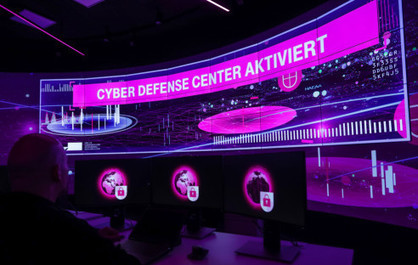
Die Telekom Security hat in Bonn ihr neues Zentrum für Cyber Defense und Security Operation eröffnet. Von dort aus sichert der Konzern sowohl seine eigene Infrastruktur als auch die Netzwerke von Kunden ab. Eine "IT-Sicherheits-Hochburg" soll das neue Cyber Defense und Security Operation Center der Telekom Security in Bonn darstellen. Rund 200 Experten überwachen dort im 24-Stunden-Betrieb die Systeme der Telekom und die ihrer Kunden. Damit sei das Abwehrzentrum eines der größten und modernsten Europas. Vor Ort sollen künftig Cyberangriffe erkannt und abgewehrt, Angriffswerkzeuge analysiert und daraus Prognosen für zukünftige Attacken erstellt werden. In der Vergangenheit habe man auf diese Weise bereits mehr als 20 Millionen Beispiele von Attacken gesammelt und zur Verbesserung der eigenen Systeme herangezogen. Zu den Kunden der Telekom Security zählen mehr als 30 deutsche DAX- und große mittelständische Unternehmen. Mit dabei ist seit kurzem mit der Linde Group ein weiterer weltweit tätiger deutscher Technologie-Konzern, der Serviceleistungen aus dem neuen Abwehrzentrum bezieht. Hinzu kommen außerdem mehrere zehntausend Kunden aus dem KMU-Bereich, die auf das Know-how der Telekom zurückgreifen. Learn more / En savoir plus / Mehr erfahren:
|
|
Scooped by
Gust MEES
October 26, 2017 1:49 PM
|
|
|
|
Scooped by
Gust MEES
November 21, 2017 6:19 PM
|
Uber sind bereits vor gut einem Jahr Daten von rund 50 Millionen Fahrgästen gestohlen worden. Der Fahrdienst-Vermittler informierte die Öffentlichkeit aber erst am Dienstag über den Vorfall.
Es gehe um Namen, E-Mail-Adressen und Telefonnummern von Nutzern rund um die Welt, erklärte Uber dem Finanzdienst Bloomberg. Außerdem hätten sich die Angreifer auch Zugriff auf Daten von etwa sieben Millionen Uber-Fahrern verschafft.
Es seien aber keine Kreditkarten-Daten oder Informationen zu Fahrten gestohlen worden, betonte die Firma.
Uber räumte nun ein, dass über die Attacke weder Behörden noch Betroffene informiert worden seien. Stattdessen seien den Hackern 100.000 Dollar (rund 85.000 Euro) bezahlt worden, damit sie die gestohlenen Daten vernichten.
„Nichts davon hätte passieren dürfen“
Uber gehe davon aus, dass die Informationen nicht verwendet worden seien, hieß es. Die Hacker seien durch eine schlecht geschützte Datenbank an die Daten gekommen. Der Uber-Sicherheitschef Joe Sullivan wurde diese Woche entlassen, wie Uber weiter mitteilte. Learn more / En savoir plus / Mehr erfahren: https://www.scoop.it/t/securite-pc-et-internet/?&tag=DATA-BREACHES https://www.scoop.it/t/securite-pc-et-internet/?&tag=Uber
|
|
Scooped by
Gust MEES
November 21, 2017 6:02 PM
|
Uber concealed a hack that affected 57 million customers and drivers, the company has confirmed.
The 2016 breach was hidden by the ride-sharing firm which paid hackers $100,000 (£75,000) to delete the data.
The company's former chief executive Travis Kalanick knew about the breach over a year ago, according to Bloomberg, which first broke the news.
The hackers found 57 million names, email addresses and mobile phone numbers, Uber said.
Within that number, 600,000 drivers had their names and license details exposed. A resource page for those affected has been set up.
Drivers have been offered free credit monitoring protection, but per Uber's statement, affected customers will not be given the same.
"While we have not seen evidence of fraud or misuse tied to the incident, we are monitoring the affected accounts and have flagged them for additional fraud protection," Uber's chief executive Dara Khosrowshahi said.
Learn more / En savoir plus / Mehr erfahren: https://www.scoop.it/t/securite-pc-et-internet/?&tag=DATA-BREACHES https://www.scoop.it/t/securite-pc-et-internet/?&tag=Uber
|
|
Scooped by
Gust MEES
November 21, 2017 1:01 PM
|
|
|
Scooped by
Gust MEES
November 19, 2017 4:43 PM
|
Stellen Sie sich ein Flugzeug vor: Sie wissen schon…groß, mit Triebwerken und vollbesetzt mit Passagieren. Und nun stellen Sie sich vor, dass genau dieses Flugzeug gehackt werden könnte. Diese theoretische Möglichkeit wurde bereits einige Male zum Ausdruck gebracht; ein Flugzeug ist im Grunde genommen, genauso wie jedes andere moderne (Luft)Fahrzeug, ein Netzwerk aus Computern, von denen einige sogar mit dem Internet verbunden sind. Jetzt scheint die bisherige Theorie allerdings auch in der Praxis bestätigt worden zu sein.
Das versicherte kein anderer als der Vertreter des Ministeriums für Innere Sicherheit der Vereinigten Staaten. Innerhalb von zwei Tagen gelang es Robert Hickey, Zugriff auf die internen Systeme eines Flugzeuges, das am Flughafen geparkt war, zu gewinnen. Er hatte weder physischen Zugriff auf das Flugzeug, noch stand ihm die Hilfe von Mitarbeitern zur Verfügung. Die Tools die Hickey hierbei verwendete, waren zudem alltägliche Gegenstände, die am Flughafen problemlos mit sich geführt werden dürfen.
Ein Vertreter des Ministeriums für Innere Sicherheit der Vereinigten Staaten versichert, eine Boeing 757 gehackt zu haben. Learn more / En savoir plus / Mehr erfahren: https://www.scoop.it/t/securite-pc-et-internet
|
|
Scooped by
Gust MEES
November 18, 2017 6:36 PM
|
Les deux enceintes intelligentes de Google et Amazon, le Google Home et l’Amazon Echo, victimes de la faille Bluetooth BlueBorne.
Des chercheurs ont réussi à prouver que la faille Bluetooth BlueBorne impactait aussi les enceintes intelligentes Google Home et l’Amazon Echo. Révélées il y a quelques semaines, huit failles critiques de Bluetooth ont récemment étaient révélées. Elles affectent des milliards d’appareils Android, iOS, Windows et Linux. Voilà que les deux assistants des deux géants du web sont aussi impliqués dans cet énorme « merdier » numérique comme le confirme la société Armis. Learn more / En savoir plus / Mehr erfahren: https://www.scoop.it/t/securite-pc-et-internet/?&tag=BlueBorne
|
|
Scooped by
Gust MEES
November 16, 2017 4:20 PM
|
Amazon Key Lets Delivery People into Your House—and It Just Got Hacked.
A hardware safeguard in Amazon’s recently launched while-you’re-out delivery service turns out to have a big hole. And, well—let’s just say you probably should have seen this coming.
Amazon Key uses a smart lock and cloud-based security camera in order to allow delivery staff to drop parcels inside a home while a customer is out. The driver requests access via Amazon, but the customer can watch footage from Amazon’s Cloud Cam to keep a watchful eye over the proceedings—a nice way of inspiring confidence that said driver won’t steal all your stuff. All that convenience, for a mere $250!
There’s just one problem: as Wired reports, researchers from Rhino Security Labs have demonstrated that it’s possible for someone in Wi-Fi range of the Cloud Cam to send it commands that knock it offline. That’s discomforting, but not awful—because at least you’d see that the camera was offline and do something about it, right?
Nope! Like something out of Ocean’s Eleven, the camera doesn’t show the customer that it’s offline: it just shows the last frame, frozen, so the scene looks totally normal. Meanwhile, someone could be rifling through your cupboards, eating your Cheerios, or (more likely) stealing your TV.
It’s worth noting that Amazon only allows authorized staff to open the smart lock that forms part of the system, so it would require a rogue employee for this to happen. The firm also provides insurance if anything does go wrong. And it now says it will update its software so that users are alerted if the camera goes offline during delivery.
But the news should be a warning call, if one were needed, that the intersection of smart devices, home security, while-you’re-out deliveries, and Big Tech is a combination people should be genuinely nervous about. Not least because, currently, smart devices are about as secure as the Democratic National Committee’s servers, and breaking into homes remains an attractive proposition for any sane criminal. Learn more / En savoir plus / Mehr erfahren: https://www.scoop.it/t/securite-pc-et-internet/?&tag=cameras
|
|
Scooped by
Gust MEES
November 14, 2017 5:41 PM
|
Wer im Internet surft, ist Freiwild. Von allen Seiten wird Ihr Browser angezapft: sei es von der Werbeindustrie, von Dienstanbietern, Geheimdiensten und Hackern. Das Tor-Netzwerk ist zwar in den letzten Jahren etwas in Verruf geraten, bietet aber immer noch mehr Anonymität als alle anderen Maßnahmen. Außerdem kommen Sie über den Tor-Browser in das sonst geheime Darknet. Learn more / En savoir plus / Mehr erfahren: https://www.scoop.it/t/securite-pc-et-internet/?&tag=TOR
|
|
Scooped by
Gust MEES
November 8, 2017 7:25 PM
|
Early Monday morning, the websites for about 800 US schools and school districts were hijacked and replaced with an image of Saddam Hussein on a black background, a recruitment video in Arabic and the statement “I Love Islamic State” in English, according Jim Brogan, director of technology services for schools in Gloucester County, Virginia.
This should all ring a bell, given that hackers going by the same name have been more or less making the same defacements for years. Namely, a photo of Hussein accompanied by an Arabic message seen on an IS flag that reportedly reads “There is no god but Allah” and “Mohammed is the Messenger of God.”
According to the International Business Times, the web hosting company that services the sites – SchoolDesk, in Atlanta – confirmed the attack and said that a group going by the name “Team System DZ” claimed responsibility.
SchoolDesk’s statement:
Our technical staff discovered that a small file had been injected into the root of one of the SchoolDesk websites, redirecting approximately 800 school and district websites to an iFramed YouTube page containing an audible Arabic message, unknown writing and a picture of Saddam Hussein. Learn more / En savoir plus / Mehr erfahren: https://www.scoop.it/t/securite-pc-et-internet/?&tag=US
|
|
Scooped by
Gust MEES
November 8, 2017 3:18 PM
|
Victimes d’une faille de sécurité des puces Infineon, les cartes d’identité électroniques des Estoniens sont bloquées depuis ce week-end.
« Nous sommes désolés des inconvénients causés par ce problème, mais la protection de l’intégrité de votre identité numérique doit passer avant tout. »
La faille, qui frappe les puces Infineon intégrées sur les cartes d’identité nationale, a privé plus de 760 000 citoyens d’Estonie de leurs services administratifs numériques le week-end dernier (sur une population globale d’1,3 million d’habitants).
Le gouvernement estonien s’en est excusé par voie de blog. Learn more / En savoir plus / Mehr erfahren: https://www.scoop.it/t/securite-pc-et-internet
|
|
Scooped by
Gust MEES
November 4, 2017 9:46 AM
|
Eine Sicherheitslücke im Tor-Browser ist geschlossen worden. (Bild: David Bates/Golem.de)
LINUX UND MAC:
Tor-Browser-Exploit verrät IP-Adresse einiger Nutzer
Unter bestimmten Voraussetzungen verrät der Tor-Browser die unverschleierte IP-Adresse der Nutzer. Betroffen sind nur Mac und Linux-Versionen des Firefox-Bundles, in der täglichen Nutzung dürfte der Fehler nur wenige Personen betreffen.
Das Tor-Projekt hat ein Notfallupdate für die Linux- und Mac-Versionen des Tor-Browser-Bundles veröffentlicht. Unter bestimmten Umständen verraten die beiden betroffenen Versionen die reale IP-Adresse der Nutzer und machen somit die angestrebte Anonymität kaputt. Die Windows-Version des Tor-Browsers, die Tails-Distribution und der im Alpha-Test befindliche Tor-Browser mit Sandboxing sollen nicht betroffen sein. Learn more / En savoir plus / Mehr erfahren: https://www.scoop.it/t/securite-pc-et-internet/?&tag=TOR
|
|
Scooped by
Gust MEES
October 30, 2017 1:55 PM
|
|
|
Scooped by
Gust MEES
October 26, 2017 1:58 PM
|
|



















Learn more / En savoir plus / Mehr erfahren:
https://www.scoop.it/t/securite-pc-et-internet/?&tag=DATA-BREACHES
https://www.scoop.it/t/securite-pc-et-internet/?&tag=Uber