Your new post is loading...

|
Scooped by
Gust MEES
July 16, 2012 9:31 AM
|
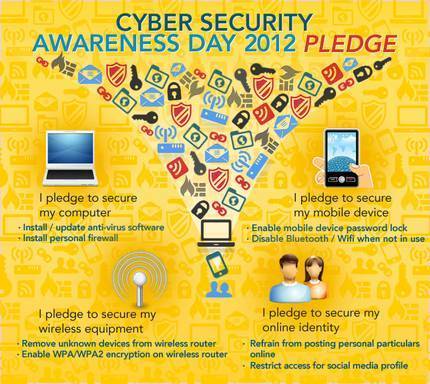
ENISA has developed a series of free material to support the EU Member States in their preparations for the European Cyber Security Month. Citizens are increasingly relying on the internet in their everyday lives for banking, shopping, education and communication. It is, therefore, important that they are able to use the internet in a secure and confident manner. ENISA has developed a series of free material to support the EU Member States prepare their cyber security education and awareness campaigns in the context of the European Cyber Security Month. This material is an important tool in reaching people and getting them to change their behaviour, or to reinforce good behaviour. Read more: http://www.enisa.europa.eu/media/news-items/european-cyber-security-material-now-available-online
|
|
Scooped by
Gust MEES
July 15, 2012 2:31 PM
|
|
|
Scooped by
Gust MEES
July 13, 2012 12:16 PM
|
|
|
Scooped by
Gust MEES
July 13, 2012 10:34 AM
|
|
|
Scooped by
Gust MEES
July 13, 2012 5:52 AM
|
Welcome to Symantec Symposium 2012
We are delighted to announce the Symantec Symposium event series, an eight-city technology roadshow taking place across Australia and New Zealand between August and October 2012.
Symantec Symposium 2012 will deliver a full-day program, jam-packed with technology and industry experts, keynote presentations, technical breakout sessions and informal networking opportunities - allowing you to share in Symantec’s vision and to evaluate the latest solutions across areas such as: - Cloud
- Mobile
- Virtualisation
- Big Data
- Compliance & Risk Management Read more: http://www.symantec-events.com.au/
|
|
Scooped by
Gust MEES
July 12, 2012 9:36 AM
|
|
|
Scooped by
Gust MEES
July 12, 2012 7:14 AM
|
|
|
Scooped by
Gust MEES
July 11, 2012 8:53 AM
|
|
|
Scooped by
Gust MEES
July 11, 2012 7:25 AM
|
|
|
Scooped by
Gust MEES
July 11, 2012 6:02 AM
|
|
|
Scooped by
Gust MEES
July 10, 2012 8:52 AM
|
Cecilia Malmström - Commissioner Cecilia Malmström, Responsible for Home Affairs... A new Eurobarometer survey shows that Internet users are very concerned about cyber security: 89% avoid disclosing personal information online, and 74% agree that the risk of becoming a victim of cybercrime has increased in the past year. 12% of internet users across the EU have already experienced online fraud, and 8% have fallen victim to identity theft. ===> Nonetheless, 53% have not changed any of their online passwords during the past year.<=== Download the survey [pdf] for your country here: http://ec.europa.eu/public_opinion/archives/eb_special_399_380_en.htm#390
|
|
Scooped by
Gust MEES
July 10, 2012 6:33 AM
|
|
|
|
Scooped by
Gust MEES
July 16, 2012 9:24 AM
|
|
|
Scooped by
Gust MEES
July 14, 2012 8:11 AM
|
Security expect Mikko Hypponen on how Stuxnet and other targeted cyberattacks are the first steps in a cyber arms race. Stuxnet was obviously a game changer. But what does it mean in the long term? I think we are now seeing the very first steps of a new arms race: The cyber arms race. Just like modern hi-tech research revolutionised military operations over the last 50 years, we are going to see a new revolution, focusing on information operations and cyber warfare. This revolution is underway and it's happening right now. We haven't seen real online warfare yet, of course. This is because thankfully we haven't lately seen wars between technically advanced nations. But any future crisis is likely to have a cyber component as well. Read more "A MUST" to understand the importance about IT-Security and Cyber-Security: http://www.bbc.co.uk/news/technology-18825742#?utm_source=twitterfeed&utm_medium=twitter
|
|
Scooped by
Gust MEES
July 13, 2012 10:43 AM
|
|
|
Scooped by
Gust MEES
July 12, 2012 7:35 AM
|
According to a post of Eric Grosse, VP of security engineering at Google, on Google Online Security blog the company is constantly monitoring the web for malicious activity on its systems, with particular attention to attacks made by third parties to illegally access into users’ accounts. Google declared that is ready to adopt measurements to mitigate cyber threats each time they receive an alert from intelligence or from their clients and also when their monitoring procedures reveal anomalies. The company is preparing to offer a specific protection service for a restrict number of users that could be target of state-sponsored attacks. Every user potentially at risk will be advised with a message like the one proposed in the following picture: Read more: http://securityaffairs.co/wordpress/6263/cyber-crime/google-online-security-against-state-sponsored-attacks.html
|
|
Scooped by
Gust MEES
July 11, 2012 12:21 PM
|
|
|
Scooped by
Gust MEES
July 11, 2012 8:44 AM
|
|
|
Scooped by
Gust MEES
July 10, 2012 10:24 AM
|
Recently Trusteer discovered the first Tatanga-based man in the mobile (MITMO) attack as well as new SPITMO configurations which are targeting Android mobile banking users in Germany, the Netherlands, Portugal and Spain. With nearly 60 percent of the market and a reputation for weak app security, it’s no surprise that Android has become the preferred target for financial malware. Read more: http://www.net-security.org/malware_news.php?id=2183
|
|
Scooped by
Gust MEES
July 10, 2012 6:47 AM
|
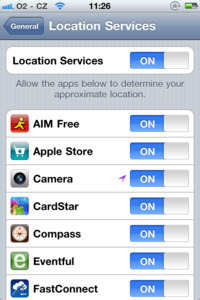
Geotagging: the process of adding geographical identification metadata to various media such as photographs, video, websites, [etc]. That’s the definition from Wikipedia. If you’re still unclear on what this means, just imagine using your smartphone to take photos of your child at his/her school performance, then uploading them from your smartphone to a site like Facebook or Flickr, or directly to Twitter via a service like TwitPic or yfrog. Now imagine a complete stranger being able to pinpoint the exact location of where those photos were taken. Well, that’s what geotagging does. And it’s the same technology you’ll find in social networking services like Facebook Places or Foursquare. Here’s a video that my good friend Sue Scheff forwarded to me. It gives you a nice glimpse into how geotagging technology works on your mobile device, and why you might want to consider disabling it on your smartphone, and your child’s. Read more: http://internet-safety.yoursphere.com/2011/03/location-based-services-and-geotagging-how-they-work/
|