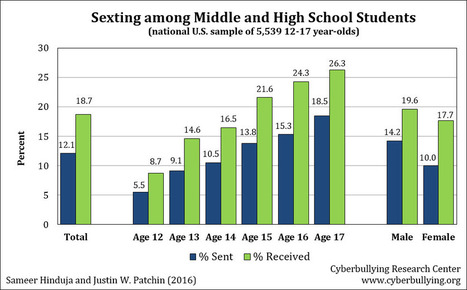
For full post, see here: http://cyberbullying.org/new-teen-sexting-data
Get Started for FREE
Sign up with Facebook Sign up with X
I don't have a Facebook or a X account


 Your new post is loading...
 Your new post is loading...
Your new post is loading...
 Scoop.it!
For full post, see here: http://cyberbullying.org/new-teen-sexting-data 
No comment yet.
Sign up to comment
Scoop.it!
"Fix School Discipline is a comprehensive resource for school superintendents, principals, teachers, parents, students, community leaders and organizations and anyone who is interested in learning about how to eliminate harsh, push-out discipline practices and put in place solutions that work for all students." ________________________________
Topics of new toolkit include:
Available for download at: http://www.fixschooldiscipline.org/wp-content/uploads/2017/04/comm_toolkit_final.pdf
For more information, please see: http://fixschooldiscipline.org
Scoop.it!

Center on Media and Child Health, Contributor Michael Rich, MD, MPH (The Mediatrician®) "Even before the debut of the new Netflix original movie To the Bone, parents and professionals were worried, asking The Mediatrician® about what they need to know — and whether children and teens should watch. The movie, which depicts the story of a young woman’s struggle with anorexia nervosa, has been the subject of many public and private discussions about eating disorders and how they are dealt with in popular culture. Already reeling from the portrayal of suicide in 13 Reasons Why, parents have concerns: Is the film safe for my child to watch? Can it encourage disordered eating behaviors in kids who may be prone to such an illness? Might it upset or trigger a relapse in a child working toward recovery from an eating disorder? Would it present anorexia nervosa as an attention-getting condition that kids and teens might find desirable? The answer to all those questions is “Maybe.” Here’s what you should know and what you can do: What you should know
The appeal of the characters - and the misleading messages they convey
More people die from anorexia nervosa than with any other psychiatric diagnosis. Ellen is easy to like, especially for teens. She is acerbically funny, brash, and asserts that she is in control… even when she isn’t. Young people struggling with eating disorders can be, and often are, charming, both because they want to feel attractive and to distract others from their illness. But they also feel deep despair, something that is implied but not really shown in To the Bone. Focusing on Ellen’s rebellious “rage against the machine,” To the Boneneglects to reveal the black hole deep inside that fuels her rage. Without showing the self-loathing, hopelessness, and helplessness privately felt by so many struggling with eating disorders, we are left with Ellen’s engagingly moody public persona. For children and teens struggling with eating disorders, body issues, or other life stressors, this can make anorexia nervosa appear to be an attractive lifestyle choice rather than a potentially lethal illness. Should my child watch it? The value in watching To the Bone, and other movies and TV shows that portray adolescent health or lifestyle problems, is that it provides a springboard for discussion. It is always easier to discuss difficult issues faced by others (particularly fictional others) than those faced by ourselves. If you decide that taking the risk of triggering your tween or teen is outweighed by the benefit of an open discussion of eating disorders, be sure to co-view To the Bone with her. (Please note that although boys do develop eating disorders, these illnesses are much more prevalent in girls. I will use female pronouns from here forward; substitute “him” and “his” if you are worried about a boy.) A tween (11 to 13 years old) or teen is at a time in her life that is driven by emotion rather than reason. She needs the perspective of your life experience and fully developed executive brain function to processTo the Bone with her, to think through the issues rather than reacting emotionally and impulsively. Ask questions and listen deeply rather than telling her how to respond. Instead of talking points, try asking points:
Listen to what she says and what she avoids saying, understanding her perspective, thoughts, and feelings. Respond honestly with facts and a caring attitude. She will be wary of being judged. Make it safe for her to talk. Be explicit about your love and support. Be as accurate and complete as you can, acknowledging when you do not know an answer; offer to look it up and think it through together. Learn why being underweight, binge eating (with or without purging), and hyper-exercising are unhealthy. If she is triggered, notify her care team, or you can seek one through the resources below. Talk through how she might seek help for herself or a friend. No matter what she or a friend is going through, reassure her that she doesn’t have to go it alone. You are there for her, and there are caring and understanding medical professionals who can help her find her way to health. Enjoy your media and use them wisely. For further resources, check out:
For full post, click here:
Scoop.it!
"Using Research To Prevent Bullying: What Works, and What Can Schools Do?
Bullying — both face-to-face and online — is a problem for many youth. Dorothy L. Espelage, PhD, has conducted bullying, harassment and violence research for more than 20 years. She will describe the problem, including gender-based bullying, such as sexual harassment and homophobic name calling. What prevention strategies can be used in schools? How can schools address their social climate to reduce the problem? What can bystanders do when they see someone being bullied?
For main event page, click here: http://www.apa.org/about/apa/archives/speakers-series-bullying.aspx
For link to full set of slides, click title above or here:
Scoop.it!
To download slides, click on title above.
Slides are from OJJDP webinar Nov. 9th, 2016: https://www.nttac.org/index.cfm?event=trainingCenter.traininginfo&eventID=1855&from=training&dtab=0
See also: https://www.nttac.org/index.cfm?event=trainingCenter.Homepage
And for Educator Resources, presenters recommended: National Center for Missing and Exploited Children http://www.missingkids.com/home
Scoop.it!

By Dena Simmons The recent election results left our nation overcome with intense emotions: Some Americans are experiencing profound triumph, others are experiencing deep despair and still others are concerned about what an administration led by a non-politician will look like. President-elect Donald Trump’s victory has emboldened some people to commit acts of harassment and intimidation. Young people at primary and secondary schools and universities across the nation are experiencing racist graffiti, anti-immigration chants, Islamophobic slurs and other hateful behavior. As educators, it is our job to ensure that all students are safe to learn in an environment where they can be their full, authentic selves, where they can learn and live the values of equality, civility, freedom and justice for all. While it may be difficult sometimes, that responsibility includes helping children who exhibit anger, negativity or bias to reflect on their emotions and behave in a way that does not harm others. (Teachers should use culturally responsive practices as they reflect on, identify and work to understand and support students’ emotions.) Doing this requires, in part, that we practice and model the skills of emotional intelligence, which can be defined as the ability to recognize, understand, label, express and regulate our emotions productively and effectively—particularly when adults in the public eye are not demonstrating these skills. Such skills of emotional intelligence can be channeled toward creating a more compassionate, equitable and just society.
So, what can we do right now?
Not being able to manage our emotions, express emotions for the given context or accurately recognize or label how we are feeling (or how others are feeling) can divide us and lead to often-avoidable conflict. These misunderstandings and misinterpretations of emotions strip us—and students—of opportunities to connect meaningfully and civilly with others. It is an imperative, then, to infuse emotionality into our instruction in the hopes of creating a more compassionate and just society, in hopes of shifting our divided states to the United States. Our young people deserve that much.
For original post, please see: http://www.tolerance.org/blog/post-election-don-t-neglect-those-emotions
Scoop.it!

"Experts were warning west suburban parents this week about something all parents should know about protecting their children from online predators."
Scoop.it!

To access, click title above or Science Direct Link here: http://www.sciencedirect.com/science/article/pii/S0190740916304145
To download full pdf: http://ac.els-cdn.com/S0190740916304145/1-s2.0-S0190740916304145-main.pdf?_tid=0758ea74-a9cd-11e6-84b5-00000aacb35e&acdnat=1479061053_995edae3fb32cb3ad4ac807c1bed3dea
Scoop.it!
For more information, please see: http://www.surgeongeneral.gov/library/reports/national-strategy-suicide-prevention/
Scoop.it!
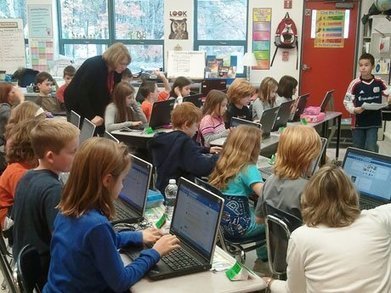
By Matt Davis [Photo credit: Massachusetts Secretary of Education via flickr (CC BY-NC-SA 2.0)] "Considering how ubiquitous smartphones and tablets have become, especially in high school and middle school, questions about managing use and educating students about digital etiquette are on a lot of educators' minds.
For full post, please see: http://www.edutopia.org/blog/digital-citizenship-resources-matt-davis
|
Scoop.it!

Abstract "Bullying is a serious problem that affects millions of individuals worldwide each year. In response to this, thousands of research articles have been published on bullying. Unfortunately, much of bullying research remains largely atheoretical in its approach to defining bullying as a unique form of aggression. Another key problem in bullying research is the proliferation of heterogeneity of bullying measures whose validity is sometimes questionable. Combined, these two problems have made progress difficult as comparisons between studies and results are impeded by a lack of commonality. As a solution to these problems a discussion of the issues surrounding defining and measuring bullying is offered. This paper aims to promote thoughts and insights about the critical issues and concepts facing those who seek to define and measure bullying for research, intervention, or policy work. Although suggestions for best practices are offered, the overriding goal is to promote all practices that enhance the validity, transparency, and compatibility of bullying research. The time seems right for a general call to action for researchers to individually produce data that are both theoretically and empirically more communicable to the broader bullying community."
http://www.sciencedirect.com/science/article/pii/S1359178917302112
Scoop.it!
To download, click on title above or link below.
Scoop.it!

"Services, Immigrant Rights and Education Network (SIREN) began as an ad-hoc coalition of immigrant rights activists and advocates in 1987 under the name Network for Immigrant and Refugee Rights and Services (NIRRS) in order to develop a Santa Clara County response to the 1986 Immigration Reform and Control Act. For over a decade, the NIRRS was central to statewide campaigns against all the anti-immigration legislation and ballot initiatives that followed. In 1998, NIRRS changed its name to Services, Immigrant Rights and Education Network (SIREN) and received seed funding to hire staff and establish the county’s first-ever multilingual information hotline. Since that time, SIREN has grown to include policy analysis and advocacy, community education, citizenship application assistance, and community and service provider trainings."
For more information, please see:
Scoop.it!
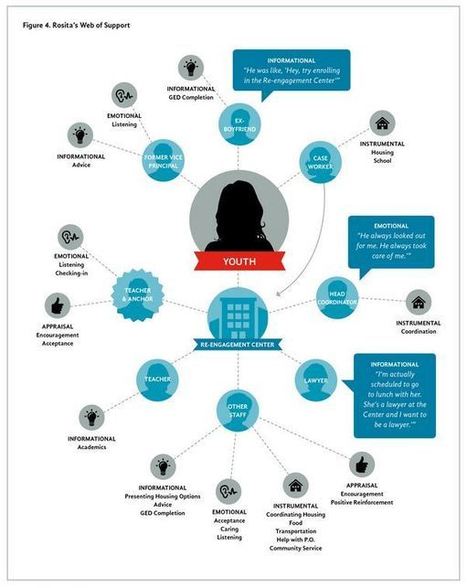
"We've long known that adolescents need supportive relationships to help them stay in school through tough times. A new study, published Wednesday, argues that having an "anchor" and a "web" of support—rather than one person to act as a "hero"—can boost adolescents' chances of staying in school. Like other researchers who have probed the dynamics that prompt students to leave school, America's Promise Alliance has consistently seen that the presence of caring adults is pivotal. Following up its 2014 report, "Don't Call Them Dropouts," the organization decided to focus on finding out more about what students need from those relationships. The result is "Don't Quit on Me," released today.
The bottom line? Relationships matter. But the type, source, and intensity matter, too, if they're going to serve as effective buffers against leaving school. "They told us they need respect, not judgment. They need resources—bus passes, a ride to school, a meal, a job, a chance. They need people to show care through actions, not advice. They need an anchor, not a hero. And they need a web of support, a healthy, supportive community of their own," America's Promise Alliance President and CEO John Gomperts writes in the introduction to the report.".... For full post, click on title above or here: http://blogs.edweek.org/edweek/high_school_and_beyond/2015/09/high_school_students_need_webs_of_supportive_adults.html
Scoop.it!

"New research shows that witnessing traumatic events, like domestic violence, shootings, or even fighting, can impact the physical development of a child’s brain — potentially leading to lifelong health and social issues. But you can help reverse the effects. This site will teach you about the science of childhood trauma, and how five everyday gestures can make a world of difference."
Traumatic stress can injure a child's brain. But you can help. Learn the science of childhood trauma, and how the 5 Changing Minds gestures can help heal.
Scoop.it!

"The Silicon Valley Internet Crimes Against Children Task Force Program (SVICAC) helps state and local law enforcement agencies develop an effective response to technology-facilitated child sexual exploitation and Internet crimes against children. This support encompasses forensic and investigative components, training and technical assistance, victim services, prevention and community education."
Scoop.it!

By Elissa Nadworny (Eva Bee/Getty Images)
"Suicide rates for U.S. middle school students have been steadily rising — doubling from 2007-14, according to the Centers for Disease Control and Prevention.
There's a perception that children don't kill themselves, but that's just not true. A new report shows that, for the first time, suicide rates for U.S. middle school students have surpassed the rate of death by car crashes.
The suicide rate among youngsters ages 10 to 14 has been steadily rising, and doubled in the U.S. from 2007 to 2014, according to the Centers for Disease Control and Prevention. In 2014, 425 young people 10 to 14 years of age died by suicide. We've been reporting about the role that schools and school staff play in addressing students' mental health. "Kids spend a lot of time at school ... it's where they live their lives," says David Jobes, who heads the Suicide Prevention Lab at Catholic University in Washington, D.C. "Suicide prevention has been focused on schools for a long time because it's a place where kids are and where a lot of problems can manifest." Many educators don't feel comfortable talking about suicide, or often don't know what to do or say when a student needs help, Jobes says. He recommends resources from the American Foundation for Suicide Prevention that are specific to schools. "It's really hard to prevent it, if we don't know it's there," he says. So educators shouldn't be afraid to talk about suicide — because saving lives begins with "asking a question."
Yesterday we chatted with Jobes on NPR Live about the six myths on suicide that every parent and educator should know:"...
For full post, click on title above or here: http://www.npr.org/sections/ed/2016/11/04/500659746/middle-school-suicides-reach-an-all-time-high
Scoop.it!

"WASHINGTON, D.C., November 1, 2016─Positive school climates contribute to academic achievement and can improve outcomes for students from low socioeconomic backgrounds, according to a new study published today in Review of Educational Research, a peer-reviewed journal of the American Educational Research Association. In a comprehensive analysis of research published since 2000, U.S. and Israeli researchers found substantial evidence that schools with positive climates can narrow achievement gaps among students of different socioeconomic backgrounds and between students with stronger and weaker academic abilities.
Broadly speaking, positive school climates are marked by a supportive, caring approach from teachers; a sense of safety from violence and bullying; student connectedness in school; and parental involvement.
“Our analysis of more than 15 years’ worth of research shows that schools do matter and can do much to improve academic outcomes,” said study co-author Ron Avi Astor, a professor of social work and education at the University of Southern California. “Our findings suggest that by promoting a positive climate, schools can allow greater equality in educational opportunities, decrease socioeconomic inequalities, and enable more social mobility.”
The analysis also found no correlation between socioeconomic status and perceptions of school climate. This suggests that schools serving students of lower socioeconomic status do not necessarily have poor climates and that positive climates can be nurtured in these schools.
“Positive school climate has the potential to break the negative influences that stem from poor socioeconomic backgrounds and to mitigate risk factors that threaten academic achievement,” said co-author Ruth Berkowitz, an assistant professor of social work at the University of Haifa, Israel. “Evidence-based interventions that support and improve school climate are critically important to efforts around the world to increase educational opportunity for disadvantaged students and schools.”
Need for Common Definition and Measurement In their analysis, the authors also found great variation in the school climate definitions and measurements used by researchers, reflecting the absence of clear and uniform standards. “This becomes very important with the new Every Student Succeeds Act, which focuses heavily on the climate and social and emotional tone of schools,” said Astor. “The U.S. Department of Education has a definition and instrument that is only somewhat aligned with the research and the scholars producing it.”
“There is a tangible, immediate need to construct a common definition and reliable climate measurements that can be translated into practice and policy guidelines,” Astor said. “In the absence of a clear and uniform definition and measurement of school climate, the ability of researchers and stakeholders to evaluate school climate growth over time is restricted.”
In addition, the study authors made several recommendations to improve future research that would provide more definitive results and allow researchers to offer clear recommendations for policymakers and education practitioners. They strongly recommended the use of more rigorous research designs such as longitudinal, experimental, and semi-experimental. They also recommended investigating an entire school community’s perceptions of school climate—including those of teachers, administrators, and parents—not just of students or teachers. In addition to allowing for more accurate evaluations of school climate, a multi-perspective approach would allow school communities to design their own climate improvement programs, tailor-made to their requirements and social and organizational characteristics, rather than importing external models that have proved effective elsewhere. The authors also suggested examining the contribution of school climate to the arts, physical education, social and emotional learning, civics, vocational subjects, and other areas outside the core subjects of mathematics, language arts, and science.
About AERA
For full post, see: http://www.aera.net/Newsroom/Comprehensive-Review-of-Research-Confirms-Positive-School-Climates-Can-Narrow-Achievement-Gaps
Scoop.it!
From
prezi

Presentation above was from a session at the Northern California PBIS/School Climate Conference on April 5th, 2017 in Mountain View, CA. To view link on Prezi website, click on title above.
Content includes information from the following websites: "This is my place: Middle Schoolers talk about social and emotional learning" https://www.youtube.com/watch?v=Wqj3_8raIHw Screenagers Trailer: https://www.youtube.com/watch?v=LQx2X0BXgZg Antoine Geiger’s Series SUR-FAKE http://antoinegeiger.com/filter/art/SUR-FAKE Cyberbullying Research Center Cyberbullying.org
For more, see: http://bit.ly/safe_schools_resources
Scoop.it!
What most helps young people thrive in a challenging academic environment? Answers from students bear out what research has found: social and emotional factors constitute a crucial underpinning for learning. In recent WKCD interviews at School of the Future in New York City, middle schoolers gave their own examples of how everyday interactions between students, peers, and adults affected how they learned in the classroom. Their descriptions reflected some key unspoken questions that adolescents bring with them into a school environment:
NOTE: For years WKCD has gathered, most of all, the voices and vision of high-school-age youth—although we did publish the popular Fires in the Middle School Bathroom: Advice for Teachers from Middle Schoolers by Kathleen Cushman and Laura Rogers (The New Press, 2008). In the months ahead, we aim to include more voices and perspectives from the middle grades.
For main page, please click on title above or here: http://www.whatkidscando.org/featurestories/2012/12_this_is_my_place/

My Self-Directed Learning Journey's curator insight,
September 7, 2024 8:28 PM
The article and video are powerful. Hearing the Social Emotional Learning (SEL) voice of children is very valuable. It gave me the input to understand their thought process and how I could use technology to document their story. It shows the value of having a consistent educator and school. Children know when their thoughts and concerns are important. It starts with each other and the culture set in the classroom. Based on the children story the whole campus is SEL driven.
|