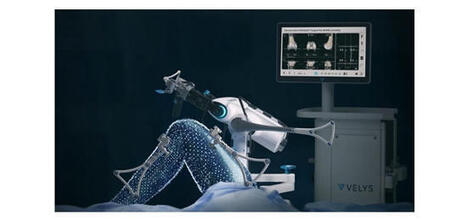
Understand how next-generation robotic surgery, with its minimally invasive approach, results in faster recovery periods, shorter hospital stays, and best outcomes.
Skip to content Accueil Académie nationale de médecine | Une institution dans son temps > International > Comité des relations internationales > 19 juin 2024 : Webinaire franco-chinois : Chirurgie robotique Webinaire franco-chinois : Chirurgie robotique PROGRAMME Introduction, Catherine Barthélémy (Paris) Présentations scientifiques : Histoire de la robotique, Pr Jacques Hubert (Nancy) L’exploration et la réflexion sur les interventions chirurgicales à distance assistées par des robots, Pr Xinghuan Wang (Wuhan) Robotic bariatric surgery, Dr Nicolas Reibel (Nancy) Les problèmes courants liés à la formation sur les robots chirurgicaux et leurs solutions, Dr Kun Yang (Wuhan) Table ronde, Modérateur Pr Zhao Yan (Wuhan) Conclusion, Pr Jacques Hubert (Nancy) Vidéo du webinaire :
Surgery has always been at the forefront of medical innovation, continually evolving to improve patient outcomes and enhance procedural precision. As we approach 2024, several groundbreaking techno...
On 7 May 2024, MicroPort® MedBot™’s Toumai® Laparoscopic Surgical Robot received CE MDR certification from the EU, approving its use in urologic, general, thoracic, and gynecological endoscopic surgeries. This approval confirms the robot's stability, clinical efficacy, safety, and technological…
Cat Royale est un projet qui explore l’impact de l’IA sur les humains et les animaux, visant à comprendre comment les systèmes autonomes vont avoir une
This study compared the radiologic and clinical outcomes of a new seven-axis robotic-assisted total hip arthroplasty (THA) and conventional THA. Hundred and four patients were randomly assigned to two groups—the robotic-assisted THA group (RAS group) and the conventional THA group (CON group).
Background: Total Knee Arthroplasty (TKA) is a prevalent surgical procedure for treating severe knee arthritis, aiming to alleviate pain and restore function. Recent advancements have introduced computer-assisted (CAS) and robot-assisted (RA-TKA) surgical techniques as alternatives to conventional...
Bladder cancer is a prevalent urological malignancy that typically requires radical cystectomy, which is the surgical removal of the bladder. Historically, this operation has been conducted via open surgery, which necessitates substantial incisions and prolonged recuperation periods. Nevertheless, the introduction of robotic-assisted surgery has revolutionized the field of urology procedures by providing less invasive options that come with a multitude of advantages. This article explores the complexities of robotic cystectomy surgery, focusing on its methodology, advantages, drawbacks, and potential advancements. Robotic bladder removal surgery, or robotic radical cystectomy, is a less invasive technique conducted with the assistance of robotic technology. The da Vinci Surgical System, which is the prevailing platform, has a console where the surgeon is seated and manages the robotic arms that are equipped with surgical instruments and a high-definition 3D camera. Method: Preparation: The patient is under general anesthesia, and multiple small incisions are created in the belly. Trocars, which are small tubes, are placed through these incisions to facilitate the insertion of the robotic arms and camera. Cystectomy: The surgeon, positioned at the console, manipulates the robotic arms to meticulously dissect and extract the bladder, along with the adjacent tissues and lymph nodes. The advanced 3D imaging and accuracy of the robotic technology enable precise dissection and minimize the danger of harm to nearby structures. Urinary Diversion: After the removal of the bladder, the surgeon establishes an alternative method for storing and expelling urine from the body. This may entail the formation of an ileal conduit, where a segment of the intestine is utilized to establish a pathway for urine, or the construction of a neobladder, which involves fashioning a new bladder using a portion of the intestine. Advantages of Robotic-Assisted Bladder Surgery Robotic cystectomy surgery has numerous benefits compared to conventional open surgery: Minimally Invasive: Robotic surgery utilizes small incisions, which leads to decreased postoperative pain, lower blood loss, and smaller scars in comparison to the larger incisions required in open surgery. The robotic system offers advanced accuracy: it delivers high-definition 3D imaging and exceptional dexterity, allowing the surgeon to execute precise movements and complicated dissections. Minimized Complications: The procedure’s minimally invasive nature and the precision of the robotic system significantly decrease the likelihood of problems, such as infections and harm to nearby organs. Reduced Recovery Time: Patients who undergo robotic-assisted surgery generally have shorter recovery periods, spend less time in the hospital, and are able to resume their daily activities more quickly. Enhanced Results: Research has demonstrated that the use of robotic-assisted surgery can result in superior oncological results, such as reduced occurrence of positive surgical margins and enhanced lymph node dissection. Potential Hazards and Factors to Take into Account Although robotic bladder removal surgery has certain advantages, it is not devoid of hazards. Possible problems encompass: Surgical Risks: Like other significant surgical procedures, there is a possibility of experiencing bleeding, infection, and negative responses to anesthesia. Technical Challenges: Specialized training and skills are necessary due to the intricate nature of the robotic system. Surgeons must possess a high level of skill in robotic procedures in order to achieve the best possible results. Expense: Robotic surgery is typically more costly than traditional methods because of the elevated expenses associated with the robotic system and the disposable tools. Restricted Accessibility: The availability of robotic surgery may be limited in certain areas, and not all healthcare facilities possess the required technology and adequately educated staff. Prospects for the Future The area of robotic surgery is in a constant state of development, with continued progress focused on enhancing patient outcomes and broadening the scope of treatments that may be conducted using robots. Enhanced imaging, improved robotic instruments, and integration of artificial intelligence show potential for improving the accuracy and efficiency of robotic-assisted surgeries. Conclusion Robotic cystectomy is a notable breakthrough in the management of bladder cancer, providing a less intrusive option compared to conventional open surgery. Robotic-assisted surgery has the potential to transform urological surgery by offering greater precision, reduced complications, and faster recovery times, hence improving patient outcomes. The ongoing progress of technology holds great promise for the future of robotic surgery, enabling the development of increasingly sophisticated and efficient surgical methods.
This talk is part of Reboot with Robot Conference held on 12th May 2024. Organizing Secretary - Dr Mirant B. Dave Course Convener - Dr Ajay Krishnan Course Chairman - Dr Bharat R. Dave & Dr Amit Jhala
OrthoTV : Orthopaedic Surgery & Rehabilitation Video & Webinars One Stop for Orthopaedic Video Lectures & Surgeries
BACKGROUND: This study aims to implement a set of wearable technologies to record and analyze the surgeon’s physiological and ergonomic parameters during the performance of conventional and robotic-assisted laparoscopic surgery, comparing the ergonomics and stress levels of surgeons during...
Enhancing efficiency in robotic surgery is crucial. Leveraging Lidar reconstruction to optimize operating room setup, this technology enables us to create…
System Will Utilize the SIGMA™ HP Partial Knee Implant, Which Demonstrated Improved 12-Year Survivorship Compared to Class PALM BEACH GARDENS, Fla., June 7, 2024 /PRNewswire/ — Today, Johnson & Johnson MedTech* announced that DePuy Synthes, The Orthopaedics Company of Johnson & Johnson**, has received...
Playing Super Mario with da Vinci Robotic Surgical System Simulator to improve Surgical Skills. Studies show that a history of gaming and video-game-based training is linked to improved metrics in Robotic Surgery and Laparoscopy.
Speakers at the 2024 American Urological Association (AUA) annual meeting highlighted the innovations and advancements that are pushing the field of urology forward.
To get content containing either thought or leadership enter:
To get content containing both thought and leadership enter:
To get content containing the expression thought leadership enter:
You can enter several keywords and you can refine them whenever you want. Our suggestion engine uses more signals but entering a few keywords here will rapidly give you great content to curate.


 Your new post is loading...
 Scoop.it!