The field of minimally invasive surgery has advanced significantly with the integration of laparoscopic and robotic techniques. Surgeons worldwide seek specialized training to master these cutting-edge technologies.
World Laparoscopy Hospital (WLH) is a globally recognized institution dedicated to advancing the fields of laparoscopic and robotic surgery through high-quality training, research, and clinical excellence.
ORSI Academy is the world leading training center for minimal invasive and robotic surgery,We are proud that #MicroPort®MedBot® and the #Toumai® robot to the…
When even the most highly trained surgeons perform procedures on the retina-one of the smallest, most delicate parts of the human body-the stakes are high.
Introduction: Robot-assisted minimally invasive gastrectomy (RAMIG) represents a significant advancement in the surgical management of gastric cancer, offering superior dexterity, enhanced visualization, and improved ergonomics compared to laparoscopic gastrectomy (LG).
In fact, the #Toumai™ surgical robot has completed nearly 300 telesurgical cases worldwide using 5G dedicated lines, standard 5G networks, conventional…
This video is being presented at the Humans at the Cutting Edge of Robotic Surgery Symposium 2024, Jaipur, India. It was produced by Dr Alessio Pecoraro, Fundació Puigvert, Barcelona, Spain. Abstract: Orthotopic robot-assisted kidney transplantation: surgical technique and preliminary results Alessio Pecoraro1,2, Begoña Etcheverry3, Josep Maria Gaya1, Angelo Territo1, Andrea Gallioli1, Camille Berquin1,4 , Giuseppe Basile1,5, Pietro Diana1 , Thomas Prudhomme6, Nicolas Doumerc6, Francesc Vigués3 and Alberto Breda1 1Department of Urology, Fundació Puigvert, Universitat Autonoma de Barcelona, Barcelona, Spain; 2Unit of Urological Minimally Invasive, Robotic Surgery and Kidney Transplantation, Careggi Hospital, University of Florence, Florence, Italy; 3Department of Urology, Hospital Universitari de Bellvitge, Le'Hospitalet de Llobregat, Barcelona, Spain; 4Department of Urology, University Hospital Ghent, Belgium, ERN eUROGEN accredited centre; 5Department of Urology and Division of Experimental Oncology, URI, Urological Research Institute, IRCCS San Raffaele Scientific Institute, Milan, Italy; 6Department of Urology and Renal Transplantation, University Hospital of Rangueil, Toulouse, France. 1. Introduction Kidney transplant (KT) candidates are fragile and immunocompromised patients and they are more often older, with several comorbidities. However, some of them present a retained iliac fossa from a previous KT or for severe atherosclerotic calcification. In this challenging setting, KT recipients and particularly those patients who are candidates for an orthotopic KT, could benefit the most from the implementation of minimally invasive approach, potentially improving the recipient vessels dissection and the vascular anastomoses, as well as perioperative outcomes. In this video, we report the largest experience about orthotopic robot-assisted KT (ORAKT), focusing on technical nuances and perioperative outcomes. 2. Materials and methods After ethical committee approval, we retrospectively collected data regarding patients who underwent ORAKT between January 2020 and August 2023 at three European referral transplant centers. All ORAKTs were performed by a highly experienced robotic and transplant surgeon. The primary aim was to assess the technical feasibility and safety. 3. Results Overall, 16 ORAKTs were included. Of these, 4 (25%) were from donors after cardiocirculatory death, 5 (31%) from donors after brain death and 7 (44%) from living donors. Notably, all KT were carried out in the left renal fossa. Severe calcification of the external iliac vessels (100%), often with a previous iliac fossa KT (31%), drove ORAKT. The median recipient age was 66 (IQR 63–71) years and the median BMI was 26 (23–29) kg/m2 . Surgical open conversion occurred in 12.5% of cases with a median operative time of 295 (268-360) minutes. An end- to-end anastomosis between graft artery and native left renal artery was performed in 75%, while 25% had an end-to- end anastomosis with the splenic artery. Graft vein anastomosed with the native renal vein in all cases. A uretro- ureteral anastomosis was reported in 81% of cases, while pyelo-ureteral anastomosis and ureteral reimplantation were carried out in 2 and 1 case, respectively. During the first 30-days after ORAKT, any grade postoperative complications were recorded in 11 (69%). Of these, 3 patients experienced high-grade complications (Clavien-Dindo greater than 2). 4. Conclusion This study presents the largest ORAKT series reported, suggesting the robotic approach offers a safe minimally invasive alternative for select patients unsuitable for heterotopic KT in high-volume KT centers with robotic expertise and prior heterotopic RAKT experience. Robotic surgery can reduce perioperative complications, postoperative pain, and hospital stays while enabling precise dissection of the native renal vein and splenic artery and accurate vascular anastomoses.
Robeauté, a medical technology startup developing neurosurgical micro-robots, has raised $28 million led by Plural, Cherry Ventures and Kindred Ventures.
At Central Indiana Orthopedics, we were the first orthopedic practice in the region to use Mako SmartRobotics, and we’re proud to lead the way in providing state-of-the-art, personalized care. With over 3,000 successful Mako robotic-assisted joint replacement surgeries performed, we have helped countless patients get back to doing what they love. While that number is impressive, the number that matters most to us is #1: You. Your care and recovery are our top priorities, every time. To learn more about how Mako robotic surgery can help you, visit ciocenter.com/mako.
As robotic adoption expands beyond knee and hip replacements into spine, shoulder, and trauma surgeries, staying ahead of the curve has never been more crucial. Download IQVIA MedTech's whitepaper, "The Rise of Robotics in Orthopedics: Innovations and Future Directions" to hear from IQVIA MedTech...
(ORTHOWORLD) - We met with industry and surgeons at the American Academy of Orthopaedic Surgeons (AAOS) Annual Meeting and heard an overall sense of optimism about market growth and new technology.
The study investigating the impact of surgical assistive arms on thoracoscopic surgery found promising results indicating their potential to reduce surgeon fatigue…...
Introduction: Future evolutions of artificial intelligence (AI) will support autonomous surgery, conducted without the need for human decision making and implementation, but we have not yet achieved this level of technology.
Ce travail est remarquable et il est important de souligner son apport au développement de la formation pratique des opérateurs à la chirurgie robotique 4.0…
This video is being presented at the Humans at the Cutting Edge of Robotic Surgery Symposium 2024, Jaipur, India. It was produced by Dr Daniele Amparore, Division of Urology, Department of Oncology, University of Turin, Italy. Abstract: TRAINING COURSE FOR 3D-AUGMENTED REALITY IN ROBOTIC PARTIAL NEPHRECTOMY 1D. Amparore, 1A. Piana, 2R. Campi, 3S. Pulia4, 1F. Piramide, 4E. Checcucci, 1A. Bellin, 1S. Barbuto, 1S. De Cillis, 4G. Volpi, 5M. Olimpo, 1C. Fiori, 1F. Porpiglia 1Division of Urology, Department of Oncology, San Luigi Gonzaga Hospital, University of Turin, Turin, Italy 2Unit of Urological Robo/c Surgery and Renal Transplanta/on, Careggi Hospital, University of Florence, Florence, Italy 3Division of Urology, University of Modena and Reggio Emilia, Modena, Italy 4Department of Surgery, Candiolo Cancer InsLtute, FPO-IRCCS, Turin, Italy 5Department of Veterinary Sciences, University of Turin, 10095 Grugliasco, Italy Introduction: Aim of the study is to set-up a dedicated course on 3D virtual models (3DVM) and augmented reality (AR) for partial nephrectomy in a porcine model. Materials and Methods It consists of hands-on sec/ons with dry and wet lab exercises. Defined metrics ensure learning path based on Proficiency-Based-Progression Methodology. The initial two modules, overseen by bioengineers, instruct surgeons to generate a 3DVM from 2D-images, as well as its handling using 3D-mouse and the ICON3d rack. For the wet lab module, a case-specific virtual reconstruction from contrast enhanced CT-scans of the animal undergoing surgery is required. Within the training operative room the ICON3d system is connected to the robotic console, to allow the trainee-surgeon to visualize the 3DVM by using TilePro. The five intraoperative exercises include overlaying the 3DVM onto the real kidney, the delineation of a virtual renal mass placed within the 3DVM by burning the surface of the real organ with monopolar scissors, the selective clamping of the arterial branch of interest, the resection of the renal parenchyma previously delineated under AR-guidance, the suture of the resection bed guided by virtual dots at the margins of the parenchymal incision. Results 3 trainee surgeons were involved in the pilot AR-Course study under the supervision of three trainer surgeons and two bio-engineers. 3 porcine models underwent AR-RAPN. All the exercises were successfully completed. Conclusions The training course on 3DVM and AR for porcine robotic partial nephrectomy has been set and tested, demonstrating efficacy in training the surgeons to AR technology. See more at: http://vattikutifoundation.com/
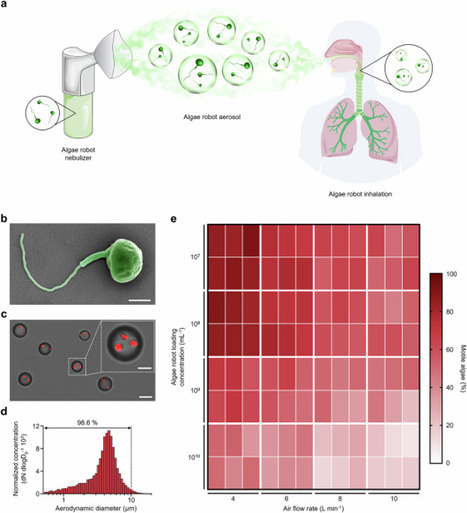
Reaching the depths of the respiratory tract is hard even with vapor-based drug delivery. Here, the authors devise inhalable biohybrid microrobots that, thanks to their motility, reach deeper regions of the lungs.
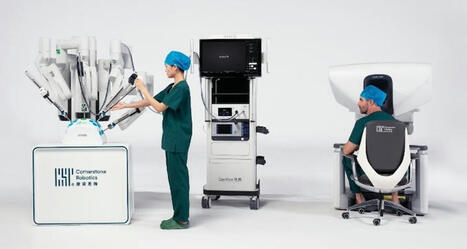
Cornerstone Robotics, a developer of surgical robotics, has successfully raised over $70 million in Series C financing led by EQT with participation from Qiming Venture Partners, Alpha JWC Ventures, the Innovation and Technology Venture Fund, eGarden Ventures, CTS Funds, K2VC, Long-Z Capital, and...
To get content containing either thought or leadership enter:
To get content containing both thought and leadership enter:
To get content containing the expression thought leadership enter:
You can enter several keywords and you can refine them whenever you want. Our suggestion engine uses more signals but entering a few keywords here will rapidly give you great content to curate.


 Your new post is loading...
 Scoop.it!