Your new post is loading...

|
Scooped by
mhryu@live.com
September 1, 1:01 PM
|
Corrosion imposes a $2.5 trillion annual global cost, with much attributed to microbiologically influenced corrosion (MIC) associated with sulfate-reducing bacteria (SRB). Existing mitigation strategies that rely on biocides or polymeric coatings are costly and ecologically disruptive. Here, we present a four-part framework integrating microbiome engineering, biological passivation, commensal antagonism, and sustainability. We define microbioclaim as a biologically mediated ecological dominance mechanism through which a commensal biofilm establishes protective control over the surface. Using copper (Cu) as a model metal, we show that Citrobacter sp. strain MICI21 forms a commensal biofilm that reduces SRB-induced corrosion in co-culture with Oleidesulfovibrio alaskensis strain G20. MICI21 conferred 3- to 15-fold higher resistance, and multimodal characterization confirmed formation of a compact MICI21-dominated biofilm that resisted sulfide ingress, limited pitting, and exhibited high rigidity (~0.8 GPa). Analyses indicate contributions from Cu–EPS interactions, competitive exclusion of SRB, and a putative Type VI secretion system (T6SS) associated with antagonistic potential in publicly available Citrobacter genomes. Complementary assays using isolated Citrobacter-derived extracellular polymeric substances (EPS), applied to bare copper surfaces in the absence of living cells, showed that EPS alone can contribute to surface passivation in 3.5% NaCl. Together, this work positions microbiome engineering as a design principle for living coatings.
|
|
Scooped by
mhryu@live.com
September 1, 12:22 PM
|
This Genome Watch article highlights how giant fungal Starship transposons may facilitate the horizontal transfer of smaller transposable elements and adaptive genes across species, contributing to rapid genome evolution and phenotypic diversification. A recent survey of 1,348 genomes across the...
|
|
Scooped by
mhryu@live.com
September 1, 12:02 PM
|
As a thermotolerant bacterium, Bacillus licheniformis is an attractive chassis for high-temperature biomanufacturing. Here, we identified a novel temperature-responsive promoter, PycgM, which maintained strong transcriptional activity at 37–52 °C. In a promoter–mCherry reporter system, PycgM exhibited 2287.3-fold higher activity than P2 at 52 °C, demonstrating excellent compatibility with a thermotolerant host. Truncation analysis identified a 150-bp core functional region responsible for optimal activity under induction and heat stress. When applied to drive glutamate decarboxylase expression at 50 °C, PycgM enabled γ-aminobutyric acid production of 391.67 g/L with a 98.69% conversion rate, representing a 275% increase over 37 °C fermentation. The whole-cell biocatalyst retained 86% activity after five reuse cycles, and SEM analysis indicated acceptable structural stability despite moderate morphological changes. These results demonstrate that PycgM is a robust, high-temperature genetic element for efficient enzyme and metabolite production in thermotolerant hosts.
|
|
Scooped by
mhryu@live.com
September 1, 11:41 AM
|
Metazoan development relies on the coordinated establishment of diverse gene regulatory programs that drive the formation of specific cell types, tissues and organs. The temporal and spatial control of gene expression is achieved through the concerted activity of multiple classes of cis-regulatory elements encoded in the genome. Among these, enhancers enable the establishment of specific and precise gene expression patterns and control gene expression over long linear distances, a property often referred to as distance-independent regulatory activity. However, enhancer activity is, in fact, inversely correlated with linear genomic distance, and target gene expression and transcriptional precision decrease with increasing enhancer–promoter linear distances. Here, we highlight emerging insights into multiple mechanisms that enable enhancers to precisely and robustly activate gene expression across large genomic distances. Finally, we provide a more speculative perspective on the potential advantages that long-range regulation might confer during the establishment of developmental gene expression programs. Development depends on gene regulation by enhancers across long genomic distances. This Perspective discusses mechanisms enabling long-range enhancer–promoter communication and the potential advantages that distal enhancer positioning might confer.
|
|
Scooped by
mhryu@live.com
September 1, 11:34 AM
|
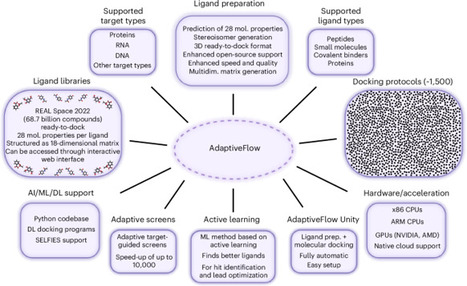
Ultralarge virtual screenings (ULVSs) evaluate billions of molecules for drug discovery but face cost, flexibility and scalability limits. We introduce AdaptiveFlow, an open-source platform that makes ULVSs more accessible, scalable and efficient and supports artificial intelligence (AI) and machine learning (ML) method development. AdaptiveFlow provides a screening-ready version of the Enamine REAL Space, to our knowledge the largest library of ready-to-dock, drug-like molecules, comprising 69 billion compounds, also available in SELFIES format. An 18-dimensional grid of molecular properties prioritizes promising chemical subspaces, with optional active learning, reducing computational costs by orders of magnitude. AdaptiveFlow integrates >1,500 docking protocols, including GPU-accelerated and ML-based methods, and achieves near-linear scaling on up to 5.6 million CPUs in the Amazon Web Services cloud. We identified nanomolar inhibitors of two disease-relevant targets, ferroptosis suppressor protein 1 (FSP1) and poly(ADP-ribose) polymerase 1. Co-crystal structures provided mechanistic insights into FSP1 inhibition. AdaptiveFlow enables drug discovery at unprecedented scale and supports the development of AI-driven methods. Massive chemical libraries are screened computationally at scale.
|
|
Scooped by
mhryu@live.com
September 1, 10:15 AM
|
Reprogramming of plant nucleotide-binding leucine-rich immune receptors has long been limited by natural receptor diversity and hard-to-engineer recognition surfaces. A novel approach combines de novo protein design with directed evolution in planta to build synthetic plant immune receptors that detect diverse pathogen proteins, enabling on-demand design and refinement of resistance genes.
|
|
Scooped by
mhryu@live.com
September 1, 1:41 AM
|
Whole-cell biosensors provide a cost-effective and sensitive approach for real-time monitoring of toxic metals in environmental samples. In this study, a bacterial whole-cell biosensor was engineered using E. coli BL21(DE3) by integrating the cadC regulatory gene from Bacillus megaterium TWSL_4 with a green fluorescent protein (GFP) reporter to enable fluorescence-based detection of heavy metals. The biosensor gene cassette (Pcad + cadC + gfp) was first cloned into the pUC19 vector and then subcloned into the pET28a(+) expression vector to generate the recombinant plasmid pETCG28. Functional characterization showed that the engineered strain E. coli BL21/pETCG28 exhibited enhanced tolerance to heavy metals, sustaining growth at Pb²⁺ concentrations up to 1600 ppm, Cd²⁺ up to 200 ppm, and Zn²⁺ up to 60 ppm, significantly higher than the wild-type strain. Fluorescence analyses demonstrated strong concentration-dependent responses to heavy metal exposure. Corrected total cell fluorescence increased nearly fourfold between 1 ppb and 10 ppb of Pb²⁺ (R² = 0.95, P < 0.0001). Cd²⁺ exposure produced an approximately threefold increase (R² = 0.96, P < 0.0001), while Zn²⁺ generated a moderate twofold response (R² = 0.94, P < 0.0001). Optimal biosensor performance occurred at pH 7.0 and 37°C, demonstrating potential for portable environmental monitoring applications.
|
|
Scooped by
mhryu@live.com
September 1, 1:32 AM
|
Intragenomic homologs are widespread, but their physiological roles are often masked by redundancy. Histone-like nucleoid structuring protein (H-NS), a nucleoid-associated protein in Gram-negative bacteria, typically coexists with homologs like StpA, whose functions are obscured by a lack of strong phenotypes. We demonstrate here that the interaction between H-NS and StpA finetunes the physico-chemical properties of nucleoid-associated compartments. Although H-NS forms dynamic condensates in vitro, StpA assembles into stable insoluble fibrils. However, together the two proteins form liquid-like droplets, whose fluidity and stability are tunable by their relative stoichiometry. By increasing the levels of StpA over H-NS, bacteria stabilize heterochromatin-associated compartments, thereby preserving gene repression and optimizing bacterial growth under stress. Structural differences at these proteins’ dimerization sites help explain their distinct phase behaviors. Our findings reveal a paradigm in which intragenomic homologs that are positioned at the opposite ends of the phase spectrum can fine-tune subcellular organization to promote survival in fluctuating environments.
|
|
Scooped by
mhryu@live.com
September 1, 12:45 AM
|
Stable isotope dilution mass spectrometry (IDMS) has become a cornerstone of quantitative metabolomics, enabling accurate intracellular metabolite quantification across a range of biological systems. However, the broader adoption of IDMS in high-throughput studies remains limited by the high costs of commercially available 13C-labeled internal standards (ISs), labor-intensive in-house IS production, and the narrow applicability of existing methods to different organisms. Here, we present a robust and scalable IDMS-based LC–MS/MS workflow for the high-throughput profiling of primary metabolism in diverse bacteria. The analytical method couples ion-pairing liquid chromatography with multiple reaction monitoring (MRM) to quantify 96 intracellular metabolites in under 16 min, with an average RSD of 21%. We developed a protocol for large-scale production of high-quality 13C-labeled IS, considerably lowering the costs and labor necessary to perform high-throughput IDMS studies. We then demonstrated the applicability of the same workflow by performing relative quantification of 5 diverse bacterial species in different cultivation conditions. This work provides a versatile platform for microbial metabolomics, supporting systems biology and data-driven metabolic engineering at scale.
|
|
Scooped by
mhryu@live.com
September 1, 12:25 AM
|
Enterococcus faecalis is a gram-positive commensal bacterium of the human gut microbiome and an opportunistic pathogen responsible for many hospital-acquired infections. Despite the clinical importance of E. faecalis, how gene and protein expression are coordinated with growth remains poorly defined. Here, we profiled transcript, protein, and tRNA pool dynamics across distinct phases of E. faecalis growth. Differences in protein abundance and corresponding mRNA levels suggested growth phase-dependent posttranscriptional regulation. Growth-associated genes exhibited biased synonymous codon usage, with ribosomal and glycolytic proteins enriched in low-abundance codons read by queuosine-modifiable tRNAs. Analysis of tRNA modification and tRNA isoacceptor abundance revealed growth phase-dependent changes, particularly in anticodon stem-loop modifications that influence synonymous codon translation. Changes in queuosine levels preceded shifts in ribosomal proteins, suggesting a contribution to codon-biased translation. Collectively, these findings reveal growth phase-associated remodeling of the E. faecalis tRNA pool and support a model in which queuosine-dependent translational reprogramming shapes protein expression during bacterial growth.
|
|
Scooped by
mhryu@live.com
September 1, 12:11 AM
|
Polyurethane (PU) is a synthetic polymer characterized by highly stable urethane linkages that hinder biological turnover. Although fungi have been implicated in PU degradation, the molecular mechanisms that couple polymer surface sensing to enzymatic depolymerization remain largely undefined. Here we show that the marine-derived fungus Alternaria alternata FB1 employs a surface-sensing signaling pathway that drives appressorium-mediated degradation of both polyester and polyether PUs. Contact with hydrophobic polymer surfaces rapidly induces melanized appressoria that mechanically penetrate the polymer matrix and promote its oxidative and hydrolytic depolymerization. Integrative transcriptomic analysis and targeted gene disruption identify the mucin-like surface sensor Msb2 as an upstream component of the polyurethane surface-sensing machinery. Loss of Msb2 disrupts MAPK and Ca2+ signaling, impairs appressorium differentiation, and reduces expression of degradative enzymes. Biochemical profiling further reveals multiple urethane-hydrolyzing enzymes that expand the known catalytic repertoire for PU bond cleavage. Together, these findings establish a mechanistic framework linking surface recognition, appressorium development, and polymer degradation, providing insight into how fungi transform recalcitrant polyurethane materials.
|
|
Scooped by
mhryu@live.com
August 31, 11:51 PM
|
Small interfering RNAs (siRNAs) are a clinically validated therapeutic modality with eight FDA-approved drugs, yet designing effective siRNAs remains computationally challenging due to complex dependencies on sequence composition, thermodynamic properties, target-site accessibility, and off-target interactions. Over two decades, computational approaches have evolved from empirical heuristics to deep learning systems integrating physical priors with learned representations. We review the complete landscape of machine learning methods for siRNA design, spanning classical scoring rules, pretrained RNA foundation models, transformer-based efficacy predictors, graph neural networks encoding siRNA/messenger RNA interaction topology, off-target prediction frameworks, and chemical modification-aware architectures. Across over 40 studies, we identify convergent findings: hybrid models integrating thermodynamic features with learned representations are among the strongest performers, although this evidence rests largely on single-model ablations and does not establish that foundation-model embeddings specifically are required; graph neural networks with leakage-aware data splitting address pervasive benchmark inflation; and off-target prediction has matured through empirical RNA-seq frameworks and structure-based features. We distinguish throughout between chemically unmodified siRNAs, which dominate public benchmarks, and the fully modified siRNAs used therapeutically, whose efficacy data remain scarce and whose prediction is correspondingly harder. We provide a taxonomy of methods, head-to-head performance comparisons, benchmark dataset descriptions, code availability, biology-informed interpretability analysis with formal saliency validation protocols, and concrete recommendations for advancing siRNA design. Critical gaps in uncertainty quantification, active learning, and prospective experimental validation are identified as priorities for clinical translation.
|
|
Scooped by
mhryu@live.com
August 31, 11:00 PM
|
Microbial extracellular polymeric substances (EPS) refer to complexes of polysaccharides, proteins, and nucleic acids secreted by microorganisms, which perform diverse functions in soil ecosystems. This Review elucidates the mechanisms of EPS action at three levels: cytoprotection, soil improvement, and pollution remediation. At the cellular level, EPS maintain cellular integrity and mitigate stress through the formation of biofilm barriers and chelation by its functional groups. At the soil level, EPS improve the aggregate structure and water retention capacity and stabilize heavy metals. For remediation, EPS adsorb and remove pollutants, extending its functionality from cellular protection to that of environmental remediation. EPS have wide-ranging application prospects; however, cost reduction and mechanism elucidation remain as challenges. Future green applications will need to be propelled by advances in synthetic biology and materials science.
|
|
|
Scooped by
mhryu@live.com
September 1, 12:26 PM
|
Intracellular delivery of functional proteins is emerging as a powerful strategy to interrogate and control cellular pathways with high spatial and temporal precision. Recent advances in chemical biology now enable the design of cell-permeable proteins through precise chemical and biochemical modification, bringing the field closer to achieving intracellularly targeted biologics as a “new class of drugs”. By overcoming the limitations of genetic manipulation, researchers create solutions for basic research and medicine. In this review, we outline the key motivations that drive intracellular protein delivery. We highlight central mechanistic paradigms for protein entry, important parameters influencing protein delivery, and summarize analytical tools to assess successful delivery. We outline different chemical and biochemical conceptional approaches that resulted in breakthrough studies to achieve functional protein transport. Finally, we discuss ongoing efforts, highlighting the challenges for future research on protein delivery.
|
|
Scooped by
mhryu@live.com
September 1, 12:11 PM
|
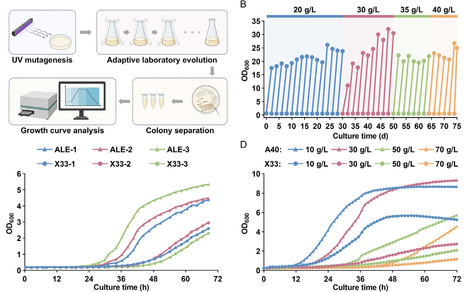
Methanol is a promising renewable C1 feedstock for sustainable single-cell protein (SCP) production. However, its inherent cytotoxicity and metabolic trade-offs between cell growth and protein synthesis remain significant bottlenecks. Here, we established an “evolutionary-rational” dual-driven paradigm to construct a high-yield Pichia pastoris chassis. Through UV mutagenesis and adaptive laboratory evolution ALE, we developed a highly tolerant strain A40, capable of growing in 70 g/L methanol. Notably, at 30 g/L methanol, A40 achieved a 3.4-fold higher maximum biomass than the wild-type. Whole-genome resequencing and reverse genetics revealed that this superior performance stems from a multi-gene synergistic network rather than a single dominant mutation. To further optimize SCP production, we rationally co-overexpressed nitrogen assimilation genes (GLN1, GDH1) and a translation elongation factor (PpeEF3) in the A40 background. This targeted metabolic engineering effectively redirected carbon flux toward protein biosynthesis. The engineered strain A40-2Ge3 achieved a peak intracellular crude protein content of 67.9% and a 51.3 g/L total titer in a 5-L bioreactor, representing a 23.1% increase over the wild-type strain. Collectively, this study provides deep insights into the synergistic mechanisms of methanol adaptation and establishes an efficient, scalable strategy for sustainable SCP production from C1 feedstocks.
|
|
Scooped by
mhryu@live.com
September 1, 11:49 AM
|
Environmental fluctuations remodel RNA modification landscapes, yet the routes that connect cue detection to writer–eraser–reader control remain dispersed across disciplines. Here, we consolidate upstream mechanisms capable of driving epitranscriptomic change and organize them by response speed. At the fastest proximal level, catalytic output can be modulated through shifts in substrate and cofactor availability, redox and ionic state, temperature, and direct chemical or metal interference with enzyme active sites, although transcriptome-wide RNA readouts may appear later. Over minutes to hours, cue-responsive signaling can reach the machinery through post-translational modification PTM, partner switching, subcellular trafficking, and stress-induced condensates that may gate access to modified transcripts. Across hours to days, regulator abundance and specificity are reshaped by transcriptional programs, translational control, and protein quality-control pathways, enabling adaptation and, in some contexts, persistence. We propose a kinetics-to-sensors approach for interpreting time-resolved epitranscriptomic datasets and prioritizing perturbations that discriminate among candidate upstream inputs. We also outline conceptual gaps and experimental practices needed to establish causal cue-to-mark chains.
|
|
Scooped by
mhryu@live.com
September 1, 11:39 AM
|
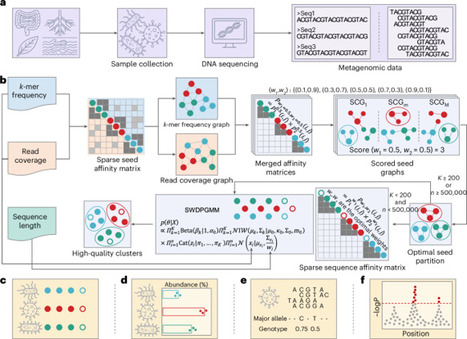
Recovering high-quality microbial genomes from metagenomic sequencing data is essential for accurate profiling and understanding microbial variation. However, existing clustering methods often suffer from limited accuracy and scalability. Here we present MetaCAT (Metagenome Clustering and Association Tool), a framework that combines recovery of microbial genomes from metagenomic data and analysis of their associations with host traits. MetaCAT incorporates a Sparse Weighted Dirichlet Process Gaussian Mixture Model (SWDPGMM) to accurately and efficiently decompose complex datasets and combines k-mer frequency with read coverage to improve genome reconstruction. It also provides a dedicated workflow for microbial single-nucleotide polymorphism identification and metagenome-wide association studies with the host. MetaCAT outperforms existing methods in both clustering accuracy and computational efficiency across diverse datasets. Using metagenomic data from colorectal cancer cohorts, it revealed previously unrecognized marker species and microbial single-nucleotide polymorphisms associated with colorectal cancer. MetaCAT provides a scalable framework for microbial community profiling and advances our understanding of host–microbe interactions. MetaCAT is a computational framework to assess host–microbiome interaction via a combination of high-accuracy and efficient microbial genome reconstruction and metagenome-wide association studies with the host physiology using metagenomics data.
|
|
Scooped by
mhryu@live.com
September 1, 10:28 AM
|
With the approval of the European Council and the European Parliament, Regulation (EU) 2026/1388 on plants obtained by certain new genomic techniques and their products was finally adopted by the European Union on 17 June 2026. This is a remarkable achievement considering that Directive 2001/18/EC, the main legislation on the environmental release of genetically modified organisms, dates back to 2001, and that the first Working Group on New Plant Breeding Techniques was established by the European Commission in 2007 with the aim of identifying legislation more appropriate to technologies developed after 2001.
|
|
Scooped by
mhryu@live.com
September 1, 9:55 AM
|
Wastewater treatment plants (WWTPs) are hotspots for the exchange of plasmids, which can spread antibiotic resistance genes. However, recovering conjugative plasmids from complex communities remains challenging because both plasmid extraction and cultivation-based approaches introduce bias. Here we show that filter mating coupled with nanopore selective sequencing (FM-NSS) can recover an ampicillin-selected, recipient-compatible fraction of conjugative plasmids from a full-scale WWTP without plasmid extraction. After depletion of reads aligning to the Escherichia coli recipient genome, FM-NSS recovered a total of 1.10 million plasmid reads. De novo assembly yielded 622 non-redundant plasmid contigs, including 441 not detected by extraction-based plasmid sequencing from the same conjugant pools. Notably, activated sludge displayed a distinct recovered plasmid profile compared with other treatment stages, which is associated with an elevated estimation of community replication rates. FM-NSS provides a practical workflow to expand the recovery of selected conjugative plasmids from complex environmental communities. Filter mating coupled with nanopore selective sequencing recovers recipient-compatible conjugative plasmids from wastewater without plasmid extraction, revealing greater plasmid diversity and stage-specific profiles than extraction-based sequencing.
|
|
Scooped by
mhryu@live.com
September 1, 1:36 AM
|
Chemically inducible gene regulatory systems, with inducible promoters as their core regulatory elements, are central to advancing synthetic biology by enabling precise, dynamic, and orthogonal control of gene expression in response to chemical signals. Recent advances have moved the field from the direct use of natural inducible promoters toward engineered regulatory systems that integrate promoter remodeling, transcription factor engineering, computational design, high-throughput screening, and direct-acting promoter screening. This review systematically outlines recent progress in engineered chemically inducible gene regulatory systems, while maintaining a particular focus on promoter-centered design, focusing on five core design principles, including orthogonality, reversible responsiveness, dose dependence, modular compatibility, and sequence-dependent structural regulation. We highlight emerging strategies such as AI-driven promoter prediction, direct-acting DNA-based switches (G-quadruplex systems), and engineered receptor pathways that expand chemical sensing beyond classical transcription factors. Furthermore, we examine cutting-edge applications in metabolic pathway optimization, precision gene therapy, biosensor development, and programmable synthetic circuits, illustrating how chemically inducible promoters enable context-aware biological control. Despite challenges related to inducer permeability, cross-talk, and scalability, future progress is anticipated through the development of trace-free inducers, AI-assisted orthogonal system design, and autonomous regulation strategies for industrial scalability. Together, these advances establish chemically inducible promoters as foundational components of next-generation synthetic biology, bridging chemistry, computation, and engineering to drive innovations in biomanufacturing, therapeutics, and intelligent cellular systems.
|
|
Scooped by
mhryu@live.com
September 1, 1:25 AM
|
The sexual life cycle represents a natural engine for promoting genetic diversity in yeast. However, harnessing it for controllable, rapid evolution in industrial yeast strains remains a big challenge. Here, we developed quantitative mating and sporulation methods for an industrial yeast Komagataella phaffii. Functional genes for its sexual life cycle were identified, and deficiency of key sporulation targets generated stable diploids with enhanced stress tolerance and recombinant protein production. A fully programmable life-cycle system was constructed, for which mating and sporulation are orthogonally controlled by different inducible signals. Leveraging this system, we developed an in situ mating-sporulation shift (iMASS) platform in liquid culture. Applications of iMASS under diverse selection pressures accelerated cell evolution, generating strains with improved robustness and protein productions. Our work proposes a paradigm that integrates rational design with controlled sexual reproduction for directed microbial evolution.
|
|
Scooped by
mhryu@live.com
September 1, 12:31 AM
|
Microbial symbiosis drives the functional and phylogenomic diversification of life on Earth yet remains underexplored because of culturing challenges. This study used machine learning (ML) to predict symbiotic lifestyles in more than a hundred thousand microbial genomes from diverse environmental metagenome samples and reference genomes. Predictions were performed using symclatron, an ML framework developed to identify genomic signatures of symbionts. Predictions were deposited in a catalog we established called Symbiont Genomes (SymGs). The results indicate that 15–23% of uncultivated microorganisms likely engage in symbiotic relationships with other organisms, categorized as host-associated or obligate intracellular lifestyles, and are present in half of all known bacterial and archaeal phyla. We also identify genomic signatures of symbiotic lifestyles, including the loss of certain metabolic functions and the differential presence of metabolic modules that may enable host-dependent living. The symclatron software and the SymGs catalog represent valuable resources for studying symbioses, potentially facilitating future mechanistic investigations and engineering of host–microorganism associations. Symbiotic relationships of microorganisms are predicted and cataloged with a machine learning tool.
|
|
Scooped by
mhryu@live.com
September 1, 12:12 AM
|
Multilayer programming of living bacterial therapeutics. Disease-associated signals, exemplified by tumor lactate, are integrated with bacterial population signals through transcriptional logic to determine whether a therapeutic program should be activated. Programmable RNA regulators subsequently control transcript degradation, translation repression and translation activation, thereby tuning the magnitude, duration and composition of therapeutic outputs. Payload-release and safety modules govern therapeutic action and termination. Transcriptional logic determines whether bacteria act, whereas RNA programming determines how they act.
|
|
Scooped by
mhryu@live.com
August 31, 11:54 PM
|
Renewed interest in phage therapy has highlighted a need to understand how bacteria subvert phage infection through antiphage defense systems. Traditionally, strategies to identify antiphage defense systems lack throughput or have limitations for bacterial species where antiphage defense systems are understudied. Herein, we developed a bioinformatic pipeline that uses a small serine recombinase to identify known and unknown antiphage defense systems. Using this approach to query reference genomes and metagenomes, we show that small serine recombinase genes are genetically linked to antiphage defense systems and serve as bait for finding these systems across diverse bacterial phyla. Using co-transcription predictions and statistical analysis of protein domain abundances, we experimentally validated our bioinformatic approach by discovering that KAP P-loop NTPases are fused to putative antiphage domains and reinforce prokaryotic Schlafen proteins as a new class of antiphage defense. Our work shows that small serine recombinases are a reliable genetic marker for the discovery of antiphage defenses across diverse bacterial phyla.
|
|
Scooped by
mhryu@live.com
August 31, 11:02 PM
|
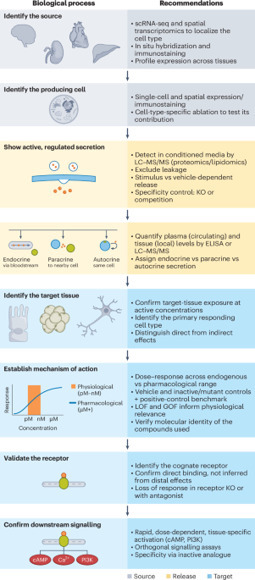
Secreted molecules are central regulators of interorgan communication and metabolic physiology. As the field has expanded rapidly, criteria for assigning molecules as bona fide secreted signals and linking them to functions have remained inconsistent. Here, we describe core concepts in secreted factors and how to study them.
|