 Your new post is loading...

|
Scooped by
mhryu@live.com
September 10, 4:21 PM
|
N- and O-glycosylation are structurally diverse post-translational modifications that affect a range of biological functions. Glycoproteomics faces substantial challenges, particularly in the analysis of O-glycans due to their diversity compared to that of N-glycans. In addition, tandem mass spectrometry data patterns exhibit variability between different fragmentation methods. Existing de novo algorithms often lack sensitivity and are limited to sceHCD fragmentation, restricting their practical application. To address these limitations, we introduce DeepGlycan, a deep-learning-based method for de novo glycopeptide sequencing that captures relationships between glycopeptide spectra and fragment ions from both N- and O-glycans. DeepGlycan achieves over 92% glycan recall and around 95% glycan precision on N-glycopeptide spectra generated using both sceHCD and EThcD. In addition, it enables O-glycan de novo sequencing without additional training. Beyond benchmarking, DeepGlycan identifies an O-glycopeptide in mouse heart tissue whose assignment is supported by exoglycosidase treatment and comparison with a synthetic standard. Protein glycosylation is difficult to analyse across glycan classes and fragmentation methods. Here, the authors present DeepGlycan, a model that predicts N- and Oglycan compositions from tandem mass spectra and supports analyses across tissues and disease datasets.
|
|
Scooped by
mhryu@live.com
September 10, 3:56 PM
|
Designing mRNA coding sequences that simultaneously optimize RNA accessibility in the translation initiation region and codon adaptation while preserving the encoded protein requires navigating a vast discrete combinatorial space. The inherently discrete nature of codon choices prevents direct application of gradient-based optimization, despite the availability of accurate deep learning predictors such as DeepRaccess for RNA accessibility prediction. We present the Input Data Differentiable Designer (ID3), a unified framework for mRNA codon optimization. ID3 treats trained models as fixed differentiable functions and optimizes input data through continuous probability distributions while preserving the encoded amino acid sequence through three constraint mechanisms. The framework shows strong performance in both accessibility optimization and joint accessibility-CAI optimization across diverse protein targets. We also provide convergence analyses from the perspective of trained model input optimization.
|
|
Scooped by
mhryu@live.com
September 10, 12:57 PM
|
Environmental shifts can cause epigenetic modifications in corals associated with changes in gene expression and physiology, although it remains unclear if associated bacteria can also induce such changes. Here, we inoculate nubbins of the coral Pocillopora verrucosa with an opportunistic pathogen, Vibrio coralliilyticus, and/or a coral probiotic, Cobetia sp., and subject the nubbins to heat stress. We show that pathogen exposure leads to distinct DNA methylation changes compared to the control, probiotic, and co-inoculation groups. We also confirm that DNA methylation broadly correlates with coral gene expression; however, individual correlations are restricted to a subset of genes. We then highlight genes altered by pathogen inoculation that show similar responses in their expression and methylation. Notably, coral probiotic exposure mitigates specific epigenetic changes caused by pathogen inoculation, which correlates with increased stress resilience and higher coral survival rates. Although many aspects remain to be resolved, evidence that bacteria alter coral epigenomes may help clarify the role of microbiome interactions in coral resilience. Pocillopora verrucosa corals were inoculated with a bacterial pathogen and/or a coral probiotic, then subjected to heat stress. Pathogen inoculation induced epigenetic and gene expression changes that were mitigated by probiotic co-inoculation.
|
|
Scooped by
mhryu@live.com
September 10, 12:09 PM
|
Improving nitrogen use efficiency (NUE) is pivotal for sustainable agriculture but is limited by spatiotemporal mismatches between soil N supply and crop N demand. Here, we show that the rice circadian clock component Nhd1 coordinates rhizosphere microbial activity with plant diurnal N uptake. Nhd1 drives a rhythmic root exudation program: quercetin 3-gentiobioside peaks during the day against a constitutive baseline of baimaside secretion, both of which upregulate core microbial N-cycling genes to boost ammonium bioavailability. This Nhd1-orchestrated exudation rhythm aligns microbial N turnover with peak plant N demand. A synchronized microbial community engineered to match this diurnal N release pattern increased grain yield and NUE in field trials, with far greater benefits in cultivars harboring weak versus strong Nhd1 alleles. Our work uncovers a mechanism by which the plant circadian clock directly coordinates rhizosphere microbial functions to optimize N acquisition, thus providing a tractable strategy for sustainable crop production.
|
|
Scooped by
mhryu@live.com
September 10, 11:18 AM
|
Viral lysis is a major driver of phytoplankton mortality and a key source of dissolved organic matter in the ocean, yet quantitative and taxon-resolved measurements of this process remain limited for eukaryotic plankton. Here, we demonstrate that cell-free ribosomal RNA (rRNA) dissolved in the extracellular medium serves as a quantitative proxy for viral lysis in microeukaryotes by combining laboratory infection experiments with a rate-based modeling framework. We investigated two host–virus systems: the diatom Chaetoceros tenuissimus infected by a single-stranded RNA virus (CtenRNAV) and the raphidophyte Heterosigma akashiwo infected by a large double-stranded DNA virus (HaV). By explicitly accounting for cell-free rRNA degradation, we quantified a proxy for cell lysis rate from cell-free 18S rRNA dynamics and observed up to 46- and 302-fold increases in cell-normalized lysis rates under viral infection. In C. tenuissimus, peak lysis preceded the decline in cell abundance, demonstrating that substantial viral lysis occurs while populations are still proliferating. In contrast, H. akashiwo exhibited elevated lysis in both early and late infection phases, implying that a fraction of host cells undergoes rapid, nonproductive mortality prior to viral replication, in addition to canonical lytic events. Our study provides the first experimental validation of cell-free rRNA as a quantitative marker of lytic mortality in microeukaryotes, offering a scalable approach for estimating taxon-specific mortality in natural plankton communities.
|
|
Scooped by
mhryu@live.com
September 10, 12:57 AM
|
Gene regulatory networks (GRNs) govern many cell processes. While multistability and oscillations are common GRN dynamics, they are typically studied and engineered in isolation. Here, we challenge this separation using the AC-DC circuit, a minimal three-gene network that merges the classical toggle switch and repressilator. Using a thermodynamic formalism and Bayesian inference, we show that a single-inducer version of the circuit displays diverse multifunctional dynamics, including coexistence of oscillations and multistability. We explore robustness, classify emergent behaviors, and analyze critical slowing down. Remarkably, the AC-DC circuit can produce more than thirty topologically distinct bifurcation diagrams, results that challenge the classical view that network topology rigidly constrains dynamical outcomes. This flexibility enables synthetic capabilities coupling hysteresis with oscillations, criticality, and reversibility. By uncovering the potential of minimal genetic circuits and outlining design principles for their implementation, this work opens directions for harnessing emergent complexity using the basic building blocks of life.
|
|
Scooped by
mhryu@live.com
September 9, 6:00 PM
|
Nanobodies (NB) are compact single-domain antibody fragments with substantial diagnostic and therapeutic potential, but scalable microbial production under controlled bioreactor conditions remains insufficiently characterized. In this study a high-cell-density cultivation (HCDC) fed-batch process for an anti-human CD45 NB in E. coli was established and evaluated how process parameters, host background, and subcellular targeting (cytoplasmic vs. periplasmic) affect yield and product quality including correct disulfide bond formation. Using a two-stage design-of-experiments (DoE) strategy in 2 L stirred-tank bioreactors, OD600nm at induction and post-induction temperature were identified as the main process variables controlling the post-purification nanobody concentration, whereas inducer concentration had no relevant effect within the tested range. Late induction at OD600nm 125–150 combined with production temperatures around 21–22.5 °C defined a robust operating window and yielded more than 2.5 g L−1 purified nanobody after Strep-tag affinity chromatography. Benchmarking of five host strain–plasmid combinations under standardized HCDC conditions further increased NB yield indicating that production performance was directly governed by the combined host background and expression architecture. While E. coli NEBExpress® with periplasmic SPPelB targeting reached around 2.4 g L−1 anti-hCD45 NB and the highest volumetric productivity (0.122 g L−1 h−1), E. coli SHuffle® T7 Express produced 2.2 g L−1 anti-hCD45 NB intracellularly. Nanobody-quality analysis revealed a pronounced difference between production routes. NB preparations obtained from periplasmic targeting constructs formed thermally uniform species with single nano differential scanning fluorimetry (DSF) unfolding transitions at 73.27–74.05 °C, whereas cytoplasmic derived preparations showed biphasic unfolding profiles with lower first transitions at 51.62–55.31 °C and second transitions at 68.30–71.53 °C indicating a higher thermal stability and also folding uniformity for secreted anti-hCD45 NB. Finally, flow cytometry confirmed functional binding of all tested anti-hCD45 NB to CD45-positive Jurkat cells. High-cell-density fed-batch cultivations of E. coli can reach > 2.5 g L−1 production of functional anti-CD45 nanobodies when induction timing, production temperature, host strain genetics, and subcellular location of the final product are aligned. The highest yield, most uniform, and thermally stable anti-hCD45 NB preparation was obtained with signal-peptide-mediated periplasmic targeting. Graphical Abstract
|
|
Scooped by
mhryu@live.com
September 9, 5:42 PM
|
Microbial electrochemical technologies (METs) are emerging with innovative applications in various fields by harnessing the combined action of electrodes and microbes. What if METs could be the key to circularity in wastewater treatment? What if METs could be employed to convert electricity and CO2, or waste, into valuable organics? What if new bioinspired materials could be produced through METs? What if METs could be used as smart bio-based sensors? We provide our vision for the future of METs in four sectors: water treatment, industrial biotechnology, electronics, and biosensors. We showcase why and how METs could advance or replace state-of-the-art technologies and discuss the challenges that must be overcome to make METs part of an electrified future powered by microbes.
|
|
Scooped by
mhryu@live.com
September 9, 5:28 PM
|
Microbial communities often maintain ecosystem functions despite environmental fluctuations and compositional turnover. This robustness is frequently attributed to functions being encoded and provided by multiple members of the community, a phenomenon referred to as functional redundancy. Yet functional redundancy does not by itself explain whether a function will be maintained after a perturbation. A central challenge is therefore to understand when such functional overlap among taxa can translate into compensation and functional robustness. Here, we argue that addressing this challenge requires moving beyond asking whether redundancy is present to asking under which ecological conditions redundant providers are maintained and can buffer function. This requires focusing on clearly defined functions, identifying the taxa that provide them, and understanding the processes that determine whether these providers persist, are lost, or are replaced under changing conditions. From this perspective, the potential for redundancy to support functional robustness depends on whether providers differ in their responses to environmental perturbations, avoid coupled loss through interaction-network effects, and are maintained over relevant timescales through coexistence, turnover, or immigration. These conditions can be examined through the lens of trait-based ecology, interaction-network theory, and coexistence theory. They are jointly shaped by how a focal function is connected to trait distributions and species interactions, including resource competition. As a result, the relationship between functional redundancy and microbial community dynamics is inherently function-specific. This perspective shifts the focus from quantifying redundancy alone to testing when redundant providers can actually persist, compensate, and realize functions under change.
|
|
Scooped by
mhryu@live.com
September 9, 4:30 PM
|
The type VI secretion system (T6SS) is a contractile nanomachine used by Gram-negative bacteria to deliver effector proteins into target cells, contributing to both interbacterial competition and pathogenesis. Although T6SS gene clusters are present in recently isolated commensal and pathogenic E. coli strains, they are absent from classical laboratory strains that have been propagated for decades in pure cultures, suggesting that T6SS can be lost in the absence of competition. Here, we combined experimental evolution with whole-genome sequencing to track the fate of the enteroaggregative E. coli (EAEC) Sci1 T6SS during competition with either T6SS-susceptible or T6SS-immune bacteria. After ∼640 generations, T6SS activity was largely maintained during competition with T6SS-susceptible bacteria, whereas ∼90% of clones evolved with T6SS-immune bacteria lost or attenuated T6SS activity through diverse mutations within the sci1 promoter, essential T6SS structural genes, or the rfaH transcriptional antiterminator. We identified two RfaH-binding ops elements within the sci1 cluster, revealing antitermination as a regulatory element of EAEC T6SS transcription, which is conserved among Enterobacteriaceae. Our findings highlight how experimental evolution can reveal the selective forces shaping T6SS maintenance and identify new regulatory components controlling its activity.
|
|
Scooped by
mhryu@live.com
September 9, 1:42 PM
|
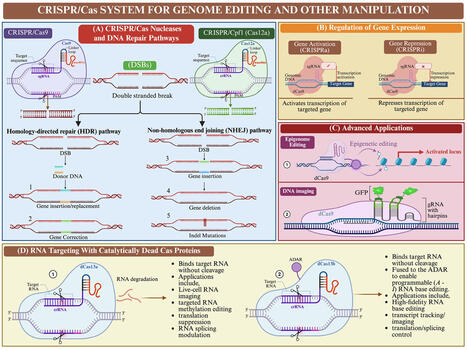
Developing climate-smart crops with enhanced crop productivity, nutritional quality, resistance to biological and environmental stressors is vital for global food security. While hybrid breeding forms the cornerstone of modern crop improvement, conventional breeding approaches are limited by genetic barriers and prolonged breeding cycles. CRISPR–Cas based genome editing has revolutionized plant biology by allowing precise, efficient, and multiplex genetic modifications. This review provides a comprehensive synthesis of a recent advances in CRISPR–Cas technologies and their strategic applications in crop genetics and hybrid breeding. We summarize major genome-editing strategies, including gene knock-out, base editing (BE), knock-in, gene replacement, epigenome editing, and transcriptional regulation. Furthermore, we contrast stable, transient, and DNA-free delivery systems, highlighting ribonucleoprotein (RNP)-mediated delivery for minimizing off-target effects and avoiding transgene integration. We showcase how these technologies accelerate hybrid breeding by engineering male sterility systems, fixing heterosis, and generating high-throughput mutant libraries for trait discovery. Finally, we synthesize major bottlenecks in tissue culture-independent transformation and delivery systems, while outlining how emerging paradigms like de novo domestication and synthetic biology will shape the future of climate-resilient agriculture.
|
|
Scooped by
mhryu@live.com
September 9, 1:23 PM
|
Noncanonical redox cofactors (NRCs) are low-cost alternatives to the natural redox cofactors nicotinamide adenine dinucleotide (NAD+) and nicotinamide adenine dinucleotide phosphate (NADP+) for biomanufacturing, offering exquisite electron-delivery control, yet their adoption is limited by the scarcity of compatible enzymes. Screening the aldehyde dehydrogenase (ALDH) family, we identified a conserved RH/QxxR motif that enables widespread NRC activity among natural enzymes. Bos taurus ALDH3a1 exhibits unprecedented turnover with nicotinamide mononucleotide (NMN+), with kcat values exceeding NAD+ and surpassing most engineered NRC-active enzymes by 10–105-fold. Structural analyses reveal that this motif reinforces cofactor positioning and preorganizes the active site independently of the NAD+ adenosine monophosphate moiety. This motif supports activity across simple-synthetic NRCs such as 1-(2-carbamoylmethyl)nicotinamide and, when introduced into diverse ALDH scaffolds, enhances NMN+ activity up to 60-fold. These findings elucidate nature’s solution to engineering NRC-active enzymes and offer a blueprint to mine latent evolutionary plasticity in natural enzymes that serve as superior engineering starting points. Noncanonical redox cofactors (NRCs) are promising alternatives to nicotinamide adenine dinucleotide (phosphate) (NAD(P)+) for biomanufacturing because of expanded capabilities and lower cost; however, compatible enzymes with higher activity using NRCs and specificity to NRCs over NAD(P)+ are lacking. Now, a sequence motif in the aldehyde dehydrogenase (ALDH) family is identified that supports enhanced activity across multiple NRCs and is transferable to diverse ALDH scaffolds.
|
|
Scooped by
mhryu@live.com
September 9, 12:48 PM
|
Large language model (LLM) agents have shown promise in driving scientific discovery, but their effectiveness in complex, real-world biological problems remains underexplored. We ask whether a general-purpose LLM agent can drive semi-autonomous development of a model for a genuinely hard biological problem, RNA 3D structure prediction. We designed a development loop where, under a fixed budget and with human supervision, the agent iteratively proposed, implemented, trained, and evaluated model changes. Over 297 iterations, the model evolved from a randomly-initialised baseline to QuickFold, an 8.9M-parameter folding trunk that matches the strongest open-source baselines (RhoFold+, NuFold) on lDDT and TM-score within noise on a held-out test set at a fraction of their inference cost. We frame this less as a new predictor than as a case study in feedback-driven, agent-led model development.
|
|
|
Scooped by
mhryu@live.com
September 10, 4:08 PM
|
Jiang et al. show that the type I-A CRISPR system of Saccharolobus islandicus recruits Cas3 only after target recognition. Their study reveals different Cas3 activation mechanisms and a dual role of ATP in target degradation and collateral cleavage.
|
|
Scooped by
mhryu@live.com
September 10, 3:41 PM
|
The gut microbiota contributes to variation in susceptibility to enteric infection, but the underlying mechanisms remain poorly defined. Here, we leverage a natural model of disease resistance comparing Salmonella-resistant indigenous Tibetan chickens with susceptible commercial broilers to uncover conserved mechanisms of colonization resistance relevant to human health. We find that enrichment of Bacteroides, particularly B. salanitronis, is associated with resistance, and supplementation with B. salanitronis significantly reduces S. Enteritidis colonization in susceptible hosts. Mechanistically, Bacteroides species competitively deplete N-acetyl-D-glucosamine (GlcNAc), a growth-limiting carbohydrate for S. Enteritidis, through highly efficient glucosamine-6-phosphate deaminase (GNPDA) activity. Enzymatic assays, structural modeling, and mutational analysis identify Ile138 as critical for the catalytic advantage of Bacteroides GNPDA over S. Enteritidis GNPDA. Replacing this residue abolishes the competitive advantage, confirming its role in nutrient-mediated colonization resistance. These findings show how genetic variation in microbial nutrient-metabolizing enzymes shapes interspecies competition and suggests microbiome-based strategies for controlling enteric pathogens.
|
|
Scooped by
mhryu@live.com
September 10, 12:47 PM
|
Biofilm-based manufacturing offers superior robustness, yet the spatial logic governing its metabolic resilience remains a “black box,” hindering rational strain engineering. Here, we present a spatiotemporal transcriptomic map of Saccharomyces cerevisiae biofilms under industrial conditions. We identify a fundamental “reproduction-metabolism decoupling” strategy: the biofilm functions as a self-organizing system where outer cells act as a “metabolic shield”—activating retrograde signaling to endure stress and maximize glycolysis—while inner cells serve as a “protected nursery” for rapid proliferation. This spatial division of labor explains biofilm stability and provides a genetic blueprint for spatially programming microbial factories for next-generation biomanufacturing.
|
|
Scooped by
mhryu@live.com
September 10, 11:44 AM
|
Autonomous cell-based control of heterologous gene expression can simplify batch-culture bioprocessing by eliminating external monitoring and extrinsic control of culture conditions. Existing approaches use auto-induction media, synthetic cell-cell communication systems, or application-specific biosensors. A simpler, resource-efficient, and general-purpose expression control system responsive to common changes during batch culture would be highly valuable. We used native E. coli promoters, including PhdeA, PdpS, PfumA, PrpoA, PrpoS, PgadA, and PyiaG, and recombinase-based switches to repurpose endogenous transcription signals for control of heterologous gene expression. Specifically, natural changes, covering 1–2 orders of magnitude across growth phases, in transcription from endogenous promoters result in recombinase expression at the exponential-to-stationary phase transition. So-expressed recombinases invert a constitutive promoter regulating expression of arbitrary heterologous genes amplifying the endogenous transcriptional input signal by more than 10-fold. We realized reversible and single-use switching with reduced static and dynamic cell-to-cell variation and overall expression amplification. We used “off-the-shelf” genetic parts and abstraction-based composition frameworks to realize reliable forward engineering of our synthetic genetic systems. We engineered autonomous control systems for regulating heterologous gene expression. Our system uses generic endogenous promoters to sense and control heterologous expression during growth-phase transitions. Our system does not require specialized auto-induction media, production or activation of quorum sensing, or the development of application-specific biosensors. Cells programmed to control themselves could simplify existing bioprocess operations and enable the development of more powerful synthetic genetic systems. Modern biotechnology uses engineered microbes to manufacture molecules that are incorporated into medicines, flavors, fuels, and other materials. Making molecules inside cells requires enzymes, whose expression levels and timing need to be optimized to maximize final product yields. Many engineered microbes use enzymes that should only be expressed during the later stages of cell growth to avoid overconsumption of resources or accumulation of toxic intermediates. Here, we develop simple genetic devices that enable engineered cells to control themselves, automatically switching on or off enzyme expression during batch cell culture. Unlike existing approaches, our devices do not require specialized growth media or wasteful synthesis of cell-cell signaling molecule.
|
|
Scooped by
mhryu@live.com
September 10, 1:06 AM
|
Insertion and excision of genomic islands (GIs), chromosomally-integrated mobile genetic elements (MGEs), are major sources of microbial genome plasticity and can impact gene expression and phenotype of the host organism. GI mobilization also influences microbial communities beyond the host organism as GI excision generates MGEs that can be transferred between community members through horizontal gene transfer and induction of prophages can kill host populations, which impacts community structure. Established computational methods now enable precise GI mapping in genomes, as well as highly sensitive detection of GI excision from deep-genome sequencing data. We applied these approaches to metagenomic datasets from a defined soil microbial consortium grown on glass beads under hydration stress and compared GI activity with that observed in monoculture. Under these environmentally structured community growth conditions, GI excision was more abundant and involved a broader range of host species and GI types than under isolate growth conditions. Combined analysis with metatranscriptomic and metaproteomic data identified patterns of GI gene expression associated with induction. Three GIs showed particularly high excision together with strong transcription, numerous detected proteins, and evidence of association with potential transfer particles, including phages or vesicles. These results indicate that isolate studies can miss a substantial environmentally responsive layer of GI activity. More broadly, this work establishes a framework for mining existing community multi-omic datasets to quantify dynamic genome restructuring, identify active but poorly understood GIs, and generate mechanistic hypotheses about the processes that shape microbial genome plasticity and gene flow.
|
|
Scooped by
mhryu@live.com
September 9, 10:30 PM
|
When used as antibacterial agents, Peptide Nucleic Acid (PNAs) are generally designed to base-pair with complementary sequences of an essential mRNA and block translation initiation. Although bacterial susceptibility to peptide-conjugated PNAs is strongly influenced by cellular uptake, intracellular determinants of PNA activity remain poorly understood. Here, we identify a ribosome-centered mechanism of resistance to antibacterial PNAs in E. coli. The rpsLI82N mutation increased the minimum inhibitory concentration (MIC) of an argininerich cell penetrating peptide-conjugated PNA targeting acpP eightfold. The effect of rpsLI82N was additive with mutations that reduce PNA entry into bacterial cells PNA resistance conferred by rpsLI82N was independent of carrier peptide and also applied when naked PNA was tested in an envelope-permeable strain. Similarly, rpsLI82N-associated resistance was independent of the targeted mRNA, as it applied to PNAs targeting either the Shine-Dalgarno or AUG region of acpP or ftsZ mRNA. Several additional substitutions within residues 74-82 of ribosomal protein uS12 conferred PNA resistance. Because resistance occurred among both error-restrictive and ribosomal-ambiguity alleles, it did not correlate with the classical decoding-fidelity phenotypes measured by stop-codon readthrough. Proteomic analysis revealed widespread changes in proteins under post-transcriptional control in rpsLI82N cells. The effect on selected sRNA-regulated genes correlated with the location of the sRNA-binding site: repression was less efficient when binding overlapped the translation-initiation region whereas it was more efficient when regulatory sites were located outside this region. In parallel, rpsLI82N increased the 30S and 50S ribosomal fractions and reduced the 70S fraction. Both loss of KsgA, which disrupts 30S maturation, and treatment with kasugamycin, which perturbs translation initiation, increased PNA resistance. We propose that rpsLI82N alters uS12-dependent 30S assembly and initiation-complex dynamics, thereby changing the effective occupancy of mRNA translation-initiation regions. This limits access of PNAs and sRNAs to overlapping sequences, resulting in PNA resistance and reduced sRNA-mediated repression. Conversely, a longer-lived 30S initiation state may facilitate sRNA binding to flanking regions and strengthen repression. These findings identify the ribosome-mRNA interface as an intracellular determinant of antibacterial PNA susceptibility.
|
|
Scooped by
mhryu@live.com
September 9, 5:52 PM
|
Toxin-antitoxin systems (TAs) are widespread in bacterial genomes. Yet, their integration, persistence, and impact in chromosome dynamics remain unclear. Here, we identified 80 type II TAs in the single chromosome of Photorhabdus laumondii TT01, 50 of which were experimentally validated. Comparative analysis across the Photorhabdus genus revealed a highly heterogeneous distribution, with TAs frequently clustering within discrete genomic regions, either alone or associated with cointegrate-forming transposases and integrases. TAs rarely clustered with other putative defense systems and are preferentially associated with different types of recombinases, suggesting distinct pathways of acquisition for the two types of functions. Functional analyses showed that most validated TAs display addictive properties and stabilize plasmids. These addictive TAs are preferentially located in genomic regions characterized by high gene turnover, consistent with recent acquisition events. Despite their plasmid-stabilizing capacity, TAs do not promote long-term conservation of their immediate chromosomal neighborhoods. Instead, we observed frequent TA loss, either through complete deletion or toxin pseudogenization, indicating relaxed selection for their persistence in bacterial lineages. We propose a stepwise model for TA evolution in bacterial chromosomes: initial acquisition mediated by mobile genetic elements, preferential integration into permissive genomic regions, subsequent genetic streamlining of linked loci, and progressive gene loss. The short-lasting linkage between TAs and their genomic neighborhoods is consistent with the view that TA modules can behave as autonomous, selfish genetic elements.
|
|
Scooped by
mhryu@live.com
September 9, 5:40 PM
|
Lactobacilli have long been regarded as promising probiotic bacteria due to their safety profile, host compatibility, and beneficial roles in modulating human health. However, the therapeutic efficacy of wild-type probiotics remains constrained by limited target specificity, lack of control over their activity, and variability in clinical responses. Recent advances in synthetic biology have enabled the possibility of overcoming these constraints through precise engineering of bacterial functions, such as therapeutics production. Despite these advances, significant challenges remain in engineering lactobacilli, including limited genetic toolkits, species- and strain-dependent variability, and uncertainty regarding the stability and safety of engineered strains. This review discusses the current landscape of engineering lactobacilli for therapeutic applications, with particular emphasis on candidates undergoing clinical evaluation. Furthermore, it outlines key technical hurdles to overcome and suggests potential solutions to accelerate their translation into clinically effective and reliable microbial therapeutics.
|
|
Scooped by
mhryu@live.com
September 9, 4:37 PM
|
Genomic language models have emerged as a powerful approach for learning genome-wide functional constraints directly from DNA sequences. However, standard genomic language models adapted from natural language processing often require large model sizes and computational resources, yet still fall short of classical evolutionary models in predictive tasks. Here we introduce a genomic pretrained network with species tree and alignment representations (GPN-Star), which is a biologically grounded genomic language model featuring a phylogeny-aware architecture that leverages whole-genome alignments and species trees to model evolutionary relationships explicitly. Trained on alignments spanning vertebrate, mammal and primate evolutionary timescales, GPN-Star achieves state-of-the-art performance across a wide range of variant effect prediction tasks in both coding and non-coding regions of the human genome. Analyses across timescales show task-dependent advantages of modelling more recent versus deeper evolution. To demonstrate its potential to advance human genetics, we show that GPN-Star substantially outperforms previous methods in prioritizing pathogenic and fine-mapped genome-wide association study variants, yields strong enrichments of complex trait heritability and improves power in rare variant association testing5. Extending beyond humans, we train GPN-Star for five model organisms—Mus musculus, Gallus gallus, Drosophila melanogaster, Caenorhabditis elegans and Arabidopsis thaliana—demonstrating the robustness and generalizability of the framework. Taken together, these results position GPN-Star as a scalable, powerful and flexible tool for genome interpretation, well suited to leverage the growing abundance of comparative genomics data. GPN-Star, a genomic language model with a phylogeny-aware architecture for whole-genome alignment data, is shown to be a scalable and flexible tool for genetic variant effect prediction across species.
|
|
Scooped by
mhryu@live.com
September 9, 1:43 PM
|
Microorganisms that deliver treatments to tumors could make chemotherapy, radiotherapy and immunotherapy safer and more effective. According to a survey Danino conducted last year2, 16 firms are developing cancer therapies that use bacteria, including Salspera, a biotechnology company in Cambridge, Massachusetts, co-founded by Saltzman. Nine were running clinical trials at the time. Salspera’s treatment — called Saltikva — is one of the furthest along in development.
|
|
Scooped by
mhryu@live.com
September 9, 1:28 PM
|
Long-read RNA sequencing resolves full-length transcript structures, complex splicing, alternative boundaries, transcriptional overlaps, and multigenic isoforms without short-read reconstruction. Current approaches include PacBio HiFi and Kinnex cDNA sequencing, Oxford Nanopore cDNA sequencing, and direct RNA sequencing of native molecules. We critically review platform-specific trade-offs, analytical workflows, sequencing-depth requirements, and biomedical applications, and provide practical guidance for robust transcript discovery, quantification, rare-disease interpretation, viral transcriptomics, and single-cell or spatial isoform analysis.
|
|
Scooped by
mhryu@live.com
September 9, 12:56 PM
|
The persistent conflict between rice and Xanthomonas oryzae pv. oryzae (Xoo), the causal agent of bacterial blight, exemplifies a dynamic genetic arms race in agriculture. The cyclical deployment and erosion of major resistance (R) genes highlight the high adaptive potential of Xoo and the need for strategies that are durable rather than absolute. This review synthesizes a paradigm shift from reactive, single R-gene deployment toward proactive engineering of evolution-resilient resistance. We explore the molecular-genetic basis of Xoo adaptability, including TAL effector diversification, non-TAL virulence functions, genome variation, and immune suppression mechanisms. In response, we propose a framework for durable disease management with three connected components: precision disarmament through editing of susceptibility-gene effector-binding elements and executor/decoy designs; smart induction through targeted delivery and immune priming; and ecological fortification through protective microbiomes. We also discuss the limits, trade-offs, and field-validation requirements of these approaches. Integrating frontier technologies with evolutionary genetics, predictive genomics, and pathogen population dynamics can help develop rice varieties and deployment systems that are more difficult for Xoo populations to overcome.
|









ptm