Your new post is loading...

|
Scooped by
mhryu@live.com
September 30, 1:24 PM
|
Surface layers (S-layers) are paracrystalline protein lattices that form the outermost boundary of many archaeal and bacterial cells. Interest in S-layer biology has grown rapidly in recent years, driven by advances in structural and bioinformatic studies that have revealed new insights into lattice organization and function. In contrast, the mechanisms that anchor these lattices to the underlying cell envelope during growth, division, and cellular morphogenesis remain comparatively understudied. Because anchoring is dictated by the chemistry and architecture of the underlying cell envelope, we propose that S-layer anchoring strategies provide valuable insights into prokaryotic evolution. Based on recent experimental work and bioinformatic predictions, we summarize the major anchoring mechanisms found across archaea and bacteria. Our analysis reveals a recurring feature of S-layers: the arrangement of lattice-forming and envelope-proximal anchoring regions, frequently connected by linkers, generates an enclosed space near the underlying cell envelope, with an enigmatic biological role. We discuss possible contributions of this enclosed ‘epiplasmic’ space to mechanical scaffolding, chemical compartmentalization, and substrate harvesting.
|
|
Scooped by
mhryu@live.com
September 30, 1:23 PM
|
Diet shapes the composition of the gut microbiota; however, the specific effects of distinct food groups on microbiome dynamics are unclear, particularly in circumstances of extreme perturbation. Here we evaluated the relationship between diet and intestinal microbiome dynamics by precisely tracking 9,419 meals consumed by 173 patients who were hospitalized for haematopoietic cell transplantation and analyzing subsequent microbiome changes. Bayesian inference applied to data from 158 patients with paired longitudinal microbiome samples revealed that the intake of sweets and sugars during antibiotic exposure predicted exacerbated microbial dysbiosis, manifesting as lowered α-diversity and greater expansion of the pathobiont Enterococcus. Experiments in mice also showed that sucrose supplementation increased and prolonged antibiotic-induced Enterococcus expansion. These data suggest that avoiding a diet rich in simple sugars during antibiotic treatment may mitigate microbiota disruption. Further studies in independent cohorts will offer opportunities to generalize these findings and evaluate microbiota-sparing interventions. Avoiding a diet rich in simple sugars during treatment with antibiotics may mitigate microbiota disruption.
|
|
Scooped by
mhryu@live.com
September 30, 12:47 PM
|
The increasing demands of synthetic biology have shifted the central bottleneck from DNA assembly to DNA writing. As engineered systems grow in complexity, progress increasingly depends on the ability to write, test, and rewrite regulatory DNA to support fast design−build−test−learn cycles and precise control of gene expression. In this regard, enzymatic DNA synthesis offers a promising route toward next-generation DNA writing technologies for on-demand benchtop implementation. In particular, terminal deoxynucleotidyl transferase (TdT), a template-independent DNA polymerase, provides a unique mechanism for generating sequence diversity without predefined templates. Here, we establish a programmable TdT-based enzymatic platform for the in-house synthesis of random-sequence oligonucleotide libraries with tunable base composition. Systematic kinetic characterization of TdT revealed a substrate-dependent bias, which we mitigated through optimization of divalent cofactors and dNTP input ratios, enabling user-defined nucleotide distributions. Using this platform, we expanded and screened composition-controlled libraries of promoters, 5′-UTRs, and transcription terminators in Escherichia coli, identifying functional bioparts spanning wide dynamic ranges of transcriptional and translational activity. Integration of TdT-synthesized regulatory libraries into a streamlined enzymatic workflow enabled rapid cloning and screening within hours. As a proof of concept, targeted promoter diversification of a lycopene biosynthetic operon yielded a 124.7-fold range in production and identified variants achieving up to 1.43-fold higher titers than those of the parental strain. These results establish TdT-mediated enzymatic DNA synthesis as a controllable DNA writing modality for rapid regulatory-part engineering in synthetic biology and metabolic engineering.
|
|
Scooped by
mhryu@live.com
September 30, 12:21 PM
|
Cell-penetrating peptides (CPPs) and quorum-sensing peptides (QSPs) represent peptide functions related to intracellular delivery and microbial signaling. Sequence-based prediction remains difficult because benchmark embeddings often show uneven local support, overlapping class regions, and high dimensionality. A single classifier may therefore miss either local or global structure. We propose Stack-DCL, an out-of-fold stacking framework for CPP and QSP classification with fixed UniRep embeddings. Stack-DCL combines a density-aware weighted random forest, a cosine-neighborhood model, and an L2-regularized logistic regression classifier. The meta-learner is also logistic regression and fuses only positive-class probabilities generated from held-out folds, which reduces fusion-stage leakage. On benchmark train/test splits with five-fold cross-validation on training data and final held-out testing, Stack-DCL achieves independent-test AUC values of 0.980 for QSP and 0.974 for CPP. Ablation results indicate that the three branches capture local support, directional neighborhood similarity, and global linear separability as different representation-level signals. These results support Stack-DCL as a benchmark-level stacking design for the two evaluated peptide tasks.
|
|
Scooped by
mhryu@live.com
September 30, 11:35 AM
|
Polyethylene terephthalate (PET) is a widely used synthetic polymer that persists in the environment because of its resistance to biological degradation. Although engineered PET hydrolases have shown improved catalytic performance, translating these advances into effective whole-cell degradation remains challenging because cells and enzymes must interact with an insoluble polymer surface. We developed a synthetic bacterial consortium to investigate early PET surface colonization and biofilm formation. The system combined E. coli Nissle 1917 engineered for PETase expression with a biofilm-forming Pseudomonas putida strain evolved for growth on ethylene glycol. PET film incubation experiments, microscopy, biofilm quantification, and surface characterization were used to evaluate how extracellular enzyme targeting, consortium composition, and PET surface roughness influence microbial attachment. Co-culture experiments with PET films showed that surface attachment was strongly influenced by extracellular enzyme targeting and consortium composition. The strongest and most persistent attachment was observed when extracellular enzyme availability was paired with the biofilm-forming partner. Quantitative analysis showed an approximately 1.5-fold increase in biofilm formation in the engineered consortium relative to the control. In addition, mechanical roughening of PET surfaces further increased biofilm formation, indicating that surface accessibility is an important determinant of microbial attachment. Our findings show that PETase secretion, consortium composition, and polymer surface roughness may collectively influence biofilm formation on PET and could therefore be considered when designing future whole-cell PET bioprocessing systems.
|
|
Scooped by
mhryu@live.com
September 30, 11:10 AM
|
This study examines how DNA methylation by both phase-variable and canonical restriction–modification (RM) systems contributes to bacterial gene regulation, using the SpnD39III system of Streptococcus pneumoniae and the prototypical EcoKI system of E. coli. RNA-seq analysis of pneumococcal phase-locked strains expressing individual SpnD39III specificities revealed widespread but promoter-context-dependent differential gene expression associated with methylation. Targeted luciferase reporter assays confirmed that methylation of specific intergenic sites can either activate or repress transcription, validating the transcriptomic observations. Genetic dissection demonstrated that these regulatory effects depend on methyltransferase activity mediated by HsdM and are independent of restriction endonuclease function. These methylation-dependent responses were conserved across pneumococcal strain backgrounds. Mechanistic analyses revealed that methylation alters DNA topology, with methylated plasmids exhibiting reduced negative supercoiling. Consistent with a topology-driven mechanism, modulation of the nucleoid-associated protein HlpA (HU) reshaped promoter responses in a manner dependent on methylation state and promoter topological responsiveness. Extension of these analyses to E. coli showed analogous methylation-dependent regulation by EcoKI, supported by reporter assays, quantitative polymerase chain reaction, RNA-seq, and methylome profiling. Together, these findings demonstrate that RM system-mediated DNA methylation functions as an epigenetic regulator across bacterial species by altering local DNA topology and promoter accessibility, thereby dynamically shaping bacterial gene regulatory networks.
|
|
Scooped by
mhryu@live.com
September 30, 1:32 AM
|
Determining the biological function of bacterial proteins remains a central challenge in microbiology. We previously developed Fusion, a reference-free scheme that clustered the tens of millions of known, unique, bacterial proteins into about four hundred thousand groups of functionally similar proteins, i.e. functions. For any newly identified proteins, Fusion function assignment could be performed using function-aware sequence alignment to each function's representatives. However, Fusion functions lack human-readable descriptions of their functionality. Here, we leverage large language models (LLMs) to synthesize scattered, partial annotations of functions of individual proteins into coherent English-language descriptions for ~100,000 clusters, i.e. a quarter of all Fusion functions. From these descriptions, we extract Gene Ontology (GO) terms and Enzyme Commission (EC) numbers. We validate these against annotations inferred from UniProtKB/Swiss-Prot. These annotations immediately expand functional coverage for both genome and microbiome -level analyses. For organisms in FusionDB, we annotate 50% more proteins than alignment to Swiss-Prot alone. For other bacteria, the gain is smaller but still reaches 30% for some organisms. For microbiomes, annotation coverage increases nearly ten-fold. Our work thus enables the analysis of microbial "transparent matter," i.e. functions already described in earlier research that have not yet made it into usable annotations. Our annotated Fusion function database is freely available at https://services.bromberglab.org/fusion2ai and as a reference DB for metagenome annotation https://services.bromberglab.org/mifaser
|
|
Scooped by
mhryu@live.com
September 30, 1:07 AM
|
New approaches to induce expression of microbial secondary metabolite biosynthetic pathways can accelerate natural product discovery. Here, we present a high-throughput media screening (HTMS) workflow that builds on classical fermentation optimization strategies in which small changes in media composition alter secondary metabolite production. Rather than relying on predefined media recipes, HTMS uses robotic liquid handling to systematically generate and test combinatorial mixtures of commonly used media components, enabling exploration of hundreds of previously untested growth conditions. To validate the approach, we applied HTMS to three actinomycetes: the model organism Streptomyces coelicolor, an unexplored soil isolate Streptomyces GA7, and Amycolatopsis keratiniphila, selected for its encoding of the cryptic keratinimicin glycopeptide family. HTMS yielded three principal findings. First, production of actinorhodin and undecylprodigiosin in S. coelicolor was strongly dependent on specific media formulations. Second, optimized HTMS conditions increased production of target metabolites in Streptomyces GA7 by up to 22-fold. Finally, HTMS identified a small subset of the tested conditions under which keratinimicin A and C1, a previously unreported member of this family, were produced. Together, these results demonstrate that HTMS is a powerful platform for systematically perturbing secondary metabolism in actinomycetes and may accelerate the discovery of cryptic or bioactive natural products.
|
|
Scooped by
mhryu@live.com
September 30, 12:50 AM
|
As sessile organisms, plants continuously perceive and adapt to dynamic light environments and complex microbial communities. Light serves not only as the energy source for photosynthesis, but also a key signal that regulates plant growth, development, and plant-microbe interactions. Through photoreceptor-mediated perception and downstream signaling networks, light modulates plant immunity and orchestrates beneficial microbial associations. This review summarizes how light signaling regulates plant-microbe interactions through three interconnected layers. First, photoreceptors and downstream factors directly modulate immune and hormonal defense pathways. Second, light regulates physical barriers, including cuticular wax deposition, cell wall lignification, and stomatal immunity. Third, light-driven reprogramming of carbon allocation and secondary metabolism reshapes rhizosphere chemistry and microbiome assembly. These findings highlight light signaling as a central coordinator of plant immunity, physical defense, and microbiome assembly, providing a basis for precisely manipulating plant-microbe interactions through light management to advance sustainable agriculture.
|
|
Scooped by
mhryu@live.com
September 29, 11:55 PM
|
A growing body of evidence suggests that synonymous substitutions, DNA sequence changes that do not alter the encoded amino acid and so should be selectively neutral, can be under strong selection. Yet our ability to identify putative non-neutral synonymous substitutions from comparative sequence data is limited. Here, we use Bayesian stochastic character mapping to contrast substitution rates and patterns for each position along two bacterial genes, followed by hierarchical clustering on principal components (HCPC) and consensus clustering to robustly identify synonymous sites showing signatures of selection. Specifically, we compare gtsB from Pseudomonas fluorescens, known from experimental studies to harbor synonymous mutations with strongly beneficial fitness effects, with a more conserved gene in the same operon, gtsD. We find that synonymous four-fold degenerate sites can vary from highly constrained, characterized by low rates and constrained patterns of substitution comparable to neighboring nonsynonymous second codon positions, to weakly constrained, exhibiting high rates and diverse patterns of substitution indicative of weak purifying selection characteristic of nearly neutrally evolving sites. Highly constrained sites account for 8% and 7.5% of the four-fold degenerate sites in gtsB and gtsD, respectively, and include some positions previously characterized through experiments as beneficial, suggesting they are sites that experience non-neutral selection. Patterns of codon usage, protein structure, or local sequence motifs do not explain the variation in substitution patterns between constrained and unconstrained sites. Combined, our site-specific approach suggests non-neutral synonymous mutations can occur at an appreciable frequency and may often contribute to adaptation.
|
|
Scooped by
mhryu@live.com
September 29, 11:17 PM
|
While proteins are built from 20 canonical amino acids, it is interesting to explore whether proteins can be formed from significantly reduced amino acid alphabets. Our bioinformatics survey of UniProt (more than 250 m sequences) revealed that proteins composed of reduced amino acid alphabets are extremely rare among existing proteins. Next, we used computational protein design to design proteins 100 amino acid residues in length composed of all 1013 possible alphabets of 2–10 early amino acids (Ala, Asp, Glu, Gly, Ile, Leu, Pro, Ser, Thr, and Val). Our findings show that small amino acid alphabets preferred simple helices or helix bundles, while larger amino acid alphabets allowed for the design of more complex structures. We verified a protein composed of 8 amino acid types (Ala, Asp, Gly, Leu, Val, Ser, Thr, and Pro) finding it adopts the β-sheet-rich fibronectin type III domain architecture. However, attempts to experimentally verify designs composed of 6 and 4 amino acid types were unsuccessful. Furthermore, we show by computational experiment with experimental validation that inverse folding models, namely ProteinMPNNsol, can stabilize a designed protein within the same eight-amino-acid alphabet. Ultimately, our results show that globular proteins may have formed early in evolution using a minimal amino acid alphabet and that it is possible to design such proteins with interesting properties for biotechnology and synthetic biology.
|
|
Scooped by
mhryu@live.com
September 29, 5:15 PM
|
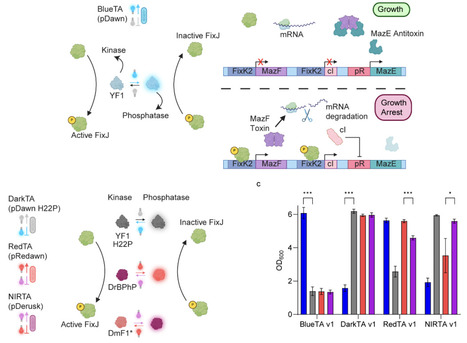
Engineered microbial consortia offer a promising strategy for chemical production by distributing specialized functions among microbial strains, reducing metabolic burden, facilitating modular pathway optimization, reducing toxicity, and increasing strain stability. However, differences in growth rates can destabilize population composition, compromising productivity and limiting their applicability. Here, we developed a multichromatic optogenetic Toxin-Antitoxin (optogeneticTA) platform for dynamic control of E. coli consortia of up to four members using blue, red, and near-infrared light and darkness. By varying light intensities or pulses, we precisely program and dynamically modulate the population composition of two-, three-, and four-membered consortia. We further developed a modular mathematical framework that captures and predicts population dynamics of these optogenetically controlled co-cultures. Applying dynamic control to a two-membered engineered consortium increased phenol production by ~69% relative to unregulated consortia. These results establish a programmable platform for stabilizing and dynamically optimizing microbial consortia, with potential applications across microbial biomanufacturing.
|
|
Scooped by
mhryu@live.com
September 29, 5:05 PM
|
The type III secretion system (T3SS), a nanoinjector apparatus utilized by Gram-negative bacterial pathogens to colonize host cells, represents a promising target for antibiotic-independent therapeutics. To date, molecules identified to associate with T3SS components have been largely limited to natural proteins, small molecules, and antibodies. Here, we report the rational design and characterization of de novo proteins that associate with the T3SS needle protein. We generate α-helical mini-proteins targeting polymerization hotspots of PrgI, the Salmonella Typhimurium T3SS needle protein. Twenty-four designs successfully recombinantly expressed, folded into stable α-helical bundles, and exhibited distinct oligomerization states. Binding to PrgI* was confirmed in solution, with equilibrium dissociation constants ranging from 1 to 150 µM. Several designs inhibited polymerization of PrgI* T3SS needle in vitro, and one construct was capable of disassembling preformed T3SS needles. Some designs also associated with homologous needle proteins, Burkholderia BsaL and Shigella MxiH, suggesting a potential for broad-spectrum T3SS needle targeting. Together, these results establish a molecular blueprint for the design of functional T3SS needle binding proteins, enabling future efforts to disrupt conserved secretion systems underlying bacterial pathogenesis.
|
|
|
Scooped by
mhryu@live.com
September 30, 1:24 PM
|
Anti-CRISPR (Acr) proteins inhibit CRISPR-Cas immunity and are key targets for precise control of CRISPR-based genome editing and phage–host coevolution research. Their experimental identification is costly and low-throughput, so computational predictors are used to prioritise candidates for testing. In this setting validated positives number in the hundreds while phage-derived putative negatives reach tens of thousands, producing extreme class imbalance. Yet existing classification-based predictors train and evaluate on 1:1 balanced datasets and allow high-similarity sequences between training and test, overestimating real-world performance. We present AcrSeek, a metric-learning framework that trains a projection head over a frozen protein language model (PLM) encoder with hybrid negative mining (offline global plus online semi-hard) under a joint triplet–focal objective. Under nested 5-fold cross-validation with leakage controlled by 40% identity clustering, AcrSeek improved AUPRC on the imbalanced (1:383) test set from 0.017 to 0.355 over AcrNET (matched PLM backbone), reaching 0.508 with ESM-2 3B. AcrSeek therefore remains structurally robust under extreme class imbalance and may also serve other protein-function detection problems with scarce positives.
|
|
Scooped by
mhryu@live.com
September 30, 1:11 PM
|
Generative artificial intelligence (AI) models are revolutionizing biology, with tools such as AlphaFold 3 and protein design models accelerating breakthroughs in protein structure prediction and the creation of new functional proteins. Tracking and establishing the provenance of AI-generated protein sequences and structures is becoming increasingly important to tackle a range of emerging challenges, including biosecurity and concerns about information veracity. Here we introduce SynthIDBio, a family of methods for watermarking protein sequences and structures to establish the provenance of those generated with AI. SynthIDBio-sequence actively embeds a watermark into protein sequences while preserving function. We demonstrate this by creating watermarked, functional designed protein binders with binding affinity comparable with non-watermarked counterparts and near-perfect watermark detection accuracy. Furthermore, SynthIDBio-structure, a fine-tuned AlphaFold3 model, embeds an imperceptible watermark into biomolecular structures. Our work is a proof-of-concept that function-preserving biological watermarking is feasible, introducing a potential tool for provenance in the rapidly expanding era of AI-driven biological engineering. SynthIDBio watermarks AI-generated protein sequences and structures while preserving function, enabling provenance detection and offering a proof-of-concept tool for biosecurity and information integrity.
|
|
Scooped by
mhryu@live.com
September 30, 12:27 PM
|
l-Glutamic acid is conventionally produced by bacteria from starch-derived sugar, while its production in eukaryotic hosts remains rarely reported. The thermophilic ascomycete fungus Myceliophthora thermophila has been developed as a platform for producing value-added chemicals from lignocellulosic biomass. In this study, we explored the feasibility of engineering M. thermophila for l-glutamate production from biomass-derived carbon sources. Genome-scale metabolic modeling indicated that M. thermophila has the stoichiometric capacity to synthesize l-glutamate from glucose and ammonia. Experimental fermentation confirmed extracellular l-glutamate accumulation, and medium optimization revealed that nitrogen source selection and extracellular pH homeostasis strongly affected l-glutamate accumulation. Overexpression of the native NADPH-dependent glutamate dehydrogenase gene gdh1 markedly increased glutamate production. Additional engineering strategies targeting membrane-associated metabolism, glutamate transport, mitochondrial precursor transport, and competing α-ketoglutarate-consuming pathways provided insights into the regulation of glutamate metabolism in filamentous fungi. The engineered strain produced 3.41 g/L l-glutamate from glucose. Moreover, 1.50 g/L and 1.49 g/L l-glutamate were obtained directly from cellulose and raw corncob, respectively. This study establishes M. thermophila as a proof-of-concept thermophilic fungal platform for l-glutamate production from lignocellulosic carbon sources and provides a framework for engineering amino acid biosynthesis in cellulolytic fungi.
|
|
Scooped by
mhryu@live.com
September 30, 12:18 PM
|
Microbial taxa in the soil microbiome with specific ecological functions play crucial roles in plant health. Flavobacterium is found closely associated with physiological functions that promote plant growth and enhance disease resistance. While cooperative interactions mediated by metabolite exchange can stabilize microbial consortia, the specific interactions between these consortia and plants remain understudied, particularly regarding their application in plant disease control. Here, we isolate a natural microbial consortium comprising Achromobacter, Flavobacterium, and Bacillus strains from cucumber rhizosphere soil, and identify the Flavobacterium strain as a methionine auxotroph. This study reveals the metabolic interactions among strains within a cross-feeding-based consortium. The Achromobacter and Bacillus primarily metabolize carbon and nitrogen sources, respectively, whereas the relevant genes in the Flavobacterium are significantly downregulated. The consortium develops significantly enhanced biofilms with a distinct stratified architecture, facilitating root endophytic colonization by Achromobacter and Flavobacterium. Endophytic Flavobacterium induces systemic resistance in plants, thereby enhancing resistance against phytopathogenic fungal infections. Our findings reveal a novel ecological strategy employed by auxotrophic Flavobacterium species for both microbial interactions and root endophytic colonization and provide a theoretical foundation for microbial consortium-based microbial inoculants in plant disease management.
|
|
Scooped by
mhryu@live.com
September 30, 11:25 AM
|
Ferredoxins are central to cellular metabolism by mediating electron flow in energy conversion reactions. The focus of this study was to systematically examine twelve ferredoxin and ferredoxin-like proteins from Synechocystis sp. PCC 6803 to identify their properties, activities, and functions in electron transfer. Using electron paramagnetic resonance spectroscopy, we detected cluster types consistent with major ferredoxin families including plant-type [2Fe-2S], adrenodoxin, thioredoxin, and bacterial-type [4Fe-4S] ferredoxins. In addition, we found that the ssr3184 ferredoxin-like protein exchanged between a [3Fe-4S] or a [4Fe-4S] cluster, pointing to a possible functional change in response to changes in oxygen or cellular redox poise. Electrochemical measurements demonstrated that these ferredoxins constitute a broad potential window, from −243 mV to −520 mV vs SHE. Investigations on their capacity to support electron transfer focused on reactions with two major redox hubs: Photosystem I and pyruvate:ferredoxin oxidoreductase and included testing of binding interactions with nitrite reductase. Expression profiling under multiple environmental conditions was also used to predict function and revealed distinct regulatory patterns. Collectively, these findings identified a group of core ferredoxins that directly support photosynthetic electron transfer, and more specialized ones that may serve other functions. In summary, Synechocystis utilizes a suite of ferredoxins to maintain cellular redox homeostasis under dynamic environmental conditions.
|
|
Scooped by
mhryu@live.com
September 30, 10:22 AM
|
It is unclear whether human milk oligosaccharides (HMO) can be used as a nutrient source by Streptococcus pneumoniae. Here, we investigate whether and how S. pneumoniae metabolizes HMOs and whether these compounds inhibit pneumococcal adherence. We find that S. pneumoniae can metabolize several HMOs, except for 2’-fucosyllactose (2’FL). The process is regulated by the carbon catabolite repression system. Transcriptome analyses showed reduced expression of the lac operon I (lacABCD) in bacteria grown with two tested HMOs when compared to lactose (Lac). Genes for the Leloir pathway and exoglycosidases were upregulated. A genome-wide CRISPR interference screen showed that the lac operons I and II (lacEFG-2) are essential for metabolizing HMOs. Lac and non-metabolizable 2’FL were found to inhibit pneumococcal adherence to host cells in vitro. Importantly, 2’FL showed a stronger inhibitory effect compared to Lac in vivo. Further research is warranted to investigate whether the non-metabolizable 2’FL can be used to inhibit pneumococcal adherence. It is unclear whether human milk oligosaccharides (HMOs) can be used as a nutrient source by Streptococcus pneumoniae. Here, Bacher et al. report that these bacteria can metabolize several HMOs, identify genes and pathways involved in the process, and show that a non-metabolizable HMO inhibits pneumococcal adherence to host cells.
|
|
Scooped by
mhryu@live.com
September 30, 1:28 AM
|
Dysbiosis, the disruption of plant-associated microbial communities, is increasingly recognized as a driver of impaired plant health. Notably, plant dysbiosis parallels disruptions of the human gut microbiome, where imbalances similarly contribute to host dysfunction and disease. Here, we discuss the current understanding of plant dysbiosis by integrating host–microbiome interactions and emerging analytical methods. Dysbiosis can extend beyond local compartments, affecting systemic processes such as immunity and nutrient acquisition. Advances in sequencing and quantitative metrics now enable its measurement at the population level, while experimental evidence shows that restoring microbial balance can recover plant function. We highlight translational strategies, including microbiome-informed breeding (Microbiome genes or M genes), synthetic microbial communities (SynComs), and soil microbial priming, to enhance plant resilience. We propose a three-tiered framework for studying and interpreting plant microbiome dysbiosis that integrates compositional profiling, functional omics, and host-performance assessment, and we introduce the concept of functional dysbiosis. We also outline how host-genome-informed M-gene selection, metabolite monitoring, and rationally defined microbial community (SynCom) design can translate this framework into practical crop management strategies.
|
|
Scooped by
mhryu@live.com
September 30, 12:55 AM
|
Although recent deep learning models have achieved promising results on read level classification tasks, their robustness to realistic sequencing conditions, sensitivity to read length, and ability to support reliable genome level inference remain incompletely characterized. Here, we present PathoBERT, a hybrid deep learning framework that integrates a LoRA adapted DNABERT encoder with convolutional feature extraction, a modified Convolutional Block Attention Module (MCBAM), and Multiscale Convolutional Attention (MSCA) for bacterial pathogenicity prediction. The model demonstrated near complete strand invariance and maintained robust performance under simulated sequencing errors, highlighting its suitability for real world next generation sequencing applications. The model operates on individual sequencing reads and supports genome level inference through a read-aggregation strategy based on the Pathogenic Fraction (PathFrac), which combines read level predictions using a majority vote framework. At the read level, PathoBERT outperformed DeePaC at short and moderate fragment lengths (100 and 150 bp), achieving peak performance at 150 bp. At the genome level, PathoBERT achieved perfect separation between pathogenic and non pathogenic genomes using PathFrac based aggregation, resulting in perfect classification performance on the evaluated benchmark compared with competing approaches, namely DeePaC and PathogenFinder 2. Representation level analyses further demonstrated that a progressive refinement of pathogen-associated features throughout the architecture, culminating in highly separable and biologically meaningful latent representations within the final attention pooled embedding space. These findings demonstrate that integrating contextual genomic language models with attention guided multiscale feature extraction provides a robust framework for pathogenicity prediction from short read sequencing data. virulence
|
|
Scooped by
mhryu@live.com
September 30, 12:07 AM
|
The increasing limitations of chemical pesticides such as environmental pollution, pathogen resistance, and threats to human and ecosystem health have increased the demand for sustainable, biologically based crop protection methods. Eco-smart biocontrol has emerged as a game-changing paradigm that uses beneficial microorganisms associated with plants to suppress phytopathogens, boost plant immunity, and make agroecosystems more resilient over time. Moving beyond traditional single-strain biocontrol, eco-smart biocontrol integrates multi-omics discovery, artificial intelligence-assisted predictive microbiome design, and dynamic rhizosphere ecology. This review brings together ecological, molecular, and technological dimensions of eco-smart biocontrol, focusing on the rhizosphere as a dynamic hotspot for plant–microbe interactions. We investigate rhizosphere microbiome assembly and demonstrate the preferential recruitment of beneficial bacteria, fungi, actinomycetes, and mycorrhizal symbionts by plant root exudates. Moreover, the review highlights the impact of innovations in multi-omics techniques (metagenomics, transcriptomics, proteomics, and metabolomics), systems biology, and artificial intelligence on microbial biocontrol agent discovery, functional validation, and predictive design. Examples from cereal crops, legumes, and horticulture crops indicate that the application of beneficial microbial inoculants can significantly lower the burden of pests and diseases, enhance crop productivity, and fit perfectly within an integrated pest management system. Lastly, we critically analyze the main challenges preventing large-scale adoption, such as inconsistent field performance, limited microbial survival and competitiveness, and comparative regulatory frameworks across global markets. Ultimately, eco-smart microbial biocontrol combines mechanistic insights with omics-driven discovery, artificial intelligence (AI)- assisted prediction, advanced formulation strategies, and field-level validation, creating a strong, scalable, and environmentally friendly framework for resilient, low-input agricultural systems.
|
|
Scooped by
mhryu@live.com
September 29, 11:37 PM
|
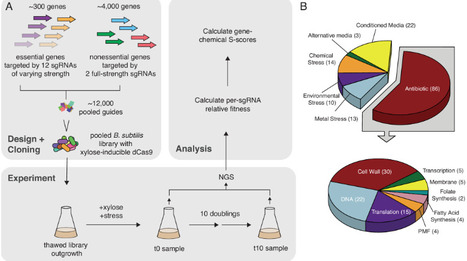
Firmicutes are gram-positive bacteria with important roles in human health, disease, and industry. However, more than a quarter of genes in the model firmicute Bacillus subtilis remain completely uncharacterized, including numerous phylum-specific genes. Here, we design a compact pooled CRISPRi library targeting all protein-coding genes in B. subtilis and test its growth in ~150 stress conditions. Using data from this screen as a hypothesis generator, we perform targeted experiments, revealing that the conserved essential firmicute protein YneF is part of the SRP cotranslational protein secretion pathway. We also demonstrate that ECF-transporters play a broadly conserved role in cell wall homeostasis, perform an unbiased analysis of amino acid crossfeeding, and make additional insights into bacterial competition. This work additionally provides a rich dataset to nucleate future studies of uncharacterized genes and presents a framework for performing accessible full-genome functional genomic screens in other bacteria.
|
|
Scooped by
mhryu@live.com
September 29, 10:39 PM
|
Controllable gene delivery to specific tissue by adeno-associated viruses (AAVs) is a challenge in gene therapy. Here we develop masked AAVs, whose transduction is blocked and restored only on pathological activation or by activation triggered by exogenous signals. The masking effect is accomplished by genetic encoding of non-canonical amino acid with tetrazine groups into AAV capsid proteins, allowing efficient reaction with trans-cyclooctene-modified truncated AAV receptor or polyethylene glycol to completely block viral infectivity in mice. With three different cleavable linkers, masking groups are selectively removable through liver-specific protease matriptase-2, near-infrared light or inflammation-associated reactive oxygen species, thus restoring the infectivity of AAVs and allowing localized transduction in mice. Systemic administration of protease-activated masked AAVs enables tissue-specific gene delivery to the liver, while administration of near-infrared-activated masked AAVs provides localized transduction in irradiated regions such as muscles and brain. Intravenous administration of reactive-oxygen-species-activated AAVs achieves targeted gene delivery to the myocardium in a cardiac ischaemia–reperfusion injury model, resulting in the localized expression of VEGF-A165 and myocardial repair. Masked adeno-associated viruses are developed that remain inactive until they are unmasked by disease-related signals or near-infrared light, enabling localized gene delivery to the liver, muscle, brain and injured heart in mice.
|
|
Scooped by
mhryu@live.com
September 29, 5:07 PM
|
The valorization of biological polymers requires microbial systems that can both access recalcitrant substrates and convert the resulting carbon into useful products. Although microbial genome and metagenome resources provide an expanding reservoir of candidate depolymerizing and modifying enzymes, most discovery workflows remain disconnected from enzyme optimization and host adaptation. Here we present a coupled sequence-based enzyme discovery, enzyme evolution and synthetic yeast chassis adaptation strategy for microbial biopolymer valorisation. Focusing on laccases for the depolymerisation of lignin as a proof of concept, we combine sequence data mining for enzyme discovery, modular yeast surface display for functional screening, directed evolution for enzyme optimisation and synthetic yeast genome diversification for chassis improvement. In our study, surface display enabled functional benchmarking and recovery of improved laccase variants and synthetic-genome-enabled diversification provided a route to explore host configurations that influence display and enzyme performance. By integrating enzyme-level and chassis-level optimisation, this framework addresses a central bottleneck in converting microbial biodiversity by computational sequence repository mining into deployable biomanufacturing systems. Our results establish laccases as tractable entry points for oxidative biopolymer conversion and provide a generalizable platform for engineering yeast systems for sustainable carbon valorisation.
|