 Your new post is loading...

|
Scooped by
mhryu@live.com
October 5, 3:11 PM
|
Metal-responsive transcriptional regulators must couple metal coordination to DNA release at the DNA-binding interface. However, the pathway connecting these states remains poorly understood. Here, we define this mechanism for the ArsR/SmtB-family repressor CadC from Listeria monocytogenes by combining crystal structures of apo, DNA-bound, and cadmium-bound states with biochemical and in vivo analyses. The DNA-bound structure reveals how CadC dimers bind sequence-specifically to operator DNA, via coordinated major-groove, wing and backbone interactions, with high-affinity binding depending on operator architecture. Cadmium is coordinated at the α3N sensor by an unusual Cys3-Met ligand set and stabilizes a DNA-incompatible conformation through remodeling of DNA-contacting elements and steric incompatibility between the ordered N-terminus and DNA. Mutational analyses show how these structural transitions link to metal-dependent transcriptional control in Listeria cells. We show that CadC binds zinc and supports zinc-responsive transcription in bacterial cells, and that host zinc availability modifies CadC-dependent infection phenotypes. Together, results reveal how metal coordination is converted into DNA release through coupled allosteric remodeling and steric exclusion, establishing a mechanism for signal-dependent transcriptional switching in ArsR/SmtB metalloregulators.
|
|
Scooped by
mhryu@live.com
October 5, 2:56 PM
|
Spontaneous vegetable fermentation is driven by the indigenous microbiota associated with the raw ingredients. The process often involves an initial heterofermentative phase followed by a predominantly homofermentative phase, both ensured by lactic acid bacteria (LAB). While microbial dynamics during fermentation are well characterized, phage communities remain poorly understood, despite evidence linking phage activity to LAB succession. We monitored viral and bacterial succession during sauerkraut and carrot fermentations using a metagenomics approach to characterize community dynamics. To further assess the impact of phage PLE001 on bacterial community dynamics, we developed a simplified carrot fermentation model comprising representative strains of Rahnella aquatilis, Leuconostoc mesenteroides and Lactiplantibacillus plantarum. Two consortia were assembled: one containing the PLE001-susceptible strain L. mesenteroides CIM3004, and the other containing also its phage-resistant derivative, CIM3004 BIM. We observed major shifts in the viral community during the first week of fermentation, coinciding with changes in bacterial structure during hetero- and homofermentative phases transition. In the simplified model, phage PLE001 reduced the population of the host during the heterofermentative phase but did not affect overall fermentation dynamics nor metabolite production. These results suggest that bacteriophages contribute to bacterial succession during fermentation, while communities remain resilient to phage infection, preserving fermentation stability.
|
|
Scooped by
mhryu@live.com
October 5, 2:14 PM
|
Groundwater is a globally relevant drinking water resource, yet nitrate pollution from agriculture increasingly threatens its quality, especially in shallow, oxygen-rich aquifers where natural attenuation is limited. This study examined whether gaseous hydrogen can stimulate autochthonous chemolithoautotrophic denitrification in nitrate-polluted, gravel aquifer sediments, and whether this process remains effective across temperatures relevant for laboratory and field conditions. We hypothesized that both microbial community composition and the kinetics of nitrate reduction will change under distinct temperature regimes. Microcosm incubations of sediments from a nitrate-polluted aquifer successfully enriched native hydrogenotrophic denitrifiers. Denitrification activity was quantified at 12°C, 15°C, 20°C, and 25°C, with maximum rates ranging from ~1 to ~1.8 µmol g⁻¹ sediment day⁻¹, and average rates generally following the expected kinetic temperature responses. Higher temperatures supported greater microbial biomass and community diversity, including a broader range of denitrifiers. Nevertheless, a single population, a novel strain of Acidovorax defluvii, dominated the community across all temperatures. Unlike the heterotrophic type strain, it possessed a conserved, likely transferable gene cluster for hydrogen oxidation, hydrogen sensing, and CO₂ fixation, as revealed by metagenomics. Although complete denitrifiers with hydrogen-oxidation capacity dominated at all temperatures, nitrite accumulated transiently below 15°C. The presence of aerobic respiration genes in all enriched denitrifiers indicates their ability to switch to oxygen as an electron acceptor if available. Our study demonstrates a notable presence of an autochthonous hydrogenotrophic denitrification potential in the studied aquifer and its effective stimulation by hydrogen injection alone. Furthermore, it identifies mass transfer constraints and redox control as targets for future process optimization.
|
|
Scooped by
mhryu@live.com
October 5, 1:52 PM
|
The gut microbiome undergoes compositional and functional changes with ageing. However, microbial signatures specifically associated with healthy ageing, independent of age-related diseases, remain poorly defined. This systematic review aimed to identify compositional and functional features of the gut microbiome associated with healthy ageing. Following Preferred Reporting Items for Systematic Reviews and Meta-Analyses guidelines, a systematic search was conducted using PubMed, Web of Science and ScienceDirect for studies published up to January 2026. The search strategy focused on gut microbiome, ageing and healthy terms. Risk of bias was assessed using the Newcastle–Ottawa Scale. Gut microbiome composition was reviewed across five predefined age groups, while the functional pathways were reviewed for older adults and centenarians. The included studies represented several regions, including recognized longevity hotspots, although geographic representation remained limited. Most studies used 16S rRNA gene sequencing (n=24; 58.5%), followed by shotgun metagenomics (n=13; 31.7%), both (n=3; 7.4%) or metaproteomics (n=1; 2.4%). Enrichment of specific taxa such as Akkermansia, Alistipes and Parabacteroides was consistently reported in centenarians, alongside distinct patterns in older adults and long-lived individuals. Functional profiling suggested differences in pathways related to amino acid catabolism, vitamin biosynthesis and pathways potentially linked to immune modulation, inflammatory processes and gut barrier support. This review provides the first structured synthesis of gut microbiome signatures associated with healthy ageing across the lifespan, highlighting consistent functional traits and the need for a wider geographic representation in future research. It supports standardized, multi-omics framework to identify robust biomarkers and potential microbiome-based interventions for promoting healthy ageing.
|
|
Scooped by
mhryu@live.com
October 5, 1:40 PM
|
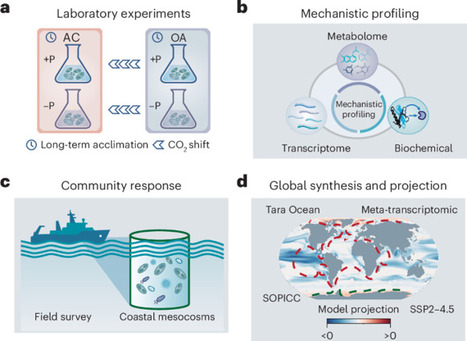
Phosphorus (P) availability constrains marine productivity, yet how ocean acidification interacts with intensifying phosphate limitation remains unresolved. Here we present multi-omics analyses of >1,000 generations of experimental diatom evolution to disentangle evolutionary and acclimation-driven responses to ocean acidification under different phosphate regimes. Long-term selection under elevated CO2 produced heritable increases in growth and carbon fixation that persisted irrespective of phosphate availability. In contrast, ocean acidification-driven reductions in particulate organic phosphorus were reversed after reciprocal transfers between selection treatments under phosphate limitation, indicating acclimation and environment-dependent P allocation. Multi-omics analyses indicate that the particulate organic phosphorus decline could be attributed to depletion of cellular P reserves and enrichment of non-P cell membrane lipids under combined ocean acidification and phosphate stress. Coastal mesocosm experiments revealed similarly reduced particulate organic phosphorus in natural phytoplankton at low-phosphate stations under ocean acidification. Global meta-transcriptomes further indicate widespread upregulation of gene expression in non-P cell membrane lipid pathways in high- and low-phosphate regions. Earth system models predict a 211% to 2,185% decline in particulate organic phosphorus by 2100 under the under the Shared Socioeconomic Pathway (SSP)2–4.5 or SSP5–8.5 scenarios, respectively. These results show that ocean acidification could intensify nutrient imbalance and reshape global phosphorus cycling in marine ecosystems. Ocean acidification can reduce phytoplankton phosphorus content, especially under phosphate limitation, which could reshape marine nutrient balance and phosphorus cycling, according to long-term experiments, field studies and global analyses.
|
|
Scooped by
mhryu@live.com
October 5, 1:17 PM
|
Plant pathogens and pests pose persistent threats to global crop production and food security. Plant immune receptors, including pattern recognition receptors and nucleotide-binding leucine-rich repeat receptors, represent key targets for engineering disease resistance. Deeper understanding of their structural biology and activation mechanisms has driven the development of strategies to engineer, transfer and deploy these receptors, expanding recognition specificities and enabling broad-spectrum, durable resistance to pathogens and pests in plants. In this Review, we discuss advances in identifying, transferring and engineering plant immune receptors, with an emphasis on translational strategies that support sustainable agriculture. We further examine how tools such as CRISPR-based genome editing and AI-assisted protein design could progress this field. By integrating mechanistic insights with practical applications, we aim to engage bioengineers, plant scientists and agricultural biotechnologists in addressing the urgent need for environmentally sustainable crop production systems. This Review highlights advances for identifying, transferring and engineering plant immune receptors, then discusses translational strategies for developing durable, sustainable crop protection.
|
|
Scooped by
mhryu@live.com
October 5, 12:49 PM
|
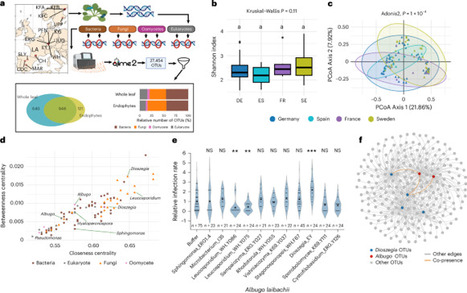
Microbiome homeostasis is crucial for host health and ecosystem function, yet the molecular and ecological mechanisms underlying community assembly and stability remain elusive. Here we uncover a conserved yeast–oomycete association that promotes their coexistence in the leaf microbiome. Using a continental-scale microbiome survey, we identified an asymmetric mutualistic interaction between two eukaryotic hub microbes: the yeast Dioszegia hungarica and the obligate oomycete Albugo laibachii. We show that Dioszegia facilitates Albugo colonization by supplying thiamine via a dedicated membrane permease, alleviating Albugo’s auxotrophy. Genomic and transcriptomic analyses indicate that natural selection has acted on thiamine production in Dioszegia, shaping this metabolic complementation. In planta assays further suggest that Albugo presence supports Dioszegia persistence under glasshouse conditions. Our study illustrates how the evolution of nutrient cross-feeding mediates microbial coexistence and microbiome stability. Targeting microbial nutrient flows offers new strategies for engineering microbiomes and enhancing plant resilience in natural and agricultural systems. Evolution of nutrient cross-feeding between a yeast and oomycete mediates microbial coexistence and leaf microbiome stability.
|
|
Scooped by
mhryu@live.com
October 5, 12:30 PM
|
Soybean production is increasingly threatened by fluctuating environmental conditions and nutrient limitations. While synthetic fertilizers can alleviate these constraints, their excessive use has raised concerns regarding long-term soil health. Consequently, leveraging beneficial soil microbes, a diverse group of microorganisms that reside in the soil ecosystem, as biofertilizers represents a promising solution for sustainable agriculture. This review examined a tripartite framework involving microbial interactions, host genetic control and environmental influences. By addressing the not-yet fully understood mechanisms, including the genetic determinants of microbial recruitment and the degree of functional redundancy among microbial groups, we discussed how soybean genotypes shape rhizosphere niches via variations in root system architecture, immune signalling cascades, and root exudate profiles, assessing how these traits have been altered through domestication. Furthermore, how genotype-specific interactions can be strategically managed through crop rotation and intercropping practices in the field was also explored. By synthesising these co-dependent relationships, this review provides a roadmap for developing low-input, resilient soybean systems to optimise nutrition in an era of changing climate conditions.
|
|
Scooped by
mhryu@live.com
October 5, 12:10 PM
|
CRISPR–Cas12a nucleases typically induce double-strand breaks (DSBs) to initiate genome editing. However, reliance on DSBs risks chromosomal rearrangements and unintended insertions or deletions at off-target sites. Therefore, engineering nickase variants that cleave only a single DNA strand might enable precise editing platforms. We describe an unbiased in vivo screen in E. coli to identify LbCas12a nickase variants. We targeted the RuvC Lid domain for mutagenesis, hypothesizing that altering this region would disrupt the coordination of strand cleavage. While the screen produced many nickase variants with targeted point substitutions (Lid1), it also serendipitously yielded a variant (Lid2) with an unprecedented Lid domain in terms of size and sequence. Biochemical characterization confirms that Lid2 robustly nicks the non-target strand (NTS) with minor cleavage activity observed for the target strand (TS), accumulating predominantly nicked substrates. Cryo-electron microscopy (cryo-EM) at 2.5 Å resolution reveals that, in Lid2, the native α-helical Lid is replaced, uncoupling the concerted cleavage mechanism. Specifically, the remodeled Lid appears to stabilize the NTS in the active site, whereas it hampers the conformational transitions required for subsequent TS cleavage. This robust nickase-phenotype of this Cas12a variant expands the CRISPR–Cas toolbox and offers a new component for precise genome editing applications.
|
|
Scooped by
mhryu@live.com
October 5, 11:32 AM
|
Abiotic redox-active materials are increasingly used to interface with electroactive microorganisms, yet their influence on cellular regulation remains poorly understood. Here, Shewanella oneidensis MR-1 was coupled with the electron-transporting conjugated polymer poly(benzodifurandione) (PBFDO) to examine how material interfaces reshape inward extracellular electron transfer (EET). PBFDO-coated carbon electrodes enhanced electron uptake and fumarate reduction, producing over two orders of magnitude higher current density and up to a twelvefold increase in succinate production than polymer-free controls. Integrated electrochemical, transcriptomic, metabolomic, and protein analyses reveal coordinated physiological remodeling associated with the polymer-supported interface rather than passive conductivity alone. PBFDO exposure is associated with transcriptional enrichment of genes linked to the Mtr-CymA electron-transfer conduit, energy metabolism, and biofilm formation. Metabolomics revealed altered intracellular redox and metabolite profiles consistent with enhanced fumarate respiration, alongside elevated NADH/NAD+ and ATP/ADP ratios indicative of altered cellular redox and energetic states. Beyond transcriptional regulation, polymer-responsive small RNAs (sRNAs) revealed a post-transcriptional regulatory layer linked to the biohybrid interface. Delivery of individual sRNAs into control cells partially recapitulated the polymer-induced phenotype, increasing current output up to threefold while altering intracellular redox balance. These findings establish sRNA-mediated regulation as a previously unrecognized mechanism linking biohybrid interfaces to enhanced microbial electrosynthesis.
|
|
Scooped by
mhryu@live.com
October 4, 12:34 PM
|
Cyclic diguanosine monophosphate (c-di-GMP) is a second messenger that coordinates lifestyle transitions, virulence, and developmental processes in bacteria. In Clostridioides difficile, elevated c-di-GMP levels inhibit sporulation, but the underlying mechanism remained unclear. Here, we identified a conserved family of small, membrane-associated proteins encoded by c-di-GMP riboswitch-regulated genes. Transcriptomic analyses revealed that c-di-GMP represses these genes, and reporter assays demonstrated riboswitch-dependent transcriptional regulation via premature termination mechanism. Overexpression of a single gene, CD1980.2, was sufficient to trigger the transcriptional activation of sporulation genes, including sigma factors and their regulons, and to increase spore formation. Conversely, sporulation efficiency decreased proportionally with the number of deleted small-protein genes, and the strain lacking all seven genes displayed a severe sporulation defect, underscoring their cumulative and functionally redundant roles. Elevating c-di-GMP levels in the deletion mutant did not further reduce sporulation, supporting a model in which c-di-GMP inhibits spore formation by repressing the expression of this small-protein family. Thus, our work establishes these small proteins, encoded by c-di-GMP riboswitch-regulated genes, as important regulators of spore formation in C. difficile, a process essential for pathogen persistence and transmission. The second messenger c-di-GMP inhibits sporulation in the pathogenic bacterium Clostridioides difficile through unclear mechanisms. Here, Badilla Lobo et al. show that the expression of sporulation genes is modulated by a family of small membrane-associated proteins encoded by genes that are controlled by c-diGMP-regulated riboswitches.
|
|
Scooped by
mhryu@live.com
October 4, 11:50 AM
|
Efficient use of limited cellular resources is fundamental to metabolism. Although flux optimization is widely recognized as a central objective of metabolic networks, how flux efficiency influences the allocation of the metabolic proteome remains unclear and lacks direct validation. Here, we derive a simple analytical relationship linking the equilibrium constant (K) and the catalytic-abundance quotient (CAQ) of reactions within a pathway that defines the condition for maximal efficiency. By integrating reaction thermodynamics, enzyme kinetics, transcriptomic, and proteomic data, we compared enzyme allocation in glycolysis and the TCA cycle with this K-CAQ relationship across evolutionarily distant species, and showed that deviation from it can be explained by a trade-off between maximizing flux efficiency and concentrating flux control. Moreover, the drive to optimize glycolytic efficiency is strengthened under oncogenic signaling and a limited cellular budget for glycolytic enzymes. These findings establish a principle of Pareto optimality governing enzyme allocation in metabolic pathways and reveal key determinants of efficiency optimality in glycolysis.
|
|
Scooped by
mhryu@live.com
October 3, 12:17 PM
|
Fungal hyphae form spatially confined interfaces in soil that mediate close associations with bacteria, collectively referred to as the hyphosphere. Despite its recognized ecological importance, experimental access to hyphosphere-associated microbial communities under realistic soil and plant-associated conditions has remained limited. Here, we present a soil-mimetic microcosm that enables controlled recovery of hyphosphere bacterial communities embedded within plant-associated soil. The system integrates field-derived soil, a native soil microbial inoculum, living cotton seedlings, and a spatially constrained fungal inoculum housed within sterile cell-strainer assemblies, permitting hyphal extension into soil while preserving a recoverable fungal-soil boundary. Using the soil-borne plant pathogen Fusarium oxysporum f. sp. vasinfectum as a model filamentous fungus, we show that the microcosm enables reproducible recovery of hypha-associated soil microaggregates containing physically attached bacterial cells. Full-length 16S rRNA profiling revealed pronounced reductions in bacterial richness and evenness in hyphosphere samples relative to bulk and rhizosphere soils (Shannon diversity, Kruskal-Wallis H = 15.25, P = 0.0016, with genus richness declining by 87% in bulk soil and 24% in rhizosphere soil contexts), consistent with recruitment of a restricted subset of the surrounding microbiota. Ordination analyses demonstrated clear compositional separation between soil and hyphosphere compartments (PERMANOVA F = 7.14, R2 = 0.572, P = 0.001), with hyphosphere communities of bulk and rhizosphere origin converging to similar composition despite differing starting soils (R2 = 0.128, P = 0.307). Phylogenetic turnover analyses (βNTI) indicated phylogenetic structuring (exceeding the +2 threshold), whereas taxonomic analyses identified a conserved set of bacterial genera consistently associated with hyphae, alongside compartment-specific taxa influenced by soil and plant context. Together, these findings establish the novel hyphal release-and-capture microcosm as a reproducible, ecologically grounded platform for studying hyphosphere-associated bacterial communities in plant-associated soils.
|
|
|
Scooped by
mhryu@live.com
October 5, 3:07 PM
|
Metabolomics provides a direct window into microbial function by capturing the small molecules that reflect cellular activity and microbial interactions. Here, we highlight its diverse applications for microbiologists across both in vitro and in vivo models under dynamic biological and nutritional conditions, including variations in community complexity, medium composition, and exposure to exogenous compounds such as antibiotics. Through representative case studies, we demonstrate how metabolomics provides critical insights into microbial physiology and inter-organismal interactions. We also showcase examples of multiomics integration, in which metabolomics is combined with complementary approaches to enhance data interpretation and strengthen biological conclusions. Finally, we discuss key challenges in metabolomics data analysis and highlight emerging strategies to overcome these limitations.
|
|
Scooped by
mhryu@live.com
October 5, 2:41 PM
|
Gut bacteria rapidly evolve in vivo, but their long-term success requires dispersal across hosts. Here, we quantify this interplay by tracking ∼70,000 genomically barcoded lineages of the commensal Bacteroides thetaiotaomicron (Bt) among co-housed mice. Adaptive mutations rapidly spread between hosts, overcoming colonization resistance imposed by resident Bt strains. Daily transmission rates varied >10-fold across hosts, but shared selection pressures drove predictable engraftment of specific lineages. Spatially resolved sampling within hosts revealed emergent preferences among adaptive lineages. The addition of a highly diverse community shifted the adaptive landscape without slowing the rate of evolution and reduced transmission while allowing specific mutants to engraft. Whole-genome sequencing uncovered diverse modes of adaptation involving complex carbohydrate metabolism. In vitro evolution across 29 carbon sources revealed variable overlap with in vivo selection pressures, potentially reflecting synergistic and antagonistic pleiotropies. These results illustrate how high-resolution lineage tracking enables quantification of commensal evolution across ecological scales.
|
|
Scooped by
mhryu@live.com
October 5, 2:01 PM
|
In this work, we show how exploration of genomic sequence space yields an unexpected evolutionary ‘fix’ that allows the cell to bypass the phenotypic defects associated with a dysfunctional enzyme. We identified a transposon (Tn) insertion in the gene (argA) encoding N-acetylglutamate synthase (NAGS) that leads to arginine auxotrophy in Pseudomonas aeruginosa. This Tn insertion generates a truncated version of the ArgA protein (ArgA188-432) that retains NAGS activity but, unlike the wild-type protein, is unrestrained by arginine feedback inhibition. However, the Tn::argA mutant readily re-acquired a prototrophic phenotype through the acquisition of spontaneous secondary mutations outside of the argA locus. Whole-genome sequencing and complementation analyses of one such ‘bypass mutant’ allowed us to trace this epistatic effect to an Ala128→Val substitution in AmbA, a LysE-type transmembrane transporter. Using a variety of genetic approaches, we show that the ambAAla128Val mutation gives rise to a change/expansion of function in the encoded gene product and that this mutation is directly or indirectly responsible for bypassing the auxotrophy associated with the original Tn::argA mutation. Further analysis of the Tn::argA ambAAla128Val mutant revealed that, compared with the ‘wild-type’ progenitor, the mutant exhibited large-scale changes in its proteome and metabolome consistent with elevated intracellular arginine and enhanced polyamine degradation. We conclude that the ambAAla128Val mutation overcomes the phenotypic impact of the dysregulated ArgA188-432 enzyme, possibly by enabling efflux of toxic polyamines (which we also show can competitively inhibit NAGS).
|
|
Scooped by
mhryu@live.com
October 5, 1:44 PM
|
The turnover number (kcat) is crucial for understanding enzyme kinetics, yet its experimental determination remains costly and low-throughput. Existing deep learning approaches often rely on single substrate assumptions and overlook full reaction contexts or language-informed semantic representations, limiting their accuracy and generalization across diverse reactions. To address these challenges, we propose Katalyst, a knowledge-guided semantic alignment framework for kcat prediction based on contrastive learning. Katalyst integrates enzyme sequences, protein textual descriptions, substrates and products into a shared latent space using multi-channel encoders and contrastive alignment. An interaction-aware fusion module is designed to capture complementary crossmodal information. Experimental results demonstrate that Katalyst achieved the best overall performance, with the RMSE of 0.9880, R2 of 0.5829, and SRCC of 0.7603. Compared with the State-Of-The-Art (SOTA) baselines, Katalyst reduced RMSE by 3.01% and improved R2 and SRCC by 4.72% and 2.31%, respectively. Moreover, ablation studies and evaluations across sequence scales further confirmed the effectiveness of semantic alignment and multimodal feature fusion. Overall, Katalyst provides a robust and accurate framework for kcat prediction.
|
|
Scooped by
mhryu@live.com
October 5, 1:20 PM
|
To discover unknown retrotransposons for genomic integration in human cells, we searched 1,139 avian genomes, identified 159 avian R2 retrotransposons and characterized conserved/nonconserved sequence features in their proteins and untranslated region elements. Engineered variants of these retrotransposons achieved up to 60% site-specific gene integration across human primary cells. This work expands the avian R2 resource and provides additional tools for all-RNA-mediated genome editing. Engineered retrotransposons enable site-specific DNA integration into human cells.
|
|
Scooped by
mhryu@live.com
October 5, 1:12 PM
|
Cold-adapted lipases have attracted extensive research attention in enzymology owing to their unique low-temperature adaptability and catalytic properties, and investigations in this area continue to deepen. This study aimed to efficiently produce a cold-adapted lipase to overcome the limitations of conventional lipases under low-temperature conditions, such as low activity, high cost, and restricted applicability. Fungal strains were isolated from naturally cold environments, and subjected to multiple rounds of screening for lipase activity. A selected strain was further improved by UV-nitrosoguanidine (NTG) combined mutagenesis, followed by optimization of fermentation conditions. The lipasewas purified by ammonium sulfate precipitation, Q-HP anion exchange chromatography, and Superdex 75 gel filtration chromatography, and its enzymatic properties were characterized. A lipase-producing strain identified as Aspergillus niger was obtained through screening. Following combined mutagenesis, lipase activity by the mutant strain increased by 127.35%. Under the optimized fermentation conditions (temperature 21℃, pH 6.0, inoculation size 6.5 × 10⁶ spores/mL), the lipase activity further increased to 57.26 U/mL. After purification, the cold-adapted lipase exhibited a specific activity of 113.52 U/mg. Its optimal reaction temperature was 30℃ and pH 7.0 and retained more than 60% of its maximum activity at 15℃. Its high relative activity at low temperatures, together with its low thermal stability, supported its classification as a cold-adapted lipase. This purification strategy can produce high-purity lipase at laboratory scale, which provides a pure enzyme preparation for biochemical studies. The cold-adapted lipase obtained in this study may have promising application prospects in fields such as food processing, low-temperature laundry, and environmental management.
|
|
Scooped by
mhryu@live.com
October 5, 12:37 PM
|
We propose a strategy for the steerable depolymerization and fractional utilization of lignocellulosic biomass to prepare fibrous foods. Fibrous foods products primarily refer to functional products (such as monosaccharides, oligosaccharides, proteins, and dietary fibers [DFs]) prepared from lignocellulosic biomass through green biorefining technologies. The main chemical components of lignocellulosic biomass include 40%–50% cellulose, 25%–35% hemicellulose, and 15%–30% lignin, and it is currently used primarily in energy, materials, and chemicals. Due to its rich carbohydrate composition, it holds tremendous potential for use in the production of fibrous foods and functional nutritional products. The health benefits of fibrous foods are largely attributed to their rich composition of DFs, prebiotic oligosaccharides, and fermentable proteins. These naturally derived components have been shown to regulate glucose absorption in the digestive tract, improve gut microbiota, promote cholesterol metabolism, and significantly control postprandial blood glucose, blood pressure, and inflammatory responses. Numerous studies have demonstrated the considerable potential of functional fibrous foods in nutritional regulation and disease prevention among elderly populations with chronic diseases. The main objectives are to break down the complex cell wall structure of lignocellulose, improve the accessibility of cellulose and hemicellulose, and preserve natural functional components wherever possible. Currently, lignocellulosic biomass pretreatment technologies primarily include physical methods (mechanical disintegration, steam explosion), chemical methods (acid-alkali pretreatment, organic solvents, ionic liquids, and deep eutectic solvents), biological methods, and their combined techniques.
|
|
Scooped by
mhryu@live.com
October 5, 12:18 PM
|
In Streptococcus pneumoniae, the RpiR transcriptional regulator NanR (SpNanR) senses sialic acid in the environment and upregulates transcription of the nan and sia A operons to increase uptake and metabolism of sialic acid. The molecular basis of this activation is unknown. Here, we demonstrate that SpNanR binds N-acetylmannosamine-6-phosphate, a metabolite of sialic acid catabolism. SpNanR exists in a dimer–tetramer equilibrium, and N-acetylmannosamine-6-phosphate binding strongly stabilizes the tetramer. Crystal structures and site-specific substitutions demonstrate that N-acetylmannosamine-6-phosphate bridges and stabilizes the SpNanR tetramer. SpNanR binds its DNA recognition sequence with nanomolar affinity. Notably, the effector N-acetylmannosamine-6-phosphate does not affect the affinity of SpNanR for DNA. The DNA-binding domains are not structurally coupled to the sugar isomerase domains, explaining why N-acetylmannosamine-6-phosphate binding does not affect DNA binding. Structural analysis reveals that sequence specificity arises through distortion of B-DNA and an unusual π-stack formed by two arginine residues in the minor groove, while affinity is driven by backbone contacts. We propose a mechanism by which S. pneumoniae regulates sialic acid metabolism, consistent with our biophysical experiments and in vivo regulatory behavior. These findings define a unique activation mechanism for an RpiR regulator and provide new insights into carbohydrate-responsive gene regulation in pneumococci.
|
|
Scooped by
mhryu@live.com
October 5, 12:02 PM
|
Broad-host-range IncA and IncC (A/C) conjugative plasmids propagate multidrug resistance in bacteria and mobilize chromosomal resistance islands, including Salmonella Genomic Island 1 (SGI1), across genera. A/C plasmids mobilize SGI1 at very high frequencies and are inhibited by SGI1. Here, we show that SGI1 and kin encode a fertility inhibitor, which we named CtiC (for ‘Conjugative Transfer Inhibition of IncC’), that hampers A/C plasmid transfer. Fertility inhibition facilitates the propagation of SGI1, which is known to be destabilized by coresident A/C plasmids. ctiC expression is both constitutive and activated during conjugative transfer of A/C plasmids. Structural predictions suggest that CtiC resembles the C-terminus of the MOBH12-family relaxase TraI of A/C plasmids. Bacterial two-hybrid assays and relaxase domain substitutions show that CtiC and the C-terminus of TraI interact with the plasmid-encoded mobilization factor MobI, which recognizes and binds the origin of transfer (oriT) of A/C plasmids. Hence, CtiC acts as a decoy that competes with TraI for binding to MobI, freeing TraI for efficient SGI1 mobilization, and precluding efficient processing of the plasmid’s oriT. Our work reveals a mechanism of fertility inhibition that prevents relaxosome assembly and uncovers a functional domain in MOBH12 relaxases.
|
|
Scooped by
mhryu@live.com
October 5, 11:06 AM
|
Host mucus is a major nutrient reservoir for gut Bacteroidota, yet the gene-level determinants of mucin utilization remain poorly defined. In this study, we used a genome-scale CRISPR interference library in Bacteroides thetaiotaomicron to systematically map fitness contributions across the mucin-utilization network, spanning surface accessibility, glycan degradation, and intracellular sugar assimilation. Our screen identified 1,256 genes with condition-dependent fitness divergence, which revealed a layered organization of mucin-dependent growth. A prominent mucin-specific fitness signature was enrichment of strains with repressed capsular polysaccharide loci. Subsequent competition and deletion experiments validated that specific capsules impede growth on mucin, supporting a surface-accessibility trade-off model. By contrast, most mucin-induced carbohydrate-binding and glycoside hydrolase genes showed negligible fitness contributions, consistent with functional redundancy in extracellular glycan capture and processing. Conversely, downstream sugar catabolism showed pronounced condition-specific constraints, with the galactose-utilization gene BT_0623, causing measurable fitness defects upon repression in both mucin- and galactose-containing media. Finally, comparison with murine colon CRISPRi data revealed broad concordance with the in vitro mucin fitness landscape, while also highlighting environment-specific differences, in CPS- and polysaccharide degradation-associated functions. Together, these results define mucin utilization as a layered fitness architecture governed by surface-accessibility costs, redundant extracellular glycan processing, and downstream metabolic constraints.
|
|
Scooped by
mhryu@live.com
October 4, 12:20 PM
|
Genetic code expansion aims to incorporate non-canonical amino acids (ncAA) into biological systems, enhancing protein functionality or enabling the in vitro selection of peptides from diverse mRNA displayed libraries. Typically, genetic code expansion has involved reassignment of stop codons to ncAAs through orthogonal translation systems. This review instead focuses on efforts to expand the genetic code by breaking the redundancy of sense codons in vitro and in vivo. In vivo, orthogonal aminoacyl-tRNA synthetase (AARS)/tRNA/AA systems are able to compete with endogenous machinery, enabling partial to full codon reassignment. Recent approaches, like genome recoding, offer potential solutions to reduce competition. In vitro studies utilize cell extract-based or reconstituted translation systems, allowing precise control of codon usage via gene design and tRNA addition, making breaking of sense degeneracy easier. In these systems several unsplit codon boxes have been successfully reassigned multiple to ncAAs. These efforts showcase both the successes and challenges in achieving orthogonality and selective codon decoding and point towards a future where the 64 codons can encode more than 30 monomers, enabling new advances in synthetic biology and drug discovery.
|
|
Scooped by
mhryu@live.com
October 3, 12:23 PM
|
Homologous recombination is ubiquitous across evolution, generating variation through genetic reshuffling. Although bacteria lack meiotic recombination, homologous recombination has been known to extensively shape their genomes. However, the mechanisms and ecological conditions sustaining frequent recombination in bacteria remain unclear. Using an E. coli–P1 phage model system, we reveal how frequent recombination emerges from CRISPR-based herd immunity to a generalized transducing phage (DNA vector). Herd immunity maintains phage-susceptible donor bacteria, recipient immune bacteria, and transducing phage, which promotes chromosomal gene flow that exceeds spontaneous mutation by up to two orders of magnitude. Notably, recombination begins as bacterial cultures enter stationary phase, when canonical mutation supply through population growth and DNA replication is strongly reduced, and recombination can be reinitiated by brief fresh nutrient pulses. Genetic analysis showed that stationary-phase recombination requires recA, recB, and recG, connecting this process to a defined homologous recombination pathway, and suggests a plausible transcriptional regulatory link to transition to nutrient limitation. Bacterial herd immunity therefore has an unexpected evolutionary consequence: it can promote homologous recombination by turning phages into de facto pollinators. This mechanism can help explain how high rates of homologous recombination may be sustained across bacterial populations and suggests that bacterial immune systems can shape molecular evolution not only by blocking infection but also by regulating genetic exchange.
|










metal sensor