 Your new post is loading...

|
Scooped by
mhryu@live.com
October 7, 11:58 AM
|
Recombinant protein production can be a challenging process. To help users troubleshoot and optimize experiments in E. coli we have compiled and characterized a toolbox of biosensor plasmids. It contains a biosensor that monitors the translational efficiency of the recombinant protein and quality control biosensors that detect unwanted events, such as protein misfolding in the cytoplasm, inefficient translocation through the Sec translocon, or protein misfolding in the periplasm. The biosensors were combined with different fluorescent proteins so that multiple events could be measured in parallel, in the same cell. The toolbox is a resource for diagnosing protein production problems and evaluating solutions that mitigate these problems.
|
|
Scooped by
mhryu@live.com
October 7, 11:46 AM
|
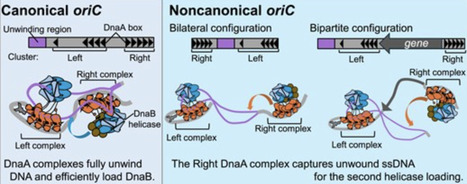
The E. coli chromosomal origin, oriC, contains a duplex-unwinding element (DUE) flanked by two clusters of the initiator DnaA-binding sites (DnaA boxes). ATP-DnaA oligomerizes to construct Left- and Right–DnaA subcomplexes on these clusters. These complexes coordinately promote DUE unwinding and DnaB helicase loading onto the unwound region for replication initiation. However, despite the strong conservation of DnaA and DnaB across bacterial species, oriC architectures vary largely. Remarkably, bipartite and bilateral configurations contain the two DnaA box-clusters separated by an insertion of the dnaA gene or positioned on both sides of the DUE, respectively. Here, we demonstrate that E. coli oriC variants mimicking these configurations remain fundamentally functional. Notably, DnaB loading activity of these variants showed increased dependence on single-stranded DUE binding by the relocated DnaA subcomplex and on the AT cluster upstream of the DUE, reflecting reduced stability of DUE unwinding. Consistent with these in vitro results, these variants supported cellular replication initiation with only slow cell growth rates. Together, these findings reveal remarkable architectural flexibility, mechanistic robustness, and a conserved mechanism in oriC. Also, those highlight unwinding stability as a key determinant of oriC adaptation to rapid cell growth, providing insight into the evolution of oriC architecture.
|
|
Scooped by
mhryu@live.com
October 7, 11:35 AM
|
The rational engineering of non-model microorganisms is often constrained by the scarcity of high-performance genetic regulatory tools. To overcome this limitation, we developed ARCANE – a reprogrammable circuit architecture for non-model engineering – featuring a cascaded design in which an inducer controls orthogonal bacterial transcription factors (bTFs), which in turn drive both activation and repression of endogenous promoters. This architecture provides strong insulation from host regulatory networks, minimizes leakage, and enables a broad dynamic range. As a proof-of-concept, we implemented ARCANE in the industrially significant non-model yeast, Yarrowia lipolytica. The resulting genetic switch exhibited exceptionally precise and tunable control over both single reporter genes and a multi-gene carotenoid biosynthesis pathway. Beyond providing a powerful regulatory tool for Y. lipolytica, ARCANE offers a versatile and transferable modular foundation for programmable gene control in emerging microbial platforms, paving the way for scalable synthetic biology in non-model systems.
|
|
Scooped by
mhryu@live.com
October 7, 10:11 AM
|
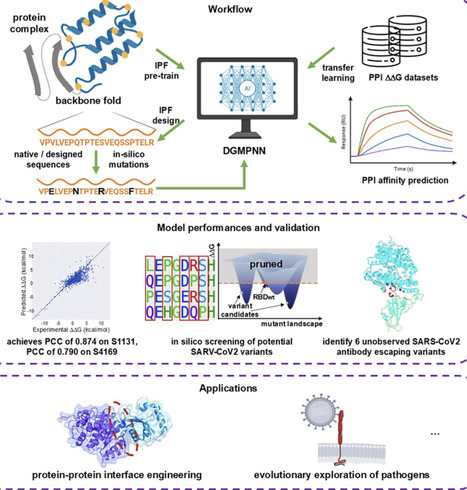
Protein-protein interactions (PPI) are fundamental to vast biological processes. Accurate prediction of mutation-induced changes in PPIs is crucial for protein engineering and drug discovery. Most existing PPI prediction approaches rely on refined physicochemical features or computationally intensive structural sampling. Here, we present delta-G message-passing-neural-network (DGMPNN), a message-passing neural-network framework for predicting the effects of mutations on PPIs. DGMPNN is pre-trained on an inverse protein folding (IPF) task and employs an adaptive residue-level attention pooling mechanism to enable effective transfer learning for predicting mutation-induced changes in protein binding affinity. The model achieves state-of-the-art performance on multiple benchmark datasets and deep mutational scanning (DMS) datasets. Experimental validation using computationally selected multi-site variants of the SARS-CoV-2 RBD-hACE2 complex showed strong agreement between predicted and experimentally measured binding affinities.
|
|
Scooped by
mhryu@live.com
October 7, 1:11 AM
|
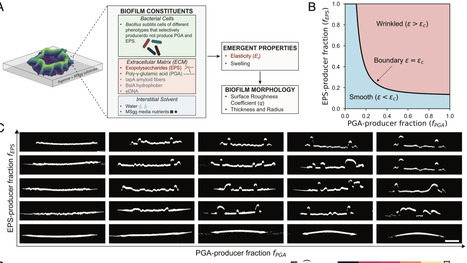
Microbes across diverse species and environments form biofilms, living materials composed of cells and extracellular polymers. Biofilm-dwelling cells benefit from emergent soft matter physics, which sculpts three-dimensional morphologies and facilitates osmotic nutrient uptake. Although biofilms are modeled as viscoelastic gels, the physical origins of the phase transition underlying their conversion from groups of cells to living gels have not been systematically investigated. Here, we show that Bacillus subtilis biofilms use polymer composition to tune their physical properties and drive gel formation. Using imaging, water immersion experiments, and rheological measurements with matrix knockout strains, we demonstrate the complementary roles of two polymers in this developmental transition: hydrophilic poly-γ-glutamic acid swells colonies by absorbing water while exopolysaccharides serve as effective cross-linkers, causing a sol–gel-like phase transition that imparts structural integrity. With matrix knockout coculture biofilms, we independently modulate the production of each polymer and reveal a phase space of biofilm morphologies. Colonies that produce both polymers develop macroscopic wrinkles. A thin-film model predicts biofilm wrinkling from swelling-induced internal strain coupled with elasticity. The model reproduces the shape of our observed morphological phase diagram. Our results demonstrate that bacteria leverage gelation to vary their material properties and morphologies, with implications for microbial ecology and engineering living matter.
|
|
Scooped by
mhryu@live.com
October 7, 12:46 AM
|
As engineering goals in microbial bioprocessing become increasingly complex, functional programmability in single strains is often limited due to finite cellular resources and space, as well as incompatibilities among individual pathway components. Microbial division of labor (DOL) through synthetic consortia offers an alternative strategy for bioprocessing by dividing and distributing target functions among individual members of microbial communities. In doing so, DOL can alleviate intrinsic limitations such as metabolic burden and pathway interference, while also facilitating system organization via modular design, optimization, and extension. Here, we highlight recent advances in the use of DOL in synthetic microbial consortia for bioprocessing by examining five enabling utilities, including alleviating metabolic burden, reducing pathway interference, facilitating complex feedstock utilization, enabling modular design, and improving system tunability. We also synthesize the functional roles of DOL from an organizational perspective and elucidate how this view can further the design of microbial DOL for future biomanufacturing.
|
|
Scooped by
mhryu@live.com
October 7, 12:40 AM
|
We present a simple, low-cost, and efficient protocol for fluorescent staining of Bacillus spp. endospores using the thioflavin T (ThT) dye. The article provides step-by-step procedures for culturing Bacillus paranthracis, Bacillus thuringiensis (2 strains), and Bacillus subtilis, purifying endospores from pure cultures, and staining them with ThT. ThT-stained endospores retain fluorescence for at least 2 years when stored at 4°C in the dark and remain fluorescent following formaldehyde fixation. Importantly, ThT staining does not impair spore viability, and stained endospores germinate normally. In contrast, vegetative Bacillus cells exhibit minimal to no ThT fluorescence. Overall, this robust and straightforward staining protocol is well suited for applications requiring fluorescently labeled endospores, including fluorescence microscopy, and provides a convenient plate-based readout for germinant screening and related assays. methods
|
|
Scooped by
mhryu@live.com
October 7, 12:24 AM
|
Fungal-microbial interactions drive key ecosystem functions and offer vast, untapped potential for the bio-economy. However, translating these natural consortia into controllable applications is hindered by the structural and metabolic complexity of the interplay. This review navigates the complexity landscape of these interactions, examining the technological trajectory from the mechanistic foundation of 1:1 dialogue to the rational design of synthetic consortia. We discuss the transition from static cultivation toward advanced microfluidic (“fungi-on-a-chip”) and biomimetic platforms that resolve the spatial ecology across diverse environmental gradients. Beyond extracellular associations, we highlight the paradigm shift toward synthetic endosymbiosis, where precise interaction engineering enables the creation of novel endosymbiotic chassis. Furthermore, we examine how integrating multi-omics with artificial intelligence-driven phenotyping and genome-scale metabolic modeling can bridge the gap between mechanistic discovery and predictive design through integrative systems biology and design-build-test-learn cycles, enabling the rational engineering of fungal-microbial consortia. These approaches offer opportunities to iteratively optimize community composition, metabolic exchange, and functional performance, thereby connecting laboratory-scale discovery with ecosystem-level complexity. Despite these advances, further development and integration of these approaches are needed to improve the reproducibility, scalability, and controllability of fungal-microbial consortia for agriculture, environmental, and industrial applications.
|
|
Scooped by
mhryu@live.com
October 7, 12:13 AM
|
Rapid and accurate diagnostics are essential for controlling emerging infectious diseases and antimicrobial resistance, yet CRISPR assays with exceptional analytical sensitivity often remain difficult to translate into deployable tests. Existing reviews have commonly organized CRISPR diagnostics by Cas effector, biosensor format, or application, offering limited guidance on how design decisions interact across complete workflows or why promising systems remain at the proof-of-concept stage. We introduce an integrated framework that connects five coupled design layers with five levels of translational evidence. The design layers comprise guide RNA engineering, signal amplification circuits, molecular adaptors, computational design support, and specimen and intended-use implementation. The evidence levels progress from purified-target characterization and spiked-matrix testing to retrospective specimen evaluation, prospective integrated-workflow evaluation, and intended-use operation by target users supported by controls, usability assessment, real-time stability, manufacturing consistency, cost per valid result, and claim-specific regulatory preparation. This dual framework shows how improvements at one layer can shift the dominant bottleneck to another. For example, preamplification can lower the analytical limit of detection while increasing contamination risk and workflow burden, whereas guide designs that improve sequence discrimination may reduce cognate-target activation. The framework supports bottleneck-guided selection of effectors, signal-gain strategies, adaptors, computational tools, and multiplexing formats according to target type and abundance, specimen matrix, intended decision, target users, and deployment setting. High analytical sensitivity or single-nucleotide discrimination under controlled conditions does not establish clinical utility unless such performance improves classification at the intended decision threshold within the complete workflow. Translation requires standardized benchmarking, matrix-aware validation, appropriate controls, stability and manufacturability assessment, prospective intended-use studies, and economic evaluation suited to the intended claim and setting. This framework shifts the evaluation of CRISPR diagnostics from isolated analytical performance toward evidence-based workflow co-design.
|
|
Scooped by
mhryu@live.com
October 6, 11:56 PM
|
Ionization governs molecular behavior, yet predicting aqueous pKa accurately and tractably remains a fundamental challenge. Rigorous ensemble methods require enumerating a protonation-state space that grows exponentially with the number of ionizable sites, while fast graph predictors return numbers without thermodynamic consistency. Here we derive an exact thermodynamic identity showing that the macroscopic first–dissociation constant is fully determined by protonated-microstate populations and unique first–deprotonation events, eliminating the deprotonated ensemble algebraically and reducing aggregation to O(n+E) operations. We implement this identity in DTi–pKa, a dual–head graph neural network whose free–energy and dissociation heads are coupled by thermodynamic constraints. On four external benchmarks (355 molecules), DTi–pKa achieves a pooled MAE of 0.5665 pKa units, with 0.6285 on the 169 records lacking training-cache matches, while providing site–resolved micro–pKa values and protonation–state populations. Controlled ablations show that constraint placement at the level of the reported macroscopic equilibrium matters more than microscopic label precision—a design principle transferable to physics–informed machine learning beyond chemistry. Closure diagnostics expose numerical self–consistency as an open frontier, which we report transparently. By replacing an intractable computation with a physical identity, DTi–pKa unifies macroscopic accuracy and microscopic interpretability in a single framework.
|
|
Scooped by
mhryu@live.com
October 6, 11:06 PM
|
Global warming-induced water scarcity threatens agricultural sustainability. While precision irrigation and microbial inoculants are recognized as effective individual strategies, their synergistic potential remains under-explored. This review synthesizes recent advances in the “water-plant-microbe” synergy to propose a bidirectional regulatory mechanism for climate-smart agriculture. We demonstrate that irrigation regimes function as a primary filter for rhizosphere microbial assembly, thereby defining the hydraulic niche for colonization. Conversely, functional microbes actively engineer the soil environment via exopolysaccharide production and hormonal modulation, thereby enhancing plant hydraulic status and water use efficiency (WUE). In contrast to previous reviews focusing on single factors, this review constructs an integrated framework linking soil hydrology with microbial ecology, supported by emerging comparative evidence. We conclude that future agricultural water management must shift from solely regulating water supply to managing the holobiont’s hydrological interactions, offering a promising systems-level strategy to safeguard food security under climate stress.
|
|
Scooped by
mhryu@live.com
October 6, 4:22 PM
|
Silk offers a sustainable alternative to synthetic polymers, yet widespread industrial adoption has not been realised. Many current silk protein engineering efforts have focused on spider dragline silk; a pursuit made difficult by the metabolic burden of expressing high molecular weight, repetitive spidroins. This Perspective argues for a strategic redirection toward the broader sequence space of non-canonical silks for silk protein engineering. By mining the diversity of taxa such as Hymenoptera, Neuroptera, and Trichoptera, we can identify compact or compositionally distinct protein templates that may offer advantages for heterologous expression, stability, or targeted applications. Integrating these sequences with computational protein design, alongside experimental workflows, could expand the range of recombinant silk-like proteins available for biomaterial design. However, translating these proteins into useful materials will require parallel advances in expression, hierarchical assembly control, and scalable aqueous processing. We therefore frame silk protein engineering diversification not as a replacement for processing challenges, but as a route to broaden the molecular starting points available for application-specific biomaterials. Many current silk protein engineering efforts have focused on spider dragline silk; a pursuit made difficult by the metabolic burden of expressing high molecular weight, repetitive spidroins. This Perspective argues for a strategic redirection toward the broader sequence space of non-canonical silks for silk protein engineering.
|
|
Scooped by
mhryu@live.com
October 6, 4:14 PM
|
Tumor hypersialylation drives immunosuppression and limits immunotherapy efficacy by shielding tumor cells and engaging inhibitory immune receptors. Here, we engineered E. coli Nissle 1917 (EcNΔpgi-SAS) as a metabolically confined "desialylation catalyst" to remodel the tumor microenvironment. This strain combines HER2-directed adhesion, hypoxia-inducible surface sialidase display for targeted glycan cleavage, and sialic acid catabolism to prevent glycolytic recycling. Critically, disrupting glucose metabolism (Δpgi) restricts bacterial proliferation to sialic acid-rich tumor microenvironment, significantly enhancing biosafety. In mice, EcNΔpgi-SAS colonized tumors and effectively desialylated tumor cells, synergizing with anti-PD-L1 to suppress growth of immunologically "cold" tumors. Mechanistically, desialylation reversed immunosuppression by broadly enhancing antitumor immunity. Orally administered EcNΔpgi-SAS substantially inhibited colorectal carcinogenesis, repaired epithelial barrier integrity by restoring tight junctions, and prevented adenoma formation. This integrated strategy establishes a clinically translatable platform for reversing immunosuppression in solid tumors.
|
|
|
Scooped by
mhryu@live.com
October 7, 11:51 AM
|
CRISPR–Cas9 DNA cleavage requires R-loop extension to activate the histidine–asparagine–histidine (HNH) nuclease domain, yet how heteroduplex maturation gates catalytic commitment remains unclear. Using extensive molecular dynamics simulations across seven experimentally trapped heteroduplex states (6–18 nt), we define a three-stage activation pathway: unlocking, preorganization, and precatalytic gating. At the 18-nt checkpoint, HNH and REC2 regain mobility but do not adopt a fully cleavage-competent orientation; this dynamically frustrated metastate is consistent with a conformational-proofreading model. Here, dynamic frustration is used operationally to describe renewed mobility and weakened directional coupling without commitment to the cleavage-competent state, rather than a formal energetic frustration calculation. Two sensors, Y450 at the sgRNA: DNA hybrid interface and K1200 in the PI domain, respond to distinct maturation milestones, encoding heteroduplex length into domain-specific conformational outputs. Integrating these insights with two deep-learning analyses and deep mutational scanning recovers known high-fidelity positions and prioritizes three unannotated residues for testing. In a cellular cleavage reporter assay, R1210D reproduces the attenuated low-completion phenotype of eSpCas9, identifying it as a candidate for direct specificity testing, while destabilizing L1-linker substitutions increase cleavage efficiency. These results connect atomic-level dynamics to experimentally testable, structure-mechanism-informed engineering hypotheses; direct matched-versus mismatched validation is required to establish effects on discrimination fidelity.
|
|
Scooped by
mhryu@live.com
October 7, 11:40 AM
|
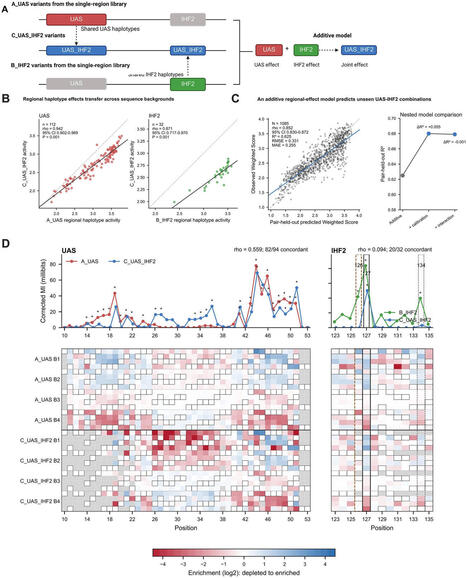
Promoters are core cis-regulatory elements that determine gene expression levels and dynamic responses, and their quantitative engineering directly dictates the performance of synthetic biological systems such as whole-cell biosensors. However, the transcriptional output of complex inducible systems, exemplified by σ54-dependent promoters, relies on long-range coordination among distal bacterial enhancer-binding proteins, DNA architectural proteins, and RNA polymerase. The combined effects of multiple regulatory regions on promoter output remain poorly understood, which limits the cross-background transfer of local sequence rules and hinders the accurate prediction and rational design of promoter activity. The phenol-responsive DmpR–Po promoter serves as both a classical model for investigating σ54-dependent regulation and a high-value sensing element for environmental pollutant detection and high-throughput enzyme activity screening. Resolving sequence–activity relationships across its complete regulatory region therefore holds both mechanistic and practical significance. To overcome the barriers to rational engineering of complex promoters, we established a modular design–measure–model–guide–validate framework targeting the full DmpR–Po regulatory region. A library of 17,500 designed promoter sequences was constructed to systematically perturb the upstream activating sequence (UAS), the IHF2 region, combined UAS–IHF2 mutational backgrounds, and downstream regulatory architecture. Fluorescence-activated cell sorting coupled with sequencing yielded a high-quality sequence–activity map covering 11,940 variants. At the regional level, identical UAS and IHF2 haplotypes generally preserved their relative activity rankings across single-region and joint-variant backgrounds, and the main effects estimated independently for UAS and IHF2 could approximately predict the activity of combined variants. At the nucleotide level, however, the effects of individual substitutions were strongly constrained by the overall DNA architecture and full-sequence context. A deep learning model trained on the complete regulatory sequence captured these context-dependent relationships, achieved robust predictive performance on held-out sequences and a separately transformed and processed Batch 2 derived from the same preconstructed plasmid-library pool, and enabled model-guided prioritization of targeted local variants. Single-clone validation further showed that model-guided edits produced variable experimental outcomes, supporting candidate prioritization while indicating that individual engineering predictions require experimental validation. Collectively, this study characterizes the transferability and context-dependent constraints of regional sequence effects and establishes a data-driven framework for quantitative prediction and model-guided engineering of complex σ54-dependent promoters.
|
|
Scooped by
mhryu@live.com
October 7, 11:30 AM
|
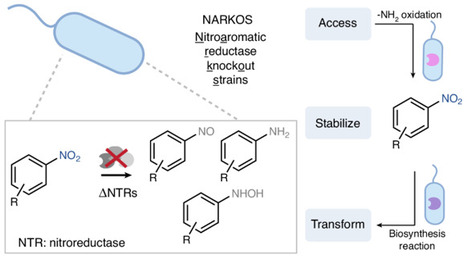
The instability of nitroaromatic compounds or nitroarenes in the presence of microbial cells has hindered the ability to biomanufacture these industrially and pharmaceutically relevant chemicals. Although nitroreductase (NTR) gene deletions have been linked to nitroarene stability, the extent of this effect is unclear. Here we perform a comprehensive analysis of bacterial NTR activity in cells by engineering strains of E. coli that contain up to 15 knockouts of known and candidate NTR genes. We evaluate the stability of over 20 exogenously supplemented nitroaromatic compounds to wild-type and engineered strains. For several chemistries, such as di-nitro compounds and nitro-aldehydes, our engineered nitroaromatic reductase knockout strains enable retention of compounds. We leverage these tools and insights to improve or enable nitroaromatic compound biosynthesis, including the biocatalytic transformation of an amine precursor to a nitro compound, the biosynthesis of nitrobenzaldehydes and the combined semi-synthesis and site-specific incorporation of nitrophenylalanines from supplemented nitrobenzaldehydes. This work advances access to nitro functional group chemistry in cell-based biocatalysis, metabolic engineering and synthetic biology. Nitroarenes are unstable in microbial cultures, limiting the biomanufacturing of these industrially and pharmaceutically important chemicals. Genome engineering of nitroreductase-deficient E. coli strains has now been shown to improve nitroarene retention during fermentation, expanding access to nitro functional group chemistry in whole-cell biocatalysis, metabolic engineering and synthetic biology.
|
|
Scooped by
mhryu@live.com
October 7, 1:28 AM
|
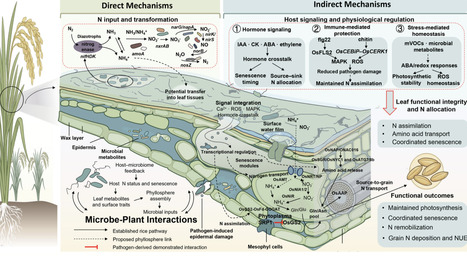
Nitrogen (N) fertilizers are key drivers of high yields in rice (Oryza sativa L.), yet increasing N inputs often deliver diminishing improvements in N use efficiency (NUE) and can exacerbate N losses via volatilization, leaching, and runoffs, with associated environmental impacts. The rice phyllosphere microbiome, which consists of microbes inhabiting leaf surfaces and internal tissues, has the potential to influence foliar nutrient turnover, N metabolism, and stress responses and may therefore influence internal NUE (IEN) and, under reduced fertilizer-N input, potentially affect agronomic efficiency of applied N (AEN). Here, we summarize the major steps of rice N metabolism (uptake, assimilation, transport, redistribution, and remobilization) and discuss microbial pathways that could modulate N use, including foliar N transformations, microbially mediated N inputs, and indirect effects through hormonal regulation, stress buffering, and microbe–microbe interactions. Key knowledge gaps remain in quantification of underlying mechanistic processes, field robustness across seasons and sites, and genotype/microbiome matching under reduced-N management.
|
|
Scooped by
mhryu@live.com
October 7, 1:03 AM
|
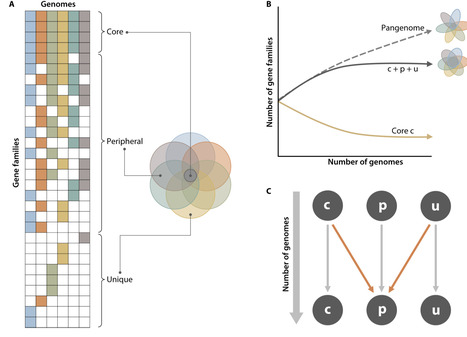
The concept of the pangenome has emerged as the approach of choice for targeted comparative genomics across groups of organisms, from strain or population levels within a species to broader taxonomic or phenotypic categories. Pangenome analyses employ diverse procedures that inevitably introduce reproducibility challenges. Nevertheless, they have already yielded important insights into the structure, function, and evolution of archaeal, bacterial, and eukaryotic genomes across space, time, biogeography, and phylogeny. There is a wide range of applications from vaccine design to synthetic biology that are expected to yield additional technological and biomedical tools for genome biology and biotechnology. We review here the basic concepts underpinning pangenome research, including the estimation of gene and protein family numbers, the modeling of open and closed pangenomes, and key definitions relevant to reporting guidelines. We list and compare computational platforms, algorithms, and data structures, along with their salient features. We present key findings from 249 taxa covering 17,858 genome sequences, subjected to such analyses, and discuss major patterns observed, such as novel families per genome and pangenome size estimates for this validated data set. We propose revised criteria for pangenomes, standard operating procedures, and further targets to enhance the reproducibility of analysis and expand opportunities for experimental and computational comparative genomics. This framework attempts to clarify current methodologies and chart a path forward for integrating pangenome analyses.
|
|
Scooped by
mhryu@live.com
October 7, 12:42 AM
|
Hybrid electro-biomanufacturing provides an attractive route for converting CO₂ into fuels and chemicals beyond the constraints of natural photosynthesis. However, achieving systems-level high productivity and efficiency while maintaining robust electro-biological (electrobio) operation remains a key challenge. This mini review quantitatively benchmarks electrobio system architectures by evaluating the kinetic and chemical compatibility between electrochemical CO₂ reduction and biological conversion to identify the key determinants of performance and scalability. We demonstrate that carbon intermediate compatibility is the primary requirement for successful integration, while production–consumption rate matching ultimately determines system efficiency and scale-up potential. Together, these insights establish electrobio compatibility as a critical yet underappreciated design principle for guiding the development of next-generation electrobio manufacturing platforms.
|
|
Scooped by
mhryu@live.com
October 7, 12:34 AM
|
Natural transformation is a widespread mechanism driving genetic exchanges in bacteria. It proceeds from the capture of extracellular DNA released by other cells. Internalized in linear single strands, this exogenous DNA is ultimately integrated into the genome by homologous recombination. It is unknown how the RecA-directed D-loop intermediate of this dedicated recombination pathway is processed. We report that resolution of the transformation D-loop depends on two endonucleases of opposing phylogenetic distribution in bacteria. One is YraN, which has coevolved and interacts with the ComM helicase, known to extend DNA recombination at the transformation D-loop. The other is CoiA, which is restricted to the Bacillota. CoiA is shown to be a resolvase of the transformation D-loop, extended by the RadA helicase in these species. We demonstrate that both YraN and CoiA act synergistically with their cognate helicases. These findings reveal that bacteria have evolved two helicase/nuclease pairs for the maturation and recombination extension of the transformation D-loop. The wide distribution of this dual system indicates that recombination of exogenous DNA by natural transformation is an ancestral and pervasive feature of bacteria.
|
|
Scooped by
mhryu@live.com
October 7, 12:19 AM
|
Programmable control of bacterial gene expression is critical for advancing applications in synthetic biotechnology. This is particularly true for the genus Streptomyces, a well-recognized prolific producer of diverse natural products. Although several inducible regulatory systems have been developed for Streptomyces, there remains an escalating demand to expand the repertoire of high-performance induction tools. Herein, we present Strep-LitRS, a light-sensing system for Streptomyces that exhibits pronounced activation under blue and green light, with only weak induction under yellow light. Moreover, blue light was more effective than green light in triggering transcriptional activation. This system enables tunable, reversible, and spatially controlled gene expression upon blue-light illumination. It demonstrates effective programmable control of morphological differentiation via CRISPR/dCas9-mediated interference. Its utility is further validated through the blue light-inducible production of actinorhodin and violacein in Streptomyces chassis strains. Furthermore, by coupling Strep-LitRS with the Cre-loxP recombination system, we achieve precise and conditional gene activation in response to blue light. A synthetic genetic circuit also allows light-induced control to be gated by rhamnose, enabling multi-input regulatory logic. Collectively, this work establishes a versatile light-sensing module and highlights its broad applicability for the programmable manipulation of diverse target genes across Streptomyces species.
|
|
Scooped by
mhryu@live.com
October 7, 12:08 AM
|
Retrobiosynthesis tools use different reaction rules, search strategies and biochemical priors, so each can recover transformations missed by others. Integrating their outputs could broaden pathway coverage, but ensembling can also worsen ranking. SynBioCrow runs independent retrosynthesis engines, normalizes predictions into a provenance-preserving reaction graph, and separates route generation from biochemical evidence, sequence design and bounded learning. On the frozen 65-path Galaxy-SynBioCAD literature benchmark used for SynBioCrow 2.3, connectivity-level partial recovery was 19/65 for the ensemble, 13/65 for RetroBioCat2, 9/65 for RetroPath and 0/65 for DORAnet; the ensemble preserved two exact RetroPath routes but worsened their ranks. SynBioCrow 2.4 subsequently repaired structured-reaction parsing and target-connected Candidate generation and prospectively locked two new external targets, 1,3-propanediol and 1,4-butanediol, before pathway truth was examined. RetroBioCat2 produced 3 and 2 backend-internal SOLVED search outcomes, respectively, whereas DORAnet produced none; however, neither backend recovered any predeclared explicit literature intermediate by exact structure. The negative prospective result was frozen without post-reveal tuning. Production ranking in 2.4 is therefore NONE and the release remains Candidate-stage; validated complete-pathway recovery is not claimed. Availability: SynBioCrow 2.4.0 is archived at DOI 10.5281/zenodo.23173173 with source code and frozen supporting evidence.
|
|
Scooped by
mhryu@live.com
October 6, 11:47 PM
|
Dense bacterial populations often navigate complex and heterogeneous environments using collective behaviors including group motility. Whether local interactions within a population can regulate collective order is unclear. Here we show using live imaging, single-cell tracking and simulations that Pseudomonas aeruginosa regulates collective order by mechanosensing cell–cell collisions, enabling adaptive surface exploration. Collision-induced reversals suppress collective cell alignment in dense bacterial populations. While a non-reversing mutant remains locked in cohesive near-linear motion regardless of density, wild-type cells adapt to local crowding, transitioning from isotropic motion in crowds to unidirectional exploration at the colony front. With increasing density, collisions generate information that feeds back on single-cell motility to regulate collective order, providing a navigational advantage. This advantage extends to spatially structured environments, such as micromazes, where collision-induced reversals prevent cells from becoming trapped at physical boundaries. These findings reveal that bacterial collective organization is not merely an emergent consequence of physical interactions, but a feedback-regulated state. Density-dependent regulation of collective order through collision sensing and collision-induced reversals provides a navigational advantage to Pseudomonas aeruginosa during surface colonization and navigation through micromazes.
|
|
Scooped by
mhryu@live.com
October 6, 4:47 PM
|
With the rise of antibiotic resistance, bacteriophage-based treatments against bacterial infections have regained momentum. However, phage therapy has so far shown only moderate success in complex environments like the mammalian gut, where phages are particularly promising tools for microbiome engineering and specific elimination of opportunistic pathogens. Here, we use different murine models of intestinal colonization to quantitatively assess the minimal population size of susceptible E. coli cells that is required for phage replication in the gut (replication threshold). We found that the composition of the intestinal microbiota is a key factor shaping phage–bacteria interactions by restricting the carrying capacity of susceptible host cells. We further demonstrate that the replication threshold enables coexistence of susceptible and resistant bacteria in phage-treated mice, with implications for phage-based applications in complex environments like the gut.
|
|
Scooped by
mhryu@live.com
October 6, 4:21 PM
|
Current genetic engineering technology that based on complementary base pairing for target recognition is a powerful tool to control protein expression at DNA or RNA levels. Nonetheless, limited research has utilized genetic strategies to directly manipulate proteins. To address this gap, we have developed a method of genetically engineered RNA inducers of proximity (GENRIP), one strategy that leverages RNA structure-dependent protein recognition to precisely regulate protein activity. GENRIP is a modular and bifunctional RNA comprising two kinds of motifs: a conserved RNA motif that recruits endogenous RNA-binding enzymes for protein modification, and a variable motif responsible for recognizing different proteins of interest (POIs). By inducing proximity between effector enzymes and POIs, GENRIP enables precise post-translational modification of POIs. Using the RNA-binding E3 ligase MEX3A and RNA-binding kinase CamK as model effectors, we have demonstrated its capability to achieve ubiquitination-mediated degradation and phosphorylation-induced activation of POI, respectively. Furthermore, GENRIP offers superior advantages in modularity, programmability, precise subcellular localization targeting, and cell-type selectivity. This approach represents a paradigm shift in genetic engineering, holding profound implications in the field of post-translational protein regulation. Current genetic engineering techniques enable protein modulation at the DNA/RNA levels. Here, the authors design an RNA platform to bring target protein and effector enzyme into proximity, realizing direct protein regulation.
|












1str, The TCD is downstream of the poi and was designed so that the region encoding the C-terminal poly-His tag on the coding sequence would be sequestered into an mRNA hairpin with the SD sequence and AUG start codon of the downstream coding sequence for the red fluorescent protein. This hairpin blocks translation of the red fluorescent protein as the ribosome cannot access the SD sequence. However, when the upstream coding sequence of interest is translated, the TCD is temporarily unfolded.
four stress reporter promoters plus one translation reporter: PibpA (and its stronger, higher background variant PibpA/fxsA) is σ32 dependent and reports misfolding in the cytoplasm via the heat shock response; PcpxP is CpxR dependent and reports misfolding in the periplasm via the Cpx response; PsecM, which includes the secM promoter, 5′UTR and coding sequence, mimics SecM stalling and reports an overloaded Sec translocon, though only for co-translationally targeted proteins (DsbA signal peptide), not post-translationally targeted ones (MalE signal peptide). Each drives a fast folding, fast degrading GFP (mut3ASV) or mCerulean-LVA so the signal tracks current stress. Expression itself is read not by a promoter but by a translational coupling device placed after the gene of interest, which drives mCherry or mScarlet-I3 (the latter more sensitive) only when the upstream gene is translated. The recombinant protein comes from a separate arabinose inducible pBAD plasmid.