 Your new post is loading...

|
Scooped by
mhryu@live.com
April 19, 2018 8:25 AM
|
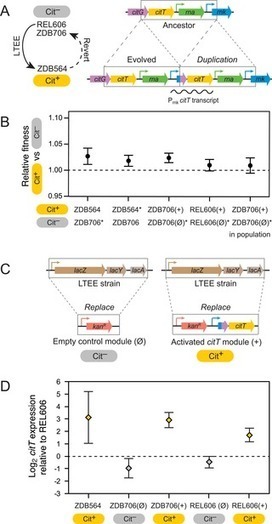
Key innovations are disruptive evolutionary events that enable a species to escape constraints and rapidly diversify. After 15 years of the Lenski long-term evolution experiment with Escherichia coli, cells in one of the twelve populations evolved the ability to utilize citrate, an abundant but previously untapped carbon source in the environment. Descendants of these cells became dominant in the population and subsequently diversified as a consequence of invading this vacant niche. Mutations responsible for the appearance of rudimentary citrate utilization and for refining this ability have been characterized. However, the complete nature of the genetic and/or ecological events that set the stage for this key innovation is unknown. In particular, it is unclear why it took so long for citrate utilization to evolve and why it still has evolved in only one of the twelve E. coli populations after 30 years of the Lenski experiment. In this study, we recapitulated the initial mutation needed to evolve citrate utilization in strains isolated from throughout the first 31,500 generations of the history of this population. We found that there was already a slight fitness benefit for this mutation in the original ancestor of the evolution experiment and in other early isolates. However, evolution of citrate utilization was blocked at this point due to competition with other mutations that improved fitness in the original niche. Subsequently, an anti-potentiated genetic background evolved in which it was deleterious to evolve rudimentary citrate utilization. Only later, after further mutations accumulated that restored the benefit of this first-step mutation and the overall rate of adaptation in the population slowed, was citrate utilization likely to evolve. Thus, intense competition and the types of mutations that it favors can lead to short-sighted evolutionary trajectories that hide a stepping stone needed to access a key innovation from many future generations.
|
|
Scooped by
mhryu@live.com
April 19, 2018 12:41 AM
|
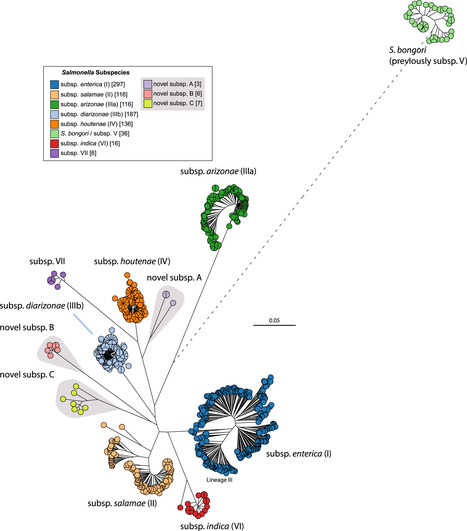
For many decades, Salmonella enterica has been subdivided by serological properties into serovars or further subdivided for epidemiological tracing by a variety of diagnostic tests with higher resolution. Recently, it has been proposed that so-called eBurst groups (eBGs) based on the alleles of seven housekeeping genes (legacy multilocus sequence typing [MLST]) corresponded to natural populations and could replace serotyping. However, this approach lacks the resolution needed for epidemiological tracing and the existence of natural populations had not been independently validated by independent criteria. Here, we describe EnteroBase, a web-based platform that assembles draft genomes from Illumina short reads in the public domain or that are uploaded by users. EnteroBase implements legacy MLST as well as ribosomal gene MLST (rMLST), core genome MLST (cgMLST), and whole genome MLST (wgMLST) and currently contains over 100,000 assembled genomes from Salmonella. It also provides graphical tools for visual interrogation of these genotypes and those based on core single nucleotide polymorphisms (SNPs). eBGs based on legacy MLST are largely consistent with eBGs based on rMLST, thus demonstrating that these correspond to natural populations. rMLST also facilitated the selection of representative genotypes for SNP analyses of the entire breadth of diversity within Salmonella. In contrast, cgMLST provides the resolution needed for epidemiological investigations. These observations show that genomic genotyping, with the assistance of EnteroBase, can be applied at all levels of diversity within the Salmonella genus.
|
|
Scooped by
mhryu@live.com
April 19, 2018 12:10 AM
|
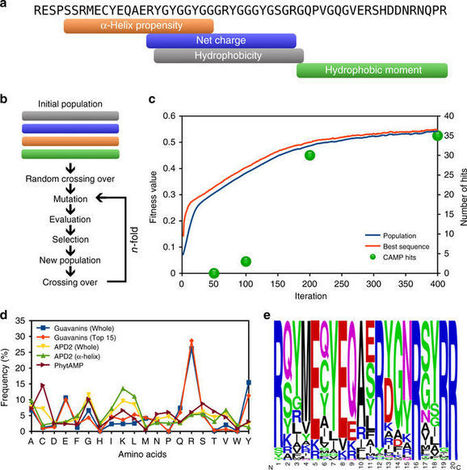
Plants are extensively used in traditional medicine, and several plant antimicrobial peptides have been described as potential alternatives to conventional antibiotics. However, after more than four decades of research no plant antimicrobial peptide is currently used for treating bacterial infections, due to their length, post-translational modifications or high dose requirement for a therapeutic effect . Here we report the design of antimicrobial peptides derived from a guava glycine-rich peptide using a genetic algorithm. This approach yields guavanin peptides, arginine-rich α-helical peptides that possess an unusual hydrophobic counterpart mainly composed of tyrosine residues. Guavanin 2 is characterized as a prototype peptide in terms of structure and activity. Nuclear magnetic resonance analysis indicates that the peptide adopts an α-helical structure in hydrophobic environments. Guavanin 2 is bactericidal at low concentrations, causing membrane disruption and triggering hyperpolarization. This computational approach for the exploration of natural products could be used to design effective peptide antibiotics.
|
|
Scooped by
mhryu@live.com
April 18, 2018 11:41 PM
|
Microbial and plant specialized metabolites, also known as natural products, are key mediators of microbe-microbe and host-microbe interactions and constitute a rich resource for drug development. In the past decade, genome mining has emerged as a prominent strategy for natural product discovery. Initially, such mining was performed on the basis of individual microbial genome sequences. Now, these efforts are being scaled up to fully genome-sequenced strain collections, pangenomes of bacterial genera, and large sets of metagenome-assembled genomes from microbial communities. The Medema research group aims to play a leading role in these developments by developing and applying computational approaches to identify, classify, and prioritize specialized metabolite biosynthetic gene clusters and pathways and to connect them to specific molecules and microbiome-associated phenotypes. Moreover, we are extending the scope of genome mining from microbes to plants, which will allow more comprehensive interpretation of the chemical language between hosts and microbes in a microbiome setting.
|
|
Scooped by
mhryu@live.com
April 17, 2018 5:35 PM
|
Elucidating the factors governing the functional compatibility of horizontally transferred genes is important to understand bacterial evolution, including the emergence and spread of antibiotic resistance, and to successfully engineer biological systems. In silico efforts and work using single-gene libraries have suggested that sequence composition is a strong barrier for the successful integration of heterologous genes. Here we sample 200 diverse genes, representing >80% of sequenced antibiotic resistance genes, to interrogate the factors governing genetic compatibility in new hosts. In contrast to previous work, we find that GC content, codon usage, and mRNA-folding energy are of minor importance for the compatibility of mechanistically diverse gene products at moderate expression. Instead, we identify the phylogenetic origin, and the dependence of a resistance mechanism on host physiology, as major factors governing the functionality and fitness of antibiotic resistance genes. These findings emphasize the importance of biochemical mechanism for heterologous gene compatibility, and suggest physiological constraints as a pivotal feature orienting the evolution of antibiotic resistance.
|
|
Scooped by
mhryu@live.com
April 16, 2018 1:40 AM
|
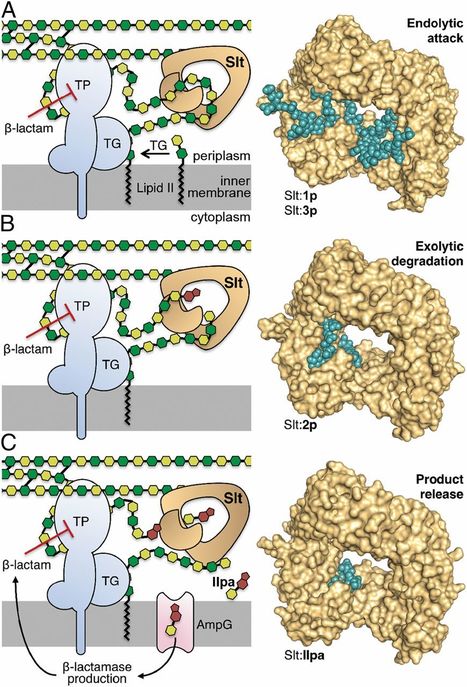
β-Lactam antibiotics are currently the most broadly used class of antibiotics. These antibiotics prevent bacterial cell wall from cross-linking, which leads to the accumulation of long non–cross-linked strands of peptidoglycan. Pseudomonas aeruginosa , a nefarious bacterial pathogen, attempts to repair this aberrantly formed peptidoglycan by the function of the lytic transglycosylase Slt. We document in the present report that Slt turns over the peptidoglycan by both scission of the glycosidic bonds from a terminus or in the middle of the peptidoglycan. In a series of seven X-ray crystal structures, we provide structural context to how these two reactions take place. These results disclose the details of bacterial response to the β-lactam antibiotic challenge.
|
|
Scooped by
mhryu@live.com
April 16, 2018 1:26 AM
|
Acidimicrobiaceae sp. A6 (ATCC, PTA-122488), a strain that has been previously reported to play a key role in the oxidation of ammonium (NH4+) under iron reducing conditions, has now been isolated from riparian wetland soils in New Jersey, USA. Incubations of this strain in a medium containing ferrihydrite as the ferric iron [Fe(III)] source, CO2 as the carbon source, under room temperature, and a pH of 4.5, resulted in 52% of NH4+ removal over a 20-day incubation period, while reducing Fe(III) in the expected stoichiometric ratio when NH4+ was oxidized to nitrite with Fe(III) as the electron acceptor. This study demonstrates that this new isolated strain is capable of oxidizing NH4+ while reducing iron under anaerobic conditions.
|
|
Scooped by
mhryu@live.com
April 16, 2018 12:20 AM
|
Why are so many invasive plant pathogens now appearing? The aim of this paper is to increase understanding of the means of introduction and spread of these pathogens, which, as with most invasive species, can be traced to human behavior, societal development, technological change, and geopolitical trends. We strongly believe that reviewing historical developments enhances our ability to anticipate future developments.
|
|
Scooped by
mhryu@live.com
April 16, 2018 12:06 AM
|
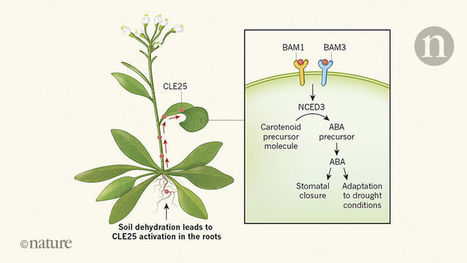
Because plants cannot move to escape unfavourable conditions, they must continuously monitor environmental cues to survive when conditions change. Plants can sense interactions with other organisms, such as bacteria, and can monitor light conditions across the spectrum, from ultraviolet to far red. The molecular mechanisms that facilitate those capacities are well understood. But how plants sense drought, cold and salt has remained an enigma1. In a paper in Nature, Takahashi et al.2 report the identification of a peptide that is generated in response to a water deficit in plants.
|
|
Scooped by
mhryu@live.com
April 15, 2018 4:30 PM
|
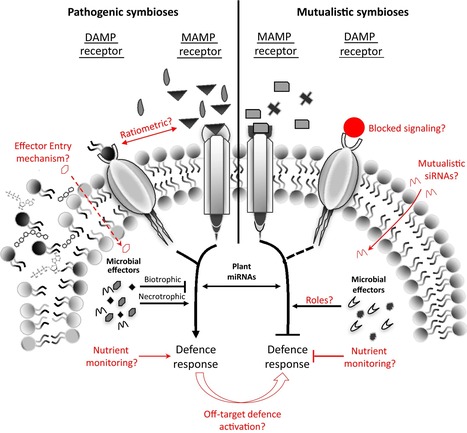
Microorganisms, or ‘microbes’, have formed intimate associations with plants throughout the length of their evolutionary history. In extant plant systems microbes still remain an integral part of the ecological landscape, impacting plant health, productivity and long‐term fitness. Therefore, to properly understand the genetic wiring of plants, we must first determine what perception systems plants have evolved to parse beneficial from commensal from pathogenic microbes. In this review, we consider some of the most recent advances in how plants respond at the molecular level to different microbial lifestyles. Further, we cover some of the means by which microbes are able to manipulate plant signaling pathways through altered destructiveness and nutrient sinks, as well as the use of effector proteins and micro‐RNAs (miRNAs). We conclude by highlighting some of the major questions still to be answered in the field of plant‐microbe research, and suggest some of the key areas that are in greatest need of further research investment. The results of these proposed studies will have impacts in a wide range of plant research disciplines and will, ultimately, translate into stronger agronomic crops and forestry stock, with immune perception and response systems bred to foster beneficial microbial symbioses while repudiating pathogenic symbioses.
|
|
Scooped by
mhryu@live.com
April 15, 2018 4:19 PM
|
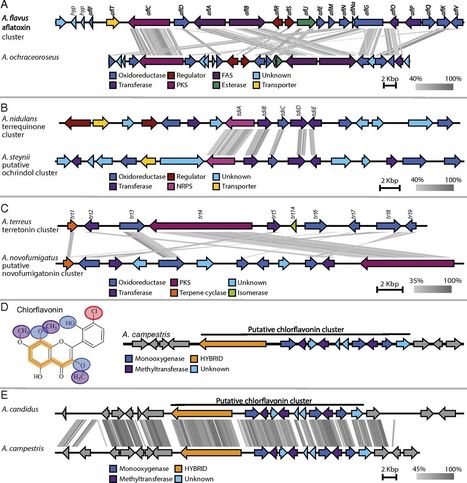
The fungal genus of Aspergillus is highly interesting, containing everything from industrial cell factories, model organisms, and human pathogens. In particular, this group has a prolific production of bioactive secondary metabolites (SMs). In this work, four diverse Aspergillus species (A. campestris, A. novofumigatus, A. ochraceoroseus, and A. steynii) have been whole-genome PacBio sequenced to provide genetic references in three Aspergillus sections. A. taichungensis and A. candidus also were sequenced for SM elucidation. Thirteen Aspergillus genomes were analyzed with comparative genomics to determine phylogeny and genetic diversity, showing that each presented genome contains 15–27% genes not found in other sequenced Aspergilli. In particular, A. novofumigatuswas compared with the pathogenic species A. fumigatus. This suggests that A. novofumigatus can produce most of the same allergens, virulence, and pathogenicity factors as A. fumigatus, suggesting that A. novofumigatus could be as pathogenic as A. fumigatus. Furthermore, SMs were linked to gene clusters based on biological and chemical knowledge and analysis, genome sequences, and predictive algorithms. We thus identify putative SM clusters for aflatoxin, chlorflavonin, and ochrindol in A. ochraceoroseus, A. campestris, and A. steynii, respectively, and novofumigatonin, ent-cycloechinulin, and epi-aszonalenins in A. novofumigatus. Our study delivers six fungal genomes, showing the large diversity found in the Aspergillus genus; highlights the potential for discovery of beneficial or harmful SMs; and supports reports of A. novofumigatus pathogenicity. It also shows how biological, biochemical, and genomic information can be combined to identify genes involved in the biosynthesis of specific SMs.
|
|
Scooped by
mhryu@live.com
April 15, 2018 4:05 PM
|
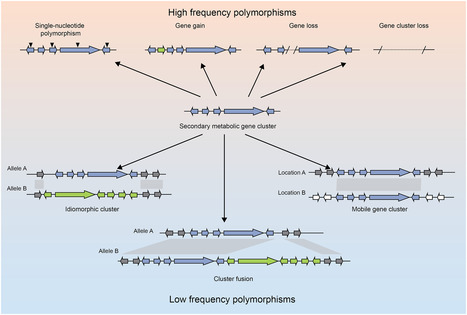
All organisms produce metabolites, which are small molecules important for growth, reproduction, and other essential functions. Some organisms, including fungi, plants, and bacteria, make specialized forms of metabolites known as “secondary” metabolites that are ecologically important and improve their producers’ chances of survival and reproduction. In fungi, the genes in pathways that synthesize secondary metabolites are typically located next to each other in the genome and organized in contiguous gene clusters. These gene clusters, along with the metabolites they produce, are highly distinct, even between otherwise similar fungi, and it is often difficult to reconstruct how these differences evolved. To understand how secondary metabolic pathways evolve in fungi, we compared secondary metabolic gene clusters in 66 strains of one species of filamentous fungus, the human pathogen Aspergillus fumigatus. We show that these gene clusters vary extensively within this species, and describe the genetic processes that cause these differences. We identify 5 types of variants: single nucleotide changes, gene and gene cluster gain and loss, different gene clusters at the same genomic position, and mobile gene clusters that “jump” around the genome. These results provide a road map to the types and frequencies of genomic changes underlying the extensive diversity of fungal secondary metabolites.
|
|
Scooped by
mhryu@live.com
April 15, 2018 3:52 PM
|
Extensive research efforts have been dedicated to describing degradation of wood, which is a complex process; hence, microorganisms have evolved different enzymatic and non-enzymatic strategies to utilize this plentiful plant material. This review describes a number of fungal and bacterial organisms which have developed both competitive and mutualistic strategies for the decomposition of wood and to thrive in different ecological niches. Through the analysis of the enzymatic machinery engaged in wood degradation, it was possible to elucidate different strategies of wood decomposition which often depend on ecological niches inhabited by given organism. Moreover, a detailed description of low molecular weight compounds is presented, which gives these organisms not only an advantage in wood degradation processes, but seems rather to be a new evolutionatory alternative to enzymatic combustion. Through analysis of genomics and secretomic data, it was possible to underline the probable importance of certain wood-degrading enzymes produced by different fungal organisms, potentially giving them advantage in their ecological niches. The paper highlights different fungal strategies of wood degradation, which possibly correlates to the number of genes coding for secretory enzymes. Furthermore, investigation of the evolution of wood-degrading organisms has been described.
|
|
|
Scooped by
mhryu@live.com
April 19, 2018 12:58 AM
|
Bacteria face tough competition in polymicrobial communities. To persist in a specific niche, many species produce toxic extracellular effectors to interfere with the growth of nearby microbes. These effectors include the recently reported non-canonical D-amino acids (NCDAAs). In Vibrio cholerae, the causative agent of cholera, NCDAAs control cell wall integrity in stationary phase. Here, an analysis of the composition of the extracellular medium of V. cholerae revealed the unprecedented presence of D-Arg. Compared with other D-amino acids, D-Arg displayed higher potency and broader toxicity in terms of the number of bacterial species affected. Tolerance to D-Arg was associated with mutations in the phosphate transport and chaperone systems, whereas D-Met lethality was suppressed by mutations in cell wall determinants. These observations suggest that NCDAAs target different cellular processes. Finally, even though virtually all Vibrio species are tolerant to D-Arg, only a few can produce this D-amino acid. Indeed, we demonstrate that D-Arg may function as part of a cooperative strategy in vibrio communities to protect non-producing members from competing bacteria. Because NCDAA production is widespread in bacteria, we anticipate that D-Arg is a relevant modulator of microbial subpopulations in diverse ecosystems.
|
|
Scooped by
mhryu@live.com
April 19, 2018 12:32 AM
|
Plant roots are colonized by complex communities of bacterial and archaeal microbiota from the soil, with the potential to affect plant nutrition and fitness. Although root-associated microbes are known to have the potential to be utilized to promote crop productivity, their exploitation has been hindered by a lack of understanding of the compositional dynamics of these communities. Here we investigate temporal changes in the root-associated bacterial and archaeal communities throughout the plant life cycle in field-grown rice over multiple seasons and locations. Our results indicate that root microbiota composition varies with both chronological age and the developmental stage of the plants. We find that a major compositional shift correlates with the transition to reproductive growth, suggestive of distinct root microbiota associations for the juvenile and adult plant phases. The results from this study highlight dynamic relationships between plant growth and associated microbiota that should be considered in strategies for the successful manipulation of microbial communities to enhance crop performance.
|
|
Scooped by
mhryu@live.com
April 18, 2018 11:54 PM
|
Microbial communities often exhibit incredible taxonomic diversity, raising questions regarding the mechanisms enabling species coexistence and the role of this diversity in community functioning. On the one hand, many coexisting but taxonomically distinct microorganisms can encode the same energy-yielding metabolic functions, and this functional redundancy contrasts with the expectation that species should occupy distinct metabolic niches. On the other hand, the identity of taxa encoding each function can vary substantially across space or time with little effect on the function, and this taxonomic variability is frequently thought to result from ecological drift between equivalent organisms. Here, we synthesize the powerful paradigm emerging from these two patterns, connecting the roles of function, functional redundancy and taxonomy in microbial systems. We conclude that both patterns are unlikely to be the result of ecological drift, but are inevitable emergent properties of open microbial systems resulting mainly from biotic interactions and environmental and spatial processes.
|
|
Scooped by
mhryu@live.com
April 18, 2018 10:45 PM
|
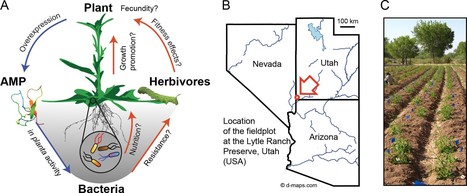
Plant-microbe associations are thought to be beneficial for plant growth and resistance against biotic or abiotic stresses, but for natural ecosystems, the ecological analysis of microbiome function remains in its infancy. We used transformed wild tobacco plants (Nicotiana attenuata) which constitutively express an antimicrobial peptide (Mc-AMP1) of the common ice plant, to establish an ecological tool for plant-microbe studies in the field. Transgenic plants showed in planta activity against plant-beneficial bacteria and were phenotyped within the plants´ natural habitat regarding growth, fitness and the resistance against herbivores. Multiple field experiments, conducted over 3 years, indicated no differences compared to isogenic controls. Pyrosequencing analysis of the root-associated microbial communities showed no major alterations but marginal effects at the genus level. Experimental infiltrations revealed a high heterogeneity in peptide tolerance among native isolates and suggests that the diversity of natural microbial communities can be a major obstacle for microbiome manipulations in nature.
|
|
Scooped by
mhryu@live.com
April 17, 2018 1:00 AM
|
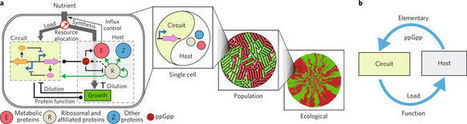
One fundamental challenge in synthetic biology is the lack of quantitative tools that accurately describe and predict the behaviours of engineered gene circuits. This challenge arises from multiple factors, among which the complex interdependence of circuits and their host is a leading cause. Here we present a gene circuit modelling framework that explicitly integrates circuit behaviours with host physiology through bidirectional circuit–host coupling. The framework consists of a coarse-grained but mechanistic description of host physiology that involves dynamic resource partitioning, multilayered circuit–host coupling including both generic and system-specific interactions, and a detailed kinetic module of exogenous circuits. We showed that, following training, the framework was able to capture and predict a large set of experimental data concerning the host and its foreign gene overexpression. To demonstrate its utility, we applied the framework to examine a growth-modulating feedback circuit whose dynamics is qualitatively altered by circuit–host interactions. Using an extended version of the framework, we further systematically revealed the behaviours of a toggle switch across scales from single-cell dynamics to population structure and to spatial ecology. This work advances our quantitative understanding of gene circuit behaviours and also benefits the rational design of synthetic gene networks.
|
|
Scooped by
mhryu@live.com
April 16, 2018 1:33 AM
|
Wastewater treatment plants (WWTPs) have been suggested as reservoirs and sources of antibiotic resistance genes (ARGs) in the environment. In a WWTP ecosystem, human enteric and environmental bacteria are mixed and exposed to pharmaceutical residues, potentially favoring genetic exchange and thus ARG transmission. However, the contribution of microbial communities in WWTPs to ARG dissemination remains poorly understood. Here, we examined for the first time plasmid permissiveness of an activated sludge microbial community by utilizing an established fluorescent bioreporter system. The activated sludge microbial community was challenged in standardized filter matings with one of three multidrug resistance plasmids (pKJK5, pB10, and RP4) harbored by Escherichia coli or Pseudomonas putida. Different donor–plasmid combinations had distinct transfer frequencies, ranging from 3 to 50 conjugation events per 100000 cells of the WWTP microbial community. In addition, transfer was observed to a broad phylogenetic range of 13 bacterial phyla with several taxa containing potentially pathogenic species. Preferential transfer to taxa belonging to the predicted evolutionary host range of the plasmids was not observed. Overall, the ARG dissemination potential uncovered in WWTP communities calls for a thorough risk assessment of ARG transmission across the wastewater system, before identification of possible mitigation strategies.
|
|
Scooped by
mhryu@live.com
April 16, 2018 12:21 AM
|
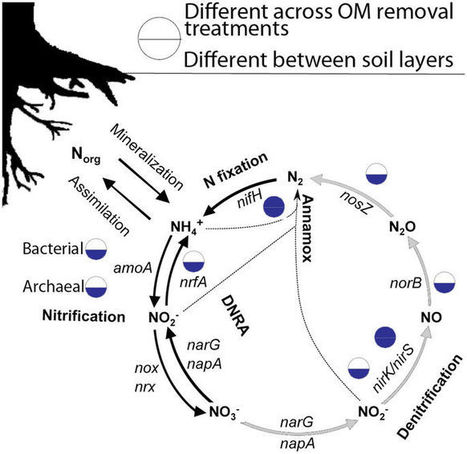
Forest ecosystems are critical to global biogeochemical cycles but under pressure from harvesting and climate change. We investigated the effects of organic matter (OM) removal during forest harvesting on the genetic potential of soil communities for biomass decomposition and nitrogen cycling in five ecozones across North America. We analyzed 107 samples, representing four treatments with varied levels of OM removal, at Long-Term Soil Productivity Study sites. Samples were collected more than ten years after harvesting and replanting and were analyzed via shotgun metagenomics. High-quality short reads totaling 1.2 Tbp were compared to the Carbohydrate Active Enzyme (CAZy) database and a custom database of nitrogen cycle genes. Gene profile variation was mostly explained by ecozone and soil layer. Eleven CAZy and nine nitrogen cycle gene families were associated with particular soil layers across all ecozones. Treatment effects on gene profiles were mainly due to harvesting, and only rarely to the extent of OM removal. Harvesting generally decreased the relative abundance of CAZy genes while increasing that of nitrogen cycle genes, although these effects varied among ecozones. Our results suggest that ecozone-specific nutrient availability modulates the sensitivity of the carbon and nitrogen cycles to harvesting with possible consequences for long-term forest sustainability.
|
|
Scooped by
mhryu@live.com
April 16, 2018 12:17 AM
|
The purpose of this review is to present the most common and emerging DNA‐based methods used to generate data for biodiversity and biomonitoring studies. As environmental assessment and monitoring programmes may require biodiversity information at multiple levels, we pay particular attention to the DNA metabarcoding method and discuss a number of bioinformatic tools and considerations for producing DNA‐based indicators using operational taxonomic units (OTUs), taxa at a variety of ranks and community composition. By developing the capacity to harness the advantages provided by the newest technologies, investigators can “scale up” by increasing the number of samples and replicates processed, the frequency of sampling over time and space, and even the depth of sampling such as by sequencing more reads per sample or more markers per sample. The ability to scale up is made possible by the reduced hands‐on time and cost per sample provided by the newest kits, platforms and software tools. Results gleaned from broad‐scale monitoring will provide opportunities to address key scientific questions linked to biodiversity and its dynamics across time and space as well as being more relevant for policymakers, enabling science‐based decision‐making, and provide a greater socio‐economic impact. As genomic approaches are continually evolving, we provide this guide to methods used in biodiversity genomics.
|
|
Scooped by
mhryu@live.com
April 15, 2018 4:39 PM
|
Forest soils represent important terrestrial carbon (C) pools where C is primarily fixed in the plant-derived biomass but it flows further through the biomass of fungi and bacteria before it is lost from the ecosystem as CO2 or immobilized in recalcitrant organic matter. Microorganisms are the main drivers of C flow in forests and play critical roles in the C balance through the decomposition of dead biomass of different origins. Here, we track the path of C that enters forest soil by following respiration, microbial biomass production, and C accumulation by individual microbial taxa in soil microcosms upon the addition of 13C-labeled biomass of plant, fungal, and bacterial origin. We demonstrate that both fungi and bacteria are involved in the assimilation and mineralization of C from the major complex sources existing in soil. Decomposer fungi are, however, better suited to utilize plant biomass compounds, whereas the ability to utilize fungal and bacterial biomass is more frequent among bacteria. Due to the ability of microorganisms to recycle microbial biomass, we suggest that the decomposer food web in forest soil displays a network structure with loops between and within individual pools. These results question the present paradigms describing food webs as hierarchical structures with unidirectional flow of C and assumptions about the dominance of fungi in the decomposition of complex organic matter.
|
|
Scooped by
mhryu@live.com
April 15, 2018 4:23 PM
|
The discovery of lignin as activator for the redox enzyme lytic polysaccharide monooxygenases (LPMOs) for the oxidation of cell-wall polysaccharides opens a new scenario for investigation of the interplay between different lignocellulose-degrading enzymes. The lignin-active enzymes in one hand, and the carbohydrate active in the other, are linked through a variety of electrons carrier molecules either derived from lignin or enzymatically transferred. Likewise, in nature, many lignocellulose-degrading organisms are expressing those enzymes simultaneously, and we wanted to test if a major commercial available lignin oxidase enzyme, i.e., laccase could benefit and synergize the activity of the LPMOs by depolymerizing the insoluble lignin. In this work, two fungal laccases together with a mediator (ABTS) were used to isolate low-molecular-weight lignin from lignocellulosic biomass. The isolated lignins were used as electron donors for activation of LPMOs. A direct correlation between the low-molecular-weight lignin isolated with laccases and an increased activity of a cellulolytic cocktail containing LPMO was found when pure cellulose was hydrolyzed. We then tried to implement existing commercial cellulases cocktail with laccase enzymes, but under the conditions tested, the co-incubation of laccases with LPMOs showed a substrate competition towards oxygen inhibiting the LPMO. In addition, we found that laccase treatment may cause other modifications to pure cellulose, rendering the material more recalcitrant for enzymatic saccharification. Laccase-mediated system was able to depolymerize lignin from pre-treated and native sugarcane bagasse and wheat straw, and the released phenolic molecules were able to donate electrons to LPMO enzymes boosting the overall enzymatic hydrolysis of cellulose. Likewise, other poly-phenol oxidase, we might have just started showing possible pros or cons in applying several oxidase enzymes for a simultaneous degradation of cellulose and lignin, and we found that the competition towards oxygen and their different consumption rates must be taken into account for any possible co-application.
|
|
Scooped by
mhryu@live.com
April 15, 2018 4:11 PM
|
Ortholog prediction and synteny visualization across whole genomes are valuable methods for detecting and representing a range of evolutionary processes such as genome expansion, chromosomal rearrangement, and chromosomal translocation. Few standalone methods are currently available to visualize synteny across any number of annotated genomes. Here, I present a Synteny Imaging tool (Synima) written in Perl, which uses the graphical features of R. Synima takes orthologues computed from reciprocal best BLAST hits or OrthoMCL, and DAGchainer, and outputs an overview of genome-wide synteny in PDF. Each of these programs are included with the Synima package, and a pipeline for their use. Synima has a range of graphical parameters including size, colours, order, and labels, which are specified in a config file generated by the first run of Synima – and can be subsequently edited. Synima runs quickly on a command line to generate informative and publication quality figures. Synima is open source and freely available from https://github.com/rhysf/Synima under the MIT License. Synima should be a valuable tool for visualizing synteny between two or more annotated genome assemblies.
|
|
Scooped by
mhryu@live.com
April 15, 2018 3:56 PM
|
- Roots grow in highly dynamic and heterogeneous environments. Biological activity as well as uneven nutrient availability or localized stress factors result in diverse microenvironments. Plants adapt their root morphology in response to changing environmental conditions, yet it remains largely unknown to what extent developmental adaptations are based on systemic or cell‐autonomous responses.
- We present the dual‐flow‐RootChip, a microfluidic platform for asymmetric perfusion of Arabidopsis roots to investigate root–environment interactions under simulated environmental heterogeneity. Applications range from investigating physiology, root hair development and calcium signalling upon selective exposure to environmental stresses to tracing molecular uptake, performing selective drug treatments and localized inoculations with microbes.
- Using the dual‐flow‐RootChip, we revealed cell‐autonomous adaption of root hair development under asymmetric phosphate (Pi) perfusion, with unexpected repression in root hair growth on the side exposed to low Pi and rapid tip‐growth upregulation when Pi concentrations increased. The asymmetric root environment further resulted in an asymmetric gene expression of RSL4, a key transcriptional regulator of root hair growth.
- Our findings demonstrate that roots possess the capability to locally adapt to heterogeneous conditions in their environment at the physiological and transcriptional levels. Being able to generate asymmetric microenvironments for roots will help further elucidate decision‐making processes in root–environment interactions.
|

















barrick je