Your new post is loading...

|
Scooped by
mhryu@live.com
Today, 1:03 AM
|
While biomolecular condensates have been implicated in activating transcription, investigating the specific contributions of condensates relative to soluble proteins has been challenging. Here, we leverage the concentration dependence of condensate formation to compare the transcriptional activity of condensed and soluble MYOCD, a cell-type-specific transcriptional coactivator. Using single-cell resolution measurements, we find that cells with MYOCD condensates have more target gene transcripts than cells with soluble MYOCD. While transcription can occur in the absence of condensates, it is less frequent and produces fewer transcripts. Both the frequency of active cells and transcriptional output per cell within a heterogeneous population increase sharply above concentration thresholds that promote condensate formation. Mutants that alter the concentration threshold for condensate formation correspondingly shift the MYOCD concentration at which transcription increases. We propose that condensates enhance transcription by coordinating the multiple steps required for gene activation, making an otherwise infrequent event more common.
|
|
Scooped by
mhryu@live.com
Today, 12:59 AM
|
Polyethylene (PE), the most commonly produced synthetic plastic derived from petroleum, is highly recalcitrant to biodegradation, causing severe environmental accumulation. The recycling of PE involves considerable economic and technological obstacles. However, some microbes possess enzymes that can break down PE. Modern genomic and bioinformatic methods now allow researchers to investigate these bacteria in depth, revealing the genes and metabolic pathways involved in PE breakdown. This review emphasizes current genomic approaches and their applications in understanding the genomes of PE-degrading bacteria. Additionally, it explores some catabolic genes that play important roles in the oxidative breakdown of PE, such as alkB and cyp genes. The merging of whole-genome sequencing, pangenome analysis, genome mining, and multi-omics approaches has enhanced our understanding of microbial and enzymatic processes associated with PE biodegradation. Finally, the review refers to the utilization of protein and genetic engineering for enhancing enzyme activity and bacterial PE biodegradation. Together, our observations underscore the critical importance of genetics in devising efficient, sustainable biodegradation solutions for minimizing PE waste.
|
|
Scooped by
mhryu@live.com
Today, 12:47 AM
|
Synthetic organelles are engineered to replicate the compartmentalization and dynamic functionality of natural organelles, offering the potential to reprogram or rescue cellular functions. Existing approaches, such as protein cages, biomolecular condensates, and other artificial compartments, have shown promise but remain limited by their capacity to perform multifunctional tasks. To overcome these challenges, we introduce Cyborg Bacterial Organelles (CBOs), which are non-replicating, metabolically active bacteria engineered to function as living synthetic organelles within mammalian cells. Unlike synthetic systems or replicating endosymbionts, CBOs integrate the biological complexity of living organisms with the stability and tunability of engineered materials. CBOs are generated by permeating bacteria with poly(ethylene glycol) diacrylate (PEG) based monomers followed by intracellular UV induced hydrogel crosslinking, producing a structurally reinforced, non-replicative chassis capable of sustained activity inside host cells. Here, we show that CBOs remained detectable inside mammalian cells with substantially reduced morphological disruption compared with wild-type bacteria. Furthermore, we show that CBOs can perform complex functions intracellularly, including responses to extracellular chemical stimuli via synthetic gene circuits and execution of enzymatic reactions such as prodrug conversion into a therapeutic drug. Notably, we also show that CBOs protect host cells from chemically induced mitochondrial stress. Transcriptomic analysis revealed host gene expression changes associated with membrane remodeling, ion transport, and metabolic buffering, suggesting that CBOs modulate the host in protective and adaptive ways. Together, these findings establish CBOs as a novel hybrid material platform for intracellular engineering while addressing key limitations of current synthetic organelle systems. CBOs open new possibilities for cellular modulation in therapeutic and diagnostic applications.
|
|
Scooped by
mhryu@live.com
Today, 12:37 AM
|
Bottom-up construction of synthetic cells requires a simple, yet robust ATP-generating system. The arginine deiminase (ADI) pathway offers a minimal, enzyme-based alternative to more complex ATP-producing systems such as glycolytic routes, respiratory chains or photosystems. Here, we implement the ADI pathway in E. coli and test its capacity to fully replace native ATP generation. First, we designed and tested synthetic ADI operons through combinatorial library screening and selected high-performing variants. Using the best performing-ADI variant, we progressively reduced the cells dependence on native ATP generation while increasing selection for ADI-dependent growth through targeted knockout strains and growth conditions, followed by adaptive laboratory evolution. This resulted in a strain in which the ADI pathway sustained growth in minimal medium at a doubling time of 21 hours, serving as the sole source of ATP. Whole-genome sequencing of evolved strains revealed that this transition required loss-of-function mutations in the native respiratory chain. These findings demonstrate that the ATP supply of a cell can be fully supported by the ADI pathway, which has not been demonstrated in nature. Moreover, the ability of the pathway to sustain growth with a relatively high growth rate highlights its potential to fully power synthetic cells and support other biotechnological applications.
|
|
Scooped by
mhryu@live.com
Today, 12:04 AM
|
Extensive fungicide use has promoted resistance in pathogenic fungi and raised ecological concerns. Multiprotein bridging factor 1 (MBF1), a conserved transcriptional coactivator, contributes to fungal growth, stress responses, and pathogenicity. Its unique domain architecture and species-specific structural features suggest potential for fungicide discovery. However, selective targeting remains unvalidated, with challenges including conformational flexibility, identification of ligandable pockets or interaction interfaces, and inhibitor selectivity. MBF1-targeted strategies may affect multiple downstream pathways, but resistance-management benefits remain uncertain. Integrating structural biology, computational chemistry, chemical biology, and plant pathology is essential to evaluate target engagement, antifungal efficacy, and selectivity for crop protection.
|
|
Scooped by
mhryu@live.com
November 16, 11:47 PM
|
Engineered living hydrogels (ELHs) represent a convergence between biomaterial science and synthetic biology, wherein living and non-living components are combined to overcome the limitations of traditional hydrogels. While early ELHs relied on passive cell encapsulation, the next-generation of ELHs, cell-node hydrogels (CNGels), employ cells as active crosslinking nodes, fundamentally transforming hydrogel functionality and performance. This strategy enables dynamic bioactive properties, including self-healing, self-growing, self-degrading, and real-time programmable behavior through cellular sensing and adaptation. These CNGels have been successfully engineered using both mammalian and non-mammalian cells by employing a variety of strategies from metabolic glycoengineering and bioorthogonal click chemistry to SpyTag/SpyCatcher-mediated assembly, enabling a wide range of biomedical applications from tissue engineering and regenerative medicine to bioremediation. This review highlights the current fabrication strategies and mechanistic principles of CNGels, as well as provides a forward-looking perspective on optimizing CNGels for clinical and industrial deployment.
|
|
Scooped by
mhryu@live.com
November 16, 11:10 PM
|
A longstanding barrier in genome engineering with CRISPR–Cas9 has been the inability to measure editing outcomes and their functional effects at single-cell resolution. Here we present Superb-seq, which captures single-cell edits and transcriptome effects by integrating Cas9 editing, T7 in situ transcription and single-cell RNA sequencing. We performed Superb-seq on 35,000 cells from three cell lines. Using seven guide RNAs to target four chromatin remodeler genes in 10,000 K562 cells, Superb-seq detected 5,761 edited cells, all on-target sites and 36 off-target sites. Superb-seq improved estimation of downstream perturbation effects on gene expression compared to Perturb-seq. We compared Superb-seq to 4 bulk off-target detection methods and identified between 6 and 210 edit sites across 3 benchmarking guides. Nineteen off-target edits were associated with differential gene expression, nine of which were cell type-specific. In summary, Superb-seq illuminates the consequences of Cas9 genome editing by connecting single-cell edits with changes in gene expression. Superb-seq integrates CRISPR–Cas9, T7 in situ transcription and scRNA-seq to capture genome edits and gene expression in single cells.
|
|
Scooped by
mhryu@live.com
November 16, 9:25 PM
|
Despite advances in bioengineering strategies, the in vivo performance of live biotherapeutic products (LBPs) remains limited by poor intestinal engraftment and unstable functional persistence, owing in part to poorly understood ecological constraints. Here, we leveraged early-life ecological conditions as a tractable in vivo platform to investigate microbial engraftment across different E. coli strains. Colonization was strongly strain-dependent and was associated with intrinsic bacterial fitness and host immune responses in the gut. We showed that early-life provides a permissive ecological window that may enable durable colonization of engineered E. coli following a single administration, including the probiotic strain E. coli Nissle 1917 (EcN). Another commensal isolate EcWJ exhibited robust ecological fitness in both early-life and adult hosts, whereas the laboratory strain MG1655 colonized poorly. We further demonstrated that engineered EcWJ and EcN strains carrying either an Acanthocheilonema viteae cystatin (AvCys) secretion module or a 5-hydroxytryptophan (5-HTP) biosynthesis module both preserved long-term gut colonization while maintaining their respective functional outputs. The EcN chassis achieved superior efficacy in a colitis model despite lower intestinal abundance, whereas the EcWJ chassis exhibited better colonization and 5-HTP biosynthesis. Thus, functional performance is not only determined by colonization strength, but also depends on chassis-specific functional properties. Multiple safety assessments confirmed no overt host toxicity following early-life administration of engineered LBPs, although increases in spleen weight and maternal-to-offspring transmission should be noted. Together, these findings establish that early-life ecological conditions provide a tractable platform for durable microbial engraftment and sustained functional activity, informing the design of long-acting LBPs.
|
|
Scooped by
mhryu@live.com
November 16, 5:26 PM
|
Organisms expand their metabolism by repurposing promiscuous enzymes to perform new reactions. To be repurposed, an enzyme often must balance its original and new functions—If it cannot, another promiscuous candidate may be recruited instead. Here, we investigate how metabolic evolution of a glucokinase-deficient bacterium is impacted by environmental changes wherein the canonical substrate of the preferred recruitment candidate, N-acetyl-D-mannosamine kinase (NanK), is gradually depleted while a new resource, glucose, is abundantly available. Despite the presence of three additional genomically encoded promiscuous glucokinases, we find that NanK is still recruited to restore glycolysis via two distinct mechanisms that leave native activity largely unaltered. In one mechanism, small-scale gene amplification precedes the appearance of two non-synonymous mutations in nanK that increase glucokinase activity but have little or no effect on N-acetyl-D-mannosamine kinase activity. In another mechanism, recruitment occurs via amplification of a ∼1000 base pair fragment that narrowly encompasses nanK and reaches copy numbers as high as 127. Despite maintenance of amplification for hundreds of generations, we observe no persistent mutations in any nanK duplicate at the level of resolution provided by 75X whole genome sequencing coverage. Our results demonstrate that variable selection for multiple functions does not prevent recruitment of the preferred glucokinase candidate despite the existence of other, seemingly equal candidates. Our findings also reveal that evolution by the Innovation-Amplification-Divergence model may only be facilitated at moderate levels of gene amplification, and hindered by massive amplification, as increased gene copy number diminishes returns of individual adaptive point mutations.
|
|
Scooped by
mhryu@live.com
November 16, 5:17 PM
|
Forest humus soil (FHS) harbors highly diverse microbial communities driving carbon transformation, yet genomic resources and strategies underlying lignocellulolysis remain poorly understood. A cross‑climatic FHS metagenome-assembled genome catalog (HSMAG) was constructed from 204 metagenomic FHS samples. HSMAG included 3338 species-level genome bins (96.1% undescribed species) out of 9776 MAGs. These taxa harbored > 669 000 CAZyme sequences. To decipher how they facilitate lignocellulolysis through functional organization, we performed multidomain identification. Results showed that CAZymes were extensively organized into multi-tiered modular degradation strategies, including free CAZymes (FCs), cellulosomes, and polysaccharide utilization loci (PULs). Cellulosome scaffoldins were enriched in nonclassical taxa (Blastocatellia and Gammaproteobacteria), whereas > 44.5% of PULs occurred in Mucilaginibacter and Puia dinghuensis. FCs were enriched in endo- and exo-glucanases, while PULs harbored clustered xylan-degrading glycoside hydrolases (GHs). Thus, these modular strategies might cooperatively deconstruct lignocellulose through complementary GHs. Metatranscriptomics revealed PULs responsive to high lignocellulose levels and identified their core GHs. Recombinant expression and biochemical characterization confirmed the catalytic potential of these GHs. Notably, GH5 exhibited endoglucanase activity of 38.2 U/mg, and GH3 displayed xylanase activity of 20.3 U/mg. Taken together, HSMAG expanded FHS genomic resources and revealed synergistic modular strategies for lignocellulolysis, prioritizing targets for mechanistic investigation and lignocellulose bioconversion.
|
|
Scooped by
mhryu@live.com
November 16, 4:06 PM
|
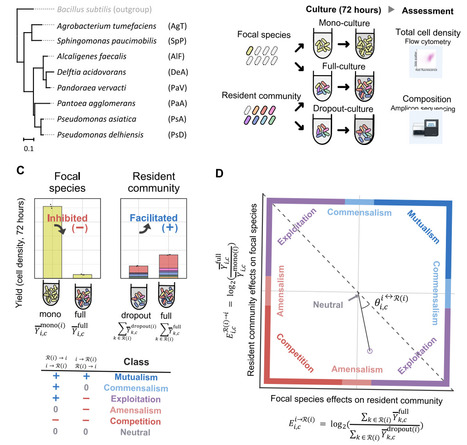
Bacterial interspecies interactions are often shaped by the growth environment through processes such as resource competition and metabolite exchange. Clarifying the relationship between these interactions and the growth environment is therefore essential to understanding them. Previously, we analysed 28 pairwise coculture systems comprising eight bacterial species across multiple carbon-source environments and found that competitive interspecies interactions, in which the species mutually inhibited growth, became more frequent as carbon source diversity increased. In monospecies cultures, mixtures of carbon sources could also support greater growth than the average observed when the constituent carbon sources were supplied individually, suggesting a benefit beyond increasing the likelihood of providing a usable carbon source. We proposed that this growth enhancement might contribute to the shift towards competitive interactions. However, whether these patterns extend to communities comprising more species remained unclear. Here, we addressed this question in a community comprising the same eight bacterial species. The carbon-source dependence of interactions in the eight-species community was consistent with the pattern observed in pairwise cocultures. In contrast, the growth enhancement associated with carbon-source diversification in monospecies cultures was attenuated in the multispecies community. The persistence of competitive shifts despite attenuated growth enhancement suggests that carbon source diversity acts as a robust driver of competitive interactions across scales of community complexity, offering a basis for relating environmental parameters to interaction patterns in complex microbial communities.
|
|
Scooped by
mhryu@live.com
November 16, 3:47 PM
|
Bacteria engage in many cooperative behaviors which provide benefits to other cells in the population. Lab experiments have suggested that these costly behaviors can be favored by kin selection due to the benefits they provide to closely related cells. However, we know much less about the role of kin selection in natural populations. Here, we used two complementary methods to measure and compare kin selected signatures of cooperation in 19 species of bacteria found in the guts of honey bees. We used bioinformatic tools to count the number (and proportion) of genes for cooperative traits in a genome, and used molecular population genetics to measure how natural selection is acting on those genes. We found evidence for a consistent signature of kin selection for cooperation on genes controlling cooperative traits across species. Genes for cooperative traits had more non-synonymous relative to synonymous polymorphism than genes for private traits, had more protein-changing mutations and more codons under positive selection, and were lost more often. From this signature, we estimate an average relatedness of 0.73 between interacting cells. However, we found no evidence supporting the prediction that this signature varies with relatedness estimated from metagenomes. These patterns suggest that whilst genes for cooperative traits are undergoing kin selection in natural populations, there may be other factors influencing how the action of kin selection varies across species.
|
|
Scooped by
mhryu@live.com
November 16, 3:38 PM
|
Two-dimensional (2D) diagrams are widely used to communicate nucleic acid secondary structure, yet the path from a sequence and pairing model to an editable publication figure often requires either specialized software or substantial cleanup in a general-purpose graphics editor. AptaRender (v2.3.1, available https://yjhe99.github.io/aptarender/ is a browser-based editor that converts a set of user-supplied DNA or RNA sequences and their dot-bracket structures into an interactive 2D drawing. The software separates structure specification from visual composition: it does not predict folding, but provides direct control over the layout, nucleotide styling, base pair styling, numbering and export. AptaRender supports simultaneously working with multiple sequences, customized per-nucleotide sizing and coloring with customized styles, manual branching and motif repositioning, constrained rotation of helices around loop rings, and visualization of a user defined hybridization region between two strands. Drawings are exported as editable SVG or high-resolution PNG. The application is implemented as a single dependency-free HTML file that runs entirely in the browser and stores working state locally. This design makes the tool easy to distribute and suitable for rapid preparation of figures for manuscripts, presentations, and exploratory communication. AptaRender complements prediction and template-based visualization software by concentrating on lightweight, local, art directed figure construction. Across eight test cases, AptaRender reliably generated accurate, information-rich 2D nucleic acid structures and exported them in PNG and SVG formats, although specialized annotations and additional symbols required external editing.
|
|
|
Scooped by
mhryu@live.com
Today, 1:01 AM
|
Synthetic biology opens new avenues for developing and discovering natural products of therapeutic value in a sustainable manner. Traditional ‘grind and find’ bioactivity-guided fractionation approaches tend to pose challenges including rediscovery of known compounds, low production yields, and lack of ability to generate analogs for drug development. This perspective covers key examples of using synthetic biology strategies to overcome such barriers through generating difficult-to-source compounds, exploring the chemical space, harnessing next-generation hosts for improved synthesis, and modularizing the biosynthetic pathway for efficient manipulation and optimization. We highlight key examples of synthetic biology applied to develop therapeutically relevant natural products from the main classes of natural products: terpenes, polyketides, nonribosomal peptides, and ribosomally synthesized and posttranslationally synthesized peptides. Taken together, these new approaches provide access to complex and difficult-to-source natural products to develop next-generation medicines. bgc
|
|
Scooped by
mhryu@live.com
Today, 12:57 AM
|
Microbial adhesion is the process by which individual microorganisms attach to a surface. It is a key process for microbial life: adhesion allows to colonize ecological niches, but also to interact with other organisms in symbiotic or pathogenic relationships. While we understand the importance of adhesion in microbial life in general, the underlying molecular mechanisms are less clear. Molecular details of adhesion processes have been elucidated only for some individual examples, mostly for human pathogens in the context of infections. In this review, we focus on the adhesion to non-living, solid surfaces, and summarize the limited understanding of the molecular principles of these interactions. We describe how proteins and other biomolecules interact with surfaces, and how microbes, and specifically bacteria, employ these interactions to enable a sessile lifestyle. We introduce the concept of preferential binding that describes specificity, affinity, and cooperativity of microbial adhesins and their interactions with different materials and surfaces. This concept more accurately describes the binding affinity to different surfaces, compared to the current textbook terminology coined for the interactions of enzymes or protein complexes. A molecular understanding of these processes, using concepts and methods across all disciplines of natural sciences, is key to the development of new disinfection and antifouling strategies that are in high demand in the post-antibiotic era.
|
|
Scooped by
mhryu@live.com
Today, 12:41 AM
|
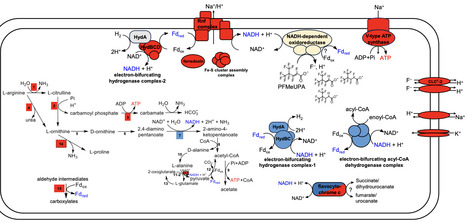
Per- and polyfluoroalkyl substances (PFAS), also known as "forever chemicals", are ubiquitous environmental pollutants, highly persistent and toxic to humans and ecosystems. In addition to legacy PFAS, largely alkanoic acids, perfluorinated olefins and their corresponding enoic acids are emerging PFAS of concern. However, reported PFAS biodegradation is typically not growth-supporting, hindering the selection for effective defluorinating bacteria. Here, we report a new amino acid-fermenting bacterial isolate, Sedimentibacter sp. strain ZM-1, that performs high-rate reductive defluorination of a perfluoroenoic acid at physiologically relevant levels (mM). This process substantially enhanced energy conservation and cell growth, with three times higher growth than fermenting L-arginine alone and 50% higher than Stickland fermentation. The reductive defluorination redirected excess reducing equivalents (NADH) away from reducing protons and internal fermentation intermediates, as evidenced by decreased H2 production and downregulation of several NADH-dependent electron-bifurcating oxidoreductases. This defluorinating electron shunting drove arginine fermentation and oxidation of intermediates, such as ornithine and alanine, to form more acetate and CO2, leading to higher substrate-level ATP synthesis per arginine consumed. This process also generated reduced ferredoxin available for cell synthesis or anaerobic respiration, as genes involved in these processes were significantly upregulated. ZM-1 has a unique and effective CLCF-type fluoride exporter that works with the highly efficient defluorinating system to enable fluorotrophic growth. Since amino acid-fermenting anaerobes are common in the environment, such fluorotrophy opens new paths for natural selection of defluorination to drive natural and laboratory evolution of fluorophilic bacteria.
|
|
Scooped by
mhryu@live.com
Today, 12:29 AM
|
A prevailing assumption in agricultural RNA research is that delivery platforms established in human medicine—such as lipid nanoparticles, polymeric carriers, extracellular vesicles, and engineered nanomaterials—can be directly adapted for crop protection. This review examines that assumption. We argue that although RNA applications in medical and agricultural contexts encounter similar biological barriers, including RNA degradation, inefficient uptake, and limited intracellular release, they operate under different constraints, such as open environmental exposure, plant-specific morphology, diffuse biodistribution, and field-scale deployment. Building on this asymmetry, we evaluate medically derived carrier platforms. We introduce a use case-dependent framework that classifies each platform by its transfer potential, relating its strengths, limitations, and adaptability to specific agricultural applications, rather than seeking a universally optimal carrier.
|
|
Scooped by
mhryu@live.com
November 16, 11:59 PM
|
5-Aminolevulinic acid (5-ALA) is an important tetrapyrrole precursor with broad application potential. However, high-level microbial production can impose oxidative stress and disrupt redox homeostasis, undermining production robustness and productivity. To address this challenge, this study developed a redox-guided engineering strategy in E, coli that coordinates oxidative stress control, NADPH regeneration, product export, and carbon flux reinforcement. Chromosomal integration of ALA synthase (ALAS) with acnA improved biomass accumulation by strengthening central metabolism. Further the co-expression of redox genes katG and grxA enhanced oxidative stress tolerance, which raised 5-ALA titers to 11.8 g/L. Further engineering with pos5 for NADPH regeneration, eamA for 5-ALA export, and ppc for anaplerotic oxaloacetate replenishment increased the 5-ALA titer to 21.8 g/L and the yield to 0.51 g/g glucose. Process optimization through glucose-glycerol balancing, pantothenic acid supplementation, and staged ferric citrate feeding further elevated production to 24.8 g/L. In a 5-L fed-batch bioreactor, controlled substrate feeding combined with staged ferric citrate addition successfully boosted 5-ALA titer up to 44.6 g/L with a yield of 0.655 g 5-ALA/g carbon source. In summary, this work demonstrates that integrating antioxidant defense, redox balance, metabolite export, and anaplerotic flux enable high-yield 5-ALA synthesis and provide a versatile strategy for a robust microbial platform.
|
|
Scooped by
mhryu@live.com
November 16, 11:33 PM
|
Antifreeze proteins (AFPs) constitute a broad class of biological macromolecules that extend the lifespan of various organisms, including bacteria, fungi, algae, diatoms, plants, insects, and fish, by inhibiting ice growth under extreme icy conditions. We discuss the molecular mechanisms behind the specificity of AFPs in recognizing a particular water polymorph, “ice”, preventing recrystallization and regulating ice growth, emphasizing their irreversible adsorption onto ice. Various structural motifs, ice-recognition mechanisms underlying antifreeze activity, and factors that enhance their antifreeze function are explained. In synergy with experimental structural biology techniques, advanced computational methods have played an essential role in elucidating the correlations among structure, protein hydration dynamics, and the functions of different classes of AFPs. In particular, advances in water-model development, improvements in sampling techniques, and free-energy calculations enable us to elucidate the origin of the unusual hydration dynamics of this group of proteins, which are crucial for ice recognition. This review discusses how molecular modeling and advanced molecular dynamics simulations shape our understanding of key aspects of AFP-mediated inhibition of ice growth. The findings presented herein can form the basis for designing AFP-inspired materials and their synthetic mimetics to regulate ice formation, which possess immense potential in the cryopreservation of biological cells, tissues, and different organs; the storage and delivery of perishable foods; the freeze-thaw degradation of cement-based substances; and the advancement of surfaces designed to prevent ice accumulation for aerospace vehicle, solar panel, and wind applications.
|
|
Scooped by
mhryu@live.com
November 16, 10:10 PM
|
Genome-scale metabolic models (M-models) are widely used to understand and manipulate microbial metabolism in silico, and are characterized by an extensive availability of automated reconstruction, analysis tools, and simulation software. The scope and accuracy of M-models was greatly improved by the development of metabolic and gene expression models (ME-models) aimed to infer the optimal allocation of individual macromolecules such as proteins, RNA, and enzymatic complexes which constrain metabolic fluxes to their availability and abundance. Although ME-models reconstruction and simulation is currently aided by open-source software such as coralME, COBRAme, ECOLIme, and solveME, they lag behind their M-model counterparts and lack formal analysis tools such as gene essentiality analysis, that would facilitate a broader adoption of ME-models in research. Moreover, the rigid and incomplete formulation of ME-models limit advanced analyses they are theoretically capable of, including the simulation of genomically recoded organisms, protein homeostasis, enzyme cofactor essentiality, and RNA decay. Here, we present coralME v1.3, a vastly improved software version aimed to expand the applicability of ME-models by adding support for translation of non-canonical amino acids, protein and RNA degradation reactions, use of arbitrary coupling coefficients and parameter values, and formalized gene and cofactor essentiality analyses. This work expands, formalizes, and streamlines ME-model reconstruction and analyses for applied research.
|
|
Scooped by
mhryu@live.com
November 16, 5:31 PM
|
Plants naturally extract heavy metals from polluted water, but they merely accumulate these toxins in their tissues, leaving behind hazardous biomass. Alternatively, microbial biomineralization can precipitate dissolved metals into valuable semiconductor nanomaterials, but this process relies on sulfate-reducing bacteria, strict anaerobes that cannot survive the oxygen-rich environment of plant roots. Here we overcome this oxygen limitation by engineering the aerobic bacterium Vibrio natriegens to colonize water lettuce (Pistia stratiotes) roots and assemble metal sulfides directly in the rhizosphere. Sustained entirely by root exudates, the bacteria perform aerobic sulfate reduction to generate hydrogen sulfide, precipitating aqueous cadmium and lead into cell-surface-anchored CdS and PbS semiconductor nanoparticles (4.94–11.00 nm). The resulting semiconductor-cell biohybrids exhibit photoelectric properties, making them valuable for post-harvest applications such as solar-driven biosynthesis. Concurrently, bacterial auxin secretion buffers the host plant against metal toxicity, recovering root biomass by over 10%. Over consecutive treatment cycles, this system removed 30% of cadmium and 63% of lead from the aqueous phase, far exceeding the capacity of single-host controls. By decoupling sulfide biomineralization from anaerobic constraints, this rhizospheric strategy upgrades wastewater treatment from metal sequestration to optoelectronic material recovery.
|
|
Scooped by
mhryu@live.com
November 16, 5:21 PM
|
Microbial biomanufacturing and engineered probiotics increasingly use related microbial lineages across distinct product architectures, but the associated engineering and evidence requirements are rarely compared. Here, E, coli Nissle 1917 (EcN) is evaluated as a programmable bridge chassis across four alternative deployment modes: purified molecule, cell-derived architecture/material, living-cell product, and host-state-responsive living system. The review links carbon–nitrogen–energy–redox allocation and global regulation to cellular-state trajectories, interface capacity, safety refactoring, materials-assisted protection, containment, and mode-specific qualification. Direct evidence includes 100-L heparosan fermentation, antibiotic-free β-alanine production, engineered outer-membrane-vesicle delivery, human studies of phenylalanine-consuming EcN, and glucose-responsive GLP-1 delivery in diabetic mice and non-human primates. The terminated SYNB1934 Phase 3 program is considered alongside positive studies to distinguish proof of function, pharmacodynamic activity, tolerability, manufacturing readiness, and late-stage efficacy. Operational criteria for bridge-chassis designation, explicit rules for boundary cases, and a prospective design–build–test–learn agenda are proposed. As functional embodiment changes, engineering priorities shift among flux, state, interface, formulation, containment, and evidence—not necessarily toward a more advanced mode.
|
|
Scooped by
mhryu@live.com
November 16, 4:12 PM
|
Efficient delivery of the Cas endonuclease into target cells avoiding toxic effects remains one of the limiting steps of CRISPR-Cas gene editing technologies. Bacterial conjugation delivers protein and DNA directly into recipient bacteria, since the conjugative relaxase travels through a type IV secretion system covalently attached to the transferred DNA strand. We previously showed that fusion proteins relaxase- Cas12a or relaxase- base editor are translocated by conjugation and recover gRNA-guided nuclease or base-editing activity in recipient bacteria, despite the large size of the fusion. Aiming to improve the efficiency and to broaden the range of susceptible recipient bacteria, here we test translocation of the miniature type V-U4 nuclease Cas12n, fused to two unrelated conjugative relaxases, MobA and TrwC from RSF1010 and R388 respectively. Both fusions of 139 and 168 kDa were stably produced in E. coli donor cells, mobilized their cognate plasmid as efficiently as the wild-type relaxases, and directed guide-dependent cleavage of a chromosomal target in the donor. Translocation and activity in recipient cells were tested with a lethality assay based on the loss of transconjugants viability caused by double-strand breaks introduced by the translocated nuclease. When MobA-Cas12n was delivered together with a mobilizable plasmid which encoded the guide RNA, conjugation frequency was reduced by more than one order of magnitude relative to both a non-targeting guide RNA and a nuclease-free relaxase control, indicating target-specific cleavage of the recipient chromosome. When assayed in parallel with previously characterized TrwC-Cas12a, MobA-Cas12n showed better protein yields and higher activity in recipient cells. This work extends the range of Cas proteins deliverable by conjugative relaxases to miniature nucleases. The fusion with relaxase MobA allows the use of the promiscuous RP4 conjugative system for conjugative delivery, extending the range of recipient bacteria potentially targeted by this tool.
|
|
Scooped by
mhryu@live.com
November 16, 3:51 PM
|
In nature, many bacteria reside in a non-growing stationary phase. The extent and genetic basis of the accompanying cellular remodeling remain unclear. Here, we developed Coli-Painting, a combinatorial staining assay, and BactoScoop, a dedicated image-based profiling pipeline, to characterize the growth-to-stasis transition in E. coli. Single-cell profiles revealed a gradual yet heterogeneous entry, with some cells retaining signs of chromosome replication or cell division well into stationary phase. Subsequent genome-wide profiling identified genetic determinants of stationary-phase cell morphology, nucleoid organization, RNA distribution, and membrane-related properties. Global correlations among cellular features revealed coordinated aspects of stationary-phase cell architecture, while high-dimensional mutant profiles provided functional context for genes of known and unknown function. Downstream characterization of 19 y-genes highlighted the ability of our approach to identify relevant contributors to stationary-phase physiology. Overall, our work uncovers the genetic landscape of stationary-phase cell organization in E. coli and serves as a resource for uncovering growth-stage-specific gene function.
|
|
Scooped by
mhryu@live.com
November 16, 3:42 PM
|
Clinical and public-health questions often concern strains rather than species, yet co-resident strains of one species can be so closely related that a single long read carries no sequence difference between them. We measured how often this happens in 639 pairs of isolates of Enterococcus faecium, Klebsiella pneumoniae, Listeria monocytogenes and Staphylococcus aureus sequenced on one nanopore platform. Among the 297 pairs above 99% average nucleotide identity (ANI), 40.37% of read placements (a read counted against one strain's genome) carried no sequence difference between the two strains, and above 99.9% ANI about three quarters did. Strains of one species also differ in the DNA motifs they methylate. Our method, Epilect, assigns single nanopore reads to strains from the basecaller's methylation calls, given a methylation profile for each strain, and declines to call when the evidence is weak. In the pairs above 99% ANI it correctly assigned 21.8% of the read placements that sequence could not place, at a precision of 0.959. In computational mixtures of 65 pairs of distinct strains at or above 99.5% ANI that were predicted to differ in methylation, its per-read F1 score exceeded that of the best of three sequence-based read-phasing tools by 0.25 (95% CI 0.08 to 0.37); where equally related strains were predicted to share a methylome, the comparison reversed. DNA methylation therefore supplies strain evidence on reads whose sequence carries none, and whether it will do so for a given pair of strains can be estimated before sequencing.
|