Your new post is loading...

|
Scooped by
mhryu@live.com
August 22, 11:45 PM
|
DNA sequences derived from ancient samples provide insights into human history, paleoenvironments, and evolutionary biology. Advances in laboratory techniques and computational tools have established ancient DNA research as a distinct field. However, current analyses focus mainly on the DNA level, while the protein space remains under-explored. Recent progress in the de novo assembly of ancient metagenomes and the availability of protein structure prediction tools, such as AlphaFold 2, enable the reconstruction of protein structures from these degraded sequences. Here, we present a computational framework to assemble contigs, evaluate their authenticity as ancient sequences, predict open reading frames, and fold ancient protein structures directly from highly damaged metagenomic data. Applying this pipeline to two-million-year-old datasets from the Kap Kobenhavn Formation, we successfully rescued ancient proteins involved in methane metabolism. By generating structural models with AlphaFold 2 and comparing them to modern predicted reference structures, we demonstrate that these ancient proteins can be reconstructed and aligned with high confidence. We showcase this by analyzing an archaeal V/A-type ATP synthase protein recovered from the 2M-year-old Greenlandic data. Ultimately, our work proves that ancient proteins can be reliably recovered from highly degraded palaeogenomic material, establishing a new computational avenue for evolutionary and biochemical research.
|
|
Scooped by
mhryu@live.com
August 22, 11:22 PM
|
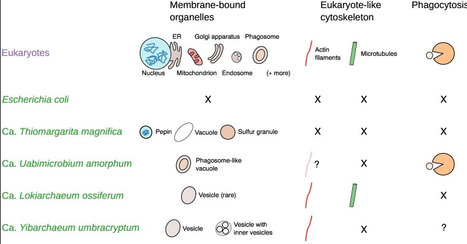
Cellular organisms can be divided into two basic types of cells: the prokaryotic cells of Bacteria and Archaea and the eukaryotic cells. The rapidly expanding knowledge of the diversity and ultrastructure of prokaryotic cells has revealed cellular intricacies that warrant a critical reappraisal of the profundity of the prokaryote–eukaryote divide.
|
|
Scooped by
mhryu@live.com
August 22, 11:13 PM
|
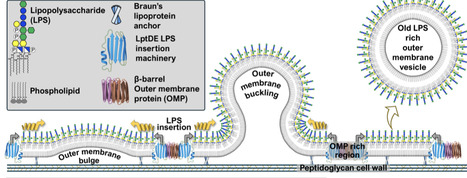
The Gram-negative outer membrane is a load-bearing permeability barrier dependent on ordered lipopolysaccharide (LPS) packing in its outer leaflet. How this organization is maintained after LPS insertion, and whether bacteria can remodel LPS independently of growth, remain unclear. Existing models attribute LPS turnover to passive dilution during elongation and division, limiting adaptation as growth slows. Here we show that, as E. coli enters stationary phase and elongation slows, new LPS insertion continues while pre-existing LPS is preferentially removed through outer membrane vesicles, enabling growth-independent surface remodelling. Pulse–chase metabolic labelling and super-resolution microscopy reveal that newly inserted LPS localizes to discrete sites and remains segregated from pre-existing LPS. Spatiotemporal analysis supports an insertion-trapping model in which localized insertion and restricted lateral diffusion maintain LPS-rich patches without coarsening into larger domains. Time-lapse imaging, biochemical fractionation and nanoparticle tracking identify vesicle release as a route that uncouples LPS turnover from cell growth. Lipopolysaccharide (LPS) organization and turnover in E. coli is integral to outer membrane homeostasis. Here, pulse-chase labelling and imaging reveal sustained spatial segregation of pre-existing and newly inserted LPS, together with growth-independent LPS turnover by vesiculation.
|
|
Scooped by
mhryu@live.com
August 22, 10:40 PM
|
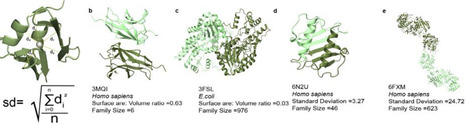
A fundamental question in structural biology centres around understanding protein evolution. Key to this process is mutational robustness, defined as the protein fold's ability to absorb sequence changes without collapsing its structure. Here, we show that robustness is systematically shaped by simple features such as protein size, geometry, and oligomeric state. We used Foldseek-identified (structural) homologs to quantify family size across monomers and higher homo-oligomers. We found that proteins in larger families are consistently larger in size, more compact in atomic density, and less exposed to solvent. Strikingly, homo-oligomers occupy systematically larger families than monomers, revealing quaternary structure itself as a driver of mutational tolerance, not merely a functional supplement. This signature of robustness can be further linked to increasing functional complexity in proteins; those with adaptive, multifaceted biological roles belong to larger structural families than those with specific roles, thereby linking structural flexibility directly to evolutionary versatility. In short, simple yet overlooked features of protein geometry can explain mutational robustness and evolvability, offering a structural rationale for why certain protein families have diversified extensively while others remain in evolutionary stasis.
|
|
Scooped by
mhryu@live.com
August 22, 10:20 PM
|
Rift Valley Fever Virus (RVFV) is a mosquito-borne zoonotic pathogen responsible for severe disease in domestic and wild ungulates as well as humans, representing a major threat to livestock production and human public health. RVFV is endemic in many African countries and has the potential to spread to new geographical regions. Current vaccines have limitations in safety and efficacy, highlighting the need for strategies to develop new vaccines candidates. In this study, we explored the use of codon deoptimization (CD) as a novel attenuation approach for the development of live-attenuated vaccine (LAV) against RVFV. CD exploits the redundancy of the genetic code by replacing frequently used codons with synonymous, less-preferred codons, thereby reducing translational efficiency without altering the amino acid sequence. We recoded parts of the M and S genome segments of RVFV using the least frequently used codons in mammalian cells, ensuring complete preservation of protein functionality and immunogenicity. Using reverse genetics, we rescued a panel of recombinant (r)RVFV encoding codon-deoptimized S-segment NSs gene (rNScd), M-segment Gn/Gc genes (rMcd), or both (rMcd/NScd). These recombinant CD viruses were characterized in vitro in mammalian and insect cell lines and in vivo using wild-type and immunocompromised mice. Results demonstrated varying degrees of attenuation among the three CD rRVFV, with the one deoptimized in both viral segments, rMcd/NScd, as a promising LAV based on the safety profiles. This study provides proof of concept for the use of CD as a rational strategy to generate attenuated RVFV, for the development of next-generation vaccines against this zoonotic threat.
|
|
Scooped by
mhryu@live.com
August 22, 4:27 PM
|
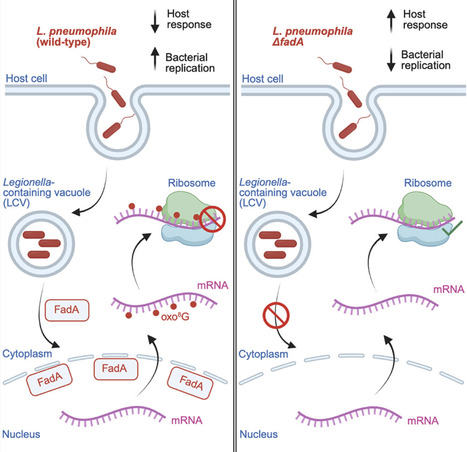
Bacterial pathogens harbor specialized secretion systems that inject effector proteins into the host cell to establish infection and disease. While many bacterial effectors post-translationally modify proteins to influence host responses, the extent to which effectors modify host RNA is currently unknown. Here we performed RNA-interactome capture (RIC) to isolate effectors bound to host cellular messenger RNA (mRNA) during Legionella pneumophila infection. RIC identified an uncharacterized effector, FadA (Lpw16921), which localized to the host-cell nucleus and interacted with host mRNAs at uracil (U)-rich RNA motifs. FadA exhibited NADPH-oxidase activity that mediated 8-oxo-guanine (oxo8G) modifications of mRNA substrates, resulting in oxidative damage and inhibition of translation. Infection with L. pneumophila harboring wild-type FadA, but not a catalytically inactive mutant, increased oxo8G modifications, suppressed cytokine responses, and promoted bacterial persistence in vivo. Our findings demonstrate the potential for a secreted effector to post-transcriptionally modify host mRNA as a mechanism to promote bacterial virulence.
|
|
Scooped by
mhryu@live.com
August 22, 4:09 PM
|
Programmed −1 ribosomal frameshifting (PRF) is a translational control mechanism used by RNA viruses to regulate the relative abundance of proteins encoded in different reading frames. Cardioviruses exhibit the highest known PRF efficiency, with ∼85% of ribosomes shifting into the −1 frame. This unusual event requires an interaction between the viral 2A protein and a stimulatory element in the RNA genome, but the basis for protein dependence is unclear. To address this, here we investigate the structure and dynamics of the PRF signal in Theiler’s murine encephalitis virus (TMEV). By combining X-ray crystallography, small-angle X-ray scattering (SAXS), and single-molecule fluorescence resonance energy transfer (smFRET), we show that 2A binding switches the RNA from a stem-loop conformation into a pseudoknot, and we demonstrate that pseudoknot formation is essential for efficient PRF in vitro and in cells. Together, these findings illustrate how the cardiovirus PRF element behaves as a protein-dependent riboswitch, defining the molecular mechanism by which frameshifting is conditionally activated.
|
|
Scooped by
mhryu@live.com
August 22, 1:58 PM
|
The application repertoire of industrial biotechnology is constrained by the reaction scope of natural biocatalysis, which covers only a fraction of the accessible chemical space. To expand the versatility of biomanufacturing, abiological organometallic catalysts can be integrated into synthetic biology in the form of artificial metalloenzymes (ArMs). ArMs have been developed for a broad range of new-to-nature reactions, and in recent years multiple examples of their successful implementation in vivo have been demonstrated. Nevertheless, whole-cell ArM catalysis remains at the stage of fundamental research, and hybrid metabolic systems incorporating ArMs have yet to be realized at scale. In this review, we summarize the recent advances in whole-cell ArM catalysis and outline the challenges associated with in vivo ArM incorporation. We highlight the additional complexity that arises when transitioning from simple whole-cell biotransformations to metabolic engineering with ArMs and discuss potential strategies to achieve efficient integration of ArMs into biosynthetic pathways.
|
|
Scooped by
mhryu@live.com
August 22, 1:34 PM
|
Recent advances in computational methods for designing biological sequences have sparked the development of metrics to evaluate these methods performance in terms of the fidelity of the designed sequences to a target distribution and their attainment of desired properties. However, a software library implementing these metrics was lacking. In this work we introduce seqme, a modular and highly extendable open-source Python library, containing model-agnostic metrics for evaluating computational methods for biological sequence design. seqme considers three groups of metrics: sequence-based, embedding-based, and property-based, and is applicable to a wide range of biological sequences: small molecules, DNA, ncRNA, mRNA, peptides and proteins. The library offers a number of embedding and property models for biological sequences, as well as diagnostics and visualization functions to inspect the results. seqme can be used to evaluate both one-shot generation and iterative optimization. We show the utility of seqme by performing an antimicrobial peptide benchmark and acquiring mRNA data.
|
|
Scooped by
mhryu@live.com
August 22, 12:01 PM
|
Nucleic acid testing is important for infectious-disease diagnosis, but combining high sensitivity with accessible testing remains challenging. Here we show a chip-based visual detection strategy for one or two viral RNA targets that involves only sample loading, without further instrumentation or manual actuation. Target-activated CRISPR-Cas13a alters the wettability of a molecular barrier, causing liquid to cross a preset threshold and generate a dam-break drainage signal. The chip detects a single target at 10 aM within 2 min and two targets at 100 aM within 5 min, with costs of $0.20 and $0.30 per test, respectively. We further establish a practical clinical-sample workflow combining room-temperature lysis with RNase inhibition and validate the platform across 40 nasal-swab samples tested for SARS-CoV-2, influenza A virus and influenza B virus, with results concordant with RT–PCR. This threshold-based fluidic strategy provides a route towards rapid, low-cost and instrument-free molecular testing outside centralized laboratories. Nucleic acid testing is central to infectious-disease diagnosis, and methods which combine high sensitivity with operational simplicity and ease of interpretation are particularly desirable. Here the authors present their CRISPR-based ‘dam-break drainage’ chip, where a positive result is clearly visualised via the release of test liquid from a sample reservoir.
|
|
Scooped by
mhryu@live.com
August 22, 11:47 AM
|
Phosphorus (P) availability is closely associated with algal bloom types, yet filamentous attached algae frequently proliferate in clear waters or low-P systems. To examine associations between algal dominance and microbial P-cycling potential, sediment–periphyton assemblages from a low-P artificial water-diversion canal were incubated for 120 days under three water matrices representing oligotrophic, lake-like, and eutrophic conditions. Algal dominance was assessed by microscopy and metagenomic relative abundance profiling, together with sediment P fractions, bacterial communities, and P-cycling genes. Filamentous attached algae remained dominant under low-P treatments, accompanied by depletion of sediment P, especially redox-sensitive BD-P, and higher relative abundances of genes associated with P scavenging and organic P utilization, including aphA and glpQ. In contrast, eutrophic treatments were associated with planktonic algae accounting for more than 70% of the algal community at the bloom stage and with distinct bacterial assemblages and P-cycling gene profiles. Candidate phosphate-solubilizing taxa, including Ideonella, Runella, Sphingopyxis, and Gemmatimonas, were statistically associated with community variation. These results suggest that the level of P in the water, microbial P-cycling potential, and sediment P dynamics may jointly contribute to algal niche differentiation at the water–sediment interface, providing a framework for understanding filamentous algal proliferation in low-P aquatic systems.
|
|
Scooped by
mhryu@live.com
August 22, 11:11 AM
|
The human gut microbiome is increasingly viewed as an active regulator of host physiology, extending beyond earlier taxonomy-centered descriptions of a complex microbial community. Accumulating evidence supports an organ-like conceptual framework in which the gut microbiome exhibits spatially structured organization, extensive metabolic capacity, and continuous bidirectional communication with host systems. Through the production of bioactive metabolites with endocrine-like, immunomodulatory, and neuromodulatory properties, the microbiome contributes to metabolic, immune, and neuroendocrine regulation, thereby influencing systemic homeostasis and disease susceptibility. Recent advances in multi-omics, spatial biology, and computational modeling are moving the field from taxonomic association toward functional interpretation, mechanistic insight, and causal inference. These approaches are beginning to reveal microbiome-derived functional modules and host–microbe signaling networks that are shaped by host genetics, diet, medications, feeding patterns, circadian rhythms, and environmental exposures. In this review, we synthesize current mechanistic and translational evidence to conceptualize the gut microbiome as an organ-like functional system, delineate its structural and functional organization, and propose a framework for mapping, modeling, and therapeutically targeting microbiome-derived circuits to support precision medicine in metabolic, inflammatory, and selected gut–brain axis-related disorders.
|
|
Scooped by
mhryu@live.com
August 22, 11:05 AM
|
Bile acids (BAs) are emerging as key signaling metabolites at the interface of diet, the gut microbiota, and host physiology. Microbial transformation generates structurally diverse BA species that regulate host metabolism and immunity via receptor-mediated signaling pathways. Recent advances in synthetic biology enable the modular reconstruction of BA metabolic pathways in tractable microbial hosts, moving the field toward programmable control of BA composition. Integrating engineered chassis with process optimization and emerging technologies such as computational design, biosensors, and encapsulation is accelerating the development of scalable and predictable BA-remodeling platforms. These advances contribute to an emerging paradigm of precision microbiome engineering with broad implications in pharmabiotics, functional foods, and personalized microbiome therapies.
|
|
|
Scooped by
mhryu@live.com
August 22, 11:43 PM
|
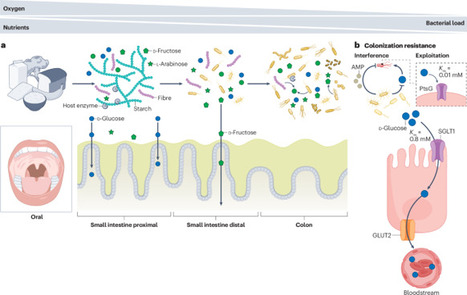
Enterobacteriaceae are facultative anaerobic bacteria that commonly colonize the gut and include both commensals and diverse pathogens. They can flexibly adapt their metabolic strategy to grow in the intestinal environment. As Enterobacteriaceae blooms are linked to enteric disease and the dissemination of antibiotic resistance, a deeper understanding of the factors that drive their expansion is needed. In the healthy intestine, Enterobacteriaceae subsist on low concentrations of diet-derived and mucus-derived monosaccharides that feed glycolysis and mixed-acid fermentation. Inflammation reshapes this niche as immune-derived oxidants generate new terminal electron acceptors, such as nitrate or tetrathionate, and facilitate oxygen diffusion into the gut lumen, thereby expanding facultative anaerobes and broadening the range of usable substrates. In this Review, we discuss recent evidence across E. coli, Citrobacter rodentium, Klebsiella spp. and Salmonella Typhimurium to define a conserved, monosaccharide-fuelled programme for colonization and its inflammatory remodelling. Competition with commensal bacteria for these nutrients underpins colonization resistance, and genetic differences can determine competitive fitness. Metabolism lies at the core of these ecological dynamics, and recognizing its central role will help guide the design of future therapies. In this Review, Schubert and Hardt explore the metabolic strategies that Enterobacteriaceae use to establish themselves in the gut, and how they adapt to inflammatory conditions in this environment.
|
|
Scooped by
mhryu@live.com
August 22, 11:18 PM
|
The affordability and high-throughput capabilities of Oxford Nanopore Technologies (ONT) have democratized genomic sequencing, yet the complexity of bioinformatics environment setup and analysis remains a barrier for many biologists. microbiONT addresses this gap by providing a user-friendly, privacy-focused platform that features a streamlined, one-command installation process. Integrating a local Large Language Model (Llama 3.1) with an intuitive graphical interface, microbiONT serves not only as an analysis tool but also as an AI copilot to assist users in learning bioinformatics concepts. By translating natural language requests into executable commands and simplifying deployment, microbiONT empowers non-experts to perform rigorous or custom 16S/18S amplicon analysis locally. This ensures rapid data insights without the need for command line use. Beyond its AI-integrated GUI, the novelty of microbiONT lies in its fully localized, highly accurate, and privacy-preserving architecture for flexible data analysis.
|
|
Scooped by
mhryu@live.com
August 22, 10:52 PM
|
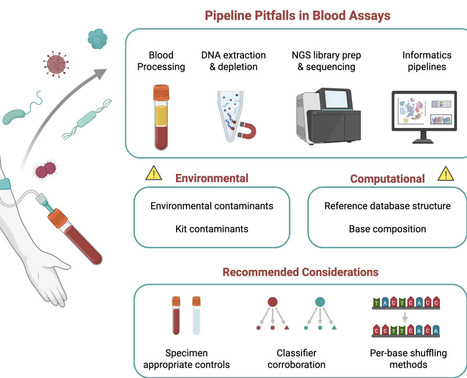
Circulating microbial DNA (cmDNA) has been proposed as a non-invasive cancer biomarker, but most evidence comes from cancer-sequencing datasets not designed for microbial analysis and lacking contamination controls. Whether reported signatures reflect biology or artifact is unclear in low-biomass specimens, where standard taxonomic pipelines are prone to systematic error. In a tightly controlled pilot study of metastatic castration-resistant prostate cancer, we profiled plasma cell-free DNA (cfDNA) and buffy-coat genomic DNA (gDNA) from two patients and two healthy volunteers alongside mock blood-draw and reagent controls, each with and without host-DNA depletion. Much of the apparent cmDNA structure, including its agreement with a published cancer-microbiome catalog, is explained by base composition and reference-database architecture rather than authentic biology, and short-read k-mer pipelines cannot separate the two on their own. We find little positive evidence of an authentic circulating microbial signal, though our small sample cannot prove its absence. To limit false discovery in low-biomass metagenomics, we recommend specimen-matched negative controls, corroboration with a conservative second classifier, per-base shuffling (with GC-matched synthetic reads as a stricter floor), and GC-aware analysis.
|
|
Scooped by
mhryu@live.com
August 22, 10:31 PM
|
Small open reading frames (sORFs) are a potentially rich, yet error-prone, source of antimicrobial-peptide (AMP) candidates: short sequences are readily prioritized by AMP classifiers but may derive from incomplete gene calls. We developed a genome-context-aware discovery workflow that separates AMP-like sequence properties from evidence for a complete, recurrent coding locus. From 649,653 RefSeq assemblies representing 327 clinically relevant bacterial species, species-aware clustering and length filtering yielded 4,442,548 representative 10-100-aa sequences. AmpScanner v2, Macrel and AMPlify identified 585 non-haemolytic records supported by all three models. However, genome-context auditing of 11,918 mapped candidates showed that 529 of 536 mapped consensus candidates were supported exclusively by partial ORFs near contig termini. By contrast, 3,382 candidates had at least one complete non-edge occurrence; 1,069 recurred in ≥2 assemblies and 251 in ≥10 assemblies. We therefore assembled a 20-peptide panel through two explicitly labelled routes: sequence/structure-led selection (n=8) and genome-supported selection (n=12). Broth microdilution against Escherichia coli ATCC 25922 and Staphylococcus aureus ATCC 25923 identified low-micromolar activity in both routes. CAND_04141, a recurrent complete non-edge candidate, had the strongest combined profile (MICs of 4 and 2 μM, respectively), while CAND_07825 and CAND_04265 were also active at low micromolar concentrations. In plate-count MBC assays, all three advanced peptides achieved ≥3-log10 reductions at 128 μM. These findings show that high classifier agreement is not a substitute for genomic evidence and provide an auditable framework for prioritizing both synthetic AMP-like sequences and candidate genome-encoded peptides.
|
|
Scooped by
mhryu@live.com
August 22, 5:59 PM
|
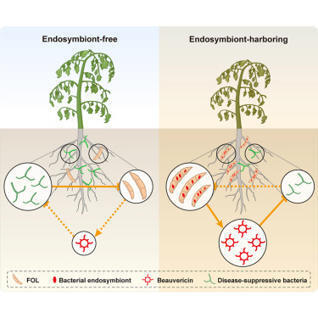
The mechanisms by which bacterial endosymbionts (bacteria living within fungal cells) enhance the fitness and virulence of fungal pathogens remain poorly understood. Here, we report that the tomato Fusarium wilt pathogen Fusarium oxysporum f. sp. lycopersici (FOL) hosts Achromobacter spp. endosymbionts that enhance fungal virulence. This virulence potentiation is partially dependent on interactions with the native rhizosphere microbiota. We show that bacterial endosymbiont-harboring FOL reshapes the rhizosphere bacterial community during pathogen infection and decreases the abundance of disease-suppressive bacteria, including Streptomyces spp. taxa. This inhibitory effect is mediated by bacterial endosymbiont-stimulated production of beauvericin (an antibacterial cyclic hexadepsipeptide) by FOL. Together, our findings reveal a tripartite interaction in which a fungal pathogen leverages its bacterial endosymbiont to weaken rhizosphere microbiome-based disease suppression by inhibiting plant-protective bacterial taxa. This work highlights how cross-kingdom symbioses can modulate pathogen ecology and virulence in soil environments.
|
|
Scooped by
mhryu@live.com
August 22, 4:15 PM
|
Transcription underpins the expression of genetic information and is viewed as a series of independent initiation and termination events. In bacteria, promoters and terminators of transcription are therefore considered distinct regulatory elements. Here, we challenge this view. Genome-scale analyses reveal that promoters and terminators are extensively coupled. Thus, initiation and termination sites, for adjacent transcription units, frequently overlap. This conserved organization arises because the DNA sequences, which direct termination, also contribute to promoter function. This couples neighboring transcription units and generates regulatory interference between RNA polymerases. These findings define a universal mechanism for coordinating transcription across bacterial genomes.
|
|
Scooped by
mhryu@live.com
August 22, 2:26 PM
|
Microorganisms interact through the exchange of metabolites and competition for shared substrates, and this metabolic coupling shapes the composition and function of microbial communities. Community flux balance analysis (cFBA) can predict such behavior - the maximum community growth rate, the metabolic fluxes and the relative abundances of the species - from stoichiometric models of their metabolism, but existing formulations are either complex and hard to scale as communities grow or cannot predict optimal growth rates. Here we present a physiology-based formulation of cFBA in which each species' metabolism is reduced to a few macrochemical equations, one for each 'metabolic mode' the species can use, and the whole community is then solved as a single linear program. From this, the method predicts the optimal composition of the community, its maximum growth rate, the metabolites exchanged between the species, and the net conversion the community carries out as a whole; its ecological service. This reduction makes it far simpler to build and solve models of larger communities. We illustrate the approach on a two-species synergistic community that can be verified by hand, apply it to a five-member anaerobic digestion community, and use it to predict the metabolic interactions of a genome-scale syngas-fermenting coculture. Characterizing these communities at their optimal steady states, we show that each species is driven to a distinct metabolic strategy. We discuss the method both as a practical tool for larger microbial communities and as a means of uncovering the ecological principles that govern them.
|
|
Scooped by
mhryu@live.com
August 22, 1:54 PM
|
Surface layers (S-layers) are highly ordered, paracrystalline protein lattices that form the outermost envelope of many bacteria and archaea. Although widespread, their functions and structural organization are only recently being elucidated at molecular resolution. This review addresses S-layer structure and function in Gram-positive bacteria, with emphasis on emerging insights into lattice-forming self-assembly and the mechanisms by which S-layers attach to the cell wall. Recent work highlights the role of Gram-positive S-layers as exoskeletons that provide organisation and mechanical stabilization of the cell envelope, and discusses their involvement in host interactions and stress tolerance. Although crystallinity is central for S-layer function, these lattices must also incorporate intrinsic plasticity to accommodate cell curvature and permit cell growth and division. S-layers and associated proteins are increasingly thought to act as active organisers of the cell envelope, and can undergo shedding or remodelling in response to changing environmental conditions.
|
|
Scooped by
mhryu@live.com
August 22, 1:27 PM
|
The mechanosensitive channel of large conductance (MscL) is a tension-gated, pore-forming protein that acts as a safety valve to protect bacteria from osmotic lysis. E. coli MscL (EcMscL) was the first mechanosensitive channel discovered and subsequently served as a model system for understanding mechanical sensing, becoming one of the most decorated and well-studied systems. Despite extensive biophysical and functional characterisation spanning several decades, the precise mechanism of EcMscL gating has been poorly understood due to the lack of high-resolution structural information. Herein, we solve two EcMscL structures by cryoEM in the closed conformation in DMPC and DOPC lipid nanodiscs. Using PELDOR/DEER spectroscopy, we screen conditions and identify that in DSPC lipids, the EcMscL conformational ensemble shifts away from the closed state and that open-like states are present. We solve the structure in an expanded state by cryoEM, revealing an architecture with pore properties consistent with previous electrophysiology reports. By combining hydrogen-deuterium exchange mass spectrometry and molecular dynamics simulations, we investigate the dynamics of EcMscL gating in lipid bilayers, identifying sites involved in the closed-to-expanded transition. Combined, this enables us to inform on the elusive structural mechanism of EcMscL mechanosensitive channel function. Here, authors solve three cryo-EM structures of EcMscL in two different lipid environments and two distinct conformational states; closed and open-like, guided by EPR. Additional EPR, MD and HDX-MS experiments provide insight into the gating mechanism.
|
|
Scooped by
mhryu@live.com
August 22, 11:52 AM
|
Denitrification is a modular process that is mediated by an assemblage of microbes with varying denitrification gene combinations. The controls on these gene combinations, known as modularity, are poorly understood and marine observations are mostly limited to permanently anoxic systems. In this global metagenomic analysis representing 69 water column metagenome samples we report different modularity patterns associated with environmental parameters based on the permanence of anoxia. Thermodynamic favorability alone is not enough to explain the distribution of modularity patterns. Instead, variables such as the permanence (or transience) of anoxia, oxygen availability, biogeography and ratios of organic matter to nitrogen supply all help shape the denitrifier community gene assemblage. Environmental correlates in transiently anoxic compared to permanently anoxic systems suggest that the pressures of a more complex environment may favor shorter pathways due to resource allocation trade-off regardless of organic matter availability. Nitrate reduction is the dominant step compared to the rest of the denitrification pathway irrespective of anoxia type. As increases in global temperature result in more seasonally anoxic and hypoxic waters, these results highlight the importance of understanding the controls on denitrification modularity under varying states of anoxia.
|
|
Scooped by
mhryu@live.com
August 22, 11:35 AM
|
E. coli is a prototroph and can synthesize all twenty proteinogenic amino acids when required to grow in minimal medium. There are approximately sixty protein-coding genes individually essential for amino acid synthesis. This is a large mutational target for the accumulation of detrimental mutations. E. coli can rewire biosynthetic pathways in response to mutational damage, but the limits of this capacity are poorly understood. Here, to address evolutionary robustness, we asked whether and how the phenotypes of irreversible mutations causing auxotrophy could be suppressed or bypassed in the absence of horizontal gene transfer (HGT). Spontaneous suppressors could be selected for only ten of fifty-nine mutants tested (detection limit ∼7x10-11). Mechanisms of suppression included: regional amplifications; mutations increasing gene or operon expression; mutations relaxing enzyme specificity; and mutations causing biochemical pathway diversions. Overall, the data show that spontaneous suppression of auxotrophy caused by an irreversible mutation is an evolutionary survival mechanism relevant only to a minority of the genes essential for amino acid synthesis. As a consequence, the essential genetic foundations for amino acid prototrophy are expected to be degraded over time by mutations (Muller’s ratchet) and metabolic rewiring alone will be insufficient to counteract this effect. This implies that maintaining phenotypes, including prototrophy in E. coli, and potentially other bacterial species, is likely to be reliant on HGT of housekeeping genes to counteract the effects of inevitable mutational inactivation. Accordingly, chromosomal HGT in bacteria may be critical for survival across diverse environmental niches.
|
|
Scooped by
mhryu@live.com
August 22, 11:08 AM
|
Extremophilic proteins offer immense potential for diverse applications; however, their discovery is hindered by the reliance on predefined templates and domain-specific knowledge. Therefore, new methods are required to mine extremophilic proteins without relying on existing templates, enabling a comprehensive exploration of functional extremophilic proteins across the entire protein universe. Here, we propose a co-evolution–guided protein mining framework, CEM 2.0 (Co-Evolution Mining 2.0), comprising three synergistic components: (1) an extensive and diverse extremophilic proteome database covering six extremophilic features, (2) a multidimensional evaluator for six extremophilic features, leveraging the protein language model ProteinBERT, and (3) an integrated and interactive mining pipeline equipped with advanced tools for computing more than 20 properties of proteins. This framework was implemented on an interactive web platform ( https://cem.sjtu.edu.cn/) equipped with intuitive visualization tools. We conducted wet-lab validation, performed a series of computational validations using published studies, and made recommendations for novel PETases, thereby demonstrating the effectiveness and potential of CEM 2.0 for the template-independent discovery of extremophilic proteins. CEM 2.0 is expected to mine functional extremophilic proteins across the protein universe in terms of evolutionary distance and serve as a valuable tool for protein engineering and synthetic biology.
|