 Your new post is loading...

|
Scooped by
mhryu@live.com
Today, 10:30 PM
|
Model-based design in synthetic biology is limited because bioparts are typically characterised by relative metrics that vary across genetic and physiological contexts. To address this, we introduce a host-aware framework for quantitatively characterizing parts in combinatorial libraries of plasmid-based constitutive expression constructs. The approach integrates a digital twin of E. coli, conditioned on measured growth rate, with model-in-the-loop parameter identification to separate part-associated properties from host-dependent effects. Using structured combinatorial libraries, we identify mechanistically interpretable, transferable parameters for plasmid origins, promoters and ribosome binding sites. In particular, we define an intrinsic translation initiation capacity that captures the dominant RBS-associated contribution to translation while context-dependent expression emerges from host physiology and local sequence context. The resulting parameterisation accurately predicts protein synthesis across physiological conditions, supports incremental library expansion, and reveals localised failures of modularity, providing a scalable foundation for predictive host-aware design in synthetic biology. Model-based design in synthetic biology is limited because bioparts are typically characterised by relative metrics that vary across genetic and physiological contexts. Here, using combinatorial libraries of plasmid-based expression constructs and a host-aware E. coli digital twin, the authors identify intrinsic biopart parameters that provide a basis for more predictive model-based design of synthetic gene circuits.
|
|
Scooped by
mhryu@live.com
Today, 4:26 PM
|
The gastrointestinal tract is rich in metabolic, immune, and microbiome-derived signals that can inform the design of live biotherapeutics and diagnosis of intestinal disorders. Engineered cell-based biosensors can tap into this molecular information and report on their environment, yet their development in gut-resident symbionts has been limited by a lack of validated sensor systems. Here, we present a generalizable pipeline that leverages bacterial transcriptional profiling to identify environment-responsive systems for biosensor engineering. Candidate Sensors Systems (CSSs) mined from healthy, disease, and in vitro transcriptomes were assembled into a barcoded library in Bacteroidaceae chassis and screened in high-throughput in vivo to identify responsive promoters. A unique Bacteroidales ECF-type sigma factor operon with ties to sphingolipid metabolism and flux was highly responsive in chemically-induced colitis models. The biosensor responded robustly to disease and returned to baseline upon recovery, establishing an in vivo-driven strategy for discovering functional biosensors in non-model gut-resident bacteria.
|
|
Scooped by
mhryu@live.com
Today, 2:15 PM
|
Chromatin organization plays a critical role in regulating gene expression. Chromatin compaction represses gene expression by physically restricting the access of the transcriptional machinery to DNA, while spatial proximity between enhancers and promoters, often mediated by chromatin loops, is essential for gene activation. To investigate the regulatory mechanisms underlying loop formation and chromatin compaction, as well as their effects on gene expression, we developed CRISPR-FOIL (utilizing CRISPR to FOld and ILluminate chromosomal DNA), a novel programmable platform for engineering chromatin loops and inducing chromatin compaction in live cells. CRISPR-FOIL anchors pairs of genomic loci in proximity by engineered single-guide RNAs (sgRNAs), resulting in an artificial chromatin loop. The fused two CRISPR-Sirius gRNAs enable genomic loci to be visualized through fluorescent RNA coat proteins in various colors. In addition, multiple CRISPR-FOIL complexes can act cooperatively to drive chromatin compaction. These results establish CRISPR-FOIL as a powerful tool for engineering chromatin organization in live cells and highlight its potential as a therapeutic platform for gene regulation and disease control.
|
|
Scooped by
mhryu@live.com
Today, 1:52 PM
|
How does evolution create new things? A key strategy is 'tinkering': changing and re-using existing biological components in new ways. Tinkering is generally thought to be genomically unpatterned, occurring without spatial or other kinds of structure. Here, I find that 'tinkering loci,' kilobase-scale regions with significantly higher rates of gene birth by tinkering, are common in Drosophila genomes. These regions work by accumulating unusually high concentrations of duplicated gene fragments from around the genome, increasing the rate at which they can be co-opted to create new genes, especially ones containing new combinations of previously unrelated pieces. Their activity varies on timescales of a few million years; they use a universal mechanism enabled by all major kinds of transposable elements; and they form networks to collectively innovate and enable their useful products to duplicate into gene families. Tinkering loci demonstrate that evolutionary innovation can be a property of genome architecture and suggest a tunable mechanism shaping the tempo and mode of animal evolution.
|
|
Scooped by
mhryu@live.com
Today, 11:57 AM
|
Terrestrial Antarctica harbors compositionally diverse and functionally distinct microbial life. Yet the eco-evolutionary processes underlying adaptation to Antarctica’s polyextreme conditions remain largely unknown. Here, we address how horizontal gene transfer (HGT) and de novo mutations influence microbial adaptation in 16 Antarctic soils using combined short- and long-read datasets. Phylogenetic reconciliation and mobile genetic element analysis of 676 metagenome-assembled genomes show frequent HGT across communities. While transferred genes span diverse functional categories, those involved in energy metabolism are exchanged at higher frequency. Genes for aerotrophy, i.e. the consumption of atmospheric trace gases to provide energy, carbon, and hydration, are among the most frequently disseminated. Approximately a quarter of carbon monoxide dehydrogenases and [NiFe]-hydrogenases are predicted to be horizontally acquired and are often associated with mobile genetic elements. Analysis of polymorphisms suggests widespread purifying selection, particularly for aerotrophy genes, providing further evidence that aerotrophy is critical for microbial survival in Antarctica. Genetic variation in hydrogenases is tightly associated with predicted protein structures, with intense selection acting on critical sites preserving stability and function. Together, these findings show that previously unrecognized eco-evolutionary dynamics shape the composition and function of Antarctic microbial communities, and confirm aerotrophy is a strongly selected and horizontally disseminated trait. Antarctica was long thought to be biologically static, but its microbial life is now known to be diverse and active. This study shows that widespread horizontal gene transfer and purifying selection drive microbial adaptation in Antarctic soils.
|
|
Scooped by
mhryu@live.com
Today, 11:35 AM
|
Microplastic and nano-plastic (MPs/NPs) pollution is a major environmental threat affecting ecosystems and human health. Soils contain higher levels of MPs/NPs than oceans, underscoring the urgent need for improved plastic waste management in agriculture. Studies show that MPs/NPs disrupt the rhizosphere by altering soil properties and microbial dynamics, impairing plant growth. This review outlines their fate in terrestrial ecosystems, their rhizosphere impacts, and emphasizing the need to understanding phytotoxicity mechanisms for safe crop production.
|
|
Scooped by
mhryu@live.com
Today, 2:02 AM
|
CRISPR technologies based on nuclease-deactivated Cas9 (dCas9) rely on programmable DNA binding rather than DNA cleavage, yet the intrinsic DNA-recognition properties that govern optimal guide RNA (gRNA) performance remain poorly understood. Existing approaches either measure genomic occupancy in cells or infer dCas9 behavior from cleavage-based Cas9 datasets, despite DNA binding being substantially more permissive than DNA cleavage. Here we introduce TANGO (Targeted Array-based Nucleic acid-Guided Occupancy), a high-density DNA-array platform that quantitatively profiles intrinsic dCas9:gRNA binding across tens of thousands of DNA targets in a cell-free system. TANGO captures established features of dCas9 target recognition, while providing substantially greater sensitivity than prior assays. Comparison with ChIP-seq data demonstrates that intrinsic DNA-binding specificity is a major driver of genomic occupancy and reveals that chromatin accessibility modulates the intrinsic binding affinity required for dCas9 recruitment. Across CRISPRi/a guides, TANGO identifies multiple independent biochemical determinants of guide performance (including on-target affinity, mismatch tolerance, and ribonucleoprotein assembly) and flags problematic and highly promiscuous guides overlooked by current specificity metrics. Unexpectedly, some guides retain substantial guide-directed DNA binding even in the absence of a protospacer-adjacent motif (PAM), revealing an additional dimension of dCas9 specificity. Together, these results establish intrinsic DNA recognition as a quantitative and experimentally accessible determinant of dCas9 function, providing a framework for improving guide selection and enhancing the precision of CRISPR technologies.
|
|
Scooped by
mhryu@live.com
Today, 1:52 AM
|
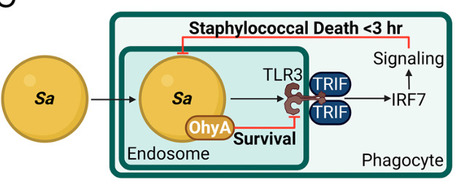
Innate immune recognition shapes infection outcomes by linking microbial detection to host defense. Although pattern recognition receptors are classified by the ligands they detect (lipids, peptidoglycans, or nucleic acids) cross-talk between these pathways is increasingly recognized. Staphylococcus aureus, a major cause of skin and soft tissue infections, can persist intracellularly, evading immunity and antibiotics. Here, we describe a lipid-based immune evasion strategy in which the S. aureus enzyme oleate hydratase (OhyA) converts host fatty acids into hydroxylated lipids that antagonize TLR3–TRIF–IRF7 signaling, a pathway activated by double-stranded RNA. Deletion of ohyA unleashed this pathway, triggering rapid bacterial clearance, whereas loss of TLR3, TRIF, or IRF7 restored bacterial persistence, establishing a noncanonical antibacterial role for an antiviral signaling pathway. These findings identify a previously unrecognized interface between bacterial lipid metabolism and antiviral immune machinery, highlighting how pathogens manipulate cross-kingdom signaling to evade intracellular immunity.
|
|
Scooped by
mhryu@live.com
Today, 12:26 AM
|
Nature produces hundreds of carotenoids, yet only a handful of the apocarotenoids derived from them are accessible through microbial production. The best-known example is retinal, the chromophore of rhodopsins and a precursor of pharmaceutical retinoids, which is generated by the central cleavage of β-carotene. Whether the same cleavage chemistry can be extended to other carotenoids, yielding retinal analogues that differ in their ring structures, and potentially in their biological activities, has remained largely untested. In this study, we demonstrate a pathway engineering approach in E. coli for the biosynthesis of five retinal analogs by leveraging substrate promiscuity of Blh, a bacterial carotenoid cleavage enzyme originally identified in microbial rhodopsin gene clusters. While initial co-expression of Blh with carotenoid pathway genes often resulted in the production of retinal (by cleavage of β-carotene intermediate), we found that by optimizing the expression level of Blh, carotenoids such as astaxanthin or canthaxanthin were cleaved efficiently. Structure-guided engineering of Blh, informed by its predicted substrate-binding cavity, further improved the cleavage of zeaxanthin. This expanded catalytic activity suggests that Blh can serve as a versatile biocatalyst for the production of diverse retinal analogues, potentially yielding compounds with a range of biological activities. Furthermore, our findings raise the possibility of diverse biological roles for these enzymes in their native biological contexts.
|
|
Scooped by
mhryu@live.com
Today, 12:03 AM
|
Xenogeneic silencers, such as histone-like nucleoid structuring protein (H-NS), are critical for maintaining horizontally acquired genes in bacterial genomes and minimizing fitness costs associated with inappropriate expression. For bacterial pathogens, this has enabled the acquisition of costly virulence regulons, with H-NS balancing the need for tight silencing with rapid expression in host environments. For Salmonella enterica serovar Typhimurium (STm), survival in these environments relies on phenotypic heterogeneity in virulence gene expression and evolutionary adaptation. Although complete loss of hns is highly deleterious in STm, how subtle impairments to this global silencer disrupt heterogeneity in virulence gene expression and alter adaptation to host environments remains poorly understood. Here, we identify an STm hns hypomorph strain and find that its reduced H-NS DNA-binding affinity increases the proportion of virulence-expressing cells, resulting in enhanced epithelial cell infection in vitro. Furthermore, through experimental evolution in intracellular-like conditions in vitro, we demonstrate that both wild-type and mutant populations converge on disrupting the SPI-2 virulence regulon to improve fitness; however, the mutant population also acquires distinct adaptive mutations to resolve the underlying dysregulation in gene expression. These results suggest that H-NS sets single-cell virulence activation thresholds and that even minor disruptions to its silencing function impact pathogen adaptation, highlighting its role as a critical evolutionary buffer.
|
|
Scooped by
mhryu@live.com
August 10, 11:17 PM
|
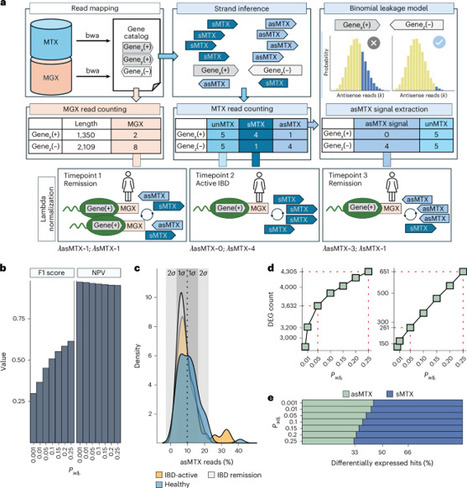
The gut microbiome is a dynamic ecosystem in which microorganisms constantly adjust their transcriptional programmes. Here we developed metastrand, a framework that integrates strand-aware metatranscriptomics and metagenomics to quantify mRNAs and antisense RNAs (asRNAs) in complex microbial communities at gene-level resolution. In inflammatory bowel disease (IBD), microbial asRNA programmes converged across patients during active disease, correlated with faecal metabolites and calprotectin levels and remained stable during persistent inflammation, highlighting their potential as biomarkers of inflammatory activity in the gut. These programmes involved antisense-to-sense transcriptional shifts at insertion sequence elements with functionally diverse passenger genes and preceded their detection at new genomic locations, linking asRNA dynamics to structural genome rearrangements and redistribution of adaptive functions under selective pressure. Similar dynamics were observed in a mouse model of colitis, oxidative stress in vitro and in patients with pathogen-confirmed gastroenteritis, establishing asRNAs as an important dimension of microbial adaptation in health and disease. Metastrand integrates strand-aware metatranscriptomic and metagenomic data to distinguish microbial sense from antisense transcription at gene-level resolution, and a use case study highlights the importance of antisense RNAs in understanding the microbial dynamics in inflammatory bowel disease.
|
|
Scooped by
mhryu@live.com
August 10, 10:32 PM
|
Effector-triggered immunity (ETI) is central in plant defense, but whether all cell types execute ETI similarly remains unknown. We combined chemically imposed immune activation with single-cell transcriptomics to profile ETI responses across major leaf cell types in Arabidopsis. Despite uniform ETI perception, we find divergent transcriptional outputs: a core set of defense genes is broadly induced, while distinct cell types activate specialized immune modules. We infer that immune outputs are shaped not only by immune receptor activation but also by cell identity, transcription factor availability, and chromatin accessibility. We further demonstrate that epidermis-enriched transcriptional regulators are required to restrict invasion by non-adapted pathogens. Their absence permits pathogen entry into deeper tissues despite intact recognition, revealing a spatial division of immune functions. Our findings uncover a layered immune architecture in plants, challenge the assumption of uniform immune activation, and establish a framework for exploring cell-type-specific resistance logic in multicellular hosts.
|
|
Scooped by
mhryu@live.com
August 10, 4:45 PM
|
Nanozymes are nano-scale materials that function similarly to natural enzymes, offering advantages for cancer therapy when compared with traditional biological enzymes due to their enhanced enzymatic activity, stability, versatility, low cost, and their ability to alter the tumor microenvironment. This enables new cancer treatment strategies by modulating the tumor microenvironment through chemotherapy, photothermal therapy, photodynamic therapy, or starving therapy. However, challenges persist that hinder the development and use of nanozymes for cancer treatment, including difficulties in substrate selection, ongoing issues of tumor microenvironment heterogeneity, and the risk of off-target toxicities. Therefore, developing functionalization strategies to enhance nanozyme catalytic efficiency, targeting specificity, and biocompatibility can significantly enhance the success of novel nanozymes in cancer treatment. The covalent techniques for attaching peptides, polymers, and aptamers are based on EDC/NHS coupling, Click chemistry, and Schiff-base condensation. Noncovalent attachment techniques rely on reversible interactions (e.g., hydrogen bonds, π-π stacking, and electrostatic forces) to retain the native enzyme activity. While functionalization techniques improve the tumor targeting and biodistribution of nanozymes, they also enable stimulus-responsive activation of the nanozymes in the tumor microenvironment (triggered by acidic pH, glutathione, and/or H2O2) to reduce the risk of systemic toxicity. This review comprehensively discusses the classification, catalytic principles, and therapeutic applications of nanozymes, with emphasis on their role in modulating the tumor microenvironment for effective cancer therapy. Different functionalization strategies, including covalent, noncovalent, and peptide-, ligand-, and aptamer-based approaches, will be highlighted to enhance targeting, catalytic efficiency, and clinical applicability.
|
|
|
Scooped by
mhryu@live.com
Today, 5:18 PM
|
Accurate detection of off-target activity in primary human cells is crucial for ensuring the safety of gene therapies, yet existing methods often lack sufficient sensitivity. To address this limitation, we develop Tracking-seq2, an advanced technology that integrates exogenous 5′ → 3′ exonuclease treatment and non-homologous end joining (NHEJ) pathway inhibitors with the original Tracking-seq. Tracking-seq2 exhibits enhanced sensitivity in profiling off-target sites of diverse genome editors—including Cas9, Cas12a, cytosine base editors (CBEs), adenine base editors (ABEs), and prime editors (PEs). Critically, Tracking-seq2 is directly applicable to clinically relevant primary human cell types, such as T cells and CD34+ hematopoietic stem and progenitor cells (HSPCs). Furthermore, our findings reveal that genomic variations drive distinct off-target heterogeneity across different individuals, highlighting the necessity for personalized safety assessment in clinical genome editing applications. Tracking-seq2 provides a robust platform for sensitive off-target detection in primary cells, with sensitivity comparable to or exceeding current state-of-the-art methods. Ensuring safe gene editing requires precise detection of unintended DNA edits. Here, authors develop Tracking-seq2, a highly sensitive method to profile off-targets for diverse genome editors, and reveal distinct off-target effects across individuals in primary human cells.
|
|
Scooped by
mhryu@live.com
Today, 4:10 PM
|
Selenocysteine (Sec), the 21st amino acid, is a rare non-canonical amino acid that represents an attractive target for protein engineering due to its desirable chemical properties such as high affinity for metals, strong nucleophilicity, and reversible covalent bond formation. To bypass the natural constraints on Sec placement within proteins, several strategies have been developed to rewire the native translational machinery to enable site-specific incorporation. However, these usually abolish the quality control mechanism that excludes the serine-charged selenocysteinyl-tRNA (Ser-tRNASec), the immediate biosynthetic precursor, from translation resulting in heterogenous protein species. This challenge is confounded by a lack of genetic tools to accurately report the selenylation state of the tRNA pool as most are blind to competing process of Ser incorporation, which can only be observed using analytical methods. To resolve this issue, we have developed a new fluorescent reporter, Selenocysteine Adjusted Ratiometric Chromophore (SeARCh), which exhibits two distinct spectral outputs dependent on the incorporation of either Ser (red) or Sec (green). Using SeARCh, we define several factors which influence the observed Sec:Ser ratio and construct a new hybrid biosynthetic pathway with improved performance, achieving 90% Sec incorporation. Furthermore, SeARCh displays unusually complex mass spectra due to the isotope distribution of selenium and heterogenous nature of the protein in solution and we report specific methods to account for this behavior and precisely quantify the rare Ser-containing species found at high Sec incorporation efficiencies. Our findings suggest that the equilibrium between selenoprotein and tRNASec expression levels is a key driver of incorporation efficiency and implies a process that is broadly biosynthetically constrained. Collectively these tools represent a significant advance in the metrology of selenocysteine biosynthesis and incorporation and can be used to inform and standardize future engineering efforts.
|
|
Scooped by
mhryu@live.com
Today, 2:02 PM
|
Accurately identifying orthogroups is crucial for precise phylogenetic reconstruction, but clustering-based methods often generate complex, many-to-many orthogroups that include confounding paralogs. Incorporating synteny offers a robust strategy to refine these clusters into high-granularity, single-copy orthologs. We introduce orthoSynAssign, a user-friendly, high-performance rewrite of the orthogroup refinement tool OrthoRefine, combining an intuitive Python interface with a core computing engine written in Rust. This hybrid architecture ensures straightforward installation, seamless data parsing, and exceptional computational efficiency. Evaluated against the Yeast Gene Order Browser (YGOB) dataset, orthoSynAssign demonstrated outstanding performance, substantially elevating the Area Under the Precision-Recall Curve. Furthermore, multi-threading benchmarks across 193 Eurotiomycetes genomes confirmed strong scalability, drastically reducing execution runtime while maintaining a strictly bounded, thread-independent memory footprint. Ultimately, orthoSynAssign provides a reliable and scalable framework for high-throughput phylogenomic workflows.
|
|
Scooped by
mhryu@live.com
Today, 12:06 PM
|
Many peptides often do not have a single dominant structure. Instead, many remain disordered in water and fold when they encounter membranes or other chemical environments, a property that underlies diverse biological functions but is difficult to predict. Here we introduce ApexFold, a machine-learning framework that predicts how peptide secondary structure change across environments. ApexFold uses peptide sequence and features together with physicochemical descriptors of the surrounding medium to estimate the fractions of helical, β-like and disordered structure expected in each condition. Trained on circular dichroism measurements from 1,187 peptides assayed in water, co-solvents and membrane-mimicking micelles, ApexFold predicted solvent-induced structural shifts in independent peptide panels and outperformed static structure predictors that return a single conformation. These results show that peptide structural plasticity can be learned from sequence and environment, providing a way to prioritize peptides and experimental conditions before synthesis and structural characterization.
|
|
Scooped by
mhryu@live.com
Today, 11:44 AM
|
Cooperative behaviors among microorganisms, such as biofilm formation, are widespread and play a key role in the emergence and evolution of antibiotic resistance by promoting genetic exchange and environmental adaptability. Bacterial cooperation can involve the secretion of metabolically costly “public goods” that benefit neighboring cells. These include β-lactamases, chloramphenicol acetyltransferase, outer membrane vesicles, metabolites, and signaling molecules, which can protect susceptible bacteria by reducing local antibiotic concentrations and thereby attenuating selection pressure. Importantly, genes encoding these extracellular products are often subject to horizontal gene transfer, facilitating cooperative interactions across species within microbial communities. In this review, we summarize current knowledge of these extracellular products, highlight their roles in the development and evolution of cooperative antibiotic resistance, examine their potential implications for antibiotic therapy, and identify key gaps in current research. We also examine future research directions and consider how integrating microbial social interactions and community dynamics in antimicrobial strategies could offer new ways to reduce the emergence and spread of antibiotic resistance.
|
|
Scooped by
mhryu@live.com
Today, 11:34 AM
|
E. coli remains the premier microbial chassis in industrial biotechnology; yet, translating laboratory-scale metabolic successes into robust, hundred-ton-scale manufacturing presents persistent multidimensional bottlenecks. This review systematically elucidates a contemporary paradigm shift in E. coli fermentation regulation, transitioning from isolated, empirical process adjustments to cross-scale, deeply coupled intelligent cybernetic frameworks. We first deconstruct the precise cross-scale links between macroscopi physicochemical parameters and intracellular biological regulatory networks, detailing how fluctuations in temperature, pH, and dissolved oxygen fundamentally reshape intracellular molecular cascades alongside transmembrane proton motive forces. To mitigate spatial heterogeneity, substrate mixing delays, and carbon catabolite repression common in large-volume bioreactors, we comprehensively evaluate advanced mitigation strategies that integrate process-level model predictive control (MPC) with dynamic synthetic biology circuits, including quorum-sensing-based growth-production decoupling, metabolite-responsive feedback loops, and optogenetic switches. Critically, we highlight the convergence of multi-scale modeling and digital twins as a frontier simulation-driven tool, which dynamically couples computational fluid dynamics (CFD) with genome-scale metabolic models (GEMs) to render the industrial fermentation “black box” transparent. Finally, we outline the evolutionary trajectory of E. coli biomanufacturing toward a digitized, intelligent, and sustainable paradigm, leveraging low-carbon C1 feedstocks and paving the way for next-generation green biomanufacturing.
|
|
Scooped by
mhryu@live.com
Today, 1:54 AM
|
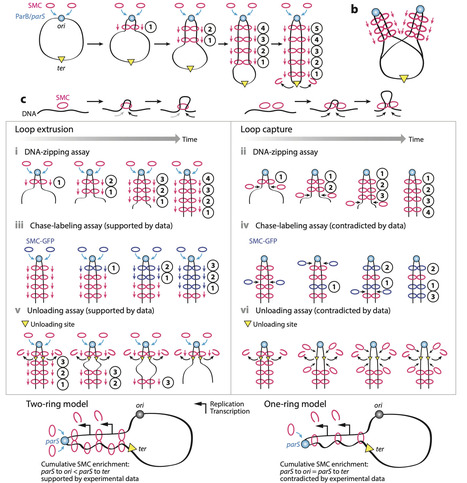
Structural maintenance of chromosomes (SMC) complexes are conserved ATP-driven machines that organize, compact, and segregate genomes in all domains of life. Despite variation in subunit composition and regulation, all SMC complexes share a core structure and mechanism of action. Bacteria possess two major classes of SMC complexes, SMC-ScpAB and MukBEF, which function in chromosome compaction and segregation. In addition, some bacteria contain other SMC complexes or SMC-like systems such as MksBEF, Wadjet, RecN, and SbcC, each with specialized functions. Bacterial SMC complexes coordinate genome maintenance, DNA replication, DNA repair, plasmid defense, and cell physiology. In this review, we discuss the structure and function of these bacterial SMC complexes, highlighting the shared characteristics and unique strategies employed by each.
|
|
Scooped by
mhryu@live.com
Today, 1:39 AM
|
Cells in multicellular eukaryotic systems are diverse biological units, with characteristics and functions determined by their molecular profiles. CRISPR-Cas9 genome editing has been widely used across biology to modulate gene expression and study gene function. However, there is currently no versatile and scalable method for editing a cell's genome in response to endogenous cellular signals. Here, we report the engineering of a CRISPR guide RNA that efficiently confers genome editing in response to the catalytic activity of a target microRNA (miRNA) within a cell. miRNAs are short non-coding RNAs that are widely conserved across eukaryotes and can cleave their target RNA through almost perfect base pairing. In mammals, miRNAs are largely involved in development and homeostasis as well as disease progression and developmental disorders. To leverage these properties for genome editing, we developed a cuffed guide RNA (cgRNA) which is composed of a permutated order of sequence domains from the commonly used single guide RNA (sgRNA). These permutated domains were then concatenated with a miRNA target sequence, yielding a warped guide RNA that is inactive until cleaved by a complementary miRNA. We demonstrated that cgRNA enabled efficient miRNA activity-dependent genome editing in human and mouse cell lines. Biochemical and structural analyses revealed three stages of inhibition of the CRISPR genome-editing pathway for unprocessed cgRNA. Utilizing a lentiviral library of cgRNAs containing miRNA targets covering mouse genome-wide miRNAs, we identified miRNA cleavage activities and their sequence specificities in mouse embryonic stem cells and during smooth muscle cell differentiation. Furthermore, we showed that endogenous mRNA expression could be irreversibly recorded into a DNA sequence using a cgRNA targeted by a synthetic miRNA repeat. cgRNA is a simple, robust, miRNA activity-gated genome editing system that could facilitate the development of cell state-specific genome editing, the mapping of miRNA activity and gene expression landscapes, and the recording of molecularly determined cell states during the long-term progression of multicellular systems.
|
|
Scooped by
mhryu@live.com
Today, 12:09 AM
|
The precise identification of promoters is crucial for understanding gene regulation. Deep learning methods have achieved considerable success in promoter prediction, yet most operate at the sequence level with coarse-grained labels. This means they label an entire DNA segment as either a “promoter” or “non-promoter,” which results in a lack of the nucleotide-level resolution in prediction. In this study, we propose EvoSNR-Prom, a model designed for promoter prediction at single-nucleotide resolution. EvoSNR-Prom is built on the Evo foundation model and formulates promoter identification as a token-level sequence labeling problem, analogous to named entity recognition in natural language processing. To address the limited contextual information available in single-nucleotide tokenization, we introduce a lexicon-enhanced embedding strategy that incorporates biologically meaningful DNA lexicons, enriching contextual representations and improving the model’s ability to capture complex sequence motifs. Furthermore, to enhance predictive performance on small size datasets, we integrate a label-aware transfer learning framework to leverage knowledge from well-annotated source species to a target organism. The results across various prokaryotic datasets show that EvoSNR-Prom achieves excellent performance. This work provides a valuable computational framework for the high-precision analysis of gene regulatory elements, contributing to the advancement of promoter prediction at single-nucleotide resolution.
|
|
Scooped by
mhryu@live.com
August 10, 11:55 PM
|
Transcription termination by RNA polymerase II (Pol II) defines transcriptional boundaries of protein-coding and noncoding transcription units throughout the genome. Rather than being a passive endpoint of elongation, termination is a tightly regulated and context-dependent process that shapes gene expression, RNA surveillance pathways and chromatin environments. This Review summarizes mechanistic and conceptual aspects of Pol II termination, focusing primarily on studies in metazoans and incorporating insights from yeast where relevant. We discuss the major termination pathways operating across different genomic contexts, including canonical cleavage and polyadenylation-dependent termination at 3′ ends of genes, promoter-proximal termination mediated by the Integrator–PP2A complex (INTAC), Pol II turnover via the E3 ligase CRL3ARMC5 and cap-dependent RNA surveillance. We further examine how termination restrains pervasive transcription and how its dysregulation compromises genome stability, particularly through the accumulation of R-loops. Finally, we discuss how termination interfaces with RNA processing, export and nuclear decay pathways to guide RNA fate decisions. Transcription termination by RNA polymerase II is a tightly regulated process that involves RNA surveillance and the chromatin environment. This Review discusses the interactions between transcription termination, RNA processing, nuclear RNA decay and mRNP export, which together guide RNA fate.
|
|
Scooped by
mhryu@live.com
August 10, 11:10 PM
|
Gut microbial metabolites play crucial roles in regulating systemic immunity, but their mechanisms and limited drug-like properties remain unresolved. Here we report an oral nano-formulation that leverages gut microbial metabolites to modulate T cell metabolism and amplify anti-tumor immunity. Through an in vitro screening of gut microbial metabolites, we identified 3,4-dihydroxybenzoic acid that improved adoptive T cell therapy and enhanced CD8+ T cell stemness by suppressing glycolysis and regulating the Akt-mTORC1-Myc pathway. To harness the potency of 3,4-dihydroxybenzoic acid for systemic cancer immunotherapy, we engineered a 3,4-dihydroxybenzoic acid prodrug nano-emulsion, significantly increasing its oral absorption and half-life. In multiple murine tumor models, the oral nano-emulsion enhanced the expansion of antigen-specific, stem-like CD8+ T cells, sensitizing tumours to anti-PD-1 blockade and exerting robust antitumor efficacy. By integrating nanotechnology with microbial-metabolite-based immunotherapy, this study establishes a mechanistic link between the gut microbiota and T cell immunity, offering a promising approach for cancer immunotherapy. A nano-emulsion that delivers the gut microbial metabolite 3,4-dihydroxybenzoic acid in a prodrug form enhances T cell stemness and boosts the efficacy of immunotherapy approaches in different murine cancer models.
|
|
Scooped by
mhryu@live.com
August 10, 4:53 PM
|
Mathematical models are increasingly used to infer traits, interactions and functional dynamics of microbial systems. One common example is a rate-based ordinary differential equation model parameterized with microbial traits. However, fitting such models with associated parameters to data requires a principled approach to extract information from time series while accounting for prior knowledge and measurement noise. These principles often remain implicit and not necessarily well defined. Here, we make the implicit, explicit: introducing Bayesian inference of ecological models for microbial time series, including three detailed case studies of algal population dynamics that follow a birth-death process. Complementing this primer, we provide an online tutorial on Bayesian inverse modelling with cross-programming language support via Python (PyMC) and Julia (Turing). By connecting theory, code, data and a series of hands-on educational modules, this primer aims to bring the utility of Bayesian learning to the broader microbial ecology research community.
|













r-2st, The fastest-growing taxa in the rhizosphere replicated roughly once every ~4–5 days — about 0.2 times per day. That comes from the highest mean RGR reported (0.15/day for a copiotrophic taxon), converted as doublings/day = RGR/ln(2) ≈ 0.22. RGR is: the fraction of a taxon's total DNA pool that was newly made per day, inferred indirectly through isotope incorporation — not a directly observed division count.
Using N_t = N_0 × e^(RGR × t), with RGR = 0.15/day and t = 5 days:
So the fastest taxon's population grew to about 2.1× its starting size over the full 5 days — i.e., it just barely more than doubled once across that entire period (log₂(2.12) ≈ 1.08 doublings in 5 days).