Your new post is loading...

|
Scooped by
mhryu@live.com
Today, 2:08 AM
|
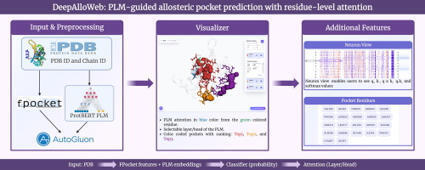
Allostery critically influences protein function, presenting unique opportunities in targeted drug development due to reduced side effects compared to orthosteric drugs. This work builds on our previous method, DeepAllo. DeepAlloWeb is an interactive web server to improve user engagement and practical usability for computational biologists and drug discovery researchers. DeepAllo is an advanced computational approach leveraging a fine-tuned protein language model (ProtBERT-BFD) in multitask learning combined with FPocket-extracted features to predict allosteric pockets accurately. Unlike existing allostery prediction servers, which do not utilize protein language models (PLMs), our web server integrates the fine-tuned PLM to achieve better prediction performance and offers an interactive visualization of residue-level attention mechanisms. The DeepAlloWeb resource enables detailed exploration through visualizations of attention mechanisms; an effort for biological interpretability. A case study shows that residue-level attention highlights known allosteric communication in a representative protein, and an additional whole-dataset analysis provides guidance on how layer/head combinations can be interpreted in practice. https://3dpath.ku.edu.tr/DeepAllo/
|
|
Scooped by
mhryu@live.com
Today, 1:59 AM
|
Chemolithoautotrophic bacteria represent a diverse group of microorganisms capable of utilizing carbon dioxide (CO2) as their sole carbon source, deriving the necessary energy for growth and metabolism from redox reactions involving inorganic compounds such as hydrogen, sulfur, or iron. These organisms have attracted substantial scientific and industrial interest due to their dual potential to function as biological CO2 sinks, mitigating greenhouse gas accumulation, and as microbial platforms for the sustainable biosynthesis of value-added compounds. Their natural CO2 fixation pathways, including the Calvin–Benson–Bassham cycle, the reductive tricarboxylic acid cycle, the Wood–Ljungdahl pathway, 3-hydroxypropionate bi-cycle, and reductive glycine pathway constitute the biological foundation for carbon assimilation in these organisms. However, these native pathways often exhibit limited efficiency, constraining their broader application. This comprehensive review discusses recent advances and opportunities in the optimization and redesign of CO2 fixation networks in chemolithoautotrophic bacteria. It extends to the design and development of novel, energy-efficient routes for CO2 fixation, which hold significant potential for large-scale implementation aimed at mitigating greenhouse gas emissions. In addition, the review assesses energy generation and utilization within carbon fixation networks, as well as emerging strategies for optimizing energy and redox balance in metabolic pathways. Finally, it highlights the emerging frontier of developing chemolithoautotrophic bacteria as microbial cell factories, capable of coupling carbon capture with sustainable biomanufacturing, thereby positioning these organisms at the forefront of next-generation climate and bioengineering solutions.
|
|
Scooped by
mhryu@live.com
Today, 1:37 AM
|
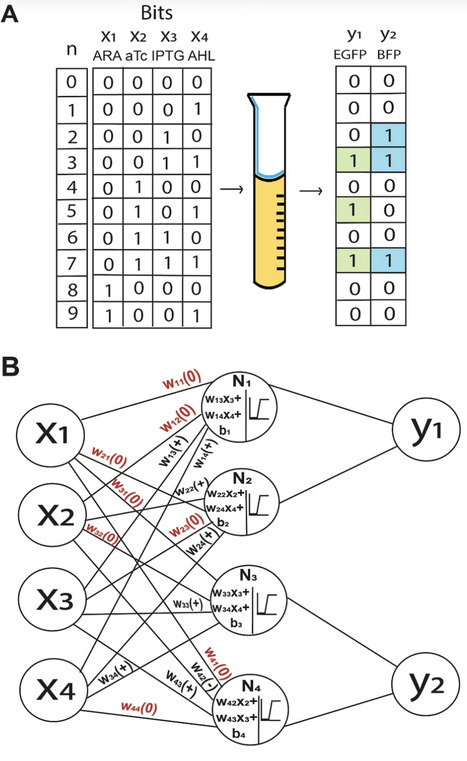
Living cell-based computers are in their infancy and answering multiple computational decision problems by a single system remains a key challenge. Here, we demonstrate an artificial neural network type architecture implemented with molecular-genetically engineered bacteria that answer four computational decision problems by identifying four types of prime numbers, including cluster prime, Euclid prime, safe prime, and Lucas prime, within the range of 0–9 in a chemical space. First, we demonstrated that the network consisting of four engineered cells classified two prime number families, namely cluster and Lucas prime numbers. Next, we scaled up the four-cell network to a six-cell network by introducing two new engineered cells and demonstrated that the new network classified four prime number families. Questions were asked to the bacteria by applying chemicals in binary patterns, and the answers were obtained from the distinct expression patterns of multiple fluorescent proteins. Each bacterium was engineered with synthetic gene regulatory networks such that the system chemistry followed the mathematical nature of an artificial neuro-synapse module. Collectively, the molecular-genetically engineered bacterial population formed a single-layered artificial neural network type architecture in liquid culture to perform the overall computation. The work may have implications in synthetic biology, biocomputing, and biologically implemented AI wetware.
|
|
Scooped by
mhryu@live.com
Today, 1:13 AM
|
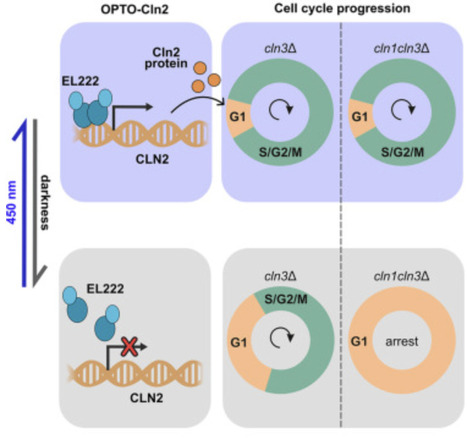
The complexity of the eukaryotic cell cycle complicates experiment design and data interpretation, limiting our understanding of how cells coordinate cell cycle processes. Traditional perturbation methods, including knockouts, deletions, and arrest-inducing chemicals, are limited by compensatory feedback interactions or pleiotropic side effects. Inducible synthetic systems offer greater specificity but often rely on external inducers, making rapid reversibility difficult. Here, we developed OPTO-Cln2, an optogenetic tool for light-controlled and reversible regulation of G1 progression in budding yeast. Using time-lapse microscopy, we show that OPTO-Cln2-strains rapidly switch between normal and altered G1 progression. Combining OPTO-Cln2 with a readout of TORC1 and PKA activity, we find that oscillatory signaling dynamics is coordinated with G1 progression. Finally, we show that OPTO-Cln2 enables at least two cycles of synchronous arrest and release in liquid cultures. This system provides a powerful approach for studying cell cycle dynamics and the coordination of cell growth with division.
|
|
Scooped by
mhryu@live.com
Today, 12:09 AM
|
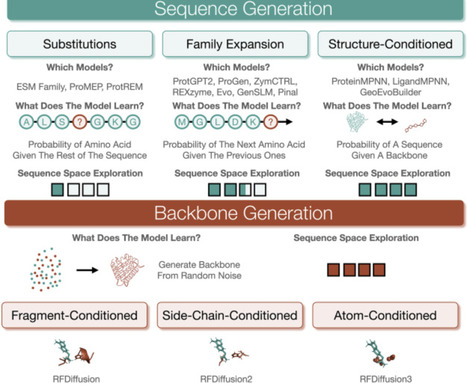
Sparked by innovations in generative artificial intelligence (AI), the field of protein design has undergone a paradigm shift with an explosion of new models for optimizing existing enzymes or creating them from scratch. After more than one decade of low success rates for computationally designed enzymes, generative AI models are now frequently used for designing proficient enzymes. Here, we provide a comprehensive overview and classification of generative AI models for enzyme design, highlighting models with experimental validation relevant to real-world settings and outlining their respective limitations. We argue that generative AI models now have the maturity to create and optimize enzymes for industrial applications. Wider adoption of generative AI models with experimental feedback loops can speed up the development of biocatalysts and serve as a community assessment to inform the next generation of models.
|
|
Scooped by
mhryu@live.com
July 30, 11:45 PM
|
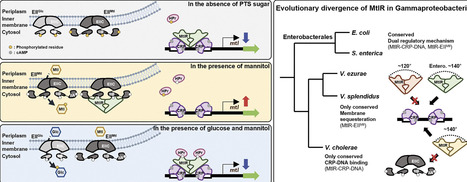
Mannitol is a widely distributed sugar alcohol and a primary carbon source for diverse microbial communities, serving as a substrate for producing high-value metabolites. In Gammaproteobacteria, the conserved mtl operon is essential for mannitol metabolism, encoding the phosphotransferase system enzyme II (EIIMtl; mtlA), mannitol-1-phosphate dehydrogenase (mtlD), and the repressor MtlR (mtlR). While operon transcription is known to be subject to catabolite repression and dependent on cAMP receptor protein (CRP), the molecular mechanism of MtlR-mediated repression has remained unclear, as it lacks a canonical DNA-binding domain. Here, we demonstrate that MtlR represses transcription by utilizing CRP as a DNA-anchoring platform. In the absence of mannitol, MtlR forms a complex with CRP at the mtl operator, with recruitment specificity determined by the precise spacing between adjacent CRP-binding sites. With mannitol, the dephosphorylation of membrane-bound EIIMtl triggers the sequestration of MtlR at the membrane, thereby relieving repression and inducing operon expression. We reveal a dual regulatory mechanism: CRP spacing-dependent MtlR recruitment and EIIMtl-mediated MtlR sequestration. This dual-control strategy is selectively conserved across Gammaproteobacteria, with Enterobacterales retaining both functional modules, while other lineages exhibit distinct evolutionary divergence. This study highlights a non-canonical, broadly conserved strategy for integrating metabolic and environmental signals into bacterial gene control.
|
|
Scooped by
mhryu@live.com
July 30, 11:18 PM
|
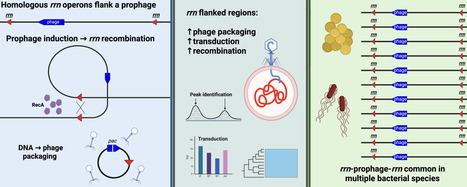
Bacterial genomes contain multiple ribosomal RNA (rRNA) operons that by homologous recombination facilitate genome rearrangements. Here, we show that a Staphylococcus aureus temperate bacteriophage stimulates homologous recombination between the rRNA operons flanking the prophage and promotes a novel route of horizontal gene transfer HGT we term rrn-linked lateral transduction. By polymerase chain reaction, sequencing of phage-packaged bacterial DNA, and phage transduction assays, we show that upon induction of the prophage, large circles of DNA formed by rRNA operon recombination are packaged and transduced by the phage via the mechanism of lateral transduction. This phenomenon is likely to be widely occurring, with prophage-linked rRNA operon recombination also shown here in Salmonella. Our results challenge the concepts of mobile and core genomes and establish rrn-linked lateral transduction as a new form of gene transfer involving rRNA operons.
|
|
Scooped by
mhryu@live.com
July 30, 10:58 PM
|
Self-driving laboratories (SDLs) merge autonomous experimentation, advanced reactor engineering, robotics and artificial intelligence to accelerate scientific knowledge creation. Over the last decade, SDLs have progressed from narrowly focused automation tools to multipurpose discovery platforms in which algorithms propose, execute and interpret experiments with limited human intervention. This Review traces the evolution of SDLs and examines the structural asymmetries that limit their maturation into shared scientific infrastructure. We frame the next phase of the field around three interdependent requirements: scalability, generalizability and provenance-complete experimentation. Realizing collective scientific superintelligence will require SDLs that reliably scale throughput, transfer workflows and learned models across laboratories and scientific domains and capture end-to-end experimental data and metadata from precursor preparation through synthesis, characterization and performance evaluation. Achieving this transition will depend on interoperable data and metadata standards, modular and integrable experimental hardware, and trustworthy artificial intelligence agents that reason under uncertainty within rigorous safety and ethical boundaries. Self-driving laboratories integrate automation, robotics and artificial intelligence to accelerate chemical discovery. This Review charts their evolution from bespoke systems to interoperable platforms, highlighting challenges in scalability, generalizability and data provenance, and outlining pathways towards networked, trustworthy infrastructures enabling collective scientific superintelligence.
|
|
Scooped by
mhryu@live.com
July 30, 5:18 PM
|
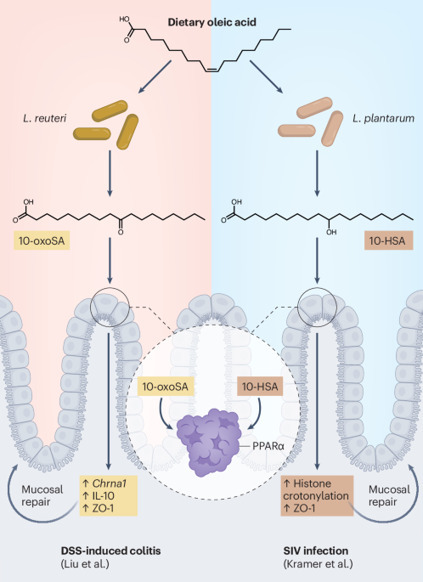
Two independent studies converge on the nuclear receptor PPARα as a key node in gut microbiome communication, highlighting it as a potential therapeutic target in intestinal diseases.
|
|
Scooped by
mhryu@live.com
July 30, 2:21 PM
|
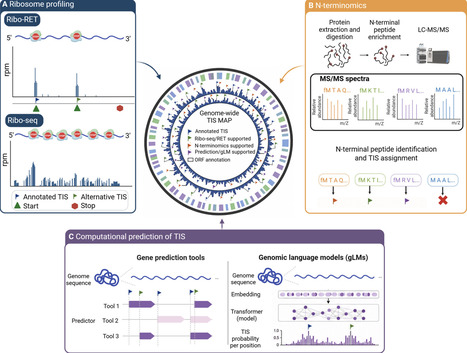
The bacterial proteome is a highly dynamic landscape rather than simply a static reflection of the genome. Recent research has revealed that proteome complexity extends far beyond canonical gene annotation, with N-terminal (Nt-)proteoforms emerging as an important underexplored additional regulatory layer. These molecular variants originate from a single genetic locus through alternative translation initiation at internal or external in-frame start sites, thereby generating N-terminal heterogeneity that can influence protein stability, subcellular localization, interaction networks, and the stoichiometric assembly of multiprotein complexes. While recent advances in riboproteogenomics, N-terminomics, and computational annotation strategies have enabled proteoform mapping at single-amino-acid resolution, rapid high-throughput discovery currently outpaces downstream functional characterization. This review discusses the technological advances driving Nt-proteoform discovery, including emerging ribosome profiling and proteogenomic approaches, and further evaluates strategies for the functional characterization of Nt-proteoforms. Particular emphasis is placed on the transition from conventional plasmid-based heterologous expression systems towards precise genome-engineering approaches that enable selective manipulation of alternative translation initiation events within their native genomic context. Such targeted strategies are essential to bridge the gap between Nt-proteoform identification and functional understanding, ultimately uncovering how individual bacterial genomic loci can encode proteoforms with distinct and potentially divergent functional roles in bacterial physiology and pathogenesis. Ultimately, we hypothesize that alternative translation initiation represents a biologically meaningful post-transcriptional regulatory mechanism that contributes to maximizing prokaryotic coding capacity without expanding genome size, rather than merely constituting stochastic translational noise.
|
|
Scooped by
mhryu@live.com
July 30, 2:11 PM
|
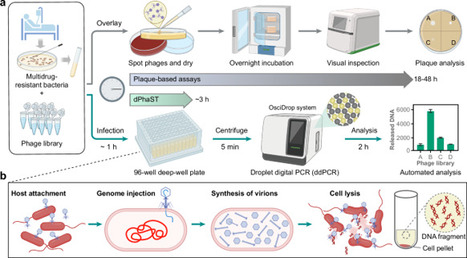
The clinical translation of phage therapy for multidrug-resistant infections is constrained by the lack of rapid, standardized therapeutic phage selection. Here, we introduce digital phage susceptibility testing (dPhaST), an automated droplet digital PCR workflow that quantifies phage-induced DNA release as a molecular signature of lysis. By targeting conserved 16S rRNA regions, dPhaST measures lytic activity across diverse bacterial pathogens within 3 h. Across 122 phage–host combinations involving 19 bacterial strains from six species, dPhaST shows 95.9% concordance with spot tests while resolving weak and heterogeneous lytic activities that are not readily distinguished phenotypically. It remains robust during the early infection window despite phage-encoded nuclease activity and tolerates phage cross-contamination better than spot tests. The method captures defense-mediated interactions involving CRISPR–Cas and Sir2-HerA systems. In this work, we show that automated digital quantification enables rapid and mechanistically informative profiling of early phage lytic efficacy across Gram-positive and Gram-negative pathogens. In this study, the authors present their automated droplet digital PCR workflow, capable of quantifying phage lytic activity.
|
|
Scooped by
mhryu@live.com
July 30, 1:31 PM
|
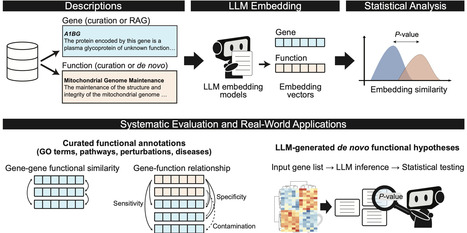
Emerging large language models (LLMs) can infer gene functions directly from gene lists, enabling hypothesis generation without predefined gene sets. However, these LLM-derived predictions are qualitative, and principled statistical validation is lacking. Here, we develop an embedding-based statistical framework that transforms gene and function descriptions into vector representations, enabling statistical testing of gene-gene and gene-function relationships and quantitative prioritization of de novo functional hypotheses inferred by LLMs. We benchmark seven state-of-the-art embedding models using curated and retrieval-augmented literature-derived gene descriptions across diverse biological contexts. OpenAI’s text-embedding-3-large and Google’s gemini-embedding-001 perform best, capturing gene-gene functional relationships in 88.7-92.5% of Gene Ontology biological processes and approximately 98.6% of canonical pathways. In gene-function association analyses, these models achieve high sensitivity (95.2-98.4%) and specificity (72.7-84.3%). Through contamination analysis and evaluation using experimentally informed protein assembly gene sets, our framework distinguishes biologically meaningful LLM-inferred hypotheses from noise, outperforming confidence-based inference and conventional enrichment analysis. We further develop the open-source R package DEGEmbedR and demonstrate its utility for interpreting a drug perturbation-derived differentially expressed gene (DEG) signature lacking significant conventional enrichment results. Together, these results establish LLM-derived embeddings as a quantitative foundation for functional genomics and the statistical validation of LLM-based gene function inference. Whilst large language models can infer gene functions from gene lists, these predictions lack validation. Here the authors develop a framework to transform gene and function descriptions into vector representations, enabling statistical testing of gene-gene and gene-function relationships.
|
|
Scooped by
mhryu@live.com
July 30, 11:35 AM
|
Recombinant proteins are widely used in biopharmaceuticals, industrial manufacturing, and molecular diagnostics; however, efficient secretion remains a major bottleneck limiting their large scale production. As core elements controlling protein entry into secretion pathways, signal peptides do not function solely based on their own sequences, but rather depend on coordinated compatibility among cargo protein properties, secretion pathways, and host backgrounds. Current signal peptide engineering mainly relies on a limited number of commonly used signal peptides, empirical selection, and individual experimental screening, making it difficult to design efficient secretion elements tailored to specific expression systems. Here, we present ApexSP, a signal peptide design framework for secretion engineering tailored to individual cargo proteins. ApexSP is built upon a large scale, high quality signal peptide knowledge base and integrates a discrete diffusion generative model constrained by evolutionary information, a multitask biological filter incorporating topology information, and a signal peptide and mature protein compatibility ranking model to enable integrated design of signal peptides for specific expression systems. ApexSP achieved high accuracy in multiple attribute prediction tasks, including pathway classification and cleavage site prediction, reaching or exceeding the performance of existing signal peptide prediction tools. Moreover, the cargo protein aware ranking module improved the enrichment of candidates with high secretion performance. Experimental validation across multiple eukaryotic and prokaryotic expression systems demonstrated that screening only 10 candidate sequences generated by ApexSP yielded multiple designed signal peptides outperforming reference signal peptides, with the best performing design in the ApGA expressed Pichia pastoris system achieving a 1.71 fold increase in secretion performance compared with the α factor signal peptide. Overall, ApexSP advances signal peptide research from sequence prediction toward secretion element design, demonstrating that a single round of designed signal peptides can achieve high secretion performance suitable for further engineering optimization.
|
|
|
Scooped by
mhryu@live.com
Today, 2:03 AM
|
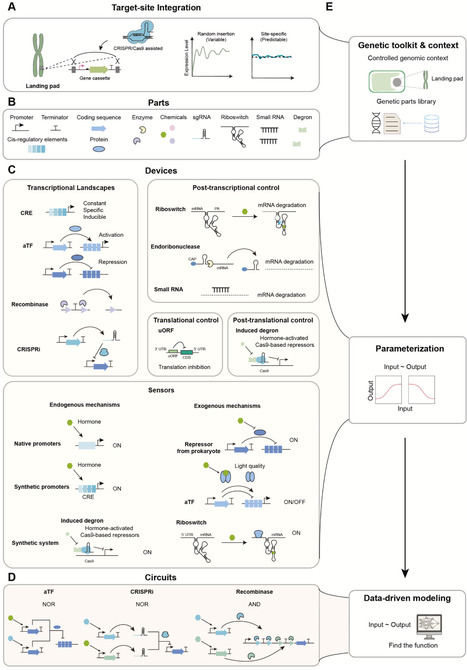
Predictable design is central to realizing the potential of plant genetic circuits by linking regulatory architecture to phenotypic outcomes. Despite rapid advances in genetic parts and circuit construction, most plant circuits are still developed through empirical optimization, limiting their scalability, reuse, and predictability. In this review, we examine why quantitative prediction in plants remains challenging and organize recent advances within an emerging quantitative engineering framework. We discuss how genomic and epigenetic context, developmental progression, spatial organization, and environmental variability shape circuit behavior, together with strategies that move beyond qualitative switching toward quantitative sensing, information processing, and model-informed design. Achieving predictable circuit behavior will require quantitative characterization, standardized measurement, multiscale modeling, and iterative design workflows that account for cellular and physiological context. As plant synthetic biology expands from model systems toward crops and field environments, predictive performance will also depend on species-specific physiology and fluctuating environmental conditions. Automation, high-throughput phenotyping, and AI-assisted modeling will likely become increasingly important for extracting transferable design principles across biological systems and environmental conditions. Collectively, these advances position predictability in plant synthetic biology as a systems-level engineering challenge requiring coordinated quantitative design across genetic, physiological, and environmental scales.
|
|
Scooped by
mhryu@live.com
Today, 1:55 AM
|
The continuous turnover of pathway enzymes imposes a significant metabolic burden on engineered cells and often limits production efficiency. However, enzyme lifetime is rarely considered a fundamental parameter in pathway design and optimization. Here, using the myo-inositol biosynthetic pathway in E. coli as a model, which consists of myo-inositol 1-phosphate synthase (IPS) and inositol monophosphatase (IMP), we demonstrate that selective regulation of the intracellular half-lives of pathway enzymes can enhance myo-inositol production. Specifically, fusing a degradation-protective short peptide, termed long-tail 1 (lt1) to the C-terminus of the rate-limiting enzyme IPS prolonged its intracellular half-life from 24 min to 135 min without compromising enzymatic activity, leading to a 30% increase in myo-inositol titer. In contrast, stabilizing IMP via the same tag reduced overall production due to intensified substrate competition for glucose-6-phosphate. These results highlight the importance of tailoring enzyme lifetime according to pathway topology. Mechanistically, lt1 fusion protects the tagged enzyme from ClpXP-mediated proteolysis by masking C-terminal degrons. Combining lt1 tagging with ClpXP deletion further improved the myo-inositol titer by 48%. Our findings establish rational control of enzyme lifetime as a general and complementary strategy to conventional expression-based approaches for optimizing microbial cell factories.
|
|
Scooped by
mhryu@live.com
Today, 1:33 AM
|
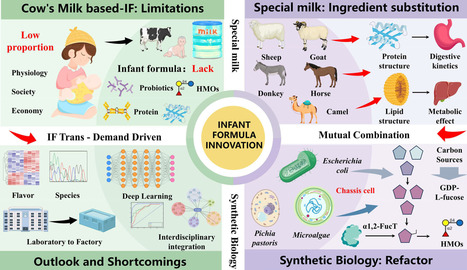
Breast milk (BM) serves as the gold standard for infant nutrition, yet conventional cow's milk-based infant formulas (IF) fail to adequately replicate its structural and functional complexity. This review critically examines two complementary paradigms, specialty milk utilization and synthetic biology-enabled precision manufacturing, as transformative strategies for developing biomimetic IF ingredients. Specialty milks, including goat milk, camel milk, donkey milk, buffalo milk, and yak milk, exhibit compositional proximity to BM in specific dimensions, including digestibility, sn-2 fatty acid profiles, and fat globule size distribution. Synthetic biology platforms have achieved notable industrial-scale successes, particularly in producing 2′-fucosyllactose and recombinant lactoferrin. However, significant knowledge gaps persist: the reconstruction of complex multi-site phosphorylation, the high-fidelity assembly of triple-layer milk fat globule membranes, and cost-effective large-scale production remain unresolved challenges. Critically, most studies focus on single components rather than integrated formula systems, and robust clinical validation is lacking. This review argues that the convergence of specialty milk matrices with precision-fermented bioactives represents a paradigm shift from compositional to structure-function biomimicry. Priority research areas include multi-omics-based integration strategies, harmonized regulatory frameworks, and well-designed clinical trials to establish functional equivalence. Addressing these gaps will be essential for developing next-generation IF that more closely emulates the functional complexity of BM.
|
|
Scooped by
mhryu@live.com
Today, 12:22 AM
|
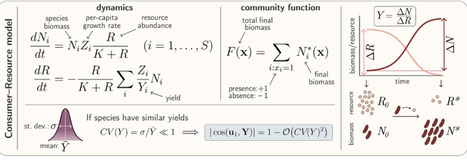
Microbial communities carry out functions of ecological, clinical and industrial importance. These functions arise from individual species contributions and from pairwise and higher-order interactions, whose number grows exponentially with community size. Yet community function is often surprisingly predictable. Here we show that this predictability does not require weak interactions. Instead, interactions across orders are strongly coordinated: those involving a given species are approximately proportional to related interactions one order below. This coordination causes species effects to vary together across community backgrounds, allowing function to be described by only one or two collective variables. We demonstrate this organization across dozens of combinatorial bacterial experiments and multiple environments. For total biomass, consumer resource models and experiments identify the dominant collective variable with species yield, a trait that remains stable as abundances change through community dynamics. Microbial communities are therefore predictable not because their interactions are simple, but because their complexity is coherently organized. Our work provides a framework for understanding and ultimately designing community function from species traits.
|
|
Scooped by
mhryu@live.com
Today, 12:01 AM
|
Soil nutrient transformation capacity is a critical determinant of sustainable productivity in perennial cropping systems; however, the extent to which high-yielding crops actively regulate rhizosphere microbial assembly to maintain nutrient availability remains poorly understood. We investigated whether root exudates from high-yielding alfalfa (Medicago sativa L.) selectively recruit plant growth-promoting rhizobacteria (PGPR) to enhance nutrient transformation. In an 8-year continuous alfalfa system (2018–2025), high-yielding cultivars increased soil organic carbon by 8.64%, total nitrogen by 6.01%, and moderately labile phosphorus fractions by 1.62%. Rhizobox experiments demonstrated that root exudates enhanced growth only with an active microbiome. High-yielding alfalfa enriched PGPR communities, specifically Ensifer, Pseudomonas, and Bacillus. Isolated strains exhibited N fixation, P solubilisation, and IAA production. Metabolomic profiling revealed that exudates were enriched in specific sugars and amino acids. Maltopentaose, maltotetraose, taurine, N-acetyl-L-leucine, and asparagine functioned as chemoattractants, stimulating PGPR proliferation and biofilm formation. These findings demonstrate that root exudate-mediated, targeted recruitment of functional PGPR enhances N fixation and P transformation, thereby supporting sustained high alfalfa productivity. This study demonstrates a key rhizosphere mechanism underlying the long-term sustainability of high-yielding perennial legume systems and provides a mechanistic basis for microbiome-informed sustainable alfalfa production and management.
|
|
Scooped by
mhryu@live.com
July 30, 11:31 PM
|
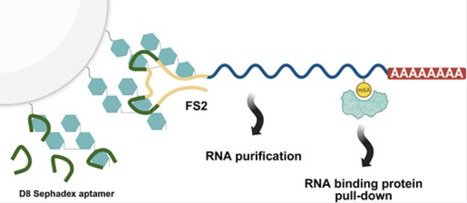
Efficient purification of specific RNAs from lysates remains a major challenge. Existing methods, such as MS2 tagging or oligonucleotide hybridization, require protein immobilization or sequence-specific hybridization, limiting scalability and compatibility with diverse RNAs. Current approaches often have low recovery, exhibit slow kinetics, and generate background contamination, limiting their use in RNA–protein interaction studies. To overcome these limitations, we developed FS2, an RNA sequence that binds Sephadex beads with high affinity, thus acting as an affinity tag for protein-free, rapid, and simple RNA purification. FS2 consists of two copies of the dextran-binding D8 aptamer embedded within the highly stable F30 three-way junction RNA scaffold, which promotes aptamer folding and enhances avidity. Systematic optimization revealed that FS2 exhibits rapid binding kinetics, efficient purification, and efficient elution under mild conditions (50°C, 10 mM EDTA), representing substantial improvements over existing RNA purification systems. We validated the utility of FS2 by purifying an FS2-tagged MYC mRNA fragment from HEK293T cells and demonstrating that N6-methyladenosine (m6A)-containing mRNAs can be pulled down along with the m6A-binding protein YTHDF2. Overall, FS2 provides a highly simple and efficient RNA-based affinity tag for recovering RNA from complex mixtures and lysates for diverse applications.
|
|
Scooped by
mhryu@live.com
July 30, 11:10 PM
|
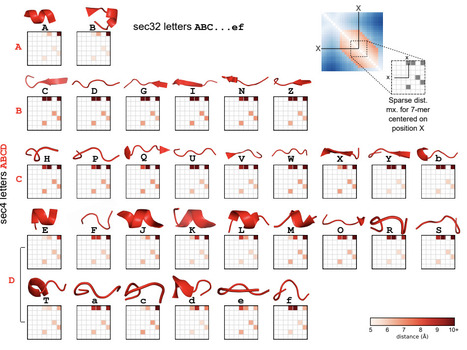
Protein structure databases have grown from thousands of experimentally determined structures to hundreds of millions of AI-predicted models, creating an urgent need for search methods that combine high accuracy with practical scalability. Here, I present the third generation of Reseek, a protein structure search algorithm achieving the highest overall accuracy (median rank 1) according to diverse metrics among tested methods including DALI, Foldseek and TM-align. Improved accuracy is obtained by parallel sequence alignment of many discrete alphabets capturing primary, secondary and tertiary features, giving a combined space of ~10^22 possible states. Separate statistical models are optimized for family, superfamily and fold discrimination, respectively, revealing distinct combinations of features that characterize each level. Hundreds of query structures can be searched a against a multimillion-structure database on a server computer in minutes, making large-scale structure search at state-of-the-art accuracy practical on commodity hardware.
|
|
Scooped by
mhryu@live.com
July 30, 10:52 PM
|
All cells possess a diverse array of cell-autonomous immune responses that can detect and restrict infections by intracellular pathogens. These intrinsic responses (both passive and active) enable individual cells to autonomously block bacterial and viral invasion and replication. Epithelial and endothelial cells act as a first line of defence, coordinating immune responses that preserve host barrier integrity. These cells can also mount specialized innate immune responses (many of which are triggered by antimicrobial cytokines, such as interferons) to limit the replication and motility of intracellular bacteria and viruses. To counteract these, bacteria and viruses have developed strategies to avoid or antagonize host defences, driving an evolutionary arms race that shapes every aspect of host–pathogen interactions. This Review provides an overview of current knowledge of cell-autonomous immunity against bacteria and viruses. We emphasize the factors underpinning host cell surveillance and restriction of cytosolic pathogens and mechanisms of immune evasion deployed by the invading microorganism. This Review summarizes the current knowledge about the cell-intrinsic factors that act against pathogenic bacteria and viruses and the immune evasion strategies that pathogens have to counteract cell-autonomous immunity.
|
|
Scooped by
mhryu@live.com
July 30, 5:04 PM
|
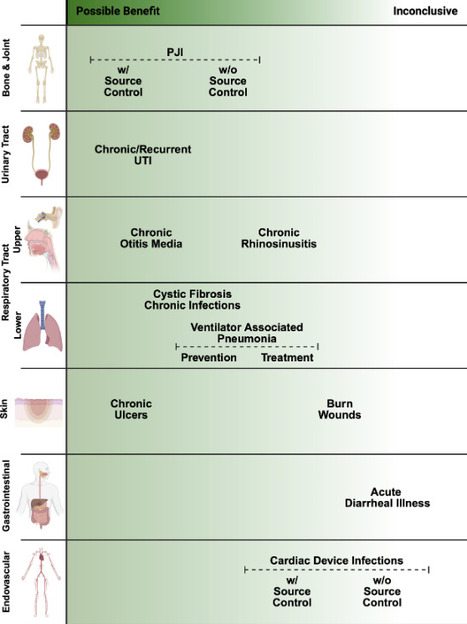
Bacteriophages are the viral predators of bacteria. Their ability to infect and kill bacterial strains has been harnessed for use in clinical practice for more than a century, but their development stalled for decades in many regions. Now, in the face of increasingly complex bacterial infections that fail conventional therapeutic options, and the growing global threat of antibiotic resistance, interest in phage therapy has resurged. Data evaluating the impact of phage therapy via clinical trials are steadily increasing, but remain sparse. Yet, an ever-growing number of case reports and case series highlights the potential of phage therapy to make a positive impact in the battle against antimicrobial resistance and difficult-to-treat bacterial infections. In this review, we summarize the available data describing the clinical utility of phage therapy, highlight infectious indications where phage therapy shows strong potential, and call attention to disease states where the benefits of phage therapy, as it is practiced today, are less certain. Furthermore, we note areas where there is a crucial need for additional research and propose how scientists and clinicians can work together to design and carry out the preclinical and clinical studies that will take phage therapy into its next century.
|
|
Scooped by
mhryu@live.com
July 30, 2:13 PM
|
Bacterial microcompartments (MCPs) are versatile proteinaceous organelles that compartmentalize metabolic pathways, offering promising scaffolds for synthetic biology and metabolic engineering. However, designing customized nanobioreactors requires distinguishing structurally indispensable shell proteins from those that can be modified or deleted to tune shell permeability without disrupting core organelle assembly. In this study, we performed a systematic biophysical and metabolic characterization of the hexameric shell protein PduU to evaluate its potential as a modular platform for synthetic organelle engineering. We tested whether deleting pduU or selectively truncating its N-terminal β-barrel domain preserves shell assembly, metabolite flux, and intermediate confinement. Our results demonstrate that PduU modifications alter shell permeability while fully maintaining organelle structural integrity, monodispersity, and electrostatic colloidal stability. Crucially, this modulation in permeability redirects internal metabolic flux toward the energy-generating propionate pathway, resulting in elevated cell biomass and significantly increased yields of propionate, an economically vital industrial platform chemical. By establishing that PduU is a non-essential structural component whose modification tunes small-molecule flux, this work highlights PduU as a flexible locus for shell engineering, providing a scalable strategy for biomanufacturing of high-value bio-based products in tailor-made MCP nanobioreactors.
|
|
Scooped by
mhryu@live.com
July 30, 1:42 PM
|
Assessing the deleteriousness of synonymous mutations is of considerable importance for understanding human health, and the development of corresponding prediction methods offers a rapid and efficient approach. However, the scarcity of training data remains a major bottleneck in building high-performance predictors for synonymous mutation deleteriousness. Herein, we present TPdsm, a novel method for predicting deleterious synonymous mutations. TPdsm leverages TabPFN, a tabular foundation model specifically designed for small-sample prediction. The features are retrieved from CDsyn, a comprehensive database dedicated to deleterious synonymous mutation prediction. Our evaluation demonstrates that TPdsm delivers better predictive performance than a set of 14 current state-of-the-art predictors, as evidenced by its results across multiple independent testing datasets and real-world cases.
|
|
Scooped by
mhryu@live.com
July 30, 1:22 PM
|
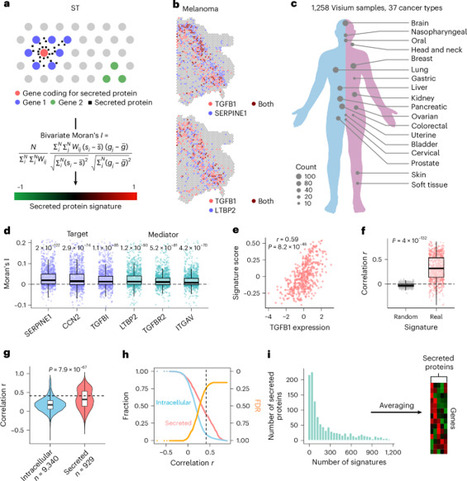
The human genome encodes ~1,900 secreted proteins, many of which mediate intercellular communication. Secreted proteins do not act cell-autonomously, limiting systematic approaches to characterize their functions. Here we introduce SecAct (Secreted Activity, https://secact.ccr.cancer.gov ), a computational framework that infers the signaling activities of 1,170 human secreted proteins from spatial, single-cell and bulk transcriptomic data. The inference model harnesses precomputed intercellular signaling signatures trained on 1,258 spatial transcriptomics samples spanning 37 cancer types. Transcriptomics data from antisecreted protein therapies validate SecAct’s accuracy in predicting the repression of secreted protein activity following treatment. For spatial and single-cell transcriptomics data, SecAct provides interactive modules for analyzing secreted protein-mediated cell–cell communication. Applying SecAct to 54 cancer immunotherapy cohorts comprising 5,174 patients, we identified secreted proteins associated with tumor immunity. In vivo experiments validated lymphocyte antigen 86 (LY86), whose function in cancer was previously unknown, as an antitumor regulator. SecAct is a framework that leverages transcriptomic data to infer secreted protein signaling activities.
|