 Your new post is loading...

|
Scooped by
mhryu@live.com
Today, 12:01 PM
|
Defined microbial communities (also known as synthetic communities) are showing promising results for plant health but are lacking an efficient lab to field transition. This is the due to limited knowledge on how to efficiently modulate plant microbiota by considering complex environments and multi-kingdom interactions. In this study, we aimed to better understand the transmission and impact of multi-kingdom synthetic communities (SynCom) from the seed to seedling stage. We constructed 20 different SynComs using both a priori and random approaches, from pool of diverse strains including 24 bacteria, 11 yeasts and 10 filamentous fungi. SynComs were inoculated on Brassica napus seeds and we monitored both transmission and impact on the microbiota of 15-day-old seedlings grown in non-sterile soil. Optimization of the inoculation protocol showed that alginate coating improved bacterial, yeast and filamentous fungi concentrations by more than 2 log compared with other approaches. With this inoculation method, we observed contrasted seedling colonization profiles, with SynComs members representing between 1.1-45.7% of bacterial community and 3.2-36.6% of fungal community. Our multiple SynCom design revealed that strain selection is a more critical determinant of SynCom performance than assembly strategy. Even randomly assembled communities performed well, as long as they are drawn from a pool of ecologically relevant, well-adapted taxa. Based on these evidences, we identified key bacterial and fungal traits explaining efficient seedling colonization such as high abundance on inoculated seed and low in vitro lag-time. Despite low colonization levels, we observed that SynCom inoculation altered seeding bacterial community assembly in 14 SynComs. A total of 82 native bacterial ASVs were identified as responsive to SynCom inoculation, most likely originating from the soil. This shift indicates that SynComs influence community assembly by modulating the recruitment of environmental taxa, especially when SynCom strains were more integrated in multi-kingdom network structures. Finally, we identified four distinct SynComs profiles which either colonized strongly or not seedlings while shifting of not native microbiota. Altogether, these findings provide actionable directions for improving SynCom design, suggesting that leveraging ecological processes such as host adaptation, optimal inoculation density, and network integration could enhance both colonization efficiency and plant phenotypic outcomes.
|
|
Scooped by
mhryu@live.com
Today, 11:34 AM
|
Disruption of ribosome flux on translating mRNAs can result in ribosome collisions that activate key cellular responses. Despite growing interest in the field, current methods to detect ribosome collisions have limited sensitivity and are not suitable for use in living cells. Here, we describe a novel, reliable, and highly sensitive method based on split-nanoluciferase complementation to detect ribosome collisions in living cells. RiboCollSensor relies on the specific recruitment of EDF1-LgBiT to collided ribosomes near uS4-SmBiT, which generates luminescence due to the proximity of the partners in the ribosome. This biosensor showed unprecedented sensitivity, allowing detection of basal ribosome collisions in unstressed cells or under very low stress levels, enabling real-time analysis of collision kinetics. Thus, an increase in collisions could be detected within the first minute after translation disturbance, confirming the role of ribosomal flux as a rapid sensor of cell stress. Ribosome collisions rapidly disappeared after stress withdrawal, whereas under persistent stress, recovery was slower, taking up to two hours depending on the cell type. The ease and flexibility of this method, which requires only transient co-expression of sensor partners in target cells, make it applicable across many cell types to monitor the impact of internal and external cues on ribosome dynamics in real time.
|
|
Scooped by
mhryu@live.com
Today, 11:23 AM
|
In conventional total-RNA sequencing, unwanted RNA is removed by ribosomal-RNA depletion or messenger-RNA enrichment, and contaminating genomic DNA is cleared by DNase, both before reverse transcription. A sample index is added only later, during amplification, so each sample is carried through reverse transcription and cleanup on its own. These steps lose material that low-input samples cannot spare, and the per-sample handling limits throughput. Here we describe BIRT (Barcode-Integrated Reverse Transcription), a hairpin primer that carries a sample barcode and begins reverse transcription preferentially at RNA 3′ ends, folding both barcoding and 3′-end capture into first-strand synthesis. Barcoding at reverse transcription enables early pooling, so samples are combined before any cleanup. It also authenticates RNA against DNA contamination: the primer barcodes RNA 909-fold more often than genomic DNA, and non-barcoded reads, which report DNA, are discarded. The 3′-end preference recovers terminal sequence that random priming loses: for a typical small nucleolar RNA, 66% of reads begin within two nucleotides of the mature 3′ end, against a few percent for random hexamers. We pair BIRT with PERD (Probes for Excess RNA Depletion), a modular set of blocking probes that removes unwanted RNA within the same reaction without distorting expression (Pearson r = 0.98). We have applied BIRT to 8,079 samples across seven species, from cultured cells and primary tissue to FFPE and extracellular-vesicle RNA.
|
|
Scooped by
mhryu@live.com
Today, 9:43 AM
|
Plant growth is influenced by the composition of its associated microbiome. The inherent complexity and functional redundancy of natural plant microbiomes present a formidable barrier to understanding the myriad biological interactions therein. Efforts have been made to develop synthetic microbial communities (SynComs) that can provide a rigorous and generalizable framework for the rational design of next-generation microbial products for sustainable agriculture. We test multiple strategies for stable, plant growth promoting SynCom design and evaluate the phenotypic and molecular impacts of a successful plant-SynCom interaction. We designed four distinct, reduced-complexity variants of SynCom Sorghum Root Consortium 1 and assessed their capacities for colonization, stability, and plant growth promotion (PGP). To understand the impact on plant performance of our highest performing SynCom variant, we characterized the host's longitudinal transcriptional response to SynCom inoculation and corroborated the results with metabolomics analysis. The top-performing SynCom stably colonized Sorghum bicolor roots and rhizospheres, elicited PGP, and induced dynamic spatiotemporal gene transcription in S. bicolor roots and shoots defined by modulation of growth–defense trade-off machinery and enhanced flavonoid production. The resultant reduced-complexity SynCom is a highly stable, soil-independent, plant growth promoting, and demonstrates the utility of colonization-based selection criteria, integrated with longitudinal transcriptomic and metabolomic characterization.
|
|
Scooped by
mhryu@live.com
Today, 12:16 AM
|
Spliceosomal introns impose a universal processing burden on eukaryotes and obstruct genome minimization because their essentiality remains unresolved. By exploiting Spo11-independent meiosis in synthetic single-chromosome Saccharomyces cerevisiae, the complete deletion of all 300 spliceosomal introns was achieved, generating an intron-free strain, SYNE27α. Whole-genome sequencing confirmed precise excision. Unexpectedly, spliceosomal components (all five small nuclear RNAs [snRNAs], Prp8, Prp9, Prp19, Yhc1, and Luc7) were no longer required for viability, demonstrating that a eukaryotic cell can exist independently of spliceosomal function. U3 small nucleolar RNA (snoRNA) splicing bypassed the requirements for Yhc1, Luc7, Prp9, and Prp19, revealing a mechanistic divergence from pre-mRNA splicing. Cumulative intron loss caused slow growth via ribosomal dysregulation, yet SYNE27α maintained genetic stability. Fitness costs were fully recessive in diploids, confirming intron loss as the primary driver. These findings establish an intron-free, spliceosome-independent eukaryote, resolving the essential function of the spliceosome and enabling minimal-system studies of genome evolution.
|
|
Scooped by
mhryu@live.com
July 15, 11:46 PM
|
RNA polymerases are essential in the enzymatic synthesis of RNA via in vitro transcription. The resulting mRNA transcripts have been investigated more and more as therapeutics in clinical studies. Therefore, it is important that these enzymes possess a high specificity. Despite their utility, many commercially available RNA polymerases are limited by their tendency to generate abortive transcripts and undesired byproducts. To ensure high specificity, optimal pairing between the RNA polymerase and its cognate promoter is vital. However, current promoter characterization techniques remain laborious and time-consuming, thereby limiting efficient and rapid RNA-polymerase applications. In this work, we describe a high-throughput strategy for rapid promoter identification using a two-plasmid screening platform in E. coli. Cell populations are analyzed and sorted via fluorescence-activated cell sorting (FACS), followed by sequence verification. Functionality of the screening platform was validated via cell sorting, based on high fluorescence, of a mixed population containing T7 RNA polymerase paired with three different promoters. Moreover, the screening system was evaluated by using two recently identified RNA polymerases in combination with their respective cognate promoters. This proof-of-concept facilitates the identification of both RNA polymerase and promoter. Further, it substantially accelerates promoter characterization, thereby supporting improvements regarding mRNA manufacturing workflows.
|
|
Scooped by
mhryu@live.com
July 15, 5:04 PM
|
Protein-protein interactions underpin most cellular processes, and engineered binders present powerful tools for probing biology and developing novel therapeutics. However, scalable, quantitative characterization of large numbers of candidates remains a major bottleneck. Here we show that ADAPT-M (Affinity Determination by Adaptation of ProTein binders for Microfluidics) enables rapid, parallel measurement of binding affinities and dissociation behavior directly from enriched display libraries in under one week, without requiring gene synthesis or hands-on protein purification. Applied to a computationally designed library targeting the SARS-CoV-2 Omicron BA.1 receptor binding domain, ADAPT-M recovered most highly enriched variants and revealed that many display-enriched binders lacked measurable binding in vitro, highlighting limitations of screening alone. ADAPT-M enabled quantitative characterization of dozens of binders in parallel and selection of lead candidates for structural analysis. Unexpectedly, structural and mutational studies revealed that designed binding interfaces were preserved despite engaging alternative epitopes. By bridging screening and scalable in vitro validation, ADAPT-M accelerates protein binder discovery and supports data-driven protein engineering. ADAPT-M is a workflow combining design and high-throughput experimentation. It overcomes the testing bottleneck and enables rapid quantitative affinity measurements of thousands of designer proteins enriched from yeast surface display libraries.
|
|
Scooped by
mhryu@live.com
July 15, 3:39 PM
|
The integration of biological and artificial systems promises the effective coupling of living cells with electronic devices. However, to create biomimetic platforms capable of bridging biological with artificial systems, it is necessary to first enhance cell adhesion and cell interactions with engineered surfaces via the integration of techniques from materials science, nanotechnology and synthetic biology, such as structural functionalization techniques, and chemical or biological surface modifications. In this Tutorial Review we cover the use of polymer-based semiconductors and micro- and nanofabrication methods for the integration of biologically relevant cell membrane models with chip-based devices. This integration enhances cell–device coupling and provides an approach for studying membrane-level interactions. Although cell membranes are essential for understanding biological mechanisms, including drug responses, existing technologies rely on simplified synthetic models which lack biological complexity. Advances in electrical impedance measurements enable the study of membrane protein activity, providing insight into drug interactions and biomolecular processes. In addition, exploiting these hybrid systems can result in improved adhesion and electrostatic interactions, facilitating functional coatings for microdevices and neuromorphic applications. We discuss the recent advances in biomembrane–electronic interfaces, device design, surface modification, electronic materials, biomembrane formation and measurement techniques in the context of applications in drug discovery, diagnostics and neuromorphic computing, along with future directions for the field. This is a Tutorial Review on advances in bioelectronic interfaces covering research in material science for biomimetic interfaces and in synthetic biology for the reconstitution of complex biological functions.
|
|
Scooped by
mhryu@live.com
July 15, 3:31 PM
|
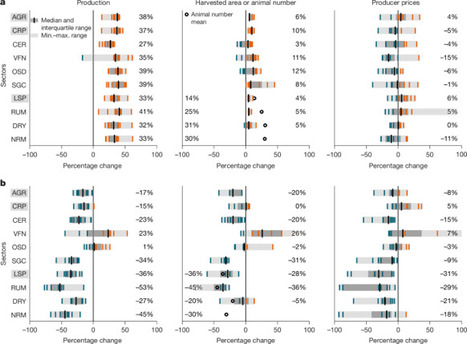
Food systems are a major contributor to exceeding planetary boundaries and poor quality diets are a key mortality risk globally. Projected population and income growth could exacerbate these challenges. In response, there are calls for transformation towards healthy and sustainable food systems. However, the scale and distribution of the impacts of this transformation on agriculture are underexplored. Here we show that, by 2050, the transformation of food systems towards healthy diets (adoption of the EAT–Lancet reference diet), improved productivity and halving of food waste results in a fundamental restructuring of global agriculture, aspects of which break with historical trends. Scenario simulations using a multimodel ensemble of ten global economic models show a 6% median decrease in agricultural land (+1% to −26%) compared with 2020 levels. By 2050, agricultural production would be 17% lower than business-as-usual projections (−2% to −32%) and, economically, the value of this production is US$1.6 trillion (26%) lower (+8% to −58%). Within this, the value of livestock production would be substantially lower than current 2050 projections (−49% to −83%), while vegetable, fruit, nut and legume production value would increase by 23% (−33% to +106%). Results are dependent on the assumed policies to achieve the transformation scenario. We highlight a more active role for food policy to consider the benefits of such a transformation (improved population health and reduced environmental pressures) and navigate the political economy of its impacts. Scenario simulations using global economic models show that by 2050 the transformation of food systems towards healthy diets, improved productivity and halving of food waste result in a restructuring of global agriculture.
|
|
Scooped by
mhryu@live.com
July 15, 3:16 PM
|
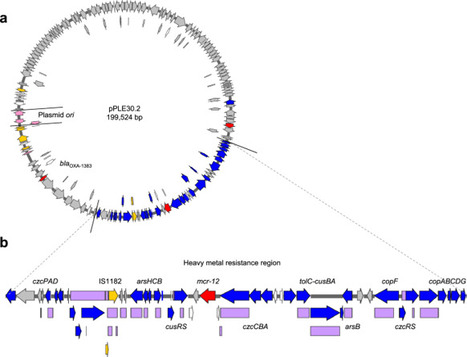
The emergence of mobile colistin resistance (mcr) genes threatens the efficacy of polymyxins as last-resort antibiotics for treating multidrug-resistant bacterial infections. Here, we identify a novel environmental mcr gene, mcr-12, discovered in Pigmentiphaga litoralis from Australian sediment, and evaluate its potential role in the intersection between environmental resistance reservoirs and clinically relevant bacteria. Gene mcr-12 was located within a metal-resistance gene cluster on plasmid pPLE30.2, which also carried a predicted novel β-lactamase gene (blaOXA-1383). Removal of pPLE30.2 increased polymyxin susceptibility 32-fold, while reintroduction of mcr-12 restored resistance. Despite its low amino-acid identity to known MCR enzymes, MCR-12 confers polymyxin resistance by phosphoethanolamine transferase modification of lipid A. Expression of mcr-12 in Pseudomonas spp. and Acinetobacter baumannii conferred polymyxin resistance, suggesting that mcr-12 is compatible between environmental strains and clinical pathogens. The discovery of a new mcr gene from an environmental source and from outside Gammaproteobacteria highlights the need for further surveillance efforts within a One Health framework. Multiple families of transferable mcr genes drive bacterial resistance to polymyxin antibiotics. Here, Gillieatt et al. identify a new type of plasmid-borne mcr gene in an environmental bacterium and show that it confers polymyxin resistance in the native microbe and when transferred to other bacteria.
|
|
Scooped by
mhryu@live.com
July 15, 1:17 PM
|
Catalytic-RNA (cat-RNA) expressed from mobile DNA can record cellular events, such as the uptake of plasmids via horizontal gene transfer, by splicing a barcode onto 16S ribosomal RNA (rRNA) - a system termed RNA addressable modification (RAM). However, scaling RAM to record multiple simultaneous biological events requires large numbers of orthogonal cat-RNA whose signals reflect the biological features under investigation rather than variability arising from the barcode sequence. Here, we explore how to design orthogonal cat-RNA to record information about multiple plasmid-encoded traits in parallel. We show that cat-RNA having tRNA-derived barcodes with sequence variation in the anticodon stem-loop present greater signal consistency within E. coli than mRNA-derived barcodes. When orthogonal cat-RNA designs harboring tRNA-derived barcodes were evaluated in Vibrio natriegens and Pseudomonas putida, increased variance was observed compared with E. coli. Nevertheless, the signal consistency was sufficient to use these orthogonal cat-RNAs to report on the relative activities of four promoters and two origins of replication by sequencing barcoded-rRNA derived from the three organisms. These results show how RAM can be multiplexed to report on mobile DNA features in microbial communities and illustrate the importance of accounting for variability in RNA outputs when designing and interpreting multiplexed RNA barcoding data.
|
|
Scooped by
mhryu@live.com
July 15, 12:50 PM
|
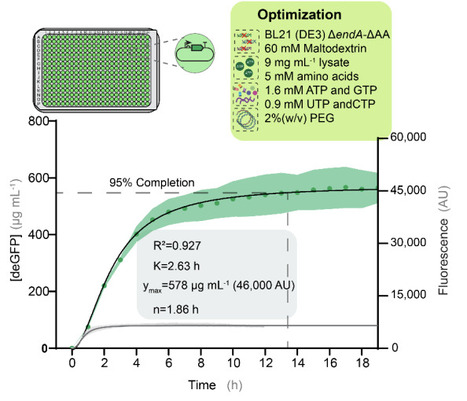
Cell-free protein synthesis (CFPS) is a powerful platform for synthetic biology, yet the factors governing reaction longevity remain poorly understood despite their importance for high-throughput applications. Here, the three principal determinants of CFPS performance—DNA template design, reaction composition, and lysate genotype— systematically optimized to extend reaction lifetime in a 384-well plate format. Different energy regeneration systems were evaluated through real-time pH monitoring and metabolomic analyses to identify the metabolic constraints limiting prolonged protein synthesis. Lysates prepared from engineered E. coli BL21(DE3) strains were further examined to assess the contributions of DNA, RNA, and amino acid stabilization. Systematic optimization of amino acid, nucleoside triphosphate, polyethylene glycol, and lysate concentrations identified DNA template stability and amino acid preservation as the primary factors sustaining CFPS activity. Combining these improvements yielded reactions that remained productive for >14 h and produced 567 ± 64 μg mL-1 active deGFP. These findings establish practical strategies for extending CFPS lifetime and improving high-throughput cell-free platforms.
|
|
Scooped by
mhryu@live.com
July 15, 11:45 AM
|
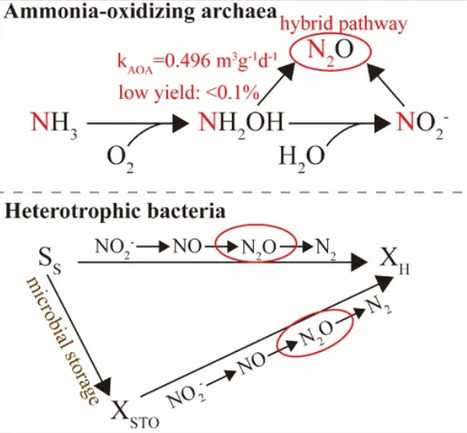
Nitrous oxide (N2O) emissions linked to ammonia-oxidizing archaea (AOA) lack a process-resolved kinetic framework, limiting accurate source attribution in wastewater nitrification. A mechanistic model was developed for N2O production in AOA-dominated systems, explicitly resolving the archaeal N-nitrosation hybrid pathway and coupling nitrite generation by AOA to heterotrophic denitrification via intracellular carbon storage. The model was calibrated using dynamic batch experiments with an AOA-enriched culture across dissolved oxygen gradients (1.47–7.35 mg L–1) and independently validated against temporal profiles of nitrogen species and N2O. The rate constant for the archaeal hybrid N2O production was quantified as kAOA = 0.4966 m3g-1d-1, yet yielded only 0.032–0.085% of oxidized nitrogen as N2O. Simulations indicated that N2O in AOA systems originated predominantly (>96%) from heterotrophic denitrification, while the archaeal hybrid pathway remained low-yield and insensitive to dissolved oxygen. In contrast, canonical ammonia-oxidizing bacteria-mediated systems exhibited higher N2O yields (3.1–8.7% of oxidized nitrogen), which were strongly suppressed under elevated oxygen. By transforming the conceptual hybrid pathway into a predictive, process-resolved framework, this model provided a kinetic basis for moving N2O mitigation strategies beyond uniform oxygen control toward approaches that account for nitrifier identity.
|
|
|
Scooped by
mhryu@live.com
Today, 11:48 AM
|
In microbiome studies, associations between microbial functions and the environment are often confounded by phylogeny. While some methods explicitly account for this confounder, they require information about genome content, limiting their use in biomes where few genomes have been available. To make these methods more universally accessible, we have developed Phylogenize2, a redesigned phylogeny-aware tool for linking microbial gene families to abundance phenotypes. Phylogenize2 integrates large metagenome-assembled genome collections, including both biome-specific collections from MGnify and a broadly sampled general purpose database, GlobDB, to substantially expand species coverage, allowing its application in environments like the mouse gut and ocean. In addition, by default, Phylogenize2 uses a new robust phylogenetic testing framework that has been optimized for microbial abundance data, while also allowing the use of other comparative methods such as POMS. In an experimental mouse study, Phylogenize2 identifies that Muribaculaceae with higher abundance on a high-fat diet are enriched for proteins in the thioredoxin family, with likely roles in oxidative stress. When we apply Phylogenize2 to a polar ocean study, we find that a molybdenum-dependent PaoABC/YagTSR-like aldehyde oxidoreductase system differentiates mesopelagic from surface-dwelling Flavobacteriaceae, suggesting that aldehyde detoxification may be important for organisms that degrade marine snow. Together, these results show that Phylogenize2 expands phylogeny-aware microbiome analysis beyond the human gut and can provide insight into the genetic basis of microbiome-encoded traits in diverse environments.
|
|
Scooped by
mhryu@live.com
Today, 11:27 AM
|
Fluorescent RNAs (FRs) have emerged as powerful tools for the visualization of RNA in live cells. However, the poor folding of FRs is a major limiting factor in many advanced RNA imaging applications. Here, we describe a novel strategy to significantly increase the folding efficiency of FRs. By introducing a stabilizing stem and performing targeted mutagenesis at key junction regions, we develop a superfolder variant of the Pepper aptamer, termed sfPepper, that exhibits a striking twofold increase in folding efficiency compared with Pepper under physiological conditions. sfPepper exhibits much improved thermostability and reduced ion dependence and, most importantly, is substantially brighter than Pepper in live cells. sfPepper enables robust imaging of diverse noncoding RNAs and messenger RNAs with increased signal-to-background ratios and stimulated emission depletion (STED) superresolution imaging of CUG trinucleotide repeat-containing toxic RNAs. Remarkably, only four sfPepper repeats facilitate sensitive single-molecule mRNA tracking, revealing dynamic heterogeneity among ER-associated mRNA molecules. Together, this study establishes an efficient strategy for improving FR folding and offers a powerful tool for fluorescently labelling RNAs in live cells.
|
|
Scooped by
mhryu@live.com
Today, 11:20 AM
|
Oxford Nanopore Technologies (ONT) sequencing offers several advantages for metagenomics, including long reads, rapid turnaround, low upfront cost, scalability and portability. However, for ONT metagenomics, DNA yield, quality and integrity are important considerations when selecting an extraction method. Many metagenomic extraction methods use harsh lysis conditions to extract a wide range of species and provide an accurate community composition, but these conditions can compromise DNA fragment length. Therefore, extraction methods for ONT metagenomics must balance DNA shearing and recovery with representative community lysis. We systematically evaluated DNA extraction methods for ONT metagenomic sequencing using a use case-oriented framework. Among nearly 50 extraction methods screened, 7 were selected for detailed comparison based on suitability for metagenomics, variation in methodology, availability, cost and processing time: Norgen BioTek Corp’s Stool DNA Isolation (NG), Zymo Research’s ZymoBIOMICS Quick-DNA HMW MagBead (ZMG), Qiagen’s DNeasy Blood and Tissue (QBT), Macherey-Nagel’s NucleoMag DNA Microbiome (MN), Zymo Research’s ZymoBIOMICS DNA Mini Prep (ZMI), Qiagen’s DNeasy PowerSoil/QIAamp PowerFecal Pro (PS) and Qiagen’s QIAamp Fast DNA Stool Mini (QIA). Methods were tested using Zymo Research’s ZymoBIOMICS Microbial Community Standard (MCS), a matrix-free mock community with known composition. DNA extracts were sequenced on an ONT PromethION using the Rapid Barcoding Kit, except QIA due to insufficient DNA yield. Metrics for the method, DNA extracts, sequencing and genomes were evaluated, revealing trade-offs between methods. The two magnetic bead methods, MN and ZMG, produced the highest mean read length N50 values (13.9 and 16.5 kb, respectively) but showed apparent community compositions skewed towards Gram-negative bacteria. In contrast, ZMI and PS maintained a community composition close to expected, with reduced mean read length N50 values (4.5 vs. 7.5 kb). Performance across various metrics is presented in the context of the following use cases: maximizing genome coverage and assembly completeness, preserving composition accuracy, targeting specific species and limiting required resources (equipment, time or budget). The metrics and use case considerations presented offer practical guidance for informed selection of DNA extraction methods for ONT metagenomics. For accurate community composition, ZMI or PS are recommended, while PS and ZMG perform best at maximizing genome coverage and assembly completeness. NG and QBT may be the most economical options, though performance trade-offs were observed. Finally, PS may be the preferred method for time-sensitive diagnostic or field applications.
|
|
Scooped by
mhryu@live.com
Today, 12:18 AM
|
Developing therapies and vaccines against integral membrane proteins is hindered by their extensive hydrophobic surfaces, which complicate production and structural analysis. Here, we describe a general deep learning–based design approach for solubilizing native membrane proteins while preserving their sequence, fold, active-site, and ligand-binding properties. Genetically encoded de novo protein WRAPs [water-soluble RFdiffused amphipathic proteins] surround the lipid-interacting hydrophobic surfaces, rendering them thermostable and water-soluble without the need for detergents. We design WRAPs for both monomeric and oligomeric beta-barrel outer membrane proteins and helical multipass transmembrane proteins. A 2.95-angstrom-resolution cryo–electron microscopy structure of WRAPed mycobacterial porin demonstrates that WRAPs can be used for the structural determination of membrane proteins in solution. As a step toward syphilis vaccine development, we generated soluble versions of Treponema pallidum antigens.
|
|
Scooped by
mhryu@live.com
Today, 12:05 AM
|
Quantifying the abundance and activity of bacteria within populations and communities is fundamental to systems microbiology and microbiome research. Yet direct microscopic cell counting remains low throughput, labor-intensive, and prone to user variability, leading many researchers to rely on indirect proxies such as optical density or multicopy marker-gene quantification. These indirect approaches do not distinguish between active and inactive cells and can obscure ecological interpretation. Here, we introduce microbial activity and total cell quantification via rapid imaging and extraction (MATRIX), an efficient workflow that integrates sample extraction, fluorescence staining, microscopy and automated image analysis, and Bayesian statistical inference to quantify total and redox-active cells and derive single-cell measurements for environmental bacterial populations and communities. We demonstrate its reproducibility and versatility using both cultured isolates and high-diversity soil communities. The resulting quantitative, phenotypic data sets provide rapid, direct measurements of bacterial population and community size and activity, enabling well-powered analyses that strengthen mechanistic insight into microbial responses and improve the ecological grounding of microbiome studies.
|
|
Scooped by
mhryu@live.com
July 15, 11:38 PM
|
Bacterial–fungal interactions (BFIs) are central to microbial community dynamics in diverse ecosystems, with profound implications for medicine, agriculture, and environmental microbiology. A critical yet unresolved question in BFIs is how bacteria specifically detect and respond to fungal competitors. This review synthesizes recent advances in this field, focusing on four integrated strategies that bacteria employ to recognize fungi: (i) sensing conserved fungal cell wall-derived microbe-associated molecular patterns; (ii) eavesdropping on fungal chemical signals, including quorum-sensing molecules and volatile organic compounds; (iii) contact-dependent recognition via chemotaxis, biofilm adhesion, and specialized secretion systems; and (iv) indirect recognition through resource competition. These mechanisms highlight the sophistication of interkingdom communication and its translational potential in managing polymicrobial infections and engineering biocontrol systems.
|
|
Scooped by
mhryu@live.com
July 15, 4:55 PM
|
Bacterial endospore formation begins with a polar septum that compartmentalizes two transcriptionally distinct cells, the mother cell and forespore. In Bacillus subtilis, a complex composed of SpoIIIE, SpoIIIM and PbpG maintains compartmentalization at a septal pore during hydrolysis of septal peptidoglycan (PG), by coordinating two critical functions: chromosome translocation from the mother cell to the forespore through the septal pore and preservation of septal pore stability through SpoIIIE-PG interactions and PG synthesis. Disruption of this mechanism leads to cytoplasmic leakage, failed chromosome transfer, and reduced sporulation. Here, we identify CprV (YteV) as a safeguarding factor that maintains compartmentalization in response to septal pore stability defects. Cells lacking CprV show mild defects in compartmentalization and chromosome translocation; however, in mutants experiencing septal pore instability, loss of CprV significantly worsens these defects. Consistent with this role, CprV accumulates at the septal pore in a SpoIIIE-dependent manner when chromosome translocation is impaired. Computational analyses indicate that CprV exhibits structural similarity to Alba proteins found in Eukaryotes and Archaea and is primarily conserved in the Bacillales. Collectively, our data support a model whereby CprV monitors septal pore stability to safeguard compartmentalization during sporulation, providing insight into how cells monitor compartmental integrity during cellular remodeling. Identification of CprV during bacterial sporulation reveals insight into how developing cells monitor compartmental integrity during cellular remodelling and differentiation.
|
|
Scooped by
mhryu@live.com
July 15, 3:37 PM
|
Xeno nucleic acids (XNAs) exhibit enhanced chemical stability and significant resistance to nuclease degradation, making them attractive for synthetic biology and therapeutic development. Most engineered XNA polymerases are derived from thermophilic organisms and exhibit limited catalytic activity under physiological conditions, thereby limiting their broader application. We report a single-residue mutant (F762A) of the mesophilic Family A DNA polymerase I Klenow fragment that synthesizes DNA, RNA, 2′-F-RNA, and FANA with yields exceeding 85% at 37°C, as well as 2′-OMe-RNA, HNA, phosphorothioate-, and (methyl) pseudoU-containing oligonucleotides, confirming its broad substrate compatibility. Compared to wild-type, F762A exhibits up to 90-fold higher catalytic efficiency for modified nucleotides while maintaining an overall error rate below 1.19 × 10⁻³. F762A functions efficiently under physiological metal ion concentrations and molecular crowding, with reverse transcriptase activity and 2′-F-RNA-templated self-replication. Unlike thermophilic XNA polymerases, nearly inactive at 37°C, F762A also extends DNA and RNA primers to generate chimeric XNAs. Molecular dynamics simulations show F762A relieves steric hindrance from the phenylalanine side chain, improving modified nucleotide accommodation while maintaining polymerase structural integrity. These findings establish a foundation for polymerase-mediated XNA synthesis under physiological conditions and expand the potential of XNAs in synthetic biology and biotechnology.
|
|
Scooped by
mhryu@live.com
July 15, 3:23 PM
|
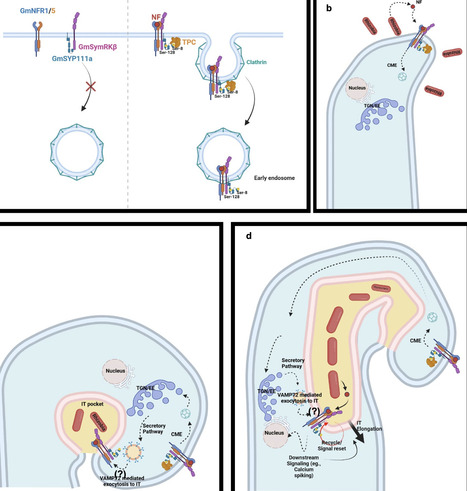
Legume–rhizobium symbiosis requires coordinated receptor signaling and membrane trafficking to initiate infection thread formation in root hairs. Here, we identify the soybean Qa-SNARE GmSYNTAXIN111a (GmSYP111a), a close paralog of the cytokinesis-associated protein KNOLLE, as a critical regulator of symbiotic infection. Kinase-client assays and in vivo immunoprecipitation–mass spectrometry showed that GmSYP111a is phosphorylated by the receptor kinase GmSymRKβ at Ser-8 and Ser-128. BiFC, co-immunoprecipitation, and kinase assays validated the interaction and phosphorylation. Nod factor perception promoted clathrin-mediated endocytosis of the GmSymRKβ–GmSYP111a complex and its relocalization to intracellular vesicles. Structural modeling and interaction assays suggest that dual phosphorylation exposes an endocytic motif that recruits the TPLATE adaptor; accordingly, non-phosphorylatable mutations impaired internalization, whereas phosphomimetic substitutions induced endocytosis without rhizobial stimulation. GmSYP111a also interacted with VAMP72, linking endocytic recruitment to vesicle fusion. Genetic analyses in soybean and Lotus japonicus established a conserved requirement for GmSYP111a in nodule initiation. These findings define a phosphorylation-dependent SNARE switch that couples Nod factor signaling to membrane trafficking during legume nodulation. Soybean plants initiate symbiosis with nitrogen-fixing bacteria by remodeling cell membranes. This study shows that bacterial signals activate a receptor that switches on a membrane fusion protein, enabling infection thread and nodule formation.
|
|
Scooped by
mhryu@live.com
July 15, 3:10 PM
|
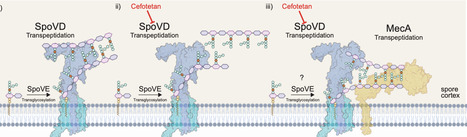
Spore-forming bacteria produce two distinct cell types: vegetative cells and resilient spores. While antibiotic resistance is typically associated with vegetative cells, spores play a critical role in disseminating resistance genes due to their durability and transmissibility. We previously demonstrated that cephamycin antibiotics target the conserved spore-specific protein SpoVD, significantly reducing spore formation in pathogens including Clostridioides difficile. Here, we show that when C. difficile acquires CdmecA, a homologue of Staphylococcus aureus mecA, one of the most globally burdensome resistance genes, the anti-sporulation effect of cephamycins is bypassed. CdMecA functionally replaces CdSpoVD, restoring sporulation and producing phenotypically distinct spores. We further show that mecA is prevalent across C. difficile strains and other pathogenic, gut, and environmental spore-formers. Since SpoVD is conserved, MecA may broadly co-opt sporulation; we confirm this in Clostridium perfringens. This work reveals an unusual resistance mechanism with unexpected physiological consequences, reshaping our understanding of antibiotic resistance within the context of sporulation and microbial adaptation. Cephamycin antibiotics inhibit sporulation of the pathogenic bacterium Clostridioides difficile by targeting the spore protein SpoVD. Here, the authors show that isolates carrying the resistance gene mecA are able to form spores in the presence of cephamycins, with MecA functionally replacing SpoVD.
|
|
Scooped by
mhryu@live.com
July 15, 1:11 PM
|
1. Community assembly graphs (CAGs) summarize which species combinations can coexist and how single-species invasions drive transitions between them, encoding the pathways, alternative endpoints, and cycles that make up a community's assembly history. Constructing CAGs from dynamical models requires methods that are both computationally tractable and faithful to the underlying ecological dynamics. However, existing methods rely on restrictive assumptions, such as global stability, that exclude alternative stable states and non-equilibrium dynamics known to occur in empirical systems. 2. We develop a computational pipeline that constructs CAGs from any generalized Lotka--Volterra model. Building on the invasion graph framework and its connection to permanence, the pipeline verifies that community dynamics are bounded, identifies which subsets of species coexist in the sense of permanence, determines which single-species invasions are dynamically realized, and assigns each community a topographic height equal to the length of the longest assembly path leading to it. We also provide a numerical algorithm to simulate the dynamics of community assembly. 3. We prove several general properties of the resulting graphs, including that a successful invader is never subsequently excluded and that, in the absence of assembly cycles, permanent communities can be reassembled by introducing their species one at a time in the right order. We prove that the CAG faithfully reproduces the compositional shifts seen in the numerically simulated dynamics of assembly. Applying the pipeline to three empirically based models (a New Zealand grassland, a European pasture, and a Puerto Rican ant community), we show how competition strength and mutualistic feedbacks reshape the assembly landscape and how intransitive competition generates assembly cycles. 4. Our approach accommodates alternative stable states and non-equilibrium dynamics without requiring global stability, and it turns the long-standing landscape metaphor into a quantitative, mechanistically grounded object by resolving what ``height'' means. More broadly, it makes the topography of the assembly pathways measurable, providing a way to compare the historical contingency and predictability of the assembly in ecological systems.
|
|
Scooped by
mhryu@live.com
July 15, 12:42 PM
|
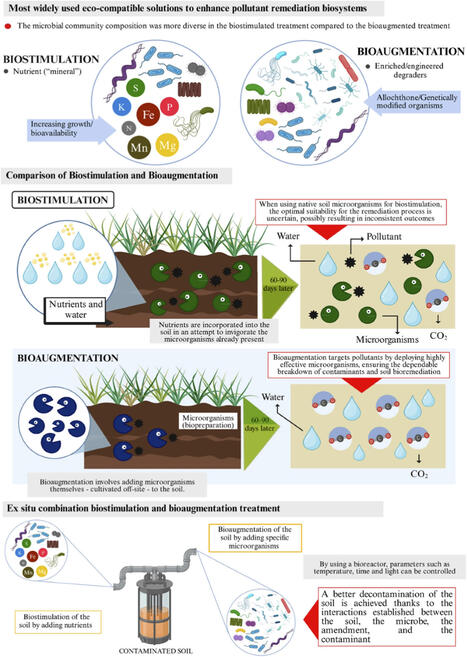
Polycyclic aromatic hydrocarbons (PAHs), petroleum hydrocarbons, chlorinated compounds, pesticides, pharmaceuticals, per- and polyfluoroalkyl substances and heavy metals are all examples of pollutants that are more difficult to degrade in the environment, are toxic, and persist in the environment for an extended period. Traditional remediation practices are often high-cost, high energy, and can have a negative impact on soil ecosystems. Microbial remediation has proven to be an emerging sustainable and eco-friendly technology using bacteria, fungi, actinomycetes, and microbial consortia to degrade, transform, immobilize, and/or detoxify contaminants through a variety of processes such as biodegradation, biosorption, bioaccumulation, biotransformation, biomineralization, co-metabolism, and biofilm-mediated processes. This review covers the types of pollutants that are recalcitrant, the microbial communities in the soil, and the most significant microbial processes associated with the remediation of recalcitrant pollutants. Additionally, the most important applications of geo-environmental engineering (GE) are critically discussed, including biostimulation, bioaugmentation, rhizoremediation, mycoremediation, microbially induced carbonate precipitation (MICP), and permeable reactive biobarriers. The factors affecting remediation effectiveness, advanced monitoring methods, existing challenges, and emerging innovations such as synthetic biology, engineered microbial consortia, nanobioremediation, and artificial intelligence are also pointed out. Microbial processes combined with geo-environmental engineering can be a promising way to restore the soil sustainably and to protect the environment for the long term.
|











we integrate BONCAT-FACS and metagenomics to quantify ARGs in active microbial population