Your new post is loading...

|
Scooped by
mhryu@live.com
Today, 4:01 PM
|
Temperate bacteriophages are dominant members of the human gut microbiome that can infect and lyse their bacterial hosts or integrate as prophages. During this integrated state, prophages exhibit extensive control over host physiology and lysis via induction. Here, we studied a diverse collection of Bacteroidales isolates, which are amongst the most abundant bacterial orders within the human gut, identifying 902 high-quality prophage genomes present within 305 isolates, 240 of which were poly-lysogens. Despite their prevalence, our understanding of the function and induction triggers of prophages is limited. To predict prophage induction, we employed an iterative profile Hidden Markov Model search across divergent bacterial hosts to identify prophage regulatory components. We found 197 Bacteroidales prophages encoding complete CI-like repressor proteins, which initiate induction upon DNA damage. We selected Bacteroides thetaiotaomicron strain Bt_806 to characterise further as it harbored six diverse prophages, including the prevalent and abundant prophage LoVE, which was the only integrated prophage encoding a complete CI-like repressor. Transcriptomics revealed phage LoVE was routinely induced upon DNA damage, while the five co-habiting prophages remained stably integrated yet exhibited transcriptionally active genes associated with regulation, prophage maintenance, and uncharacterised functions. Finally, we selected an additional eleven Bacteroidales poly-lysogens, confirming that integrated prophages encoding complete CI-like repressors were reliably induced upon DNA damage. Together, we demonstrate that mechanistic understanding of prophage induction linked with identification of regulatory genes enables selective and predictable induction of gut prophage species as a potential tool to modulate the microbiome.
|
|
Scooped by
mhryu@live.com
Today, 3:42 PM
|
Klebsiella pneumoniae (Kp) is a leading cause of bacterial nosocomial infections. The rapid emergence of multidrug-resistant (MDR) Kp strains poses a significant global health threat, challenging current antibiotic-based therapies. While bacteriophage therapy offers a promising alternative, its effectiveness is often limited by the narrow host ranges of natural phages and the rapid emergence of phage resistance. Synthetic phages, with their diverse and customizable genomes, have the potential to overcome these limitations. In this study, we engineered synthetic bacteriophage variants using two in-house phage isolates, ɸ115 and ɸ100, which exhibited limited efficacy against a range of clinical Kp strains. In contrast, the synthetic phage libraries derived from the recombination of tail fiber genes and genomes of ɸ115 and ɸ100 exhibited a significantly extended host range and the ability to lyse phage resistant Kp strains. Indirect measurement of bacterial respiration as a growth indicator in presence of phage, using the OmniLog system revealed that no phage resistance Kp emerged against the synthetic phage libraries within 24 h, while other Kp strains developed resistance to the parental phages. Host range analysis, burst size measurements, and genomic DNA comparisons of individual synthetic phage isolates indicated that a short central tail fiber of ɸ100 likely plays a pivotal role in extending the host range and lysing resistant Kp strains. Our findings highlight the potential of synthetic bacteriophages to overcome the dual challenges of narrow host specificity and phage resistance. This represents a significant advancement toward developing viable phage therapeutics against MDR Kp infections.
|
|
Scooped by
mhryu@live.com
Today, 3:32 PM
|
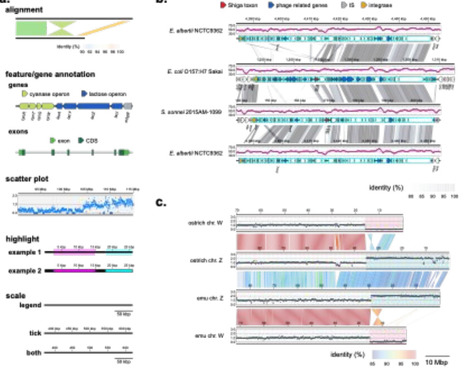
A-liner is a flexible command-line tool for linear visualization of genome-scale sequence alignments, supporting outputs from multiple aligners and integrated visualization of annotations, highlights, quantitative tracks, and coordinate scales. It is applicable to a wide range of organisms, from bacteria to large eukaryotic genomes, and facilitates efficient generation of publication-ready comparative genome visualizations.
|
|
Scooped by
mhryu@live.com
Today, 3:04 PM
|
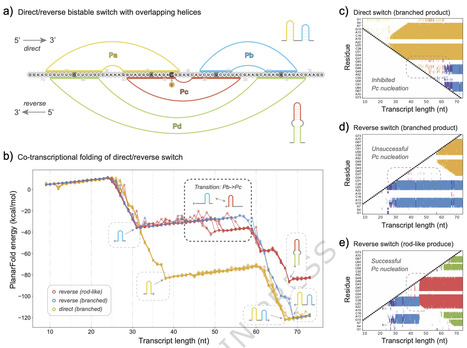
RNAs serve versatile functional roles by virtue of their structures and dynamics. RNA computational models are typically tailored to either perform structural modeling or solve a specific class of folding problems. Here, we present PlanarFold, a coarse-grained RNA model that integrates molecular dynamics simulation in two-dimensional space with dynamic programming to explore the diverse dynamic behaviors of RNAs, achieving a speedup of more than four orders of magnitude compared with all-atom molecular dynamics models. We demonstrate that, at the secondary structure level, PlanarFold quantitatively reproduces experimental results across diverse scenarios, including the native secondary structures, thermodynamics and kinetics, mechanical properties, and co-transcriptional and de novo folding pathways. The conformational dynamics revealed by PlanarFold can provide mechanistic insight into how RNAs perform or lose functions, and offer potential targets for mutagenesis and therapeutics design, as well as guide the development of RNA-based devices. Modelling the dynamics of RNA molecules can shed light on their function. Here, the authors present PlanarFold, a fast, coarse-grained model of RNA secondary structure dynamics that can reproduces experimental measurements.
|
|
Scooped by
mhryu@live.com
Today, 2:30 PM
|
DNA chemical modifications, including methylation, are widespread in prokaryotes and mobilomes, including viruses, plasmids, and other extrachromosomal DNAs, and play important roles in their ecology and interactions. However, current knowledge of these modification systems and their association with interactions between hosts and mobilomes across communities, including those in extreme environments, is severely limited. Here, using single-molecule real-time sequencing and single-cell genome sequencing technologies, we conducted a culture-independent 'metaepigenomic' analysis of microbial communities in hot spring biofilms. A total of 248,332, and 465 genomes were constructed from diverse prokaryotes, viruses, and extrachromosomal circular DNAs, respectively, from 10 biofilm samples collected from 3 hot spring sites. In total, 1106 candidate methylated motifs and 3280 genes associated with the restriction-modification (RM) system, including DNA methyltransferases (MTases), were identified. In contrast to the varied methylated motifs, the nucleotide-level modification ratios were consistent with those of a common E. coli genome, and an environment-dependent epigenomic preference attributed to the lack of C5-methylcytosine was observed, as supported by direct measurements of modified bases by liquid chromatography-tandem mass spectrometry. A systematic survey revealed various defense systems in the genome, and almost half of the MTase genes were estimated to be genetically involved in defense mechanisms against extracellular DNA, such as RM systems. The mobilomes and their predicted hosts shared epigenomic patterns within each interactive subnetwork, suggesting that mobilome DNA was modified by host MTase during the current infection or transfection, rather than serving as historical records. Our findings highlight that DNA modification shapes multiple ecological and evolutionary strategies in interactions between prokaryotes and mobilomes, and that epigenomes serve as a potential signature for accurate prediction of current host-phage interactions.
|
|
Scooped by
mhryu@live.com
Today, 2:25 PM
|
Microbial cell factories play an important role in the sustainable production of chemicals used in several industries, including pharmaceutical, food, polymer, and energy. Biosynthesis of these desired chemicals typically occurs through complex or extended metabolic pathways via multiple enzymatic steps. However, introducing multiple heterologous genes into a single microbial strain often creates a significant metabolic burden, making the efficient production of target chemicals challenging. To overcome the limitations of monocultures, microbial consortia can be engineered to divide complex catabolic or biosynthetic tasks among different microbial partners. In contrast to monocultures, which often suffer from metabolic burden, pathway interference, and limited tolerance to toxic intermediates, consortia-based systems may benefit from a modular division of labor. This approach enables efficient utilization of metabolic resources, enhanced pathway flux, and improved system robustness. This review focuses on the bioproduction of various target compounds by synthetic microbial consortia containing Corynebacterium glutamicum, E. coli, or Pseudomonas putida at least as one partner. Where relevant, a particular focus will be laid on cooperativity in mutualistic consortia.
|
|
Scooped by
mhryu@live.com
Today, 2:12 PM
|
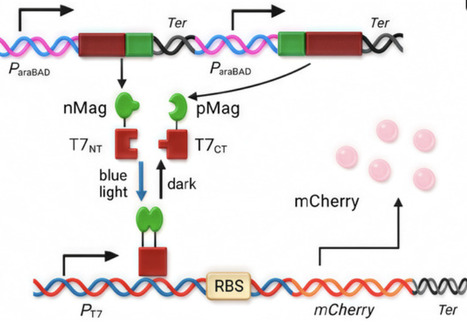
Synthetic biology seeks to build predictable, programmable biological systems. We developed a blue-light-inducible T7RNAP system with dual-input regulation to enable precise spatiotemporal gene control, which is vital for biomanufacturing, therapy, and microbial engineering. We optimized it by replacing RBS sequences, testing tandem T7 promoters, and evaluating split-T7RNAP variants. Expression and bactericidal efficacy were assessed via fluorescent output and real-time growth curves under blue light. RBS variants caused up to 50-fold differences in expression. Three tandem T7 promoters provided the best balance between yield and fidelity. Integration of a benzoate-responsive module enabled 4.5-fold repression at 3 mM benzoate, demonstrating effective chemical off-switching without compromising light induction. This system combines blue light precision with environmental responsiveness, offering non-invasive, on-demand activation for antimicrobial therapy or spatial bioproduction. The benzoate-triggered off-switch is especially valuable for ecological applications such as biocontainment or bioremediation, where gene expression must shut down upon detection of pollutants, for example, aromatic hydrocarbons. Its orthogonal, modular design supports context-dependent control, making it ideal for environmental biosensors, programmable probiotics, and smart antimicrobial delivery in complex ecosystems.
|
|
Scooped by
mhryu@live.com
Today, 1:21 PM
|
Engineered bacteria are emerging as powerful tools in the development of cancer therapies, driven by advances in synthetic biology and tumor immunology. These microbes preferentially colonize solid tumors, where they can deliver therapeutic agents directly to malignant cells and into the tumor microenvironment, inducing tumor cell death and activating robust anti-tumor immune responses. Current strategies include programming bacteria to secrete toxins, tumor-suppressor or pro-apoptotic proteins, and to mediate targeted intracellular delivery. Bacteria can also be engineered to sense tumor-specific metabolites and to adhere to tumor-associated cell surface antigens, further enhancing selectivity and safety. Engineered strains synergize with immunotherapies — including immune checkpoint inhibitors and chimeric antigen receptor-T cells — and can stimulate both innate and adaptive immune responses, even at distant metastatic sites. Here, we review recent progress in this field, with a focus on engineering strategies and their effectiveness in preclinical in vivo tumor models, and outline prospects for future developments and remaining challenges.
|
|
Scooped by
mhryu@live.com
Today, 12:48 PM
|
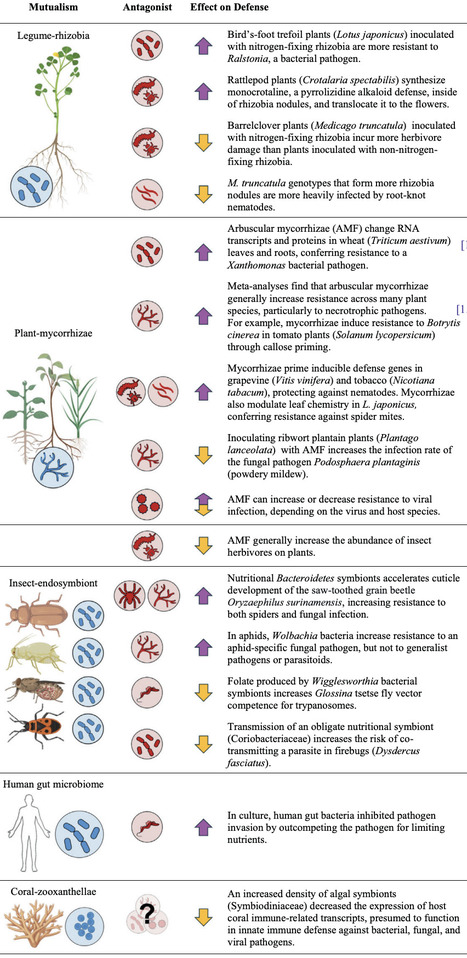
Historically, mutualisms have been categorized by their benefits: nutrition, defense, or transportation. However, many nutritional mutualists have secondary effects on defense. In this review, we propose that nutritional mutualists are major, overlooked drivers of defense evolution and identify four distinct mechanisms by which they can affect the evolution of defense traits. Direct tests of all four mechanisms are scarce. We argue that this is because most work has focused on mutualist effects on trait expression rather than on the parameters that govern evolution: genetic variances, genetic correlations, and natural selection. We highlight new questions that this perspective brings into focus and outline experiments to test them. Finally, we propose that overlap in mutualism and defense resource budgets can unite mutualism and defense theory.
|
|
Scooped by
mhryu@live.com
Today, 11:14 AM
|
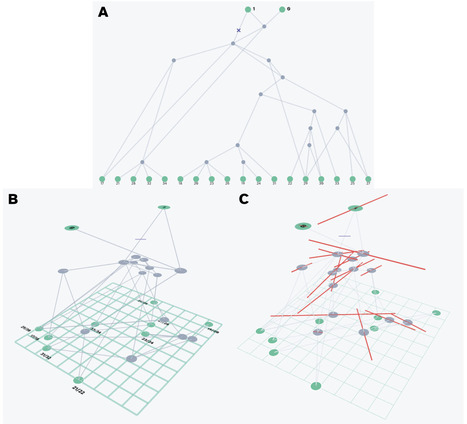
Ancestral recombination graphs (ARGs) are increasingly central to modern population genetics, yet ARG-based methods for spatiotemporal demographic inference remain underutilized in empirical settings due to fragmented workflows and a lack of exploratory tools. ARGscape addresses this by providing a unified framework, seamlessly integrating established and novel tools for ARG simulation, manipulation, and spatiotemporal inference into both graphical and command-line interfaces. ARGscape features dynamic 2- and 3-dimensional visualizations and a novel “spatial diff” visualization for quantitative comparison of ARG-based geographic inference methods. By integrating these various functionalities, ARGscape facilitates novel data exploration and hypothesis generation, bridging the gap between methods development and empirical adoption, and enabling educational uses.
|
|
Scooped by
mhryu@live.com
Today, 1:04 AM
|
Abiotic stress frequency and intensity are increasing, severely impacting plants' health, hence leading to significant crop yield losses (~20%–40% globally). In addition to modifying their genetic and physiological traits to increase stress tolerance, growing research revealed that plant–microbiome interaction plays a remarkable role in determining stress resilience. This review integrates physiological, ecological, and multi-omics data suggesting holobiont plasticity is an unifying paradigm for mechanistic understanding of stress-induced plant–microbe system reorganization. Abiotic stress causes rapid changes in plants' root metabolism and root exudate composition, which alter the release of organic acids, phenolics, osmolytes, and signaling compounds, which selectively change the microbial community's structure in the rhizosphere and endosphere. Microbial taxonomic diversity usually declines under stress conditions. Meanwhile, functional redundancy within the microbial communities is generally maintained or can increase. However, network connectivity may often remain stable or become stronger under stress, and the centrality of keystone taxa usually increases. These keystone microbes play a critical role in sustaining microbial community structure and function. Microbial regulation of phytohormones (such as auxin, ethylene, and abscisic acid), along with control of redox balance, osmotic adjustment, and nutrient cycling, improves plant water use, nutrient uptake, and root development. This often makes them more tolerant to stress by 15%–60% without increasing their biomass. Holobiont plasticity emerges as a quantifiable and potentially predictive characteristic of plant stress responses by integrating microbial network structure, functional gene profiles, metabolomic responsiveness, and host regulatory mechanisms. These responses function on ecological timescales (days to weeks), preceding the more gradual process of host genetic adaptation. This halobiont plasticity-based framework shows promising potential but requires validation under field conditions to prove its robustness and applicability. This opens new avenues for microbiome-assisted plant growth and development of a climate-resilient agricultural system.
|
|
Scooped by
mhryu@live.com
Today, 12:16 AM
|
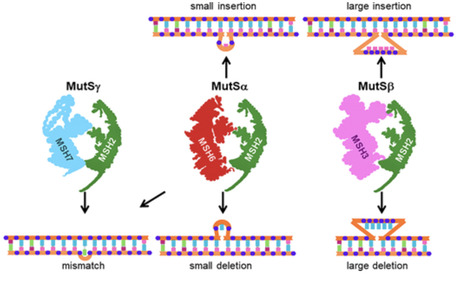
The mismatch repair (MMR) system is an essential DNA repair mechanism that recognizes and corrects single base–base mismatches and unpaired nucleotides that escaped the proofreading exonuclease activity of DNA polymerases or recombination intermediates. This pathway is highly conserved throughout evolution. However, the nature and number of MMR proteins differ between eukaryotes and prokaryotes. Even more, the plant MMR system contains an ancient duplicated MMR protein. In addition, developmental processes vary among eukaryotic organisms. One striking feature is plant genome stability maintenance over multiple generations because embryogenesis and seed development occur after many divisions during plant vegetative growth. Thus, it was of our interest to review the present state of knowledge with respect to the MMR mechanism from eukaryotic organisms, with special comparisons between human, yeast, and plant systems.
|
|
Scooped by
mhryu@live.com
June 25, 11:35 PM
|
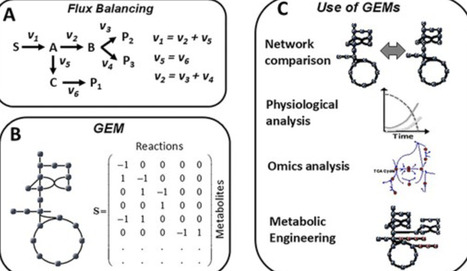
Metabolism underpins cellular function by supplying energy, biosynthetic precursors, and redox balance and in yeast there are thousands of metabolic reactions that are tightly coordinated through multilayered regulation. The yeast Saccharomyces cerevisiae has become a central model for studying metabolism and its regulation and following publication of its genome in 1996, this yeast became pivotal in systems biology. Systems biology integrates experimental data with mathematical modeling to analyze complex cellular networks. A major advance for metabolic analysis was the development of flux balance analysis and genome sequencing enabled reconstruction of the first genome-scale metabolic model (GEM) for yeast. This initial GEM described how hundreds of genes, reactions, and metabolites interact across compartments. Subsequent models, including Yeast8 and Yeast9, expanded the coverage and predictive power, and these models enable metabolic comparison, physiological analysis, omics integration, and design of strains that can be used for production of chemicals and biopharmaceuticals. Overall, S. cerevisiae remains a cornerstone of systems biology and biotechnology, with continued advances expected in integrative modeling and engineering applications.
|
|
|
Scooped by
mhryu@live.com
Today, 3:42 PM
|
A handful of start-up firms are testing therapies that target specific epigenetic markers to treat everything from high cholesterol to a rare muscular disorder. industry
|
|
Scooped by
mhryu@live.com
Today, 3:40 PM
|
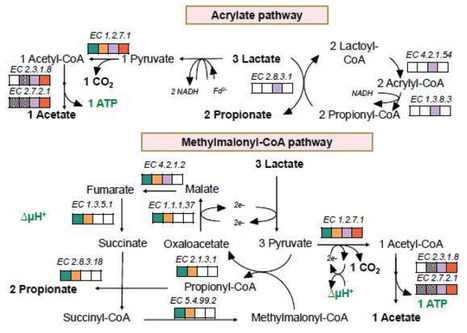
D- and L-lactate are routinely produced as intermediates in fermentative ecosystems. However, the microbial fate of these stereoisomers remains poorly understood. Given that D-lactate is an unavoidable byproduct of digestion and a neurotoxin, understanding its microbial turnover not only holds ecological pertinence but also the potential to uncover new links between gut microbiota metabolism and host health. Here, we used chemostat bioreactors (pH 7.0, 37°C, and a solids retention time of 4 d) to enrich for lactate-consuming communities. DL-lactate-consuming consortia were enriched, characterized, and used as inoculum for duplicate bioreactors fed exclusively with D- or L-lactate. After steady-state was reached, the fed lactate stereoisomers were switched to assess community resilience. Regardless of the fed stereoisomer, the fermentation product spectra were consistent and dominated by acetate, propionate, and CO2. However, microbial communities and biomass yields diverged sharply, with a high relative abundance of Anaerotignum in D-lactate enrichments and Acidipropionibacterium and Propionibacterium in L-lactate enrichments. Notably, the biomass yield for D-lactate feeding was less than half that for L-lactate feeding, suggesting that the two isomers are metabolized through distinct biochemical pathways despite similar product spectra. Metagenomic and metaproteomic analyses confirmed divergence in D- and L-lactate conversion at both the phylogenetic and pathway levels. Our findings reveal how the stereoisomer identity of microbes shapes their niche specialization, with implications for understanding the ecology and clinical impact of lactate metabolism.
|
|
Scooped by
mhryu@live.com
Today, 3:06 PM
|
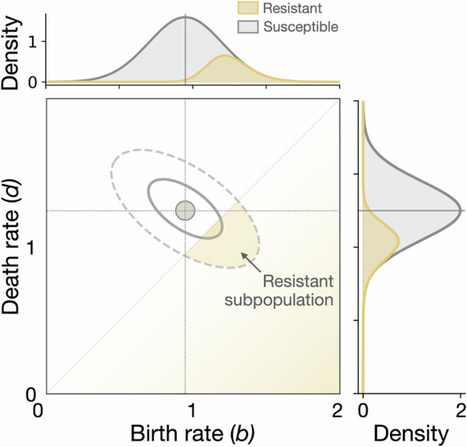
Antibiotic resistance and tolerance are thought to be the key phenotypic traits that underpin evolutionary adaptation to antibiotics. However, the concepts of resistance and tolerance can be traced back to population-level assays developed by Fleming in the 1920s. Recent single-cell studies have shown that population responses to antibiotics are driven by a dynamic interplay between cell birth and death, challenging the concepts of resistance and tolerance at the level of individual cells. In this Perspective, we show that ecological models of population growth provide a tool to connect the population-level responses to antibiotics measured by classic assays (ie growth rate) with individual cellular phenotypes (ie birth and death rates). In this model, resistance and tolerance represent emergent properties of bacterial populations that change as an indirect consequence of selection on cell birth and death rates. We argue that this model challenges established concepts and highlights the need to better understand evolutionary responses to antibiotics from the perspective of cellular phenotypes.
|
|
Scooped by
mhryu@live.com
Today, 2:54 PM
|
How antiviral immunity first arose in animals is a central question in evolutionary biology. Here, using the sea anemone Nematostella vectensis, we identify CARDIB, a previously uncharacterized gene located next to RLRb—a cnidarian homologue of the vertebrate RIG-I-like receptor family. This conserved genomic linkage across Anthozoa reveals an ancient coupling between immune sensing and regulation. Despite sequence similarity to vertebrate MAVS, CARDIB performs an opposing function: it represses immune genes under basal conditions yet is essential for activation upon viral challenge. CARDIB binds RLRb through a single CARD domain, forming a repressive complex. Loss of either gene abolishes antiviral transcription, disrupts apoptosis and elevates viral load under laboratory conditions. Both genes, as well as the RLRb paralogue RLRa, are essential for antiviral defence under native conditions. Phylogeny places the cnidarian CARDs distinctly from the vertebrate RLR–MAVS families, revealing an ancient mechanism that regulates the antiviral response through CARD-based signalling. Experiments in Nematostella vectensis identify CARDIB as an anthozoan-specific antiviral mediator with sequence and structural homology to the mammalian immune-activating MAVS protein but with opposing, immune-repressing functions.
|
|
Scooped by
mhryu@live.com
Today, 2:26 PM
|
As food demand increases, agricultural practices have evolved, prompting increased exploration of sustainable ecological techniques and utilization of plant-associated microorganisms. In this context, plant fitness has been enhanced by plant growth-promoting microorganisms (PGPM), which stimulate growth through direct mechanisms, such as improved nutrient availability and phytohormone production, as well as indirect mechanisms, including protection against phytopathogens and suppression of soil-borne diseases. However, these innate capabilities of PGPM can be further improved through genomic modification or editing. This article reviews advances in the genomic engineering of plant-beneficial microorganisms as tools to enhance their positive effects on crop performance and environmental remediation. The genetic modification strategies analyzed here include random mutagenesis, targeted genome editing (such as CRISPR-Cas), gene over-expression, genome shuffling, RNA interference, metabolic pathway engineering, and synthetic biology approaches. These tools have enabled the optimization of functions, such as nitrogen fixation, phosphate solubilization, secondary metabolite production, biocontrol, stress tolerance, and bioremediation. However, we propose expanding the discussion of their regulation and use in various countries. Additionally, these modifications must be efficient and safe for the beneficial microbiota associated with the target crop, as well as for humans, animals, and the environment, all of which depend on sustainable agricultural practices.
|
|
Scooped by
mhryu@live.com
Today, 2:23 PM
|
The global probiotic market is expanding rapidly, driven by growing demand for accessible strategies to support gut health, preventive care, and microbiome-based interventions. However, this commercial growth contrasts with the limited number of clinically validated, mechanism-driven products, highlighting a persistent gap between market expansion, scientific evidence, and therapeutic translation. Most current probiotics remain dominated by conventional genera, including Lactobacillus, Bifidobacterium, Bacillus, Saccharomyces, and Streptococcus, whereas live biotherapeutic products (LBPs) remain scarce. Synthetic biology is beginning to address this gap by transforming probiotics from empirically selected strains into programmable microbial platforms that sense disease-associated signals and produce defined therapeutic outputs. Escherichia coli Nissle 1917 (EcN) offers a valuable model chassis for engineered probiotics because of its long history of human use, safety record, genetic tractability, transient gut colonization, and scalable cultivation. As a rare Gram-negative probiotic, EcN naturally produces outer membrane vesicles that support host interaction, immunomodulation, and therapeutic cargo delivery. This review links probiotic market expansion with live biotherapeutic development and uses EcN to discuss emerging engineering strategies, therapeutic opportunities, and remaining translational barriers.
|
|
Scooped by
mhryu@live.com
Today, 1:27 PM
|
LLPS utilizes dynamic, membrane-less compartmentalization to spatially organize and control biochemical processes, which advances synthetic biology fields such as synthetic metabolic engineering and artificial cell construction, offering novel solutions to longstanding biomedical and biotechnological challenges. However, the rational design and optimization of these promising LLPS-based applications are currently hampered by an incomplete mechanistic understanding of how LLPS precisely governs reaction kinetics. To bridge this gap, we present a comprehensive review that integrates both protein and nonprotein mediated LLPS and systematically dissecting how LLPS orchestrates reaction kinetics─through mechanisms including reactant concentration, reaction–diffusion coupling, microenvironment engineering, and enzyme activity modulation─to dictate bioreaction outcomes. Our analysis begins by outlining the thermodynamic foundations and classifications underpinning LLPS, then critically examines these kinetic regulatory mechanisms, and further summarizes burgeoning applications across biocatalysis, metabolic engineering, diagnostics, therapeutics, origins of life research, and artificial cell construction. Finally, we discuss prevailing challenges and outline strategic pathways for translating LLPS into practical technologies. By synthesizing dispersed knowledge and elucidating fundamental kinetic principles, this review not only fills a critical void in understanding but also establishes essential mechanistic insights and design guidelines to empower the rational development of next-generation LLPS-driven synthetic biology.
|
|
Scooped by
mhryu@live.com
Today, 1:15 PM
|
The gut microbiota is implicated in adverse effects associated with low-calorie sweeteners. Yet, the direct impact of sweeteners on gut bacteria remains largely uncharacterized. Here, we report interactions between 25 phylogenetically diverse gut bacterial strains and 39 commercially used sweeteners. We tested these sweeteners individually and in combination with four commonly co-consumed compounds, viz., advantame, caffeine, vanillin, and duloxetine. Three-quarters of the tested sweeteners individually impacted the growth of at least one tested bacterial strain. Further, over 100 interactions were found between sweeteners and the four co-consumed compounds. Isosteviol, a commonly used sweetener-component, and duloxetine, an antidepressant, synergistically inhibited Roseburia intestinalis, a bacterium previously linked to glucose homeostasis, and Parabacteroides merdae, a prevalent commensal linked to healthy microbiota. Proteomic, metabolomic, and genetic analyses indicate altered small molecule transport underpinning this sweetener–drug synergy. The isosteviol-duloxetine combination also modulated metabolism of a synthetic gut bacterial community, leading to increased toxicity to HeLa cells and altered secretion of inflammation-modulatory cytokines IL-6 and IL-8 by Caco-2 cells. Our data warrant further studies on interactions between low-calorie sweeteners and common xenobiotics.
|
|
Scooped by
mhryu@live.com
Today, 12:41 PM
|
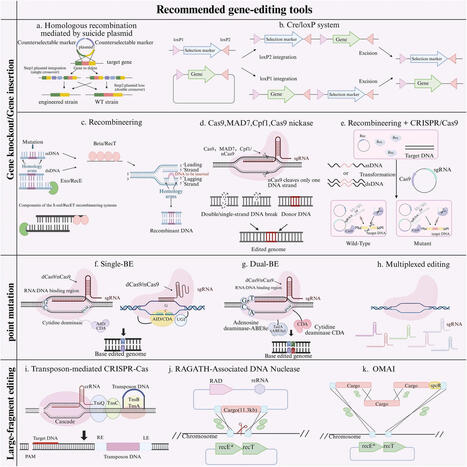
Gram-positive bacteria serve as important chassis microorganisms in synthetic biology, industrial fermentation, and probiotic development. The rapid advancement of gene editing technologies has provided critical technical support for the iterative construction and functional validation of engineered strains. However, due to factors such as cell wall structure, differences in genetic backgrounds, and tool compatibility, the development and editing efficiency of gene editing systems for Gram-positive bacteria still face many challenges. This review focuses on four representative Gram-positive bacterial species-Lactobacillus plantarum, Lactococcus lactis, Bacillus subtilis, and Corynebacterium glutamicum-and traces the evolution and current state of their editing tools, from traditional homologous recombination to CRISPR-Cas9, base editors, and large-fragment integration tools. On this basis, we summarize the common challenges and corresponding strategies concerning host repair capacity, tool compatibility, and inherent limitations of editors in these four bacterial species, and propose recommendations for tool selection based on different application scenarios. This review aims to provide a technical reference for gene editing studies of the above-mentioned bacterial species. Although the conclusions cannot be directly extended to all Gram-positive bacteria, the common issues summarized here may inform the development of gene editing tools for other Gram-positive bacteria.
|
|
Scooped by
mhryu@live.com
Today, 1:19 AM
|
CRISPR-Cas and toxin-antitoxin systems can serve as antiviral defense mechanisms in prokaryotes. In typical toxin-antitoxin systems, toxin activation can limit phage propagation by inducing growth arrest or reduced cellular fitness, while the antitoxin neutralizes toxin activity. Here, we study potential functional synergy between a CRISPR-Cas13a system and a type II toxin-antitoxin module (HicAB) from a Leptotrichia bacterium, when heterologously expressed in E. coli, as well as in biochemical and structural analyses. We show that the antitoxin HicB exhibits toxic properties, and Cas13a directly activates HicB, triggering growth inhibition and conferring protection against bacteriophages. Structural analyses reveal that Cas13a binding promotes the spatial proximity of HicB tetramers, likely enabling its activation. The toxin HicA competitively binds to HicB, thereby inhibiting Cas13a-mediated HicB activation. Importantly, both CRISPR RNA and HicB independently suppress HicA toxicity. Structural evidence indicates that CRISPR RNA forms a hetero-tetradecameric complex with HicAB, occluding HicA’s active site and neutralizing its toxic function. Thus, our findings indicate functional synergy between distinct bacterial immune strategies. CRISPR-Cas and toxin-antitoxin systems can serve as antiviral defense mechanisms in prokaryotes. Here, the authors provide evidence of functional synergy between a CRISPR-Cas13a system and a type II toxin-antitoxin module.
|
|
Scooped by
mhryu@live.com
Today, 12:50 AM
|
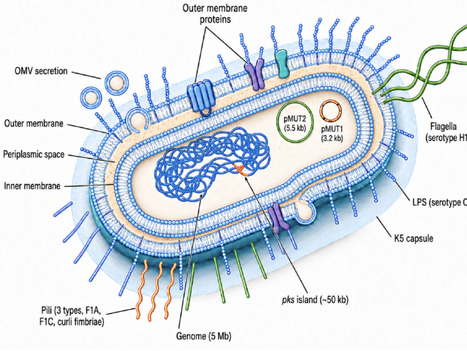
E. coli is a key workhorse of biotechnology. Commonly used CRISPR-Cas9 systems for E. coli genome editing are complex and impose metabolic stress on the host, creating demand for more streamlined strategies. Recent studies identified the IS605 transposon-associated TnpB as a programmable RNA-guided (ωRNA) DNA endonuclease, prompting us to explore whether endogenous TnpB in E. coli (EcoTnpB) could be harnessed for genome editing. Biochemical and cellular analyses demonstrated that EcoTnpB efficiently cleaves both chromosomal and plasmid DNA at custom-specified sites in a TAM-dependent manner. Interestingly, E. coli possesses an endogenous recombination machinery capable of repairing EcoTnpB-induced DNA double-strand breaks (DSBs), challenging the long-held view that bacteria lack efficient homologous recombination systems. Based on these findings, we established a single-plasmid editing system (SPEED) in which genome editing is achieved by simply providing ωRNA and a homologous recombination template. By utilizing endogenous EcoTnpB together with the host HR pathway, this system enabled inducible and seamless genome editing at multiple genomic loci in BL21 (DE3), with editing efficiencies ranging from approximately 29% to 56%. Our results demonstrate for the first time that endogenous TnpB can be harnessed for genome editing and may hold potential for broader applications, such as species-specific antimicrobial development.
|
|
Scooped by
mhryu@live.com
Today, 12:15 AM
|
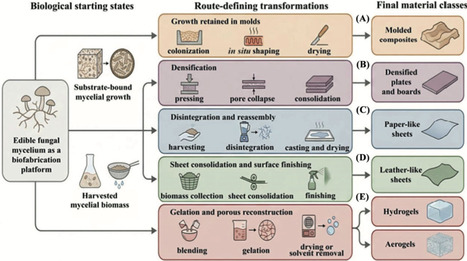
Edible mushroom mycelium-based materials are emerging as renewable, route-dependent systems spanning composites, flexible sheets, hydrogels, aerogels, and hybrid materials, rather than a single engineering class. In this review, we synthesize how strain selection, substrate composition, cultivation conditions, and post-processing shape structure–property–function relationships across these formats. Available evidence is strongest for substrate-bound composites and selected laminate systems, whereas reconstructed gels, aerogels, and functional hybrids remain more exploratory. We assess how synthetic biology, advanced manufacturing, and AI-assisted monitoring may improve controllability and scale-up, while highlighting barriers including reproducibility, moisture sensitivity, durability, techno-economics, and regulatory qualification. Progress will depend on route-specific benchmarking, process control, and validation under realistic service conditions.
|