Your new post is loading...

|
Scooped by
mhryu@live.com
Today, 12:36 PM
|
Structure-based virtual screening (VS) via molecular docking is a pivotal approach for hit identification. Many artificial intelligence (AI)-powered protein–ligand docking and scoring methods have demonstrated impressive speed and accuracy. Retrospective benchmarking studies using enrichment rate and computational efficiency on curated datasets have corroborated their potential for discovering bioactive compounds. However, determining which method suits a specific application and implementing it efficiently remains challenging. Here we present the Comprehensive VS Platform with AI Engine (CVSP-AIE) for drug discovery from compound libraries. It integrates three AI models: KarmaDock, a fast docking model that directly updates atomic coordinates; CarsiDock, an accurate docking model that predicts protein–ligand distances and reconstructs binding poses; and RTMScore, an accurate scoring model that learns residue–atom distance distributions for affinity prediction. Their hierarchical application enables dynamical balances in screening speed and accuracy. CVSP-AIE is available as an online web server ( https://cadd.zju.edu.cn/cvsp/ ) and a local software package. Users can efficiently initiate drug screening by uploading a protein and a known binder that defines the binding pocket. The following workflow involves (1) preprocessing, including protein structure repair and molecule standardization, (2) binding pose and affinity prediction powered by KarmaDock, CarsiDock and RTMScore and (3) postprocessing, comprising protein–ligand interaction calculation and visualization. It takes 30–45 min to hierarchically screen 100,000 compounds, and the output is a ranked list of molecules with predicted binding scores, intermolecular interaction profiles and interactive chemical space analysis. Users can also install locally the hierarchical screening module through command-line package for arbitrary-scale screening. This Protocol describes an artificial intelligence-driven virtual screening platform for drug discovery that includes an online webserver and a local software package, offering a user-friendly alternative for drug screening targeting compound libraries of arbitrary-scale.
|
|
Scooped by
mhryu@live.com
Today, 12:07 PM
|
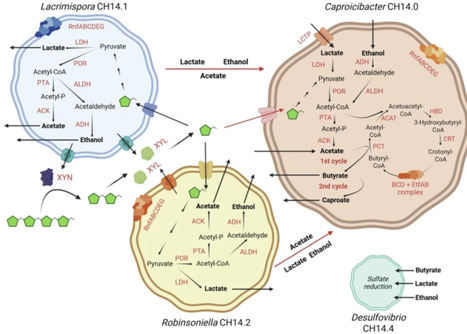
Lignocellulose is a promising renewable resource for anaerobic biochemical production, but its microbial conversion remains challenging. To elucidate metabolic networks in lignocellulose-degrading consortia, inocula of various origins were enriched on cellulose or xylan. Community composition and metabolic functions were revealed by amplicon sequencing, metagenomics, genome-scale metabolic modelling, and metabolic simulations. In cellulose-enriched communities, Fibrobacter and Lacrimispora consistently dominated as primary cellulose degraders, whereas Bacteroides likely functioned as secondary degraders. Acetic acid (up to 1.3 g l-1) and CO2 were the main fermentation products. Xylan enrichments produced C2-C6 fatty acids (up to 3.9 g l-1), lactic acid (up to 1.2 g l-1), ethanol (up to 1.2 g l-1), CO2, and H2. Clostridium dominated one xylan community and produced mainly butyric acid, while Bifidobacterium dominated another and produced mainly lactic acid. Caproic acid production was experimentally observed in one xylan enrichment. Metagenomic annotations and metabolic simulations suggest that Lacrimispora amygdalina degraded xylan and Robinsoniella peoriensis consumed xylobiose as a secondary consumer, both likely producing ethanol and lactic acid that supported caproic and butyric acid production by Caproicibacter fermentans. Integrated analysis identified functional guilds and clarified the roles of degraders and non-degraders, providing a blueprint for engineering synthetic consortia for sustainable biochemical production.
|
|
Scooped by
mhryu@live.com
Today, 11:58 AM
|
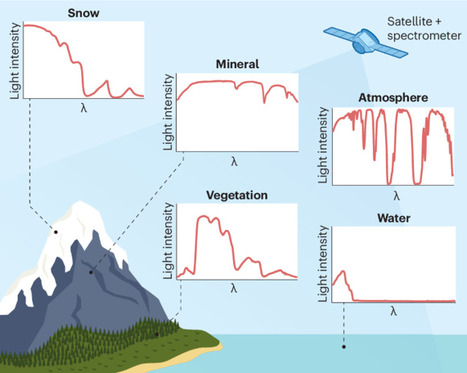
Imaging spectroscopy technology is transforming the way Earth is viewed from space, with applications across diverse science communities. A global imaging spectrometer mission with Landsat-like spatial and temporal coverage could fully realize this potential.
|
|
Scooped by
mhryu@live.com
Today, 11:54 AM
|
Pseudomonas putida KT2440, renowned for its diverse metabolic capabilities, is a promising platform for downstream processing and revalorisation of recalcitrant molecules. In this study, we examined and optimized P. putida KT2440's ability to utilize products of the degradation of polyethylene (PE), the most used and disposed plastic. PE degradation creates over 200 molecules that vary in oxidation level and, thus, chemical properties. Among those, long-chain alcohols represent one of the most challenging fractions to process due to their poor solubility. Using them as feedstock for microbial growth would close the plastic-derived carbon cycle, reducing environmental impact. First, we discovered that P. putida KT2440 can use the long-chain alcohols, 1-hexadecanol and 1-eicosanol, as the sole carbon and energy source. Using adaptive laboratory evolution (ALE), we generated variants with improved growth rates on such substrates. Mutations that became fixed during ALE provided insights into the mechanism, highlighting the importance of cell–substrate interaction. By heterologously expressing a hydrocarbon transporter-encoding gene, we successfully reproduced the ALE-derived phenotype, suggesting that the bottleneck in long-chain alcohol utilisation lies in uptake rather than substrate transformation. These findings lay the groundwork for the potential application of P. putida KT2440 for the valorization of PE degradation products.
|
|
Scooped by
mhryu@live.com
Today, 11:48 AM
|
Cereal root microbiomes harbor diverse diazotrophic bacteria, yet the taxa capable of sustained nitrogen fixation in association with cereal roots remain poorly characterised. Here, two high-performing nitrogen-fixing strains (B6 and J2) were isolated from barley roots and identified as belonging to the family Rhizobiacae in the genus Paenirhizobium. Both strains possess plasmid-encoded canonical rhizobial nif and fix genes for nitrogen fixation but lack nodulation genes. Their genomes have a 5.7 Mb chromosome and four repABC plasmids. Unlike most nodulating rhizobia, strains B6 and J2 fixed nitrogen in laboratory culture on a range of carbon sources, achieving maximal activity on organic acids at low ammonium (<0.5 mM) and oxygen concentrations (1–3%). Both strains colonized the total root systems of barley plants, with population densities of 106 CFU g−1 fresh root weight. Strains fixed high levels of nitrogen on barley plants, similar to or greater than other known free-living diazotrophs. These findings expand the ecological context of rhizobial nitrogen fixation and identify cereal-associated Paenirhizobium as a previously unrecognised component of the diazotrophic cereal root microbiome.
|
|
Scooped by
mhryu@live.com
Today, 10:47 AM
|
The rhizosphere, a critical soil layer around plant roots, is enriched with carbon from root exudates, influencing microbial communities that can either protect against or cause plant diseases. Bacteriophages significantly impact soil nutrient cycles and ecosystem processes through cell lysis and horizontal gene transfer. They play a vital role in the rhizosphere by affecting plant stress responses and climate adaptation. Bacteriophages exert a range of negative effects on Actinobacteria, impacting their ecological and physiological functions by diminishing Actinobacteria's roles in antibiotic production, soil health, and plant growth. Phage predation affects nutrient cycling by influencing nitrogen and carbon metabolism, with evidence showing that phages can alter microbial diversity and function, leading to changes in soil ammonium levels and carbon decomposition rates. In wastewater treatment, bacteriophages can improve process efficiency by targeting harmful bacteria, managing foam formation, and enhancing sludge reduction through enzymatic action. Additionally, bacteriophage dispersal mechanisms in the rhizosphere can be enhanced by rhizosphere-associated animals. Numerous invertebrate and vertebrate animals can significantly alter the rhizosphere environment by amplifying, mobilizing, and distributing both phages and bacterial hosts. Herein, three main mechanisms by which animals enhance the dispersal of bacteriophages in the rhizosphere are discussed. This review discusses bacteriophages' roles in soil ecosystems, highlighting their impact on nutrient cycling, plant health, and soil remediation, as well as animal-mediated phage dispersal mechanisms. Overall, while bacteriophages have potential biotechnological applications, their negative effects on microbial functions and nutrient cycling highlight the need for balanced use and further research.
|
|
Scooped by
mhryu@live.com
Today, 10:15 AM
|
Fluorescent nucleobase analogs (FBAs) are valuable tools for studying nucleic acid structure and dynamics. However, their utility is often limited by substantial fluorescence quenching upon incorporation into oligonucleotides and variable brightness influenced by neighboring bases. In this study, we present a novel turn-on nucleoside, 3b, a thiazolyl-dU analog (hereinafter referred as TzdU), engineered to overcome these limitations and enable reliable DNA fluorescence imaging. Compared to its nearly nonfluorescent free form, TzdU shows approximately a 10-fold increase in brightness in single-stranded DNA (ssDNA) and up to a 50-fold enhancement in double-stranded DNA (dsDNA). Importantly, it maintains relatively stable brightness regardless of surrounding bases by evading common quenching pathways, including solvent-induced collisional quenching and excited-state proton transfer (ESPT). The triphosphate derivative of TzdU is efficiently utilized by various DNA polymerases, including Deep Vent and KOD XL, facilitating real-time, intensity-based monitoring of critical enzymatic processes such as PCR and primer extension without external labels. Furthermore, TzdU can illuminate DNA in a gradient manner, enabling the visualization and encryption of information. As the first FBA to achieve universal turn-on characteristics, sequence insensitivity, and compatibility with enzymatic reactions, TzdU serves as a novel tool for investigating nucleic acid dynamics and advancing fluorescence-based methodologies.
|
|
Scooped by
mhryu@live.com
Today, 9:22 AM
|
Lanthanides (Ln), a group of 15 rare earth elements (REEs), are critical for advanced technologies, although their conventional extraction and processing are environmentally unsustainable. Here, we present a microbial platform based on Pseudomonas putida KT2440 for the eco-friendly recovery and transformation of Ln, introducing a key methodological innovation: the use of a resting cell system to circumvent the pervasive issue of abiotic lanthanide–phosphate precipitation. This approach enables controlled investigation of Ln biomineralization under mild conditions. Mechanistically, the results showed that Ln recovery proceeds via rapid cell-surface adsorption, followed by surface-templated nucleation and extracellular mineralization. This process leads to the formation of well-defined biogenic nanoparticles primary identified as CePO₄ and GdPO₄. Structural analyses reveal nanorod morphologies, while functional characterization shows that CePO₄ nanoparticles retain photoluminescent properties and GdPO₄ nanoparticles preserve paramagnetic behavior. Compared to conventional chemical synthesis, this biosynthetic strategy eliminates toxic reagents and energy-intensive steps, yielding biocompatible materials with controlled size and morphology. Our findings establish P. putida KT2440 as an efficient and sustainable platform for Ln recovery and functional nanoparticle production, providing a foundation for scalable green alternatives to traditional Ln processing.
|
|
Scooped by
mhryu@live.com
Today, 1:24 AM
|
The realization of long-term manned space exploration and extraterrestrial habitation hinges on microbial-based extraterrestrial domestic wastewater (EDW) treatment technology to achieve sustainedly closed-loop water recycling. This perspective recaps the challenges and potential of integrating microbial technology as a sustainable and low-energy alternative for treating EDW compared to physicochemical water recovery systems. Of note, traditional microbial technologies are not directly transferable due to EDW’s unique constraints, including high ammonium, low C/N ratio, and multiple stresses. We proposed how synthetic microbiology integrated with single-cell Raman spectroscopy (SCRS) offers a promising approach to engineer stable, efficient microbiomes tailored for EDW treatment. SCRS coupled with stable isotope probing can enable precise identification and isolation of stress-tolerant functional microorganisms at the single-cell level, bypassing lengthy enrichment methods. SCRS can also serve as a real-time monitoring tool for system optimization and early warning, enabling resilient, intelligently monitored biological systems for extraterrestrial water recycling.
|
|
Scooped by
mhryu@live.com
Today, 1:03 AM
|
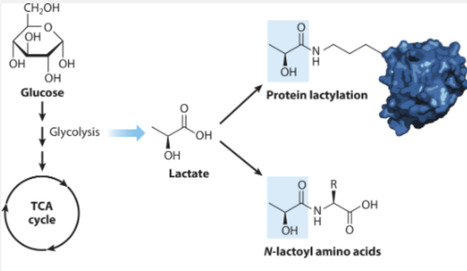
Lactate's role in biochemistry and physiology has attracted considerable biochemical interest for over a century. Beyond its classical description as a glycolytic byproduct, lactate is now recognized as a central energy metabolite, a redox shuttle, and a signaling molecule. Modern advances in mass spectrometry have uncovered yet another dimension of lactate biology: lactate as a chemical modification on proteins and metabolites. Covalent conjugation of lactate to the ε-amine of a protein lysine side chain generates a posttranslational modification (lysine lactylation); in a related reaction on metabolites, conjugation of lactate to the α-amine of free amino acids produces a class of bioactive lactate-modified amino acids (the N-lactoyl amino acids). These lactate modifications represent a fundamental mechanism by which transient increases in glycolytic flux are translated into durable downstream effectors. Here, we review the detection, regulation, and function of these lactate-derived modifications in cellular and organismal homeostasis.
|
|
Scooped by
mhryu@live.com
Today, 12:22 AM
|
Cellular metabolism is widely understood as an integrated network of redox reactions, energy conservation, and biosynthetic pathways. Here we show that across diverse prokaryotic lineages, loss of redox-associated functions is coupled with loss of nucleotide biosynthesis, raising a fundamental question of how such metabolically reduced organisms sustain cell growth. One of the most widespread and diverse lineages of prokaryotes, Minisyncoccota or Patescibacteriota, constitutes the majority of lineages exhibiting this pattern. To investigate how such organisms persist, we cultivated and characterized a representative of this lineage from a deep aquifer. The organism attaches to and penetrates growing bacterial host cells, and directly uptakes host RNA, concomitant with its depletion in the host. The metabolically reduced parasite cleaves host-derived RNA to directly supply cellular energy currencies and precursors for RNA/DNA synthesis, NTPs, without invoking canonical metabolic pathways. Codon usage in the parasite is complementary to that of its host, potentially minimizing translation of host-derived mRNA. Comparative genomics and phylogenetics indicate that these features are widespread and likely ancestral across the lineage. Exploitation of host RNA as a metabolic resource reveals a previously unrecognized metabolic strategy that demonstrates cellular metabolism can be sustained through direct utilization of informational macromolecules and thereby taps into an omnipresent energy reservoir, potentially supporting the environmental ubiquity of the metabolically reduced lineage.
|
|
Scooped by
mhryu@live.com
June 23, 11:48 PM
|
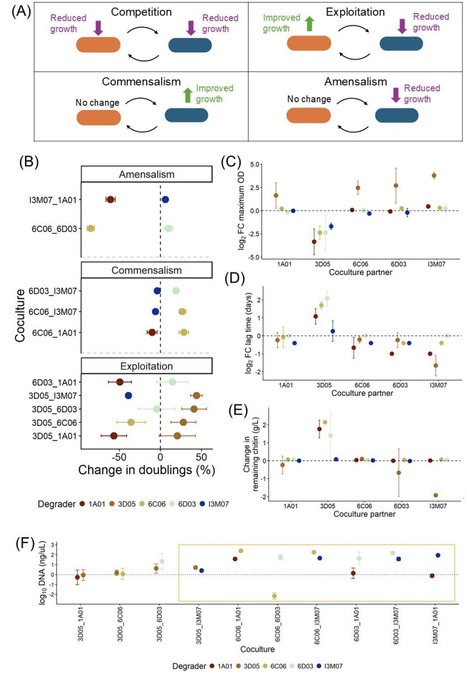
Bacterial chitin degradation contributes to global carbon cycling, particularly in marine environments where it is a highly abundant polysaccharide. Despite the taxonomic diversity of co-occurring chitin-degrading bacteria, the influence of individual traits on interactions between them remains poorly understood. Here, we measured key physiological traits of seven chitin degraders and investigated how these traits shape interaction outcomes and chitin degradation in pairwise cocultures. We found mainly negative and neutral interactions among degraders, contrasting with the synergistic dynamics observed with other complex polysaccharides. However, chitin degradation was not consistently diminished. These interaction types could be attributed to the limited partitioning of degradation products, alongside variations in enzyme repertoires and attachment behaviors that help some degraders to prevail over others. Further, we showed that one degrader can strongly inhibit the growth of others, even those possessing favorable physiological traits, likely due to the secretion of inhibitory compounds. These findings extend our understanding of the breadth of interactions among primary polysaccharide degraders and their implications for the degradation process.
|
|
Scooped by
mhryu@live.com
June 23, 5:04 PM
|
The scaffold protein NifU plays a central role in assembling the precursor [Fe4S4] clusters required for nitrogenase to function. The synthesis of these precursors depends on a catalytic [Fe2S2] group within NifU core ferredoxin domain. Here, we show that the monothiol glutaredoxin GrxD is one of the proteins delivering this cluster to the NifU scaffold protein. Consistently, grxD mutants have reduced nitrogenase activity, the result of altered iron allocation to this enzyme due to a suboptimal [Fe2S2] cluster occupancy of the core NifU domain in the cell. These results also indicate the existence of additional pathways to provide NifU with its core [Fe2S2] group. Biochemical assays show that GrxD unidirectionally transfers [Fe2S2] to NifU through protein-protein interaction. This allows GrxD to restore apo-NifU functionality, enabling proper [Fe4S4] synthesis, and NifH activation. These findings are crucial to understand how iron is allocated to nitrogenase for biological nitrogen fixation.
|
|
|
Scooped by
mhryu@live.com
Today, 12:25 PM
|
The cross-species delivery of megabase-scale synthetic DNA molecules, from microorganisms into mammalian cells, remains a major challenge for synthetic genomics. Recently, we developed nucleus isolation for chromosome extraction (NICE), a method that enables the isolation of yeast nuclei containing intact synthetic megabase-scale DNA with preserved chromatin structure. By leveraging the unique epigenomic features of Saccharomyces cerevisiae, which lacks cytosine methylation and repressive histone marks, synthetic DNA encapsulated within isolated yeast nuclei was successfully delivered into mouse early embryos, maintaining a naive state. This work established a unique platform for studying the establishment of de novo epigenetic modifications and their influence on transcriptional regulation over time. Here, we provide a detailed protocol for NICE, including the isolation of yeast nuclei and their subsequent delivery into mammalian embryos. The high-concentration and high-purity isolated nuclei can be stored at –80 °C for >6 months. Using microinjection, we achieved 100% delivery efficiency, reliably transferring isolated yeast nuclei into mouse embryos. The entire procedure, including pulsed-field gel electrophoresis verification, can be completed within ~5 d. When the isolated yeast nuclei are intended for cross-species delivery into embryos, prior familiarity with mammalian embryo microinjection techniques may be required. This protocol offers an efficient and reliable method for the delivery of large-scale genetic information, advancing the study of complex biological functions. This protocol presents a method for isolating intact yeast nuclei containing megabase-scale synthetic DNA and delivering them into mouse embryos, enabling efficient cross-species transfer and studies of de novo epigenetic regulation.
|
|
Scooped by
mhryu@live.com
Today, 12:01 PM
|
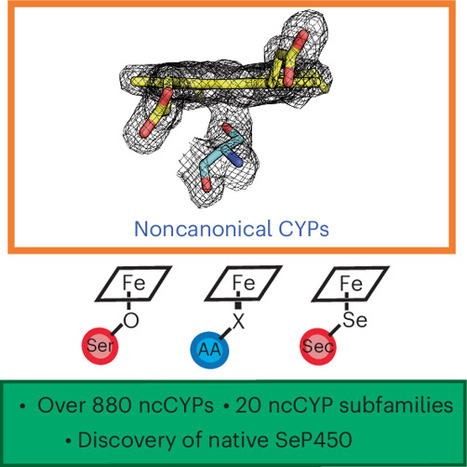
Cytochrome P450s (CYPs) constitute a superfamily of thiolate-ligated heme metalloenzymes principally responsible for the hydroxylation of unactivated C–H bonds. The proximal cysteine is an obligatory and universally conserved residue for the CYP enzyme class. Herein, we challenge this paradigm by systematically identifying noncanonical CYPs (ncCYPs) that do not harbor a proximal cysteine ligand. Our bioinformatic search revealed 20 distinct ncCYP families encoded in diverse microbial genomes with alternative residues at this position. We characterize a native serine-ligated CYP with a high-spin ferric resting state that catalyzes azide reduction and nitrene insertion reactions. Its crystal structure clearly shows a typical CYP fold and a serine alkoxide as a proximal heme ligand. In addition, we report the discovery and characterization of the first native selenocysteine-ligated CYP in nature. Our findings expand the CYP metalloenzyme family and provide opportunities for future enzymatic and biocatalytic discoveries. Cytochrome P450s catalyze essential reactions and carry a strictly conserved proximal cysteine ligand. Here, we identify noncanonical P450s that harbor diverse proximal ligands, including serine and selenocysteine, expanding the P450 chemical space and providing opportunities for future discoveries.
|
|
Scooped by
mhryu@live.com
Today, 11:58 AM
|
This study addresses the core challenge of Fusarium wilt control in agricultural production. We successfully reconstituted a functional heterologous type III secretion system (T3SS) from Photorhabdus luminescens in the biocontrol bacterium Pseudomonas protegens Pf-5, creating an engineered molecular syringe for targeted delivery of antifungal effectors. The system is activated under low-calcium conditions, achieved by cultivation in calcium-limited medium followed by EGTA-mediated chelation of residual Ca2+, enabling conditional secretion of effector proteins. By fusing the antifungal protein Bg9562 to the N-terminal secretion signal of the T3SS effector LopT and co-expressing it with the cognate chaperone SlcT, we obtained fluorescence-based evidence for T3SS-dependent delivery of Bg9562 into the hyphae of multiple Fusarium species. The engineered strain exhibited enhanced rhizosphere colonization, promoted plant growth and conferred improved protection against tomato Fusarium wilt, restoring plant height to levels approaching healthy controls. We further demonstrated the modularity of this platform by successfully transferring it into Pseudomonas koreensis D26, a strain known for its plant growth-promoting properties, indicating broad applicability across biocontrol-relevant pseudomonads. This work establishes a versatile T3SS-based delivery platform for precision biocontrol, offering a generalizable strategy for engineering beneficial rhizobacteria.
|
|
Scooped by
mhryu@live.com
Today, 11:51 AM
|
Free-living environmental microbes at four plant-atmosphere interfaces (leaf, nectar, fruit, and bark surfaces) intercept, biotransform, and augment plant volatile signals, shaping what herbivores, pollinators, and parasitoids detect. This forum article reviews how microbes remodel these signals, the threats posed by climate change and land-use intensification, and priorities for translating microbial volatile ecology into sustainable pest management.
|
|
Scooped by
mhryu@live.com
Today, 10:49 AM
|
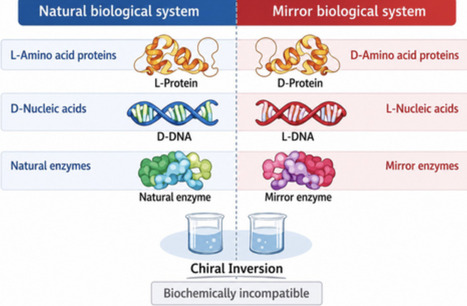
Chirality is a fundamental structural property of biological molecules that governs molecular recognition, enzymatic catalysis, and genetic information processing in living systems. Natural life exhibits a universal pattern of homochirality in which proteins are composed predominantly of l-amino acids, while nucleic acids contain d-sugars within their backbone structures. Advances in synthetic biology and chemical biology have stimulated growing interest in mirror biological systems that operate with inverted molecular chirality. In theory, mirror organisms would contain proteins composed of d-amino acids and nucleic acids built from l-sugars, forming a stereochemically inverted yet internally consistent biochemical framework that is largely incompatible with natural biological systems. This review examined the molecular foundations, engineering strategies, biosafety considerations, and ecological implications associated with the theoretical development of mirror bacteria. Particular emphasis is placed on the hierarchical organization of biological chirality and the stereochemical constraints that govern macromolecular folding, molecular recognition, and the processing of genetic information. Recent advances in the chemical synthesis of mirror proteins and mirror nucleic acids demonstrate that stereochemically inverted biomolecules can adopt stable structures and perform catalytic or informational functions. However, integrating these components into self replicating mirror cellular systems remains a major scientific challenge. Furthermore, the ecological interactions, evolutionary dynamics, and environmental persistence of mirror biological systems require careful biosafety evaluation and responsible governance. This review highlights key conceptual and technological challenges that must be addressed before mirror organisms can progress from theoretical constructs toward experimental feasibility.
|
|
Scooped by
mhryu@live.com
Today, 10:30 AM
|
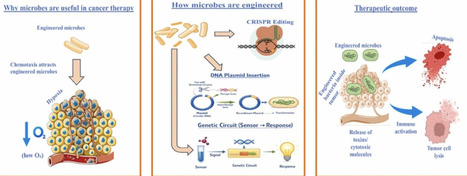
The field of synthetic biology has become a revolutionary tool for engineering microorganisms capable of precise, programmed cancer treatment. Unlike conventional cancer treatments, which lack safe, selective toxicity, engineered microbial cells can detect tumor-specific signals, target hypoxic environments, and deliver cytotoxic payloads more effectively in both space and time. This review presents the most recent advancements in microbial chassis engineering, including E. coli, Salmonella, Clostridium, Bifidobacterium, Vibrio cholera, Shigella species and L. monocytogenes along with their potential uses in targeted cancer therapy through toxin delivery, prodrug conversion, immune modulation, and tumor-specific surface display. We discuss key synthetic biology techniques that enhance safety, specificity, and genetic stability, including CRISPR/Cas9-based genome editing, genetic logic circuits, and kill-switch systems. This review provides some highlights about the role of synthetic biology in developing oncolytic bacteria with precise targeting abilities and enhanced therapeutic stability. By analyzing comparative microbial chassis and the implementation of precise killing strategies, we address current clinical challenges and explore the future of oncolytic bacterial therapy.
|
|
Scooped by
mhryu@live.com
Today, 10:01 AM
|
Confronting the dual crisis of escalating global protein demand and unsustainable agriculture necessitates transformative solutions. Here, we pioneer evolutionary insights from maize nitrogen optimization via asparagine synthetase (ASNS) to rewire metabolism in Pichia pastoris. Empirically, the tri-copy ASNS strain achieved superior protein titers: 62.48% crude protein, 47.86% total amino acids, and 8.05% branched-chain amino acids, nutritionally surpassing conventional protein sources. Genome-scale modeling and transcriptomic studies provided convergent evidence that ASNS overexpression drove global metabolic rewiring through predicted synergistic coupling between aspartate metabolism and the tricarboxylic acid cycle. Mechanistically, ASNS overexpression unlocked a previously uncharacterized nitrogen sensor-regulator circuit by inducing PAS_chr1-1_0158, validated in amplifying intracellular nitrogen flux and driving a self-reinforcing cycle of ammonia assimilation. This work validated evolutionary conservation of nitrogen optimization strategies across kingdoms, established the first scalable blueprint for carbon–nitrogen co-optimized microbial cell factories, decouples sustainable SCP production from agricultural constraints, and offers a scalable solution to the global protein crisis.
|
|
Scooped by
mhryu@live.com
Today, 1:30 AM
|
Extracellular vesicles (EVs) are membranous nanoparticles released by cells that help shape the extracellular environment, remove cellular waste, and mediate cell-to-cell communication. Their release is ubiquitous across kingdoms, species, and cell types, highlighting their functional importance. Nearly as evolutionarily widespread and heterogeneous is the release of viruses, which have evolved to co-opt the host’s cellular machinery to facilitate their replication and spread within all branches of life. Nearly all viruses, enveloped or not, repurpose EVs to modulate infection dynamics, while EVs also play a crucial role in the host’s response to infection. This review explores the interplay between EVs and viruses across the phylogenetic diversity of virus species. We urge virologists and EV biologists to look beyond a single infection model and learn from the unique concepts and shared commonalities observed between close, as well as distantly related viruses, whether they infect mammals, vertebrates, insects, plants, bacteria, or more. To facilitate these efforts, we provide a comprehensive, taxonomical overview of the current knowledge regarding DNA and RNA virus families, and discuss recurring motifs in EV release and function during infection.
|
|
Scooped by
mhryu@live.com
Today, 1:17 AM
|
Thanks to the standard microbiology protocols of isolation and culturing, hundreds of strains have been isolated from fermented foods throughout the last decades, and phenotypic traits linked with pro-technological properties and health claims have been investigated. However, culture-independent metagenomic analyses have revealed an unexpected microbial diversity in foods fermented spontaneously or by undefined starter cultures. Here, we report the most groundbreaking advancements in the understanding of fermented foods ecology by presenting case studies where metagenomics has been applied, contributing to identifying novel species in silico or to deciphering the microbiome structure associated with spontaneous fermentations. We also highlight the potential of metagenomics in supporting the identification of potential probiotics and discuss the future ahead, particularly focusing on the integration of multi-omics approaches.
|
|
Scooped by
mhryu@live.com
Today, 12:25 AM
|
Programmable composition of complex systems is a longstanding goal of biological research. Generative modeling has improved the reliability of computational design, but existing methods are highly specialized and are difficult to extend or compose. Here, we introduce Proto, a high-level programming language for generative biology. By composing a small set of abstract primitives into structured programs, Proto encodes generative design campaigns across diverse modalities and scales, spanning DNA, RNA, proteins, ligands, and their interactions. Proto readily incorporates predictive models into generative workflows, which we leveraged to design alternatively spliced introns with experimental validation in human cell lines. Proto is natively multi-objective, enabling the design of promoter-repressor pairs with leading experimental success rates for synthetic protein-DNA design. Alongside AI agents, Proto enables the specification of complex pathways and regulatory logic through natural language instructions. We openly release Proto, including software infrastructure and user interfaces, to enable widespread access to generative biological programming.
|
|
Scooped by
mhryu@live.com
June 23, 11:51 PM
|
Cobamides, including vitamin B12, are essential cofactors exchanged between organisms across diverse ecosystems including oceans, soils, and the mammalian gut. Although most organisms depend on cobamides only a minority of prokaryotes perform their metabolically costly biosynthesis. This has led to vitamin B12 uptake from the environment as a common acquisition strategy, but does not explain why B12 producers would allow B12 to become extracellularly available. Our work reconciles this inconsistency, showing that bacteriophages can facilitate the release of intracellular B12 at physiologically relevant concentrations. Phages are viruses that infect and often lyse their targeted bacteria, which may externalizes intracellular material along with progeny phages. In this work, we aimed to determine whether phage-mediated lysis promotes the externalization of vitamin B12, thereby supporting the growth of B12 dependent bacteria. To test this, we first used genetically well-defined B12-Producer and B12-User bacteria, and found that phage-mediated lysis of the producers releases sufficient B12 to support the growth of the users in co-culture. Next, we show that phage-mediated lysis of the B12-producer can similarly support the growth of various commensal gut bacteria that are also B12-dependent, in co-culture. B12 released by phage-mediated cell lysis induced significant compositional changes among the non-targeted bacteria including an increased diversity that was muted by supplementing B12 in the medium. Collectively, these findings suggest that phage-mediated bacterial lysis is a significant contributor to nutrient externalization in microbial communities, leading to broad compositional changes beyond their host range.
|
|
Scooped by
mhryu@live.com
June 23, 11:22 PM
|
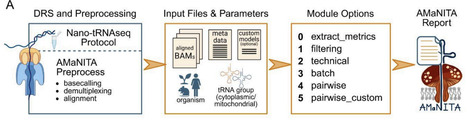
Transfer RNA (tRNA) molecules serve as essential adapters during protein translation. While direct RNA sequencing (DRS) via Oxford Nanopore Technologies has emerged as a powerful platform for systematic tRNAome profiling, we currently lack a simple and robust statistical framework for nanopore tRNA data analyses. Here, we address this gap by developing AMaNITA (Abundance, Modifications, and Nanopore Intensity Toolbox Application), an end-to-end bioinformatic workflow that enables simplified, robust, and scalable analyses of nanopore native tRNA sequencing datasets. AMaNITA streamlines the entire analytical trajectory: from upstream processing (basecalling, mapping, filtering, batch effect correction) to downstream assessment of differential tRNA abundance and modification stoichiometry. The workflow generates an interactive HTML report for data exploration and analysis, allowing the user to download the source data files and resulting plots. AMaNITA can be executed using Singularity from the command line, without requiring installation of dependencies.
|





![Azotobacter vinelandii glutaredoxin D delivers the core [Fe2S2] cluster to nitrogenase cofactor scaffold protein NifU | jbc | RMH | Scoop.it](https://img.scoop.it/XOIPxoQdwj1YCuOBf9HW8jl72eJkfbmt4t8yenImKBVvK0kTmF0xjctABnaLJIm9)