Your new post is loading...

|
Scooped by
mhryu@live.com
Today, 5:15 PM
|
The infectious diseases remain a primary cause of morbidity and mortality on a global level, a crisis exacerbated by the rapid emergence of antimicrobial resistance (AMR). The ineffectiveness of the old antibiotics and the stagnation of the development of new medications have triggered an emergency in the search for new methods of treatment. This review examines the opportunity of nanotechnology, which is the so-called nanobiotics, as a game-changing technology in combating multidrug-resistant (MDR) bacteria by searching various databases. Nano-particles (NPs) are unique physicochemicals, i.e., high surface-to-volume ratio and multi-valent properties that enable them to overcome traditional resistance, e.g., efflux pumps, target modifications. The paper discusses the important antibacterial processes, which can involve the induction of oxidative stress by the production of reactive oxygen species (ROS), the physical destabilization of the bacterial cell envelope, or the targeting of intracellular macromolecules, such as DNA and proteins. Moreover, it emphasizes the synergistic nature of the interactions of NPs with traditional antibiotics to improve drug delivery and efficacy and decrease host toxicity. Although a wide range of nanomaterials, such as silver, gold, metal oxides, and carbon-based structures, promise a lot, a lot of questions have been raised on their compatibility in the long term, their impact on the environment, and their legality. Nanotechnology, coupled with precision medicine and CRISPR-based systems, is a promising future in dealing with infectious diseases. Finally, nanomedicine is a complex solution to address the shortcomings of existing treatments and achieve a future of world health.
|
|
Scooped by
mhryu@live.com
Today, 5:13 PM
|
Liquid–liquid phase separation (LLPS) plays a central role in cellular regulation, with its dysregulation linked to numerous diseases. LLPS is also increasingly implicated in various biological contexts, such as virus replication. These findings have driven the development of numerous computational predictors to screen and identify phase-separating proteins from sequence and/or structural models. Despite the need for these tools, their performance across diverse biological contexts remains incompletely understood, complicating tool selection and result interpretation. We performed a systematic comparative analysis of 9 LLPS prediction algorithms using multiple curated datasets comprising both LLPS-positive (LLPS+) and LLPS-negative (LLPS−) proteins. The datasets span multiple biologically relevant scenarios, including intrinsically disordered proteins, folded proteins, proteins with LLPS-abolishing variants, benchmark datasets, and viral proteins. We observed substantial variability in predictive performance across algorithms when assessing proteins of different structural classes such as LLPS+ and LLPS− folded proteins, LLPS-abolishing mutations, and viral proteins. These results demonstrate that LLPS predictor performance is strongly context dependent, leading to different predictors being optimal for different biological questions. For overall protein assessment, DeePhase and MolPhase provided the most consistently accurate predictions, being the least impacted by structural bias. For assessing the impact of small mutations on LLPS propensity, PSPHunter, a built-for-purpose algorithm, reliably predicts mutation impacts, with structure-informed algorithms PSPire and PICNIC also providing strong insight. Across all evaluated datasets, the findings highlight the need for well-benchmarked training and testing data that encompass a broad and diverse range of protein classes.
|
|
Scooped by
mhryu@live.com
Today, 5:08 PM
|
Bacterial-mediated cancer therapy shows therapeutic potential yet remains constrained by bioavailability and biosafety challenges. We introduce a scalable, modular biosurface-engineering platform for functionalizing wild-type magnetotactic bacteria (Magnetospirillum magneticum, AMB-1), enabling the integration of diverse materials, including small molecules, polymers, nanoparticles, and metal–organic frameworks. As a proof-of-concept, AMB-1@Fe3+-PDA (poly dopamine) exemplifies a bacteria-mediated therapeutic strategy that merges tumor-targeted delivery, immunosuppressive tumor microenvironment (TME) reprogramming, and innate immune activation with photothermal-chemodynamic therapy. The Fe3+-PDA coating counteracts deep-tissue immunosuppression and primes adaptive immunity, while AMB-1 enhances penetration into resistant TME niches. These mechanisms synergistically suppress aggressive 4T1 breast tumor progression, metastasis, and recurrence while establishing immunological memory. In murine models, two treatment cycles prolonged median survival from 45 to 67 days and elicited systemic antitumor immunity, including abscopal effects targeting untreated distant tumors. This platform establishes a bridge between materials science and synthetic biology, providing a generalizable blueprint for advancing the clinical translation of engineered bacterial therapies.
|
|
Scooped by
mhryu@live.com
Today, 3:50 PM
|
Mechanical force has recently emerged as a microbial energy source through direct mechanical-to-electrical energy conversion. However, the flexoelectric effect, a universal mechanoelectrical coupling phenomenon, remains underexplored as an energy source for microbial life. Here, we report a mechanically-driven microbial growth mechanism whereby mechanical energy is converted into electrical energy via the flexoelectric effect of a mineral. This process supports microbial growth in the absence of sunlight and chemical energy sources. Using flexoelectric manganese oxide and electroactive Rhodopseudomonas palustris as a model biohybrid, we demonstrate that mechanical force bends manganese oxide nanosheets to generate free electrical charge. R. palustris captures and utilizes this electrical energy for growth by coupling carbon fixation and denitrification in the absence of chemical electron donors under dark conditions. This pathway is accessible to various electroactive microorganisms and flexoelectric minerals. These findings reveal a noteworthy energy acquisition pathway for microbial survival in energy-limited settings, providing crucial evidence for the diversity of mechanical-to-metabolic coupling in biological processes. Mechanical forces are ubiquitous in natural environments, yet the ability of microbes to harness this energy is underexplored. Here, the authors reveal that flexoelectric minerals generate free electrons under mechanical strain, providing electroactive microbes with an energy source for growth independent of sunlight or chemical substrates.
|
|
Scooped by
mhryu@live.com
Today, 3:05 PM
|
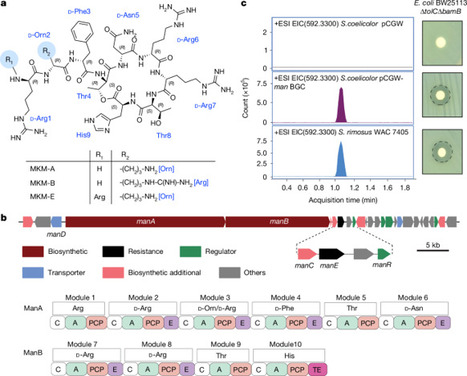
A key challenge in addressing the antibiotic resistance crisis is identifying new antimicrobial compounds. Although natural products produced by fungi and bacteria, particularly actinomycetes, have been the source of most antibiotics discovered over the past 80 years, they have fallen out of favor owing to the frequent rediscovery of known drug scaffolds. The current perception is that antibiotic-producing actinomycetes have been over-mined and possess little novelty left to yield. Here we demonstrate that by using improved fractionation approaches that enrich previously overlooked minor products, even well-studied strains of antibiotic-producing actinomycetes can provide new chemical scaffolds with unique modes of action. By fractionating a library of natural product extracts from soil bacteria, we show that Streptomyces rimosus, the source of the well-known antibiotic oxytetracycline, produces a cyclic depsipeptide antibiotic that we call manikomycin. Manikomycin can kill multidrug-resistant Enterobacteriaceae and is not susceptible to resistance associated with clinically used antibiotics. Biochemical, genetic and structural analyses reveal that manikomycin binds in the E-site of the large subunit of the bacterial ribosome, preventing entry of the 3′ end of the tRNA into the E-site and effectively hindering the translocation step of protein synthesis in a sequence-context-specific manner. Manikomycin is the first antibacterial agent, to our knowledge, to target the critical but underexplored E-site in the large ribosomal subunit, highlighting its value as a lead for developing new antibiotics. Improved fractionation strategies can identify antibiotics with previously unseen scaffolds and mechanisms, exemplified by manikomycin from Streptomyces rimosus, which acts by targeting the E-site of the bacterial large ribosomal subunit.
|
|
Scooped by
mhryu@live.com
Today, 2:34 PM
|
The microbiota produces thousands of potentially bioactive small molecules. High-throughput bioactivity screens of in vitro commensal cultures have exposed microbiota metabolites that shape host physiology by activating diverse G-protein-coupled receptors (GPCRs). However, owing to technical limitations, the GPCRome-wide bioactivities of in vivo metabolomes, which result from complex diet–microorganism–host interactions, remain unclear. Here we used a multiplexed GPCR screening technology to assess GPCRome-wide bioactivities of 100 commensal strains grown in vivo in monoassociated germ-free mice or in vitro in bacterial culture medium. In vivo and in vitro commensal metabolomes exhibited distinct GPCR activation patterns due to (1) host-mediated metabolite degradation; (2) in vivo microbial metabolic reprogramming; and (3) biotransformation of dietary substrates. Notably, we found that multiple commensal strains produced acetylcholine (ACh) in vivo through the conversion of dietary choline, including select Bifidobacterium strains that dominate the microbiome in early life and a probiotic Pediococcus strain. Mechanistically, we identified and characterized the bacterial enzymes that mediate this biotransformation in Bifidobacterium breve and Pediococcus pentosaceus, and generated an isogenic mutant B. breve strain lacking ACh production. Mice colonized with ACh-producing B. breve exhibited enhanced intestinal immunoglobulin A (IgA) production, altered microbiota composition and increased resistance to enteric infection. These findings underscore the profound impacts of the in vivo environment on microbiota metabolism and reveal a diet–microbiome–host axis that strengthens mucosal immune defences and reinforces host–microbiota mutualism. A diet–microbiome–host axis strengthens mucosal immune defences and reinforces host–microbiota mutualism.
|
|
Scooped by
mhryu@live.com
Today, 2:26 PM
|
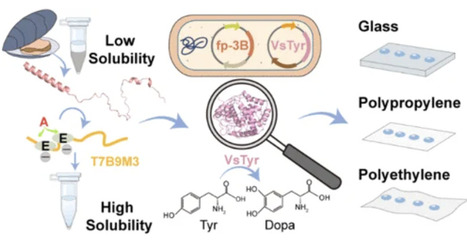
Due to intrinsically low solubility and stability, recombinant mussel foot proteins (Mfps) require an efficient system that supports large-scale production of dopanized-Mfps. Here, we engineered a 39-aa peptide tag, termed T7B9M3, to increase the solubility of Mfps in E. coli. The absence of net charged residues, rather than the copy number or the predicted α-helical structure of the T7B9M3 tag, contributes to the solubility enhancement. T7B9M3-fp-3B achieved a 365.96 mg/L soluble protein titer with a 98.75% soluble rate in a shake flask. Coupling the tyrosinase coexpression to endow Mfps with a dopaminization capability, the tyrosine hydroxylation efficiency reached 19.82%. Moreover, dopanized-Mfps tended to form stronger interactions with various substrates, including glass, polypropylene, and polyethylene, than the unmodified version. Our findings suggest that the combined strategy may contribute to establishing a scalable and low-cost protein expression platform with the potential for batch production of functional Mfps.
|
|
Scooped by
mhryu@live.com
Today, 2:15 PM
|
Current long-read single-nucleotide variant callers were designed primarily for genomic data—particularly human genomes. While some have been used on metagenomic data, their underlying assumptions and training procedures fail to account for the inherent complexity of metagenomic samples. To date, no long-read variant caller has been purpose-built for metagenomic applications. To address this gap, we present SNooPy, a single nucleotide polymorphism (SNP)-calling tool that implements a new statistical framework tailored to long-read metagenomic data. Unlike previous genomic methods, our approach makes no assumptions about the number of haplotypes present, their evolutionary relationships, or their sequence divergence. We demonstrate that SNooPy outperforms both traditional statistical and deep learning–based SNP callers. Our results suggest that future integration of this framework with deep learning approaches could further enhance variant-calling performance. SNooPy is freely available on github.com/rolandfaure/snoopy.
|
|
Scooped by
mhryu@live.com
Today, 2:00 PM
|
5-Aminolevulinic acid (5-ALA) is a naturally occurring nonproteinogenic amino acid with considerable potential in agricultural and pharmaceutical applications, and its biomanufacturing has attracted growing interest. To meet market demand, this study developed an efficient production process by engineering E. coli. First, we established the C4 biosynthetic pathway for 5-ALA and minimized glycine degradation by targeted deletion of gcvP and kbL. Subsequently, the introduction of a nonoxidative glycolysis (NOG) module combined with enhanced glucose uptake further increased 5-ALA production. To alleviate host toxicity, efflux engineering and antioxidant systems were integrated, further raising the titer to 6.93 ± 0.28 g/L. Dynamic regulation of sucCD expression together with redox rebalancing maintained a balance between precursor supply and cell growth. Finally, attenuation of hemB expression reduced metabolic flux diversion toward heme synthesis, yielding the engineered strain A48, which produced 55.11 g/L of 5-ALA within 41 h in a 5 L bioreactor. The metabolic engineering strategy presented in this study establishes an efficient biosynthetic platform for 5-ALA production.
|
|
Scooped by
mhryu@live.com
Today, 1:55 PM
|
Heparin has been the most important drug for treating thrombotic disorders for more than 60 years. However, the traditional production of heparin involves the slaughter of animals. Therefore, there is a demand for the animal-free production of heparin, such as enzymatic synthesis based on the heparin biosynthetic pathway. To achieve this, robust 6-O-sulfotransferases (6OSTs) are required to produce the 6-O-sulfation pattern in heparin, which is crucial for the biological activity. However, most native 6OSTs are derived from animal tissues and exhibit poor recombinant expression, low catalytic efficiency, and insufficient stability in E. coli. To overcome these limitations, we systematically established a two-tier engineering framework that integrated structure-guided protein repair and optimization of translation. Cross-species screening identified Oryzias melastigma 6OST-1 as an engineering-competent template. First, we constructed the variant 6OST-M10 through protein repair one-stop service-guided structural restoration combined with targeted reverse mutations. To address the long-standing challenge of low heterologous expression, we generated a synonymous rare-codon (SRC)-guided ultrahigh-throughput screening platform based on split-GFP complementation. This platform systematically tunes the translation kinetics for sulfotransferases. Ultimately, the 6OST-M10(SRC) variant was generated, which displayed an 8.375-fold increase in soluble expression and a 27-fold improvement in catalytic activity that reached 4400 IU/L under high-density fermentation. This dual-layer strategy couples structural stabilization with translational optimization to resolve the trade-offs among activity, stability, and recombinant expression that have previously limited bacterial production of animal-derived sulfotransferases and heparin synthesis in E. coli. This framework provides a universal, scalable paradigm for protein engineering and enables the synthesis of bioengineered heparin and other glycosaminoglycan products without the involvement of animals.
|
|
Scooped by
mhryu@live.com
Today, 2:02 AM
|
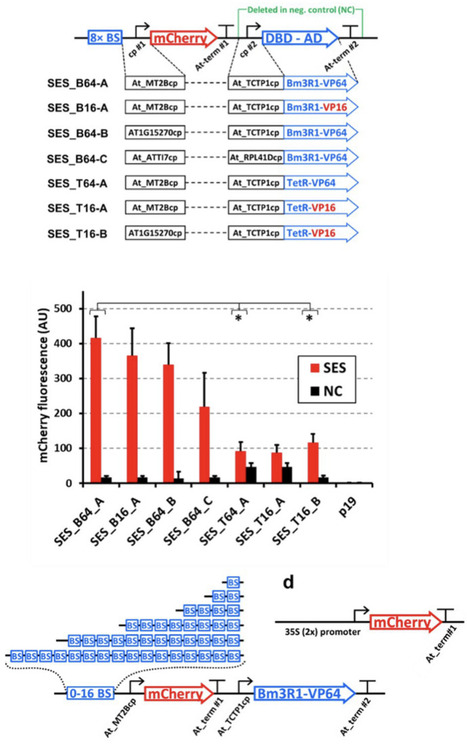
Plants represent commercially relevant production systems for recombinant proteins and chemical compounds. Effective genetic engineering depends on precise control of heterologous gene expression, which remains challenging due to complex transcriptional and post-transcriptional regulation, endogenous gene silencing mechanisms, and notably because of limited number of tools for allowing robust, fine-tuned control of expression levels across different systems/organisms. Some of the most common issues associated with plant expression systems are addressed with our plant-optimized version of a previously developed fungal universal synthetic expression system (SES). Plant SES demonstrates several favorable characteristics for robust heterologous gene expression, including highly constitutive function with apparently reduced sensitivity to endogenous silencing in transient assays, without requiring p19 co‑expression under the tested conditions. These together provide simple, predictable tuning of gene expression levels, and the potential for very high expression levels of the target genes. In all these features, SES shows higher and more stable transcript levels than Cauliflower Mosaic Virus (CaMV) 35 S promoter-based constructs in our experimental setups. The functionality of plant SES was tested by expressing mCherry and three commercially relevant proteins: fungal glucose oxidase (GOX), protein A and human vascular endothelial growth factor 165 (VEGF16) from diverse organisms, supporting high-level accumulation of recombinant proteins. In addition, plant SES retains full functionality in both plant and fungal hosts, which makes this expression system a useful tool for a multitude of genetic engineering applications in other eukaryotic organisms.
|
|
Scooped by
mhryu@live.com
Today, 1:53 AM
|
Plasmids benefit bacterial communities by storing auxiliary genes that address environmental challenges such as antibiotics. Subsequent plasmid loss can also be advantageous if plasmid benefits are temporary but costs are permanent. However, unless positive selection is sustained, plasmid loss can proceed to extinction, with access to plasmid-derived benefits permanently lost. In principle, horizontal transmission can maintain a plasmid in a population, but if the plasmid cost is too high, the host can become uncompetitive. We examine how survival of costly but occasionally beneficial plasmids is possible in a bacterial population. Using population models, we demonstrate that plasmid-dependent phages can, counterintuitively, solve this plasmid survival problem for their bacterial hosts. Phage predation pins the plasmid at low but nonzero abundance, such that the plasmid cost is effectively neutralized at the population level, dramatically lengthening the persistence time of the plasmid. When conditions change and the costly plasmid becomes beneficial, it spreads across the host population and switches to a vertical-transmission lifestyle until benefits again subside.
|
|
Scooped by
mhryu@live.com
Today, 1:25 AM
|
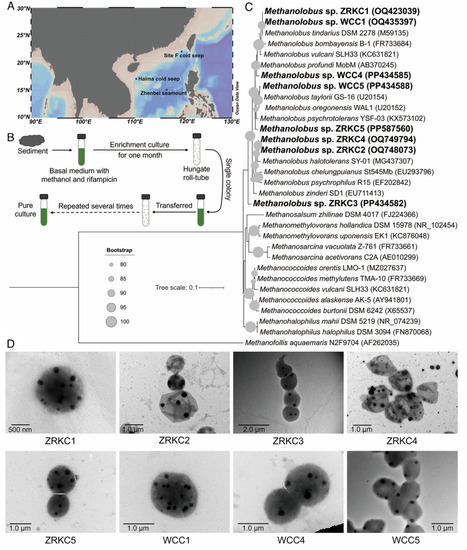
Microorganisms employ inorganic polyphosphate (polyP) as an ancient strategy for energy and phosphate storage, yet its physiological roles in methanogenic archaea remain largely unexplored. Here, we report that polyP metabolism is coupled to growth and methanogenesis in Methanolobus sp. ZRKC1, a representative of eight methanogenic archaea isolated from deep-sea cold seep sediments. Through combined genetic, biochemical, and physiological analyses, we find that PPK1 mediates polyP synthesis in a Mg2+-dependent manner, whereas PPK2 functions primarily as a polyP hydrolase. Deletion of ppk1 in strain ZRKC1 abolishes polyP accumulation and impairs both growth and methane production, pointing to a role for polyP as a metabolic hub linking these processes. Transcriptomic profiling reveals that under organic phosphorus conditions, strain ZRKC1 upregulates phosphoesterases to liberate bioavailable phosphate, which is subsequently channeled into polyP via PPK1. Furthermore, in situ transcriptomic data suggest that the genetic capacity for this metabolic strategy may be present and transcriptionally active in the native environment, with concurrent upregulation of genes involved in phosphate acquisition, polyP metabolism, and methanogenesis. Our findings suggest the importance of polyP in linking phosphate homeostasis to growth and methanogenesis in deep-sea methanogenic archaea.
|
|
|
Scooped by
mhryu@live.com
Today, 5:14 PM
|
Accurate prediction of enzymes' optimal catalytic temperature (Topt) is crucial in biotechnology, as enzymes with extreme Topt values are highly desirable for reactions at extreme temperatures and for their general stability. However, experimental determination of Topt is costly, labor-intensive, and time-consuming. Meanwhile, existing computational methods suffer from small and imbalanced datasets, suboptimal predictions at extreme temperatures, and insufficient validation. In this study, we address these challenges by expanding the Topt dataset and validating on an independent test set based on sequence similarity. We further tackle these limitations by comparing multiple resampling techniques to improve predictions at extremes and by considering diverse protein representations and multiple machine learning architectures. Overall, the best performing models reached R2 approximately 0.64 with MAE approximately 7-8 degrees C, while extreme resampling improved tail performance, reducing tail MAE by up to approximately 1.8 degrees C. Notably, our models show improved performance over state-of-the-art prediction models. We also demonstrate that accurate prediction of Topt is achievable even in the absence of organism growth temperature (OGT). Our Topt prediction models are made freely available as AdventML on GitHub.
|
|
Scooped by
mhryu@live.com
Today, 5:10 PM
|
Artificial intelligence (AI) has transformed protein engineering by leveraging deep learning, protein language models, and knowledge graphs to decode relationships between sequence, structure, and function. Models like AlphaFold2 achieve near-experimental accuracy in structure prediction, while transformer-based language models facilitate de novo sequence design under functional constraints. AI enhances therapeutic protein engineering, enzyme catalysis, and synthetic biology, accelerating the transition from in silico design to experimental validation. These advances accelerate experimental validation across healthcare and industrial biotechnology. Despite algorithmic successes, challenges remain in model interpretability, training data biases, and experimental validation rates. This review examines the computational methodologies shaping protein design, benchmarking metrics, and the integration of machine learning with experimental pipelines.
|
|
Scooped by
mhryu@live.com
Today, 5:06 PM
|
Decomposer bacteria recycle necromass, the organic remnants of dead cells. This process underlies ecological system persistence via provisioning matter for future generations; however, it is unknown if more efficient necromass recycling also improves the persistence of the microbial ecosystem reliant upon it. Here, we utilize severely resource-limited conditions to force a decomposer bacterium, E. coli, to grow using only its own necromass and subsequently use these adapted populations to test if improved necromass recycling ability contributes to longer persistence times of closed microbial biospheres. E. coli strain MC4100 was incubated in matter-closed systems in an isotonic saline solution without added nutrients for 60 days in spatially homogeneous or heterogeneous conditions. We observed phenotypic adaptive changes in E. coli populations, including improved growth on various carbon sources, loss of motility, and enhanced biofilm formation, which were specific to the spatial structure conditions. While these changes were beneficial for E. coli in monoculture, during co-culture with the alga Chlamydomonas reinhardtii, biospheres containing the adapted populations exhibited a 25% reduction in persistence under spatially heterogeneous conditions compared to those containing non-adapted E. coli populations. While nutrient cycling must occur for life in biospheres to self-sustain, enhanced recycling of necromass may actually undermine biosphere persistence. Adaptation to severe resource limitation enhances E. coli necromass recycling but reduces persistence of mixed producer–decomposer ecosystems.
|
|
Scooped by
mhryu@live.com
Today, 3:45 PM
|
CRISPR-Cas13d RNA nucleases are powerful tools for programmable RNA targeting. A light-controlled RNA nuclease could be transformative by enabling researchers to selectively knock down transcripts at desired positions in a cell or tissue or at timepoints of interest. Here, we develop a set of RfxCas13d tools that can be multimodally controlled by either light or small molecule addition. By screening an RfxCas13d library containing insertions of the AsLOV2 photoswitchable domain, we identify an OptoCas13d-off variant that induced target RNA cleavage in the dark and switched to an inactive state under blue light. We show that the same allosteric hotspot can be exploited to generate an OptoCas13d-on with an inverted light response and a ChemoCas13d that is activated by rapamycin analogs, enabling knockdown of endogenous mRNA and protein targets. Overall, our study shows that engineered allostery can produce stimulus-controlled Cas13d variants to modulate RNA with high spatial and temporal precision. The Cas13 family of RNA-guided RNA nucleases are powerful tools for targeted RNA perturbations, but their activity is difficult to control in space and time. Here, authors present a set of engineered optogenetic and chemogenetic Cas13 variants to precisely control RNA cleavage.
|
|
Scooped by
mhryu@live.com
Today, 2:55 PM
|
During maize (Zea mays L.) domestication, seed protein content sharply declined. In plants, glutamine and asparagine levels are closely correlated with protein content. Asparagine is synthesized from glutamine, a process catalysed by asparagine synthase. Teosinte harbors a superior haplotype of asparagine synthase 4 (ASN4). Here, we report that teosinte also possesses a superior haplotype gene promoting glutamine synthesis. We identify and clone teosinte high protein 3 (THP3), which encodes glutamate-oxaloacetate transaminase 1 (GOT1), a key enzyme involved in nitrogen assimilation and carbon–nitrogen balance. The superior THP3-T allele, subjected to negative selection during domestication, has natural variations that boost both its expression and enzymatic activity. Overexpressing THP3-T, but not the modern THP3-B allele, significantly increases seed protein, representing altered carbon–nitrogen composition. Pyramiding THP3-T with THP9-T (the latter encoding asparagine synthase 4 (ASN4)) synergistically elevates both seed and whole-plant protein in elite hybrids while maintaining yield. Our findings demonstrate a powerful strategy for crop improvement by reintroducing beneficial rare alleles disfavoured during domestication from wild relatives. Teosinte alleles enhance nitrogen assimilation and seed protein without lowering crop yield when expressed in modern maize, providing a powerful strategy for crop improvement to meet future population demands.
|
|
Scooped by
mhryu@live.com
Today, 2:29 PM
|
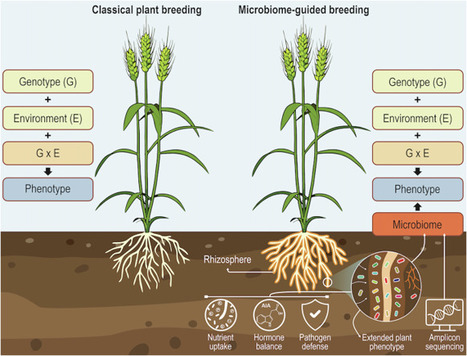
Plant breeding has advanced through genomics and predictive models, yet the plant-associated microbiome remains largely excluded from plant breeding trials. Microbial communities strongly influence nutrient acquisition, stress tolerance, and disease resistance, shaping key agronomic traits. We argue that neglecting microbiome variation biases heritability and G×E estimates, constraining genetic gains. Integrating microbiome information into breeding trials offers a feasible, scalable path toward more predictive, resilient, and sustainable crop improvement.
|
|
Scooped by
mhryu@live.com
Today, 2:18 PM
|
Antimicrobial resistance (AMR), particularly Gram-negative bacteria, poses significant challenges due to their robust outer membranes limiting antibiotic efficacy. Antimicrobial peptides (AMPs) show promising potential to replace traditional antibiotics. This study proposes a multi-condition constrained directed generation framework guided by the AMP antimicrobial mechanisms for designing membrane-targeting antimicrobial peptides (MTAMPs) against Gram-negative bacteria. By integrating sequence information, physicochemical properties, and spatial structure (PCSS) descriptors related to the outer membrane, a conditional variational autoencoder (GenMTAMP) model was developed for de novo MTAMP design. Then, target PCSS descriptors within a predefined range are input as conditional constraints into the GenMTAMP model to direct generate MTAMPs. Candidate MTAMPs were screened and evaluated through subsequent identification (ClaAMP) and prediction (PreAMP) modules. Experimental validation showed that two top-ranked peptides named MTAMP003 and MTAMP004, exhibit excellent antibacterial activity against Gram-negative bacteria while maintaining low cytotoxicity and haemolytic activity toward mammalian cells. Furthermore, mechanism research indicates MTAMPs can disrupt the Gram-negative bacterial outer membrane barrier, with limited impact on mammalian cell membranes. In summary, the current research establishes a targeted and efficient generative artificial intelligence (AI) framework for de novo MTAMP design, and provides a generalisable framework for the rational design of AMPs with predefined functional properties.
|
|
Scooped by
mhryu@live.com
Today, 2:12 PM
|
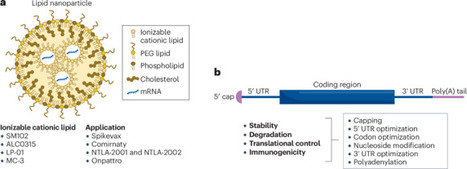
mRNA technology, which has enabled the rapid development of vaccines for infectious diseases, also holds great promise for a new generation of therapies for a host of rare and common diseases. A decade of clinical trials are beginning to clarify the key barriers to unlock the transformative potential of mRNA drugs, which are being addressed with novel interdisciplinary technical advances that, in some cases, are integrating the fields of gene, cell and mRNA therapies. Here, we review the scientific insights from a select group of clinical studies on mRNA-based drugs, including enzyme replacement therapies for rare diseases, cancer immunotherapies, genome-modifying therapies, and immune cell reprogramming therapies for cancer and autoimmune diseases. Several innovative approaches such as clinically tractable in vivo delivery systems, the development of completely ‘immune-silent’ mRNA–vehicle formulations that allow repeated administration and the development of approaches for preferential delivery to organs other than the liver would expedite the development of mRNA therapeutics 2.0. mRNA technology is being applied to develop a new generation of therapies for rare and common diseases. This Review discusses insights from clinical studies on mRNA-based therapeutics, including enzyme replacement therapies, cancer immunotherapies, genome-modifying therapies and immune cell reprogramming therapies, which illustrate how technological advances are paving the way for the wider adoption of mRNA technology in drug development.
|
|
Scooped by
mhryu@live.com
Today, 1:57 PM
|
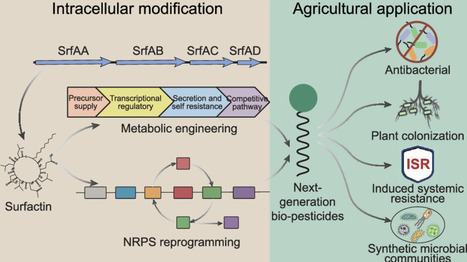
Surfactin, a cyclic lipopeptide produced by Bacillus species, represents a promising bio-pesticide due to its antimicrobial activity, environmental compatibility, and ability to induce plant immunity. However, fragmented knowledge on its molecular mechanisms and engineering limits the rational development of next-generation biopesticides. This review outlines surfactin biosynthetic principles and advances in metabolic and synthetic engineering strategies for improving yield and structural diversity. We emphasize high-throughput NRPS reprogramming strategies enabling precise control over peptide sequence and fatty acid composition, providing a powerful platform for the rational design of functionally tailored variants. Furthermore, surfactin may serve as an important signaling hub in the interaction network between plants and microorganisms. By integrating NRPS engineering, system metabolic design, and the construction of synthetic microbial communities, the future of crop protection is expected to shift from a single active molecule application model to a programmable ecological regulation model.
|
|
Scooped by
mhryu@live.com
Today, 1:39 PM
|
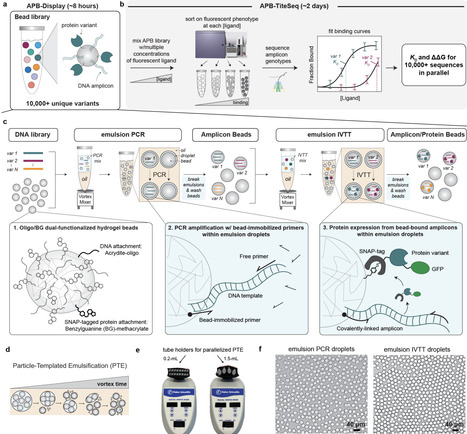
Scalable methods for producing and characterizing protein libraries are essential for generating standardized datasets needed to train models linking sequence to function. Here, we present Amplicon/Protein Bead Display (APB-Display), which expresses and purifies >100,000 protein variants in vitro in 1 day. APB-Display uses particle-templated emulsification to generate libraries of hydrogel beads that covalently display many copies of a given protein variant and its encoding DNA. By incubating beads with fluorescently-labeled ligands, sorting, and sequencing to generate titration curves (APB-TiteSeq), we simultaneously quantified expression levels and binding affinities (Kds) for >18,000 FLAG epitope variants interacting with M2 anti-FLAG antibody in 3 days, revealing chemistry-dependent epistasis between positions 4 and 5. Single-concentration binding measurements (APB-SortSeq) paired with neural network denoising further returned quantitative affinities for >88,000 variants. APB-Display requires only standard laboratory equipment and access to a FACS sorter, providing an accessible platform for quantitative in vitro biochemistry at scale.
|
|
Scooped by
mhryu@live.com
Today, 1:58 AM
|
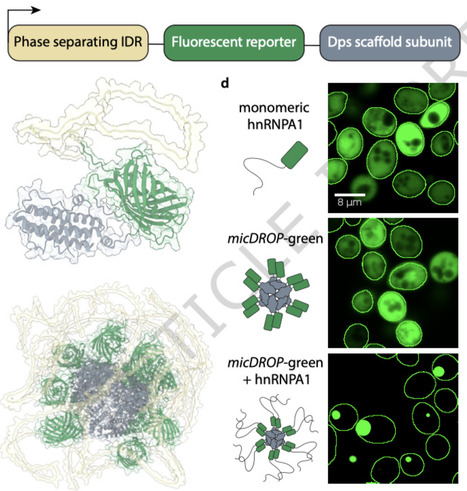
Intrinsically disordered regions (IDRs) drive intracellular phase separation and biomolecular condensate formation through interactions encoded in their sequence. Although condensates form spatially distinct assemblies in cells, the high conformational flexibility of IDRs and absence of well-defined 3D structures raise the question of how they could encode condensate specificity. To systematically characterize IDR–IDR interactions and their ability to mediate self-specific partitioning, we develop micDROP, a synthetic system of multivalent IDRs forming constitutive droplets. We examine ten natural IDRs that phase-separate in micDROP and find that their saturation concentrations in vivo correlate with total sequence stickiness. Co-expression of IDR pairs fused to distinct micDROP scaffolds reveals widespread promiscuity, whereas TDP43 and UBQ2 consistently form self-specific condensates. A short, conserved α-helical segment in the TDP43 IDR governs this self-recognition. Our results indicate that IDRs tune phase separation propensity through sequence composition, while discrete condensate identity likely requires additional structural determinants. Here the authors develop micDROP to systematically test IDR-IDR interactions driving condensate formation. Most IDR pairs co-mix promiscuously; only TDP43 and UBQ2 form distinct droplets, with a short α-helix in TDP43 driving self-recognition.
|
|
Scooped by
mhryu@live.com
Today, 1:51 AM
|
Genomovar-level and intragenomic diversity cannot be resolved by conventional amplicon sequencing due to the limitation of fragment lengths and read accuracy, while the application of metagenomic profiling to a large number of samples can be resource intensive. Here, we report UltraRes-rrn, an integrated wet-lab and computational workflow for high-accuracy rrn (i.e., 16S-ITS-23S rRNA) operon profiling using Nanopore sequencing. By integrating ultra-long DNA recovery, long-read amplicon sequencing, and unique molecular identifiers (UMI)-based consensus correction, UltraRes-rrn obtains full-length 16S-ITS-23S rRNA operon consensus sequences with mean accuracies exceeding 99.98%. To achieve higher resolution, we propose a hierarchical rRNA operon profiling strategy in which concatenated 16S+23S rRNA genes (16S23S) serve as a primary and the internal transcribed spacer (ITS) provides a secondary marker. The 16S23S marker achieved discrimination at the genomovar level compared to either 16S or 23S rRNA genes alone, which mitigates the ITS-driven over-splitting observed with the full-length rrn operon and allows for larger proportion of data being classified at higher confidence thresholds. Further, ITS variation was strongly structured by tRNA occurrence patterns, suggesting that ITS can capture taxon microdiversity missed by either 16S or 23S rRNA gene sequences alone. The UltraRes-rrn workflow was applied to full-scale nitrogen removal reactors, revealing intraspecies diversity variation driven by different carbon regimes, which would not have been possible with a shorter gene sequence. In summary, UltraRes-rrn enables cost-effective community profiling at genomovar-level resolution in complex ecosystems.
|