 Your new post is loading...

|
Scooped by
mhryu@live.com
Today, 3:26 PM
|
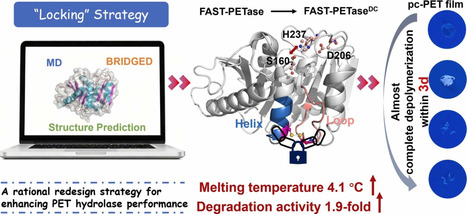
Extensive accumulation of polyethylene terephthalate (PET) plastic waste causes serious pollution to the global environment, and developing superior PET hydrolases is vital for the enzymatic degradation and biorecycling of PET. Here, we propose a “locking” strategy for the rational redesign of FAST-PETase, one of the best-performing PETase variants reported so far, to further improve its performance. The best variant, FAST-PETaseDC (A171C/S193C), exhibits 1.9-fold enhanced degradation efficiency compared with FAST-PETase at 50 °C, and a 4.1 °C increase in melting temperature (Tm). FAST-PETaseDC can almost completely depolymerize untreated post-consumer PET film within 3 d at 50 °C with periodic enzyme replenishment, two-fold faster than FAST-PETase. Molecular dynamics simulations reveal that the mutation locks Helix 5 and Loop 10 through a stable disulfide bond, and reduces the flexibility of the mutation sites and their connected regions. The structural changes consequently promote the substrate binding to the enzyme, facilitate the interaction within the catalytic triad, and rigidify the overall structure of the enzyme, leading to the improved degradation efficiency and thermostability. The study underscores the “locking” strategy as an effective way to enzyme redesign, and the engineered FAST-PETase variant is a promising hydrolase for the treatment and recycling of low-to-medium crystallinity PET plastic waste.
|
|
Scooped by
mhryu@live.com
Today, 3:13 PM
|
The Ralstonia solanacearum species complex (RSSC) ranks among the most destructive plant pathogens worldwide, due to its broad host range, extensive geographic distribution and remarkable environmental adaptability. Its persistence in soil and colonization of plant vascular tissues severely limits the effectiveness of conventional chemical control, posing significant challenges for disease management. This review highlights recent advances in understanding the environmental adaptation mechanisms of RSSC. Key topics include the dynamic evolution of pathogenicity, niche-specific survival strategies and virulence regulation mediated by quorum sensing, and complex interactions with surrounding microbial communities that shape its behavior and fitness. We further provide a comprehensive assessment of current control strategies from an ecological perspective, encompassing physical, chemical, genetic, agronomic and microbial approaches, with critical evaluation of their mechanisms, potential and limitations. Meanwhile, we discuss the major challenges in bacterial wilt management and outline future directions, with an emphasis on multi-omics-informed precision breeding, microbiome engineering and intelligent integrated disease management (IDM). These emerging strategies hold promise for the sustainable and effective long-term control of bacterial wilt disease caused by RSSC.
|
|
Scooped by
mhryu@live.com
Today, 2:57 PM
|
Culture-independent antibiotic resistance gene analyses enable broad explorations of microbial communities but often fail to link such genes to bacterial hosts and genetic contexts. This makes assessing prevalence of resistant pathogens and likelihood of further transmission or resistance evolution uncertain. There is an increasing interest in studying antibiotic resistance genes in microbial communities, however, there is no unified way to identify them in metagenomics datasets or to interpret the risks associated with them. In this Comment, the authors discuss current technical challenges and how to mitigate them.
|
|
Scooped by
mhryu@live.com
April 3, 5:21 PM
|
Soil microbial ecosystems are complex and difficult to replicate in laboratory settings. It is often unclear which pressures most strongly shape microbial survival and evolution in situ, and new methods are needed to intersect the manipulative power of the lab with the reality of field environments. One recent innovation was the “isolation chip,” in which many new microbial isolates could be cultured on agar within a buried diffusion chamber while exposed to environmental inputs through fine-pored membranes. Here, we created a modified version of this device containing biologically-cleared soil instead of agar, to trial an in situ reverse ecology experimental evolution approach. Using these “adaptation chips (aChips)” we exposed populations of two different soil-dwelling bacteria (Priestia megaterium and Streptomyces lydicus) to several farm soils in the Northeast US for up to two years, documenting mutations arising in the evolving populations. While evolution was remarkably slow in the field, P. megaterium populations accumulated many mutations pre-burial during aChip construction which seemingly reflected zinc limitation in the aChip carrier soil. Although post-burial mutations were observed in both P. megaterium and S. lydicus populations, they remained at low frequency and did not display parallelism between aChips buried at the same sites, indicating a lack of strong positive selection and/or limited generations of population growth within the aChip. We suggest several improvements to aChip design to facilitate greater evolutionary progression, including a larger within-aChip soil volume and fewer cells initially secured inside the aChip.
|
|
Scooped by
mhryu@live.com
April 3, 5:14 PM
|
Magnetotactic bacteria (MTB) are a group of gram-negative species that produce a lipid-bounded organelle, the magnetosome, in which a magnetic crystal is biomineralized. MTB use magnetosomes to align with the geomagnetic field for improved navigation of their environment. To optimize this alignment, these species linearly organize their magnetosomes using a handful of factors, including the bacterial actin-like protein MamK. Despite these shared features, there is a broad diversity of species-specific linear magnetosome chain arrangements within MTB, but the molecular mechanisms behind these phenotypic variations are unclear. Recently, genetic analyses showed that two proteins—McaA and McaB—interface with the chain organization machinery of Magnetospirillum magneticum AMB-1 to arrange magnetite crystals in a series of subchains rather than the single cohesive chains found in closely related MTB. Here, we use in vivo co-immunoprecipitation in AMB-1 to demonstrate protein-protein interactions between McaA, McaB, and MamK. Experiments with McaA truncation mutants and conditional control of McaB localization determined that McaA-McaB interactions are dependent on amino acids 530–665 of McaA and McaB localization to the magnetosome chain. We further show that disrupting the McaA-McaB interaction alters the spatial dynamics of MamK in vivo. We present a model in which protein-protein interactions between McaA, McaB, and MamK drive changes in MamK behavior to establish AMB-1’s magnetosome chain organization.
|
|
Scooped by
mhryu@live.com
April 3, 5:06 PM
|
The ongoing census of microbial life is hampered by disparate sampling across Earth’s habitats, challenges in isolating uncultivated organisms, limited resolution in taxonomic marker gene amplicons and incomplete recovery of metagenome-assembled genomes. Here we quantify discoverable Bacterial and Archaeal diversity in a comprehensive, curated cross-habitat dataset of 92,187 publicly available metagenomes. Clustering 502 million sequences of 130 marker genes, we predict ~705,000 Bacterial and ~27,000 Archaeal species-level clades, the vast majority of which were hidden among unbinned contigs. We estimate that ten and 145 previously undescribed Archaeal and Bacterial phyla, respectively, are discoverable in this dataset. We identify soils and aquatic environments as hotspots of discoverable lineages, but predict that undescribed taxa remain abundant across all habitats. Finally, we show that prokaryotic diversity appears to arise within common evolutionary patterns, as clade size distributions follow power laws, consistently across the Tree of Life. Re-analysis of over 92,000 metagenomes reveals hundreds of thousands of previously undescribed Bacterial and Archaeal clades hidden in plain sight.
|
|
Scooped by
mhryu@live.com
April 3, 4:55 PM
|
Prokaryotic Argonaute proteins (pAgos) are programmable nucleases that always utilize DNA guides to cleave DNA targets. Recent studies show that some pAgos preferentially utilize DNA guides to cleave RNA targets rather than DNA targets. VbAgo, derived from a Verrucomicrobia bacterium, is a nuclease capable of specifically cleaving single-stranded RNA and highly structured RNA substrates at 37 °C, making it an ideal candidate for developing RNA manipulation toolkits. An in-depth investigation of its mechanism contributes to understanding the functional characteristics of gDtR-type Ago proteins. Here, we present cryo-electron microscopy structures of VbAgo, the VbAgo-guide DNA binary complex, multiple wild-type VbAgo-guide DNA-target RNA ternary complexes, and the catalytically inactive mutant (VbAgo-DM) guide DNA-target RNA ternary complex, with resolutions ranging from 2.5 to 3.2 Å. By integrating these cryo-EM structures with biochemical data, we elucidate the entire catalytic process of VbAgo, revealing its unique C-terminal regulatory mechanism. Specifically, in its apo state, VbAgo’s C-terminus occupies the nucleic acid binding channel, partially impeding its catalytic activity while enhancing its stability. The binding of guide DNA displaces the C-terminus, and subsequent binding of target RNA, along with conformational changes in the N-terminal and PAZ domains, facilitates VbAgo dimerization. Following this, the C-terminus transitions from a loop to a helix, enabling maturation of the catalytic center and inducing movements in the MID-PIWI’ interactions at the dimer interfaces, ultimately leading to dimer dissociation. Concurrently, cleavage of the target RNA and subsequent product release occur, after which VbAgo reverts to its binary state to initiate the next cleavage cycle. Moreover, we demonstrate that VbAgo exhibits guide DNA mediated RNA knockdown activity in mammalian cells. In summary, our study provides a comprehensive understanding of the molecular mechanisms governing self-inhibition, guide binding, target recognition, and product release in VbAgo. These findings offer valuable insights into the diverse mechanisms of pAgos, broadening their functional scope and enhancing the biotechnological potential of pAgo proteins. Prokaryotic Argonaute proteins are programmable nucleases. Here, the authors capturing structures of VbAgo at functional stages to show how its C terminus acts as a regulator and demonstrate its ability to cleave RNA in mammalian cells.
|
|
Scooped by
mhryu@live.com
April 3, 4:48 PM
|
As the generation of data in the life and health sciences expands rapidly, there is a growing need for professionals and students in these fields to master core bioinformatics skills, particularly those relating to Unix-like systems, most commonly used in bioinformatics. This paper introduces two key contributions to address this need: (1) A Unix curriculum for life scientists with little or no command-line experience, based on progressive Unix skill levels for bioinformatics and (2) An implementation of this curriculum into a series of interactive online tutorials deployed through Sandbox.bio—an open-source platform for learning bioinformatics that embeds a command line in the browser, which removes barriers related to software installation and access. We performed an overall evaluation of this teaching framework in different contexts. This inclusive, sustainable approach provides widespread access to essential bioinformatics skills for life science students and professionals alike.
|
|
Scooped by
mhryu@live.com
April 3, 4:30 PM
|
Microorganism-based therapies, particularly those utilizing probiotics, have emerged as a powerful biomedical strategy owing to their inherent living functionalities. These living systems can dynamically interact with host environments and self-regulate their activity, offering superior adaptability, prolonged functionality, and microenvironmental responsiveness compared to conventional non-living therapeutic platforms. Despite these advantages, the direct administration of probiotics faces several challenges, such as poor viability, limited retention at target sites, and the inability to control therapeutic effects in a spatiotemporally precise manner. To address these challenges, embedding probiotics within hydrogel matrices has proven effective in enhancing microbial stability, prolonging in vivo retention, and enabling precise and sustained therapeutic delivery through synergistic interactions between the hydrogels and living microorganisms. This review provides a comprehensive overview of the materials and design strategies employed in the construction of living microorganism-encapsulated hydrogels (living hydrogels), with particular emphasis on the dynamic interactions and synergistic mechanisms of hydrogel-microorganism systems. We further illustrate how these mechanisms can achieve various biomedical applications, such as modulating gut microbiota to treat gastrointestinal disease and accelerate wound healing, or leveraging microbial-induced immune regulation for effective cancer therapy. Finally, the current challenges and future directions associated with the clinical translation of living hydrogels are highlighted. Therefore, the unique multifunctionality and therapeutic promise of living hydrogels position them as compelling candidates for the development of next-generation biomaterials with unprecedented therapeutic potential.
|
|
Scooped by
mhryu@live.com
April 3, 1:46 AM
|
Systems engineering has transformed chemical manufacturing, but bioprocessing has lagged in adopting comprehensive approaches. This review explores strategies that successfully engineer integrated upstream and downstream bioprocesses. Our analysis reveals a critical gap: bioprocess subsystems are typically optimized in isolation (‘subsystems optimization’), which limits the overall performance. We identify four key leverage points for systems engineering: engineering product accessibility to eliminate cell lysis, modifying strains to remove contaminants, adapting products for simplified purification, and enhancing strain tolerance for improved separation. While these integrative approaches substantially improve process consolidation, our findings show that there remains a significant misalignment between academic research and industrial needs (failing commercially relevant metrics). Embracing a holistic systems perspective is essential for future bioprocesses to have a transformative impact.
|
|
Scooped by
mhryu@live.com
April 3, 1:38 AM
|
Sequence-based deep learning models have become the state of the art for analyzing the genomic regulatory code. Particularly for enhancers, these models excel at deciphering sequence grammar that underlies their activity. To enable end-to-end enhancer modeling and design, we developed a software package called CREsted (cis-regulatory element sequence training, explanation and design). It combines preprocessing and analysis of single-cell assay for transposase-accessible chromatin using sequencing data, modeling chromatin accessibility from sequence, sequence design and downstream analysis to decipher enhancer grammar. We demonstrate CREsted’s functionality on a mouse cortex and a human peripheral blood mononuclear cell dataset. Additionally, we use CREsted to compare mesenchymal-like cancer cell states between tumor types, and we investigate different fine-tuning strategies of genomic foundation models within CREsted. Finally, we train a model on a zebrafish development atlas and use this to design and in vivo validate cell-type-specific enhancers. For varying datasets, we demonstrate that CREsted facilitates efficient training and analyses, enabling scrutinization of the enhancer logic and design of synthetic enhancers across tissues and species. CREsted is an efficient and user-friendly toolbox for analysis, modeling and design of cell-type-specific enhancers across diverse species.
|
|
Scooped by
mhryu@live.com
April 3, 12:47 AM
|
Predicting which receptor a phage binds to from genome sequence alone has remained an intractable challenge, principally because the experimental phenotypic data required to train and validate predictive models have not been available at sufficient scale. Here we address this by conducting 1,050 genome-wide genetic screens across 255 taxonomically diverse Escherichia coli dsDNA phages, assigning host receptors to 193 phages across 19 receptor classes. Comparative genomics and AlphaFold3 structural modelling resolved the sequence determinants of specificity to defined receptor-binding protein domains and individual residues. Machine learning models trained on this dataset predicted host receptor identity from phage genome sequence alone without prior annotation of receptor-binding genes, achieving perfect precision and greater than 80% recall on 49 independently validated phages, and yielding predictions for 1,050 of 1,875 E. coli phage genomes in NCBI. Domain swaps redirected receptor specificity as predicted, and a single amino acid substitution proved both necessary and sufficient to switch recognition between two distinct porins. These results demonstrate that systematic phenotyping at scale makes sequence-based prediction of molecular interaction specificity tractable, with direct implications for phage-based medicine, microbiome engineering and the broader challenge of inferring host-pathogen interaction outcomes from sequence.
|
|
Scooped by
mhryu@live.com
April 3, 12:29 AM
|
two research teams describe the machine-learning algorithms they developed to screen bacterial genomes and identify proteins that are involved in protecting the microorganisms against viral invaders. Their analyses identified hundreds of thousands of potential antiviral proteins, which researchers could harness to develop innovative biotechnologies. Laub and his colleagues have made DefensePredictor freely available online for researchers to use. Bernheim and her colleagues have also created an open-access database called DefenseFinder, which contains more than 44,000 predicted antiviral systems. Researchers can use these resources to test the antiviral properties of newly identified proteins.
|
|
|
Scooped by
mhryu@live.com
Today, 3:20 PM
|
Modern molecular analyses have revolutionized the study of microbial communities, yet DNA extraction and sequencing remain critical sources of bias. This study investigated the impact of seven different DNA extraction protocols and two 16S rRNA hypervariable regions (V1–V3 and V3–V4) on the profiling of a complex anaerobic fermentative biomass selected for medium-chain fatty acids production. Microscopic analysis established a baseline community dominated by Actinobacteria (53% ± 2%) and Firmicutes (47% ± 3%). The results demonstrate that Kit1 and Kit5 provided the highest DNA yields (up to 603 ng/μL) and the most effective recovery of these hard-to-lyse phyla, although they introduced a slight taxonomic bias toward Actinobacteria. In contrast, protocols relying on intensive chemical lysis without robust mechanical disruption (Kit4) significantly underestimated total bacterial abundance and showed the lowest purity. 16S rRNA gene sequencing revealed that the V3–V4 region provided higher alpha-diversity and a more balanced representation of the community core compared to V1–V3, which was more susceptible to extraction-related variability and overrepresented the genus Olsenella. Our multi methodological approach reveals significant biases introduced by both extraction technique and 16S rRNA gene region. This evidence highlights that protocol optimization is mandatory for achieving an accurate and comprehensive characterization of microbial ecosystems.
|
|
Scooped by
mhryu@live.com
Today, 3:05 PM
|
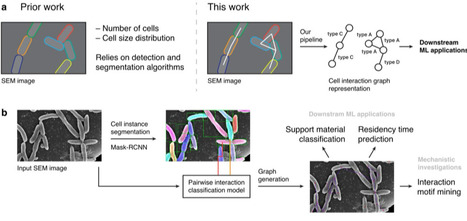
Bacterial biofilms are complex, spatially organized microbial communities that exhibit enhanced resistance to antibiotics and contribute to chronic infections. Understanding their structure, especially during early formation stages, is critical for developing effective intervention strategies. Here, we present a high-resolution computational framework that models biofilms as undirected interaction graphs, where individual bacterial cells are vertices and predicted intercellular interactions are edges. Combining microscopy visualization and deep learning, we developed a pipeline that integrates Mask R-CNN for cell segmentation and a custom neural network (BINet) for interaction prediction. The described graph-based representation enables quantitative analysis of biofilm growth, identification of recurrent structural motifs, and classification of substrate-specific colonization patterns. We demonstrate the utility of this approach in predicting both the developmental stage and material type from image-derived graph features. This study provides the tool for revealing nonobvious patterns of biofilm organization and describes a scalable, high-information-content approach for the automated analysis of microbial communities, opening new possibilities for systems-level microbiological research.
|
|
Scooped by
mhryu@live.com
Today, 2:52 PM
|
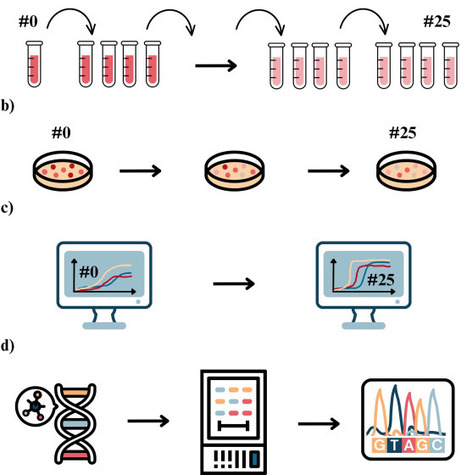
Using engineered microbial cells for chemical production from renewable resources could replace oil-based chemistry. However, it is underexplored how the chemical production by engineered microbial cells is affected by them being exposed to Darwinian selection. All proliferating cells are unavoidably subjected to Darwinian selection which favors fitness beneficial phenotypes that seldom include engineered chemical production. Here, adaptive laboratory evolution (ALE) was performed to characterize the effect of Darwinian selection on Saccharomyces cerevisiae strains expressing two different heterologous pigment producing pathways, blue-colored indigoidine and red-colored bikaverin. S. cerevisiae haploid S288C based strain had the genes for bikaverin synthesis integrated in the same locus as the genes for indigoidine synthesis in haploid and diploid S. cerevisiae CEN.PK-based strains. The ALE was performed as serial batch cultivations in rich and synthetic defined (without amino acids) media with respirative galactose as the sole carbon source for ∼200 and ∼175 generations, respectively. While indigoidine pigmentation was rapidly lost independent of growth medium or ploidy, bikaverin pigmentation was robust. The adaptive solutions detected in poor galactose utilizer S288C-based bikaverin producing lineages involved mutations in the galactose utilization pathway whereas the heterologous indigoidine pathway was recurrently mutated in the corresponding lineages. When the bikaverin producing S288C-based lineages were adaptively evolved on the favored glucose carbon source instead, clones having lost the pigmentation were detected. Thus, the robustness of the engineered traits appeared dependent on challenges in production environment and availability and fitness benefits of adaptive solutions.
|
|
Scooped by
mhryu@live.com
April 3, 5:17 PM
|
Aromatic amino acids—tryptophan, tyrosine, phenylalanine, and histidine—are essential for bacterial growth and are among the most energetically expensive metabolites to synthesize. Despite this cost, it has been recently shown that bacteria possess exporters for these amino acids. Here, we identify aexB (formerly yvjA) as a gene encoding a novel aromatic amino acid exporter in Bacillus subtilis. Using a transposon-based screen, we found that aexB overexpression confers resistance to the toxic tryptophan analog 5-fluorotryptophan. Additional analog screens revealed that AexB also promotes tolerance to toxic derivatives of tyrosine, phenylalanine, and histidine but not non-aromatic amino acids. LC-MS analysis showed that AexB specifically exports aromatic amino acids, and co-culture assays confirmed that overexpression of aexB can support the growth of aromatic amino acid auxotrophs. Furthermore, overexpression of aexB impaired growth when intracellular tryptophan was limiting. On the other hand, deletion of aexB exacerbated growth defects under excess tryptophan conditions, likely due to feedback inhibition of aromatic amino acid synthesis pathways. Our findings reveal that AexB is an aromatic amino acid exporter that functions as a metabolic safety valve.
|
|
Scooped by
mhryu@live.com
April 3, 5:10 PM
|
Adenosine-to-inosine (A-to-I) mRNA editing alters genetic information post-transcriptionally and can impact protein sequence and function, yet its regulation in bacteria remains unclear. Here, we profiled A-to-I editing in E. coli across nutrient-rich Luria-Bertani (LB) and minimal M9 media and different growth phases. Our analysis expanded the repertoire of TadA-dependent A-to-I edited mRNAs to 27, including 12 novel sites, and revealed that editing levels were dynamic and markedly increased at the stationary phase in LB but not in M9. Editing levels were independent of mRNA expression yet correlated with tRNA-Arg2 downregulation, and overexpressing tRNA-Arg2 reduced mRNA editing, demonstrating substrate competition for TadA, the sole bacterial tRNA adenosine deaminase. Mutants with TadA-deficient editing or reduced tRNA-Arg2 expression displayed similar LB-specific growth defects. Moreover, tRNA-Arg2 expression, tRNA-Arg2-dependent codon usage, and tRNA-Arg2 editing were all elevated in LB compared to M9. These findings establish regulatory principles for bacterial RNA editing, implicate tRNA editing in nutrient-responsive fitness, and provide a framework to explore the physiological roles of mRNA editing.
|
|
Scooped by
mhryu@live.com
April 3, 4:57 PM
|
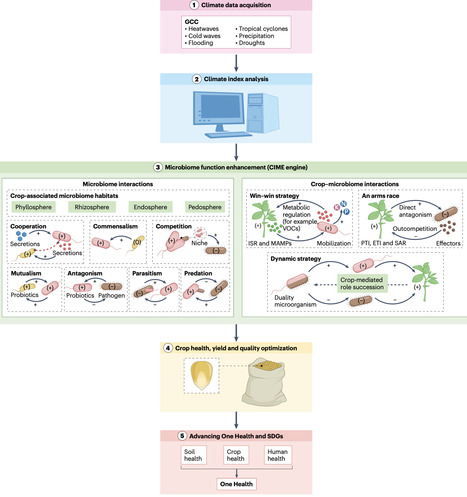
Crop productivity under climate stress remains constrained by conventional agricultural approaches that underuse plant–microbiome interactions. A microbiome-centred, climate-responsive framework was proposed to enhance crop resilience and agro-sustainability by prioritizing targeted manipulation of crop-associated microbiomes, offering a scalable and adaptive pathway to buffer climate stresses and stabilize crop performance.
|
|
Scooped by
mhryu@live.com
April 3, 4:52 PM
|
Plant phenotyping increasingly relies on (semi-)automated image-based analysis workflows to improve its accuracy and scalability. However, many existing solutions remain overly complex, difficult to reimplement and maintain, and pose high barriers for users without substantial computational expertise. To address these challenges, we introduce PhenoAssistant: a pioneering AI-driven system that streamlines plant phenotyping via intuitive natural language interaction. PhenoAssistant leverages a large language model to orchestrate a curated toolkit supporting tasks including automated phenotype extraction, data visualisation and automated model training. We validate PhenoAssistant through several representative case studies and a set of evaluation tasks. By lowering technical hurdles, PhenoAssistant underscores the promise of AI-driven methodologies to democratising AI adoption in plant biology. Application of large language models (LLMs) for automating complex and data-intensive crop phenotype analysis remains unexplored. Here, the authors integrate LLM with curated toolkit for phenotype extraction, visualization, and model training and show its ability to reduce technical barriers and enhance accessibility.
|
|
Scooped by
mhryu@live.com
April 3, 4:45 PM
|
Arbuscular mycorrhizal fungi (AMF) are key drivers of plant growth and nutrition, shaping the relationship between plant diversity and ecosystem productivity. In agroecosystems, AMF generally benefit crops but often have neutral or even negative effects on weeds, yet the mechanisms underlying these contrasting interactions remain poorly understood. In this Viewpoint, we propose a plant community-level framework to investigate interactions between multiple crop and weed species and diverse AMF taxa, focusing on chemically mediated communication via root exudates, particularly flavonoids (FLVs) and strigolactones (SLs). These compounds can act as ‘cry for help’ signals that recruit beneficial soil microorganisms to alleviate environmental stress. We found that their composition varies widely among plant families, with crops typically producing more diverse and functionally distinctive FLV profiles than weeds. Similar patterns, though less documented, appear for SLs. Different FLV subclasses elicit contrasting AMF responses, influencing spore germination, hyphal growth, and root colonization. Notably, FLVs with stronger positive effects on AMF are more common in crops, whereas those with neutral effects tend to dominate in weeds. Our results are consistent with the idea that such molecular cues may shape AMF recruitment and could potentially feed back into plant community dynamics, although this hypothesis should be explicitly tested.
|
|
Scooped by
mhryu@live.com
April 3, 4:26 PM
|
Nitrate accumulation is a prevalent challenge in aquaculture systems. Although aerobic denitrifiers offer a promising solution, few strains can tolerate varying salinities, and their performance in real aquaculture wastewater remains limited. In this study, an euryhaline aerobic denitrifying bacterium, Marinobacter sp. MAD1, was isolated from a recirculating aquaculture system. MAD1 demonstrated both ammonium assimilation and aerobic denitrification capacities, functioning effectively over a broad range of salinities (0–3.5%). Transcriptomic analysis suggests that strain MAD1 upregulates genes involved in K+ uptake and sulfur-containing amino acid metabolism, such as cysteine, to maintain cell growth and aerobic denitrification under hyposaline conditions. However, in seawater conditions, strain MAD1 survival relies on classical compatible solute accumulation. Bioaugmentation with culture MAD1 significantly improved nitrate removal compared to the control reactor under moderate (1.5%) and high salinity (3.5%), lowering effluent nitrate from 21.76 ± 3.14 to 3.58 ± 2.57 mg-N/L and 15.55 ± 2.69 to 4.51 ± 2.38 mg-N/L, respectively. Repeated amendment of strain MAD1 led to its predominance within the community, with relative abundances reaching 88.03% at 1.5% salinity and 81.09% at 3.5% salinity. Our findings highlight the potential of euryhaline aerobic denitrifiers for nitrogen management in aquaculture systems under variable salinity.
|
|
Scooped by
mhryu@live.com
April 3, 1:46 AM
|
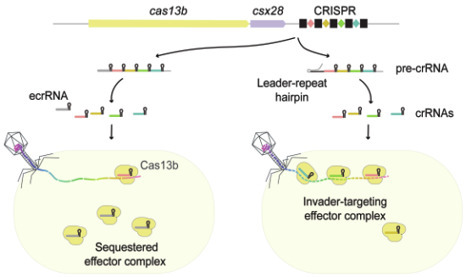
CRISPR RNAs (crRNAs) guide recognition and targeting of intracellular invaders as part of adaptive immunity by CRISPR-Cas systems. crRNAs are transcribed from CRISPR arrays of conserved repeats interlaced with invader-derived spacers. While crRNA production is essential for immunity, its optimization for defense remains poorly understood. Here, we show that, in diverse RNA-targeting type VI CRISPR-Cas systems, the leader RNA encoded upstream of the CRISPR array prevents formation of an invader-independent extraneous crRNA (ecrRNA) by blocking processing of the first repeat. Using the VI-B2 system from Porphyromonas gingivalis as a model, we demonstrate that the leader RNA and first repeat form a conserved inhibitory hairpin that precludes binding and processing by the system’s Cas13b nuclease. Disrupting this hairpin enables ecrRNA production, which in turn can deplete invader-derived crRNAs and reduce Cas13b-mediated phage defense. Structure prediction indicates that these leader-repeat hairpins are widespread across diverse type VI subtypes, highlighting a conserved regulatory mechanism. Our findings reveal how a prevalent branch of CRISPR-Cas systems suppresses ecrRNA formation to promote RNA-guided immunity.
|
|
Scooped by
mhryu@live.com
April 3, 12:54 AM
|
While the ocean’s photosynthetic production of organic matter rivals that on land, a combination of heterotrophy and sinking prevents significant accumulation of particulate organic matter (POM) in open ocean surface waters. The origins and fates of POM in ocean surface waters are unclear, in part due to the dominance of nonliving, altered material. From the natural nitrogen isotopic composition of chlorophyll and its degradation products, we estimate the fraction of particles from eukaryotic vs. prokaryotic phytoplankton. In subtropical gyres and along the eastern North Pacific margin, the eukaryotic-to-prokaryotic ratio in particles matches that of living phytoplankton. However, in the North Atlantic outside its subtropical gyre, particles have a lower eukaryotic-to-prokaryotic ratio than do the living phytoplankton. This discrepancy at least partly arises from preferential sinking of eukaryotic biomass, consistent with the canonical but disputed paradigm that cyanobacteria disproportionately fulfill the energetic demands of the upper ocean microbial community while eukaryotes drive export production. The prokaryotic bias in surface ocean particles may also result from slow decomposition of specific components of prokaryotic biomass, a possible bottleneck in the ocean’s microbial loop. The different fates of organic matter produced by eukaryotic and prokaryotic phytoplankton affect the productivity of the surface ocean, carbon export to the interior, and the signals recorded in deep-sea sediments.
|
|
Scooped by
mhryu@live.com
April 3, 12:34 AM
|
The stinkbug Plautia stali harbors essential gut symbiotic bacteria of the genus Pantoea, whose natural strains differ in cultivability and host benefits. Using this system, we evaluated how laboratory-evolved and genetically-engineered symbiotic E. coli strains compete against native Pantoea symbionts and how they influence host fitness. In single infection assays, the native uncultivable symbiont Sym A conferred the highest host performance, whereas the evolved (CmL05G13) and artificial (ΔcyaA) symbiotic E. coli strains supported host survival at levels comparable to cultivable Pantoea symbionts (Sym C-F). In competitive co-infection assays, the symbiotic E. coli strains generally showed unexpectedly strong colonization ability. CmL05G13 outcompeted all the cultivable symbionts Sym C-F and even displaced the native uncultivable symbiont Sym A, whereas ΔcyaA and the nonsymbiotic control E. coli ΔintS were dominated by Sym A at the adult stage. Despite their superior infection competitiveness, the symbiotic E. coli strains provided limited reproductive benefits, behaving as "cheater-like" associates. They were able to invade and dominate the symbiotic organ but failed to match the fitness contributions of native symbionts. These results demonstrate that the experimentally evolved E. coli can rapidly acquire strong colonization ability surpassing that of the natural symbionts that have coevolved with P. stali in nature. At the same time, the mismatch between infection success and host fitness benefits highlights potential evolutionary conflicts and provides an experimental model for studying the dynamics of cheating, mutualism, and symbiont replacement in vertically transmitted symbioses.
|















A Multi-Layer Perceptron (MLP) takes the fused representation as input to predict the final label , distinguishing AMPs from non-AMPs.