Your new post is loading...

|
Scooped by
mhryu@live.com
Today, 2:00 PM
|
Metabolic interactions are fundamental to the assembly and function of microbiomes. Yet, our understanding of how specific interaction mechanisms can drive broader ecological outcomes and population dynamics remains limited. Here, we monitor interactions resulting from plant oligosaccharide degradation by leaf-associated bacteria using a microfluidic device that enables direct cell observation and quantitative metabolite detection. This approach enables the identification of key metabolic mediators, revealing recipient-specific patterns of carbon substrate and cofactor complementation. By linking these patterns to emergent dynamics observed between pairs of bacteria, we identify metabolically driven feedbacks that could lead to a variety of ecological outcomes – from outcompetition to coexistence characterized by oscillating population abundances. Investigating these observations with metabolic modeling allows us to systematically assess the impact of specific molecular mediators on population dynamics, yielding predictions of interaction outcomes that we validate experimentally. Our results provide a detailed mapping of metabolic mechanisms to emergent population trajectories among environmental microbes and help inform strategies for designing microbiomes with desired steady states. Plant-associated bacteria engage in complex metabolic interactions. Here authors used microfluidics and computational modeling to identify molecular drivers of these interactions and disentangle their contributions to emergent ecological dynamics.
|
|
Scooped by
mhryu@live.com
Today, 1:59 AM
|
Drought stress is among the most significant abiotic constraints on agricultural productivity, a challenge that is intensifying under climate change. Translating the microbial mechanisms under drought into a holistic and systemic strategy remains largely unexplored. This review addresses this gap by advancing the plant-microbiome holobiont framework, which integrates such mechanisms into a unified approach to enhance drought tolerance. The framework constitutes four interrelated pillars which include (1) microbes induced modulation of host physiology and molecular responses through nutrient cycling, phytohormone regulation, osmotic adjustment, biofilm formation, and priming of systemic stress resistance, (2) Root exudates as signal-rich mediators that dynamically shape rhizosphere microbial communities and facilitate the recruitment and activity of drought-adaptive microbes and (3) the evaluation of emerging technological interventions to manipulate the plant-microbe dialogue. These interventions include genetic engineering which enables targeted modification of root exudation patterns and stress-responsive genes to enhance beneficial microbial recruitment, SynComs combining functionally complementary microbes to improve water-use efficiency and nutrient uptake, and mGWAS studies to identify plant genetic loci influencing microbiome composition and interactions, supporting the breeding of cultivars that preferentially associate with beneficial microbes under drought conditions. While (4) modulation of carbon pool, nutrient uptake and resistance priming upon leveraging microbial functions. Explicitly integrating these pillars, framework offers a practical roadmap for transitioning from mechanistic knowledge to targeted advancement of resilient agroecosystems. Harnessing the plant-microbiome holobiont through this integrated approach offers an innovative and sustainable pathway to sustain crop productivity and soil health in increasingly water-limited environments.
|
|
Scooped by
mhryu@live.com
Today, 12:09 AM
|
Gene regulation through translation is critical for spatiotemporal protein expression. Internal ribosomal entry sites (IRESes) mediate mRNA-specific translation by recruiting ribosomes to 5′ untranslated regions. Circular RNAs (circRNAs), naturally occurring and stable RNAs, are increasingly used as synthetic tools for sustained therapeutic protein translation by IRES-driven initiation. However, the functionality of different IRESes in synthetic circRNAs remains sparsely characterized. We systematically examine circRNA reporter translation by viral and cellular IRESes in human cells and in diverse in vitro translation systems. Improved circRNA purification by urea-PAGE and RNase R-treatment removes contaminants that induce RNA sensing. Viral CVB3 and HCV, as well as cellular Hoxa9, Chrdl1, Cofilin and c-Myc IRESes, effectively drive circRNA translation. We also establish circRNA translation in a recently developed human cell-free extract that recapitulates IRES-dependent regulation, and allows for precise engineering of HCV IRES-mediated translation. These findings inform IRES selection for synthetic circRNA translation relevant for circRNA-based medicine.
|
|
Scooped by
mhryu@live.com
May 28, 11:43 PM
|
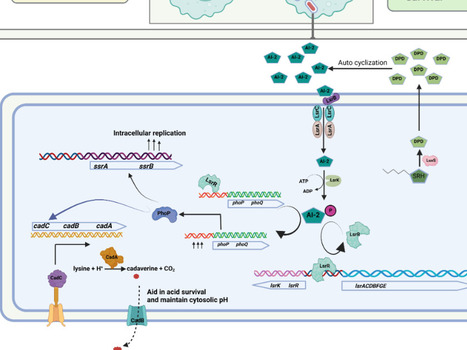
The intestinal milieu is largely characterized by the complex array of chemical compounds produced through the metabolic activity of resident microbiota. Enteric pathogens like Salmonella, which have evolved refined mechanisms to persist within this environment, utilize these microbial metabolites and self-produce quorum molecules as molecular cues to identify ecological niches and modulate their survival and virulence strategies. Salmonella quorum sensing involves producing and detecting universal Autoinducer-2 (AI-2) signaling molecules. Our research reveals that Salmonella Typhimurium enhances AI-2 biosynthesis and transport under acidic conditions, aiding environmental adaptation and facilitating pathogenesis in macrophages. AI-2 signaling regulates the pH-sensing two-component system genes, phoP/phoQ, ensuring cytosolic pH homeostasis, survival, and acid tolerance. It also involves regulating the lysine/cadaverine-mediated acid tolerance response and maintaining bacterial cytosolic pH. Furthermore, we investigated the mechanism of AI-2-mediated gene regulation and demonstrated that, in addition to the lsr promoter, the repressor LsrR binds the phoP promoter via its Y25 and R43 residues, thereby negatively regulating phoP expression. Additionally, this signaling ameliorates the intracellular survival by modulating Salmonella Pathogenicity Island-2 (SPI-2) regulators (ssrA/ssrB) and SPI-2 effector expression via PhoP. Mouse models demonstrate that AI-2 signaling is essential for colonizing the primary and secondary infection sites. Therefore, quorum sensing facilitates survival in hostile host environments by modulating multiple genetic targets through the AI-2/LsrR-mediated feedback loop in pathogenic bacteria.
|
|
Scooped by
mhryu@live.com
May 28, 5:28 PM
|
Pseudomonas aeruginosa is a ubiquitous gram-negative bacterium that causes diverse opportunistic infections in vulnerable populations. P. aeruginosa is innately resistant to many therapeutic agents, and biofilm-mediated infections demonstrate enhanced recalcitrance to antimicrobials. It has been known for over 25 years that iron plays a critical role in P. aeruginosa biofilm physiology, and numerous studies have revealed mechanistic insights into how this metallonutrient affects the regulatory, structural, and nutritional requirements of biofilm communities. This mini-review presents the current state of the field in understanding the specific impacts of iron on P. aeruginosa biofilm formation, and we propose key areas for future studies to more effectively relate these findings to the clinic.
|
|
Scooped by
mhryu@live.com
May 28, 5:06 PM
|
Multiplexed assays of variant effects (MAVEs) make it possible to measure the functional impact of all possible single amino acid residue substitutions in a protein in a single experiment. Combination of variant effect data from several such experiments provides the opportunity to conduct large-scale analyses of variant effect scores measured across proteins, but can be complicated by variations in the phenotypes that are probed across experiments. Thus, using variant effect datasets obtained with similar MAVE techniques can help reveal general rules governing the effects of amino acid variation for a single molecular phenotype. In this work, we accordingly combined data from six individual variant abundance by massively parallel sequencing (VAMP-seq) experiments and analysed a total of 31,614 variant effect scores reporting solely on the impact of single amino acid residue substitutions on the cellular abundance of proteins. Using our combined variant effect dataset, we derived and analysed a collection of amino acid substitution matrices describing the average impact on cellular abundance of all residue substitution types in different structural environments. We found that the substitution matrices predict the cellular abundance of protein variants with surprisingly high accuracy when given structural information only in the form of whether a residue is buried or exposed. We thus propose our substitution matrix-based predictions as strong baselines for future abundance model development.
|
|
Scooped by
mhryu@live.com
May 28, 4:51 PM
|
Integrated coupling of renewable energy sources with microbial CO2 fixation remains a major challenge in carbon-neutral biomanufacturing. Here, a biohybrid design is presented that combines a semiartificial leaf for solar-powered conversion of CO2 into formate with an autotrophic E. coli that is engineered to use formate as an energy source to produce biomass. First, adaptive laboratory evolution was employed to enhance formate consumption and overcome slow autotrophic growth. Second, electrode-microbe compatibility was established, showing that the adapted strain can grow directly using formate electrochemically generated from CO2 by an enzyme-modified cathode. Third, the electrical energy source was replaced with simulated sunlight, developing a biophotoelectrochemical device to support E. coli growth. Finally, an integrated platform consisting of a semiartificial leaf and autotrophic E. coli was designed, which couples solar CO2-to-biomass conversion and O2 evolution, replicating natural photosynthesis.
|
|
Scooped by
mhryu@live.com
May 28, 4:16 PM
|
The efficient, rapid, and reliable assembly of DNA fragments is essential for advancing metabolic engineering and synthetic biology. With the rapid advancement of DNA synthesis and assembly technologies, the scale of DNA assembly has expanded from single genes to metabolic pathways and even genomes. Large DNA fragment assembly, in particular, has developed into a pivotal tool for microbial cell factory engineering, significantly contributing to the understanding and construction of biological systems. This review summarizes recent advancements in large DNA fragment assembly methods, encompassing in vitro and in vitro methods for multiple-gene assemblies, as well as genome-scale technologies, including synthetic genome and neochromosome construction. We systematically compare their key features in terms of assembly principle, capacity, and efficiency. Especially, we highlight their applications in microbial cell factory engineering, including heterologous pathway construction, reprogramming host metabolism, and expanding complex biosynthetic networks. Finally, we discuss the challenges and prospects of applying large DNA fragment assembly to advance cell factories. In summary, this review provides a theoretical and technical framework for engineering high-performance microbial cell factories, contributing to the advancement of industrial biomanufacturing.
|
|
Scooped by
mhryu@live.com
May 28, 3:56 PM
|
Integral membrane proteins comprise at least a quarter of every proteome. To fold and function properly, these proteins must insert into the correct membrane with the proper topology and orientation. Although their transmembrane helices are chemically compatible with the bilayer, insertion inside cells is not a simple spontaneous event. It must occur in a crowded environment, at the correct membrane, and it often involves challenges such as transferring hydrophilic segments across the bilayer or accommodating helices that are only marginally compatible with it. Cells therefore rely on dedicated systems that direct membrane proteins to the membrane, mediate their insertion, and monitor the process to ensure that it occurs correctly. This review outlines the principles that govern membrane protein insertion in cells and explains how transmembrane sequence features interact with the machineries that mediate their entry into the bilayer. We highlight the major insertion systems of bacteria and eukaryotes and the auxiliary factors that support them, and describe how these pathways accommodate the broad range of membrane protein architectures found in cells, from single-pass proteins to complex multispanning transporters. We also discuss how cells maintain accuracy when insertion fails, through mechanisms that detect and resolve misinsertion. Together, these concepts present membrane protein insertion as a coordinated, adaptable, and safeguarded process, shaped by the interplay between sequence properties, membrane environments, and the machinery responsible for building the membrane proteome.
|
|
Scooped by
mhryu@live.com
May 28, 3:42 PM
|
Carbon dioxide removal (CDR) through seaweed cultivation has been proposed as a promising marine CDR approach due to its high afforestation potential and favorable carbon-to-nutrient ratios. However, recent studies suggest that the afforestation potential is constrained by iron limitation, and efficiency depends on relative stoichiometry with phytoplankton. Global CDR models overlook iron limitation and fail to capture how nutrient feedbacks with phytoplankton will reduce ocean carbon uptake. Here, an ocean biogeochemical model is used to assess how nutrient demand, affinity, and limitation influence the afforestation potential and CDR efficiency of seaweed cultivation. Iron limitation reduces afforestation potential by threefold after accounting for N and P limitation. Variations in nutrient affinity and demand cause large differences in CDR efficiency, from −43% to +78%. We show that if seaweed is less nutrient-efficient than phytoplankton, cultivation results in negative net CDR. Failing to account for these nutrient dynamics risks overestimating seaweed-based CDR efficacy. This study shows that when iron limitation is considered, there is nowhere in the ocean that is suitable for growing kelp for carbon dioxide removal.
|
|
Scooped by
mhryu@live.com
May 28, 1:14 AM
|
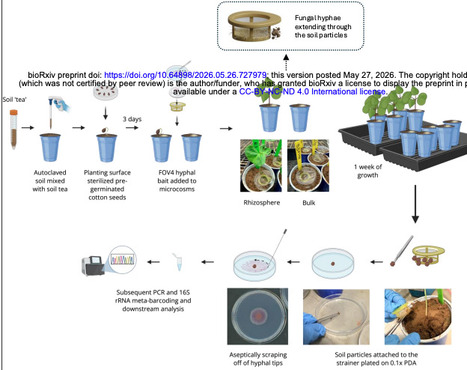
Fungal hyphae form spatially confined interfaces in soil that mediate close associations with bacteria, collectively referred to as the hyphosphere. Despite its recognized ecological importance, experimental access to hyphosphere-associated microbial communities under realistic soil and plant-associated conditions has remained limited. Here, we present a soil-mimetic microcosm that enables controlled reconstruction and recovery of hyphosphere bacterial communities embedded within plant-associated soil. The system integrates field-derived soil, a native soil microbial inoculum, living cotton seedlings, and a spatially constrained fungal inoculum housed within sterile cell-strainer assemblies, permitting hyphal extension into soil while preserving a recoverable fungal-soil boundary. Using the soil-borne plant pathogen Fusarium oxysporum f. sp. vasinfectum as a model filamentous fungus, we show that the microcosm enables reproducible recovery of hypha-associated soil microaggregates containing physically attached bacterial cells. Full-length 16S rRNA profiling revealed pronounced reductions in bacterial richness and evenness in hyphosphere samples relative to bulk and rhizosphere soils, consistent with recruitment of a restricted subset of the surrounding microbiota. Ordination analyses demonstrated clear compositional separation between soil and hyphosphere compartments, with convergence of hypha-associated communities across bulk and rhizosphere contexts. Phylogenetic turnover analyses indicated phylogenetic structuring, whereas taxonomic analyses identified a conserved set of bacterial genera consistently associated with hyphae alongside compartment-specific taxa influenced by soil and plant context. Together, these findings establish the novel hyphal release-and-capture microcosm as a reproducible, ecologically grounded platform for studying hyphosphere-associated bacterial communities in plant-associated soils.
|
|
Scooped by
mhryu@live.com
May 28, 12:55 AM
|
Hybrid yeasts represent a promising strategy for developing robust microbial platforms capable of sustaining industrial bioprocesses under multifactorial stress conditions, including high ethanol concentrations, osmotic pressure, temperature fluctuations, and inhibitory compounds. This review examines yeast hybridization as an integrative approach that combines complementary genetic and physiological traits from distinct parental lineages to expand metabolic capacity and improve process performance. Evidence indicates that hybridization, particularly when coupled with adaptive evolution, can enhance fermentation kinetics, substrate utilization, and product formation, often achieving improvements of approximately 10–30% in key performance metrics. However, these gains are context-dependent and frequently constrained by genomic instability, phenotypic variability, and scale-up limitations. A central conclusion is that hybrid yeasts function as dynamic systems whose performance emerges from interactions among genome architecture, regulatory mechanisms, metabolic fluxes, and environmental conditions. A successful application requires coordinated strategies that integrate parental selection, hybrid construction, and process optimization. The review highlights the complementary roles of classical breeding, adaptive evolution, and genome editing, and emphasizes the need for predictive frameworks incorporating multi-omics data and computational modeling. Advancing these approaches will be essential to improve stability, scalability, and the rational design of hybrid yeast platforms for industrial biotechnology.
|
|
Scooped by
mhryu@live.com
May 28, 12:43 AM
|
Industrial microorganisms combine genomic robustness with process resilience to achieve high-level bioproduction, and these traits are usually governed by complex, multi-gene interactions. Pooled CRISPR screening-assisted genotype–phenotype association (GPA), an emerging approach attracting increasing attention, has recently evolved into a powerful platform for systematically interrogating gene function in industrially relevant strains and for rapidly identifying genotypes that drive desired phenotypes. In this review, we frame the GPA workflow as “Design–Build–Screen–Apply” and focus on the middle two steps. We compare state-of-the-art library-building technologies and catalogue positive hits obtained with diverse enrichment and screening strategies, evaluating their respective strengths, limitations, and applicability. Relevant applications from the past five years are then summarized to illustrate how GPA deciphers industrially relevant traits and accelerates the construction of high-performance microbial cell factories. Finally, we explore how artificial intelligence (AI) can streamline pooled CRISPR GPA workflows and outline remaining challenges.
|
|
|
Scooped by
mhryu@live.com
Today, 2:08 AM
|
Developmental gene function is often conserved over deep time, but cis-regulatory sequence conservation is difficult to identify. Rapid sequence turnover, paleopolyploidy, structural variation, and limited phylogenomic sampling have impeded conserved noncoding sequence (CNS) discovery. Using Conservatory, an algorithm that leverages microsynteny and iterative alignments to map CNS-gene associations over evolution, we uncovered ~2.3 million CNSs, including more than 3000 predating angiosperms, from 284 plant species spanning 300 million years of diversification. Ancient CNSs were enriched near developmental regulators, and mutating CNSs near HOMEOBOX genes produced strong phenotypes. Tracing CNS evolution uncovered key principles: CNS spacing varies, but order is conserved; genomic rearrangements form new CNS-gene associations; and ancient CNSs are preferentially retained among paralogs but are often lost as cohorts or evolve into lineage-specific CNSs.
|
|
Scooped by
mhryu@live.com
Today, 1:20 AM
|
Comparing a microbial sample against a reference dataset is essential for many workflows, such as quantifying change in a microbial community after experimental perturbation or evaluating whether a human microbiome sample falls within the range of healthy subjects. Here I present a new method called Ratio Percentile Deviation (RPD) for quantifying the divergence of a microbial sample from a set of reference samples. The RPD method compares features of the test samples to the empirical distribution of features in the reference samples, making no assumption about the underlying distribution of the data. The features used for comparison are ratios between taxa in the same sample, which are invariant between count and relative abundance data; therefore, RPD is appropriate for compositional read-based data. Applying the RPD method to several large microbial datasets shows that it outperforms approaches that compare test samples to a composite reference value (e.g. the centroid of the reference dataset). In case-control analyses using the American Gut Project and Ghana Breast Health datasets, a single RPD predictor discriminated individuals with microbiome dysfunction from healthy controls with AUCs of 0.74-0.79; DeLong tests confirmed RPD's AUC was significantly higher than the best-performing comparator in all three analyses. I further show that RPD can measure compositional variation within a dataset by applying the metric to the long-term Lake Mendota microbial timeseries. The superior predictive power of RPD versus existing approaches across these varied datasets suggest that this method could be a useful new tool for comparing microbial samples to a reference across multiple study systems. The RPD method is available as an R function in the following github repository: https://github.com/cherren8/RPD
|
|
Scooped by
mhryu@live.com
May 28, 11:52 PM
|
Flagellin is the structural protein of the bacterial flagellar filament, an extracellular propeller that rotates to drive swimming in many bacteria. The structure of flagellin allows for outer domain customization, which has been the target of numerous studies for applications in biotechnology. Modified flagellin, both as monomers and in polymeric filaments, has been used in the generation of biosensors, in the formation of nanomaterials, in the attachment of cells to surfaces of interest, and in conferring motility to nanorobots. Flagellin is well characterized and provides a promising and cost-effective answer to some of the current limitations of traditional methods. This review discusses recent advances using flagellin for purposes beyond bacterial motility and new promising applications for flagellin and flagellin-derived filaments.
|
|
Scooped by
mhryu@live.com
May 28, 5:31 PM
|
Antimicrobial resistance is a growing global health crisis, with ESKAPE pathogens, such as Acinetobacter species, contributing significantly to hospital-acquired infections. These bacteria employ various virulence factors, including extracellular type IV pili (T4P), which serve as essential appendages for DNA uptake, biofilm formation, and resistance to antibiotics. Single-stranded RNA (ssRNA) bacteriophages (phages) exploit these retractile pili as entry receptors, but the exact mechanism of viral RNA delivery following pilus binding and retraction remains poorly understood. In this study, we investigated the entry mechanism of the ssRNA phage AP205 on its host strain Acinetobacter higginsii. We identified the specific phage components necessary for T4P detachment, a key step in viral genome entry. Our data reveal that the phage’s maturation protein (Mat) is sufficient to induce pilus detachment on its own, and the overall virion structure further enhances the efficiency of this process. These findings provide mechanistic insights into how ssRNA phages exploit bacterial T4P as part of their infection pathway and suggest a conserved strategy for host entry.
|
|
Scooped by
mhryu@live.com
May 28, 5:20 PM
|
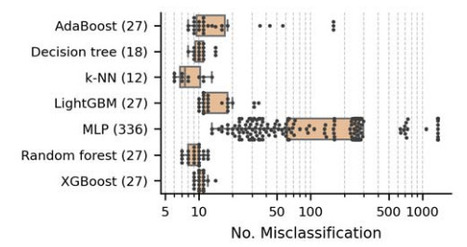
Bioinformatic tools often require the prediction of protein-coding genes to make inferences about prokaryotic genomes. Typically, the genetic code used for translating genes to proteins must be specified by the user based on the taxonomic classification of a genome assembly or, for some widely used tools, established using a heuristic rule based on gene coding densities. Manual specification is at best inconvenient, but more challenging is that many bioinformatic tools are applied before taxonomic classifications have been established making specifying the translation table impractical. Here we provide a computationally efficient tool, gTranslate, that uses an ensemble of five machine learning methods to accurately predict translation tables for prokaryotic genomes. The feature vector used by gTranslate takes advantage of differences in gene coding densities when predicting genes under different translation tables along with features that consider the number and ratio of UGA stop codon reassignments to tryptophan or glycine. We demonstrate that gTranslate correctly predicts the translation table of prokaryotic genomes >99.99% of the time (i.e. <1 error per 10,000 genomes) and outperforms a more computationally expensive prediction method and a coding density heuristic used by popular bioinformatic tools. Using gTranslate, we identify a basal lineage of Ca. Stammera capleta that uses the standard bacterial genetic code instead of the UGA stop codon to tryptophan reassignment common to other members of this species. We also identify the first instances of UGA-to-tryptophan reassignment in the Patescibacteriota making this the first bacterial phylum with members capable of using translation tables 4, 11, and 25.
|
|
Scooped by
mhryu@live.com
May 28, 4:55 PM
|
Detection and analysis of single microorganisms enable ultrasensitive early-disease diagnosis and accurate profiling of microbial phenotypes and genotypes. Droplet microfluidics emerges as a powerful tool to isolate and manipulate single microbes with high precision and throughput. In this review, we discuss the mechanisms and functions of different droplet manipulation modules. We then highlight the applications of droplet microfluidics in ultrasensitive microbe detection using different culture-based and culture-free methods. In addition, we summarize recent advances in droplet-based high-throughput single-microbe screening and analysis. Finally, we present our perspectives on current challenges and future development of droplet-based single-microorganism detection and analysis.
|
|
Scooped by
mhryu@live.com
May 28, 4:33 PM
|
Hydrogel particles are attracting increasing interest as tunable microscale platforms that combine precise architectures with diverse chemical, biological, and physical functionalities. Among fabrication strategies, droplet microfluidics has emerged as a powerful technology for producing monodisperse hydrogel particles with controllable size, composition, and internal structure via precise regulation of microscale fluid dynamics. This review first outlines the fundamental principles of droplet microfluidics, including chip fabrication, channel design, droplet generation dynamics, energy input modes, and fluidic compositions, which collectively underpin reliable particle production. We then highlight compatible hydrogel precursor systems, gelation methods, and functionalization strategies for engineering tailored hydrogel particles. The versatility of such particles is further emphasized, supporting applications in cell culture, 3D bioprinting, drug delivery, and diagnostics. Finally, we provide an outlook on future directions, including system parallelization, process automation, and artificial intelligence integration, anticipated to expand the scalability, functionality, and multidisciplinary impact of droplet-microfluidic hydrogel platforms.
|
|
Scooped by
mhryu@live.com
May 28, 3:58 PM
|
Rhizosphere microbes actively shape plant stress perception and signaling, integrating abiotic and biotic responses and enabling microbiome-assisted resilience, offering a new framework for engineering and breeding stress-adapted crops.
|
|
Scooped by
mhryu@live.com
May 28, 3:51 PM
|
Microalgae, as efficient photosynthetic microorganisms, hold great potential for solar-driven carbon fixation and sustainable biomanufacturing. However, their performance is limited by spectral mismatch, inefficient electron transport, and diffusion-limited CO2 assimilation. Recent developments in microalgae-based semiartificial photosynthetic systems (SAPSs) combine living algal cells with engineered abiotic components to address these challenges without in vitro photosynthesis reconstruction. In SAPSs, microalgae provide carbon fixation, metabolic flexibility, and regulatory adaptability, while functional materials optimize photon utilization, electron transfer, CO2 concentration, and environmental robustness. This review critically examines the biological foundations of microalgae–material integration, strategies for optical enhancement, electron-transfer regulation, CO2 concentration, and stress mitigation. It discusses applications in solar fuel production, biomanufacturing, environmental remediation, and biohybrid microrobots. Despite advancements, key challenges remain, such as energy coupling at bio-abiotic interfaces, lack of standardized performance metrics, long-term stability, and sustainability concerns with nanomaterials. Future SAPS progress will require an integrated approach combining materials science, synthetic biology, and life-cycle assessment (LCA) to scale laboratory efficiencies into environmentally sustainable technologies for carbon-neutral energy conversion and biomanufacturing.
|
|
Scooped by
mhryu@live.com
May 28, 3:25 PM
|
Microbial bioconversions are shaped by environmental perturbations and the adaptation of resident microbiomes. Prokaryotes coexist with bacteriophages, yet their coevolutionary trajectories remain underexplored. Here, we investigate the effects of a cultivation vessel leak on an anaerobic consortium performing carbon dioxide reduction. Using time-series shotgun metagenomic sequencing, we reconstruct microbial and viral genomes to track community shifts. We further apply single-nucleotide variant profiling and CRISPR array analysis to monitor viral microdiversity and host defense mechanisms. After bioaugmentation restores bioconversion efficiency, the consortium undergoes pronounced restructuring, with new dominant taxa emerging from the rare biosphere. We identify patterns consistent with phage predation selectively removing certain species, while others exhibit resilience to infection. This shift aligns with a widespread viral outbreak and a transient increased frequency of single nucleotide variants in bacterial CRISPR–Cas defense genes. Expansion of CRISPR spacers further supports that CRISPR-mediated processes influence microbial resilience. Concurrently, phages infecting resilient hosts exhibited adaptive evolution, marked by high genetic heterogeneity. Selective pressure varies across their genomes, targeting infectivity genes and protospacer-adjacent motifs. These findings highlight a dynamic evolutionary arms race driven by the selection of beneficial genetic variants, providing a mechanistic framework for multi-omics investigations, and informing biotechnological applications, including phage-based microbiome manipulation. In this study, the authors track microbial communities in a perturbed cultivation vessel and show that methanogenic microbes develop resilience through CRISPR-Cas mutations and spacer expansions, driving phages to counter-adapt by altering infectivity genes and protospacer-adjacent motifs, revealing a host-phage arms race.
|
|
Scooped by
mhryu@live.com
May 28, 12:58 AM
|
Covalent ligands represent small molecules including a reactive moiety that forms a covalent bond, enabling the targeting of proteins that are otherwise difficult to modulate. Accurate binding prediction is critical for achieving target specificity and minimizing off-target effects. However, publicly available computational tools remain limited in both accessibility and accuracy. To address this gap, we developed GalaxyCDock, a web server for covalent protein–ligand docking. GalaxyCDock predicts the binding modes of covalent ligands by employing the efficient pose sampling of GalaxyDock2 and a deep learning–based scoring function, GalaxyDock-DL. GalaxyCDock outperformed existing tools (AutoDock4, DOCK6) across standard and newly curated datasets. GalaxyCDock achieved high performance in both re-docking (up to 80%) and cross-docking (up to 61%). Furthermore, GalaxyCDock efficiently serves as a practical alternative to models like AlphaFold3 and Boltz-2 when receptor structure information is available. GalaxyCDock is publicly available at https://galaxy.seoklab.org/cdock.
|
|
Scooped by
mhryu@live.com
May 28, 12:51 AM
|
Ammonia is the second most produced chemical and the cornerstone of global agriculture. Currently, its industrial production depends almost entirely on the Haber-Bosch process, which requires extremely high temperatures and pressures. Around 80% of the ammonia produced is used to make nitrogen-based fertilizers, which are heavily traded across borders, with Russia as the leading producer. Current geopolitical conflicts and trade instabilities are disrupting the global supply chain of fertilizers, potentially posing a serious risk to food security in many countries. Therefore, decentralized and decarbonized ammonia production technologies are required in the near future to combat climate and food security challenges. Microbial electrosynthesis of ammonia (MES) is one such process which uses a bio-electrochemical approach employing nitrogen-fixing bacteria (NFB) with renewable electricity to directly fix atmospheric nitrogen (N₂) to ammonia under ambient conditions. When properly designed and developed, MES may potentially bypass the need for fossil fuel, reduce ATP dependence of NFB and lead to a low-cost green ammonia-generating platform. Research in MES of ammonia is in nascent stages, but it can represent a paradigm shift, enabling local production and reduced carbon footprint. This review provides a comprehensive assessment of the current status of MES for ammonia synthesis from atmospheric nitrogen and discusses the significant challenges it faces. The article covers the key microbial candidates, electrode materials, electron transfer mechanisms, and system configurations that have been reported to date. MES could play a pivotal role in transitioning towards a net-zero emission target and provide a cleaner method of ammonia production.
|