 Your new post is loading...

|
Scooped by
mhryu@live.com
Today, 1:24 AM
|
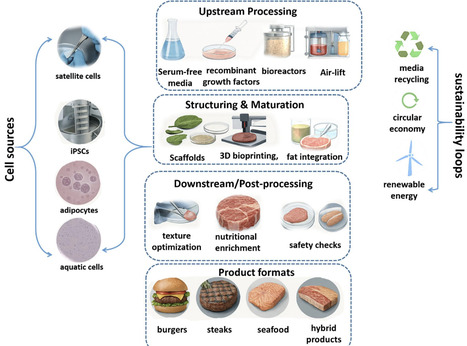
Food security and environmental sustainability have emerged as major global challenges, driving the search for alternative protein production systems that can meet growing demand while reducing the environmental burden of conventional livestock farming. Among emerging alternatives, cultivated meat has gained considerable attention due to its potential to produce animal-derived protein without the need for large-scale animal rearing and slaughter. Although cultivated meat remains absent from most commercial markets owing to technical, economic, and regulatory challenges, significant milestones have been achieved, including regulatory approval in Singapore in 2020, completion of the U.S. Food and Drug Administration pre-market safety consultation in 2022, and authorization for commercial sale by the U.S. Department of Agriculture in 2023. Substantial progress has been made in cell sourcing, cell-line engineering, serum-free culture media development, scaffold fabrication, and bioprocess optimization. However, large-scale production of cultivated meat with desirable texture, flavor, nutritional quality, and economic viability remains challenging. Key bottlenecks include the development of cost-effective animal-component-free media, scalable bioreactor systems, edible scaffold materials, and efficient downstream processing strategies. This review provides an updated assessment of recent advances in cultivated meat technology, encompassing cell-line development, scaffold engineering, bioprocessing, post-processing approaches, sustainability considerations, and regulatory frameworks. Furthermore, current technological limitations, commercialization challenges, and future research priorities are discussed to evaluate the potential role of cultivated meat within sustainable and resilient future food systems.
|
|
Scooped by
mhryu@live.com
Today, 1:14 AM
|
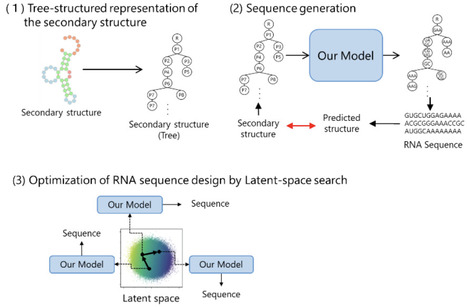
RNA inverse folding designs nucleotide sequences expected to adopt a prescribed secondary structure. Search-based solvers can optimize folding-model objectives effectively, but difficult targets can require extensive sampling, and structural optimization alone does not explicitly preserve the sequence distributions or conserved motifs of natural RNA families. We developed RIFT-VAE, a Transformer-based conditional variational autoencoder that receives a context-free grammar parse-tree representation of a target secondary structure and generates nucleotide labels on the corresponding tree. The framework combines progressively richer grammar rules, self-refinement learning from generated structure-sequence pairs, and cross-entropy-method optimization in the learned latent space. We evaluated RNAfold minimum-free-energy agreement on an RNAcentral-derived test set and the EteRNA100 benchmark, compared the method with four search-based solvers under matched total time budgets, and examined GC-content control and covariance-model family annotation. The complete pipeline achieved RNAfold-Correct/RNAfold-MCC values of 0.833/0.994 on the RNAcentral-derived test set and 0.760/0.977 on EteRNA100. Latent-space optimization accounted for the largest increase in exact structural recovery. Under a 3,600-s total budget on EteRNA100, sequences generated by RIFT-VAE improved the exact-match rate of every tested downstream search method when used as warm starts; the largest change was observed for RNAInverse (Correct, 0.297 to 0.803; MCC, 0.505 to 0.985). The pretrained model also produced sequences with measurable correct-family covariance-model hits and supported explicit GC-content conditioning. RIFT-VAE is best interpreted as a hybrid generative-search framework: pretraining supplies a structure- and family-informed proposal distribution, whereas latent optimization concentrates evaluations in high-scoring regions. The reported structural scores are specific to RNAfold minimum-free-energy validation and do not establish biochemical function. Orthogonal folding predictors, stricter homology-controlled splits, diversity-aware evaluation, architecture-matched dot-bracket ablations, and experimental assays remain priorities for validation.
|
|
Scooped by
mhryu@live.com
Today, 12:54 AM
|
Cross-feeding mutualisms, in which partner species exchange essential metabolites, are ubiquitous in microbial communities. In spatially structured environments, motility can improve access to partner-produced resources but also impose metabolic costs and displace cells from nutrient-rich regions, so its net benefit depends on the spatial dynamics of the interaction. Here, we combine competition experiments in a cross-feeding mutualism between Escherichia coli and Salmonella enterica with a spatially explicit consumer-resource model to determine what drives selection on motility. Spatial structure imposes asymmetric selection between partners i.e. S. enterica benefits from motility regardless of partner motility, whereas selection on E. coli switches from favorable to unfavorable depending on whether its partner can move. Competition in well-mixed culture suggests that this reversal reflects the loss of a spatial benefit rather than an increased cost. Our model attributes the asymmetry to three interacting factors: the ratio of metabolite production to consumption which sets whether the cross-fed resource is scarce or abundant; the number of growth-limiting resources which determines whether an alternative gradient can rescue the benefit of motility; and partner motility and growth rate, which shape where metabolites are produced. When a metabolite is scarce, motile cells gain by dispersing into regions it has reached but not yet been depleted from. When it accumulates, this gradient is eroded, and the motility costs offset any benefit it provides. Selection on motility therefore depends on the metabolic structure of the interaction and the spatial behavior of partners.
|
|
Scooped by
mhryu@live.com
Today, 12:45 AM
|
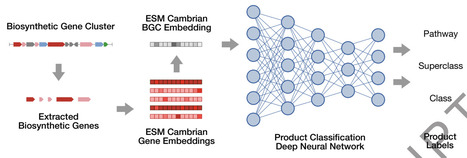
Biosynthetic gene clusters (BGCs) are responsible the biosynthesis of many natural products, including a multitude of effective therapeutics and their precursors. Advances in genomic data collection as well as computational techniques have made it possible to identify BGCs at scale. However, accurately determining the types of BGC-encoded products from genomic content remains elusive. Here, we introduce BGCat (BGC annotation tool), a machine learning method for fine-grained structural classification of BGC-encoded products, leveraging the NPClassifier natural product nomenclature. Our method leverages a pre-trained protein language model for creating meaningful gene representations and a deep neural network for class label prediction. We show the method outperforms state-of-the-art approaches in coarse-grained product classification and is effective for detailed classification. We implement a clustering-based augmentation strategy for BGC-product relationships, addressing a crucial gap in the available datasets. We then introduce the concept of product class profiles (PCPs) of gene cluster families (GCFs), associating each GCF with a probabilisitc distribution of product types and offering a new perspective on GCF functions. Lastly, we use BGCat to provide new product class labels for over 100k BGCs in antiSMASH DB that presently have minimal information about their products.
|
|
Scooped by
mhryu@live.com
Today, 12:14 AM
|
Recent FDA-approved gene-editing therapies illustrate not only the transformative potential of biotechnologies using CRISPR-derived ribonucleoproteins in treating a broad range of diseases but also the spectrum of possible molecular variations CRISPR therapeutics can adopt. These include exagamglogene autotemcel, an ex vivo therapy for hemoglobinopathies using CRISPR nuclease Cas9, and kayjayguran abengcemeran, an in vivo therapy using a protospacer adjacent motif-altered base-editing Cas9 variant for an ultra-rare metabolic disorder. Together, these therapies underscore how far CRISPR has advanced beyond its original use as a tool in biological/biomedical research. In this opinion article, we argue that as CRISPR biotechnologies advance beyond the relative simplicity of in vitro applications, our understanding must also evolve to address the challenges of optimizing ‘on-target’ and ‘off-target’ mutational activities across the diverse contexts in which they occur. clinical
|
|
Scooped by
mhryu@live.com
August 17, 11:36 PM
|
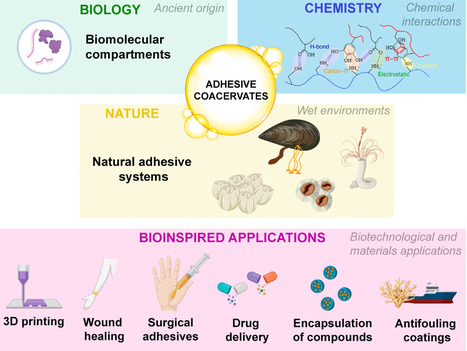
Achieving robust adhesion in wet and biological environments remains a major challenge in biotechnology and medicine. Coacervates are emerging as versatile adhesive platforms that function effectively under hydrated conditions. Their fluid-like nature enables efficient spreading at interfaces, while subsequent mechanical reinforcement stabilizes adhesion without permanent curing. In this review, we present a unifying framework in which adhesion arises from the interplay of interfacial wetting, multivalent interactions, viscoelastic energy dissipation, and kinetic arrest. We discuss how designing phase behavior and arrest dynamics can transform coacervates into functional bioadhesive interfaces for tissue sealing, drug delivery, and biointerface engineering. Finally, we outline challenges in predictive design, spatiotemporal control over arrest, and clinical translation, highlighting adhesive coacervates as multifunctional materials for complex wet environments.
|
|
Scooped by
mhryu@live.com
August 17, 4:56 PM
|
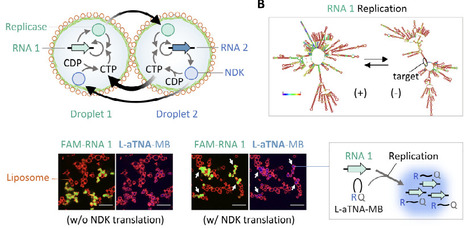
Multicellular organization enables biological functions to be distributed among specialized cells and coordinated through intercellular communication. Integrating this organizational principle with genome replication would link functional division of labor to the propagation of genetic information. Here, we show that genomic RNAs with complementary functions can cooperatively replicate across communicating artificial compartments. We constructed multicell-like colonies from all-aqueous droplets formed by phase separation of two incompatible polymers and stabilized at their interfaces by liposomes and amyloid-like proteins. The droplets assembled spontaneously while remaining permeable to protein-sized macromolecules. Two genomic RNAs encoding a replication enzyme and a metabolic enzyme were distributed in distinct colony-forming droplets and cooperatively replicated through cell-free translation and reciprocal molecular communication. These findings establish that genome replication can be collectively supported by communicating artificial compartments and provide a route toward multicell-like systems that coordinate spatially distributed genetic functions.
|
|
Scooped by
mhryu@live.com
August 17, 4:41 PM
|
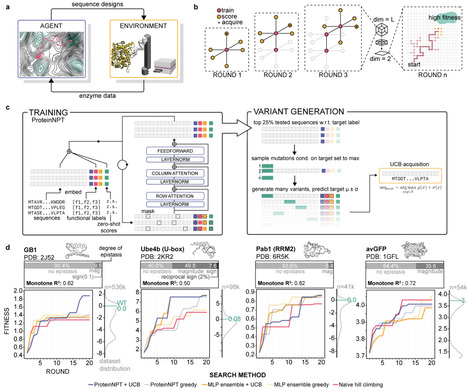
Biological AI learns primarily from existing observations, but many questions cannot be answered from available data alone. Here we show that AI can instead acquire knowledge by acting directly on biological systems and learning from the consequences. We developed a closed-loop framework in which autonomous agents design protein variants, construct and characterize them in a robotic laboratory, learn from the resulting experimental feedback, and decide what experiments to perform next. We then allowed the system to operate continuously and without human intervention for approximately one month, during which multiple agents independently explored protein sequence space while learning from shared experimental experience. Applied to glycoside hydrolases, the agents discovered enzymes with substantially altered substrate specificity toward non-native sugars and progressively learned the structure of the underlying sequence-function landscape. The resulting experimental experience also revealed determinants of substrate specificity and protein expression that were not specified as learning objectives. These results demonstrate that AI can autonomously interact with biology over extended periods to acquire knowledge through experience, establishing a framework for biological discovery driven by continuous experimental interaction.
|
|
Scooped by
mhryu@live.com
August 17, 3:50 PM
|
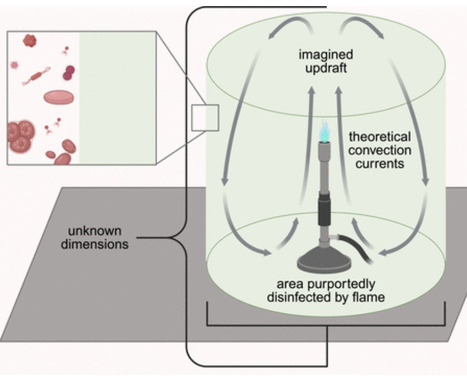
Microbiologists often use Bunsen burners to reduce airborne microbial contamination in their workspace. In theory, the burner’s flame pushes air—and the microbe-containing particles therein—up and away from research materials. This is purported to create a disinfected zone that improves asepsis. While such use of a Bunsen burner is promoted in numerous textbooks, peer-reviewed publications, and university-affiliated websites, our search for data on Bunsen burner efficacy revealed a dearth of experimental evidence in scientific literature. Therefore, we designed and conducted a series of laboratory experiments to test the utility of this method, hypothesizing that the flame would reduce airborne contamination. We intentionally inoculated the air in a laboratory space with bacteria, then collected data on the deposition of airborne contaminants using a paired settle plate method. On average, plates adjacent to an active Bunsen burner do not experience a reduction in colony-forming units (CFU) settling. Linear regression indicates that results are environmentally context dependent: plates adjacent to Bunsen burners with 18 mm flame diameter exhibit mildly decreased deposition of dry particles when control contamination rates exceed 83 CFU/min, but increased dry particle deposition at contamination rates below that cutoff. Duration of flame activity is not associated with improved aseptic outcomes, regardless of flame size or particle moisture. Taken together, these data suggest that 18 mm Bunsen burners should be selectively implemented only in situations of “high and dry” airborne contamination. Outside this specific context, their activity is either neutral or detrimental to laboratory asepsis.
|
|
Scooped by
mhryu@live.com
August 17, 3:30 PM
|
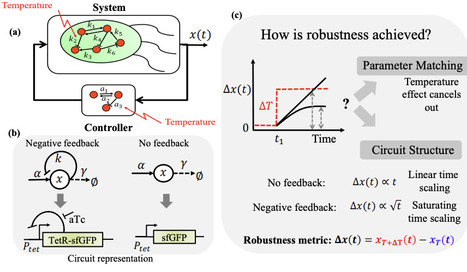
The dominant paradigm for temperature robustness in biomolecular circuits is for the parameters to be tuned to have matching temperature dependencies so that their overall effect cancels out. This contrasts with the robustness due to circuit structure, typically operative in circuits where robustness to a single input parameter is desired. The importance of the circuit structure in temperature robustness is generally unclear. We addressed this issue in a benchmark negative feedback circuit using a combination of theoretical modelling and experimental measurements. We found that the response to a temperature perturbation in a model of negative feedback was qualitatively different from the response in a model without feedback. We experimentally measured the response of the negative feedback circuit to a temperature perturbation and found that it was smaller than that of the circuit without feedback, in line with the theoretical finding. We confirmed this theoretical prediction experimentally. The initial response of the negative feedback circuit, paradoxically, was larger than the circuit without feedback. The resolution of this paradox was in accounting for the faster dynamics in the negative feedback circuit. These results show a simple design principle of temperature robustness that can operate in a widespread circuit motif and may also apply to other perturbations which, like temperature, affect multiple parameters simultaneously.
|
|
Scooped by
mhryu@live.com
August 17, 2:43 PM
|
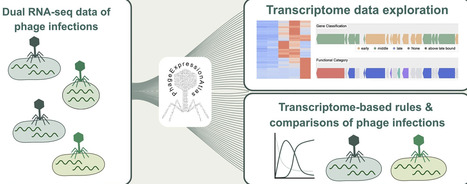
Time-resolved transcriptomic profiling has been used to study phage–host interactions for more than a decade. However, the resulting datasets are not readily accessible for custom re-analysis, and resources are lacking that provide standardized processing, storage, and analysis of transcriptomes from phage infections. Here, we present the PhageExpressionAtlas, the first bioinformatics resource for storing time-resolved dual RNA-sequencing data from phage infections. This data was processed uniformly using a custom analysis pipeline and is presented for interactive exploration through visualization. The PhageExpressionAtlas currently hosts 42 datasets from 23 studies. Using the PhageExpressionAtlas, we replicate key findings from original publications and extend hypothesis testing across multiple phage–host systems. By systematically querying and analyzing the underlying database, we evaluate approaches to phage gene classification and find that uncharacterized phage genes dominate all infection phases, with their distribution depending strongly on the classification strategy. Moreover, we provide a comprehensive view of the expression dynamics of anti-phage defenses as well as host- and phage-encoded anti-defense systems in the infection context, indicating unique and conserved patterns of transcriptional regulation underlying bacterial anti-phage immunity and phage counter-strategies. Together, the PhageExpressionAtlas is a unifying resource that democratizes transcriptomics-driven analyses of phage–host interactions and supports integrative cross-study assessment.
|
|
Scooped by
mhryu@live.com
August 17, 2:10 PM
|
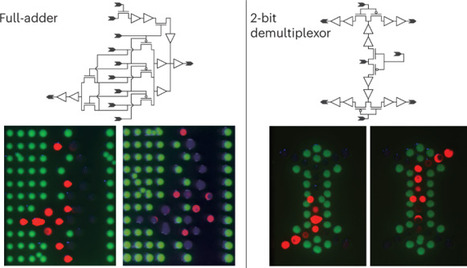
The multicellular forms and functions seen in biology are controlled by cellular communication and collective computation. Reprogramming natural systems is difficult because they comprise many signaling molecules connecting a web of regulatory networks within cells. Here we apply principles from pass transistor logic (PTL) to design bacteria that can be easily reconfigured to perform computations on a solid surface. Strains of Pantoea agglomerans were built to encode two transistors (N-type and P-type) whose inputs and outputs are small molecules. They are connected by three relay strains that convert molecular diffusion to unidirectional flow. To build circuits, an acoustic liquid handler prints patterns of these five strains on a surface. By changing the pattern, not requiring any genetic changes, different operations are implemented, including multi-input multioutput logic, demultiplexor, half-adder and full-adder. This work demonstrates that only five cell types, each encoding a simple operation, can be scaled to create complex computational operations. Electronic circuit boards carry out different operations on the basis of the configuration of their components. Now, equivalent biological circuits are engineered that compute functions on the basis of the spatial arrangement of different bacterial strains printed on a surface.
|
|
Scooped by
mhryu@live.com
August 16, 1:37 PM
|
Polystyrene (PS), a petroleum-based synthetic polymer which is extensively used in packaging, insulation, and consumer goods, has emerged as a major environmental pollutant. This report provides a comprehensive overview of recent advances in biological and synthetic biology strategies for novel PS-degrading microorganisms, including bacteria and fungi isolated from unique ecosystems such as insect gut microbiomes and extreme environments. Insects like mealworms and superworms have demonstrated the ability to ingest and degrade PS through symbiotic microbial activity, while fungi such as Aspergillus tubingensis and marine-derived fungi contribute enzymatically to polymer breakdown. Advances in enzymology involving oxidative enzymes like laccases and peroxidases have improved our understanding of PS degradation at the molecular level, supported by innovations in enzyme engineering and immobilization. The paper also examines the biodegradation abilities of bacteria, fungi, and microbes associated with insects and critically analyzes the methods used for degradation assessments, differentiating between genuine biodegradation and mineralization versus surface oxidation, fragmentation, and reduction in polymer weight. Moreover, the advancements in synthetic biology, which include metabolic engineering and engineered microbial consortia, and the biological upcycling of PS intermediates to valuable products, are also covered in light of the circular economy approach.
|
|
|
Scooped by
mhryu@live.com
Today, 1:21 AM
|
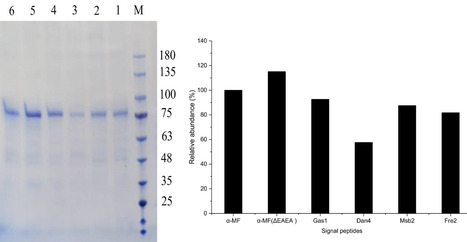
Recombinant humanized type III collagen has attracted increasing interest for biomedical and tissue engineering applications due to its roles in extracellular matrix remodeling and tissue repair. However, the production of long-continuous, structurally stable type III collagen fragment in Pichia pastoris is limited by host-derived proteolysis of the recombinant α1 chain, resulting in fragmentation and loss of structural integrity. In this study, a long-continuous type III collagen fragment was produced in P. pastoris by proteolytic selection and identified as a continuous 585-amino acid sequence (N611–P1195) by LC–MS/MS. Secretion efficiency was improved by signal peptide optimization, enabling the development of high-producing strains (6.22 g/L). rColIII was purified to > 90% purity with low endotoxin levels (< 10 EU/mg) using multimodal chromatography and exhibited enhanced thermal stability. Although CD analysis indicated the absence of a canonical triple-helix conformation, FITR spectroscopy confirmed preservation of key peptide backbone structures. Biological assays demonstrated favorable cytocompatibility, with rColIII promoting HSF cell viability, adhesion, and migration. This study provides a scalable strategy for producing long, continuous type III collagen fragment with improved stability in P. pastoris, and supports their potential applications in cosmetic, tissue engineering, regenerative medicine, and other biomedical fields.
|
|
Scooped by
mhryu@live.com
Today, 1:11 AM
|
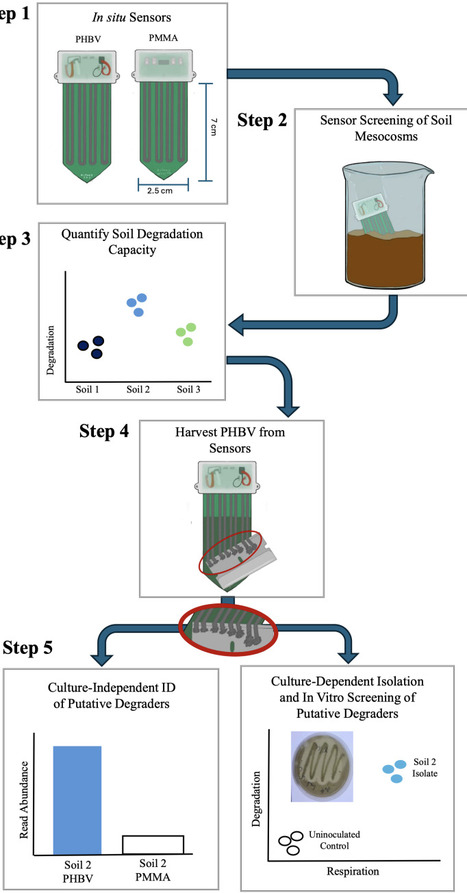
Microbial-mediated plastic degradation has the potential to address the persistent global problems of plastic waste and pollution. Previous work has shown that soils can harbor microbes capable of plastic degradation, but we expect there is a broader diversity of soil microbes capable of metabolizing plastics than identified to date using more traditional cultivation-based screening methods. Here we demonstrate a novel approach to identify putative plastic degrading microbes in soil. We paired in situ, real-time measurements of microbial plastic degradation on conductive sensors with subsequent microbial community profiling of the sensor-associated biofilms exhibiting appreciable degradation. To illustrate the utility of our approach, we focus on microbial degradation of the bioplastic polymer PHBV, poly(3-hydroxybutuyrate-co-3-hydroxyvalerate). We screened a range of soils with the in situ sensors to identify a subset of five soils with high PHBV degradation rates, and confirmed that PHBV degradation was due to microbial activity. We then extracted DNA directly from sensors placed in soils with high measured rates of PHBV degradation and used marker gene sequencing to identify the bacterial and fungal taxa associated with the observed PHBV degradation. We confirmed via in vitro culturing that microbes isolated from the sensors have a demonstrated capacity for PHBV metabolism. Together, these results highlight the benefit and feasibility of using low-cost, in-soil sensors to simultaneously collect real-time data on plastic degradation rates in soil and identify previously unrecognized microbial taxa capable of degrading and metabolizing plastic polymers in situ.
|
|
Scooped by
mhryu@live.com
Today, 12:51 AM
|
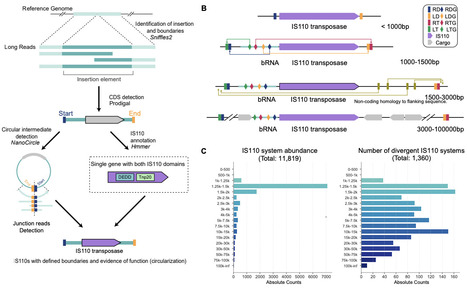
IS110 has emerged as a powerful genome-editing tool because it is the smallest RNA-guided system capable of diverse programmable insertions. Naturally existing elements are conventionally modeled as compact ~1.5-kb systems comprising a single transposase and a bridge RNA (bRNA). Using high-throughput junction mapping together with large-scale comparative genomics, we redefined the in vivo structural boundaries, growth, and mobilization of IS110 elements. We uncovered a previously unrecognized size continuum extending to ~100 kb, driven by progressive local expansion, with expanded loci being widespread across bacterial genomes. Experiments confirmed activity of natural IS110s both well below and above the size range of previously characterized elements. The large systems preferentially accumulated adaptive cargo, including antimicrobial resistance determinants and heavy-metal detoxification systems, and were strongly enriched for plasmid-derived DNA. Boundary configurations at expanded loci and the range of partial excision intermediates they produce both indicate flexible sequence recognition by IS110, most commonly through half-matches between the bRNA and complementary DNA sequence. This sequence tolerance allows loci to expand with diverse cargo. Together, these findings redefine IS110 from a compact insertion sequence into a dynamic platform that disseminates adaptive cargos.
|
|
Scooped by
mhryu@live.com
Today, 12:43 AM
|
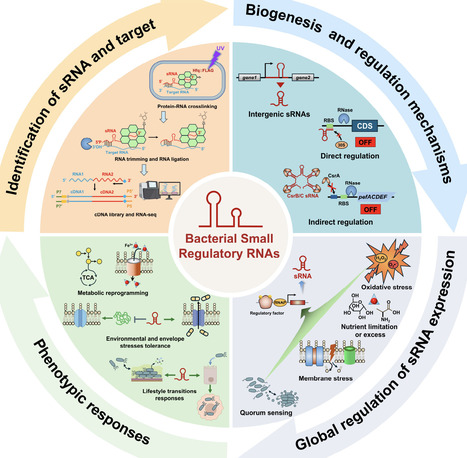
Bacterial regulatory small RNAs (sRNAs) are integral components of post-transcriptional control, shaping environmental adaptation, metabolic homeostasis, and virulence. Advances in transcriptomics and RNA technologies have greatly expanded the repertoire of bacterial sRNAs and revealed their extensive roles in post-transcriptional regulatory networks. This review provides an updated framework for the biogenesis of bacterial sRNAs and their regulatory roles within post-transcriptional networks. Crucially, we describe the regulatory pathways controlling sRNA expression, including environmental signal sensing and regulation mediated by σ factors and transcription factors, to illustrate how sRNAs respond dynamically to changing conditions. Expanding beyond expression control, we further discuss the diverse roles of sRNA-mediated regulation in metabolic adaptation, stress responses, and bacterial virulence, emphasizing their importance in linking environmental changes to cellular phenotypes. Concurrently, we review current experimental and computational methods used for sRNA discovery and target identification. Overall, this review provides an integrated perspective on how bacterial sRNAs connect environmental sensing with adaptive cellular responses and highlights the broader significance of RNA-mediated regulation in bacterial physiology.
|
|
Scooped by
mhryu@live.com
Today, 12:06 AM
|
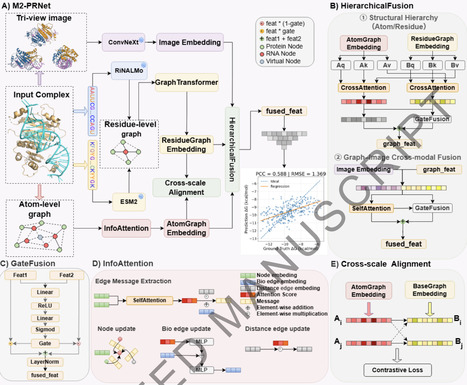
Predicting protein–RNA binding affinity is crucial for understanding cellular regulation and advancing RNA-targeted drug discovery. However, this task remains challenging due to structural complexity, limited labeled data, and insufficient modeling of fine-grained interactions. We propose M2-PRNet, a multi-scale and multi-modal framework that integrates atom-level graphs, residue-level graphs, and tri-view molecular representations to capture complementary structural information. A cross-scale contrastive learning objective is introduced to align representations across different structural resolutions of the same complex. Under a clustering-based five-fold cross-validation setting on benchmark datasets, M2-PRNet achieves state-of-the-art performance. To further assess generalization under reduced sequence homology, we construct homology-aware RNA-cold, protein-cold, and dual-cold evaluations under a stricter 40% sequence identity threshold, where M2-PRNet maintains competitive performance. To account for conformational flexibility, we evaluate the model on MD150-1ns and an extended MD75-10ns subset, demonstrating stable performance under MD-derived structural perturbations. In addition, representative case studies suggest that M2-PRNet can highlight relevant RNA-binding regions and support preliminary discrimination between strong and weak binders when plausible complex structures are available. These results demonstrate the effectiveness of integrating multi-scale and multi-modal representations with cross-scale alignment for protein–RNA affinity prediction.
|
|
Scooped by
mhryu@live.com
August 17, 11:24 PM
|
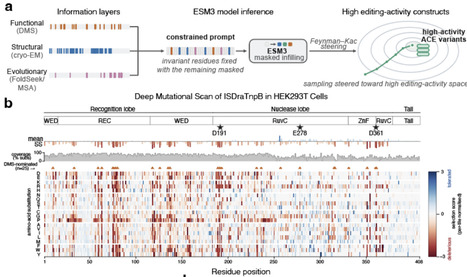
The problem of how protein sequences translate into defined functions remains largely unsolved despite decades of progress. New methods to efficiently explore protein sequence space will help to shed light on these sequence-function relationships, particularly for complex protein function. Here, we describe an approach to create novel, functional proteins through the integration of deep mutational scanning, structural analysis, and evolutionary mining within prompts for a generative protein language model (PLM). We demonstrate the utility of this approach with the generation of novel compact RNA-guided nucleases. This approach is highly efficient, resulting in active nucleases with ~40% sequence divergence relative to natural proteins and activity equivalent to or exceeding by up to ~3X that of other compact nucleases at multiple endogenous loci in human cells. The approach described here is rapidly deployable and produces new sequences that will serve as scaffolds for further exploration of complex protein functionality, as well as substrates for novel genome engineering applications.
|
|
Scooped by
mhryu@live.com
August 17, 4:54 PM
|
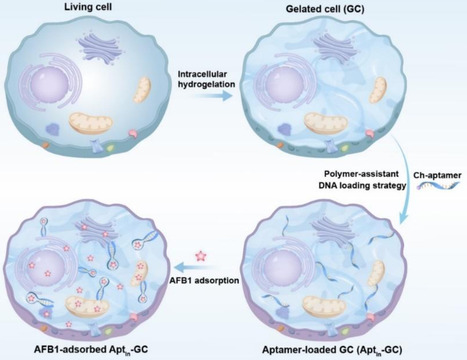
Aflatoxin B1 (AFB1) is one of the most common mycotoxins, which causes severe hepatic damage and even liver cancer. However, the development of specific tools for AFB1 diagnosis and detoxification remains elusive. Herein, we develop a DNA receptor-loaded gelated cell (DR-GC)-based adsorbent for specifically capturing and detecting AFB1, both in vitro and in vivo. In this system, fragile living cells are transformed into robust GCs using an intracellular hydrogel technique, and then loaded with aptamer-based artificial DNA receptors inside cells via a polymer-assisted strategy. These intracellular DNA receptors are excluded from a hostile environment, which exhibits high stability and retains their functionality even in complex biological media. Consequently, DR-GCs can be used to sensitively detect AFB1 and efficiently eliminate AFB1, both in vitro and in vivo. We also demonstrate the excellent therapeutic efficacy of DR-GCs using AFB1-treated male mouse models. Overall, this study is anticipated to offer useful solutions to the development of safe and effective tools for the diagnosis, elimination and treatment of mycotoxins. The mycotoxin Aflatoxin B1 is highly toxic to human beings. Here, Li and co-workers report that engineered cell particles carrying aflatoxin aptamers can be used to both detect and eliminate Aflatoxin B1, in vitro and in vivo.
|
|
Scooped by
mhryu@live.com
August 17, 4:39 PM
|
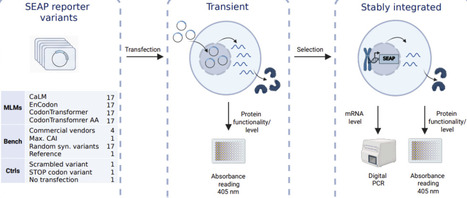
Codon optimization uses synonymous sequence changes to improve the expression and therapeutic performance of nucleic acid-based medicines. Masked language models (MLMs) have recently been proposed as alternatives to traditional, frequency-based codon optimization approaches, yet whether they offer a meaningful advantage over such simpler methods remains unclear. Here we benchmark three prominent MLMs --- CaLM, EnCodon and CodonTransformer --- across backtranslation fidelity, sequence generation and nine molecular phenotype prediction tasks, and experimentally evaluate model-designed sequences using a secreted embryonic alkaline phosphatase (SEAP) reporter. The models differed markedly in amino-acid fidelity and generated distinct synonymous sequence variants. However, no single model performed best across all benchmark tasks and simple sequence features remained competitive in several settings. Our interpretability analysis revealed that the models integrate a large window of codon context for making predictions, as opposed to frequency-based approaches. Our in vitro data showed that MLM-designed variants outperformed conventional and commercial vendor-derived sequences in both transient and stably integrated expression, supporting the models' ability to capture translational context beyond codon frequency. Together, our results establish MLMs as effective and complementary tools for codon optimization and suggest that sampling across multiple models may improve the likelihood of identifying high-performing therapeutic sequences.
|
|
Scooped by
mhryu@live.com
August 17, 3:38 PM
|
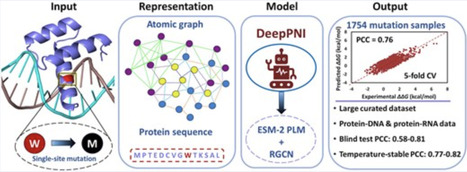
Protein–nucleic acid interactions (PNIs) are central to fundamental biological processes, and mutations can disrupt these interactions by altering local structural features and binding free energy. Here, we present DeepPNI, a deep learning regression model that integrates sequence- and structure-based features to estimate mutation-induced changes in binding free energy in protein–nucleic acid complexes. The model was developed using a comprehensive dataset of 1754 mutations spanning protein–DNA and protein–RNA complexes, representing one of the largest curated datasets for PNI binding free energy prediction. Structural features were encoded using an edge-aware relational graph convolutional network, while sequence features were represented using the Evolutionary Scale Modeling 2 protein language model. Despite the increased dataset size and heterogeneity, DeepPNI achieved an overall Pearson correlation coefficient of 0.76 in five-fold cross-validation. Consistent performance was observed across protein–DNA and protein–RNA subsets, datasets grouped by experimental temperature, and external blind test datasets, suggesting robustness against dataset heterogeneity. DeepPNI is freely available as a web server at https://research.iitbhilai.ac.in/molinfo/deeppni.
|
|
Scooped by
mhryu@live.com
August 17, 3:19 PM
|
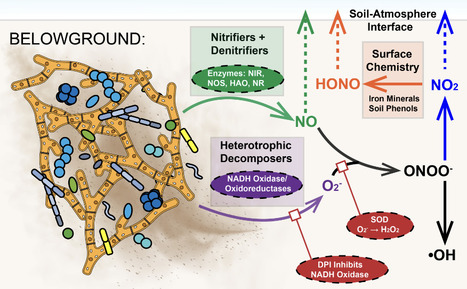
Nitrogen dioxide (NO2) is a critical atmospheric pollutant and ozone precursor, yet biogenic soil sources remain poorly constrained. Current models assume soil NO2 flux is exclusively depositional. Here we demonstrate that soils can produce NO2 through microbial superoxide (O2ˉ) production. Using controlled factorial slurry experiments, native microbial communities produced approximately 10 times more NO2 than sterile controls following nitric oxide (NO) exposure. Stimulating superoxide production with NADH increased NO2 formation 15- to 26-fold, while inhibiting NADH oxidase reduced production toward baseline levels. Superoxide dismutase decreased NO2 production by 46-71%, and O2ˉ concentration explained 60% of variation in NO2 production rates. Addition of peroxynitrite to soil increased headspace NO2, confirming this intermediate as the mechanistic link. These findings reveal a pathway linking carbon and nitrogen cycling where heterotrophic decomposers facilitate biogenic NO-to-NO2 conversion via superoxide chemistry, potentially explaining discrepancies between satellite observations and modelled soil NOx emissions. Soil microbes produce superoxide, which reacts with nitric oxide to form nitrogen dioxide directly in soil. This overlooked pathway means soils can emit NO₂ as well as NO, with implications for how nitrogen emissions are modelled.
|
|
Scooped by
mhryu@live.com
August 17, 2:34 PM
|
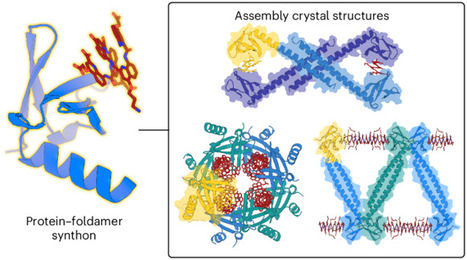
Constructing artificial assemblies that combine proteins and synthetic ligands has been hampered by the lack of protein–ligand interfaces that are sufficiently large and organized to enable precise structural control. Here ribosome display selection is used to identify a protein that binds a helical aromatic foldamer both tightly and selectively through a sizeable surface area. We used this complex as a supramolecular synthon to create well-defined hybrid foldamer–protein architectures. Examples include foldamers that bind two proteins and hold them at a precise distance, proteins that bind two foldamers and crystals in which proteins and foldamers are connected in cyclic or infinite arrays. The modularity of aromatic foldamers brings a further dimension to protein-based assemblies. A stable and modular artificial protein–foldamer helical supramolecular synthon enables the assembly of ordered architectures, in which the foldamer dictates protein orientation and spacing on the nanoscale.
|
|
Scooped by
mhryu@live.com
August 16, 1:47 PM
|
Microbial bio-surfactants are emerging as sustainable alternatives to synthetic surfactants due to their biodegradability, low toxicity, and multifunctional biological activities. Their potential in biomedical and pharmaceutical applications is increasingly recognized, yet integrated evaluations that link production strategies to translational outcomes remain limited. This review critically examines recent advances in biosurfactant production, optimization, and purification, as well as their applications in drug delivery, nanomedicine, antimicrobial therapy, vaccine formulation, wound healing, and immunomodulation. Major classes, including glycolipids, lipopeptides, phospholipids, and polymeric biosurfactants, are compared in terms of physicochemical properties and therapeutic potential. Evidence shows biosurfactants can reduce bacterial adhesion by up to 90%, inhibit biofilm formation by over 80%, and enhance antibiotic efficacy against multidrug-resistant pathogens. Biosurfactant-based carriers such as liposomes, micelles, nanoemulsions, and nanoparticles improve drug solubility, stability, bioavailability, and targeted release. Advances in engineered microbial platforms, low-cost substrates, and process optimization have enhanced production feasibility, though clinical translation remains constrained by cost, downstream processing, formulation stability, safety, and regulatory hurdles. Emerging approaches, including AI-assisted optimization and multiomics-guided discovery, promise next-generation biosurfactants with superior therapeutic performance.
|


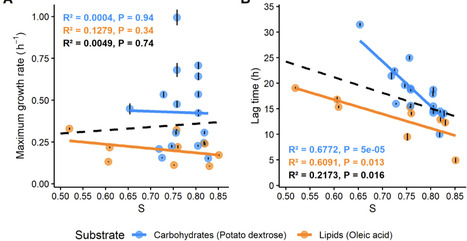











To infer the translational adaptation for these two lifestyles, we predicted the codon optimization index (S) for lipid and carbohydrate transport and metabolism pathways. The parameter S and respective statistical significance were estimated based on the tRNA gene pool, codon usage bias, and effective number of coding codons among all genes in the respective metabolic pathway. Therefore, S was used as a proxy for the measure of selection on the overall translational efficiency within these pathways. To account for interspecific variation in codon usage bias, S values were normalized by comparing the mean S values across genes associated with lipid and carbohydrate metabolic pathways (S ratio) or by normalizing pathway-specific S values to the genome-wide mean S (S normalized)