 Your new post is loading...

|
Scooped by
mhryu@live.com
Today, 3:34 PM
|
Amyloid transthyretin (ATTR) amyloidosis is a fatal disease caused by the accumulation of misfolded transthyretin proteins. Although knocking down the TTR gene by CRISPR-Cas9 represents a promising strategy for treating ATTR amyloidosis, its efficiency and safety remain to be further investigated. Here, we report a systematic investigation of SpCas9-based TTR editing. Besides the target site, wild-type SpCas9 and the reported variants induced extensive off-target edits. To improve the fidelity, we performed structural analysis and designed a series of SpCas9 variants. Studies demonstrated that SpCas9-Mut5 is an ultrahigh-fidelity variant, which induces extremely low levels of off-target edits and translocations without substantial impairment of on-target editing activity. SpCas9-Mut5 is compatible with the adenine base editor (ABE) system, markedly reducing off-target edits and narrowing the editing window. In conclusion, our study suggests that SpCas9-Mut5 is an excellent candidate for TTR gene editing. Besides ATTR amyloidosis, SpCas9-Mut5 and its derivative ABE could be widely used in the treatment of other diseases.
|
|
Scooped by
mhryu@live.com
Today, 3:21 PM
|
Automation in the life sciences remains dominated by expensive, centralized robotic systems, leaving most laboratories unable to access precision robotic liquid handling. Here we present the Lab-on-a-3D-Printer (Lo3DP), a reconfigurable robotic microfluidic platform that repurposes the motion control, thermal regulation, and open-source programmability of consumer 3D printers to deliver laboratory-grade automation at a hardware cost below $500. By replacing the extruder with a multifunctional magnetic toolhead, Lo3DP actuates ferrofluid droplets with sub-100 micrometer positioning accuracy and programmable volume control spanning 0.5-25 microliter, enabling the full repertoire of digital microfluidic operations within inexpensive laser-cut chips (<$3). We quantitatively validate system performance through long-term droplet transport exceeding 40,000 s without degradation, automated serial dilutions with high linearity (R-squared > 0.99), and fully automated colorimetric nucleic acid amplification assays whose results match conventional benchtop workflows under tightly regulated isothermal conditions (CV of 0.3%). By harnessing the global economies of scale of consumer 3D printers, Lo3DP provides accurate, reproducible, and programmable assay automation at a fraction of the cost and footprint of conventional systems, establishing a practical path toward desktop-scale, democratized laboratory robotics.
|
|
Scooped by
mhryu@live.com
Today, 3:08 PM
|
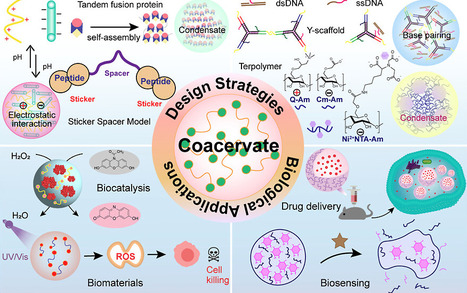
Liquid–liquid phase separation (LLPS) is a fundamental biophysical process driving the formation of dynamic biomolecular condensates, which spatially organize cellular biochemistry without membrane delimitation. These condensates arise from multivalent, weak interactions among intrinsically disordered proteins, modular interaction motifs, and RNA scaffolds, enabling highly tunable and reversible compartmentalization of biomolecules. This phase behavior regulates critical cellular functions such as gene expression, signal transduction, and stress response, while its dysregulation contributes to pathological aggregation and disease. Recent advances leverage LLPS principles to design synthetic condensates with controllable composition, properties, and activities. Combining structural insights, quantitative phase behavior, and synthetic biology tools, engineered condensates have been developed for enhanced catalysis, metabolic control, targeted drug delivery, and biosensing. This review summarizes the molecular mechanisms, design strategies, and translational prospects of LLPS-mediated condensates, thereby paving the way for future exploration at the interface of cellular biophysics and bioengineering.
|
|
Scooped by
mhryu@live.com
Today, 2:54 PM
|
The evolutionary competition within phage–host systems led to the emergence of CRISPR–Cas defence mechanisms in bacteria and anti-CRISPR elements in bacteriophages. Although anti-CRISPR elements are well characterized, the role of bacterial factors that influence CRISPR–Cas efficacy has been comparatively overlooked. Type V CRISPR–Cas12 systems display striking functional and mechanistic diversity for nucleic acid targeting. Here we use a bioinformatic approach to identify Cas12p, a phage-associated nuclease that forms complexes with the bacterial thioredoxin protein TrxA to enable target DNA degradation. This represents an unexpected phage–bacteria interaction, in which the bacteriophage co-opts a bacterial factor to augment its own genome degradation machinery, potentially against competing phages. Biochemical characterization, cryo-EM-based structural analysis of the Cas12p–TrxA–sgRNA–dsDNA complex at 2.67 Å and bacterial defence assays reveal that TrxA directly binds and activates Cas12p, enabling its nuclease activity and subsequent CRISPR immunity. These findings expand our understanding of the multilayered intricacies of phage–bacteria molecular interactions. In an unexpected interaction, infecting phages co-opt a bacterial protein to potentially facilitate genome degradation of competing phages.
|
|
Scooped by
mhryu@live.com
Today, 2:17 PM
|
Small molecules can bind RNAs to regulate their fate and functions, providing promising opportunities for treating human diseases. However, current tools for predicting small molecule–RNA interactions (SRIs) require prior knowledge of RNA tertiary structures. Here we present SMRTnet, a deep learning method that uses multimodal data fusion to integrate two large language models with convolutional and graph attention networks to predict SRIs on the basis of RNA secondary structure. SMRTnet achieves high performance across multiple experimental benchmarks, substantially outperforming existing tools. SMRTnet predictions for ten disease-associated RNA targets identified 40 hits of RNA-targeting small molecules with nanomolar-to-micromolar dissociation constants. Focusing on the MYC internal ribosome entry site, SMRTnet-predicted small molecules showed binding scores correlated closely with observed validation rates. One predicted small molecule downregulated MYC expression, inhibited proliferation and promoted apoptosis in three cancer cell lines. Thus, by eliminating the need for RNA tertiary structures, SMRTnet expands the scope of feasible RNA targets and accelerates the discovery of RNA-targeting therapeutics. SMRTnet predicts compounds that bind to disease-associated RNA targets.
|
|
Scooped by
mhryu@live.com
Today, 10:39 AM
|
Detection of the off-target effects of base editors is important for identifying their safety risks but current methods for understanding their global activities have limitations in terms of sensitivity or bias by computationally selecting a subset of sites for experimental analysis. We present CHANGE-seq-BE, a method to assess the guide RNA-dependent off-target profile of both adenine and cytosine base editors that is simultaneously sensitive and unbiased. CHANGE-seq-BE relies on selective sequencing of base-editor-modified genomic DNA in vitro and provides comprehensive identification of genome-wide off-target mutations. We found that 98.8% of validated off-target sites were unique to ABE8e adenine base editors compared to Cas9 nuclease, suggesting substantially higher off-target activity of the former. We further applied CHANGE-seq-BE to support genotoxicity studies in an emergency investigational new drug application for customized adenine base editor treatment for a person with CD40L-deficient X-linked hyper IgM syndrome. Our results emphasize the importance of using a base-editor-specific method for identifying off-target activity. Base editor off-target effects are profiled with high precision in a tailored approach.
|
|
Scooped by
mhryu@live.com
Today, 1:27 AM
|
Modern agriculture faces an urgent need to improve nutrient use efficiency while reducing environmental impacts. Here, we show that ancestral traits controlling rhizosphere microbiome functions can be reintroduced into elite maize through targeted teosinte introgressions. Using near-isogenic lines, we mapped microbiome-associated phenotypes (MAPs) derived from teosinte that suppress nitrification and denitrification—key microbial processes contributing to nitrogen loss. These introgressions altered root exudate chemistry, resulting in distinct microbial assemblies and enhanced nitrogen retention. We identified candidate loci and exudate metabolites responsible for suppressive activity and demonstrated their functional effects in vitro. These findings reveal a genetic and biochemical basis for rewilding microbiome-mediated ecosystem services in crops, offering a scalable path toward sustainable nutrient management in global agriculture.
|
|
Scooped by
mhryu@live.com
Today, 1:10 AM
|
Proper nucleocytoplasmic distribution of transcription factors (TFs) is crucial for cellular homeostasis. Mislocalization of TFs contributes to cancers, making TF relocalization a promising anticancer therapeutic strategy. We engineered anchoring aptamers as a platform for relocalizing TFs. Anchoring aptamers are heterobifunctional nucleic acids consisting of two ligands joined by a linker: one targeting the plasma membrane–anchored protein and the other recruiting the TF. As a proof of concept, we used the Ra1 aptamer targeting Ras and the DNA ligand specific for p65 or E2F1 to construct anchoring aptamers. Simultaneous binding of the anchoring aptamers to Ras and either p65 or E2F1 effectively induces cytoplasmic relocalization and functional inactivation of p65 or E2F1. Using a lentiviral expression system of anchoring aptamers, we achieved sustained cytoplasmic retention of p65 and marked inhibition of tumor growth. This work establishes a universal platform for TF relocalization, offering promising opportunities for innovative anticancer therapeutic strategies.
|
|
Scooped by
mhryu@live.com
Today, 12:49 AM
|
Aptamers are short single-stranded nucleic acids that bind protein targets with high specificity and are increasingly used in diagnostics and therapeutics, yet experimental discovery remains slow and variable in success. This creates a demand for computational systems that not only score candidate binders but also generate experimentally usable libraries under biologically meaningful constraints. Here, we present APIPred Web 1.0, a unified web platform that integrates constraint-aware aptamer library generation, machine learning- based aptamer- protein interaction prediction, and DNA secondary-structure analysis within a user-facing workflow. Users submit a target protein sequence and define an aptamer template in a PREFIX - [VARIABLE] -SUFFIX format with real-time validation of key biological constraints (GC content and homopolymer limits). On the backend, sequences are converted into model- compatible features via optimized k-mer encodings (aptamer) and pseudo amino acid composition (PAAC) descriptors (protein), followed by inference with a trained XGBoost predictor. APIPred Web 1.0 improves the computational efficiency by applying precomputed protein features, vectorized batch processing (hundreds of sequences per batch), optimized XGBoost DMatrix inference, and a bounded heap that retains only the top 25 candidates during generation. The platform then computes minimum free energy (MFE) structures using ViennaRNA with parallel folding and returns ranked list of the top candidates with log-transformed interaction scores, complete sequences (variable region highlighted), dot-bracket structures, MFE values, and interactive 2D visualizations via persistent result links. In a demonstration study targeting CD64 protein, the platform produced 25 putative binders from a custom 40- nucleotide library and enabled selection of structurally diverse candidates for experimental testing. Flow cytometry showed specific binding to CD64-expressing THP-1 cells with minimal signal in Ramos control cells. Collectively, APIPred Web 1.0 offers a reproducible, structure-informed, and computationally efficient pipeline for rapid generation of aptamer candidates against target proteins for downstream experimental validation.
|
|
Scooped by
mhryu@live.com
Today, 12:32 AM
|
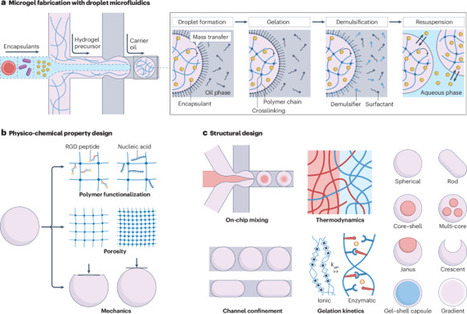
Generating biomaterials with controlled structure, morphology and physicochemical properties is a key enabler of modern bioengineering, with applications in areas ranging from tissue engineering to drug delivery. In this context, microgels — hydrogel particles with characteristic dimensions in the micrometre range — have become a foundational, modular and versatile platform for building biomaterials. Their design can be tailored across multiple length scales, integrating a range of scientific and engineering principles. In this Review, we focus on the power of droplet microfluidics to make materials drop by drop, and how this allows us to control and tailor the properties of microgels. We outline the basic principles of droplet microfluidics-enabled microgel fabrication and explore microfluidic strategies for the production of microgels and modulation of their physicochemical properties, extending beyond simple isotropic designs. We then review their applications, distinguishing between single microgels and their assemblies. We highlight how microgel features, such as size, porosity and modularity, enable unique opportunities in analytical chemistry, cell culture and drug delivery applications. Collective assemblies of microgels into jammed scaffolds are also discussed in the context of tissue engineering and biofabrication. Finally, we discuss current limitations in microgel fabrication and characterization, and outline emerging directions for future research in the field. Droplet microfluidics enables the precise fabrication of microgels, which are microscale hydrogel particles that serve as modular building blocks for biomaterials. This Review outlines principles of microfluidic microgel production, strategies for tailoring structure and functionality, and applications spanning drug delivery, cell culture and tissue engineering, while highlighting current challenges and future directions.
|
|
Scooped by
mhryu@live.com
January 1, 1:49 PM
|
The situation regarding drug resistance among gram-negative bacteria is becoming increasingly severe. While antimicrobial peptides are an ideal alternative to traditional antibiotics, single-target natural antimicrobial peptides exhibit limitations, including high toxicity and poor permeability. Given the numerous advantages of dual-target peptides for disease treatment, we designed and synthesized the first membrane/ribosome dual-target antimicrobial peptide, FPON, through a functional peptide splicing strategy utilizing FP-CATH and Oncocin as templates. FPON specifically targets gram-negative bacteria and possesses dual functionalities: the ability to disrupt bacterial membrane integrity and the ability to inhibit protein translation. Additionally, FPON exhibited low toxicity and demonstrated significant activity against drug-resistant bacteria in vitro and in vivo. In conclusion, the results presented in this study provide further evidence that dual-targeted antimicrobial peptides constitute an effective treatment strategy against gram-negative drug-resistant bacteria.
|
|
Scooped by
mhryu@live.com
January 1, 1:36 PM
|
p-Coumaric acid is a valuable phytochemical with significant roles in anticancer cell proliferation, antianxiety, and neuroprotection and as a key precursor for various flavonoids. However, the production of p-coumaric acid in microorganisms is often limited by enzyme compatibility and its antimicrobial effects. In this study, a p-coumaric acid producing Escherichia coli was constructed. First, the cryptic plasmids pMUT1 and pMUT2 were eliminated from E. coli Nissle 1917 by using the CRISPR/Cas9 method to mitigate their interference with heterologous gene expression, and the resulting strain WEN01 was used to screen for the genes encoding for tyrosine ammonia-lyase with superior host compatibility. Next, the gene tyrR encoding a global regulator was knocked out to alleviate the repression of l-tyrosine production. The key genes pheL and pheA involved in phenylalanine biosynthesis were knocked out to reduce byproduct formation, resulting in the strain WEN06. Finally, the quorum sensing system was used to overexpress the key genes aroGfbr and tyrAfbr in the l-tyrosine biosynthetic pathway, and the resulting strain WEN06/pWT101-AT, pWT104F could produce 462.6 mg/L p-coumaric acid in shake flask fermentation. In fed-batch fermentation, the engineered strain WEN06/pWT101-AT, pWT104F could produce 10.3 g/L p-coumaric acid with a glucose conversion yield of 0.13 g/g and a productivity of 0.14 g/L/h. This work provides a novel strategy for the efficient production of p-coumaric acid and lays a foundation for the efficient production of antimicrobial natural products in bacteria.
|
|
Scooped by
mhryu@live.com
January 1, 1:17 PM
|
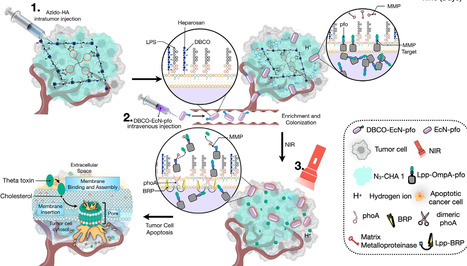
Rapid advances in synthetic biology are driving the development of microbes as therapeutic agents. While the immunosuppressive tumor microenvironment creates a favorable niche for the systematic delivery of bacteria and therapeutic payloads, these can be harmful if released into healthy tissues. To address this limitation, we designed a spatiotemporal targeting system for engineered Escherichia coli Nissle 1917, controlled by azide-modified hyaluronic acid hydrogel and near-infrared radiation induction. Using a temperature-driven genetic status switch, the system produced durable therapeutic output and promoted the therapeutic activity in solid tumors. The combination of azide-modified hyaluronic acid hydrogel and temperature-sensitive, engineered Escherichia coli Nissle 1917 provided spatiotemporal targeting of solid tumors, not only showing significant therapeutic effects on primary solid tumors, but also inhibiting the metastasis and recurrence of cancer cells by enhancing tumor-infiltrating lymphocytes. This system has potential for clinical application.
|
|
|
Scooped by
mhryu@live.com
Today, 3:28 PM
|
Structural colors (SC), generated by light interacting with nano-structured materials, are responsible for the brightest and most vivid coloration in nature. Despite being widespread within the tree of life, there is little knowledge of the genes involved. Partial exceptions are some Flavobacteriia in which genes involved in a number of pathways, including gliding motility and polysaccharide metabolism, have been linked to SC. A previous genomic analysis of SC and non-SC bacteria suggested that the pterin pathway is involved in the organization of bacteria to form SC. Here, we focus on moeA, a molybdopterin molybdenum transferase. When this gene was deleted from Flavobacterium IR1, the knock-out mutant showed a strong blue shift in SC of the colony compared to the wild-type. The moeA mutant showed a particularly strong blue shift when grown on kappa-carrageenan and was upregulated for starch degradation. To further analyze the molecular changes, proteomic analysis was performed, showing the upregulation of various polysaccharide utilization loci, which supported the link between moeA and polysaccharide metabolism in SC. Overall, we demonstrated that a targeted approach, modifying a single gene identified by genomics, could change the optical properties of bacteria.
|
|
Scooped by
mhryu@live.com
Today, 3:13 PM
|
The limited antimicrobial efficacy of biocontrol microorganisms often constrains their practical implementation in crop disease management. To address this challenge, we developed an integrated high-throughput screening platform combining atmospheric and room temperature plasma (ARTP) mutagenesis with droplet microfluidics, which efficiently selected Bacillus safensis mutants with high-antagonistic activity from ∼106 variants by low fluorescence screening of GFP-labeled Erwinia carotovora Ecc15 (GFP-Ecc15) in microdroplets. The optimal mutant R1 demonstrated enhanced broad-spectrum antagonistic activity against Ecc15 and nine phytopathogens. Untargeted metabolomic analysis identified quinolinic acid and clindamycin as key synergistic antimicrobial metabolites in R1. HPLC and in vitro assays confirmed their biosynthesis and synergistic efficacy, contributing to R1’s improved antimicrobial performance. This study represents the first report of microbial-derived clindamycin biosynthesis and provides systematic characterization of quinolinic acid’s antimicrobial properties. Our work provides a feasible strategy for breeding high-performance biocontrol strains while offering mechanistic insights into metabolite-mediated antagonism, advancing the design of next-generation microbial pesticides.
|
|
Scooped by
mhryu@live.com
Today, 3:02 PM
|
Biological nitrogen fixation through foliar application of nitrogen-fixing bacteria presents a promising route to reduce reliance on synthetic fertilizers but remains limited by challenges in bacterial adhesion and survival in the phyllosphere. We developed a nanocoated inoculant encapsulating Klebsiella variicola W12 using metal–phenolic networks and sodium alginate for enhanced nitrogen fixation under nitrogen-depleted conditions. The nanocoating improved bacterial resistance to UV radiation, oxidative stress, aerobic conditions and desiccation, enhancing adhesion and biofilm formation on leaf surfaces. Colonization increased 3.3-fold compared to non-coated bacteria at 14 days after application, improving epiphytic and endophytic persistence. The nanocoated bacteria contributed 27.89% of total plant nitrogen, over twice that of non-coated bacteria, resulting in a 1.4-fold increase in rice fresh weight after 54 days. Field trials demonstrated potential savings of chemical fertilizer of 74.38 kg N ha−1, highlighting a sustainable and effective strategy to improve crop productivity with reduced reliance on chemical nitrogen fertilizers and environmental impacts. Nitrogen-fixing bacteria offer a promising route to reduce reliance on synthetic fertilizers, but their effectiveness is hindered by environmental stresses that limit survival on leaf surfaces. This study introduces a nanocoating strategy that enables robust foliar colonization of Klebsiella variicola, enhancing nitrogen fixation and improving rice yield under low-fertilizer conditions.
|
|
Scooped by
mhryu@live.com
Today, 2:19 PM
|
Assessing the accuracy of long-read assemblies, especially from complex environmental metagenomes that include underrepresented organisms, is challenging. Here we benchmark four state-of-the-art long-read assembly software programs, HiCanu, hifiasm-meta, metaFlye and metaMDBG, on 21 PacBio HiFi metagenomes spanning mock communities, gut microbiomes and ocean samples. By quantifying read clipping events, in which long reads are systematically split during mapping to maximize the agreement with assembled contigs, we identify where assemblies diverge from their source reads. Our analyses reveal that long-read metagenome assemblies can include >40 errors per 100 million base pairs of assembled contigs, including multi-domain chimeras, prematurely circularized sequences, haplotyping errors, excessive repeats and phantom sequences. We provide an open-source tool and a reproducible workflow for rigorous evaluation of assembly errors, charting a path toward more reliable genome recovery from long-read metagenomes. Long-read sequence assemblies from metagenomes contain frequent errors.
|
|
Scooped by
mhryu@live.com
Today, 2:03 PM
|
Rewriting RNA information to alter function requires controllable tools to edit RNA sequences within a user-defined region. Here we report a single-strand deaminase-assisted platform for adjustable RNA information manipulation (AIM). AIM is composed of a loop-forming guide RNA bound to an RNA-targeting Cas protein and an evolved TadA. AIM induces a loop, flanked by paired regions, in the target RNA; the loop size can be adjusted to allow conversions of single and multiple bases. We evolve TadA to achieve A-to-I, C-to-U or simultaneous A+C editing in coding and noncoding regions. We apply AIM to suppress the ochre nonsense codon (UAA) in disease-relevant cell and animal models, in which the two As must be simultaneously edited to rewrite the coding information. Moreover, we use AIM to manipulate adjacent phosphorylation sites important for protein function. Collectively, AIM is a versatile platform for manipulating RNA information within user-defined regions, opening additional avenues for functional RNA modulation. A single-strand deaminase-assisted platform simultaneously rewrites multiple bases within a single RNA transcript.
|
|
Scooped by
mhryu@live.com
Today, 10:29 AM
|
The root nodule symbiosis of plants with nitrogen-fixing bacteria is phylogenetically restricted to a single clade of flowering plants, which calls for as yet unidentified trait acquisitions and genetic changes in the last common ancestor. Here we discovered—within the promoter of the transcription factor gene Nodule Inception (NIN)—a cis-regulatory element (PACE), exclusively present in members of this clade. PACE was essential for restoring infection threads in nin mutants of the legume Lotus japonicus. PACE sequence variants from root nodule symbiosis-competent species appeared functionally equivalent. Evolutionary loss or mutation of PACE is associated with loss of this symbiosis. During the early stages of nodule development, PACE dictates gene expression in a spatially restricted domain containing cortical cells carrying infection threads. Consistent with its expression domain, PACE-driven NIN expression restored the formation of cortical infection threads, also when engineered into the NIN promoter of tomato. Our data pinpoint PACE as a key evolutionary invention that connected NIN to a pre-existing symbiosis signal transduction cascade that governs the intracellular accommodation of arbuscular mycorrhiza fungi and is conserved throughout land plants. This connection enabled bacterial uptake into plant cells via intracellular support structures such as infection threads, a unique and unifying feature of this symbiosis. A key step in the evolution of the nitrogen-fixing root nodule symbiosis, occurring 100 million years ago, subjected the control of Nodule Inception (NIN) gene expression to a protein complex that regulated transcription much earlier in the arbuscular mycorrhiza symbiosis.
|
|
Scooped by
mhryu@live.com
Today, 1:13 AM
|
CRISPR-associated transposases (CASTs) hold tremendous potential for microbial genome editing because of their ability to integrate large DNA cargos in a programmable, site-specific manner. However, their widespread application has been hindered by poorly understood host factor requirements for transposition. To address this gap, we conducted the first genome-wide screen for host factors affecting Vibrio cholerae CAST (VchCAST) activity using an Escherichia coli RB-TnSeq library and identified 15 genes affecting VchCAST transposition. Of these, seven factors were validated to improve VchCAST activity, and two were inhibitory. Guided by the identification of homologous recombination effectors, RecD and RecA, we tested the λ-Red recombineering system in our VchCAST editing vectors and increased editing efficiency by 55.2-fold in E. coli, 5.6-fold in Pseudomonas putida, and 10.8-fold in Klebsiella michiganensis while maintaining high target specificity and similar insertion arrangements. This study improves the understanding of factors affecting VchCAST activity and enhances its efficiency as a bacterial genome editor.
|
|
Scooped by
mhryu@live.com
Today, 1:05 AM
|
Different definitions of keystone taxa and functions agree that they have an outsized role in maintaining community composition, and thus, the keystone concept continues to attract attention even 50 years after its introduction. In this Perspective, we base our definition of microbial keystones on the original one to explore its implications and limitations. We review different mechanisms behind keystoneness, cover the strengths and weaknesses of current keystone prediction methods and present findings on keystones discovered in recent experiments. In addition, we suggest a new prediction method for keystones based on metabolic modelling. Finally, we discuss the role of keystones in community control strategies. Overall, the development of new prediction methods and the insights from recent experiments illustrate the continued relevance of the keystone concept for microbial communities. In this Perspective, Garza et al. revisit the keystone concept and discuss its relevance for microbial keystone taxa and functions. For this, they explore the different mechanisms behind keystoneness, cover the strengths and weaknesses of current keystone prediction methods, present recent findings on keystone taxa and functions and explore the role of keystones in community control.
|
|
Scooped by
mhryu@live.com
Today, 12:39 AM
|
Extracellular vesicles (EVs) have gained significant attention owing to their role in pathophysiological processes and potential as therapeutic tools. EVs are small vesicles (30 nm–5 µm) containing specific cargo (proteins, nucleic acids and lipids) and are released from most cell types. Their capacity to target and induce phenotypical changes in recipient cells has established them as key mediators of intercellular communication. Although EV biogenesis is well studied, their uptake and fate in recipient cells are still poorly understood. In this Review, we focus on the cell biology underlying EV interactions with recipient cells and their intracellular fate. We discuss the mechanisms EVs use to achieve cell-specific targeting, cell signalling and functional cargo delivery and list the key challenges currently limiting our ability to harness these EVs into efficient therapeutic nanovehicles. We explore how our understanding of the molecular mechanisms supporting interactions of EVs with recipient cells and their functions herein can provide new strategies to use them for therapeutic approaches. Extracellular vesicles are released from almost all cell types and mediate intercellular communication by delivering proteins, nucleic acids and lipids. This Review examines extracellular vesicle uptake by recipient cells, their effects on signalling and their therapeutic potential and limitations.
|
|
Scooped by
mhryu@live.com
January 1, 1:51 PM
|
The National Institute of Allergy and Infectious Diseases (NIAID) Data Ecosystem Discovery Portal ( https://data.niaid.nih.gov) provides a unified search interface for over 4 million data sets relevant to infectious and immune-mediated disease (IID) research. Integrating metadata from domain-specific and generalist repositories, the Portal enables researchers to identify and access data sets using user-friendly filters or advanced queries, without requiring technical expertise. The Portal supports discovery of a wide range of resources, including epidemiological, clinical, and multi-omic data sets and is designed to accommodate exploratory browsing and precise searches. The Portal provides filters, prebuilt queries, and data set collections to simplify the discovery process for users. The Portal additionally provides documentation and an API for programmatic access to harmonized metadata. By easing access barriers to important biomedical data sets, the NIAID Data Ecosystem Discovery Portal serves as an entry point for researchers working to understand, diagnose, or treat IID.
|
|
Scooped by
mhryu@live.com
January 1, 1:40 PM
|
RNA splicing removes non-coding introns from pre-mRNA to produce mature mRNA in eukaryotes. Accurate identification of splice sites is essential for the understanding of gene structures. Previous gene annotation and prediction heavily rely on the availability of high-quality genome assemblies, intensive functional studies and massive amount of resources, which restrict the analysis and application of the genomic sequences in various non-model species. Here, we present a deep learning-based model training framework that is able to develop accurate intron splice site prediction models for diverse species with relatively limited transcriptomic data. The UniSplicer-based models (http://www.unisplicer.com) outperform existing prediction models in various species, from plants to fungi and metazoans. UniSplicer-based models prediction scores could serve as reliable indicators of the effects of mutations in various types of splice mutants. Moreover, UniSplicer A. thaliana model identified genes in Arabidopsis ecotypes that exhibit abnormal splicing due to sequence variations near splice sites, which may be under environmental selection. Overall, UniSplicer-based models achieved high prediction accuracy and provided insights into how sequence variations result in splicing alteration of genes in large genomic data sets.
|
|
Scooped by
mhryu@live.com
January 1, 1:33 PM
|
2′-Fucosyllactose (2′-FL), one of the primary human milk oligosaccharides (HMOs), exerts a pivotal influence on early human development as well as health benefits on other life stages. In this study, a high-yielding strain for 2′-FL production was constructed in Escherichia coli BL21star(DE3) using a systematic metabolic engineering strategy. The α-1,2-fucosyltransferase BKHT from Helicobacter sp. 13S00401-1 was selected as the optimal enzyme for 2′-FL biosynthesis, and the best variant F304W of BKHT was obtained to improve 2′-FL biosynthesis using semirational enzyme modifications. A “push–pull” strategy was implemented to optimize the carbon flux within the 2′-FL biosynthetic pathways. After the enhancement of the availability of cofactor GTP and NADPH, the 2′-FL titer reached 13.71 g/L in a shake flask. Finally, the engineered strain EFL54 produced 136.71 g/L 2′-FL with a productivity of 1.85 g/(L h) in a 5 L fermentor. This work provides a concrete foundation for the industrial-scale production of 2′-FL.
|


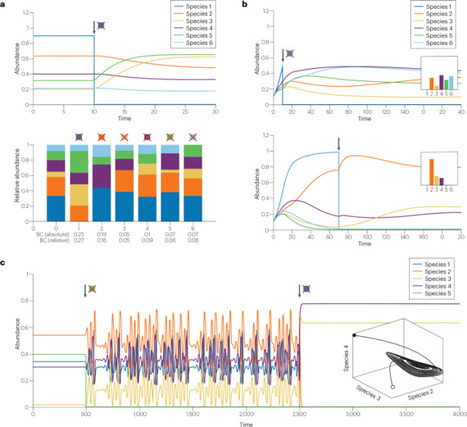













3st, The extent of the change, as quantified, for instance, by the Bray–Curtis (BC) dissimilarity (lower panel), depends on which taxon is removed and is thus a measure of the taxon’s keystoneness.