 Your new post is loading...

|
Scooped by
mhryu@live.com
Today, 1:37 AM
|
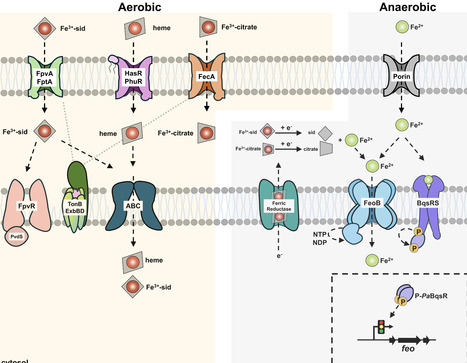
Pseudomonas aeruginosa is a ubiquitous, Gram-negative bacterium that forms biofilms and is responsible for antibiotic-resistant hospital-acquired infections in humans. The P. aeruginosa BqsRS two-component system regulates biofilm formation and dispersal by sensing extracytoplasmic Fe2+, but the mechanistic details of this process are poorly understood. In this work, we report the crystal and solution structures of the PaBqsR response regulator receiver domain, comprising a (βα)5 response regulator assembly, and the DNA-binding domain, comprising a helix-turn-helix motif. Consistent with its cognate stimulus being Fe2+, we show that BqsR binds directly to the promoter region of the feo operon that encodes the bacterial Fe2+ transport system FeoABC. Corroborating these in vitro results, transcriptional studies show that BqsR is a global regulator controlling many important genes in PAO1, including the feo operon. Intriguingly, promoter-based assays reveal that BqsR is a dynamic regulator that responds to bioavailable Fe2+, likely through the ability of BqsR to bind Fe2+ directly via a His-rich motif, independent of the BqsS membrane His kinase. To our knowledge, this mode of regulation has not been reported previously among OmpR-like response regulators but represents an important level of control over Fe2+ acquisition in P. aeruginosa that could be an attractive therapeutic target to treat hospital-acquired infections. The BqsRS two-component system regulates biofilms in the infectious pathogen Pseudomonas aeruginosa. Here, the authors show that the global response regulator BqsR controls Fe2+ acquisition in PAO1 through a previously unrecognized regulatory mechanism.
|
|
Scooped by
mhryu@live.com
Today, 1:21 AM
|
Artificial intelligence (AI) is transforming scientific research, including proteomics. In this Perspective, we highlight key mass spectrometry (MS)-based proteomics areas where AI is driving innovation, ranging from protein identification to building AI virtual cells. These include improving peptide and protein identification and quantification; characterizing protein-protein interactions and protein complexes; advancing spatial and perturbation proteomics; integrating multi-omics data; and, ultimately, enabling AI virtual cells. Finally, we call for global collaboration among data producers, data consumers and other stakeholders to establish an AI-friendly ecosystem for MS-based proteomics, laying the foundation for transformative advancements in proteomics driven by AI. This Perspective highlights key research areas within mass spectrometry-based proteomics where AI is poised to drive significant advances.
|
|
Scooped by
mhryu@live.com
Today, 1:19 AM
|
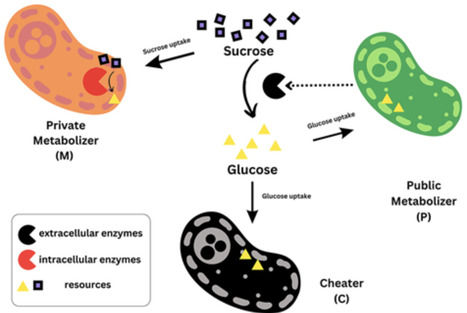
This study presents a mathematical framework for investigating the dynamics of coexistence and competition among heterotrophic microbes across different time scales. Focusing on metabolic interactions, we examine how three strategies, public metabolizing, private metabolizing and cheating, shape population behavior. The framework integrates generalized Lotka–Volterra dynamics with evolutionary game theory to capture the effects of resource exchange, particularly glucose made available by public metabolizers and sucrose as a shared substrate driving population growth. Game-theoretic pay-offs encode ecological costs and benefits, enabling analysis of frequency-dependent interactions among strategies. To capture evolutionary realism, we implement laboratory-inspired simulations in which strategies can switch between generations, mimicking mutation or phenotypic plasticity in microbial populations. These eco-evolutionary dynamics reveal conditions under which all three strategies coexist at interior equilibria and show how variation in growth advantages and, illustratively, phenotype-switching perturbations produce evolutionary shifts. Numerical analysis identifies ecological thresholds and fitness asymmetries that determine system robustness, long-term coexistence, and the persistence of a synthetic, cross-kingdom system linked by nutrient exchange. Together, these insights provide general principles for microbial coexistence and offer design guidelines for ecosystem engineering, biotechnological applications and the construction of stable synthetic communities under ecological and evolutionary constraints.
|
|
Scooped by
mhryu@live.com
Today, 1:02 AM
|
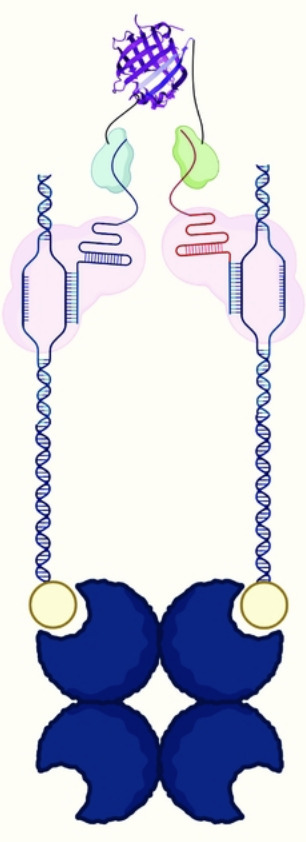
The dCas9 system has rapidly been developed into many tools to explore different aspects of the human genome; the high binding specificity, coupled with the inactive nuclease enzyme, allows for precise recruitment of molecules to specific sequences of DNA. We sought to exploit these capabilities to create a tool for assessing the real-time proximity of two DNA sequences within a biological system. By incorporating aptamers into gRNAs, dCas9 molecules can be used to recruit the β9 or β10 strands of split-NanoLuc® to specific DNA sequences and quantify the proximity of those sequences based on their ability to complex with the luciferase fragment (Δ11S) and produce luminescence. While many tools exist to detect a single DNA sequence, this system is uniquely capable of assessing how two DNA sequences interact with each other. As expected, we found that the interaction of two dCas9 molecules was affected by their linear distance from each other on dsDNA. Surprisingly, we found that their interaction was also strongly influenced by rotational orientation, even for sequences that are close together in linear space. This finding indicates that dCas9 rotational alignment is an important consideration for designing dCas9 systems that target multiple DNA sequences simultaneously. Beyond the findings presented herein, we believe this DNA proximity detection tool has the potential to be adapted for applications involving the proximity and orientation of two DNA sequences.
|
|
Scooped by
mhryu@live.com
Today, 12:56 AM
|
Methane (CH4) from ruminants is a major source of agricultural greenhouse gas and represents a loss of dietary energy. 3-nitrooxypropanol (3-NOP) is a known methanogenesis inhibitor, but its hydrophilic nature may limit the cellular accessibility to methanogens. Here, we systematically evaluated 1,3-propanediol dinitrate (1,3-PDN), a more hydrophobic derivative of 3-NOP, for its anti-methanogenic potential and underlying mode of action using ruminal fermentation, pure-culture assays, multi-omics analyses, and molecular docking. Intracellular accumulation assays indicated greater cellular accumulation of 1,3-PDN than 3-NOP in rumen-derived methanogen Methanobrevibacter olleyae. Ruminal fermentation assays showed that 1,3-PDN reduced CH4 production by ~55%, and altered hydrogen (H2) metabolism, leading to 11-fold increase in H2 accumulation. Metatranscriptomic profiling revealed that 1,3-PDN significantly altered the active archaeal community, with a notable reduction in Methanobrevibacter_A and suppression of hydrogenotrophic methanogenesis. Molecular docking suggested that 1,3-PDN may bind to the conserved active site of methyl-coenzyme M reductase (MCR), potentially contributing to MCR-associated inhibition. Proteomic analysis further indicated that 1,3-PDN supplementation downregulated key MCR subunits and simultaneously affected other redox-sensitive methanogenesis-related processes, including tetrahydromethanopterin S-methyltransferase (MTR) subunits and proteins involved in the biosynthesis of cofactors F430 and cobalamin. Nitrogen-equivalent assay suggested partial contribution of nitrite to the methanogenesis inhibition and oxidative effects induced by 1,3-PDN. Together, these findings identify 1,3-PDN as an effective inhibitor of ruminal methanogenesis with enhanced cellular enrichment, providing mechanistic insights for the rational development of new CH4 inhibitors.
|
|
Scooped by
mhryu@live.com
Today, 12:33 AM
|
GapR is a pleiotropic α-proteobacterial nucleoid-associated protein (NAP) reported to either directly regulate transcription of AT-rich DNA or to regulate transcription indirectly through sensing DNA topology and modulating topoisomerase activity. We use single-DNA micromechanics, biolayer interferometry (BLI), and computational analysis to study GapR transcriptional regulation. Micromechanics experiments show that GapR overtwists DNA and shortens its contour length. GapR binding also substantially increases DNA bending persistence length and twist stiffness. For DNA tension ∼0.5 pN, as occurs in supercoiled domains, GapR also promotes DNA strand separation, a transition not observed for lower forces. Nonequilibrium binding experiments show GapR–DNA complexes to be extremely stable, with essentially no dissociation on hour-long time scales. Strikingly, our BLI experiments show that GapR has high affinity for AT-rich DNA, while our micromechanics show that GapR binding is enhanced by pre-twisting of DNA, validating GapR affinity for both forms. By analyzing published GapR binding data, we reveal that overtwisted DNA primarily determines GapR localization. We demonstrate that these two binding modes have opposing impacts on gene expression, with AT-rich binding activating and overtwisted DNA binding repressing transcription. Together, our findings demonstrate how the biophysical activities and topological sensitivity of a single NAP generate context-specific behavior.
|
|
Scooped by
mhryu@live.com
Today, 12:16 AM
|
Three-dimensional structural reconstruction revealed that localized cell wall degradation is essential for the transition from the infection thread (IT) to the infection droplet (ID). Specifically, NPL-mediated local pectin degradation drives this transition and promotes efficient bacterial release.
|
|
Scooped by
mhryu@live.com
July 28, 11:46 PM
|
Recent advances in AI inspire visions of universal models of biology. Yet living systems are evolved, emergent processes whose behaviors cannot be inferred from their parts alone. We propose grounding AI in canonical biological processes, constructing data-driven world models with explicit mechanistic links across molecules, cells, and their dynamics in space and time.
|
|
Scooped by
mhryu@live.com
July 28, 6:31 PM
|
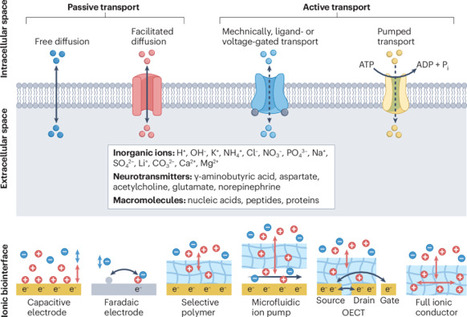
Bioiontronics is an interdisciplinary field emerging from a confluence of breakthroughs in iontronics and bioengineering. Bioiontronics promotes communication with living matter through ions and biological molecules, thereby mediating the detection and modulation of biological activities. This process can function at abiotic–biotic interfaces in an autonomous fashion or in integral, modular components of biomedical devices. The clinical need to use specific biomolecular information, such as ion concentrations and biomarker levels, for personalized diagnostics and treatments has driven the rapid evolution of bioiontronics, through the convergence of fundamental science and application-oriented engineering. However, several challenges remain, including control of ion transport, device miniaturization, biocompatible encapsulation for long-term implantation and tools to decipher and then harness multimodal biological signals. In this Review, we discuss the underlying mechanisms and recent prototypes of bioiontronic devices and describe challenges in the fabrication and application of such systems. Bioiontronics enables communication with living systems through controlled ion and biomolecule transport at abiotic–biotic interfaces. This Review outlines the mechanisms and emerging device prototypes driving the field and discusses key challenges in ion control, miniaturization, biocompatible fabrication, as well as diagnostic and therapeutic applications.
|
|
Scooped by
mhryu@live.com
July 28, 6:21 PM
|
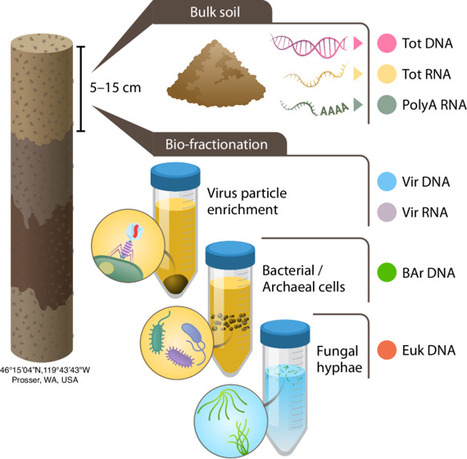
Deciphering viral ecology in soils is challenging due to soil’s high physicochemical and microbial community complexity. To enhance detection of DNA and RNA viruses, we applied different preparation methods to soils collected from a grassland field experiment. Analyses included metagenomics and metatranscriptomics of size-fractionated extracellular viruses, total soil metagenomics and metatranscriptomics, total soil metatranscriptomics with polyadenylation enrichment, and metagenomics of bacteria/archaea as well as eukaryote-enriched samples. DNA viromes outperformed total soil metagenomes in viral detection and quality. Contrastingly, RNA viromes and total soil metatranscriptomes performed similarly for viral recovery, though RNA viromes yielded higher-quality genomes. Together, our results highlight how different preparation methods can influence the recovery and quality of DNA and RNA vOTUs. Further, we demonstrate the power of different methods in identifying distinct viral communities with unique host predictions, which in turn can have significant implications for ecological investigations related to interkingdom interactions. Profiling soil viral communities is challenging due to the inherent complexity of soil samples. In this study, the authors show that soil sample preparation strongly shapes which DNA and RNA viruses are detected, which can, in turn, impact ecological implications of soil viral community analyses.
|
|
Scooped by
mhryu@live.com
July 28, 5:37 PM
|
Microbial colonization of the human gut is typically inferred from species-level profiling, yet durable establishment operates at the strain level. Here, using longitudinal shotgun metagenomics across multiple donor-recipient pairs undergoing fecal microbiota transplantation, we show that colonization is governed by lineage-dependent strain-level ecological filtering. Strain-resolved analyses reveal that gut colonization imposes reproducible population-genetic bottlenecks, characterized by reduced nucleotide diversity and selective strain capture. Lineage identity is the primary determinant of strain fate: certain taxa exhibit high donor-strain fidelity, whereas dominant gut lineages, most notably Lachnospiraceae, display broad species-level engraftment but limited capture of donor-identical strains. Repeated transplantation progressively increases species-level retention, building ecological memory, yet fails to overcome intrinsic barriers to consensus-level donor-strain capture. Clinical remission aligned specifically with directional donor-strain replacement rather than taxonomic remodeling alone, identifying strain-level lineage compatibility as a candidate determinant of therapeutic success. Collectively, these findings establish that gut colonization is constrained by strain-level ecological filtering and reframe microbiota transplantation as a selective evolutionary process in which lineage identity, not inoculum diversity, gates therapeutic integration.
|
|
Scooped by
mhryu@live.com
July 28, 5:26 PM
|
General-purpose language models are being increasingly utilized in protein-design workflows, yet their ability to evaluate variant effects remains unclear. To answer this question, we introduce PG-LLM, a benchmark built on ProteinGym to evaluate general-purpose language models on 217 protein-variant prioritization tasks. Each task follows the same format: a language model receives a wild-type protein sequence, an assay description, and is tasked with ranking 50 mutant sequences by fitness without access to multiple-sequence alignments or protein structures. We evaluate thirteen language models and rescore 95 published protein predictors on the same candidate sets with the same evaluation metric. Claude Opus 5 leads the primary leaderboard with a Spearman correlation of ρ = 0.406, narrowly ahead of GPT-5.6 Sol at 0.402. However, GPT-5.6 Sol scores higher than Opus 5 when the two models are compared only on assays scored by both. Opus 5 outperforms 49 of 95 published protein predictors, including 41 of 46 sequence-only methods, and approaches ESM2-650M at ρ = 0.411, but remains below the leading predictor VenusREM at ρ = 0.523. Variant-ranking performance improves with test-time compute across GPT, Claude, and Gemini models, but the gains taper before closing the gap to specialist protein predictors. Unlike sequence-only predictors, which perform better on proteins with deeper evolutionary alignments, LLM accuracy changes little across alignment-depth. PG-LLM shows that tool-free language models capture substantial protein-variant signal and already outperform many established sequence-based predictors. These results establish the emerging capability of language models as biomolecular reasoners while defining the remaining headroom for their reliable use in variant-prioritization workflows.
|
|
Scooped by
mhryu@live.com
July 28, 4:37 PM
|
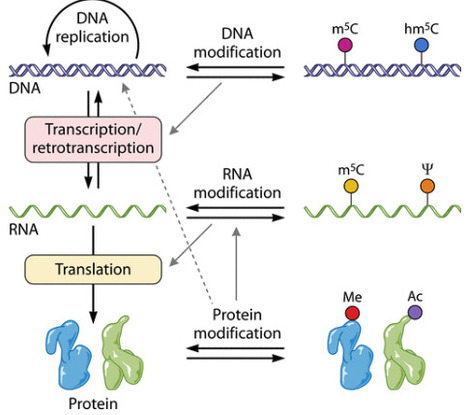
RNA modifications in the tRNA, rRNA, and mRNA constitute a widespread layer of post-transcriptional gene regulation, commonly known as the epitranscriptome. In bacteria, tRNA and rRNA modifications are well documented and play essential roles in tRNA folding, rRNA maturation, translation, and peptidyl transfer. Although mRNA modifications have been extensively characterized in eukaryotes, their functional implications for mRNA fate in prokaryotes remain uncertain, and their identities and locations are the subject of an emerging field of research. Importantly, RNA modification is a dynamic process, and variation in the presence and abundance of these modifications has significant consequences for bacterial physiology. Here, we discuss current knowledge of modified RNA nucleotides in bacteria, with a particular focus on their roles in bacterial adaptation to environmental stress.
|
|
|
Scooped by
mhryu@live.com
Today, 1:23 AM
|
Bacterial–fungal interactions represent fundamental ecological associations that shape microbial community structure across diverse environments. While traditionally framed through the lens of antagonism, bacteria and fungi engage in sophisticated metabolic dialogs extending far beyond simple warfare. Both primary and specialized metabolites function as context-dependent signals, nutrient resources, and modulators of cellular processes that fundamentally influence the physiology, development, and evolutionary trajectory of both fungi and bacteria. Primary metabolites mediate mutualistic relationships through cross-feeding and syntrophy, while specialized metabolites, including volatile organic compounds, lipopeptides, and phenazines, modulate fungal physiology at sub-inhibitory concentrations, reprogramming metabolic networks and triggering adaptive responses without causing cell death. At the molecular level, bacterial metabolites regulate fungal gene expression through transcriptional reprogramming, with consequences that extend to long-term evolutionary adaptation. The complexity of Bacillus–Trichoderma interactions exemplifies how these principles translate into ecological outcomes, exhibiting context-dependent transitions from competition to synergism that enhance biocontrol efficacy, plant growth promotion, and organic matter turnover. Recognizing the multifunctional nature of microbial metabolites beyond direct toxicity opens new avenues for rationally engineering cross-kingdom consortia with targeted agricultural and biotechnological applications.
|
|
Scooped by
mhryu@live.com
Today, 1:19 AM
|
The new laws break away from 20-year-old restrictive GMO directives to give an official nod to plants made with new genomic techniques.
|
|
Scooped by
mhryu@live.com
Today, 1:09 AM
|
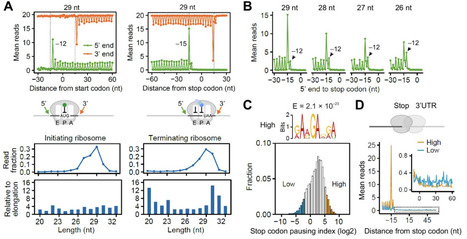
Accurate termination of protein synthesis is paramount for the integrity of the cellular proteome, yet the dynamics and fidelity of ribosome termination remain poorly understood. Here, we establish a profiling strategy to capture terminating ribosomes in mammalian cells and reveal a substantial heterogeneity in ribosome pausing at individual stop codons. We identify a sequence motif upstream of the stop codon that promotes termination pausing, a finding supported by massively parallel reporter assays. Unexpectedly, reduced termination pausing increases the likelihood of stop codon slippage, giving rise to proteins with heterogeneous C-terminal extensions. Mechanistically, we show that sequence-dependent termination pausing is consistent with post-decoding mRNA scanning by the 3′ end of 18 S rRNA. We further uncover tissue-specific patterns of termination pausing that correlate with the stoichiometry of Rps26, which potentially modulates mRNA:rRNA interactions. Together, these results suggest termination pausing as a distinct translational signature shaped by mRNA sequence contexts, ribosome heterogeneity, and cell type-specific translational control.
|
|
Scooped by
mhryu@live.com
Today, 12:59 AM
|
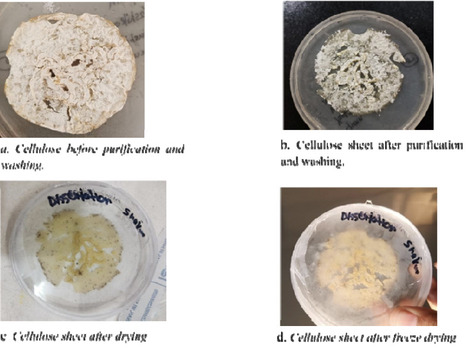
Bacterial cellulose (BC) is a biopolymer that comes from natural sources. It has high purity, crystallinity, mechanical strength, and biocompatibility, which makes it suitable for various biomedical and industrial uses. Unlike plant cellulose, BC does not contain lignin or hemicellulose. This results in better material quality and simpler processing. However, producing BC on a large scale is limited by high production costs, expensive culture media, and dependence on a few bacterial strains. It is essential to find cost-effective production methods and alternative microbial sources to expand its commercial use. This study looked at the cellulose-producing ability of Acetobacter diazotrophicus, a safe and relatively unexplored bacterium, under different growth conditions. We compared bacterial growth and cellulose production using Hestrin - Schramm (HS) medium, the standard for BC production, and LB supplemented with glucose (LB+Glucose), which we explored as a more affordable option. We analyzed growth rates, inoculum age, and pH levels to find the best conditions for cellulose production. We observed faster bacterial growth in HS medium, with a doubling time of 3.906 hours, compared to 6.241 hours in LB+Glucose medium. Cellulose production was greatly affected by inoculum age, with successful synthesis from cultures that were agitated for 36 to 40 hours. The highest cellulose yield was at pH 6.0 in HS medium (4.6 mg/mL) and at pH 5.5 in LB+Glucose medium (3.6 mg/mL). FTIR analysis confirmed the presence of characteristic functional groups of bacterial cellulose. These results suggest that Acetobacter diazotrophicus is a promising and cost-effective option for producing bacterial cellulose and highlight the importance of medium composition, inoculum age, and pH for optimizing production.
|
|
Scooped by
mhryu@live.com
Today, 12:46 AM
|
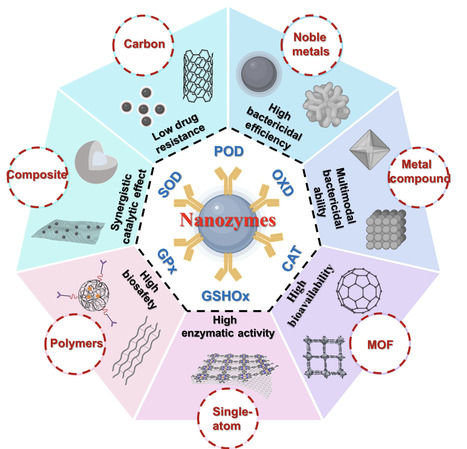
Nanozymes are emerging as versatile antimicrobial agents to tackle drug-resistant infections and biofilm-associated persistence. In this review, we present an integrated framework that links natural enzyme-mediated host defense to the rational development of antimicrobial nanozymes, and summarize recent advances through a mechanism-materials-engineering-application pipeline. We first summarize representative bactericidal principles of natural enzymes to highlight bioinspired catalytic motifs relevant to nanozyme design. We then classify antibacterial nanozymes by catalytic reaction types, including oxidoreductase- and hydrolase-like activities, and by material platforms, highlighting structure–activity relationships that govern catalytic behavior and antimicrobial performance. Building on these mechanistic and structural insights, we summarize engineering-enhanced bactericidal modalities, including photothermal and photodynamic assistance, metal ion release, immune modulation, cascade catalysis, microenvironment-responsive regulation, and targeting, that help overcome constraints imposed by infectious microenvironments, such as hypoxia, limited hydrogen peroxide availability, elevated antioxidant levels, and biofilm barriers. Finally, we translate these principles into application-oriented guidance across interfaces ranging from abiotic surface protection, including antifouling and device coatings, to superficial and deep-seated infections, and we briefly discuss emerging nanozyme strategies for antifungal and antiviral interventions. Throughout, we emphasize translational considerations, such as activity benchmarking, biosafety evaluation, and scalable manufacturing, to support the development of clinically relevant antimicrobial nanozymes.
|
|
Scooped by
mhryu@live.com
Today, 12:17 AM
|
|
|
Scooped by
mhryu@live.com
Today, 12:13 AM
|
Microorganisms dominate life in the hadal zone, yet extreme sampling difficulty and low biomass have precluded characterization of their in situ activities. Here, we analyze microbiome samples collected from hadal seawaters via in situ filtration during 12 human-occupied vehicle dives. DNA-protein co-extraction and metagenome-guided metaproteomic analysis identify 135,073 non-redundant active proteins, with over 95% being hadal-specific. Metaproteomic quantification distinguishes highly active and less active taxa that differ in biogeographic origins and genomic traits. Hadal microorganisms operate a metabolic regime fundamentally distinct from the upper ocean, preferentially utilizing refractory organic matter (aromatics, halogenated compounds, and D-amino acids) and expanded electron acceptors (thiosulfate and heavy metals), collectively shaping hadal element cycling. Active viruses extend beyond “Piggyback-the-Winner” dynamics, enhancing host adaptation through auxiliary metabolic genes. These findings provide proteome-level evidence of hadal microbial activities and reveal biogeochemical cycling distinct from that of the upper ocean, highlighting the underappreciated significance of hadal microbiomes within global ocean ecosystems.
|
|
Scooped by
mhryu@live.com
July 28, 11:45 PM
|
RiPP structural complexity is significantly expanded by multinuclear non-heme iron-dependent oxidative enzymes (MNIOs). Here, we characterize pseudoprobactin 1 and 2, two MNIO-modified proteins from Pseudomonas protegens Pf-5. Using MS, NMR, and X-ray crystallography, we show that the PbnBC converts precursor cysteines into 5-thiooxazoles. While the precursors feature an N-terminal signal peptide and an intramolecular disulfide, both are dispensable for catalysis. Instead, residues downstream of the target cysteines are the primary determinants of substrate recognition. Furthermore, PbnB2C2 modifies multiple sites in a strictly ordered, stepwise manner. Functionally, pseudoprobactins coordinate Cu2+, enhancing bacterial fitness under chlorite-induced oxidative stress. This work establishes 5-thiooxazole as a widespread MNIO-mediated modification, defines its biosynthetic logic, and reveals a role for MNIO-modified proteins in bacterial oxidative stress defense.
|
|
Scooped by
mhryu@live.com
July 28, 6:26 PM
|
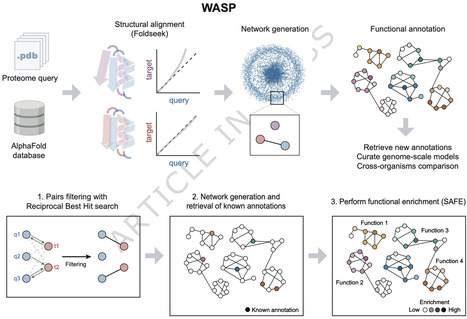
Protein function annotation is crucial for understanding biological processes and mechanisms. Traditionally, annotations rely on sequence homology, providing valuable insights but often leaving gaps even in well-characterized organisms. With AlphaFold enabling rapid generation of protein structural models, we can now infer function from three-dimensional shape. Here, we present WASP, a pipeline leveraging structural homology to enhance protein annotation prediction at scale, providing a more comprehensive understanding of protein functions across various organisms. WASP relies on network topology for better accuracy and more robust statistical power. We show that WASP achieves superior F1 scores compared to state-of-the-art sequence-based tools when recovering hidden annotations. On 20 industrially relevant organisms, WASP retrieves annotations for 20-30% of previously uncharacterised proteins. We further demonstrate utility in genome-scale metabolic model curation, identifying native candidates for 75-100% of orphan reactions. WASP highlights how structural homology can systematically discover annotations missed by sequence-based approaches. WASP predicts protein functions from AlphaFold structures using network-based structural homology, retrieving annotations for 20-30% of uncharacterised proteins and filling metabolic model gaps by mapping 75-100% of orphan reactions.
|
|
Scooped by
mhryu@live.com
July 28, 6:17 PM
|
Pseudomonas aeruginosa is a multidrug-resistant opportunistic pathogen, with chronic infections often associated with biofilm formation. Here, we investigate the previously uncharacterized gene PA3049, which is upregulated under biofilm conditions, to determine its role in infection, biofilm formation, and antimicrobial sensitivity. We show that the small uncharacterised protein PA3049, renamed as Biofilm architecture Regulator (BatR), promotes biofilm establishment and enhances biofilm survival in sub-inhibitory concentrations of antibiotics. Proteomic analysis revealed that BatR influences the R2/F2 pyocin cluster, which drives explosive cell lysis and extracellular DNA (eDNA) release during biofilm development. We further identify a specific interaction between BatR and PA0486 (SrkA), an uncharacterised Ser/Thr protein kinase. We show that SrkA controls biofilm and pyocyanin production, and lysis-mediated eDNA release through regulation of the R2/F2 pyocin cluster and activation of bacteriophage Pf4. Our findings support a model in which SrkA directly regulates key biofilm-associated phenotypes, while BatR acts as a modulatory partner that tunes SrkA activity under specific conditions. Finally, BatR function was tested in high-validity infection models, including the ex vivo pig lung model of cystic fibrosis infection and a synthetic chronic-wound model. In these models, BatR contributes to biofilm architecture and antibiotic resistance and modulates pyocyanin production. Our study implicates the BatR/SrkA system in the response of P. aeruginosa biofilms to antibiotic challenge in lung infections.
|
|
Scooped by
mhryu@live.com
July 28, 5:36 PM
|
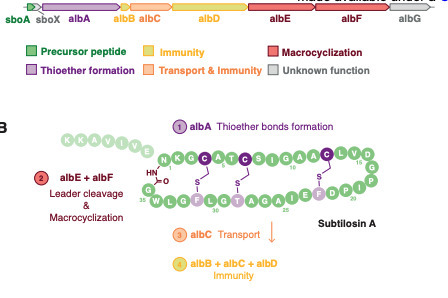
Archaea and bacteria routinely live side by side in microbial communities and must interact at least on occasion. Whether such cross-Domain interactions are dominated by mutual disregard, co-operation, or conflict remains fundamentally unknown. One potential window into archaeal-bacterial conflict is to ask whether some of the molecular weapons bacteria wield to kill other bacteria are present in archaea, and vice versa. Here, to start to address this question, we carry out a phylogenomic survey of bacteriocins in archaeal genomes and archaeocins in bacterial genomes. We find that more than 20% of known bacteriocins — proteins deployed by bacteria against other bacteria — have at least one homolog in archaea. Typically, these archaeal homologs are related to bacteriocins targeting (and encoded by) monoderm bacteria. Based on conservation of functionally critical residues, protein structure, and accessory genes critical for bacteriocin biosynthesis, we highlight homologs of subtilosin A, encoded in some Thermococcus archaea, as promising candidates for experimental follow-up work. We also show that halocin C8, originally described in Natrinema archaea, is comparatively common in bacterial genomes, including a number of skin-resident Staphylococcus species. Our results suggest that bacteriocins/archaeocins are shared across Domain boundaries with some regularity. While many instances are phylogenetically isolated — raising doubts about their functional importance and integration into host physiology — some bacteriocins are present in multiple related genomes and embedded in broader biosynthetic gene clusters that are also found in the original producers, suggesting that archaea and bacteria periodically use the same weapon systems in conflicts with other microbes. Further study of these systems might elucidate cross-Domain conflict and the nature of archaeal-bacterial interactions in different environments.
|
|
Scooped by
mhryu@live.com
July 28, 4:42 PM
|
Analytical technologies that can provide quick, precise, and continuous information regarding process performance are necessary for the development of biopharmaceutical manufacturing. Conventional bioprocess monitoring is largely dependent on laboratory-based data and offline sampling, which can restrict process management and cause delays in decision-making. This study develops a machine learning-enabled Raman spectroscopy framework for Process Analytical Technology (PAT) and Real-Time Release Testing (RTRT) applications in bioprocess manufacturing. Five predictive modeling techniques Partial Least Squares (PLS) regression, Support Vector Regression (SVR), Random Forest, Extreme Gradient Boosting (XGBoost), and Neural Networks were used to analyze Raman spectral data from an E. coli fermentation dataset. The models were assessed using the coefficient of determination (R2), root mean square error (RMSE), and mean absolute error (MAE) to predict two crucial fermentation parameters: the concentrations of glucose and acetate. The superior performance of PLS regression for glucose prediction and the improved prediction accuracy of XGBoost for acetate concentration demonstrated the importance of selecting modeling techniques based on biological complexity. Explainable artificial intelligence using SHAP analysis was incorporated to improve model transparency by identifying Raman spectral regions contributing to predictions. The suggested architecture shows how Raman spectroscopy and machine learning can be combined to assist automated process monitoring, enhance process comprehension, and hasten the implementation of real-time quality judgments in next-generation biomanufacturing.
|


















1str, microscopy software, size, shape, segmentation