Your new post is loading...

|
Scooped by
mhryu@live.com
Today, 12:31 PM
|
The plant social networking system (SNS) describes primarily unidirectional, cue-mediated information transfer from a donor holobiome to a receiver holobiome. Previously, scientific frameworks on plant–plant interactions were fragmented and did not integrate cue transfer with microbiome reconfiguration. In this opinion article, we propose that the plant SNS be conceptualized as a four-phase process: (i) external stimuli activate defense responses and reorganize the root microbiome in the donor plant; (ii) the reconfigured donor microbiome promotes the production and transmission of cues to the receiver; (iii) the receiver perceives these cues, alters host physiology, and recruits root-associated microbes; and (iv) the recruited microbes strengthen stress resilience in the receiver. The plant SNS model extends classical interaction concepts and provides a conceptual basis for explaining plant interactions as integrated holobiome-level processes.
|
|
Scooped by
mhryu@live.com
Today, 12:10 PM
|
The selection of small-molecule-binding RNA aptamers enables the creation of ligand-responsive RNA tools, yet most aptamers fail to operate reliably across diverse environments. Scaffolded selection addresses this limitation by preserving the tertiary architecture of a riboswitch scaffold while driving the evolution of a new ligand-binding pocket. Using the purine riboswitch aptamer, we previously generated dopamine-binding aptamers. Here, we report the crystal structures of two representative variants in their apo and dopamine-bound states to define how they recognize ligand while maintaining scaffold integrity. The structures demonstrate that scaffolded selection enforces global fold conservation and retains the defining tertiary interactions of the parental riboswitch. Local remodeling, triggered by deletions acquired during selection, rewires the three-way junction to build extensive interaction networks that host the dopamine-binding pocket. A deeply buried potassium ion anchors ligand recognition, while the RNA engages the catechol ring through stacking and hydrogen bonding interactions. Structure probing shows minimal conformational changes upon ligand binding, indicating that the aptamers adopt a largely preorganized fold. The balance between structural stability and local plasticity expands the capacity of a single RNA fold to recognize chemically distinct ligands and positions scaffolded selection as a powerful platform for engineering robust RNA-based sensing and regulatory devices.
|
|
Scooped by
mhryu@live.com
Today, 11:58 AM
|
Probiotic research is shifting from the empirical use of broadly beneficial microorganisms toward functionally defined microbial therapeutics. Advances in microbiome science, multiomics, formulation technologies, and synthetic biology have expanded the field from conventional strains to next-generation organisms, engineered microbes, and defined microbial effectors. This review critically examines this transition by linking mechanisms of probiotic action with the barriers that determine clinical translation. Although probiotics can influence ecological, metabolic, epithelial, immune, and host-signaling pathways, biological activity alone does not ensure therapeutic benefit. We define this disconnect as the probiotic efficacy gap, arising when strain or function selection, delivery, functional engagement, host responsiveness, or clinical outcomes fail to align. Emerging strategies—including protective formulations, mucosa-targeted delivery, programmable microbial platforms, nonviable microbial products, and microbiome-guided patient selection—address distinct points of failure along this translational pathway. We further examine the manufacturing, potency, safety, biocontainment, and regulatory challenges associated with increasingly complex microbial products. Future progress will require a function-first framework that integrates mechanism-linked potency measures, prospective responder identification, targeted delivery, and clinically meaningful evidence of target engagement. Rather than seeking a universally effective probiotic, the field must determine which microbial function is required, how and where it should be delivered, and in which host it is most likely to produce benefit.
|
|
Scooped by
mhryu@live.com
Today, 11:30 AM
|
The CRISPR-Cas9 system exhibits limited trans-cleavage activity, restricting its utility for nucleic acid detection. Here, we present a split RNA-guided Cas9 system (SCas9) that overcomes this limitation. By partitioning single-guide RNA into functionally independent scaffold and spacer modules, SCas9 enables amplification-free detection of single-stranded DNA and RNA with picomolar sensitivity within 30 min and single-nucleotide specificity. Incorporation of λ exonuclease permits PAM-independent detection of double-stranded DNA without cis-cleavage activity. Coupling SCas9 with recombinase polymerase amplification or reverse transcription–recombinase polymerase amplification extends detection of double-stranded DNA and long RNA to attomolar sensitivity. We further developed an autocatalytic SCas9 strategy for attomolar microRNA detection. SCas9 demonstrates broad substrate compatibility and was validated in clinical specimens, including human papillomavirus 16 in vaginal secretions and miR-21 in colorectal cancer tissues, highlighting its potential for point-of-care diagnostics. CRISPR-Cas9 lacks collateral cleavage for nucleic acid diagnostics. Here, authors show that splitting the guide RNA into scaffold and spacer converts Cas9 into SCas9, enabling rapid, single-nucleotide-specific DNA/RNA sensing, PAM-independent dsDNA detection, and attomolar clinical assays.
|
|
Scooped by
mhryu@live.com
Today, 10:49 AM
|
The total synthesis of genomes is a bottom-up bioengineering approach which empowers synthetic biologists to investigate complex biological hypotheses and reprogramme cells with novel functions. A successful genome synthesis requires (i) an informed design, (ii) a tractable approach to replace genomic with synthetic DNA, and (iii) a troubleshooting strategy for design flaws. While enabled by the advent of in vitro DNA synthesis and kilobase-scale in vivo DNA assembly approaches, this review highlights recent advances in megabase-scale assembly technologies as well as the nucleotide-resolution mapping of genotype-phenotype relationships. Collectively, these synthetic genomic techniques have enabled the completion of rewritten prokaryotic genomes and eukaryotic chromosomes. Furthermore, we discuss next-generation innovations in ML-driven genome design applied toward ongoing genome synthesis projects, which combined with expedited assembly techniques promise to increase the functional sequence space of redesigned organisms.
|
|
Scooped by
mhryu@live.com
November 14, 3:06 PM
|
Base editors (BEs) are precision genome editing tools which allow for the efficient introduction of point mutations in live cells without using double-strand DNA breaks. The two main classes of BEs are cytosine base editors (CBEs) and adenine base editors (ABEs), which can introduce C•G to T•A and A•T to G•C mutations, respectively. Since their development, BEs have been further developed and improved to address issues related to efficiency, specificity, and precision. In this review, we briefly summarize several recent notable developments in the field relevant to their path to the clinic, as well as three clinical trials from the past three years which apply BEs to the treatment of T-cell acute lymphoblastic leukemia, hypercholesterolemia, and a rare N = 1 urea cycle disorder. In these examples, base editing is used to precisely knock out genes or correct mutations back to wild-type in blood disorders and liver diseases. Through clinical trials, patients around the world are being treated with BE therapeutics, ushering in the next generation of precision medicine.
|
|
Scooped by
mhryu@live.com
November 14, 3:01 PM
|
Soil viruses are increasingly recognized as components of microbial communities with the potential to alter ecosystem functioning, yet the frequency and functional distribution of virus-encoded metabolic genes in soils remain poorly understood. Here, the Global Soil Virus Atlas gene catalog, comprising 1,432,147 viral genes from 1,223 samples across 12 ecosystem types, was searched against KEGG, Pfam, and CAZy for functions related to carbon cycling, nitrogen cycling, and antimicrobial resistance. Annotations associated with host entry or cell-wall lysis were separated from putative auxiliary metabolic functions. Of 5,020 initial gene-level functional annotations across the three categories, 3,322 (66.2%) were classified as peptidoglycanases. Their exclusion left 1,698 genes (0.14% of the gene catalog restricted to contigs ≥10 kb), and carbon-cycling functions represented 96.7% of the enzyme-resolved annotations. Chitinase-associated genes formed the largest carbon category, but 78.0% belonged to GH19, a family containing both chitinases and phage endolysins. Among GH19 genes on contigs encoding detectable holins or spanins, 84.2% occurred within three genes of these lysis components, a distribution comparable to that of canonical phage lysozymes. Across six matched metagenomic studies, estimated viral contributions to the targeted functions ranged from 0.00% to 8.45% (mean: 2.27%). Two of the three estimates exceeding 2% were GH19-associated chitinase estimates from rhizosphere soils and were therefore treated as upper estimates. Thus, the putative soil viral metabolic inventory was sparse and concentrated in carbon-degradation functions, whereas much of the initial carbohydrate-active enzyme signal reflected core viral lysis functions rather than auxiliary metabolism.
|
|
Scooped by
mhryu@live.com
November 14, 2:45 PM
|
Plant viruses are a diverse class of infectious agents affecting agricultural crop production, plant health, and international movement of plant material. While availability and accessibility of scientific data related to plant viruses is essential for plant protection activities, scientific research, diagnostics, plant breeding, and beyond, publicly available data on plant viruses are at present not easily accessible; they are non-standardized, scattered across different resources, poorly interlinked, and not easily searchable by scientists or digital agents. We present PVDive (Plant Virus Diversity Database; https://pvdive.dsmz.de), a freely accessible resource providing high-quality, standardized, and integrated data associated with plant viruses. PVDive primarily offers information at the level of individual plant virus isolates and samples originating from the plant virus collection of the Leibniz Institute DSMZ (Germany). The data are integrated with information on plant virus species and host plants available in existing public resources and their access is centralized in a single platform. Through an intuitive, user-friendly interface with a number of search functionalities and a RESTful application programming interface, PVDive improves findability, accessibility, retrievability, and interoperability of plant virus data. To support data exploration, the platform also includes tools such as advanced search, sequence viewer, host gallery, and interactive data views.
|
|
Scooped by
mhryu@live.com
November 14, 2:40 PM
|
The National Center for Biotechnology Information (NCBI) provides three principal resources containing DNA, RNA, and protein sequence data: the Sequence Read Archive (SRA), GenBank®, and the Reference Sequence (RefSeq™) collection. All resources are free to the public. SRA and GenBank are part of the International Nucleotide Sequence Database Collaboration and share data daily. After summarizing the current state of these resources, we review significant updates in the past two years, including these to the Submission Portal, the primary interface for submitting data to SRA and GenBank. We also describe access points for these data including NCBI Datasets’ website and programmatic interface, and present improvements in NCBI’s main sequence analysis and visualization tools, such as annotation pipelines, BLAST, and the Multiple Comparative Genome Viewer.
|
|
Scooped by
mhryu@live.com
November 14, 2:32 PM
|
Accurate prediction of translation efficiency from mRNA sequences is an important step toward mRNA sequence design. In recent years, the widespread adoption of high-resolution ribosome profiling techniques, such as Ribo-seq, has led to rapid accumulation of large-scale datasets that capture the relationship between mRNA sequences and translation efficiency. This progress has facilitated the development of machine-learning–based models for translation efficiency prediction. However, most existing approaches rely primarily on mRNA-derived features, such as codon usage frequency and 5’ untranslated regions (5’UTRs), and do not directly utilize the amino-acid-level information. In this study, we show that incorporating distributed representations (embeddings) of amino acid sequences translated from mRNA as model features can improve translation efficiency prediction. By combining fixed amino acid embeddings derived from a pretrained protein language model with mRNA-derived features, the proposed model integrates complementary protein-level and nucleotide-level information for more accurate prediction of translation efficiency.
|
|
Scooped by
mhryu@live.com
November 14, 2:21 PM
|
Existing synthetic biology toolkits have expanded part libraries and assembly capabilities. However, new users may still encounter ambiguity in construct definitions, hierarchical transitions, genomic integration routes, and quantitative testing procedures. Here, we present Polaris, a Golden Gate toolkit for E. coli and Saccharomyces cerevisiae. Polaris uses a MoClo-derived three-level hierarchy. Level 1 stores reusable parts, Level 2 generates transcription units and other intermediate constructs, and Level 3 supports multigene assembly and switching between testing and integration backbones. The toolkit distinguishes part interfaces from transcription unit interfaces, uses BpiI and BsaI in successive assembly stages, and provides parallel ccdB and mScarletI3 screening options. Integration modules and quantitative characterization frameworks were implemented in both hosts and demonstrated using representative genetic parts and activation and repression systems. A companion digital platform further encodes the Level 1 to Level 3 rules for assembly planning. Polaris connects hierarchical construction, stable genetic implementation, and quantitative testing within a common execution framework, providing a practical basis for data accumulation, part standardization, and future automation. cloning
|
|
Scooped by
mhryu@live.com
November 14, 1:48 PM
|
Two recent studies provide additional mechanistic insights into how this can work. Zeng et al. demonstrate that pathogen-triggered immune signaling in aerial tissues induces root exudation of heptadecanoic acid, which selectively enriches protective rhizosphere bacteria. Gilliard et al. reveal that plants perceive a Bacillus-derived lipopeptide through membrane biophysical remodeling rather than canonical receptor-mediated recognition. Although these mechanisms have been demonstrated in rice (Oryza sativa) and Arabidopsis thaliana respectively, together they provide complementary mechanistic examples that motivate a testable hypothesis about whether pathogen-triggered microbiota recruitment and microbial-signal perception can be functionally connected.
|
|
Scooped by
mhryu@live.com
November 14, 1:37 PM
|
The high cost of exogenous glucoamylase and bacterial contamination risk are major bottlenecks in industrial starch-based ethanol fermentation. Multilocus genome engineering offers a solution but requires compact, efficient editing tools. Compared with SpCas9, the FIRE TnpB platform achieved locus-specific integration efficiencies of 13.5–84.4% across genomic loci in industrial Saccharomyces cerevisiae, comparable to SpCas9 (33.1–81.3%). Integrating 30 signal peptide fusions with FIRE TnpB identified α-factor as optimal for protein secretion. Among three fungal glucoamylases, Saccharomycopsis fibuligera-derived enzyme showed the highest fermentative activity. Co-integration of a phage endolysin conferred antibacterial activity against lactic acid bacteria. In 5-L corn mash fermentations at 30 °C, engineered strains produced 20.0–20.1% (v/v) ethanol without exogenous glucoamylase, and the dual-functional strain reduced the glucoamylase requirement from 5.5 to 1.375 U/mL (75% saving), with no significant difference between TnpB and SpCas9. Thus, compact TnpB matches SpCas9 editing efficiency in industrial yeast, providing a size-advantaged alternative for consolidated bioprocessing.
|
|
|
Scooped by
mhryu@live.com
Today, 12:13 PM
|
CRISPR-Cas genome editing technology, originally derived from the adaptive immune system of bacteria, has expanded its applications to a wide range of organisms. Despite its broad applicability, several technical challenges still limit the precision and versatility of CRISPR-Cas systems. In this review, we systematically discuss technological advances developed to overcome these limitations. We examine the engineering of Cas orthologs to expand the target recognition range and improve targeting specificity, as well as guide RNA (gRNA) modification that enhance editing efficiency and specificity. We also highlight recent applications of advanced CRISPR-Cas technologies in crop improvement, probiotic and microbial engineering, and pathogen diagnostics. Finally, we discuss the growing role of computational and artificial intelligence (AI)-assisted approaches in gRNA design, Cas protein engineering, and the optimization of base and prime editing systems. Overall, this review provides an integrated overview of current engineering strategies, their emerging biotechnological applications, and future AI-assisted approaches that will accelerate precision genome editing across diverse biological systems.
|
|
Scooped by
mhryu@live.com
Today, 12:05 PM
|
Messenger RNA modifications regulate transcript stability and translation efficiency across diverse biological systems, but the consequences of toxin-mediated mRNA modification in bacteria remain poorly understood. RhsP2 was recently identified as an RNA-targeting interbacterial ADP-ribosyltransferase toxin, but whether mRNAs are physiological substrates remained unknown. Here, we show that RhsP2 targets mRNA coding sequences and in doing so prevents their efficient translation. eCLIP-seq reveals preferential association of RhsP2 with UAAG-enriched motifs, and biochemical analyses showed that these sequences are preferred substrates for ribose 2′-OH ADP-ribosylation. Unexpectedly, modified mRNAs were broadly stabilized despite impaired protein synthesis, demonstrating that RhsP2 uncouples transcript stability from productive translation. Monosome- and disome-seq analyses show that RhsP2-modified mRNAs induce ribosome stalling and collision, and in vitro translation reactions demonstrate that ADP-ribosylation of mRNAs is sufficient to block translation elongation. Together, these findings establish mRNA ADP-ribosylation as a mechanism of toxin-mediated translational sabotage in which chemically modified transcripts accumulate while disrupting protein synthesis.
|
|
Scooped by
mhryu@live.com
Today, 11:32 AM
|
Developing selective media for bacterial cultivation is challenging because of complex nutritional requirements and the need to suppress competing species. Here, we present a machine learning-based sequential active learning framework that incorporates multi-objective optimization to design selective media from 30 common components for six phylogenetically diverse bacteria. High-throughput monoculture growth assays generated data used to train gradient-boosting decision tree models with multi-objective functions, which predicted media formulations that maximize target growth while minimizing non-target growth. Iterative cycles of prediction and experimental validation refined media compositions, yielding selective media that enhanced target bacterial growth and selectivity. Coculture experiments confirmed the effectiveness of the selective media in promoting specific bacteria within communities, demonstrating that monoculture data can predict community growth dynamics. This data-driven approach enables selective medium development without prior knowledge of bacterial physiology or inhibitors, providing a scalable and systematic framework for microbiology and systems biology applications.
|
|
Scooped by
mhryu@live.com
Today, 11:13 AM
|
Nitrogenase activity depends on exceptionally complex metallocofactors, whose biosynthesis requires the coordinated action of diverse proteins for their assembly, maturation, and trafficking. Their formation proceeds from simple [Fe–S] clusters to increasingly complex metalloclusters, namely the P-cluster, NifB-co, and the active-site cofactors FeMo-co, FeV-co, and FeFe-co. Over the past two years, studies have identified new steps in early [Fe–S] cluster delivery, provided insights into P-cluster maturation, refined models of NifB-co synthesis, and reshaped our understanding of FeMo-co maturation. Research on alternative nitrogenases has further revealed differences in P-cluster maturation between nitrogenase isoforms and post-translational mechanisms that preserve cofactor specificity. Despite this progress, important challenges remain, including the experimental capture of transient intermediates, unresolved late steps of FeMo-co biosynthesis, and gaps in our understanding of cofactor maturation in the alternative nitrogenases. This review provides an overview of the current state of nitrogenase cofactor biosynthesis, highlighting key unresolved questions in the field.
|
|
Scooped by
mhryu@live.com
November 14, 3:09 PM
|
Though they jointly shape community responses to environmental perturbations, ecology and evolution are often examined separately, even in microorganisms where both occur over short timescales. Here, we examine ecological and evolutionary responses to 33 years of nitrogen fertilization using the legume–rhizobium mutualism. Pairing a manipulative inoculation study with full-length 16S rRNA gene amplicon sequencing and structural equation modeling allows us to synthesize across biological scales: whole bacterial community, genus Rhizobium, Rhizobium amplicon sequence variants (ASVs), and symbiosis plasmids. Clover’s preferred partner decreases in N-addition soils, limiting host growth, while a diverse and largely uncharacterized Rhizobium community increases. This ecological change is compounded by a concurrent evolutionary degradation of symbiont partner quality via changing frequencies of symbiotic plasmids. Ecological (rarer symbionts) and evolutionary (inferior symbionts) processes each accounted for roughly half of this loss of host benefit, revealing that ecology and evolution jointly shape mutualism breakdown over the short timescales typical of microbial systems.
|
|
Scooped by
mhryu@live.com
November 14, 3:05 PM
|
The human gut mucosa presents a dynamic glycan landscape, built from host, microbial, and dietary carbohydrates and remodeled throughout life. Gut microbes deploy a vast repertoire of surface glycans that drive immune evasion, lectin signaling, immunomodulation, and ecological competition. Natural antiglycan antibodies, we argue, are not fixed baseline features of humoral immunity but are structured readouts of glycan exposure, founded during early-life colonization and revised thereafter by diet, infection, vaccination, and inflammation. We trace how microbial glycan diversity arises, how specific glycan classes instruct antibody specificity, and how disrupting this glycan-immune dialog drives inflammatory bowel disease, xenosialitis, infection, and allergy. Reframing natural antibodies as ecologically instructed rather than genetically preset identifies the glycan landscape as a lifelong determinant of immune calibration.
|
|
Scooped by
mhryu@live.com
November 14, 2:52 PM
|
TransCirc is an evidence-integrated database for evaluating the translation potential of circular RNAs (circRNAs) and their putative products. Here, we present TransCirc 2.0, a major update that expands this resource from a primarily human-focused database to 10 vertebrate species, comprising more than 2.8 million circRNAs and increasing coverage by approximately 10-fold through the integration of standardized full-length circRNA sequences. Within the original multi-evidence framework, we incorporate additional evidence, including translation initiation sites, internal ribosome entry sites, N6-methyladenosine, ribosome/polysome association, and mass spectrometry (MS), together with circRNA-specific open reading frame and sequence-composition annotations. In light of recent advances in AI-based RNA modeling, we further incorporate multiple regulatory features predicted by TranslationAI and LAMAR. The circRNA-encoded proteins are further annotated for degron-associated stability and degradation properties, while MS-supported peptides are evaluated for potential MHC-I presentation. Collectively, these updates establish a cross-species framework linking full-length circRNA sequences with multi-level translation evidence and downstream product annotations, supporting systematic evaluation of circRNA translation potential and putative translation products. TransCirc 2.0 is freely available at https://www.biosino.org/transcirc/.
|
|
Scooped by
mhryu@live.com
November 14, 2:43 PM
|
proMGE is a resource of prokaryotic mobile genetic elements (MGEs) that systematically catalogues MGEs from prokaryotes, their intercellular spread, antimicrobial resistance gene carriage, and MGE nesting interactions. We present proMGE2 featuring a 6X expansion, a total of >16.4 million MGEs from 670k high-quality isolate genomes, and 180k metagenome-assembled genomes (MAGs), spanning diverse MGE categories: transposons and insertion sequences, phages, phage-like elements, conjugative elements, mobility islands, and integrons. proMGE2 includes MGEs from MAGs derived from environmental microbiomes, encompassing ~50k samples across several major habitat types. proMGE2 provides a standardized MGE reference collection of >5 million non-redundant MGE sequences drawn from our curated database, and enables identification of MGEs in user-provided genomes. proMGE2 captures MGE diversity and their functional potential at unprecedented scale to support future research of mobile genetic elements and transfer of genetic material in microbes. The database is available at http://promge.embl.de/.
|
|
Scooped by
mhryu@live.com
November 14, 2:35 PM
|
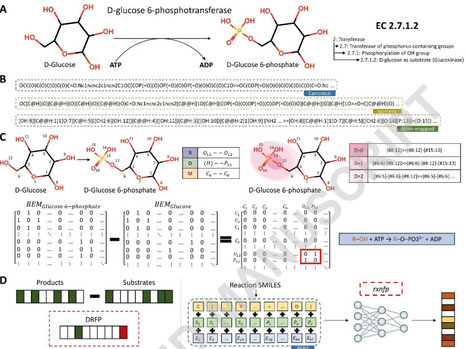
Enzymes catalyse most of the metabolic reactions in living organisms. The functional characterization of enzymes is critical to understand the metabolic processes involved in different fields such as biotechnology, nutrition, ecology, and drug development. The Enzyme Commission (EC) numbers provide a hierarchical framework for classifying enzymatic reactions, linking gene and protein sequences to biochemical transformations. However, the incomplete annotation of biochemical reaction databases limits the accurate representation of metabolism of living organisms. To address this gap, several computational methods have been developed to predict EC numbers from reaction chemical structures, broadly classified into reaction similarity-based and machine/deep learning approaches. We systematically review these tools, comparing their performance predicting EC numbers from different databases, and assessing their robustness across enzyme classes. We also apply these methods to predict EC numbers from drug metabolism reactions, highlighting their potential to improve functional annotation of uncharacterized metabolic pathways. benchmark
|
|
Scooped by
mhryu@live.com
November 14, 2:25 PM
|
Microbial peptides represent a vast yet largely underexplored component of microbial dark matter, offering a valuable reservoir of bioactive molecules. Artificial Intelligence (AI) has revolutionized peptide mining, demonstrating high-throughput screening capabilities in tasks such as functional prediction and de novo design. To fully unlock the potential of microbial resource, we present miProbe (https://www.biosino.org/iMAC/miProbe), an integrative platform hosting 1.08 × 10⁹ microbial peptides from disparate habitats. Uniquely, miProbe bridges the gap between raw sequences and AI applications by providing 8 TB of precomputed protein language model embeddings (e.g., ESM2-650M and ProtT5-XL-U50). Our analysis reveals substantial variation in peptide diversity and functional properties across habitats and microbial taxonomic groups, and highlights the utility of large-scale embedding resources in functional peptide mining. Equipped with robust APIs for seamless model integration, miProbe establishes a diverse and scalable data resource to accelerate AI-driven exploration of microbial dark matter and the rational design of novel therapeutics. Authors present miProbe, a platform aimed to consolidate peptide data and functional characterisation, and presenting a resource to accelerate AI-driven exploration of microbial dark matter.
|
|
Scooped by
mhryu@live.com
November 14, 1:51 PM
|
Accurate phage–host prediction underpins ecological interpretation and experimental validation of uncultivated phages, yet most current approaches rely heavily on metagenome-assembled genomes (MAGs). This reliance implicitly assumes that MAG-level quality metrics, such as completeness and contamination, ensure scaffold-level correctness. Here, we demonstrate that this assumption can be violated under particular challenging conditions. Tetranucleotide frequency (TNF) analyses reveal that CRISPR-associated regions often diverge compositionally from their host genomes, increasing the risk of misbinning, while experimentally validated phage–host genome pairs show consistent TNF separation between phages and their hosts, challenging compositional binning assumptions. Through controlled simulations, we further show that the incorporation of substantial amounts of TNF-matched, non-host phage sequences into high-quality MAGs does not substantially alter standard completeness and contamination estimates, rendering such errors largely undetectable. Together, these results expose a systematic and underappreciated source of bias in MAG-based phage–host inference and highlight the need for explicit scaffold-level validation beyond conventional genome-quality metrics. We further propose a practical scaffold-level validation framework that integrates structural linkage and taxonomic consistency to improve the reliability of phage–host inference from MAGs.
|
|
Scooped by
mhryu@live.com
November 14, 1:43 PM
|
Phytochromes are photoreceptor proteins with an attached bilin chromophore that exhibit a characteristic photoreversible behavior. Originally discovered in plants, phytochromes are now known to occur in diverse eukaryotes and bacteria. Many plant responses of agricultural importance are under phytochrome control. This review traces phytochrome research from its discovery to the present, covering the evolution and diversity of phytochromes, their functions in plants and other organisms, and recent advances in the structural biology of bacterial and plant phytochromes. By integrating historical discoveries with recent molecular and structural findings, the review highlights the broad biological significance and translational potential of phytochrome research.
|