Your new post is loading...

|
Scooped by
mhryu@live.com
Today, 12:56 AM
|
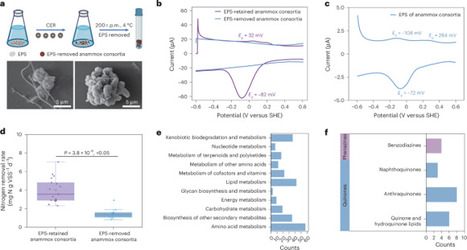
Anaerobic ammonium oxidation (anammox) plays a crucial role in efficient, low-carbon and sustainable nitrogen removal. Here we show that anammox bacteria, in cooperation with symbiotic bacteria and without a complete cytochrome c conduit, oxidize ammonium via extracellular electron transfer (EET) in the absence of nitrite through redox mediators embedded in extracellular polymeric substances. γ-Proteobacteria (Zeimonas sp.) and Actinobacteria (Candidatus ATN2) produce quinones and Planctomycetes (Candidatus CAADGN01) synthesize phenazines as electron shuttles. The anammox bacteria couple ammonium oxidation and EET by upregulating hydroxylamine oxidase, oxidoreductases and intracellular multi-haem cytochrome c. In return, they secrete essential vitamins and amino acids to support the growth of symbiotic bacteria. Global metagenomic analysis of 7,412 samples verified the widespread co-occurrence of anammox bacteria and redox mediator-producing symbiotic bacteria mainly in artificial ecosystems, such as bioreactors and wastewater treatment plants. This study reveals redox mediator-based cooperation for anammox with EET and the results imply a feasible strategy of redox mediator-enhanced EET in wastewater treatment. Anammox is a key low-carbon nitrogen removal process. Here anammox bacteria are found to couple ammonium oxidation to extracellular electron transfer with symbiotic bacteria via redox mediators within extracellular polymeric substances.
|
|
Scooped by
mhryu@live.com
July 25, 5:03 PM
|
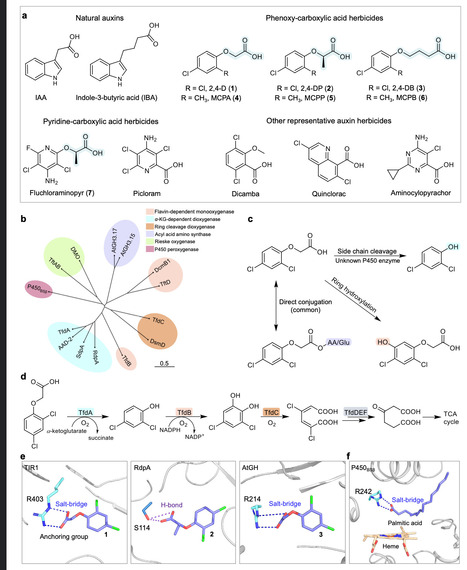
Herbicides in combination with genetically modified herbicide-resistant crops have revolutionized modern weed management, increased crop yields, and facilitated farming practices. However, rapid evolution of herbicide-resistant weeds necessitates new resistance traits to sustain control efficacy. Here, we introduce a terminal carboxyl anchoring mechanism-inspired approach for precise discovery of P450 herbicide resistance genes, by which a number of bacterial P450 peroxygenases are predicted and confirmed to degrade auxin herbicides. Upon enzyme engineering, the optimal mutant P450BSβ-F46A can efficiently degrade diverse auxin herbicides and other carboxyl-containing herbicides. Mechanistic studies reveal that Compound I-mediated hydroxylation initiates the C‒O bond cleavage, followed by aromatic ring hydroxylation, thus forming a unique two-step degradation pathway. Transgenic rice expressing P450BSβ-F46A-CPR confers significant resistance to a recently commercialized auxin herbicide fluchloraminopyr. This work demonstrates the potential of the mechanism-driven strategy in directed discovery of broad-spectrum resistance genes for herbicide-resistant crop engineering. The rapid evolution of herbicide-resistant weeds necessitates new resistance traits to sustain control efficacy. Here the authors discover and engineer a bacterial P450 peroxygenase that degrades auxin herbicides, and create a transgenic rice resistant to a commercialized auxin herbicide.
|
|
Scooped by
mhryu@live.com
July 25, 4:48 PM
|
Native tissues exhibit spatial heterogeneity in mechanical, cellular, and biochemical properties, yet reproducing such gradients in extrusion-based bioprinting remains challenging. Existing multi-material bioprinting approaches can create spatial variations in material composition, but often rely on discrete material transitions rather than continuous gradients. Here, we present a dual ball-valve mixing module that generates continuous gradients through real-time control of the mixing ratio between two precursor inks within a single-nozzle configuration. Complementary actuation of paired ball valves continuously adjusts the mixing ratio while maintaining constant extrusion conditions, transforming gradient formation into a programmable feature of the printing process. The versatility of the platform was demonstrated through gradients in mechanical stiffness, cell density, and biochemical cues. Continuous mixing enabled gradual transitions in material properties, reducing abrupt interfacial changes associated with discrete material deposition. Spatially defined cell-density distributions and graded two-population cellular interfaces were achieved while maintaining cell viability comparable to conventional extrusion bioprinting. Furthermore, a TGF-β1 gradient induced location-dependent epithelial–mesenchymal transition responses, demonstrating the ability to translate programmed biochemical gradients into spatially regulated cellular behavior. Consequently, this work establishes dynamic bioink mixing as an effective strategy for generating continuous and spatially programmable gradients, enabling the integration of material composition, cellular organization, and biochemical signaling within a single extrusion-based bioprinting process.
|
|
Scooped by
mhryu@live.com
July 25, 4:13 PM
|
Mucosal immunity—the body’s frontline defense, harboring 80% of the body's immune cells—represents a potent yet underexploited avenue for cancer vaccination. Here, we developed an oral biohybrid vaccine platform by integrating tumor antigen-loaded liposomes with fimbriae-enriched bacteria (E. coli or VNP20009) through bacterial hitchhiking or membrane hybridization. These biohybrids promote mucosal antigen delivery via glycoprotein 2 (GP2)-mediated microfold-cell (M-cell) transcytosis, enhancing antigen cross-presentation and activation of a mucosa-periphery-tumor immune cascade. Bacterial membrane-hybridized vaccines outperform bacteria-hitchhiking counterparts by reconfiguring dendritic cell (DC) subsets within gut-associated lymphoid tissues (GALTs) and triggering C-C chemokine receptor type 7 (CCR7)-dependent immune cell trafficking, thereby propagating mucosal immune activation toward distal tumor microenvironment (TME) reprogramming and tumor control. When combined with PD-1 blockade, this strategy enhances antitumor efficacy by promoting effector cell mobilization and establishing memory against tumor rechallenge. Collectively, these findings position bacteria-derived arsenal biohybrids as a versatile oral vaccine strategy, advancing mucosal immunotherapy for cancer.
|
|
Scooped by
mhryu@live.com
July 25, 3:53 PM
|
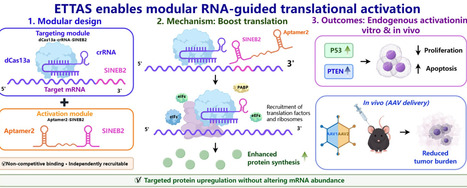
Precise enhancement of endogenous protein synthesis offers a reversible therapeutic strategy without permanent genomic modification. However, existing Cas13-mediated translational activation systems are limited by modest potency and restricted modular expandability. Here, we developed the Enhanced Targeted Translational Activation System (ETTAS), a modular RNA-guided platform that combines dCas13a, the SINEB2 translational activation element, and an independently recruitable aptamer-mediated auxiliary module. Systematic ortholog screening identified dCas13a as the most effective scaffold for SINEB2-mediated translational activation, whereas direct tandem duplication of SINEB2 elements impaired rather than enhanced activity. To overcome this architectural limitation, we used aptamer-mediated recruitment to spatially separate target recognition from auxiliary activation. A binding-validated, non-interfering dCas13a-binding aptamer enabled construction of a dual-module system in which an aptamer-recruited SINEB2 element enhanced translation without altering target mRNA abundance or stability. Compared with the previously reported dCasRx–SINEB2 system, ETTAS produced stronger reporter activation, stronger endogenous induction of P53 and PTEN, and greater antiproliferative and pro-apoptotic effects in bladder cancer cells. Proteomic analyses showed selective target protein upregulation with limited global perturbation. In vivo, dual-AAV delivery of ETTAS activated endogenous P53 and suppressed tumor growth. ETTAS establishes a programmable framework for modular post-transcriptional upregulation of endogenous proteins.
|
|
Scooped by
mhryu@live.com
July 25, 1:19 PM
|
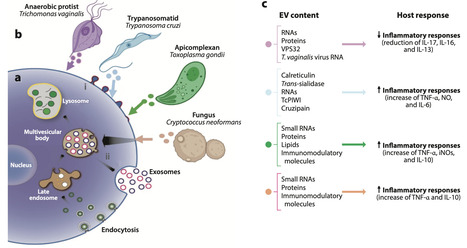
Extracellular vesicles (EVs) are released by virtually all cells in normal and in pathological conditions. They exhibit diverse sizes, contents, and surface markers. These vesicles transport cellular components such as proteins, mRNAs, miRNAs, DNA, and lipids across distances, influencing numerous physiological and pathological events, and they are involved in cellular communication, making EVs promising candidates as therapeutic agents, drug delivery systems, and disease biomarkers. In the context of eukaryotic pathogens, these EVs can be taken up by the parasite and the interacting mammalian cells, influencing parasite behavior (e.g., differentiation, infectivity) and host responses that affect pathogenesis. In this review, we discuss classical and new discoveries related to EVs produced by different cell types, including those involved in the interaction process of eukaryotic microorganisms with their respective hosts.
|
|
Scooped by
mhryu@live.com
July 25, 1:08 PM
|
Protein N- and O-glycosylation are among the most common and essential post-translational modifications and are implicated in numerous physiological and pathological processes. The efficient assembly of structurally defined N- and O-glycans remains a major challenge due to their structural complexity and diversity. Integrating the flexibility of chemical synthesis and the high regio- and stereospecificity of enzymatic catalysis, chemoenzymatic synthesis represents a powerful strategy for constructing structurally defined N- and O-glycans. This review summarizes recent advances in the chemoenzymatic synthesis of N- and O-glycans, focusing on innovative synthetic strategies and the application of novel enzymes, and offers perspectives for future research directions in this field.
|
|
Scooped by
mhryu@live.com
July 24, 4:46 PM
|
A central challenge in engineered living materials (ELMs) is the seamless integration of macroscopic structural assembly with sustained cellular viability and programmable function. Here, we report a fungal-based living material that addresses this challenge by preserving the metabolic activity of Cordyceps militaris mycelia within macroscale, cohesive films fabricated via a low-energy process. These living textiles retain the capacity for environmental response, demonstrated by nutrient-induced aerial hyphal growth that enables surface renewal. The native mycelial architecture further allows for volumetric integration of engineered microbial partners, exemplified by coculture with pigment-producing Saccharomyces cerevisiae for in situ patterning and melanized Aspergillus niger for built-in ultraviolet shielding. This modular design decouples bulk structural fabrication from genetic functionalization, offering a plug-and-play platform for synthetic biology. Environmental assessments confirm near-complete morphological degradation within 41 days. Our work establishes a scalable and sustainable chassis for functional ELMs, bridging a critical gap between structural integrity and biological programmability.
|
|
Scooped by
mhryu@live.com
July 24, 4:18 PM
|
Biocatalysis offers sustainable solutions to pressing challenges in chemical synthesis by exploiting the remarkable efficiency and selectivity of enzymes. Importantly, enzymes are able to accommodate non-native substrates and mediate transformations outside of their natural repertoire. Enzymes can be engineered for diverse applications by harnessing these 'promiscuous' activities and optimizing them using directed evolution (DE). The success of a DE campaign, however, depends on the availability of a protein starting point that displays detectable levels of the desired function. To find a starting point, researchers often screen libraries of protein variants for novel activities, typically with low rates of success. Here, instead, we diversified the active site of a desirable 'parent' protein and applied machine learning to generate informed, promiscuous libraries of protein variants. Specifically, we tested 26 different carbene and nitrene transfer reactions and used active learning-assisted directed evolution (ALDE) to generate optimized protoglobin variants with high activity across multiple reactions. We observed improvements in activity and selectivity for every reaction performed by the parent enzyme in at least one member of the ALDE-predicted libraries. Moreover, variants from these libraries can catalyze 5 out of 10 reactions not catalyzed by the parent protoglobin. These results indicate that supervised machine learning can help guide the construction of high-value enzyme libraries with expanded catalytic scope.
|
|
Scooped by
mhryu@live.com
July 24, 3:56 PM
|
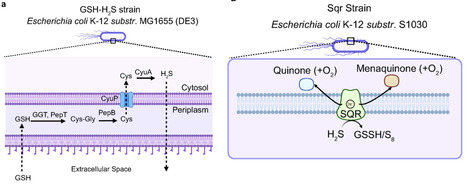
Hydrogen sulfide (H2S) is a microbiota-derived metabolite in the gastrointestinal tract implicated in a number of diseases. Its volatility and reactivity make experimentally controlling H2S concentration in vivo difficult, limiting our ability to interrogate its dose-dependent effects on host physiology. Engineered bacteria present a compelling solution, yet most probiotic metabolic engineering approaches have focused on in vitro optimization, failing to account for the complex intestinal environment. Here, we engineered E. coli strains to produce or consume H2S in specific intestinal regions by incorporating knowledge of the local metabolic environment and resident microbial activities into the design process. Analysis of human-derived ex vivo cultures revealed that glutathione (GSH) is inefficiently converted to H2S, suggesting GSH as a relatively stable substrate for engineered sulfide production. We thus engineered a GSH-dependent H2S producer, which increased levels 21-fold ex vivo. To target the nutrient-rich, microbially sparse environment of the small intestine, we optimized a H2S producer that uses L-cysteine as a sulfur source, demonstrating a 7-fold increase in H2S levels in mice. Finally, to develop strains capable of sequestering H2S, we leveraged the availability of fumarate and nitrate as electron acceptors in the large intestine by engineering a strain expressing sulfide:quinone oxidoreductase (Sqr). This enables oxidation of H2S to intracellular polysulfides and achieves higher consumption rates than alternative sequestration strategies reliant on resource-intensive GSH production. Together, this work developed engineered microbes as precision tools to modulate H2S levels and showcases a generalizable framework for region-targeted design of engineered probiotics.
|
|
Scooped by
mhryu@live.com
July 24, 1:01 AM
|
Base editing (BE), the precise installation of single-nucleotide changes in DNA or RNA without inducing double-strand breaks, holds substantial therapeutic promise for correcting single-nucleotide variants, which constitute more than half of the known pathogenic genetic variants. Recent advances have improved base editor specificity, efficiency, and delivery, enabling clinically oriented procedures. Clinically, BE has shown early success or strong translational promise in sickle cell disease, β-thalassemia, leukemia (via CAR T and epitope engineering), hypercholesterolemia (PCSK9 and ANGPTL3), alpha-1-antitrypsin deficiency, and glycogen storage disease type Ia. Key remaining challenges include bystander editing within the activity window, residual off-target DNA and RNA editing, delivery constraints (payload size, tissue targeting, and redosing limits), immunogenicity, and the need for durable long-term safety evidence across relevant cell types and disease contexts. Continued technological refinements, careful preclinical validation, and rigorous clinical assessment will be essential to fully realize BE’s transformative potential in precision medicine.
|
|
Scooped by
mhryu@live.com
July 24, 12:43 AM
|
Halophilic chassis has emerged as a promising biomanufacturing platform for industrial polyhydroxyalkanoate (PHA) production. However, challenges still remain in improving the production capacity, scalability and robustness, thereby lowering cost to meet market demands. Here, a high-performing halophilic strain Halomonas LY03 was isolated with over 38% glucose-to-PHA conversion rate and broad non-grain substrate utilization capability. Multidimensional tools, including algorithm-guided high-expression neutral integration site (HENIS) screening toolkit designated 'SiteSeek', stop codon (TAA)-dependent enhancement of gene expression and recombinase-mediated large-fragment (> 9 kb) genomic integration, were then developed to enable precise, efficient and interference-free genomic integrative expression. Using these tools, various chromosomally engineered strains were rapidly constructed to achieve high-level production of poly-3-hydroxybutyrate (PHB, 151 g L-1) and poly(3-hydroxybutyrate-co-4-hydroxybutyrate) (P34HB, 139 g L-1) under high cell-density fermentation (up to 186 g L-1 cell dry weight) in a 5-L bioreactor. Scalability was demonstrated at 2-m3 and 20-m3 industry-scale fermentations, yielding up to 134 g L-1 PHB and 127 g L-1 P34HB (6.1 mol% 4HB). Building on the proven robustness, a two-stage continuous fermentation (TCF) process was developed using a twin-bioreactor system at 5-L and 20-m3 scales, where stable and sustained PHA production lasted over 260 h and 160 h, respectively. Techno-economic analysis revealed a substantial cost-reduction space of 48% compared with conventional fed-batch process. This study demonstrates a successful paradigm for engineering a newly isolated strain toward robust, high-titer and cost-competitive PHA production across lab-industry scales.
|
|
Scooped by
mhryu@live.com
July 24, 12:29 AM
|
Pancreatic ductal adenocarcinoma (PDAC) presents a substantial challenge due to its resistance to cancer treatments. This limited efficacy is, in part, attributed to the immunosuppressive tumor microenvironment (TME), which impairs effector T (Teff) cell activity. Interleukin-2 (IL-2) is a key cytokine for T cell activation, but its therapeutic use is limited by a short half-life, systemic toxicity, and regulatory T (Treg) activation. To address this limitation, we engineered Bifidobacterium longum, a probiotic obligate anaerobe that selectively colonizes the TME, to continuously secrete Super-mutant IL-2 (SumIL-2), an engineered IL-2 variant that preferentially activates Teff cells over Treg cells, thereby delivering SumIL-2 selectively to the tumor (BifidoSumIL-2). Systemic administration of BifidoSumIL-2 significantly suppressed tumor growth in both subcutaneous tumors and orthotopic PDAC in mice, inducing an improved Teff/Treg ratio. Combining BifidoSumIL-2 with chemotherapy, radiation, and immunotherapy further restrained orthotopic PDAC growth, highlighting its therapeutic potential for difficult-to-treat cancer like PDAC.
|
|
|
Scooped by
mhryu@live.com
July 25, 5:10 PM
|
Untargeted metabolomics is a powerful approach for exploring the chemical diversity and dynamics of biological systems. However, the types of questions that can be addressed depend not only on experimental design but also on the data processing and analysis workflows used, many of which require advanced computational expertise. GNPS, now transitioning to its second major implementation (GNPS2), has evolved into an expandable platform that supports the integration of modular web applications designed to simplify and enhance downstream analysis. These apps, named MetaboApps, facilitate the postprocessing of outputs of several GNPS workflows and help make repository-scale metabolomics knowledge and other areas of metabolomics more accessible to a broader community.
|
|
Scooped by
mhryu@live.com
July 25, 4:51 PM
|
Biosensors enable the in situ measurement of metabolites in living systems over time and space. Fully genetically encoded metabolite biosensors (fGEMBs) use fluorescent proteins (FPs) linked to ligand binding domains (LBDs) to transduce the ligand binding event to a measurable change in the fluorescence behavior of the FP. Because these sensors are genetically encoded, they can be expressed in cells using standard protein expression approaches, and the fluorescence changes are quantified using fluorimetry, fluorescence microscopy, and/or flow cytometry. While there are general sensor design principles to follow, an fGEMB must be engineered for each metabolite based on a particular LBD. This development process can be slow, but there are strategies emerging to increase testing throughput and improve structure-guided design. While genetically-encoded FPs remain popular, there are now numerous chemigenetic and nucleic acid-based metabolite sensors (cGEMBs) that incorporate small molecule fluorophores. De novo design of LBDs is rapidly advancing as well, and the field may soon exhibit a shift away from relying on nature’s catalog of LBDs. Despite the engineering challenges, the metabolite biosensor field has expanded significantly in recent years to meet the demand for new and better-performing sensors that visualize metabolites within their cellular environments.
|
|
Scooped by
mhryu@live.com
July 25, 4:33 PM
|
The establishment of distinct transcriptional states entails coordinated transcriptional coregulation of several functionally disparate biological processes (fd-BPs), involving thousands of genes scattered throughout the genome. Linear clustering of genes in a single BP is one strategy for their transcriptional coregulation. However, whether such gene clustering also plays a role in transcriptional coherence of several fd-BPs remains unexplored. Here, by analyzing the genomes of eukaryotes ranging from yeast to plants to humans, we find thousands of conserved and species-specific clustered fd-BP pairs, many of which are transcriptionally correlated in normal human tissues. Strikingly, our results reveal that often this system-level transcriptional coordination is achieved in part by the genic proximity of regulatory nodes of fd-BPs (such as transcription factors) whose coregulation drives the transcriptional coherence of their respective pathways. This, we hypothesize, is one strategy for creating coregulated, tunable modulons in eukaryotes.
|
|
Scooped by
mhryu@live.com
July 25, 4:06 PM
|
Liquid–liquid phase separation (LLPS) organizes biochemical reactions in cells, yet whether this principle contributes to bacteriophage development has remained unclear. During infection, Bacillus phage SPO1 initially relies on host σA-dependent transcription to drive early gene expression before switching to phage-encoded σ factors for middle and late transcription. However, the mechanisms underlying these transitions, particularly how the middle σ factor Gp28 displaces σA, have remained elusive. Here, we show that SPO1 exploits LLPS to orchestrate its transcriptional program. We identify the phage-encoded transcription factor Gp27 as the principal driver of phase separation, forming biomolecular condensates both in vitro and in vivo. Structural and biochemical analyses reveal that Gp27 possesses a modular architecture that promotes condensate formation and concentrates the transcriptional machinery, thereby compensating for the intrinsically weak promoter-binding activity of phage-encoded σ factors. In parallel, we identify SPO1 Gp33 as an inhibitor of σA-dependent transcription whose expression itself depends on LLPS. Gp33 selectively suppresses σA-driven transcription by trapping the RNA polymerase holoenzyme in an inactive state and preventing σA-mediated promoter recognition. Together, these findings uncover LLPS as a previously unrecognized regulatory strategy exploited by bacteriophages, which acting in concert with a phage-encoded transcription inhibitor, as a mechanism governing phage transcriptional progression.
|
|
Scooped by
mhryu@live.com
July 25, 1:20 PM
|
Ribosome rescue pathways recycle the subunits from stalled ribosomes and target the aborted nascent peptide for degradation. Building upon seminal studies in eukaryotes, recent work in bacteria shows that rescue pathways are triggered by ribosome collisions. When an upstream ribosome catches up to a stalled one, a unique interface that directly recruits rescue factors forms between them. The nuclease SmrB in E. coli, for example, cleaves mRNA, targeting it for decay and triggering the rescue of upstream ribosomes by transfer–messenger RNA (tmRNA). In contrast, MutS2/RqcU in Bacillus subtilis splits stalled ribosomes into subunits without mRNA cleavage. Finally, the helicase HrpA splits stalled ribosomes in E. coli through a different mechanism. This review focuses on the discovery of these factors; the structural basis of their activities on collided disomes; and how, after splitting, the nascent chains trapped on 50S are targeted for degradation by the ribosome-associated quality control pathway.
|
|
Scooped by
mhryu@live.com
July 25, 1:12 PM
|
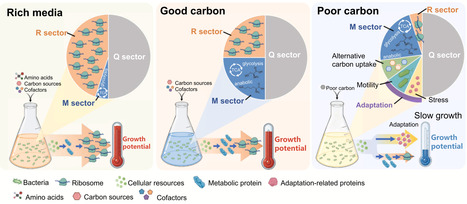
Understanding the governing principles of microbial growth control is central to fundamental microbiology, biotechnology, and systems biology. Recent quantitative studies have highlighted the pivotal role of proteome allocation in microbial growth control. Rather than simply maximizing growth, microbial cells dynamically adjust their resource allocation strategies to balance multiple physiological traits due to the fundamental constraint of trade-offs. Moreover, beyond resource allocation, which largely involves ‘abundance control’, recent studies have revealed another critical regulatory layer of microbial growth — ‘activity control’, such as modulations of ribosomal elongation rates, metabolic enzyme efficiency, and the fraction of actively translating ribosomes. Integrating these quantitative principles is expected to advance a comprehensive understanding of how distinct microbial physio-types emerge across diverse ecological niches and to further guide the rational design of synthetic biology.
|
|
Scooped by
mhryu@live.com
July 24, 4:58 PM
|
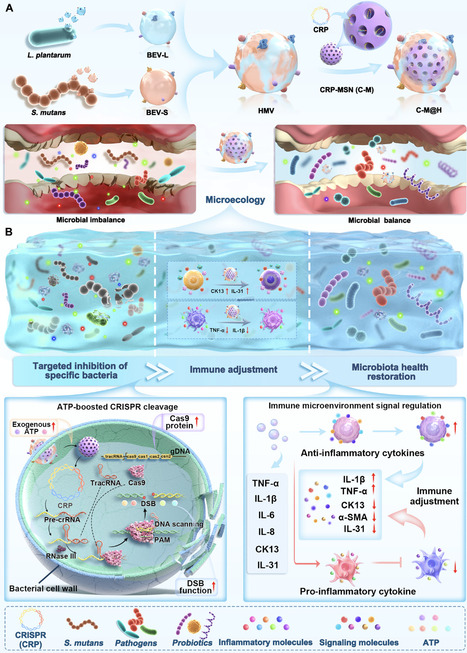
Pathogenic infections drive microbial dysbiosis and persistent inflammation, posing therapeutic challenges due to difficulties in precise pathogen eradication and microbiome restoration. Although CRISPR-based therapeutics enable pathogen-specific antibacterial targeting, their effectiveness in treating pathogenic infections is constrained by difficulties in navigating complex microbial ecosystems, penetrating pathogenic barriers, sustaining energy-intensive intracellular cleavage, and, critically, restoring microbial balance after pathogen clearance. Here, we engineer a probiotic vesicle-synergized CRISPR platform by encapsulating gtfB-targeting CRISPR plasmids within hybrid extracellular vesicles from probiotics and pathogenic Streptococcus mutans. The pathogen-derived vesicle component enables targeted uptake by S. mutans, facilitating intracellular cleavage of the virulence gene gtfB. Vesicle-carried endogenous adenosine triphosphate (ATP) boosts CRISPR activity, amplifying targeted DNA cleavage for potent and selective pathogen elimination. Probiotic-derived vesicle components further remodel quorum-sensing networks and immunity, restoring microbial homeostasis. This probiotic vesicle-based strategy integrates ATP-enhanced CRISPR cleavage with microbiome and immune modulation, offering a next-generation therapeutic paradigm for microbiome-associated diseases.
|
|
Scooped by
mhryu@live.com
July 24, 4:29 PM
|
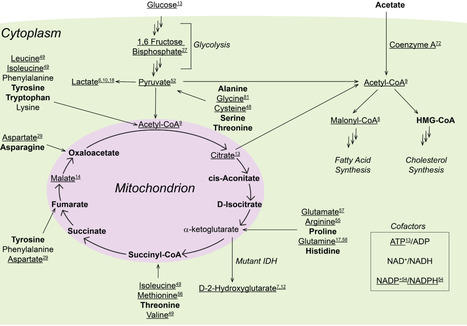
Microbes in natural environments often encounter diverse mixtures of organic compounds, yet how mixed substrate environments and their molecular composition shape microbial phenotypes remains understudied. Here, we examined how a defined fungal exudate mimic (FEM) mixture influences growth and metabolism in P. putida KT2440 compared to individual substrates matched for total carbon and nitrogen. Growth on FEM initiated 2 h earlier than growth on glucose alone and exhibited both the lowest lag and shortest time to maximum biomass compared to individual substrates. Fructose was the only individual substrate that supported significantly higher maximum biomass than FEM, but exhibited a nearly 15-fold longer lag phase. Gas chromatography mass spectrometry analysis revealed dynamic temporal patterns of substrate utilization within the FEM mixture, with early preferential utilization of malate, followed by overlapping utilization of multiple substrates between 3 and 8 h. By integrating growth and substrate uptake kinetics with genome-scale metabolic modeling and validating model-predicted pathway activity using temporal proteomics, we show that experimentally constrained model predictions accurately captured substrate utilization dynamics across multiple FEM concentrations, and predicted temporal shifts in the dominant substrates supporting growth. Through this integrative experimental-modeling approach, we demonstrate that the mixed substrate FEM environment elicits an emergent growth phenotype characterized by the lowest lag, shortest time to maximum biomass, and relatively high maximum biomass in P. putida, a combination of traits not simultaneously reproduced by any individual substrate.
|
|
Scooped by
mhryu@live.com
July 24, 4:13 PM
|
Antimicrobial resistance and tolerance pose escalating global health threats, necessitating reproducible and accessible tools for antimicrobial susceptibility testing (AST). While disk diffusion assays (DDAs) and Epsilometer tests (Etests) are widely used, there are limited open-source tools to analyze them. We present J-AST, a free, open-source, web-based platform for analyzing both DDAs and Etests. It provides automated and interactive annotation of regions of interest and metadata management, and quantifies microbial resistance and tolerance. J-AST outputs correlate strongly with those of existing tools, and equivalent DDA and Etest results correlate strongly with each other. The automated MIC detection achieved >90% agreement with manual readouts. J-AST is deployable both as desktop software and cloud service, unifies automated analysis with interactive review, and advances both fundamental research and clinical AST workflows. mic
|
|
Scooped by
mhryu@live.com
July 24, 2:54 PM
|
Recent work suggests that soil-borne viruses play an important role in controlling carbon (C) cycling and stocks. However, the contribution of individual prophage (i.e., temperate phages residing within bacterial hosts during lysogenic cycle) to C degradation remains largely undocumented at global scale. Here, we generated a global gene catalog of prophage-encoded carbohydrate-active enzyme (pCAZymes), including 20,131 soil bacterial genomes, 3548 metagenomes, and 951 metatranscriptomes derived from pre-existing databases. The catalog includes 4708 pCAZymes associated with the degradation of lignocellulose, lignin, and pectin, with 21 lytic polysaccharide monooxygenase genes newly identified in phages. Our findings reveal that prophages have potential to accelerate labile soil C degradation by encoding pCAZymes that cooperate with their bacterial hosts. Using machine learning models, we predict a 13 ± 0.7% increase in the C metabolic potential driven by soil prophages by 2100 under a high-emission scenario (SSP585). In vitro experiments demonstrated that the transcriptional activity of pCAZyme genes is regulated by environmental temperature. Soil microcosm experiments further confirmed that pCAZymes can enhance host-mediated organic C mineralization by increasing degradative enzyme activity. This study reveals previously overlooked ecological functions of prophages in global soil C transformation, with important implications for the global climate and C cycling. While it has been known that viruses contribute to biogeochemical cycles, it was unclear how prophages, of which reside within their bacterial hosts, contribute to soil carbon cycling. Zhou et al. present a global gene catalog of prophage-encoded carbohydrate-active enzyme (pCAZymes) and model the influence of these phages under a high-emission scenario.
|
|
Scooped by
mhryu@live.com
July 24, 12:53 AM
|
Plasmids are frequently AT-rich relative to their bacterial hosts. Despite this tendency towards lower GC content, plasmid and host chromosome GC content are positively correlated across diverse collections of plasmid-host pairs. However, the evolutionary processes underlying this pattern remain unclear. The classic model of amelioration predicts that horizontally acquired DNA gradually converges on host nucleotide composition. However, because plasmids can repeatedly transfer between bacterial hosts, the opportunity for such host-associated evolution may depend on their transmission dynamics. Using 50,936 plasmid-host pairs from a public sequence database, we found that the apparent global correlation between plasmid and host chromosome GC content was largely driven by differences between bacterial species rather than within species. We therefore accounted for plasmid and host population structure when testing how plasmid mobility shaped host-associated compositional evolution. We compared two contrasting regimes: a population of 3,682 Enterobacterales plasmids distributed across diverse host backgrounds, and six long-term host-associated plasmids from a Rhizobium leguminosarum lineage with INSeq-determined gene essentiality data. In the Enterobacterales population, GC content variation was overwhelmingly explained by plasmid lineage rather than host phylogeny, and conjugative plasmids showed greater similarity to their host chromosomes than mobilisable or non-mobilisable plasmids. In the Rhizobium leguminosarum plasmids, synonymous-site composition was more similar to the host chromosome among genes required across multiple host life stages. Together, these results support a model in which plasmid mobility influences the opportunity for host-associated evolutionary processes to alter nucleotide composition.
|
|
Scooped by
mhryu@live.com
July 24, 12:31 AM
|
The rational design of microbial cell factories is essential for sustainable biomanufacturing, yet the traditional Design-Build-Test-Learn (DBTL) cycle is bottlenecked by the highly non-linear and interconnected nature of biological systems. Although large language models (LLMs) offer computational advantages for automated design, their application in systems metabolic engineering is hindered by factual inconsistencies and a limited capacity for multi-hop causal reasoning—challenges that static single-pass retrieval-augmented generation (RAG) fails to resolve. Here, we present SynBioGPT2, a dynamic reasoning framework that integrates paragraph-level hybrid retrieval, an iterative self-evaluation loop, and domain-specific expert prompt templates to enable autonomous, multi-source knowledge synthesis. Evaluated on a multidimensional synthetic biology benchmark, the architecture achieved 91.67% accuracy and completeness, significantly outperforming zero-shot LLMs and static RAG baselines. We demonstrated the framework's capability to resolve systems-level biochemical constraints, including redox balancing and complex allosteric feedback networks, during the rational computational design of Corynebacterium glutamicum. Furthermore, SynBioGPT2 ensured the high-fidelity extraction of quantitative parameters and successfully reconstructed 93.5% (86/92) of expert-curated metabolic engineering strategies across diverse target products. By mitigating structural reasoning deficits and integrating expert-guided deductive logic, SynBioGPT2 provides a mechanistically robust, scalable platform to accelerate automated biological discovery and rational cell factory engineering.
|