

In efforts to translate basic-science results into pharmaceuticals and other technologies, success cannot be taken for granted.


|
Scooped by
mhryu@live.com
onto RMH March 6, 2018 1:25 PM
|
 Scoop.it!
In efforts to translate basic-science results into pharmaceuticals and other technologies, success cannot be taken for granted.

 Your new post is loading...
Scoop.it!

mRNA decay is a key post-transcriptional regulatory mechanism that fine-tunes plant development and stress adaptation through dynamic mRNA stability control, bridging fundamental biology and crop improvement. Current knowledge of mRNA decay mechanisms in plants, largely derived from Arabidopsis, is poorly generalizable across plant lineages owing to insufficient exploration of other species. Recent advances in high-throughput sequencing have accelerated the discovery of mRNA decay mechanisms. Here, we systematically illustrate its core molecular mechanisms alongside breakthrough advances. We further dissect evolutionary characteristics of highly conserved core components and lineage-specific adaptive variations across eukaryotes. Notably, conserved since the last eukaryotic common ancestor (LECA), this machinery reflects a complex ancestral eukaryote and provides high-resolution phylogenetic markers for reconstructing eukaryotic origins. We also clarify the essential biological roles of mRNA decay in developmental modulation and stress responses. Finally, we propose precision breeding strategies based on mRNA stability regulation to develop high-yielding, climate-resilient crops. This review integrates up-to-date mechanistic evidence and comparative evolutionary perspectives, consolidates consensus findings and sorts out inconsistent research outcomes, and seeks to enrich the fundamental biological understanding of plant mRNA stability modulation.
Scoop.it!
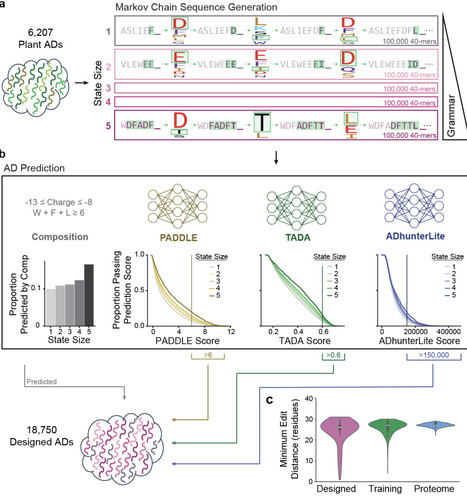
Artificial intelligence has accelerated the design of structured proteins, but it remains difficult to design functional intrinsically disordered proteins because of weak structural constraints and poorly defined sequence-to-function relationships. Activation domains (ADs), transcription factor regions that recruit coactivators, are an excellent test case for the de novo design of intrinsically disordered sequences. ADs are one of the oldest groups of functional intrinsically disordered sequences and designed ADs have applications in synthetic biology, biotechnology, and agriculture. We computationally generated 500,000 candidate sequences that resembled known ADs and predicted AD function with extant machine learning models, including three neural networks. From high-scoring sequences, we selected 18,750 for experimental validation in yeast. Surprisingly, >90% of the 16,770 well-measured sequences function as ADs. Sequences predicted to be active by multiple models were stronger, motivating development of a fast and accurate consensus AD predictor, MADRIGAL. A number of our designed ADs retain functionality across fungi, plants, and human cells. This work illustrates a generalizable paradigm for incorporating sequence-to-function models into the design loop to efficiently generate functional intrinsically disordered sequences.
mhryu@live.com's insight:
shih pm
Scoop.it!
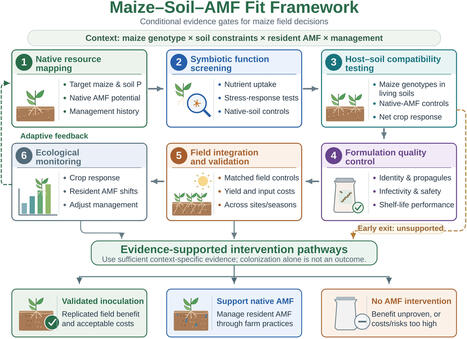
Arbuscular mycorrhizal fungi (AMF) can improve nutrient acquisition and stress responses in maize, yet inoculation benefits remain inconsistent across fields. Root colonization alone does not establish effective nutrient transfer or net crop benefit. This critical narrative review examines maize-associated AMF diversity, arbuscule-mediated exchange, host genotype effects, phosphorus availability, stress responses, rhizosphere and hyphosphere interactions, inoculant quality, and field evidence. We define crop-adapted AMF by demonstrated function in a specified maize–soil–management context, rather than fungal origin or colonization percentage alone. Drawing on mechanistic research and contrasting field outcomes, we propose a six-stage Maize–Soil–AMF Fit Framework linking native resource mapping, functional screening, compatibility tests, formulation quality, field integration, and ecological monitoring. The framework distinguishes practical agronomic evidence from advanced mechanistic measurements and permits three decisions: inoculate with a validated product, manage an effective native AMF network, or avoid intervention. It is a conceptual decision aid, not a validated predictive model. Reliable application requires replicated, genotype-aware field tests with appropriate native-AMF controls, prespecified crop outcomes, and transparent assessment of uncertainty and economic value.
Scoop.it!

RNA foundation models offer a promising route to decoding the relationships between RNA sequence, structure and function, yet how model shapes the acquisition and organization of biological information remains poorly understood. Here we introduce Layer-Interleaved Mamba-Bidirectional Encoder for RNA (LIMBER), a hybrid foundation model integrating bidirectional self-attention with selective state-space modeling, pretrained on 40.5 million non-coding RNA sequences. Through task-specific fine-tuning, LIMBER achieves leading performance on secondary-structure prediction and non-coding RNA classification benchmarks, while demonstrating strong transferability to translation-related tasks and RNA--small-molecule interaction prediction. Beyond model development, we establish a unified, task-agnostic framework to systematically evaluate and interpret the biological knowledge intrinsically acquired by RNA foundation models. This framework validates LIMBER's strong capabilities in recovering RNA structures and predicting mutational effects, while uncovering a hierarchical, task-dependent organization of different biological information across model layers. By further systematically training and evaluating a broad panel of model variants spanning model capacity, training duration and dataset size, we uncover distinct scaling behaviors across structural, evolutionary and functional capabilities. Together, these findings establish LIMBER as a versatile RNA foundation model and provide broader insights into how architectural design, internal representations and scaling shape the learning of RNA sequence-structure-function relationships.
Scoop.it!
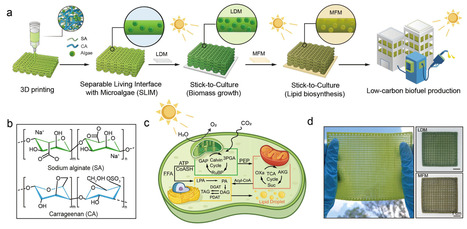
The accelerating global energy demand, coupled with diminishing fossil fuel reserves and growing carbon emissions, underscores the urgent need for sustainable energy solutions. Autotrophic microalgae are promising cell factories for converting CO2 into renewable biofuels. However, conventional microalgal biofuels typically depend on energy-intensive or nutrient-deficient regimes that suppress microalgal proliferation, resulting in a critical trade-off between biomass growth and lipid biosynthesis. Here, we report a separable living interface with microalgae (SLIM) platform that employs extracellular-matrix-mimicking hydrogel scaffolds to spatially organize microalgae and dynamically reconfigure their microenvironment, enabling spatiotemporal switching between biomass accumulation or lipid induction. The SLIM platform supports high-density growth of microalgae while facilitating precision substrate-driven metabolic regulation, enabling low-carbon operation and improved lipid production (8.89 g L−1). This work establishes an engineered living material that overcomes essential bottlenecks in microalgal biofuel production and offers a generalizable blueprint for biohybrid systems in advanced biomanufacturing. Balancing biomass growth and lipid accumulation remains a challenge in microalgal biofuel production. Here the authors report extracellular matrix-mimicking hydrogel scaffolds that dynamically reconfigure the microenvironment of spatially organized microalgae, allowing controlled switching between the two states.
mhryu@live.com's insight:
1str, prints living microalgae (Nannochloropsis oceanica) mixed into a hydrogel bioink (alginate+carrageenan), using an extrusion 3D bioprinter. The printed sheet is moved from one medium-containing substrate to another. in step one, the sheet sits on nitrogen-rich, low-salinity LDM substrate (optimized at 2 g/L nitrate and 10 g/L NaCl), where cells proliferate and the sheet turns dark green, building biomass. In step two, the same sheet is moved to nitrogen-limited, higher-salinity MFM substrate (0.5 g/L nitrate, 21.22 g/L NaCl) for 14 days, where nutrient and salt stress redirects carbon into fatty acid and triacylglycerol synthesis, lipid droplets form, and the sheet turns dark brown.
Scoop.it!

The Arg/N-degron pathway regulates important agronomic traits. In plants, the PROTEOLYSIS 1 (PRT1) protein binds to aromatic amino-terminal residues and recruits ubiquitin (Ub) conjugating enzymes to ubiquitinate substrate proteins. Here, we demonstrate that PRT1 recruits the UBC35-UEV1A complex via RING1 of PRT1. This stimulates UBC35 to produce K63-linked Ub chains. To afford chemical control over Ub signalling, we construct a synthetic substrate of PRT1 with an N-terminal calmodulin-binding peptide (CBP). The addition of the CBP sequence to the substrate creates an off switch for PRT1-dependent ubiquitination that is regulated by calcium and calmodulin. Finally, we produce a set of nanobodies that are recognised by PRT1 and induce the ubiquitination of a reporter protein. Altogether, we introduce and biochemically validate several tools to both redirect and chemically control the Arg/N-degron pathway. The Arg/N-degron pathway plays a central role in plant development, germination, and submersion tolerance. Here, the authors show that PRT1 recruits the UBC35-UEV1A complex via RING1 of PRT1, demonstrate an off-switch for calmodulin-controlled ubiquitination, and engineer nanobodies that can redirect PRT1.
mhryu@live.com's insight:
1str, To downregulate components of the N-degron pathway, we designed artificial microRNAs (amiRNAs) cloned as pre-amiRNAs that were embedded, as introns, within the CBP-RFP reporters. In this system, the presence of RFP indicates a transformed cell or protoplast with correctly spliced out pre-amiRNAs. Built on the Arabidopsis miR319a scaffold, with the targeting sequence designed using the WMD3 Web MicroRNA Designer. Cloned as a pre-amiRNA inside an intron of the reporter gene (CBP-RFP). The cell processes the intron into the mature amiRNA, which silences the target mRNA.
Scoop.it!
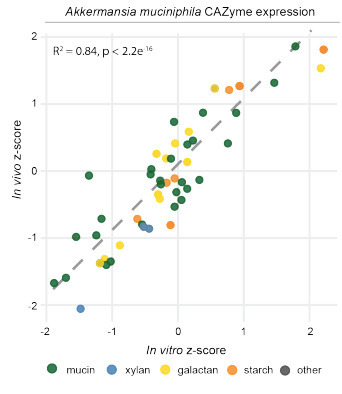
Dietary fiber deficiency shifts the gut microbiota to degrade host mucus, compromising intestinal homeostasis. Mechanistically linking in vitro metabolic dynamics of fiber degradation to in vivo outcomes remains challenging due to a lack of representative model systems. Introducing spatial mucin structures to a defined Oligo-Mouse-Microbiota (OMM12) in vitro consortium allowed us to recapitulate the spatio-temporal dynamics of xylooligosaccharide (XOS) processing in gnotobiotic mice. XOS supplementation rapidly established a stable community state in vitro and in vivo across compositional, metabolic and transcriptional levels. XOS supplementation established distinct functional guilds: Bifidobacterium animalis and Blautia coccoides partitioning xylose and arabinose catabolism, whilst profiting from XOS degradation by Bacteroides caecimuris. Along the colonic axis, a spatial XOS gradient exposes Bl. coccoides's substrate preference for xylose and drives longitudinal functional adaptations. Altogether, our predictive platform proves that regional microenvironments govern prebiotic efficacy, highlighting spatial cascades as essential parameters for targeted microbiome interventions.
mhryu@live.com's insight:
sauer u, syncom
Scoop.it!
The fundamental biochemical and stereochemical difference in how cell membrane lipids are built between Archaea on one side, and Bacteria and Eukarya on the other is known as the lipid divide. It is often assumed to translate in the impossibility of combining membranes of both types. It was established early when little sampling of the biodiversity was available. Since then, exceptions have been revealed and accumulated. Here, we review those exceptions and complement them with a broad survey, revealing diverse bacteria with mixed membrane-lipid features. Together with liposome assays and synthetic-biology experiments, studies on these organisms suggest that the lipid divide can be bridged. We conclude by discussing the evolutionary implications for LUCA, the origin of the prokaryotic domains and eukaryogenesis.
Scoop.it!
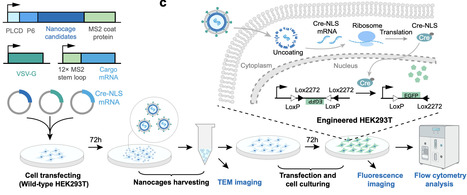
Safe and effective gene delivery remains a central challenge for therapeutic applications. While non-viral and viral vectors have enabled substantial progress, their reliance on non-human components often triggers immune responses, limiting their use in chronic treatments. Here, we develop DeepDelivery, an artificial intelligence-driven platform to identify human proteins with scaffold potential for mRNA delivery. Proteome-scale screening nominated 512 candidates, and experimental validation show that 12 of 15 selected human proteins functioned as scaffold components that facilitated particle formation and mRNA delivery within a modular engineering framework. Notably, several tripartite motif (TRIM) family proteins, typically linked to antiviral responses, exhibit strong assembly and delivery activity. Model interpretability and perturbation analyses identify TRIM domain features that influenced prediction scores and guide TRIM25-specific domain engineering to improve delivery. Together, these results establish a framework for mining the human proteome for scaffold components of programmable mRNA delivery systems and for further exploring the design space of human-derived delivery architectures. Protein-based carriers could provide biocompatible options for mRNA delivery. Here, authors develop an AI-guided platform to identify and engineer human-derived protein scaffolds that assemble into particles and support mRNA delivery in cultured cells.
mhryu@live.com's insight:
Build the training dataset (V1, V2) from InterPro viral capsid families and unrelated negatives. Train and select the model architecture (the one dimensional convolutional network), then train Model 1 on V1 and Model 2 on V2. Run the human proteome (UniProt entries, 100 to 1024 residues) through both trained models. A protein scoring above 0.5 in both becomes a candidate.
Scoop.it!
From
pubs

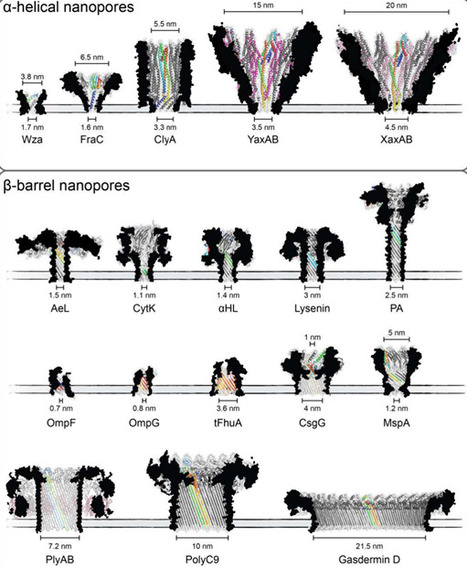
Protein-based biological nanopores have emerged as versatile tools for sequencing biopolymers, identifying molecules, and probing reactions at the single-molecule level. Many biological nanopores have been characterized, revealing the significance of nanopore size, shape, and chemical composition in molecular detection and discrimination. Advancements in understanding the nanofluidic properties of nanopores have complemented engineering approaches expanding the possible applications of nanopore technology. Through a combination of structural insights, rational design, systematic screening, and molecular dynamics simulations, researchers have developed nanopores capable of distinguishing between ions, nucleic acids, peptides, and folded proteins with remarkable specificity and sensitivity. Building upon three decades of progress, this Review highlights recent engineering innovations, discusses ongoing challenges, and explores the prospects in the field.
Scoop.it!
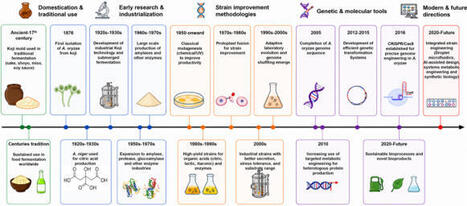
Filamentous fungi of the genus Aspergillus, because of their exceptional secretory capacity and metabolic versatility have been extensively applied in traditional food fermentation and industrial biotechnology for production of diverse bioproducts. Their history of domestication and industrial application has enabled major progress in enzyme production; however, challenges associated with the filamentous growth and strain engineering for future biomanufacturing development still remain. This review summarizes the advances across the spectrum of strain-improvement methodologies, from classical mutagenesis, protoplast fusion, genome shuffling, and adaptive laboratory evolution to the modern era of CRISPR enabled genome editing, synthetic biology, and systems-level metabolic engineering. Previous reviews have primarily focused on individual Aspergillus species, specific industrial products or particular strain improvement approaches. In this review, we provide a comprehensive overview of classical and modern strain engineering technologies and industrial scale up across a wide range of Aspergillus species for industrial enzyme production. In particular, emerging non-GMO evolution tools such as atmospheric and room temperature plasma (ARTP) mutagenesis, and modern molecular biotechnology coupled with microdroplet-based ultrahigh-throughput screening, now allow the researchers to generate and screen a large number of Aspergillus species mutants with single-cell precision. The discovery of high-performance strains with enhanced secretion, stress tolerance, substrate utilization, and favorable enzymatic profiles for food and bioprocessing applications has been accelerated by the strain innovations. Collectively, these advances establish A. oryzae and the related species as increasingly reliable, scalable, and programmable hosts that can meet the biomanufacturing requirements of future circular and sustainable bioeconomies.
mhryu@live.com's insight:
m-1str, protoplast fusion
Scoop.it!
Long non-coding RNAs (lncRNAs) have diverse biological functions, but experimentally validated evidence remains scattered across the literature and is often context dependent. EVLncRNAs 4.0 (https://www.sdklab-biophysics-dzu.net/EVLncRNAs4/) updates our manually curated database of functional lncRNAs supported by low-throughput experiments. For this release, 16 581 publications indexed between 15 May 2023 and 15 May 2026 were retrieved and manually screened. Compared with EVLncRNAs 3.0, EVLncRNAs 4.0 contains 7808 functional lncRNAs (+26%) from 199 species (+23%), 2313 diseases (+34%), 28 757 curated functional records (+21%), and 18 380 molecular interactions (+25%). EVLncRNAs 4.0 also introduces two AI-assisted functions built on the curated evidence base. AI Search uses an enhanced retrieval-augmented generation framework with adaptive selection across Quick, Expanded, and Exhaustive retrieval modes and generates answers from retrieved EVLncRNAs records with PMID-linked citations. Benchmark evaluation showed complete request execution, high retrieval coverage and full citation validity within the supplied evidence context. Functional Overview retrieves and aggregates lncRNA- and species-specific curated records before generating concise evidence-based summaries. In both functions, language models synthesize retrieved evidence rather than serve as independent sources of biological knowledge. EVLncRNAs 4.0 therefore provides an expanded, experimentally grounded resource for accessing and interpreting functional lncRNA evidence across species and biological contexts.
Scoop.it!
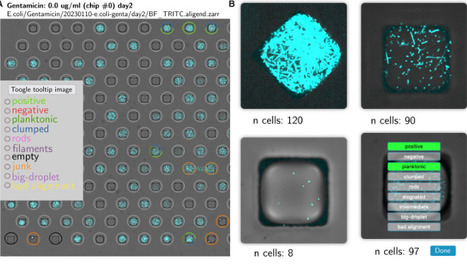
Bacterial morphology is modified by antibiotic stress depending on the antibiotic mechanism of action, while changes in morphology can contribute to cell survival. Here we present a workflow that generates morphological signatures for the progeny of individual bacterial cells across 168 antibiotic conditions. The workflow uses stationary microfluidic droplets to encapsulate and grow bacteria and confocal microscopy to image the droplet content. A custom image analysis pipeline labels morphologies in a subset of images to train a neural network. The network yields multidimensional morphological signatures from 82,000 droplets, showing the co-existence of different morphologies even for the progeny of individual cells. The signatures differ with antibiotic type and concentration, providing a way to distinguish antibiotics by their mode of action. Combined with digital detection of bacterial survival within droplets, this workflow provides a quantitative platform to investigate antibiotic resistance and identify the antimicrobial activity of unknown compounds.
mhryu@live.com's insight:
tool
|
Scoop.it!
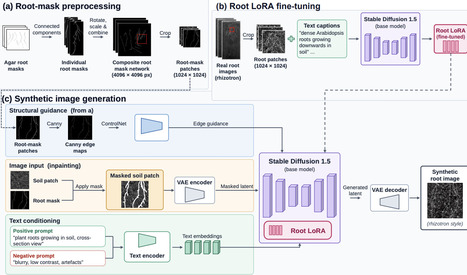
Rhizotrons allow root system architecture to be studied non-destructively in soil. However, automated analysis of rhizotron images remains difficult: roots have low contrast against soil, soil particles resemble fine roots, and deep learning models need many manually annotated images that are slow and subjective to produce. Synthetic images could provide paired images and annotations at scale, but rhizotron images are largely absent from the data used to train generative models. We built a pipeline combining Low-Rank Adaptation (LoRA), ControlNet and inpainting to generate synthetic rhizotron images with paired root masks. We compared training on synthetic data only, real data only, and synthetic pretraining followed by fine-tuning on real images, using three segmentation models: nnU-Net v2, YOLO26 and Mask2Former. Synthetic-only training reached a Dice score of up to 0.60. Synthetic pretraining followed by fine-tuning on the full real training set (two annotated rhizotron images) reached 0.80, and nnU-Net v2 and Mask2Former reached 0.62 with only two annotated image patches containing visible roots. When real annotations were limited, pretraining also improved segmentation of unseen crops, including lettuce, barley, wheat, maize, tomato, cucumber, French bean and field bean. We also introduced a Soft Dice score that compares predictions with probabilistic consensus maps from seven independent annotators, accounting for annotator disagreement. Models matched average human agreement on low-ambiguity patches but remained below it on high-ambiguity patches. In conclusion, diffusion-generated images can complement real annotations and help scale root segmentation, although their effect on downstream root trait measurements still needs to be validated.
Scoop.it!

From
academic
Chemical modifications of transfer RNAs (tRNAs) are crucial for tRNA stability, codon decoding, translational fidelity, and tRNA-derived small RNA (tsRNA) biogenesis. Changes in these modifications are associated with stress responses, physiological regulation, and human disease, underscoring the need to integrate modification information with experimental evidence and biological context. We previously established tModBase, a web resource to organize and explore tRNA modification-related data. Its first release integrated modification sites, high-throughput sequencing-derived signals, and condition-dependent changes. Since then, tRNA profiling has expanded through modification-specific and direct RNA sequencing strategies, with rapidly growing datasets across species and conditions. Here, we present tModBase v2.0 (http://www.tmodbase2.com/), containing 528 datasets across 23 species, 40 sequencing and library-preparation methods, and 42 modification types. It includes 68 third-generation and 210 modification-specific sequencing datasets, extending coverage of direct-RNA and modification-specific approaches. tModBase v2.0 further integrates sequencing-derived signals, condition-dependent information, and biological annotations linking modifications with enzymes, genetic variants, tsRNAs, diseases, and expression profiles. The LLM- and retrieval-augmented generation-powered assistant tModBot enables natural-language exploration across database modules while grounding responses in retrieved tModBase evidence. tModBase v2.0 therefore provides an expanded resource for investigating the diversity, dynamics, and biological context of tRNA modifications.
Scoop.it!
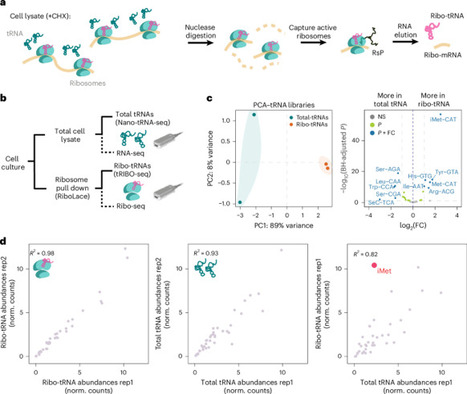
During translation, transfer RNAs (tRNAs) deliver specific amino acids to the ribosome in a coordinated manner with the sequence encoded by the messenger RNA. Despite their central role in protein synthesis, their precise contribution to the modulation of translation remains poorly understood, primarily due to lack of methods to characterize tRNA abundances and their modifications from actively translating ribosomes. Here we develop tRIBO-seq, a simple and robust nanopore-based method to selectively capture ribosome-associated native tRNA populations (ribo-tRNAs) from actively translating ribosomes, providing tRNA abundance, modification and fragmentation information from a single experiment. Using tRIBO-seq, we find that ribo-tRNAs, but often not otal tRNAs, are significantly altered on stress. Notably, we find that tRNAome alterations strongly vary depending on the stress type; while viral infection and leucine deprivation leads to changes in ribo-tRNA abundances, methionine starvation causes a dramatic loss of methyl-based tRNA modifications. By contrast, we find that arsenite exposure does not alter tRNA abundances nor modification patterns, but rather causes major fragmentation events in selected subsets of ribo-tRNAs. Altogether, tRIBO-seq offers a robust and reproducible approach to map the full tRNA landscape—capturing tRNA abundance, modification and fragmentation patterns—across both total and actively translating tRNA populations, revealing the dynamics of the tRNAome with unprecedented resolution, in a single experiment. tRIBO-seq distinguishes between ribosome-associated tRNAs and total tRNAs using nanopore sequencing, thus revealing their potentially distinct abundance, modification and fragmentation patterns in various conditions.
Scoop.it!
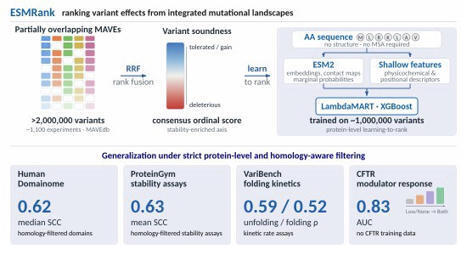
Predicting the functional effects of missense variants is limited both by predictor performance and by the lack of principled strategies to integrate heterogeneous multiplexed assays of variant effect (MAVEs), including deep mutational scanning, into transferable sequence-function models. Here, we show that redundancy among partially overlapping deep mutational scanning experiments, often treated as noise, yields a consensus landscape of mutational constraint. We introduce “variant soundness”, an overlap-aware rank-fusion score that uses cross-experiment consistency to derive an assay-agnostic ordering of mutational tolerance within proteins. Applied to ~1100 MAVEs spanning over two million missense variants, this approach reveals a mutational landscape enriched for structural stability constraints. Guided by this integrated signal, we develop ESMRank, a sequence-based learning-to-rank predictor combining ESM2 representations with physicochemical descriptors. Under strict protein-level partitioning, ESMRank outperforms widely used predictors across abundance-, folding-, and stability-related assays in ProteinGym and Domainome. Predicted deleterious variants are enriched for ClinVar pathogenicity and, in CFTR, correlate with folding efficiency, channel activity, and pharmacological responsiveness. Together, these results turn assay redundancy into a scalable resource for interpretable missense variant prediction.
mhryu@live.com's insight:
ESMRank takes a protein sequence and ranks all possible single amino acid substitutions by predicted tolerance, with predicted loss of function variants at the bottom. Training was dominated by human proteins
Scoop.it!
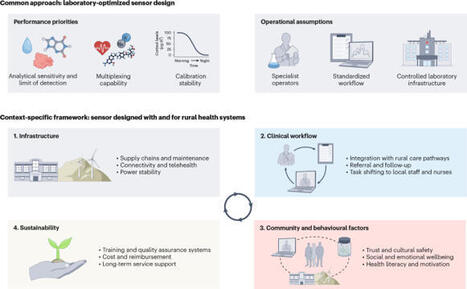
Point-of-care sensors have the potential to improve health equity in rural areas, where access to healthcare infrastructure and services is often limited. However, their readiness for scale-up and real-world deployment is judged mainly by device performance under controlled conditions. We argue that translational readiness should instead reflect how well a sensor fits the people, workflows, infrastructure and geography of its intended settings. A device that performs well in the laboratory may fail in rural settings when its design does not account for local operating conditions, workforce capacity and follow-up pathways. Here we introduce a geography-dependent readiness framework for translating point-of-care sensors into rural healthcare. The framework considers community priorities, usability, care-pathway integration and logistical constraints as upfront design criteria rather than downstream obstacles. Grounded in fieldwork across rural Australia, the framework could also apply to other regions where infrastructure, access and continuity of care are unevenly distributed. This Perspective presents a geography-dependent framework for assessing the readiness of point-of-care sensors for translation into rural healthcare settings, emphasizing the role of local context in guiding their design and deployment.
Scoop.it!
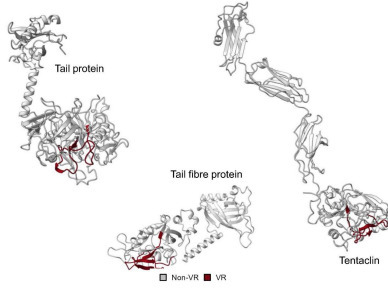
Diversity-generating retroelements (DGRs) are genetic elements that use error-prone reverse transcription to hypermutate specific target genes, most often the receptor-binding proteins of phages. They are enriched in human gut viruses, where they are hypothesised to enable phages expand their host range. Yet DGR-mediated host-range expansion across bacterial species has so far only been predicted in silico and has not been examined directly within complex microbial communities. To test this hypothesis in situ, we tracked phage-host interactions in the human gut, combining bulk metagenomic, virus-like particle (VLP), and Hi-C sequencing of longitudinal faecal samples collected over a five-week period. This culture-independent approach identified 380 interactions between 97 phages and 76 bacterial hosts. Nearly a third of these phages (31 of 97) encoded a DGR, and DGR-encoding phages were more likely to interact with multiple bacterial species. Moreover, nucleotide diversity in DGR-targeted genes increased with the number of hosts a phage interacted with and was concentrated in the surface-exposed, DGR-targeted variable region of its receptor-binding proteins. Together, these results provide in situ evidence that DGRs enable phages to expand their host range in the human gut.
Scoop.it!
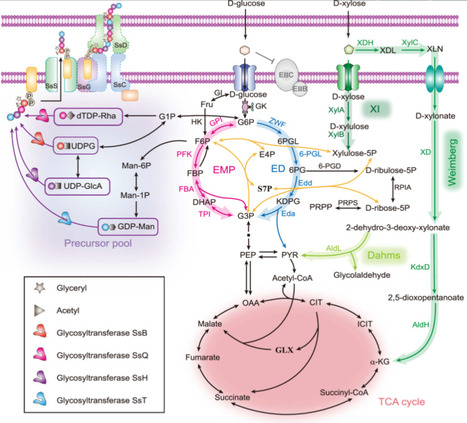
Currently, the production of high-value chemicals from natural lignocellulose is of great significance for a circular economy. In this study, a robust platform was developed based on Sphingomonas sanxanigenens NXdP, which co-utilizes glucose and xylose to synthesize polysaccharide sanxan, for efficient bioconversion of lignocellulose-derived sugars. Sanxan is a promising high-value product due to its high viscosity at low concentrations, excellent acid-gelling capabilities, and unique rheological characteristics. Through a cell growth-based screening strategy and gene manipulation, a key transporter (0233) required for the uptake of both glucose and xylose was identified, clarifying the co-utilization mechanism. Additionally, the metabolic pathways of glucose and xylose were individually blocked to assess their contributions and activities. Furthermore, the metabolic network of strain NXdP was reprogrammed via a “flux-redirection” strategy to develop a potential microbial host with improved sanxan production on mixed sugars. The final engineered strain S09 achieved a sanxan titer of 20.25 ± 0.78 g/kg under mixed-sugar fermentation, representing a 13.51% ± 4.38% increase compared with the original strain NXdP. The mechanism underlying this enhanced production was revealed by central carbon metabolism (CCM) analysis. Overall, this study provides insights into the efficient conversion of lignocellulose-derived sugars and offers genetic components for the green production of other high-value-added products.
mhryu@live.com's insight:
meng
Scoop.it!
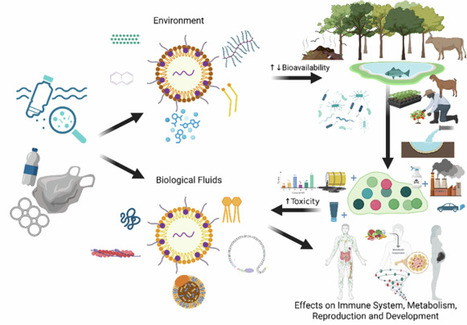
Recent data indicate plastics and associated chemicals pose risks to all forms of life - from plants, microbes, and animals to humans and their developing embryos. Plastics decompose over time into Micro and Nanoplastics (MNPs), which are present as particles or fibrils. MNPs are surrounded by other substances through hydrophobic and hydrophilic interactions, known as eco-coronas in the environment, and within living organisms as bio-coronas. We highlight key biological phenomena that may help us better understand the unique and complex impact of a Trojan horse-like exposure to the bio-corona’s cargo of MNPs. These could modify, enhance, or inhibit hormones and other active substances essential for homeostasis. The investigation of MNPs with bio-corona is of high public health relevance.
mhryu@live.com's insight:
a corona is the layer of substances that coats a micro or nanoplastic particle (MNP) after the particle meets a surrounding medium. It is a surface coating
Scoop.it!
From
pubs
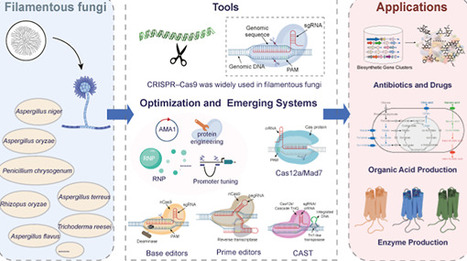
Filamentous fungi are important microbial cell factories for producing antibiotics, organic acids, enzymes, and other valuable products, with broad applications in food, agriculture, and medicine. However, inefficient and imprecise genome editing remains a major bottleneck limiting rational strain engineering. This review summarizes major genome-editing tools in filamentous fungi, including Cre-loxP, TALENs, and CRISPR–Cas systems, with emphasis on their mechanisms, advantages, and limitations. We highlight CRISPR–Cas9 as the predominant platform and discuss optimization strategies involving sgRNA design, engineered Cas9 variants, promoter engineering, AMA1-based replicative plasmids, and ribonucleoprotein delivery. Emerging technologies, including base editing, prime editing, Cas12a, and Mad7, are also discussed for their potential to broaden editing capabilities. Finally, we outline future perspectives focusing on extending the application of existing genome-editing systems in filamentous fungi and discovering novel genome-editing tools from large-scale omics data sets. This review will accelerate the development of filamentous fungi as versatile platforms for biomanufacturing.
Scoop.it!

This book explores recent, fully updated techniques involving computational approaches to the study of synthetic biology.
Scoop.it!
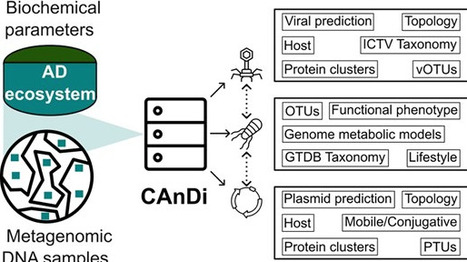
Methanogenic environments harbor complex prokaryotic consortia that drive the anaerobic conversion of organic matter into methane and carbon dioxide. Beyond being key to the global carbon cycle, such processes have been steered into powerful biotechnologies for energy production in bioreactors. Decoding the functional and taxonomic landscape of these communities requires comprehensive surveys, including bacteriophages and plasmids, which, however, remain vastly underrepresented in current databases. Here, we present the microbial Catalogue of Anaerobic Digestion (CAnDi), a database comprising 36 480 prokaryotic genomes spanning 11 149 species recovered from 1256 metagenomic samples collected across bioreactors worldwide. The reconstructed metagenomes also encode ∼1.9 million viral and over 130 000 plasmid sequences. Identity clustering revealed ∼536 000 candidate viral species, of which 85% are novel relative to existing databases, as well as over 15 000 unique plasmids. Clusters of viral and plasmid proteins were generated de novo, totalling 1 721 182 and 123 813 distinct protein families, respectively. Together, these resources substantially advance previous systematic approaches to characterize anaerobic digestion microbiomes, providing an expanded foundation for investigating the ecological and evolutionary roles of the virome and plasmidome in methane-producing ecosystems. CAnDi is accessible via https://www.candi-db.org/.
Scoop.it!
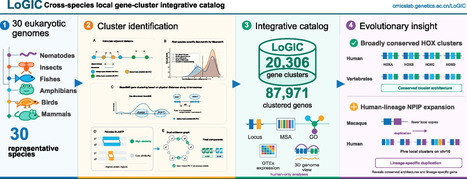
Homologous genes, especially those sharing close genomic locations and forming gene clusters, often have compensatory roles, therefore pose remarkable challenges for deciphering the functions and relationships of these genes. A comprehensive database of local homologous gene clusters with multimodal information would greatly facilitate such research. Here, we present LoGIC (https://omicslab.genetics.ac.cn/LoGIC/), a Local Gene-cluster Integrative Catalog that includes 20 306 local gene clusters identified from 30 representative eukaryotic species. In addition to the basic genomic features of each gene cluster, LoGIC also allows users to examine the sequence similarity of gene members within a cluster, the functional preference of clustered genes within a species, and the cross-species conservation of gene clusters. Information of tissue-wide expression profile and relationship with chromatin Hi-C structure is also available for human gene clusters. Together, LoGIC can facilitate studies of tandem gene duplication, paralog functional divergence, lineage-specific gene-family expansion, and evolutionary conservation or remodelling of homologous gene clusters across-species.
|





