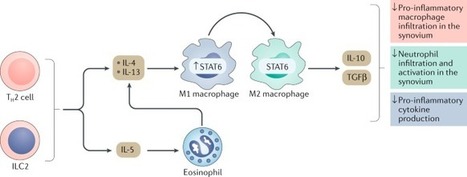
Rheumatoid arthritis (RA) is a chronic autoimmune disease characterized by a failure of spontaneous resolution of inflammation. Although the pro-inflammatory cytokines and mediators that trigger RA have been the focus of intense investigations, the regulatory and anti-inflammatory cytokines responsible for the suppression and resolution of disease in a context-dependent manner have been less well characterized. However, knowledge of the pathways that control the suppression and resolution of inflammation in RA is clinically relevant and conceptually important for understanding the pathophysiology of the disease and for the development of treatments that enable long-term remission. Cytokine-mediated processes such as the activation of T helper 2 cells by IL-4 and IL-13, the resolution of inflammation by IL-9, IL-5-induced eosinophil expansion, IL-33-mediated macrophage polarization, the production of IL-10 by regulatory B cells and IL-27-mediated suppression of lymphoid follicle formation are all involved in governing the regulation and resolution of inflammation in RA. By better understanding these immune-regulatory signalling pathways, new therapeutic strategies for RA can be envisioned that aim to balance and resolve, rather than suppress, inflammation. The ability to resolve, rather than suppress, inflammation could enable new possibilities for the treatment of chronic diseases such as rheumatoid arthritis. Knowing more about the function of immune-regulatory cytokines is the first step towards realizing their therapeutic potential.
The study found the Patrick's or FABER test, palpation of the greater trochanter, resisted hip abduction, and the resisted external derotation test to have the highest diagnostic test accuracy for GTPS.
Despite the success of targeted therapies in the treatment of inflammatory arthritides, the lack of predictive biomarkers drives a 'trial and error' approach to treatment allocation, leading to variable and/or unsatisfactory responses.
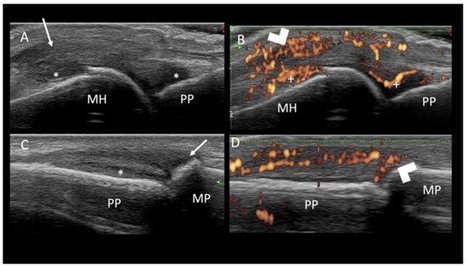
We aimed to explore the accuracy of physical examination (PE) to detect the synovial and extra-synovial pathologies in psoriatic arthritis (PsA) in comparison to ultrasonography (US). Twenty-nine PsA patients with hand pain were included in the study.
Learn from Expert Ian Horsley and start to understand where the limits of your shoulder practice can grow to unleash your potential as a clinician. Shoulders are complex structures and can cause confusion in clinical practice.
Methylation of cytosine residues in DNA, the best studied epigenetic modification, is associated with gene transcription and nuclear organization, and ultimately the function of a cell. DNA methylation can be influenced by various factors, including changes in neighbouring genomic sites such as those induced by transcription factor binding. The DNA methylation profiles in relevant cell types are altered in most human diseases compared with the healthy state. Given the physical stability of DNA and methylated DNA compared with other epigenetic modifications, DNA methylation is an ideal marker for clinical purposes. However, few DNA methylation-based markers have made it into clinical practice, with the notable exception of some markers used in the field of oncology. Autoimmune rheumatic diseases are genetically complex entities that can vary widely in terms of prognosis, subtypes, progression and treatment responses. Increasing reports showing strong links between DNA methylation profiles and different clinical outcomes and other clinical aspects in autoimmune rheumatic diseases reinforce the usefulness of DNA methylation profiles as novel clinical markers. In this Review, we provide an updated discussion on DNA methylation alterations in autoimmune rheumatic diseases and the advantages and disadvantages of using these markers in clinical practice. The DNA methylation profile of various cells types are altered in autoimmune rheumatic diseases. Particular DNA methylation profiles are associated with the prognosis, subtype, progression and/or treatment responses of various rheumatic diseases and hence have potential as clinical biomarkers.
Both ankylosing spondylitis (AS) and Crohn’s disease (CD) are chronic and potentially disabling interrelated conditions, which have been included under the group of spondyloarthropathies. The results of a large number of studies support the idea that an enteropathic pathogen, <i>Klebsiella...
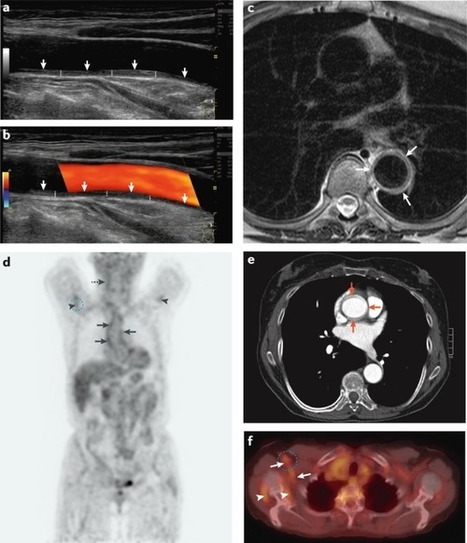
Giant cell arteritis (GCA) is the most common type of primary vasculitis in Western countries. Polymyalgia rheumatica (PMR) is the second most common inflammatory rheumatic disease of the elderly after rheumatoid arthritis. Glucocorticoids are the cornerstone of treatment for GCA and PMR, which are interrelated diseases. Glucocorticoids are effective, but adverse effects occur in a high proportion of patients. Careful use of glucocorticoids and the application of preventive strategies can minimize these adverse effects. Possible long-term complications of GCA include aneurysm and stenosis of vessels, even in patients with apparently clinically inactive disease; acute blindness is rare during glucocorticoid treatment. In PMR, whether subclinical chronic inflammation can lead to long-term damage is less clear. Management of both GCA and PMR is hampered by the lack of universally accepted definitions of remission and other disease states, such as low disease activity or vessel damage without active disease. In this Review, we outline current evidence on the monitoring and long-term management of patients with GCA and PMR, including the tapering of treatment. Giant cell arteritis (GCA) and polymyalgia rheumatica (PMR) are heterogeneous, interrelated diseases. This Review outlines current evidence on the monitoring and long-term management of patients with GCA and PMR, including the tapering of treatment and the handling of complications.
Osteoarthritis (OA) is a complex musculoskeletal disease and a leading cause of pain and disability worldwide. Hip and knee OA alone are major contributors to global disability, having notable effects on individual well-being, increasing the reliance of individuals on health-care services and contributing to a rise in the socioeconomic burden. Consistent, coordinated and tailored approaches are important for providing appropriate care to all people with OA, but despite the scale of the challenge many individuals are still not offered the safe, best-evidence treatments recommended for OA care. This Review discusses the core priority treatments for OA, including exercise and physical activity, weight-loss, education and support for self-management. Additional physical or psychological evidence-based adjunctive therapies and combined therapies that can be used to tailor individual programmes are also discussed. These options include cognitive behavioural therapy, heat therapy, walking aids and splints, manual therapies and transcutaneous electrical nerve stimulation. International examples of OA treatment options, models of care and resources available are also given. Many challenges still need to be addressed to advance the uptake of these conditions, including further discussion around the risks and costs involved with all treatments. Various core and adjunctive therapies are available for osteoarthritis (OA) that can have beneficial effects on the well-being of the individual; however, challenges remain in implementing best-evidence, high-value care.
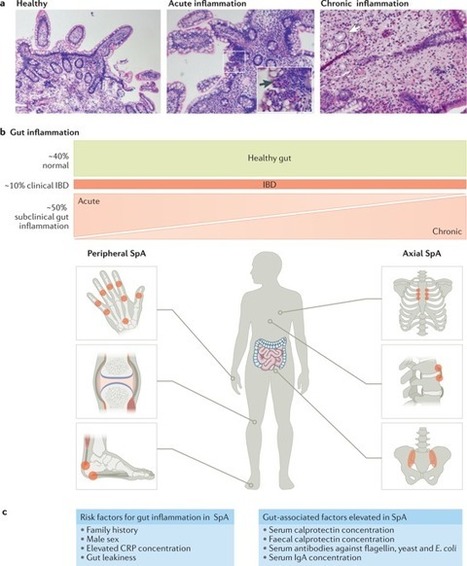
Gut inflammation is strongly associated with spondyloarthritis (SpA), as exemplified by the high prevalence of inflammatory bowel disease (IBD) and the even higher occurrence of subclinical gut inflammation in patients with SpA. The gut–joint axis of inflammation in SpA is further reinforced by similarities in immunopathogenesis at both anatomical sites and by the clinical success of therapies blocking TNF and IL-23 in IBD and in some forms of SpA. Many genetic risk factors are shared between SpA and IBD, and changes in the composition of gut microbiota are seen in both diseases. Current dogma is that inflammation in SpA initiates in the gut and leads to joint inflammation; however, although conceptually attractive, some research does not support this causal relationship. For example, therapies targeting IL-17A are efficacious in the joint but not the gut, and interfering with gut trafficking by targeting molecules such as α4β7 in IBD can lead to onset or flares of SpA. Several important knowledge gaps remain that must be addressed in future studies. Determining the true nature of the gut–joint axis has real-world implications for the treatment of patients with co-incident IBD and SpA and for the repurposing of therapeutics from one disease to the other. In this article, the authors summarize the latest clinical and basic research on gut inflammation in spondyloarthritis and highlight important questions to address in future research.
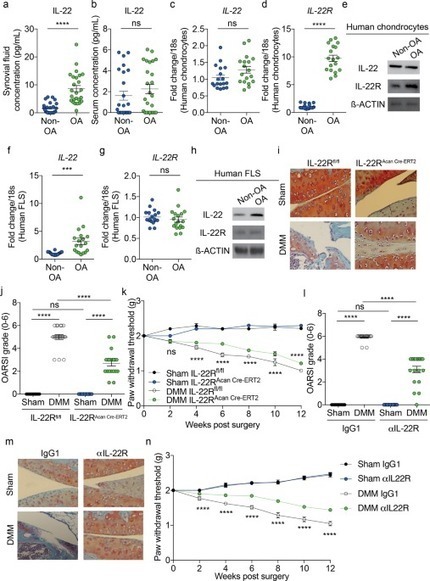
The prevalence of osteoarthritis (OA) and the burden associated with the disease are steadily increasing worldwide, representing a major public health challenge for the coming decades. The lack of specific treatments for OA has led to it being recognized as a serious disease that has an unmet medical need. Advances in the understanding of OA pathophysiology have enabled the identification of a variety of potential therapeutic targets involved in the structural progression of OA, some of which are promising and under clinical investigation in randomized controlled trials. Emerging therapies include those targeting matrix-degrading proteases or senescent chondrocytes, promoting cartilage repair or limiting bone remodelling, local low-grade inflammation or Wnt signalling. In addition to these potentially disease-modifying OA drugs (DMOADs), several targets are being explored for the treatment of OA-related pain, such as nerve growth factor inhibitors. The results of these studies are expected to considerably reshape the landscape of OA management over the next few years. This Review describes the pathophysiological processes targeted by emerging therapies for OA, along with relevant clinical data and discussion of the main challenges for the further development of these therapies, to provide context for the latest advances in the field of pharmaceutical therapies for OA. In this Review, the authors describe the pathophysiological targets and clinical effects of new drugs currently being investigated for the treatment of osteoarthritis.
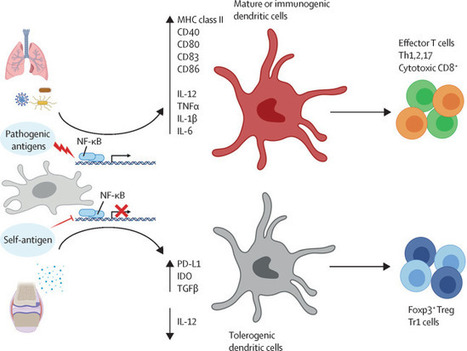
Autoimmune diseases, including rheumatoid arthritis, develop and persist due to impaired immune self-tolerance, which has evolved to regulate inflammatory responses to injury or infection. After diagnosis, patients rarely achieve drug-free remission, and although at-risk individuals can be...
Progress in our understanding of the genetics and immunology of rheumatoid arthritis (RA) has translated into clinical practice with the introduction of a first generation of biologic agents that effectively interfere with the inflammatory cascade by blocking a key component.
Mechanical loading is an important factor in musculoskeletal health and disease. Tendons and ligaments require physiological levels of mechanical loading to develop and maintain their tissue architecture, a process that is achieved at the cellular level through mechanotransduction-mediated fine tuning of the extracellular matrix by tendon and ligament stromal cells. Pathological levels of force represent a biological (mechanical) stress that elicits an immune system-mediated tissue repair pathway in tendons and ligaments. The biomechanics and mechanobiology of tendons and ligaments form the basis for understanding how such tissues sense and respond to mechanical force, and the anatomical extent of several mechanical stress-related disorders in tendons and ligaments overlaps with that of chronic inflammatory arthritis in joints. The role of mechanical stress in ‘overuse’ injuries, such as tendinopathy, has long been known, but mechanical stress is now also emerging as a possible trigger for some forms of chronic inflammatory arthritis, including spondyloarthritis and rheumatoid arthritis. Thus, seemingly diverse diseases of the musculoskeletal system might have similar mechanisms of immunopathogenesis owing to conserved responses to mechanical stress. Mechanical loading is an important factor in the development of tendon and ligament disorders. In this Review, the authors discuss the evidence for the known role of mechanical loading in tendinopathy and its potential role in inflammatory arthritis.
Des chercheurs américains ont réussi à identifier des signes pré-symptomatiques de l’arthrose à l’aide de l’IA. Dans une étude parue dans la Revue PNAS, ils donnent des résultats en faveur de l’élaboration de médicaments expérimentaux susceptibles de traiter l’arthrose avant qu’elle n’apparaisse.
Chondrogenic differentiation: from stem cell to cartilage Mesenchymal stem cells (MSCs) are multipotent stromal cells that can differentiate into a variety of cell types including osteoblasts (bone cells), neurones (nerve cells), chondrocytes (cartilage cells), myocytes (muscle cells), and...
Aims Rheumatoid arthritis (RA) is a systematic autoimmune disorder, characterized by synovial inflammation, bone and cartilage destruction, and disease involvement in multiple organs. Although nume...
Background:Articular cartilage damage of the knee is common, causing significant morbidity worldwide. Many adult tissues contain cells that are able to differentiate into multiple cell types, inclu...
Millions of people have been told the only solution to their arthritic knee is a total knee replacement. Eighty percent of these people do not need one. Here are the guidelines we use (which we...
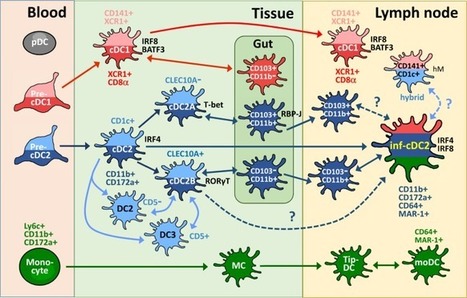
Psoriasis is a chronic inflammatory skin disease, the immunologic model of which has been profoundly revised following recent advances in the understanding of its pathophysiology. In the current model, a crosstalk between keratinocytes, neutrophils, mast cells, T cells, and dendritic cells is...
To get content containing either thought or leadership enter:
To get content containing both thought and leadership enter:
To get content containing the expression thought leadership enter:
You can enter several keywords and you can refine them whenever you want. Our suggestion engine uses more signals but entering a few keywords here will rapidly give you great content to curate.


 Your new post is loading...


 Scoop.it!
















16K attendees from 111 countries)