Maize is a main staple crop in the East African nation with 90 percent of the population depending on it for their daily energy and carbohydrates needs. However, according to UN Food and Agriculture Organization (FAO), about 60 percent of the farmers in Kenya use clean and certified maize seeds...
...With the adequate supply of the input, farmers can record high harvests as the quality seeds suitable for the climatic conditions perform well...
However, overtime...there have not been enough of the improved maize seed varieties to meet the needs of the over 3. 5 million farmers...
Shortages in the maize harvests in the country have been recorded, resulting in the sharp increase in the crop’s market prices and the maize flour...
Kenya’s food security has traditionally been pegged on the production and availability of maize, which explains the widespread concern over the number of farmers turning their backs on the crop...
...The good news, however, is that the acreage under crops like Irish potatoes, wheat, cassava, sorghum and sweet potatoes has increased.
Cassava, sorghum and sweet potatoes are nutrient-rich, drought-tolerant and disease-resistant crops, and their improved cultivation and production could cushion Kenyans from the constant threat of food shortages...
The report, which was done in collaboration with the Food and Agriculture Organisation, noted: “The major crops that rely on heavy fertiliser and seed investment coupled with the high cost of land preparation had reduced hectares; while sorghum, cassava, Irish and sweet potatoes had an expanded area due to the low investment required for their establishment”...The situation is likely to force many households to diversify their eating habits, but as the ministry of Agriculture report indicates, there are adequate alternatives.
...Divine Masters is a Uganda-based business involved in the production and trade of soya beans, maize and rice. Started in 2007 by entrepreneur Orisa Raphael Jawino to supply the demand for soya in the region, Divine Masters works with about 12,000 out-grower farmer families in addition to managing its own farms.
Managing so many farmers does come with challenges, but Divine Masters has tackled some of these issues by organising its farmers into 300 groups, consisting of between 30 and 500 farmers per group.
“These farmers operate in a cooperative manner where they have their own leadership structures; they elect their own committee members who guide or lead their operations,” Jawino told How we made it in Africa last year.
“Now Divine Masters operates or works directly with these elected leaders of the group, and any services – for instance inputs or credit facility that [have] to be extended to these farmers – I extend it through the group leadership, who is also responsible for ensuring that these services trickle down to the farmers. In the same way, when it comes to the collection of the grains and also the recovery of whatever inputs that were given or credit facility extended to them, we also get it through the group leaders.”...
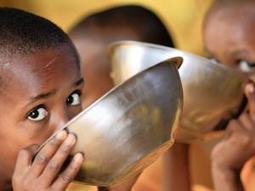
...Children are the most vulnerable to acute malnutrition -- especially severe acute malnutrition, the level of hunger that can cause permanent damage, and even death...
Every year, three-million children die of malnutrition. That is simply unacceptable, especially when you consider this: Hunger is solvable. It is not an insurmountable problem. We know what to do. Hunger is preventable -- we know when and where it is likely to strike. It is treatable -- solutions to hunger are highly effective. And it is affordable -- a full course of therapeutic food for a child with severe acute malnutrition costs a mere $45...
The need to protect the world's children from the tragedy of hunger is even more poignant this year. 2014 marks the 25th anniversary of the United Nations Convention on the Rights of the Child -- a human rights treaty that fortifies rights for children to ensure their wellbeing and safety. Food is a basic human right and now, nearly two and a half decades since the international signing of this treaty, we must not turn a blind eye...
The world is facing many challenges: civil war, natural disasters, widespread disease. We cannot combat these serious tasks without food...According to the World Food Programme, more people die from hunger each year than AIDS, malaria and tuberculosis. What's more, is a powerful contributor to the cycle of poverty, illness and cultural strife...
The prospect of earning money in Middle Eastern countries as a domestic maid or as a construction worker has spurred many young Ethiopians overseas. But for some the dream has become a nightmare as employers exploit them and ignore their rights.
Last month, the Ethiopian government ordered the repatriation of more than 130,000 young Ethiopian migrants illegally working in Saudi Arabia and placed a travel ban on workers going to the region for six months.
To help mitigate this crisis of land scarcity and spiralling youth unemployment, Farm Africa, an NGO, which has directors based in Addis Ababa, Nairobi and Dar es Salaam, has begun supplying beehives to 200 landless young people in the Tigray region to give them a resilient means of making a living...
...Ethiopia is Africa's largest honey consumer and producer. The white honey produced in the Tigray region is widely regarded as a national delicacy and is in high demand across the country.
The European Union has committed Sh16 billions towards agriculture, research and rural development in Kenya. The head of the EU delegation to Kenya Lodewijk Briet said the funds will also support nutrition in arid and semi-arid areas....the goal is to contribute to Vision 2030's objective of addressing food insecurity.
...The international aid community has recently been asking why our humanitarian aid industry continually responds late to emergencies--especially those that are recurring and known, such as drought in Africa. The industry plays a critical role in saving lives, but struggles to tackle the underlying causes of people's vulnerability, chasing misery as it moves from one crisis to the next.
The UK Department for International Development (DFID) funded a major study in 2012/2013 to quantify the cost of late humanitarian response to drought and other crises. The study found that, by responding early to drought in Kenya, the international community would save an average of $1 billion per year. Just by responding early. Imagine now if we actually invested in the ability of communities to cope with these events on their own, by supporting income generation and access to markets, water and education (among others)...
Particpants: Professor Suzanne Franks, Professor of Journalism, City University London
Discussant: Rob Bailey, Senior Research Fellow, Energy, Environment and Resources, Chatham House
Chair: Eliza Anyangwe, Journalist and Content Manager, Global Development Professionals Network, The Guardian
Extensive media coverage exposed the 1984-85 Ethiopian famine to public consciousness, with long-lasting consequences for Western policy formulation on the Horn of Africa. Recent food crises in the region continue to raise questions about the ability of the humanitarian system to translate early warnings into early action.
This meeting will look at the impact of reporting on famine and food securitization in the Horn of Africa, stimulating discussion around the themes of Suzanne Franks’ book Reporting Disasters: Famine, Aid, Politics and Media, which examines how the international configuration of aid and official policy can be both informed and misled by an incomplete portrayal of events and media pressure.
The world produces enough to feed the entire global population of 7 billion people. And yet, one person in eight on the planet goes to bed hungry each night. In some countries, one child in three is underweight. Why does hunger exist?
There are many reasons for the presence of hunger in the world and they are often interconnected. Here are six that we think are important.
Around a third of all the food produced in the world ends up being wasted somewhere along the production and consumption line, according to the UN's Food and Agriculture Organisation. In the UK, 50% of food waste occurs in the home: we throw away 7.2m tonnes of food and drink every year. That means the average household is putting £480 in the bin, rising to £680 for families with children. The rest of the waste takes place back up the supply chain, mostly on farms, but also during transport and in stores.
The consequences of all this waste go far beyond the burden on individual wallets – the land, water, fertilisers and labour that go into producing the food are also wasted, and we are left with the greenhouse-gas emissions from landfill and transport....
...Developing and developed countries account roughly evenly for the 1.3 billion tonnes of global food waste each year – but the nature of that wastage is very different. In developed countries, food is wasted throughout the supply chain, including at the consumption stage: the average European and North American consumer wastes 95-115kg of food a year. In sub-Saharan Africa and south/south-east Asia, very little is wasted by consumers. Here, most waste occurs early in the production chain, affecting millions of smallholders. Poor harvesting techniques, and a lack of storage and transport infrastructure, cause significant losses, reducing income and exacerbating local food insecurity.
A report by leading academics calls for the Food and Agriculture Organization (FAO) to change the way it operates and shift to a greater focus on “global public goods” such as data and analysis, though some of its findings are rejected by a senior FAO official.
The report, entitled Time for FAO to Shift into a Higher Gear, has emerged from a Center for Global Development (CGD) working group of 21 academics and experts on food security. It argues that FAO has the potential for greater, wider-reaching impact if it moves away from a focus on local, short-term projects.
...The five-year, $12.5 million award creates the Feed the Future Innovation Lab for Small-scale Irrigation, which will focus on methods and practices to enhance the use of small-scale irrigation in Ethiopia, Tanzania and Ghana to the benefit of the regions’ farmers, coordinators said. The objective is to contribute to sustainable improvements to utilize scarce water supplies, thereby enhancing food production by smallholder farmers. Specifically, the project will work to identify interventions that positively affect small-scale irrigation, as well as develop management protocols and practices to reduce poverty and improve nutrition...
...The project is a major effort of Feed the Future, the U.S. Government’s global hunger and food security initiative, which last year alone reached nearly 7.5 million farmers with improved technologies and management practices in more than 19 countries around the world...
...The research will begin with identifying constraints and opportunities to improving farmers’ access to small-scale irrigation technologies and will include introduction of new systems that will be used in practical demonstrations and adopted by African farmers where appropriate, according to Clarke. The project will also provide training in the use of the new technologies for in-country users — from government administrators to individual farmers — in implementing new capabilities.
The new modeling systems introduced and applied in this project will ensure new practices are gender neutral, environmentally sustainable and economically viable. They will provide enhanced nutrition to smallholder farm families...
A new voucher programme at Dadaab refugee camp in Kenya allows families to buy fresh fruit and vegetables from local food sellers. Not ordinarily a part of WFP's food ration, fresh produce makes a welcome addition to the diets of refugees, who are completely dependent on food assistance. The programme also gives a boost to the local economy providing growers and sellers with new customers to buy their food.
There are currently more than 750 KFCs in sub-Saharan Africa. Almost all are in South Africa, where they sell as much as 10 percent of the nation’s commercially grown chickens. Now the chain's parent company, Yum Brands ("the defining global company that feeds the world"), is in the midst of a major expansion northward, with plans to sell drumsticks in Senegal, ETHIOPIA, and the Democratic Republic of Congo...
...KFC's target is Africa’s surging middle class, which is expanding both in numbers and weight. According to the United Nations Food and Agriculture Organization, poultry consumption in Sub-Saharan Africa will increase 270 percent over its 2000 levels by 2030. Much of this growth is being fueled by urban, middle-class consumers who have embraced fast food, which often costs more than street food or other local fare, as a status symbol...
...But where small farmers are falling short, Africa's big chicken producers are succeeding. They're demanding more and more high-protein feed, particularly soy. The US Agency for International Development and the Gates Foundation see that as an opportunity for small farmers—if they can be convinced to adopt a new crop. To do this, USAID and Gates are funding companies to build what development experts call "value chains"—business relationships that link small farmers to sellers of agricultural inputs like fertilizer on one side, and big buyers of corn and soy on the other. Those buyers turn these commodities into feed, and then sell it to large chicken wholesalers who are staking their future growth on supplying KFC's African expansion...
Like any retail chain with a long-term investment, KFC and other chains will hire more people and inject money into local economies as they grow. Moreover, placing a high value brand like KFC at the end of any supply chain could mean more money for everyone, farmers included. There are some benefits to Africa but in the future fast food not good.
Chase Bank, in partnership with East African Grain Council, has stepped up to boost the agricultural sector in the country by introducing affordable short-term loans to farmers and traders in form of warehouse receipt finance, aimed atincreasing supply chain efficiency.
Under this form of financing, farmers and traders of wheat, maize, barley and sorghum will have access to secure and affordable short-term loans, after delivering and storing their grain in warehouses accredited by East African Grain Council. The farmers or traders will use the warehouse receipts as collateral to obtain credit from the bank.
The United Nations, in a report released today [8 January], said that "access to food remains limited" for those who have fled the wave of violence in South Sudan.
There is fear of a malnutrition crisis emerging in the conflict-torn country, and this could claim more lives than the combat itself.
Over 200,000 people have been displaced by fighting between the government and opposition forces, which broke out in December. Many of the displaced have sought refuge in UN compounds in Juba, the capital of South Sudan, and other locations.
Around 85,000 persons have fled to Awerial County in Lakes State, and distributions by the UN World Food Programme (WFP) and other aid groups are underway there. This is the largest concentration of displaced persons who escaped fighting in Bor, the capital of Jonglei state.
In Bor, the situation has deteriorated as heavy fighting continues. A limited food distribution in Bor did take place prior, during a lull in the fighting, but the insecurity is preventing additional ones from occurring. The UN says, "Further rations are required to meet food needs in Bor. If security allows, additional rations will be retrieved from the WFP warehouse."
WFP cannot access all those in need and cannot even determine really the full extent of the suffering. Malnutrition screenings are underway in Awerial County and Juba.
Another key issue will be funding for WFP, which relies on voluntary donations. The UN food agency is contending with hunger emergencies in Central African Republic, Mali and the Philippines. In Syria and throughout the Middle East, WFP is part of one of the largest humanitarian operations of this generation, feeding over 7 million war victims. In all cases WFP is facing funding shortages.
GMOs have been the subject of endless debate in the country with environmentalists claiming that its development would affect environment and lead to possible loss of indigenous seeds.
Recent reports had it that the government ruled out a review and repeal of a legal clause that holds everyone liable to punitive sanction from developers, financiers and other partners, down to the last sales outlet, should anything go wrong in the development and utilisation of agricultural biotechnology...
...Tanzania is currently implementing a regional collaborative project known as Water Efficient Maize for Africa (WEMA), aimed at developing drought-resistant maize varieties along with Kenya and Uganda in East Africa, as well as Mozambique and South Africa within the SADC region.
“Although we had a three-week dry spell in October that was not good for the Eastern and Southern provinces, we were able to recover most of the crops and planting went on in November. Since then the rains have been good, except for the last one week” [Dr Agnes Kalibata, Agriculture Minister]...She said there are no anticipated problems in terms of food pricing with the ongoing rains and farming methods in use.
...Earlier in March, a survey conducted jointly by the World Food Programme and the Government of Rwanda found that the country had made steady progress in improving food security and nutrition over the past few years...The report indicated that only one out of five Rwandan households had unacceptable food consumption trend and could be considered food-insecure...Out of the total population, only 4 per cent had poor food consumption scores.
“During the previous year (2012), the World Food Programme bought 23,000 metric tonnes of food in Rwanda, mostly for operations in neighboring countries. This is a clear sign that Rwanda is more than self-sufficient for its staple crops” [Jan Delbaere, World Food Programme’s Deputy Country Director].
In a commissioning ceremony today, the United Nations World Food Programme (WFP) together with the Government of Uganda put grain processing equipment into service to help small-scale farmers in the Jinja area to improve the quality of their grain, store it more safely and access markets.
The equipment is used to clean, dry, grade and bag grain for storage, and is being leased to Upland Rice Millers in Jinja town for the benefit of smallholder farmer groups in the area. The processing gear is one of eight units purchased by WFP and leased to the private sector and co-operatives since 2010, and it is being used in Jinja for the first time...
...The warehouse receipt system is a means to integrate small-scale farmer groups and traders into the East African Community market, the minister said. Constraints facing smallholders in Uganda include the lack of modern stores and warehouses, often resulting in poor quality grain.
"WFP's vision is that Uganda is increasingly able to access regional markets with quality grain, and that small-scale farmer groups in particular are able to get better prices for their surpluses," said Alice Martin-Daihirou, the WFP representative in Uganda...
...Under the warehouse receipt system, warehouse managers - licensed by Uganda Commodity Exchange - clean, dry, grade, bag and store agricultural produce from farmer groups, traders and processors, for a fee in public warehouses. The warehouse manager issues the depositor with a legally tradable electronic receipt, a document verifying the quantity and quality of stored grains. The receipt can enable a depositor to obtain a bank loan.
The 2013 Global Hunger Index (GHI) by the International Food Policy Research Institute and non-profit organisations Welthungerhlife and Concern Worldwide makes for fascinating reading. Aggregating three equally measured indicators (the proportion of people who are undernourished; the proportion of children younger than 5 years who are underweight; and the mortality rate of children younger than 5 years), it challenges some existing assumptions about hunger. For example, the region with the highest 2013 GHI score is South Asia rather than sub-Saharan Africa. The GHI also finds that hunger is declining, mainly due to a decline in the share of children younger than 5 years who are underweight. However, despite this progress, the report notes that 870 million people are still chronically undernourished worldwide.
What can be done? The 2013 GHI focuses on the concept of resilience as the solution. It argues that the central reason that people are unable to escape poverty and hunger is their vulnerability to shocks and stressors such as floods, price hikes, and civil unrest. Building communities' resilience to these events, including boosting their food and nutrition security, is therefore crucial for long-term development. However, the report acknowledges that the concept and science of resilience is still in its infancy—there is no consensus on the best interventions to promote resilience or even its definition. Nonetheless, it notes, the development and relief communities are working towards a loosely defined resilience framework.
The health community also has an important part to play in reaching this goal through research and evidence on the effectiveness of possible interventions to boost resilience such as cash transfers, nutritional programmes (see The Lancet's 2013 Series on Maternal and Child Nutrition), and early warning systems for disasters.
Ultimately, however, hunger is a complex condition affected by social inequality, low nutrition, education, and social status of women, climate change, poverty, food systems as well as the resilience of populations to unexpected and unpredictable events. How well all these concepts are articulated and addressed in the post-2015 development goals is therefore likely to have the biggest effect on global progress against hunger.
Sub-Sahara Africa has ample fertile land, plenty of water and a generally favourable climate for food production. It also has some of the fastest growing economies. Yet, the region is the world's most food insecure - not least because its governments don't play their part...
Even though 70 percent of Africans are farmers, the continent continues to experience hunger and famine, especially in the Horn of Africa and the Sahel region...One in four people in sub-Saharan Africa are undernourished, and every third child is stunted, according to a 2012 human development report of the United Nations Development Programme...Ironically, countries that heavily rely on agriculture are worst affected by food insecurity. That is because 90 per cent of Africa's food supply is produced by smallholders. And they produce so little, that half of them are food insecure themselves...
...The reasons for food insecurity are complex. They include crop failure due to droughts and floods, poverty, conflict and HIV. But misguided policies and weak institutions are the main culprits for hunger, experts argue...Self-serving elites are monopolising state revenues while emptying the country's resources instead of creating jobs and building industry...Many African governments continued to sideline agriculture by bestowing subsidies, incentives and macroeconomic support on other sectors.
“The cost of food production for smallholder farmers today is so high, it's not viable as a business”.
The “Famine and Forced Relocations in Ethiopia 1984-1986” case study is describing the difficulties and dilemmas met by MSF during the famine that decimated the Ethiopian population in 1984-1985. This famine triggered an unprecedented humanitarian mobilisation and huge media attention. But the Ethiopian regime at the time also used the international aid as a bait to attract the populations and forcibly resettle them in appalling conditions. In this context: what should have been done when it appeared that aid was being used against the population for whom it was intended? Could MSF’s denunciation have endangered international aid operations in Ethiopia? By taking such positions, could MSF put its own existence and, thus, its other activities at risk?
Youth need to participate in agriculture lest East Africa faces food insecurity in the future, participants at the International Symposium and Exhibition on Agricultural Development in the region have warned...
.."The average age of farmers in the region is about 60 years. This implies that low degree of youth participation in agriculture is a critical threat to food security in the near future"...."Our young people still look at agriculture as a punishment. We need to quickly address challenges like high costs of production in terms of mechanised farming".
In the EAC alone, the agricultural sector contributes about 42 per cent of Burundi's GDP, 28 per cent in Tanzania, 25 per cent in Uganda, 28 per cent in Kenya and 32 per cent in Rwanda.
For the past two years, agricultural production has been increasing in the province of South Kivu in the Democratic Republic of the Congo. And at least part of the credit goes to shopkeepers across the border in Rwanda.
The neighboring store owners have been providing Congolese farmers with phytosanitary seeds and products that help avert crop diseases. Then, these same shopkeepers have been buying the harvest that ends up coming back on the markets of Bukavu in the form of flour and other products, which have seen a resulting drop in prices.
It is a virtuous circle, where the Rwandese shopkeepers are convinced that in this border region, farmers can boost their productivity if they had better access to more modern agricultural procedures and products.
So in exchange for their help, farmers sell their produce, especially corn and manioc, to the Rwandans...
Protecting smallest farmers
Because they work hand-in-hand with these traders, local farmers with smaller output are starting to develop better procedures for their size...
...The aim is also to reduce the waste caused by transportation and tariffs at the border that farmers have had to pay whenever they go to Rwanda to buy seeds or to sell their harvest...
Advances in agricultural science and technology (S&T) have contributed to remarkable increases in food production since the mid-twentieth century. Global agriculture has grown 2.5-3 times over the last 50 years.
This has let food production keep pace with human population growth so that, overall, there are enough calories produced per capita. However, progress toward reducing hunger is variable across the world...
Hunger and malnutrition affect every aspect of human development and persist for various reasons including unequal access to land, to sufficient and nutritious food, and to other productive resources.
Adequate food production is necessary but insufficient to ensure national nutritional security. In India, for example, millions of households suffer from chronic undernourishment and malnutrition despite the fact that favourable years produce more than enough grain, and there is a public distribution system designed to supply poor households with subsidised grain.
Agricultural production needs to increase to address this unequal access to food and resources, and to meet the needs of a growing world population. It may need to increase by an estimated 70 per cent globally and by 100 per cent in developing countries by 2050 in order to keep pace with population growth and shifting diets.
Reformed agrifood systems will also need to navigate complex resource limits imposed, in part, by environmental degradation to which modern agriculture has contributed.
So the challenge for agriculture is three-fold: to increase agricultural production, especially of nutrient-rich foods, to do so in ways which reduce inequality, and to reverse and prevent resource degradation.
S&T can play a vital role in meeting these challenges - for example, by developing innovations that smallholders with limited resources can afford and use...
To get content containing either thought or leadership enter:
To get content containing both thought and leadership enter:
To get content containing the expression thought leadership enter:
You can enter several keywords and you can refine them whenever you want. Our suggestion engine uses more signals but entering a few keywords here will rapidly give you great content to curate.


 Your new post is loading...