SEL doesn't just change the teaching—it changes the teachers and the students. Here are their stories.


 Your new post is loading...
 Your new post is loading...
Your new post is loading...
 Scoop.it!
SEL doesn't just change the teaching—it changes the teachers and the students. Here are their stories. 
No comment yet.
Sign up to comment
Scoop.it!
"Facebook has partnered with Drs. Marc Brackett and Robin Stern from the Yale Center for Emotional Intelligence to provide resources and tools for dealing with bullying behavior and its consequences." https://www.facebook.com/safety/bullying
Scoop.it!

"Six Seconds is a global organization supporting people to create positive change by tapping the power of emotional intelligence. Now with offices and representatives in over 25 countries, seven validated assessment tools published, clients such as the UN, the US Navy, FedEx, HSBC, and Make-a-Wish Foundation, and top scientists on our Advisory Board, Six Seconds is a world leading resource for EQ.
Founders of Six Seconds:
Scoop.it!

In late May, on the campus of Rider University, the New Jersey Alliance for Social, Emotional, and Character Development (NJASECD) held their eighth annual conference. The theme was "Character: A Must for Everyone, Everywhere, in Academics, Athletics, and the Arts."
Scoop.it!
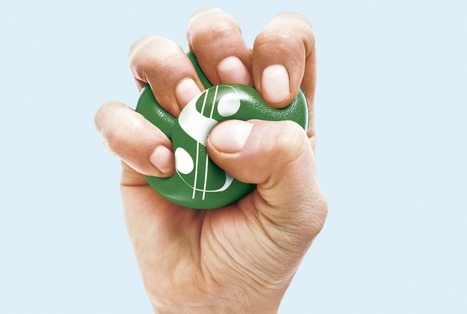
After eight weeks of a relaxation program, people used clinical services 43% less, according to a new study
Scoop.it!
By Nicole Schwarz
"It’s time for school. The bus will arrive any minute. Maybe today will be the day!
http://www.specialneedsdigest.com/2015/06/13-helpful-phrases-you-can-say-to-calm.html?spref=tw
Scoop.it!
"The Center for Youth Wellness is part of a national effort to revolutionize pediatric medicine and transform the way society responds to kids exposed to significant adverse childhood experiences and toxic stress.
http://www.centerforyouthwellness.org/
Scoop.it!

By Krista Rundell "It wasn’t until my fourth year of teaching that I really “got” it. I loved my job; teaching American History allowed me to facilitate important conversations related to the world around us and link events to explain the “whys” of our society. This was a thrilling part of my day. Discussion flowed and my students thrived on sharing their opinions while I encouraged them to cite evidence to back up their statements, not just rely on emotion.
However, about 13 years ago, I realized that my students could have all the knowledge in the world, but if they didn’t know how to manage their emotions (which run amok in a high school setting), recognize emotions in others, communicate effectively, or make appropriate decisions – they would not be given a chance to show how much they knew. I knew this already, as most of us do, deep down. But I had failed to explicitly emphasize the purpose and outcomes of the affective learning in my teaching and in the students’ learning."...
For full post, click on title above or here: http://blog.remind.com/building-relationships-through-social-and-emotional-learning/ Via Lindsey Stafford
Scoop.it!
"Jay Smooth is host of New York's longest running hip-hop radio show, the Underground Railroad on WBAI 99.5 FM in NY, and is an acclaimed commentator on politics and culture."
Scoop.it!

"Babies, toddlers, children, teenagers, parents and grandparents all have the same emotional needs. Meeting these needs in childhood provides the foundation for success in school, work, relationships, marriage, and life in general. How to Raise Emotionally Healthy Children, a parenting book by Gerald Newmark, PhD, has a compelling and provocative message about parent-child relations. It provides powerful and practical concepts and tools that enable parents, teachers, and childcare providers to interact with children and with each other in emotionally healthy ways. In the process, children learn to interact with each other in the same way.
The book is also a “wake-up call” to America that we are abandoning our children emotionally. Failure to support our children’s emotional health at home and in schools is jeopardizing their future and that of our nation. The Children’s Project, a nonprofit, grass roots organization is dedicated to providing a solution to this problem, and offers a way for families, schools, and even cities to become emotional-healthy-friendly environments. The book, and accompanying trainings and other resources, have attracted attention across diverse ethnic, religious, socio-economic, and age groups. It provides a universal language regarding emotional health that is easy for anyone to understand and use.
Visit our free resources page for tools that parents, teachers, and others who work with children can use in supporting children’s emotional health http://emotionallyhealthychildren.org/?page_id=3744
http://emotionallyhealthychildren.org/
Scoop.it!
From
www

Main page at: http://www.apa.org/ed/schools/cpse/top-twenty-principles.aspx
"Psychological science has much to contribute to enhancing teaching and learning in the everyday classroom by providing key insights on:
* Effective instruction * Classroom environments that promote learning * Appropriate use of assessment — including data, tests, measurement and research methods that inform practice.
Download the full report (PDF 453KB) to find supporting research and learn why each principle is relevant in the classroom. Click on title above or here: http://www.apa.org/ed/schools/cpse/top-twenty-principles.pdf
|
Scoop.it!

From
www
By Shankar Vedantam "A study finds that children who demonstrate more "pro-social" skills — those who share more and who are better listeners — are more likely to have jobs and stay out of trouble as young adults." For full post and audio of interview: http://www.npr.org/2015/07/16/423605191/nice-kids-finish-first-study-finds-social-skills-can-predict-future-success
Scoop.it!

ABSTRACT: "Mindfulness programs for schools are popular. We systematically reviewed the evidence regarding the effects of school-based mindfulness interventions on psychological outcomes, using a comprehensive search strategy designed to locate both published and unpublished studies. Systematic searches in 12 databases were performed in August 2012. Further studies were identified via hand search and contact with experts. Two reviewers independently extracted the data, also selecting information about intervention programs (elements, structure etc.), feasibility, and acceptance. Twenty-four studies were identified, of which 13 were published. Nineteen studies used a controlled design. In total, 1348 students were instructed in mindfulness, with 876 serving as controls, ranging from grade 1 to 12. Overall effect sizes were Hedge'sg = 0.40 between groups and g = 0.41 within groups (p < 0.0001). Between group effect sizes for domains were: cognitive performance g = 0.80, stress g = 0.39, resilience g = 0.36, (all p < 0.05), emotional problems g = 0.19 third person ratings g = 0.25 (both n.s.).
Scoop.it!

"Over the last 20 years, our scientific understanding of human development has skyrocketed—and it’s creating a paradigm shift in how we educate our children. Scientists are now suggesting that cognitive development is only 50 percent of the education equation. The other half is social and emotional development.
For more, please click on the title above or visit the following website: http://greatergood.berkeley.edu/ Via Colette Rabin
Scoop.it!
"Oakland schools have launched programs to help students manage their emotions, establish positive relationships and resolve conflicts. One of the programs, Roots of Empathy, brings infants and their mothers into school to help students recognize emotions and experience empathy. We discuss the social and emotional learning movement, which aims to teach fundamental life skills in schools, and how it's being used in Oakland." (KQED) Via Roxana Marachi, PhD
Scoop.it!
"The Stress Rap was made to help my students think about how stress impacts their health and finding healthy ways to cope. We all can learn something from this song. Side note: Part of this song is based off of the Ted Talk by Kelly McGonigal: "How To Make stress Your Friend" http://www.ted.com/talks/kelly_mcgonigal_how_to_make_stress_your_friend?language=en 
Scoop.it!

"Acknowledge Alliance recognizes that there are many factors outside of the classroom that affect student performance inside the classroom. We support educators and students through a systemic approach working directly in schools, incorporating the principles of social emotional wellness and learning into the daily teaching practice. Research has shown that social emotional wellness continues to be a consistent indicator of success in education. Having self-esteem, coping skills and building meaningful relationships will impact a student’s life now and into the future. Our work is based on understanding that some of the most influential people in a child’s life — outside of his or her family– are educators. We help shape school climate and curricula to incorporate the crucial components of social emotional learning while also providing direct support to educators around the power of resilience as they acquire new knowledge on how to nurture student’s well-being and strengths. What differentiates Acknowledge Alliance? We do not offer a “pre-packaged” curricula that is delivered to a school. Instead, we tailor our work, offering services that address the key social and emotional issues targeted to the needs of a particular school or partner."...
For main website, click on title above or here:
Scoop.it!

A school-wide mindfulness program starts with reaching out to faculty members who can help or hinder, and then addressing parent questions and concerns before beginning. Via Dr. Tom D'Amico (@TDOttawa) , Dean J. Fusto
Scoop.it!
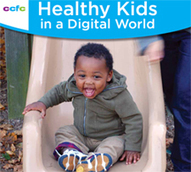
Download Healthy Kids in a Digital World: A Strategic Plan to Reduce Screen Time for Children 0 to 5 Through Organizational Policy and Practice Change here.
Scoop.it!

Empathy is the characteristic where innovation begins. It is crucial to put yourself in the place of those that you serve if we are going to create something that is better moving forward. Via Patti Kinney, Mark E. Deschaine, PhD
Scoop.it!

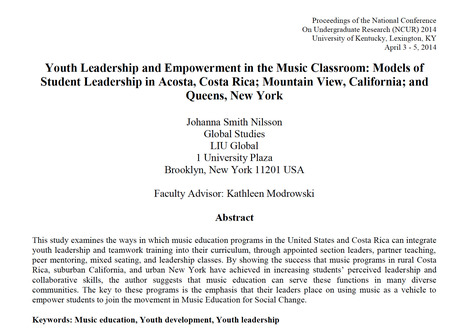
Johanna Nilsson's curator insight,
May 18, 2015 9:48 PM
Recently published in the Proceedings of the National Conference on Undergraduate Research 2014, this research shows the positive social impacts of music education on the students that I researched in Mountain View, CA; Queens, NY; and San Ignacio de Acosta, Costa Rica. This relates to health education because music impacts students' social, emotional, and academic health.
Scoop.it!
"Harvard Family Research Project (HFRP) and the National Parent-Teacher Association (PTA) have teamed up to bring you this ground-breaking policy brief that examines the role of school districts in promoting family engagement.
For full post, main link to Harvard Family Research Project, and to download report, click on title above or here:
|