


DJI has just shown off one of the most spectacular drone videos we've ever seen of an erupting volcano, so close it resulted in a melted a GoPro camera.


|
Scooped by
Jason Miller
onto Remotely Piloted Systems October 5, 2014 11:14 AM
|
 Scoop.it!
DJI has just shown off one of the most spectacular drone videos we've ever seen of an erupting volcano, so close it resulted in a melted a GoPro camera.

 Your new post is loading...
 Your new post is loading...
Your new post is loading...
Scoop.it!

Welcome to my curation site for all things coastal management-related.
Here you will find an array of stories, media, factoids, and updates on current events spanning a range of coastal and marine issues. While we are interested in a great many things, most of these entries center upon efforts to restore coastal ecosystems and improve the management of these incredibly dynamic parts of our planet.
In particular, you will find postings here that reflect a deep, continuing interest in:
- coastal riparian restoration - coastal wetland restoration - the coastal imaginary - deep sea mining - plastic pollution (especially microplastic) - subtidal reef restoration - improved Coastal Zone Managment poilcies and proceedures - coastal agriculture/food systems - sustainable fisheries management - working ports and harbors - vibrant ocean economies - marine ecology - natural history - coastal energy production - oil spills - water quality and ecotoxicology in the coastal zone - historic coastal perspectives and our relationship to our world ocean
If you find my posts here of interest, you might also be interested in some of my other research, teaching, and updates elsewhere via my:
- YouTube Coastal-Related Videos: https://www.youtube.com/watch?v=qW7CGTK-1vA&list=PLvKr3ZQE4i36pubiq9RGBJo6GSRhEJPb9&pp=gAQBiAQB - YouTube Disasters-Related Videos: https://www.youtube.com/watch?v=kJDZnFl1qxk&list=PLvKr3ZQE4i350iUWqGB_2e49Mjm94L7mf&pp=gAQBiAQB - Dr. A's lab home page: https://piratelab.org - RestoringNOLA twiter feed (emphasizing Coastal Management in California and Louisiana): https://twitter.com/RestoringNOLA
Thanks for visiting. Please enjoy and let us know if we can answer any questions or be of help. Via PIRatE Lab

Howhighcenter's curator insight,
June 2, 2022 4:57 PM
What does an acid trip typically feel like? Each person’s experience with acid will be different. Indeed, each trip may be different. One might be very light, but others can take a frightening and overwhelming turn. Symptoms may begin to show 20 to 90 minutesTrusted Source after taking a dose. The main episode can last several hours. Acid is a long-acting drug. It stays in the body 6 to 15 hoursTrusted Source. Most acid trips won’t last more than 9 hours. The trip During this period of “tripping” or active effects, you may begin to experience sensationalized perceptions of what’s happening around you. This can include “seeing” color or “tasting” sounds. Stationary items, like furniture, may begin to “move” or swell or shrink before your eyes. Coming down Coming down from the trip will feel like you’re gradually returning to Earth. Signs may begin to lessen in intensity. You may feel tired after getting through the hours-long trip and want to sleep. Afterglow An “afterglow” is possible for several hours after the end of the trip, too. This may feel like everything is “lighter” or “brighter” than before the trip. You may also have moments of flashbacks for several hours, even days, after the acid trip is over. Microdosing A microdose is a small dose of a psychedelic drug like LSD, often one-tenth of a normal dose. It’s sometimes used to help treat symptoms of anxiety and depression, but it’s not meant to completely encompass your day. However, little is known about the long-term effects of this practice. Visit Howhighcenter.com for some Psychedelic Products.. . https://howhighcenter.com/shop/chocolate-bars/blue-meanies-mushroom/ https://howhighcenter.com/shop/chocolate-bars/charming-bars/ https://howhighcenter.com/shop/chocolate-bars/dark-chocolate-bars/ https://howhighcenter.com/shop/chocolate-bars/magic-chocolate-caps/ https://howhighcenter.com/shop/chocolate-bars/one-up-mushroom/ https://howhighcenter.com/shop/chocolate-bars/one-up-mushroom-bar-3-5g-shrooms-chocolate-bar/ https://howhighcenter.com/shop/chocolate-bars/open-minded-chocolate-bars/ https://howhighcenter.com/shop/chocolate-bars/polkadot-magic-muchroom-belgian-bar/ https://howhighcenter.com/shop/chocolate-bars/rick-and-morty-trippy-flip/ https://howhighcenter.com/shop/chocolate-bars/space-bars-dark-chocolate/ https://howhighcenter.com/shop/chocolate-bars/trippy-flip-milk-chocolate-bar/ https://howhighcenter.com/shop/chocolate-bars/trippy-treats-magic-shrooms-chocolate-bars/ https://howhighcenter.com/shop/chocolate-bars/wavy-bar-chocolate-mushroom/ https://howhighcenter.com/shop/shrooms/albino-penis-envy-mushrooms/ https://howhighcenter.com/shop/shrooms/amanita-muscaria/ https://howhighcenter.com/shop/shrooms/amazon-cubensis/ https://howhighcenter.com/shop/shrooms/blue-meanies-mushrooms/ https://howhighcenter.com/shop/shrooms/brazilian-cubensis/ https://howhighcenter.com/shop/shrooms/columbia-cap/ https://howhighcenter.com/shop/shrooms/dancing-tiger/ https://howhighcenter.com/shop/shrooms/golden-caps/ https://howhighcenter.com/shop/shrooms/golden-teachers/ https://howhighcenter.com/shop/shrooms/hawaiian-caps/ https://howhighcenter.com/shop/shrooms/p-e-shrooms/ https://howhighcenter.com/shop/shrooms/psilocybe-azurescens-flying-saucer-mushrooms/ https://howhighcenter.com/shop/lsd/25i-nbome-blotter/ https://howhighcenter.com/shop/lsd/liquid-lsd/ https://howhighcenter.com/shop/lsd/liquid-lsd-acid-100/ https://howhighcenter.com/shop/lsd/liquid-lsd-acid-200/ https://howhighcenter.com/shop/lsd/lsd-blotter-200-%c2%b5g/ https://howhighcenter.com/shop/lsd/lsd-blotter-250-%c2%b5g/ https://howhighcenter.com/shop/lsd/lsd-sheets/ https://howhighcenter.com/shop/dmt/5-meo-dmt/ https://howhighcenter.com/shop/dmt/crimson-palms-hotel/ https://howhighcenter.com/shop/dmt/dmt-vape/ https://howhighcenter.com/shop/dmt/dmt-vape-top-diy-refill-syringe/ https://howhighcenter.com/shop/dmt/mdma-powder/ https://howhighcenter.com/shop/dmt/raw-dmt-powder-1g/ https://howhighcenter.com/shop/dmt/somad-dmt-vape-top/

Cole Schwab's curator insight,
September 16, 2022 3:09 PM
This article goes over how nature can help us achieve our goal set forth by the paris climate agreement, which is to limit global temperature rise to less than 2 degrees celcius. If we are smart and careful we can use nature as our ally to help fight climate change. However if we are not so smart nature could hinder our fight with rising global temperatures and contribute ultimately to natures desctruction.
Scoop.it!

The U.S. military has deployed its first squadron of one-way attack drones to the Middle East. They were reverse-engineered from Iran’s Shahed drone.

m.klighting201288@gmail.com's curator insight,
December 5, 2025 12:55 AM
For factory-direct luxury lighting designs, visit https://themklighting.com
Scoop.it!
Adam Steinmehl's insight:
Let's build some drones for the military! If we find a way to raise $121 million like these fellas, we can build some drones too! :)
Scoop.it!

More than 500 Chinese drones confiscated by Florida officials will be used for military target practice for evaluation and training.

Adam Steinmehl's comment,
December 2, 2025 7:50 PM
Crazy to think that we can take China's artillery and use it as target practice for organized destruction. I don't think they're going to like that one.
Scoop.it!

For this week’s round-up of commercial drone industry news, we look at counter-drone efforts around the 2026 World Cup, Europe’s plan to advance sustainability for commercial aviation and
Mikayla Salas's insight:
Interesting look at some differing opinions about drone usage
Scoop.it!

AI tools are transforming industrial drone operations, improving safety, inspections, and efficiency across oil, gas, and heavy industry.

Esteban Roman's comment,
November 22, 2025 10:14 PM
very interesting to see ai get tied into drone usage
Scoop.it!

Drones have been found across Western Europe near airports, military bases and power plants, as part of a suspected programme of 'hybrid warfare'
William H's insight:
Some crazy stuff is going down in the European theatre. The fact that drones are a common sighting with no knowledge of whose they belong to is rather concerning. The article suggests building a drone wall but explains that this also may not be the solution. It questions whether we should "aim for the archer, not the arrows." This alludes to the possibility of war and it is at least something to flag. I pray for the coming years and that America would know how to intercede and the discretion and discernment following all of these happenings.
Scoop.it!

The state is giving three school districts new technology to keep students safe as part of a $557,000 pilot program.

Kailani Franklin's comment,
November 20, 2025 2:31 PM
It's great that more money is being put into keeping students safe, but at the same time its sad that there is such a demand to do this because of tragic events in the past. School should be a safe place for kids.
Scoop.it!

Unmanned aerial vehicles were seen over the Doel nuclear power station in Belgium on Sunday, according to its operator.

William H's comment,
November 18, 2025 4:02 PM
It is interesting to see this article when the article I just posted referred to other drone sightings across Europe. This seems to be another instance of this phenomenon.\
Scoop.it!
Esteban Roman's insight:
Interesting to see how the public views drones and the concerns or fear with them.
Scoop.it!

Researchers at Worcester Polytechnic Institute are developing tiny drones inspired by bats for search and rescue missions.
Scoop.it!

The FCC voted to tighten national security rules on telecom equipment, which could affect DJI drones and the U.S. commercial drone market.
Scoop.it!

HP’s additive manufacturing team is transforming drone production with 3D printing, enabling lighter, smarter, and more scalable aircraft.
Mikayla Salas's insight:
similar to what we were talking about in class.
|
Scoop.it!
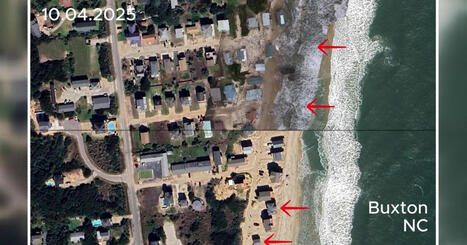
New 3D maps reveal Buxton’s beach lost 800 dump trucks of sand and nine feet of elevation in five weeks — a warning, scientists say, of how fast North Carolina’s coast is collapsing.
Scoop.it!
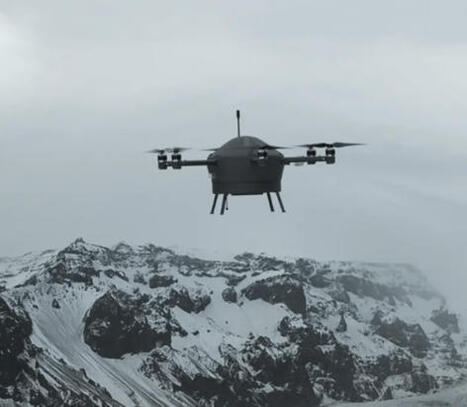
The U.S. Navy tests Meteomatics Meteodrones from moving ships to close weather data gaps and improve safety, readiness, radar performance.
Mikayla Salas's insight:
A rather interesting insight into different uses for drones
m.klighting201288@gmail.com's curator insight,
December 4, 2025 2:03 AM
Explore complete designs and factory-direct services at https://themklighting.com
Scoop.it!

Next-generation drone flight software is just one of 25 technologies for the Red Planet that the space agency funded for development this year.
Esteban Roman's insight:
This will be very interesting to see how this progresses in the future.
Scoop.it!

Amazon is expanding its Prime Air drone delivery service deeper into metro Detroit, announcing plans to fly packages from its Hazel Park fulfillment center to
Kailani Franklin's comment,
November 28, 2025 6:18 PM
I don't know how I feel about the idea of drones flying around delivering packages. I feel like a lot could go wrong. First off, the usage of drones as a way to deliver packages may take jobs away from people when the job market is already not doing so well. I also worry about the drones colliding with birds.

Mikayla Salas's comment,
December 4, 2025 1:27 AM
I don't know that I like the idea of a drone delivering a package, I feel like there is a lot of room for error.
Scoop.it!

Indigenous-led Métis Drone training at Métis Crossing develops job-ready RPAS pilots with targeted skills for emergency, industrial, and environmental missions.
Scoop.it!
Esteban Roman's insight:
great use of drones in a real life scenario
Mikayla Salas's comment,
November 24, 2025 12:25 AM
That's a really cool example of drones being used to help people.
Scoop.it!
Adam Steinmehl's insight:
Ukraine is gaining a new arsenal of aviation units from France to help the ongoing conflict with Russia.
Scoop.it!

The U.S. Marine Corps temporarily deployed a unit of drones to support Philippine maritime security efforts in the South China Sea where tensions are high between Manila and Beijing, USNI News has learned. Marine Unmanned Aerial Vehicle Squadron (VMU) 1, an Arizona-based unit formation equipped with MQ-9A Reapers, was sent to the Southeast Asian nation to support “Philippine regional maritime security,” a Marine Corps Forces Pacific spokesperson confirmed to USNI News. The deployment also enhances the U.S.-Philippine alliance’s maritime domain awareness capabilities. “The temporary stationing of unarmed MQ-9As to the Philippines demonstrates mutual commitment to improving the collective maritime security
Scoop.it!

DJI is facing an outright ban in the United States if an audit mandated by the National Defense Authorization Act doesn't take place.
William H's insight:
Very interesting and concerning that the U.S. government seemed to almost purposefully do nothing and condense the audit to just a few weeks, weakening the chance for DJI to survive. It raises a few questions...
Kailani Franklin's comment,
November 17, 2025 12:50 AM
I wonder if this will cause people to switch to a different drone brand. I think it will be hard to switch to another drone brand because DJI is such a huge drone distrbutor.
Scoop.it!

A DJI drone played a key role in saving a small dog fighting for his life in a California canal, proving once again how aerial technology can make
Esteban Roman's insight:
What a rewarding way for drones to be used in the real world.
William H's comment,
November 12, 2025 1:56 PM
Dang! They had a good eye! I was struggling to find the letters in our lab activity and I couldn't even see the dog in the picture. I am sure the more and more you do it, the better you become at identifying those types of things.
Scoop.it!
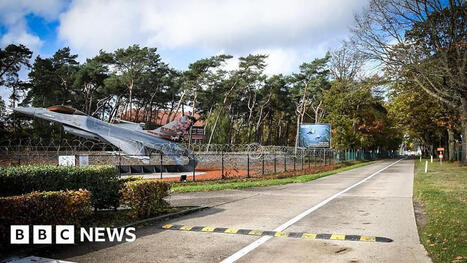
The country's Defence Minister Theo Francken said it looked like an espionage operation, but he wanted to be "cautious" about speculating.
William H's insight:
When looking for an article, this topic continued to come up equally between all news sources, despite partisan bias. It is rather concerning how much drones can be used to spy on other countries.
Scoop.it!
Adam Steinmehl's insight:
Russia is being bad boys. They are threatening civilians of war to drone attacks. They are dropping hand grenades and small artillery at Ukranians.
Scoop.it!

WPI's PeAR Bat uses ultrasonic echolocation like bats to navigate smoke and darkness for autonomous rescue missions
Adam Steinmehl's comment,
October 31, 2025 3:37 PM
It's interesting to use natural evolution to make our technology better. Cool read!
|







From the what-you-can-do-with-it department: Researchers fly drone into Dante's inferno, and its 'return home' autonomous function save its bacon.
I'm sharing this for its coolness factor. I'm also sharing it as a concrete example of how drone allow researchers to extend their reach a little more. Sure, these operators appear not to be researchers. They're more like videographers. But the story is still suggestive.
Think of what could be done with a unit that's hardened against heat and that has additional sensors. Also think about how those crashing waves of lava make planning the unit's semi-autonomous flight an important and serious issues. Fly too low over the caldera, and any flier would get brought down.
(I wonder if there are EM dynamics over the caldera that would disrupt spectrum, making it difficult or impossible to remotely control the RPV...)