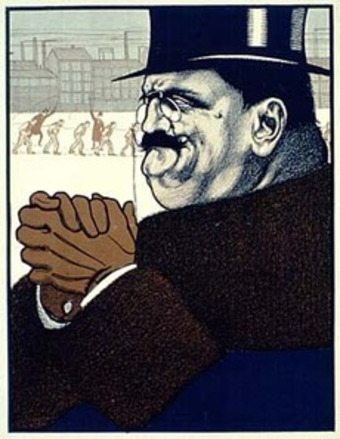
David Cameron, UK prime minister, has acknowledged Britain’s loss of faith in free market capitalism, in a speech that capped weeks of political agonising about how to control soaring executive pay and multi-million pound bank bonuses.
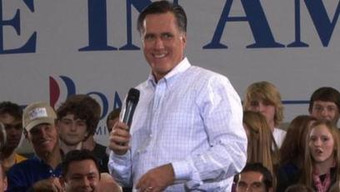
"Let me tell you something. America is a great nation, because we’re a united nation. And those who are trying to divide the nation, as you’re trying to do here, and as our president is doing, are hurting this country seriously," said Romney. "The right course for America is not to try to divide America, and try and divide us between one and another. it’s to come together as a nation."
The Occupy Movement is taking new and exciting steps as it continues to reshape political possibilities (such as reclaiming foreclosed homes).
The discussion of how to organize a society that represents the interests and aspirations of the 99% is a debate that is being held across Occupy sites. What would it mean to really take the Occupy Movement into the workplace? Into the heart of the economic system itself? And how to do it?
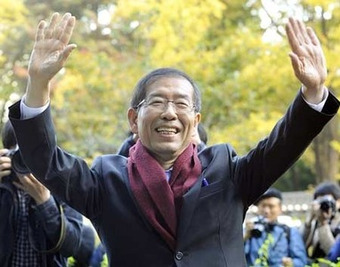
"The newly elected mayor of Seoul is Park Won Soon, a longtime activist and human rights lawyer who ran on an explicit “Occupy Wall Street platform” of challenging social inequality. Could this happen here as well?"
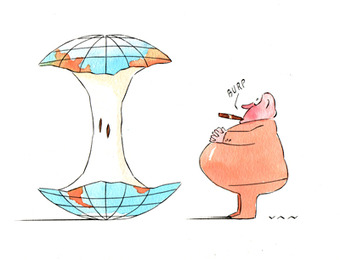
The viability of western democracy is now being put to a severe test: can the economic crisis be tackled in a way that recognizes the situation of the great majority of the population, or must the interests of the banks who caused the crisis in the first place through their irresponsible use of secondary markets always be privileged? It is a deep irony that, while the earnings of capital are justified on the grounds that shareholders are the ultimate risk-bearers, in the contemporary global economy it is the interests of bank shareholders that have first claim on resources.
I claim that there is no non-Marxist economics except forms of bourgeois economics. Assuming that we agree that an economic analysis of capitalism is needed, there is no advantage in looking toward liberal or conservative versions of economics. Despite insights, their overall theories are esentially rationalizations of capitalist ideology. Morally and politically, while Marxism can be associated with Stalinist totalitarianism, bourgeois theories are associated with economic crises, world wars, and fascist totalitarianism. This is certainly not a better choice for anarchists than Marxist political economy.
Big changes in 2011 — from the Arab Spring to the death of North Korea's dictator — create opportunities for 2012. But change can be scary, even when the regimes to be replaced are unpopular or repressive, because there's never a guarantee the new regime will be better.
The relations of China and the United States are a major preoccupation of the chattering classes (bloggers, the media, politicians, international bureaucrats). The analysis is usually posed as the relation between the declining superpower, the United States, and the rapidly rising "emergent" country, China. In the western world, the relation is usually defined negatively, China being seen as a "threat." But threat to whom, and in what sense?
"This lack of unity is Europe's third and most profound crisis, one that underlies the continent's economic and political woes. Most Europeans have little idea what the EU stands for in the world, what binds its people together, where it has come from in the past, and where it is going in the future. After more than 60 years of EU integration, 200,000 pages of legislation, and a hefty (and still growing) stack of treaties, we have succeeded in building a European Union without Europeans."
What does technology mean in our lives? Thats the question Kevin Kelly explored in his new talk. Kelly presented a new definition of technology: anything useful invented by a mind whether it be a hammer or the rule of law. So technology is more than gadgets; its part of a great story that started long ago, an extension of life and it is moving through us.
‘the international Occupy movement’s failure to produce sound legislative proposals is understandable: both the sources of the global economic crisis and the solutions to it lie, by definition, outside the competence of local and national politicians.’ She is forced to the conclusion that ‘globalisation has clearly begun to undermine the legitimacy of Western democracies.’
Among the counterintuitive facts leadership expert Jim Collins has uncovered is that personal charisma is largely irrelevant in successful leadership. In fac...
Jim Collins has a clear understanding of what it takes to be a successful leader. His book Good to Great was inspiring and I would recommend his book to anyone in a leadership position.
"Although disclosure of tax returns is standard practice for political candidates, Mr. Romney has never done so, and, at first, he tried to stonewall the issue even in a presidential race."
Why? In part because Iceland charted a unique course through the financial crisis: It let its big banks default and its currency collapse, and poured money into its economy and social safety net, raising taxes on the wealthy to do so.
“Regulation is not going to get us out of the current crisis, ” says economist Paul Krugman. “It’s what you do to prevent a recurrence. Basically, we are going to have to figure out which parts of this greatly expanded financial system are, in fact, going to be things that we have to rescue in a crisis.” This is an excerpt from a Carnegie Council talk on April 4, 2008.
South Africa’s oldest political party, the African National Congress (ANC), is embracing the social media revolution like never before. The party is increasingly using Twitter, Facebook and other internet tools to promote itself and communicate with voters. The hashtag #ANC100, marking the party’s recent centenary celebrations, moved through Twitter like wildfire, trending globally.
The first world leader to face criminal charges related to the financial crisis, he has seen his face plastered in print across the globe, not in flattering profiles but in stories weighing whether he deserves blame for an entire country's economic collapse.
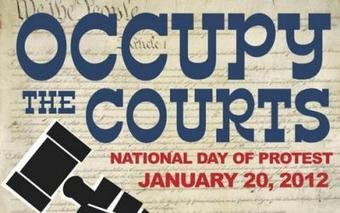
The corruption of the nation’s courts by activist judges, on both sides of the political system, threatens both the integrity and legitimacy of the American legal system and without law it can be argued that we are without country. Joining movements like Occupy the Courts is an important step for people who feel strongly about this issue, but the most important dedication one can show to this movement is to stay informed.
Bruce Springsteen's new single explores income inequality and captures the rage of the 99 percent (The Boss embraces Occupy http://t.co/Lem4spkq...)...
No More Victims (NMV) is a grassroots organization that connects American communities with war-injured children and their families. Community participants band together to learn how the child was injured, assess the child’s current situation, and work to meet the most pressing needs of the child and family.
To get content containing either thought or leadership enter:
To get content containing both thought and leadership enter:
To get content containing the expression thought leadership enter:
You can enter several keywords and you can refine them whenever you want. Our suggestion engine uses more signals but entering a few keywords here will rapidly give you great content to curate.


 Your new post is loading...


 Scoop.it!