Your new post is loading...

|
Scooped by
The Morpho Institute
January 27, 2015 8:54 AM
|
npr:
“skunkbear:
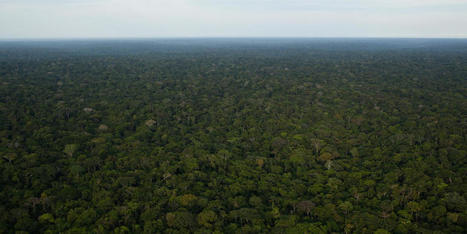
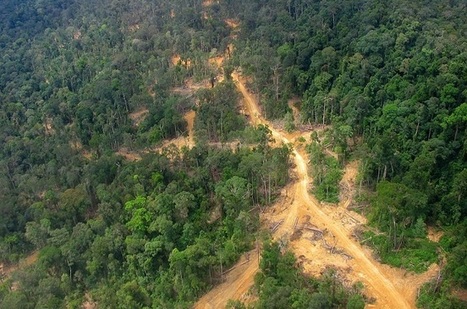
“ The top image is a photograph of a lush rainforest canopy. The bottom image colors each tree based on its species.
How? It’s all thanks to a special lab built by ecologist Greg...
|
|
Scooped by
The Morpho Institute
January 28, 2015 2:14 PM
|
Within the last six months, five oil spills from a single pipeline have contaminated indigenous Kukama communities of the Northern Peruvian Amazon. This is a story about the true cost of oil.
|
|
Scooped by
The Morpho Institute
January 22, 2015 3:13 PM
|
Three members of an isolated Amazonian tribe recently emerged from the jungle.
|
|
Scooped by
The Morpho Institute
January 20, 2015 6:33 PM
|
Aiming to be the world’s largest purveyor of sustainable cacao, a company is developing a plantation in the Amazon that scientists say comes at the expense of primary forest.
|
|
Scooped by
The Morpho Institute
January 20, 2015 7:56 AM
|
|
|
Scooped by
The Morpho Institute
January 18, 2015 12:14 PM
|
For many endangered species it is not the lack of suitable habitat that has imperiled them, but hunting. In a talk at a Smithsonian Symposium on tropical forests, Elizabeth Bennett of the Wildlife Conservation Society (WCS) outlined the perils for many species of the booming and illegal wildlife trade. She described pristine forests, which although providing perfect habitat for species, stood empty and quiet, drained by hunting for bushmeat, traditional medicine, the pet trade, and trophies.
|
|
Scooped by
The Morpho Institute
January 16, 2015 3:25 PM
|
A new study from NASA and the National Center for Atmospheric Research (NCAR) asserts that the world’s tropical rainforests might just be the best defense we have against the climate change causing greenhouse gas emissions. According to NASA and NCAR, the world’s tropical rainforests can absorb a massive 1.4 billion tons out of the 2.5 billion tons of carbon dioxide that are naturally absorbed by the earth’s natural systems.
|
|
Scooped by
The Morpho Institute
January 15, 2015 8:51 PM
|
Rising gold prices have made it profitable to extract lowgrade deposits lying beneath protected Amazon and other South American forests, says study of mining impacts A surge in the price of gold has led to increased deforestation of the Amazon and...
|
|
Scooped by
The Morpho Institute
January 14, 2015 1:57 PM
|
New research by University of California Los Angeles life scientists and 50 colleagues from the US and six other countries illuminates hidden biodiversity among more than 150 species of monkeys in South America -- many of which are endangered.
|
|
Scooped by
The Morpho Institute
January 14, 2015 1:38 PM
|
Deforestation in the Brazil Amazon continues to pace well ahead of last year's rate, shows data released today by Imazon.
According to the Brazilian NGO's analysis of satellite data, 1,373 square kilometers of rainforest was chopped down between August 2014 and December 2014, a 224 percent increase relative to the prior corresponding period a year before. Forest degradation from selective logging and fires is pacing 664 percent ahead of last year. Forest degradation typically precedes outright clearing.
|
|
Scooped by
The Morpho Institute
January 8, 2015 6:40 AM
|
The Brazilian tapir (Tapirus terrestris) may get a bad rap in Brazil, where referring to someone as a "tapir" essentially equates to calling them an "ass," but history has shown that this species is deserving of a lot more respect.
|
|
Scooped by
The Morpho Institute
January 7, 2015 5:10 PM
|
NEWS: Rainforests are the "sweat glands" of the world and losses could wreak havoc with farming, researchers warn
|
|
Scooped by
The Morpho Institute
January 7, 2015 4:54 PM
|
As Brazil's climate gets drier, caused by deforestation in the Amazon and elsewhere, writes Jan Rocha, a Brazilian climate expert proposes five-point 'battle plan' to save the world's greatest tropical forest, before it's too late.
|
|
|
Scooped by
The Morpho Institute
January 20, 2015 7:38 AM
|
A couple of weeks ago some colleagues and I wrote a paper in Science reporting some new findings on Amazonian forests. Some of the findings are actually just numbers, and one of those numbers is really big. It's the number of trees we think probably grow in the Amazon, and it's 390 billion.
|
|
Scooped by
The Morpho Institute
January 23, 2015 4:24 PM
|
By teaching basic ecology field work techniques to indigenous groups in the Amazon, Stanford researchers find that satellite measurements of rainforests underestimate the region's carbon storage potential.
|
|
Scooped by
The Morpho Institute
January 28, 2015 2:18 PM
|
Do you want to see the world? Follow a map to its edges? Let the journey unfold before you? Create your own version of the Maptia Manifesto and join Maptia's globe-scattered pioneers in declaring your love for adventure!
|
|
Scooped by
The Morpho Institute
January 20, 2015 6:28 PM
|
If there's one person standing between the world and a potential, devastating lack of chocolate, it's this man.
|
|
Scooped by
The Morpho Institute
January 20, 2015 7:49 AM
|
Returning from the field to Iquitos, Peru, researchers’ worst fears about the health of the Amazon River were confirmed.
|
|
Rescooped by
The Morpho Institute
from Chain Letters from above
January 18, 2015 9:25 AM
|
Satellite data reveals that the most dense stores of carbon in Amazonia is not above ground in trees but below ground in peatlands.
Via Paulo Gervasio
|
|
Scooped by
The Morpho Institute
January 15, 2015 10:31 AM
|
the Amazon Tall Tower Observatory, which is nearing completion in the middle of the Amazon rain forest, will gather data on gases like carbon dioxide, methane, and other components of pollution to help scientists better understand what is happening to our climate.
|
|
Rescooped by
The Morpho Institute
from Rainforest CLASSROOM
January 14, 2015 1:38 PM
|
Birds in the Amazon aren’t well suited to use human-developed surroundings to their advantage. Their dependence on intact forests makes them particularly vulnerable to environmental impacts.
|
|
Scooped by
The Morpho Institute
January 9, 2015 4:46 PM
|
Fort Dodge, IA (PRWEB) January 08, 2015 -- Lawrence "DC" Randle will be presenting on the experiential field programs in the Peruvian Amazon that offers educators, students and naturalists an exciting immersion into the world of tropical ecology, indigenous culture, sustainable development, and rainforest research. The presentation will be at the BioScience Health Center located on the Iowa Central Community College campus in Fort Dodge, IA.
|
|
Scooped by
The Morpho Institute
January 7, 2015 5:23 PM
|
Experts believe that tropical deforestation could have a massive impact on global warming and the patterns of rainfall in tropical regions.
|
|
Scooped by
The Morpho Institute
January 7, 2015 4:56 PM
|
The brilliant thighed frog is common across the Amazon River Basin, but conservation efforts will be studying this small frog as river habitats change.
|


 Scoop.it!