This briefing note examines how being in deep poverty in childhood – proxied by eligibility to free school meals at age 16 – continues to shape graduates’ earnings long after university. Using the Longitudinal Education Outcomes dataset to track the education and work pathways of 520,000 graduates...
Landmark report details impact of enslavement in Georgia | A Georgia taskforce has released a 600-page report that details the lasting impact of slavery and its afterlives in Fulton county, the state’s most populous county. In an attempt to quantify the financial impact of the county’s discrimination against Black residents, research found that in just one decade, from 1854 to 1864, stolen labour and lost wages translated to about $903bn.
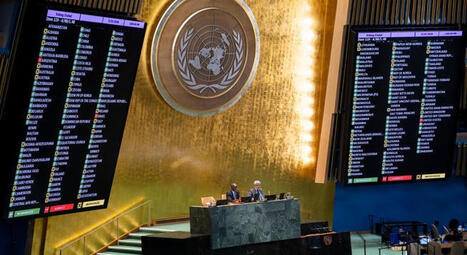
Applause erupted in the UN General Assembly Hall on Wednesday as Member States adopted a resolution declaring the transatlantic slave trade the gravest crime against humanity.
The second lecture in this series is on Frank Hill, the Jamaican trade unionist, historian, journalist and broadcaster and was delivered by Professor Matthew J Smith on 5 February 2026 at Queen Mary University of London.
The George Padmore Institute Annual Lecture is designed to highlight and platform innovative scholarship on anti-imperialism, anti-racism, internationalism and the relationship between politics and culture. The series aims to continue the legacy of GPI co-founder, Trinidadian trade unionist, activist and publisher John La Rose who dedicated his life's work to the ethos and philosophies of great Pan-Africanist George Padmore, embracing his 'independent, radical vision and outlook connecting the Caribbean, Africa, Europe, North America and Asia'.
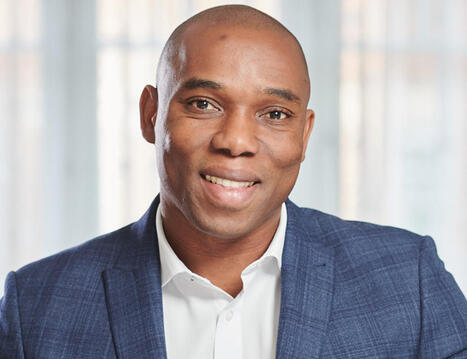
Discrimination in English football has reached record levels, from grassroots to the professional game. At the same there is rising concern about the tone of debate around immigration and identity within the sport, fuelled earlier this year by contentious comments from Manchester United’s co-owner Jim Ratcliffe. Samuel Okafor, chief executive of anti-discrimination organisation Kick It Out and a former professional footballer, tells journalist Kitty Melrose about the scale of the problem, potential reforms and why the game faces a crucial moment for change.
An online talk on 19 February 2026 which explored the materials and histories of black activist publishing in the UK from the 1970s.
Organized by the George Padmore Institute and Arielle Lawson of People's Papers and co-sponsored by the Institute of Race Relations and the Centre for the Dynamics of Ethnicity, this event focused on the archival legacy and continued significance of the black radical press — as made up of grassroots newspapers, political journals and other activist print publications — in 1970s Britain and what we can still learn from these materials today.
The Speakers Leila Hassan Howe is a British editor, writer and anti-racism activist. A founding member of the Brixton-based Race Today Collective, Leila edited the Race Today magazine from 1985. The publication played a pivotal role in highlighting the issues faced by black communities in the UK as well as race relations across the world from 1973 until its closure in 1988.
Nigel de Noronha is a researcher at the Centre for the Dynamics of Ethnicity (CoDE) at the University of Manchester. His main research focus is on housing, race and migration, and he uses archival methods to explore the historical context of the persistent housing inequalities experienced by racialised minorities.
Sophia Siddiqui works at the Institute of Race Relations (IRR), an anti-racist charity working to inform the struggle for racial justice. She is the joint editor of the IRR’s international journal Race & Class, and she writes on issues related to the far right and community resistance.
George Padmore Institute The GPI is an archive preserving the stories of black, Caribbean, African and Asian activist communities. To learn more about our work and sign up to our newsletter, please visit https://www.youtube.com/watch?v=of9E5E-hpqs&t=139s
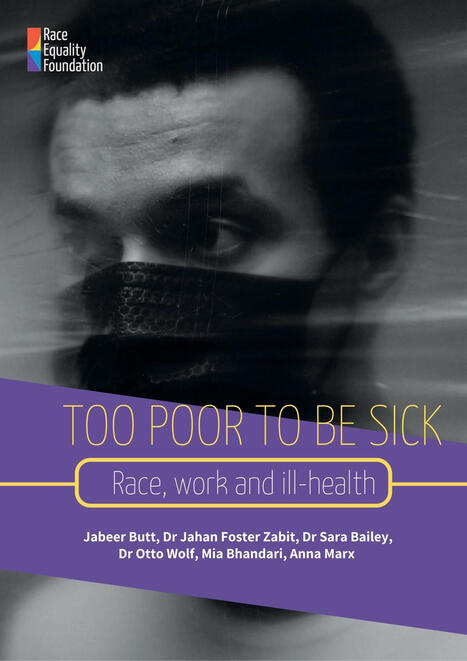
Race Equality Foundation’s new report reveals how structural racism, insecure work and inadequate sick pay are driving a growing health crisis for Black and Asian workers in the UK.
This report by the Fairness Foundation and the Black Equity Organisation combines facts and figures onthe nature, causes, and consequences of racial inequalities in wealth with two comparative case studies.These interviews bring the data to life by exploring the experiences of two men of the same age, earningsimilar salaries in the same city. One is White and has benefited from financial support from his family;the other is Black Caribbean and has not. The study examines how race and class inequalities intersectwith wealth disparities in the UK and offers recommendations for how policymakers should respond.The online version of this report is at https://fairnessfoundation.com/a-tale-of-two-city-dwellers.
This briefing note examines how being in deep poverty in childhood – proxied by eligibility to free school meals at age 16 – continues to shape graduates’ earnings long after university. Using the Longitudinal Education Outcomes dataset to track the education and work pathways of 520,000 graduates...
No Representation, No Peace exposes how Africa’s exclusion from permanent membership on the UN Security Council continues to undermine global peace and security. Drawing on case studies from the Democratic Republic of the Congo and Western Sahara, the report shows how decisions taken without African representation have fuelled implementation failures, sidelined local voices, and entrenched […]
The Runnymede Trust’s new report, Keeping Us Safe, calls for a fundamental shift in how the UK approaches safety, harm prevention and justice. Drawing on polling and in-depth community-based qualitative research, it finds strong public support for social investment over punitive enforcement when nuanced choices are on offer. As Farzana Khan, with Healing Justice Ldn, emphasises in the report’s foreword, the systems we rely on to create safety, justice and health cannot themselves be places of injustice, harm and violence.
Finding a work in translation is harder than you think. Whilst a technical challenge, the benefits of creating a record for works in translation would be worth it.
A new collection catalogued and now available from the Archives at @senatehouselib.bsky.social!
The Marisa Rueda papers - a fascinating collection about this important Argentinian artist and her role in the Montonero Peronista movement - are now available for research.
In this lecture, Dr Natalie McGuire, Curator at Barbados Museum & Historical Society, explores decolonial museology through the case study of the Barbados Museum & Historical Society (BMHS), examining how the institution has sought to redistribute interpretive power and reimagine its collections as spaces of community-led knowledge sharing.
https://www.youtube.com/watch?v=KNxFGW_C3yA
Tracing the historical frameworks of museology in Barbados from its colonial origins to the shifting paradigms of post-independence and republic status the session situates local practice within global discourses of New Museology, anti-colonial resistance, and decolonial relationality (Mignolo).
Through projects such as Artistic Interventions (2018), LOOKA: Dismantling the Colonial Gaze (2024), and the Transoceanic Visual Exchange (TVE) triennial, the lecture highlights experimental models of democratic co-curatorship that foreground multivocality, accessibility, and community agency. These initiatives reflect a broader methodological framework developed by McGuire known as the Rhizomatic Research Methodology, which emphasises assemblage, relational ecologies, and localised approaches to decolonising knowledge production in museums.
By uncovering hidden narratives, interrogating visual hegemonies, and embracing collective authorship, the BMHS continues to challenge inherited structures of colonial museology. Ultimately, this talk proposes that decolonisation in museums is not a static act but an ongoing, relational process of redistributing institutional authority, amplifying community voices, and reconfiguring museums as living, multivocal ecologies of cultural meaning.
Dr McGuire has kindly provided the following resources for further reading on this topic:
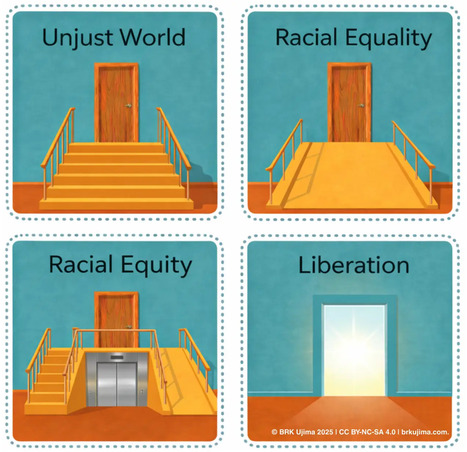
The "boxes and fence" image is arguably the most widely shared visual in racial justice work. But it was never created for that purpose, and its limitations show. We have reimagined it, shifting the emphasis from individuals navigating barriers to dismantling the structural and systemic barriers that stand in the way of liberation.
This report examines how public health services and systems can address the impacts of structural racism on mental health, and calls for a shift in power to communities.
Brianah Carter and Kathleen M. Quinlan find that the everyday labour of navigating predominantly white spaces shapes how Black British students see themselves – and their education
This webinar is a timely reminder that we can challenge the system. It will explore the concerns of safety and security for Britain’s Black youth, and what role democratic participation can play in addressing these concerns. This webinar is about allowing Britain’s Black youth to shape their future and actively participate in the democratic process however they feel able to.
When I was staring at the data tables behind the HEPI/Kortext Student Generative Artificial Intelligence Survey the other day, something quite significant jumped out.
To get content containing either thought or leadership enter:
To get content containing both thought and leadership enter:
To get content containing the expression thought leadership enter:
You can enter several keywords and you can refine them whenever you want. Our suggestion engine uses more signals but entering a few keywords here will rapidly give you great content to curate.





 Your new post is loading...