Your new post is loading...

|
Scooped by
Quezil Language Services
July 21, 2022 7:00 AM
|
The Department of Applied Linguistics/Translators and Interpreters in the Faculty of Arts is looking for a full-time doctoral scholarship holder in the field of Interpreting Studies for one year. Position - You will work actively on the one-year research project “Multimodal input & cognition: An experimental study into the effect of written text in Simultaneous Interpreting” (“Multimodale input & cognitie: Een experimentele studie naar het effect van tekst bij het simultaantolken”) under the supervision of prof. dr. Isabelle Robert and dr. Esther de Boe. Abstract: https://www.uantwerpen.be/en/staff/isabelle-robert/research/
- You will carry out a limited number of teaching and research support tasks for the Department of Applied Linguistics/Translators and Interpreters
Tasks - Implementation of the project as described in the project proposal
- Publication of at least one scientific paper related to the research results
- Production of a project proposal as “aspirant FWO” (PhD fellowship) based on the current project (for details see: https://www.fwo.be/en/fellowships-funding/phd-fellowships/phd-fellowship-fundamental-research/)
- Participation to the production of a follow-up project (“DOCPRO3”, internal BOF-financed) which, in case of approval, offers the possibility of continuing the research by means of a PhD scholarship (i.e., 3 additional years of scholarship). Please note: A “DOCPRO3” will only be granted if the application for a scholarship has not been selected by the FWO, but has obtained excellent results (rank as “reserve”)
- Assistance to the supervisors with regard to research-related activities (preparation and proofreading of papers, lay-out work)
- Contribute to the editing of LANS (https://lans-tts.uantwerpen.be/index.php/LANS-TTS) as an editorial assistant (lay-out and checking of APA style)
- Participate in services to TricS research group and the Department (e.g., minutes, surveillance of exams etc.)
Profile - You hold a Master degree in Interpreting or you will have obtained it by the time you start work, with one of the following languages: English as L1 or L2, French as L1 or L2, Dutch as L1 or L2. You may also hold another Master’s degree that contains a strong link with interpreting studies.
- You can demonstrate excellent study results.
- Your teaching competences are in line with the University of Antwerp’s educational vision.
- Your research qualities are in line with the faculty and university research policies.
- You act with attention to quality, integrity, creativity and cooperation.
- You have a great interest in research
- Experience with research (and methodologies) in interpreting is recommended
- Experience with experimental research and statistical analysis (e.g. in the context of your master's thesis, publications, etc.) is recommended
- Knowledge of Excel and SPSS is recommended
- Some experience with simultaneous interpreting (with text) is an added value
What we offer - We offer a doctoral scholarship for a period of one year. Following a positive selection at FWO/DOCPRO3, the scholarship can be renewed once for another three-year period.
- A ready-to-go project proposal: You can start immediately with preparing the data collection since the objectives, methodologies and planning have already been worked out.
- The planned start date is 1 November 2022 or before if possible.
- Your monthly scholarship amount is calculated according to the scholarship amounts for doctoral scholarship holders on the pay scales for Contract Research Staff (Dutch: Bijzonder Academisch Personeel, BAP).
- You will receive ecocheques, Internet-connectivity allowance and a bicycle allowance or a full reimbursement of public transport costs for commuting.
- You will do most of your work at City Campus (“Stadscampus”) in a dynamic and stimulating working environment.
- Find out more about working at the University of Antwerp here.
Want to apply? - You can apply for this vacancy by sending an e-mail with your motivation letter and cv before August 30th, 2022 to Isabelle Robert (isabelle.robert@uantwerpen.be) and Esther de Boe (esther.deboe@uantwerpen.be).
- The advisors will review all of the applications as soon as possible after the application deadline. As soon as a decision has been made, we will inform you about the next steps in the selection procedure.
- If you have any questions about the job itself, please contact Isabelle Robert isabelle.robert@uantwerpen.be) or Esther de Boe (esther.deboe@uantwerpen.be).
|
|
Scooped by
Quezil Language Services
July 20, 2022 7:00 AM
|
Org. Setting and Reporting This position is located in the Office of the Prosecutor, Kigali Field Office, under the direction of the Senior Trial Attorneys, OTP, IRMCT. *Appointment of the successful candidate to this position will be subject to budgetary approval. Responsibilities Under the supervision of the Senior Trial Attorneys the incumbent of the post provides:
• Interpretation during field investigations and other official meetings from Kinyarwanda into English and vice versa.
• The incumbent is expected to provide a high standard of accuracy, consistency and faithfulness to the spirit, style and nuances of the original, and to observe established terminology and usage.
• The incumbent must systematically keep abreast of IRMCT case law and relevant terminology, and prepare thoroughly for various types of complex investigations, hearings or meetings.
• S/he is routinely assigned to sensitive and highly technical meetings, functions as team coordinator of all interpreters assigned to the same meeting, and may be called upon to instruct and advise Language Assistants. The incumbent also provides consecutive interpretation at the duty station or on missions.
• When the needs of the OTP so require, the incumbent may be given written translation assignments or called upon to assist with scheduling and other interpretation-related duties within the OTP. Competencies • Professionalism - Punctuality; readiness to keep flexible working hours; high level of concentration; split second accuracy; clear delivery; ability to perform under continuous stress and to assimilate an exceedingly broad range of subjects. The incumbent must have the ability to interpret not only technically difficult testimonies and legal arguments, but also the emotionally charged testimonies of war victims. Good computer skills essential. Shows pride in work and in achievements. Demonstrates professional competence and mastery of subject matter. Is conscientious and efficient in meeting commitments, observing deadlines and achieving results. Is motivated by professional rather than personal concerns. Shows persistence when faced with difficult problems or challenges. Remains calm in stressful situations. Commitment to implementing the goal of gender equality by ensuring the equal participation and full involvement of women and men in all aspects of work.
• Communication – Speaks and writes clearly and effectively. Listens to others, correctly interprets messages from others and responds appropriately. Asks questions to clarify, and exhibits interest in having two way communication. Tailors language, tone, style and format to match the audience. Demonstrates openness in sharing information and keeping people informed.
• Teamwork – Works collaboratively with colleagues to achieve organisational goals. Solicits input by genuinely valuing others’ ideas and expertise; is willing to learn from others. Places team agenda before personal agenda. Supports and acts in accordance with final group decision, even when such decisions may not entirely reflect own position. Shares credit for team accomplishments and accepts joint responsibility for team shortcomings.
• Planning and Organising – Develops clear goals that are consistent with agreed strategies. Identifies priority activities and assignments, adjusts priorities as required. Allocates appropriate amount of time and resources for completing work. Foresees risks and allows for contingencies when planning. Monitors and adjusts plans and actions as necessary. Uses time efficiently. Education Advanced university degree from a university or from an institution of equivalent status in translation. A first level university degree in combination with two additional years of qualifying experience may be accepted in lieu of an advanced university degree. Work Experience Minimum 5 years of work experience in the interpretation field or teaching interpretation is required. Languages English and French are the working languages of the Mechanism. For the post advertised, the incumbent should have a perfect command of Kinyarwanda and an excellent command of English. Knowledge of other languages is an asset. Assessment Candidates will be assessed by a comparative matrix. Special Notice Special Notice:
The United Nations Secretariat is committed to achieving 50/50 gender balance in its staff. Female candidates are strongly encouraged to apply for this position.
The appointment is limited to the International Residual Mechanism for Criminal Tribunals. Appointment of the successful candidate on this position will be limited to the initial funding of the post. Extension of the appointment is subject to the extension of the mandate and/or the availability of funds. As the international tribunals are not integrated in the Secretariat, UN Staff Members serve on assignment or secondment from their parent department/office if selected. Appointments of staff members in the United Nations are subject to the authority of the Secretary-General. Staff Members are expected to move periodically to new functions in accordance with established rules and procedures, and may in this context be reassigned by the Secretary-General throughout the Organization based on the changing needs and mandates.
NOTE FOR PREVIOUSLY ROSTERED CANDIDATES
Roster candidates must express their interest and availability for published job openings by submitting an updated PHP and cover letter. United Nations Considerations According to article 101, paragraph 3, of the Charter of the United Nations, the paramount consideration in the employment of the staff is the necessity of securing the highest standards of efficiency, competence, and integrity. Candidates will not be considered for employment with the United Nations if they have committed violations of international human rights law, violations of international humanitarian law, sexual exploitation, sexual abuse, or sexual harassment, or if there are reasonable grounds to believe that they have been involved in the commission of any of these acts. The term “sexual exploitation” means any actual or attempted abuse of a position of vulnerability, differential power, or trust, for sexual purposes, including, but not limited to, profiting monetarily, socially or politically from the sexual exploitation of another. The term “sexual abuse” means the actual or threatened physical intrusion of a sexual nature, whether by force or under unequal or coercive conditions. The term “sexual harassment” means any unwelcome conduct of a sexual nature that might reasonably be expected or be perceived to cause offence or humiliation, when such conduct interferes with work, is made a condition of employment or creates an intimidating, hostile or offensive work environment, and when the gravity of the conduct warrants the termination of the perpetrator’s working relationship. Candidates who have committed crimes other than minor traffic offences may not be considered for employment.
Due regard will be paid to the importance of recruiting the staff on as wide a geographical basis as possible. The United Nations places no restrictions on the eligibility of men and women to participate in any capacity and under conditions of equality in its principal and subsidiary organs. The United Nations Secretariat is a non-smoking environment.
The paramount consideration in the appointment, transfer, or promotion of staff shall be the necessity of securing the highest standards of efficiency, competence, and integrity. By accepting an offer of appointment, United Nations staff members are subject to the authority of the Secretary-General and assignment by him or her to any activities or offices of the United Nations in accordance with staff regulation 1.2 (c). In this context, all internationally recruited staff members shall be required to move periodically to discharge new functions within or across duty stations under conditions established by the Secretary-General.
Applicants are urged to follow carefully all instructions available in the online recruitment platform, inspira. For more detailed guidance, applicants may refer to the Manual for the Applicant, which can be accessed by clicking on “Manuals” hyper-link on the upper right side of the inspira account-holder homepage.
The evaluation of applicants will be conducted on the basis of the information submitted in the application according to the evaluation criteria of the job opening and the applicable internal legislations of the United Nations including the Charter of the United Nations, resolutions of the General Assembly, the Staff Regulations and Rules, administrative issuances and guidelines. Applicants must provide complete and accurate information pertaining to their personal profile and qualifications according to the instructions provided in inspira to be considered for the current job opening. No amendment, addition, deletion, revision or modification shall be made to applications that have been submitted. Candidates under serious consideration for selection will be subject to reference checks to verify the information provided in the application. Apply here: https://careers.un.org/lbw/jobdetail.aspx?id=186625
|
|
Scooped by
Quezil Language Services
July 20, 2022 1:54 AM
|
We are currently recruiting for an experimented Bilingual Customer Service Representative (If you speak flawless English, but you are not bilingual, you are welcome to apply). As a Customer Service Representative, you will ensure customer queries are dealt with efficiently and accurately, with fair customer outcomes at the heart of everything you do.
The Customer Service Representative will have:
Strong communication skills in English and French at a near-native level
Very little or no pronounced accent
Proven customer service skills from a similar fast-paced environment
Confident, outgoing individual, with the ability to build customer relationships
Ability to work on behalf of our rapidly growing client base,
The Customer Service Representative will be responsible for:
Taking calls from customers to deal with any account queries that they have
Ensuring that good customer outcomes are always promoted.
Operating within quality guidelines
The timely reporting of any complaints and/or suspicious activity in line with company policy and procedures
Reach and maintain Key Performance Indicators expected of a Customer Service Representative to required standards and specified timescales
under pressure, whilst maintaining a professional and positive attitude both within the office environment and with customers
Maintaining high levels of accuracy at all times
Call center experience is a plus
Experience handling Email and chat support is a plus
Benefits
Attractive starting salary
Transport and internet allowances
Attractive performance bonus
Paid leaves
How to apply: if you’re interested in this Job If this sounds like your perfect role, email: infos@remotecm.live with your CV, salary expectation, and an audio recording introducing yourself, in English, and French. You can also apply using WhatsApp 675934966 please send all the requested information. Source: https://www.fnecm.org/index.php/fr/chercheurs-demploi-45
|
|
Scooped by
Quezil Language Services
July 19, 2022 7:00 AM
|
➡ Participez au concours d'affiches organisé par la FIT (Fédération Internationale des Traducteurs) chaque année pour fêter la Journée mondiale de la traduction (JMT) le 30 septembre, dont le thème est : "Un monde sans barrières".
🧑🎨👨🎨 Ouvert à toute ou tout graphiste professionnel souhaitant dessiner une affiche célébrant le rôle central des traductrices et traducteurs professionnels dans la promotion d'un monde sans barrières, contribuant ainsi à préserver la culture et à favoriser la compréhension à l'échelle mondiale et la paix durable.
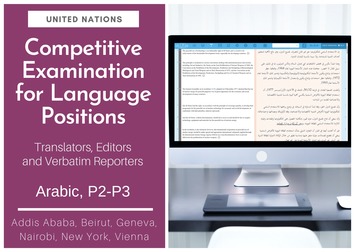
Org. Setting and Reporting • These positions are located at United Nations Headquarters in New York in the Department for General Assembly and Conference Management (DGACM) and in the United Nations Offices at Geneva, Nairobi and Vienna, as well as in the Economic Commission for Africa (ECA) in Addis Ababa and the Economic and Social Commission for Western Asia and the Pacific (ESCWA) in Beirut.
• These positions are under the general supervision of the Chief of the Arabic Translation Service or the Chief of the Arabic Verbatim Section at United Nations Headquarters in New York, or of the respective Chief of Section/Unit at duty stations away from Headquarters. Further details can be found in the language careers section of the DGACM website (https://www.un.org/dgacm/fr/content/careers). Responsibilities • Duties and responsibilities depend on the service/section/unit and duty station in which the position is located.
• In Translator positions, they include: translating, subject to revision, documents covering a broad range of subjects dealt with by the United Nations, i.e., in the political, social, legal, economic, financial, administrative, scientific and technical fields.
• In Editor positions, they include: ensuring that the phraseology, the terminology and, where appropriate, the translation are correct and that the style is appropriate to the audience; editing for continuity, logic, completeness, relevance of material, readability, clarity of expression and consistency, as well as spelling, punctuation and grammar; ensuring conformity with United Nations editorial standards, policies and practices; verifying the accuracy of facts, figures, quotations and references through research and consultation; identifying unclear or ambiguous statements and proposing amendments for consideration by the author, the supervising editor or the relevant translation service.
• In Verbatim Reporter positions, they include: producing in extenso verbatim records of meetings; editing the original language version as necessary for accuracy, making the required changes for style, syntax and grammar and procedure; transcribing and/or translating assigned portions of meetings; comparing transcripts of interpretation with original language versions to ensure completeness and accuracy of the records; and translating passages that are either inaccurate or incomplete. Competencies Professionalism: Shows pride in work and in achievements; demonstrates professional competence and mastery of subject matter; is conscientious and efficient in meeting commitments, observing deadlines and achieving results; is motivated by professional rather than personal concerns; shows persistence when faced with difficult problems or challenges; remains calm in stressful situations; takes responsibility for incorporating gender perspectives and ensuring the equal participation of women and men in all areas of work.
Teamwork: Works collaboratively with colleagues to achieve organizational goals; solicits input by genuinely valuing others' ideas and expertise; is willing to learn from others; places team agenda before personal agenda; supports and acts in accordance with final group decision, even when such decisions may not entirely reflect own position; shares credit for team accomplishments and accepts joint responsibility for team shortcomings.
Technological Awareness: Keeps abreast of available technology; understands applicability and limitation of technology to the work of the office; actively seeks to apply technology to appropriate tasks; shows willingness to learn new technology. Education Applicants must hold at least a first-level degree or an equivalent qualification in modern languages, translation, interpretation or another relevant subject, such as law, economics, accounting, international relations, science or technology from a university or institution of equivalent status, preferably one at which Arabic is the principal language of instruction.
Completion of an advanced degree (Master’s or PhD) or post-graduate diploma in modern languages, translation, interpretation, law or another relevant subject is preferred. Work Experience No work experience is required but relevant work experience may be taken into consideration.
Two or more years of practical experience in translation, verbatim reporting, editing or a related field is desirable.
Experience with computer-assisted translation tools is desirable. Languages Applicants must have a perfect command of Arabic, which should be their main language (i.e. the language in which the candidate is best able to write, edit and translate into and of which he/she has a perfect command).
All applicants must also have an excellent knowledge of English and of at least one of the other official languages of the United Nations (French, Chinese, Russian or Spanish). Applicants' claim to knowledge of official languages must be supported by relevant documentation in the attachment section of "Other information" in step 6 of the online application.. Further evidence of degrees/diplomas, knowledge of languages and/or relevant experience may be required prior to convocation to sit the examination.
Applications from candidates with excellent knowledge of Spanish are strongly encouraged. Assessment • Applications will be assessed and screened on the basis of how well applicants meet the education, work experience and language requirements listed above, and only those applicants deemed qualified will be convoked for the first part of the examination.
• The first part of the examination, which will be conducted entirely online using a dedicated platform, is likely to consist of the following exercises:
(a) Translation into Arabic of a general text in English (approx. 90 min.). It should be noted that this exercise may be eliminatory;
(b) Translation into Arabic of a text in Chinese, French, Russian or Spanish (approx. 90 min.).
• Details regarding the exact timing and arrangements will be sent to the candidates convoked for this first part of the examination. Details of any changes to the format of the test will be posted on the “Competitive examinations for language professionals” section of the United Nations Careers Portal (https://careers.un.org/lbw/home.aspx?viewtype=LE). Please check it regularly.
• Tips for preparing for the exam can be found on the DGACM website at “Exams for translators, editors and verbatim reporters” (www.un.org/dgacm/en/content/exams-translators-verbatim-reporters-editors)
• On the basis of the results of the first part of the examination, the Board of Examiners will invite selected examinees to take the second part, which will include a proctored (invigilated) remote translation test, in which all candidates will be required to translate a text from English into Arabic, possibly without using dictionaries, glossaries or other resources. Candidates will also be invited to demonstrate their ability to translate into Arabic of a specialized text in English(On an economic, legal or technical subject). On the basis of the results in the second part, the Board of Examiners will invite selected examinees to the third and final part, which will comprise a competency-based interview and possibly other additional exercises. The interview is to assess whether the candidate possesses the competencies required for the position and is an integral part of the examination. Examinees who are invited to take the third part should not assume that they will be automatically placed on a roster or offered an appointment.
• All candidates will be informed by e-mail of the Board's final recommendation in respect of their candidature. The Board's recommendations are final and not subject to appeal. The Board does not release individual scores or results. Special Notice • The purpose of the present job opening is to invite applications to sit the combined competitive examination for Arabic-language Translators, Editors and Verbatim Reporters, which will be held in three parts (see “Assessment” below). Each part of the examination is eliminatory. Only those successful in part one will be convoked to part two, and only those successful in part two will be convoked to part three, and only those successful in part three will be placed on the roster for recruitment. The first part of the examination is tentatively scheduled to take place on 30 September 2022 and will be carried out entirely online.
• Applicants wishing to sit this competitive examination must submit an application through Inspira, the United Nations Secretariat’s online recruitment platform. Please start this process by clicking on the “Apply” button in the electronic version of this Job Opening. The application process is described in the United Nations careers portal (https://careers.un.org/lbw/home.aspx?viewtype=LCRWHA$lang=en-Uus). Applicants must complete every section of this application form in ENGLISH, except the motivation statement in step 5 (see below), even if they put “not applicable” in some fields. Failure to follow this instruction will most likely result in their disqualification.
• When filling out their applications in Inspira, applicants should write a motivation statement (step 5) of up to 2,000 characters in ARABIC explaining how their experience, qualifications and competencies match the position(s) for which the examination is being organized.
• Applications that are incomplete, including those submitted without the required evidence of language skills in "Other information in step 6 or without the motivation statement in ARABIC requested in step 5, respectively, of the Inspira application form, and applications that are submitted or received after the deadline specified in Inspira will not be considered.
• Please note that the Staff Rules provide that “An appointment shall not be granted to a person who is the father, mother, son, daughter, brother or sister of a staff member.” (Staff Rule 4.7 (a)).
• Applicants must have been born in or after 1966, i.e. be 56 years old or younger at the end of 2022. This requirement is based on the Organization’s need to recruit staff who can serve for a reasonable period of time before reaching the mandatory retirement age of 65 years.
• All applications will be reviewed by the Board of Examiners. In instances where a large number of applications are received, the Board of Examiners reserves the right to admit to the examination only the most qualified applicants based on a review of qualifications over and above the minimum criteria (see education, work experience and language requirements below). All applicants will be notified by e-mail of the Board’s decision in respect of their application. The Board’s decisions are final.
• On the basis of the overall results of the examination, the Board will recommend to the Assistant Secretary-General for Human Resources Management the names of examinees who qualify for inclusion in a roster of successful candidates.
• Present and future vacancies for Translators, Editors and Verbatim Reporters will be filled from the roster of successful candidates, subject to the requirements of each section or service in terms of expertise and language combinations. There are Arabic Translator posts in the language services of the United Nations Secretariat in Geneva, Nairobi, New York and Vienna, as well as in the Economic Commission for Africa (ECA) in Addis Ababa, and the Economic and Social Commission for Western Asia (ESCWA) in Beirut; Arabic Editor posts in Geneva; and Arabic Verbatim Reporter posts in New York.
• Successful candidates selected from the roster to fill vacancies are normally offered an initial fixed-term appointment at the P-2 level for a trial period of two years. Upon satisfactory completion of this trial period, they may be promoted to the P-3 level. Fully qualified translators, editors or other language professionals with several years of internationally recognized professional language experience and demonstrated ability to perform high-quality work may be recruited at the P-3 level. After two years of satisfactory service on a fixed-term appointment, the candidate will be considered for a continuing appointment. Fixed-term appointments of those whose performance proves unsatisfactory will not be extended after the trial period of two years.
• It should be noted that successful candidates are expected to serve a minimum of five years in a language post and may, after the two-year trial period, be called upon to serve at a different duty station according to the needs of the Organization. It should also be noted that, in accordance with the needs of the service/section/unit, they may be called upon to work outside normal working hours, including weekends and holidays.
• Successful candidates who receive an offer of appointment are strongly encouraged to accept it, as declining may affect their prospects of receiving a subsequent offer.
SPECIAL NOTICE FOR INTERNAL CANDIDATES
• The combined competitive examination for Arabic Translators, Editors and Verbatim Reporters in 2022 is open to internal applicants at the P-3 level and below who meet the eligibility requirements, as well as qualified external candidates, in accordance with the provisions of ST/AI/2020/03.
• It should be noted that the requirement for a university degree or its equivalent from a university or institution of equivalent status (set forth in “Education” below) may be waived for staff members who, in the judgment of the Board of Examiners, have adequate post-secondary educational qualifications from a university or institution of equivalent status and adequate secondary educational qualifications from an establishment, preferably one at which the principal language of instruction is Arabic, in addition to five years of continuous service with the United Nations Secretariat by 31 December 1989.
• The assignment of staff members of the United Nations who are successful in the examination and are selected to fill vacancies will be subject to the following conditions:
• Staff members selected to fill vacancies will be assigned as an Arabic Translator, Editor or Verbatim Reporter for a trial period of two years according to the staff rules in force. Staff members below the P-2 level or in the General Service category will receive a special post allowance to the P-2 level. Staff members at the P-2 and P-3 levels will be assigned at their respective levels.
• Staff members with a special post allowance to the P-2 level and those already at the P-2 level who successfully complete the trial period and are recommended by the Department for General Assembly and Conference Management and the Office of Human Resources Management may be promoted to the P-3 level. Staff members already at the P-3 level who successfully complete the trial period will be confirmed in their functions at the P-3 level. After two years of satisfactory service on a fixed-term appointment, the candidate will be considered for a continuing appointment. This means that the candidate must demonstrate within that time that he or she possesses the requisite qualifications to serve as a career staff member of the United Nations in order to receive such an appointment. Staff members who do not successfully complete the trial period will be reassigned to posts at their previous levels, and any special post allowance will be discontinued.
• Staff members from subsidiary organs of the United Nations and staff members whose service is limited to a particular organ, fund or programme of the United Nations or a special mission are considered external candidates for the purpose of this examination. Such candidates, if successful in the examination, will be offered a new appointment with the United Nations, subject to normal United Nations recruitment procedures and standards.
• Staff members selected to fill vacancies will be recruited as Arabic Translators, Editors or Verbatim Reporters according to the staff rules in force. United Nations Considerations According to article 101, paragraph 3, of the Charter of the United Nations, the paramount consideration in the employment of the staff is the necessity of securing the highest standards of efficiency, competence, and integrity. Candidates will not be considered for employment with the United Nations if they have committed violations of international human rights law, violations of international humanitarian law, sexual exploitation, sexual abuse, or sexual harassment, or if there are reasonable grounds to believe that they have been involved in the commission of any of these acts. The term “sexual exploitation” means any actual or attempted abuse of a position of vulnerability, differential power, or trust, for sexual purposes, including, but not limited to, profiting monetarily, socially or politically from the sexual exploitation of another. The term “sexual abuse” means the actual or threatened physical intrusion of a sexual nature, whether by force or under unequal or coercive conditions. The term “sexual harassment” means any unwelcome conduct of a sexual nature that might reasonably be expected or be perceived to cause offence or humiliation, when such conduct interferes with work, is made a condition of employment or creates an intimidating, hostile or offensive work environment, and when the gravity of the conduct warrants the termination of the perpetrator’s working relationship. Candidates who have committed crimes other than minor traffic offences may not be considered for employment.
Due regard will be paid to the importance of recruiting the staff on as wide a geographical basis as possible. The United Nations places no restrictions on the eligibility of men and women to participate in any capacity and under conditions of equality in its principal and subsidiary organs. The United Nations Secretariat is a non-smoking environment.
The paramount consideration in the appointment, transfer, or promotion of staff shall be the necessity of securing the highest standards of efficiency, competence, and integrity. By accepting an offer of appointment, United Nations staff members are subject to the authority of the Secretary-General and assignment by him or her to any activities or offices of the United Nations in accordance with staff regulation 1.2 (c). In this context, all internationally recruited staff members shall be required to move periodically to discharge new functions within or across duty stations under conditions established by the Secretary-General.
Applicants are urged to follow carefully all instructions available in the online recruitment platform, inspira. For more detailed guidance, applicants may refer to the Manual for the Applicant, which can be accessed by clicking on “Manuals” hyper-link on the upper right side of the inspira account-holder homepage.
The evaluation of applicants will be conducted on the basis of the information submitted in the application according to the evaluation criteria of the job opening and the applicable internal legislations of the United Nations including the Charter of the United Nations, resolutions of the General Assembly, the Staff Regulations and Rules, administrative issuances and guidelines. Applicants must provide complete and accurate information pertaining to their personal profile and qualifications according to the instructions provided in inspira to be considered for the current job opening. No amendment, addition, deletion, revision or modification shall be made to applications that have been submitted. Candidates under serious consideration for selection will be subject to reference checks to verify the information provided in the application.
|
|
Scooped by
Quezil Language Services
July 18, 2022 3:17 PM
|
Org. Setting and Reporting • These positions are located at United Nations Headquarters in New York in the Department for General Assembly and Conference Management (DGACM) and in the United Nations Offices at Geneva, Nairobi and Vienna, as well as in the Economic Commission for Africa (ECA) in Addis Ababa and the Economic and Social Commission for Western Asia and the Pacific (ESCWA) in Beirut.
• These positions are under the general supervision of the Chief of the Arabic Translation Service or the Chief of the Arabic Verbatim Section at United Nations Headquarters in New York, or of the respective Chief of Section/Unit at duty stations away from Headquarters. Further details can be found in the language careers section of the DGACM website (https://www.un.org/dgacm/fr/content/careers). Responsibilities • Duties and responsibilities depend on the service/section/unit and duty station in which the position is located.
• In Translator positions, they include: translating, subject to revision, documents covering a broad range of subjects dealt with by the United Nations, i.e., in the political, social, legal, economic, financial, administrative, scientific and technical fields.
• In Editor positions, they include: ensuring that the phraseology, the terminology and, where appropriate, the translation are correct and that the style is appropriate to the audience; editing for continuity, logic, completeness, relevance of material, readability, clarity of expression and consistency, as well as spelling, punctuation and grammar; ensuring conformity with United Nations editorial standards, policies and practices; verifying the accuracy of facts, figures, quotations and references through research and consultation; identifying unclear or ambiguous statements and proposing amendments for consideration by the author, the supervising editor or the relevant translation service.
• In Verbatim Reporter positions, they include: producing in extenso verbatim records of meetings; editing the original language version as necessary for accuracy, making the required changes for style, syntax and grammar and procedure; transcribing and/or translating assigned portions of meetings; comparing transcripts of interpretation with original language versions to ensure completeness and accuracy of the records; and translating passages that are either inaccurate or incomplete. Competencies Professionalism: Shows pride in work and in achievements; demonstrates professional competence and mastery of subject matter; is conscientious and efficient in meeting commitments, observing deadlines and achieving results; is motivated by professional rather than personal concerns; shows persistence when faced with difficult problems or challenges; remains calm in stressful situations; takes responsibility for incorporating gender perspectives and ensuring the equal participation of women and men in all areas of work.
Teamwork: Works collaboratively with colleagues to achieve organizational goals; solicits input by genuinely valuing others' ideas and expertise; is willing to learn from others; places team agenda before personal agenda; supports and acts in accordance with final group decision, even when such decisions may not entirely reflect own position; shares credit for team accomplishments and accepts joint responsibility for team shortcomings.
Technological Awareness: Keeps abreast of available technology; understands applicability and limitation of technology to the work of the office; actively seeks to apply technology to appropriate tasks; shows willingness to learn new technology. Education Applicants must hold at least a first-level degree or an equivalent qualification in modern languages, translation, interpretation or another relevant subject, such as law, economics, accounting, international relations, science or technology from a university or institution of equivalent status, preferably one at which Arabic is the principal language of instruction.
Completion of an advanced degree (Master’s or PhD) or post-graduate diploma in modern languages, translation, interpretation, law or another relevant subject is preferred. Work Experience No work experience is required but relevant work experience may be taken into consideration.
Two or more years of practical experience in translation, verbatim reporting, editing or a related field is desirable.
Experience with computer-assisted translation tools is desirable. Languages Applicants must have a perfect command of Arabic, which should be their main language (i.e. the language in which the candidate is best able to write, edit and translate into and of which he/she has a perfect command).
All applicants must also have an excellent knowledge of English and of at least one of the other official languages of the United Nations (French, Chinese, Russian or Spanish). Applicants' claim to knowledge of official languages must be supported by relevant documentation in the attachment section of "Other information" in step 6 of the online application.. Further evidence of degrees/diplomas, knowledge of languages and/or relevant experience may be required prior to convocation to sit the examination.
Applications from candidates with excellent knowledge of Spanish are strongly encouraged. Assessment • Applications will be assessed and screened on the basis of how well applicants meet the education, work experience and language requirements listed above, and only those applicants deemed qualified will be convoked for the first part of the examination.
• The first part of the examination, which will be conducted entirely online using a dedicated platform, is likely to consist of the following exercises:
(a) Translation into Arabic of a general text in English (approx. 90 min.). It should be noted that this exercise may be eliminatory;
(b) Translation into Arabic of a text in Chinese, French, Russian or Spanish (approx. 90 min.).
• Details regarding the exact timing and arrangements will be sent to the candidates convoked for this first part of the examination. Details of any changes to the format of the test will be posted on the “Competitive examinations for language professionals” section of the United Nations Careers Portal (https://careers.un.org/lbw/home.aspx?viewtype=LE). Please check it regularly.
• Tips for preparing for the exam can be found on the DGACM website at “Exams for translators, editors and verbatim reporters” (www.un.org/dgacm/en/content/exams-translators-verbatim-reporters-editors)
• On the basis of the results of the first part of the examination, the Board of Examiners will invite selected examinees to take the second part, which will include a proctored (invigilated) remote translation test, in which all candidates will be required to translate a text from English into Arabic, possibly without using dictionaries, glossaries or other resources. Candidates will also be invited to demonstrate their ability to translate into Arabic of a specialized text in English(On an economic, legal or technical subject). On the basis of the results in the second part, the Board of Examiners will invite selected examinees to the third and final part, which will comprise a competency-based interview and possibly other additional exercises. The interview is to assess whether the candidate possesses the competencies required for the position and is an integral part of the examination. Examinees who are invited to take the third part should not assume that they will be automatically placed on a roster or offered an appointment.
• All candidates will be informed by e-mail of the Board's final recommendation in respect of their candidature. The Board's recommendations are final and not subject to appeal. The Board does not release individual scores or results. Special Notice • The purpose of the present job opening is to invite applications to sit the combined competitive examination for Arabic-language Translators, Editors and Verbatim Reporters, which will be held in three parts (see “Assessment” below). Each part of the examination is eliminatory. Only those successful in part one will be convoked to part two, and only those successful in part two will be convoked to part three, and only those successful in part three will be placed on the roster for recruitment. The first part of the examination is tentatively scheduled to take place on 30 September 2022 and will be carried out entirely online.
• Applicants wishing to sit this competitive examination must submit an application through Inspira, the United Nations Secretariat’s online recruitment platform. Please start this process by clicking on the “Apply” button in the electronic version of this Job Opening. The application process is described in the United Nations careers portal (https://careers.un.org/lbw/home.aspx?viewtype=LCRWHA$lang=en-Uus). Applicants must complete every section of this application form in ENGLISH, except the motivation statement in step 5 (see below), even if they put “not applicable” in some fields. Failure to follow this instruction will most likely result in their disqualification.
• When filling out their applications in Inspira, applicants should write a motivation statement (step 5) of up to 2,000 characters in ARABIC explaining how their experience, qualifications and competencies match the position(s) for which the examination is being organized.
• Applications that are incomplete, including those submitted without the required evidence of language skills in "Other information in step 6 or without the motivation statement in ARABIC requested in step 5, respectively, of the Inspira application form, and applications that are submitted or received after the deadline specified in Inspira will not be considered.
• Please note that the Staff Rules provide that “An appointment shall not be granted to a person who is the father, mother, son, daughter, brother or sister of a staff member.” (Staff Rule 4.7 (a)).
• Applicants must have been born in or after 1966, i.e. be 56 years old or younger at the end of 2022. This requirement is based on the Organization’s need to recruit staff who can serve for a reasonable period of time before reaching the mandatory retirement age of 65 years.
• All applications will be reviewed by the Board of Examiners. In instances where a large number of applications are received, the Board of Examiners reserves the right to admit to the examination only the most qualified applicants based on a review of qualifications over and above the minimum criteria (see education, work experience and language requirements below). All applicants will be notified by e-mail of the Board’s decision in respect of their application. The Board’s decisions are final.
• On the basis of the overall results of the examination, the Board will recommend to the Assistant Secretary-General for Human Resources Management the names of examinees who qualify for inclusion in a roster of successful candidates.
• Present and future vacancies for Translators, Editors and Verbatim Reporters will be filled from the roster of successful candidates, subject to the requirements of each section or service in terms of expertise and language combinations. There are Arabic Translator posts in the language services of the United Nations Secretariat in Geneva, Nairobi, New York and Vienna, as well as in the Economic Commission for Africa (ECA) in Addis Ababa, and the Economic and Social Commission for Western Asia (ESCWA) in Beirut; Arabic Editor posts in Geneva; and Arabic Verbatim Reporter posts in New York.
• Successful candidates selected from the roster to fill vacancies are normally offered an initial fixed-term appointment at the P-2 level for a trial period of two years. Upon satisfactory completion of this trial period, they may be promoted to the P-3 level. Fully qualified translators, editors or other language professionals with several years of internationally recognized professional language experience and demonstrated ability to perform high-quality work may be recruited at the P-3 level. After two years of satisfactory service on a fixed-term appointment, the candidate will be considered for a continuing appointment. Fixed-term appointments of those whose performance proves unsatisfactory will not be extended after the trial period of two years.
• It should be noted that successful candidates are expected to serve a minimum of five years in a language post and may, after the two-year trial period, be called upon to serve at a different duty station according to the needs of the Organization. It should also be noted that, in accordance with the needs of the service/section/unit, they may be called upon to work outside normal working hours, including weekends and holidays.
• Successful candidates who receive an offer of appointment are strongly encouraged to accept it, as declining may affect their prospects of receiving a subsequent offer.
SPECIAL NOTICE FOR INTERNAL CANDIDATES
• The combined competitive examination for Arabic Translators, Editors and Verbatim Reporters in 2022 is open to internal applicants at the P-3 level and below who meet the eligibility requirements, as well as qualified external candidates, in accordance with the provisions of ST/AI/2020/03.
• It should be noted that the requirement for a university degree or its equivalent from a university or institution of equivalent status (set forth in “Education” below) may be waived for staff members who, in the judgment of the Board of Examiners, have adequate post-secondary educational qualifications from a university or institution of equivalent status and adequate secondary educational qualifications from an establishment, preferably one at which the principal language of instruction is Arabic, in addition to five years of continuous service with the United Nations Secretariat by 31 December 1989.
• The assignment of staff members of the United Nations who are successful in the examination and are selected to fill vacancies will be subject to the following conditions:
• Staff members selected to fill vacancies will be assigned as an Arabic Translator, Editor or Verbatim Reporter for a trial period of two years according to the staff rules in force. Staff members below the P-2 level or in the General Service category will receive a special post allowance to the P-2 level. Staff members at the P-2 and P-3 levels will be assigned at their respective levels.
• Staff members with a special post allowance to the P-2 level and those already at the P-2 level who successfully complete the trial period and are recommended by the Department for General Assembly and Conference Management and the Office of Human Resources Management may be promoted to the P-3 level. Staff members already at the P-3 level who successfully complete the trial period will be confirmed in their functions at the P-3 level. After two years of satisfactory service on a fixed-term appointment, the candidate will be considered for a continuing appointment. This means that the candidate must demonstrate within that time that he or she possesses the requisite qualifications to serve as a career staff member of the United Nations in order to receive such an appointment. Staff members who do not successfully complete the trial period will be reassigned to posts at their previous levels, and any special post allowance will be discontinued.
• Staff members from subsidiary organs of the United Nations and staff members whose service is limited to a particular organ, fund or programme of the United Nations or a special mission are considered external candidates for the purpose of this examination. Such candidates, if successful in the examination, will be offered a new appointment with the United Nations, subject to normal United Nations recruitment procedures and standards.
• Staff members selected to fill vacancies will be recruited as Arabic Translators, Editors or Verbatim Reporters according to the staff rules in force. United Nations Considerations According to article 101, paragraph 3, of the Charter of the United Nations, the paramount consideration in the employment of the staff is the necessity of securing the highest standards of efficiency, competence, and integrity. Candidates will not be considered for employment with the United Nations if they have committed violations of international human rights law, violations of international humanitarian law, sexual exploitation, sexual abuse, or sexual harassment, or if there are reasonable grounds to believe that they have been involved in the commission of any of these acts. The term “sexual exploitation” means any actual or attempted abuse of a position of vulnerability, differential power, or trust, for sexual purposes, including, but not limited to, profiting monetarily, socially or politically from the sexual exploitation of another. The term “sexual abuse” means the actual or threatened physical intrusion of a sexual nature, whether by force or under unequal or coercive conditions. The term “sexual harassment” means any unwelcome conduct of a sexual nature that might reasonably be expected or be perceived to cause offence or humiliation, when such conduct interferes with work, is made a condition of employment or creates an intimidating, hostile or offensive work environment, and when the gravity of the conduct warrants the termination of the perpetrator’s working relationship. Candidates who have committed crimes other than minor traffic offences may not be considered for employment.
Due regard will be paid to the importance of recruiting the staff on as wide a geographical basis as possible. The United Nations places no restrictions on the eligibility of men and women to participate in any capacity and under conditions of equality in its principal and subsidiary organs. The United Nations Secretariat is a non-smoking environment.
The paramount consideration in the appointment, transfer, or promotion of staff shall be the necessity of securing the highest standards of efficiency, competence, and integrity. By accepting an offer of appointment, United Nations staff members are subject to the authority of the Secretary-General and assignment by him or her to any activities or offices of the United Nations in accordance with staff regulation 1.2 (c). In this context, all internationally recruited staff members shall be required to move periodically to discharge new functions within or across duty stations under conditions established by the Secretary-General.
Applicants are urged to follow carefully all instructions available in the online recruitment platform, inspira. For more detailed guidance, applicants may refer to the Manual for the Applicant, which can be accessed by clicking on “Manuals” hyper-link on the upper right side of the inspira account-holder homepage.
The evaluation of applicants will be conducted on the basis of the information submitted in the application according to the evaluation criteria of the job opening and the applicable internal legislations of the United Nations including the Charter of the United Nations, resolutions of the General Assembly, the Staff Regulations and Rules, administrative issuances and guidelines. Applicants must provide complete and accurate information pertaining to their personal profile and qualifications according to the instructions provided in inspira to be considered for the current job opening. No amendment, addition, deletion, revision or modification shall be made to applications that have been submitted. Candidates under serious consideration for selection will be subject to reference checks to verify the information provided in the application.
|
|
Scooped by
Quezil Language Services
July 18, 2022 7:00 AM
|
Renewed interest in research methods used in cognitive translation and interpreting studies (CTIS) has led to
increased reflection on the nature of research and experimental design, internal and external validity, and the type and nature of
experimental tasks. Of particular concern is the extent to which valid generalization can be made from empirical studies of
translation, interpreting, and their associated cognitive behaviors as objects of study. This article traces the definition and
history of ecological validity in the extant literature on research methods and philosophy of science, emphasizing three
considerations: the experimental setting, the stimuli under investigation, and the behavioral response of participants.
Subsequently, we discuss potential misunderstandings or misapplications of appeals to ecological validity, including mundane
realism, naturalistic tasks, and various data collection methods. A final section describes key points to consider for research in
CTIS. Throughout, the argument considers tradeoffs among various categories of validity as well as the importance of aligning
experimental design with research goals. This extensive engagement with a singular aspect of validity is provided to encourage
deeper reflection and better communication around the topic of ecological validity.
|
|
Scooped by
Quezil Language Services
July 17, 2022 7:00 AM
|
INTERPRETER (Kirundi/Swahili/French) Background/IRC Summary: The mission of the International Rescue Committee (IRC) is to help people whose lives and livelihoods are shattered by conflict and disaster to survive, recover and gain control of their future. Founded in 1933, the IRC has 26 offices in the United States and a presence in over 40 countries.
Job Overview/Summary: The Interpreter will support programs across the office during in office and with external appointments. The interpreter will also provide written translations, and support the front desk during open office hours.
Major Responsibilities: Responsibilities may include, but are not limited to:
Providing interpretation in Spanish
Providing IRC staff with interpretation support as they work with clients both in one-on-one and group settings.
Attending job interviews, orientations, and other appointments with clients and interpreting important information into the client’s native language.
Translate information to disseminate to the larger refugee community
Strict adherence to IRC Code of Conduct for Interpreters
Other tasks as assigned.
Profil Job Requirements:
Fluency in both written and spoken English and in Spanish. Applicants will be tested for language proficiency prior to hiring.
Education in linguistics or related field and/or evidence of training in interpretation techniques a plus.
Prior experience providing interpretive services strongly desired.
Must be a team player, detail oriented, patient, professional, and reliable.
Available for work assignments during regular business hours. Evening and weekend availability a strong plus.
Applicants must go through a 16 hour interpreter training
Working Environment:
A combination of standard office environment, remote work, and ‘field’ time within the service delivery area to perform the above outlined responsibilities.
May require occasional weekend and/or evening work.
COVID-19 Vaccination Requirement: In accordance with IRC’s duty to provide and maintain a workplace that is free of known hazards and our commitment to safeguard the health of our employees, clients, and communities, IRC requires new hires to furnish proof of vaccination against COVID-19 in order to be considered for any in-office or hybrid positions. All IRC US offices require full vaccination to attend any in-office functions (e.g., meetings, trainings).
Commitment to Diversity and Inclusivity: IRC is committed to building a diverse organization and a climate of inclusivity. We strongly encourage applications from candidates who can demonstrate that they can contribute to this goal.
Equal Opportunity Employer: We are an equal opportunity employer and value diversity at our company. We do not discriminate on the basis of race, religion, color, national origin, sex, gender, gender expression, sexual orientation, age, marital status, veteran status, or disability status. We will ensure that individuals with disabilities are provided reasonable accommodation to participate in the job application or interview process, to perform essential job functions, and to receive other benefits and privileges of employment. Please contact us to request accommodation.
US Benefits:
We offer a comprehensive and highly competitive set of benefits. In the US, these include: 10 sick days, 10 US holidays, 20 paid time off days depending on role and tenure, medical insurance starting at $120 per month, dental starting at $7 per month, and vision starting at $5 per month, FSA for healthcare and commuter costs, a 403b retirement savings plans with immediately vested matching, disability & life insurance, and an Employee Assistance Program which is available to our staff and their families to support counseling and care in times of crisis and mental health struggles.
|
|
Scooped by
Quezil Language Services
July 16, 2022 7:00 AM
|
Responsibilities Under the general supervision of the Chief of Interpretation Service and the direct supervision of the Chief of the Arabic Interpretation Section, the interpreter will be responsible for the following duties:
- Services up to seven meetings per week (exceptionally eight), usually of no more than three hours duration, of various United Nations bodies.
- Provides interpretation into Arabic of speeches given in English or French and interpretationinto English or French – as appropriate – of speeches given in Arabic.
- May occasionally be assigned to sensitive meetings .
- May occasionally function as team leader of all interpreters assigned to a given meeting.
- May perform other related duties as required. Competencies PROFESSIONALISM: Ability to demonstrate a high level of concentration; split-second accuracy. Ability to work under continuous stress and deliver clear interpretation on an exceedingly broad range of subjects. Shows pride in work and in achievements. Demonstrates professional competence and mastery of subject matter. Is conscientious and efficient in meeting commitments, observing deadlines and achieving results. Is motivated by professional rather than personal concerns. Shows persistence when faced with difficult problems or challenges; remains calm in stressful situations. Takes responsibility for incorporating gender perspectives and ensuring the equal participation of women and men in all areas of work.
COMMUNICATION: Speaks and writes clearly and effectively. Listens to others, correctly interprets messages from others and responds appropriately. Asks questions to clarify, and exhibits interest in having two-way communication. Tailors language, tone, style and format to match the audience. Demonstrates openness in sharing information and keeping people informed.
TEAMWORK: Works collaboratively with colleagues to achieve organizational goals. Solicits input by genuinely valuing others' ideas and expertise; is willing to learn from others. Places team agenda before personal agenda. Supports and acts in accordance with final group decision, even when such decisions may not entirely reflect own position. Shares credit for team accomplishments and accepts joint responsibility for team shortcomings. Education A first level degree from a university or from an institution of equivalent status is required. Work Experience At least two (2) years of professional interpreting experience in international organizations is required. Languages English and French are the working languages of the United Nations Secretariat. For the post advertised, a perfect command of Arabic, normally expected to be the incumbent's main language. Candidates must also possess an excellent knowledge of English or French as an active interpretation language. Assessment Evaluation of qualified candidates may include an assessment exercise which will be followed by competency-based interview.
Applicants who have passed the United Nations Competitive Examination for Arabic Interpreters (CELP or LCE) or who are already placed on the "Global Language Roster" (GLR) are not subject to any further assessment and as such, will not be invited for such an assessment. Special Notice • This position is temporarily available for 11 months. If the selected candidate is a staff member from the United Nations Secretariat, the selection will be administered as a temporary assignment.
• This temporary job openings are only open to applicants who have passed the United Nations Competitive Examination for Arabic Interpreters (CELP or LCE) or who are already placed on the "Global Language Roster" (GLR). Applying to this job opening carries an expectation to accept the offer, if selected.
• While this temporary assignment may provide the successful applicant with an opportunity to gain new work experience, the selection for this position is for a limited period and has no bearing on the future incumbency of the post.
• Subject to the funding source of the position, the eligibility for this temporary job opening may be limited to candidates based at the duty station.
• Staff members of the United Nations Common System organizations who will reach the mandatory age of separation or retirement within the duration of the current temporary need period are not eligible to apply. Submitting an application or selection for the current temporary job opening does not delay or increase the mandatory age of separation.
• Retirees above the mandatory age of separation who wish to be considered for the current temporary job opening must indicate the reason for their last separation as "retirement." Such retirees shall not be employed by the Organization, unless (a) the operational requirements of the Organization cannot be met by staff members who are qualified and available to perform the required functions; and (b) the proposed employment would not adversely affect the career development or redeployment opportunities of other staff members and represents both a cost-effective and operationally sound solution to meet the needs of the service.
• At the United Nations, the paramount consideration in the recruitment and employment of staff is the necessity of securing the highest standards of efficiency, competence and integrity, with due regard to geographic diversity. All employment decisions are made on the basis of qualifications and organizational needs. The United Nations is committed to creating a diverse and inclusive environment of mutual respect. The United Nations recruits and employs staff regardless of gender identity, sexual orientation, race, religious, cultural and ethnic backgrounds or disabilities. Reasonable accommodation for applicants with disabilities may be provided to support participation in the recruitment process when requested and indicated in the application.
• The United Nations Secretariat is committed to achieving 50/50 gender balance in its staff. Female candidates are strongly encouraged to apply for this position. United Nations Considerations According to article 101, paragraph 3, of the Charter of the United Nations, the paramount consideration in the employment of the staff is the necessity of securing the highest standards of efficiency, competence, and integrity. Candidates will not be considered for employment with the United Nations if they have committed violations of international human rights law, violations of international humanitarian law, sexual exploitation, sexual abuse, or sexual harassment, or if there are reasonable grounds to believe that they have been involved in the commission of any of these acts. The term “sexual exploitation” means any actual or attempted abuse of a position of vulnerability, differential power, or trust, for sexual purposes, including, but not limited to, profiting monetarily, socially or politically from the sexual exploitation of another. The term “sexual abuse” means the actual or threatened physical intrusion of a sexual nature, whether by force or under unequal or coercive conditions. The term “sexual harassment” means any unwelcome conduct of a sexual nature that might reasonably be expected or be perceived to cause offence or humiliation, when such conduct interferes with work, is made a condition of employment or creates an intimidating, hostile or offensive work environment, and when the gravity of the conduct warrants the termination of the perpetrator’s working relationship. Candidates who have committed crimes other than minor traffic offences may not be considered for employment.
Due regard will be paid to the importance of recruiting the staff on as wide a geographical basis as possible. The United Nations places no restrictions on the eligibility of men and women to participate in any capacity and under conditions of equality in its principal and subsidiary organs. The United Nations Secretariat is a non-smoking environment.
The paramount consideration in the appointment, transfer, or promotion of staff shall be the necessity of securing the highest standards of efficiency, competence, and integrity. By accepting an offer of appointment, United Nations staff members are subject to the authority of the Secretary-General and assignment by him or her to any activities or offices of the United Nations in accordance with staff regulation 1.2 (c). In this context, all internationally recruited staff members shall be required to move periodically to discharge new functions within or across duty stations under conditions established by the Secretary-General.
Applicants are urged to follow carefully all instructions available in the online recruitment platform, inspira. For more detailed guidance, applicants may refer to the Manual for the Applicant, which can be accessed by clicking on “Manuals” hyper-link on the upper right side of the inspira account-holder homepage.
The evaluation of applicants will be conducted on the basis of the information submitted in the application according to the evaluation criteria of the job opening and the applicable internal legislations of the United Nations including the Charter of the United Nations, resolutions of the General Assembly, the Staff Regulations and Rules, administrative issuances and guidelines. Applicants must provide complete and accurate information pertaining to their personal profile and qualifications according to the instructions provided in inspira to be considered for the current job opening. No amendment, addition, deletion, revision or modification shall be made to applications that have been submitted. Candidates under serious consideration for selection will be subject to reference checks to verify the information provided in the application.
|
|
Scooped by
Quezil Language Services
July 15, 2022 7:00 AM
|
We are looking for an EN>FR translator superstar to join our team of Rebels in Brussels! If your French and English skills are proficient and you have had some previous translation experiences with the EU institutions- then this could be the role for you. Listed on the Australian Stock Exchange and head quartered in New Zealand, the Straker Group is a dynamic technology company. We have pioneered the process of humans and machines working together to deliver high quality translations at scale. Our easy to manage multilingual solutions have been used by more than 50,000 customers around the world and in more than 100 languages. The backbone of our business, Straker Translations – has established itself as a world-leading A.I data-driven translation platform powering the global growth of businesses. Our customers are some of the biggest brands in the world, from leading IT services companies to global leaders in Media and entertainment or some of the more relevant European institutions. Our business has been expanding rapidly over the last 5 years and we have a highly talented global team of over 280 people around the world. To meet the changing needs of our business, we have created an exciting in-house EN>FR Translator vacancy. Typical activities - Complete translation and revision jobs into French for mainly institutional clients in an accurate and timely manner
- Provide quality assurance reviews of other translator’s work and tests
- Providing translation quality feedback to Project Managers and Vendor Managers
- Provide high level of customer service to align to company culture and brand
Skills
- Bachellor Degree in Translation
- 1-3 years’ experience as a translator-revisor
- Significant translator experience for EU institutions
- Experience with various CAT tools
- Proven IT and translation skills
- Ability to work under pressure and with tight deadlines
- Knowledge and experience within the industry
- MS Word and Excel skills to intermediate level
- Positive attitude with a good sense of humour
- Ability to work as part of a team or autonomously
- Proactive and self-motivated with strong work ethic
- Good interpersonal skills and ability to build strong relationships.
Languages: - French C2
- English C2
- + Italian preferably
Start date: 1st August Location: Brussels (Belgium) hybrid work (2 days at the office) A translation test will be conducted as the first step of the recruitment process (via e-mail) Our people are at the heart of all we do and our culture is unconditionally inclusive at the Straker Group. We recruit the most talented individuals to join us on our journey – regardless of their race, sexual orientation, religion, age, gender, disability status. By embracing and respecting our differences and harnessing the uniqueness that we each bring to our role - we have created an incredible global team of Rebels to fight the battle on behalf of our customers. We really value long-term employees, so this could be a place for you to grow!
|
|
Scooped by
Quezil Language Services
July 14, 2022 7:00 AM
|
Organizational Setting The International Fund for Agricultural Development (IFAD) is an international financial institution and a specialized United Nations agency dedicated to eradicating rural poverty and hunger. It does so by investing in rural people. IFAD finances programmes and projects that increase agricultural productivity and raise rural incomes, and advocates at the local, national and international level for policies that contribute to rural transformation. As part of the External Relations and Governance Department (ERG), the Office of the Secretary of IFAD (SEC) is composed of the Front Office, the Conference and Languages Services (CLS) Office, and the Institutional Governance and Member Relations (IGMR) Office. The Office of the Secretary of IFAD is responsible for the effective and efficient planning and organization of IFAD's governing body meetings as well as for establishing, building and effectively maintaining relations with IFAD's Member States and its Representatives to the governing bodies. Conference and Language Services ensures the efficient programming and servicing of IFAD meetings, ensures the provision of editing, translation and terminology in IFAD's four official languages (Arabic, English, French and Spanish), and, on request, the provision of language processing of non-official languages. It also sets the linguistic standards for the organization, and establishes and periodically revises editorial and translation policies and procedures for official documentation. In addition, the team is engaged in maintaining a state-of-the-art knowledge base of linguistic expertise in all official languages to ensure high-quality and cost-effective services. The Spanish Senior Language Services Specialist works under the overall strategic, policy and management guidance of the Secretary of IFAD and the direct supervision of the Chief, Conference and Language Services. Job Role The Senior Language Services Specialist provides accurate, timely and stylistically appropriate translations into one of the IFAD main languages of texts written mainly in English for distribution to Member States and/or members of the Secretariat. Their duties may include revision of translations done by other staff and the planning and coordination of the work of small groups of translators.
The Senior Language Services Specialist translates and self-revises a range of administrative, legal, economic, scientific and technical texts, particularly in the field of finance, agricultural and rural development. The incumbent applies analytical, linguistic and drafting skills to translating and self-revising texts. The incumbent checks own work for accuracy, completeness, comprehensibility, style and presentation and is responsible for the quality of the translation of the texts. Within their areas of responsibility, Senior Specialists exercise a high degree of independence in providing the delivery of language services in the respective language. Senior Specialists may have direct or delegated responsibility in organizing and coordinating the work of teams of translators or lower-level staff. The incumbent is a Senior Language Services Specialist in Spanish. Key Functions and Results
1. MANAGEMENT OF TRANSLATION: As the primary function, the Senior Language Services Specialist revises in the target language from two other languages of the Organization, translations, including summary records, prepared by staff at lower levels and/or by free-lance and contractual translators, on a wide range of political, social, legal, economic, financial administrative, scientific and technical subjects or on a more limited range of subjects requiring considerable specialization. In particular, accountabilities may include but are not limited to:
a. Translate, mainly from English and normally from two languages of the Organization, revise and self-revise, especially important, complex, technical and urgent texts for issue without further revision.
b. In the case of both translation and revision, produce versions in the target language that reflect the more skilled point of view and approach of a senior translator or reviser and which are, in terms of accuracy, completeness, meaning, style and effectiveness, the equivalent of the original text, adapted as necessary to the intended target readership.
c. Such translations and revisions use the most appropriate range of vocabulary and professional, scientific or technical concepts and terms, and incorporate the results of any supplementary research by the incumbent as may be necessary to solve problems of terminology and meaning, or any consultations with substantive units concerning manifest or possible inconsistencies or errors in the original text, including the originator's mistranslation or misinterpretation of source material.
d. Provide authoritative and comprehensive answers to queries from translation suppliers on a variety of translation issues and on the specifics; develop and update translation guidelines, reusable training materials, and reference materials; and contribute to the definition and implementation of translation quality assurance measures. 2. LINGUISTIC RESEARCH: The Senior Language Services Specialist carries out linguistic research and assists in compiling, developing and maintaining a uniform terminology suitable for translation of the documentation issued by the Organization, taking into account the terminology in use in the organizations of the United Nations system and incorporating it into the terminology database of the IFAD Language Services. The incumbent liaises with author units and other units involved in document production to harmonize the translation in the various languages and conducts supplementary research to resolve problems of terminology and meaning, and consults with substantive units regarding possible inconsistencies or errors in the original text. 3. MANAGEMENT OF COMPUTER-ASSISTED TRANSLATION AND TECHNOLOGY TOOLS: The Senior Language Services Specialist: a. Keeps abreast of developments in computer-assisted translation and technology tools (CAT tools) in order to promote their use within the unit.
b. Participates in the development and the use of computer-assisted translation and terminology tools, providing regular feedback on and recommendations for their application within the Service. 4. MANAGERIAL FUNCTIONS: The Senior Language Services Specialist at this level has typically the accountability for integrity, transparency, and equity in the management of IFAD resources. This includes: a. Depending on the structure and staffing of the translation service concerned, has direct or delegated responsibility for: - Organizing and coordinating the work of teams of translators of the same language group, and monitoring progress of such work in relation to an agreed schedule, or coordinating the work of revisers engaged in the preparation of final versions of a text in several languages for simultaneous issue before or during a meeting; and
- Guiding and training translators and trainee revisers, grading tests of candidates for employment, including prospective contractual translators, and providing evaluations on lower-level staff for use in performance appraisals by higher-level staff.
b. Resource management by providing strategic and data input into the divisional budget preparation exercises.
c. Knowledge and content management by ensuring that knowledge content within functional area is continuously updated and available to colleagues, and best practices are continuously identified, documented and distributed.
d. Information Technology management through leveraging ICT functionality for improved business results, simplification of translation process and improved client services. Key Performance Indicators The Senior Language Specialist is accountable for (i) translation, revision and self-revision of texts covering a broad range of scientific, technical, administrative and legal subjects, ensuring that translations are equivalent in meaning and style to the original texts; (ii) research points of terminology, language and subject matter and assist in the development of the central terminology database and reference archive; and (iii) provide training and guidance to (contracted) translators as necessary.
Decisions take the form of individual judgements and final determinations, often based on research conducted by the incumbent. They include the suitability of translations in terms of accuracy, completeness, technical competence, clarity and readability, and of producing a revised text or a self-revised translation which is ready for processing in final form, and the determination of appropriate terminology. Given the nature of the tasks and the degree of independence at this level, errors could have a disruptive effect on the processing and utilization of documentation for publication or at meetings could affect the quality and acceptability of the Organization's services in the target language and could have financial, political, technical or operational implications. Working Relationships Internally, the Senior Language Specialist liaises with author units and other units involved in document production, to clarify difficulties arising from texts submitted for translation as to ensure that there is neither mistranslation nor misinterpretation of source material.
External contacts include work contacts with counterparts in translation services in other international organizations and with libraries and professional associations, with a view of obtaining and exchanging information on relevant reference material, technical subjects, translation standards, procedures and policies and questions of terminology. Contacts are made with members of delegations to conferences and the staff of permanent missions in order to ensure that translations correspond faithfully to the intent of official communications and ensuring the accuracy of translated texts before issuance. Job Profile Requirements Organizational Competencies: Level 2: - Building relationships and partnerships - Builds and maintains strategic partnerships internally and externally
- Communicating and negotiating - Acquires & uses a wide range of communication styles & skills
- Demonstrating leadership - Leads by example; initiates and supports change
- Focusing on clients - Contributes to a clientfocused culture
- Learning, sharing knowledge and innovating - Challenges, innovates&contributes to learning culture
- Managing performance and developing staff - Manages wider teams with greater impact on others and on the organization
- Managing time, resources and information - Coordinates wider use of time, information and/or resources
- Problem-solving and decision-making - Solves complex problems and makes decisions that have wider corporate impact
- Strategic thinking and organizational development - Staff in management and/or strategic leadership roles
- Team working - Fosters a cohesive team environment
Education: - Level – Advanced university degree from an accredited institution in languages or another relevant field.
- Areas - Language studies
Experience: - At least eight (8) years of progressively responsible professional experience in and a demonstrated ability to perform the translation, revision and quality assessment of technical texts.
- Good working knowledge of standard MS Office applications and ability to work with Computer Assisted Translation (CAT) tools. Knowledge of terminology in the area of finance, agriculture and rural development will be an advantage.
Languages: - Spanish (perfect command or should be the mother tongue or principal language of education)
- English (4 – Excellent)
- Excellent command of French or Arabic is an asset
Skills: - Budgeting, resource management: Know-how in budget administration and accounting, resource allocation and planning at divisional level
- Specialized communication skills: Technical know-how relevant to the specific communication role considered (e.g. communication planning, building and maintaining media relations, video production, publishing, web and other digital media, graphic design, visual identity, brand management, internal communication and events management)
- IFAD governance & mandate: In depth knowledge of IFAD`s governance structure, mandate, strategic priorities and technical work
- Languages: Strong technical know-how and professional expertise related to Arabic, English, French, Spanish translation of official written documents and correspondence on a wide variety of topics, accurately, consistently and faithfully to the spirit of the original meaning and style.
- Text translation: Know-how in the translation of precise terminology of official written documents and correspondence on a wide variety of topics, accurately, consistently and faithfully to the spirit of the original meaning and style
- UN and IFI documentation & processes: Knowledge of the relevant policies, rules, regulations and guidelines on document processing and distribution within the UN and other IFIs
- Project coordination: Identification of key-priorities, ability to work with others, coordinate and structure work to meet deadlines and adjustment of workplan/resource allocation when needed, identification and management of project-related risks
- Stakeholder management: Strong alignment capabilities and consultation skills, building on effective interactions and relationships with different stakeholders (e.g. for the co-creation of communication material with member states) and ability to build and maintain a strong network (e.g. with journalists, media outlets, etc.)
- Time management: Adherence to deadlines under time constraints and pressure (e.g. to deliver governing body documents on time); ability to coordinate and manage complex workflows and in-house and external teams
- Client orientation: Strong critical thinking combined with communication skills to liaise between the business and technologies to understand business problems and needs, document requirements and identify solutions
- Interpersonal skills: Ability to deal patiently and tactfully with others (e.g. visitors, clients, callers, etc.), including senior individuals (e.g. high-level meeting participants)
- Verbal communication: Clear, succinct and convincing verbal communication; highly professional, balanced and diplomatic language
- Written communication: Clear, succinct and convincing written communication in the language needed for specific role; highly professional, balanced and diplomatic language (e.g. for drafting of position papers, briefings, etc.)
|
|
Scooped by
Quezil Language Services
July 14, 2022 5:11 AM
|
La conférence internationale ainsi que les colloques regroupent des personnes qui sont venues de différents horizons et qui s’expriment dans différents langages. Donc, pour que chacun puisse adhérer à la conversation, il est nécessaire d’utiliser un système de traduction simultané. D’où la nécessité d’adopter des équipements nécessaires pour permettre aux participants de suivre le déroulement du sujet débattu. Mais quels sont les équipements nécessaires et plus adaptés pour permettre une interprétation simultanée ? Et comment les trouver ? Découvrez tout ce qu’il faut savoir dans cet article. Définition de l’interprétation simultanée Une interprétation simultanée représente le type d’usage des langages qui sont complexes. Une interprète utilise des matériels spécialisés sans fil et travaille à l’intérieur d’une cabine calme et insonore, communément appelée cabine pour interprétation simultanée. Tout ce qu’il faut savoir sur les matériels d’interprétation simultanée Actuellement, la plupart des conférences suivent le mode à interprétation simultanée, d’ailleurs les producteurs de ces équipements sont de plus en plus nombreux. Il est important de bien choisir les équipements pour interprétation simultanée en bonne qualité et de faire attention au bon marché. La meilleure option est de chercher auprès des sociétés spécialisées pour ce domaine, mais non pas auprès d’une entreprise vidéaste ou audiovisuelle. En général, les agences de traduction et d’interprétation disposent des équipements qui lui sont propres, sinon elles ont une relation professionnelle avec d’autres entreprises spécialisées. Pour débuter sur les équipements d’interprétations simultanés, il existe notamment sept choses à savoir. Ceux-ci se composent de trois sortes de configurations possibles et quatre équipements qui se trouvent à l’intérieur de la cabine d’interprétation simultanée : Installation permanente C’est un système pour l’interprétation simultanée qui est intégré constamment dans l’installation lors d’une conférence. Les interprètes travaillent dans des cabines avec quelques portes. La configuration est plus pratique et confortable, mais elle est presque immobile. Configuration portable Les hôtels et quelques endroits ne disposent pas d’une installation permanente. Donc, des cabines mobiles ou portables sont à amener et à installer avant de commencer la conférence. Chaque cabine doit contenir au moins deux interprètes par langue. Pour les grandes conférences, elles sont au nombre de 3 par langue et par cabine. Une cabine portable a la même configuration qu’une cabine fixe, comme la ventilation ainsi que l’éclairage. Équipement de chuchotement C’est un ensemble mobile qui est composé de récepteurs sans fil et d’un émetteur sans fil portable. Il est intéressant pour les particip
|
|
Scooped by
Quezil Language Services
July 13, 2022 7:00 AM
|
L’Institut français d’Italie (IFI) est un service de l’ambassade de France en Italie. Il est chargé de la mise en œuvre de la politique de coopération et de diffusion entre la France et l’Italie dans les domaines artistique, linguistique, éducatif et universitaire. L’IFI est présent dans 5 villes en Italie (siège à Rome et 4 antennes : Milan, Florence, Naples et Palerme). Le service des cours de l’IFN gère environ 800 inscriptions par an (en cours intramuros, entreprises, institutions et établissements d’enseignement), dispense environ 3000 heures d’enseignement, délivre près de 5000 diplômes de DELF scolaire, Prim, tout public et DALF présentés chaque année pour un chiffre d’Affaires de près de 500 k€ annuel. Sur le plan administratif, il est composé de deux agents, la responsable des cours et une secrétaire. L’équipe du centre de langue est actuellement composée de 6 enseignants de FLE en CDI (5 agents à temps partiel et 1 agent à temps plein). MISSION PRINCIPALE Enseignement du FLE :
Français général tous niveaux, cours collectifs et individuels
Cours de conversation
Cours de préparation aux examens DELF-DALF
Cours dans les établissements scolaires partenaires
Surveillance, passation et correction des examens DELF/DALF MISSIONS SECONDAIRES Promotion du français et participation à la vie de l’Institut français Napoli :
Activités de promotion des cours, des certifications et autres services de l’IFN
Ateliers de promotion du français et des cultures francophones à destination d’établissements scolaires
Participation aux manifestations culturelles organisées par l’IFN
Participation à l’élaboration de projets pédagogiques
Participation à l’organisation des examens DELF/DALF CONNAISSANCES – QUALITÉS REQUISES – SAVOIR-FAIRE OPÉRATIONNEL : Expérience confirmée d’au moins 3 ans dans l’enseignement du FLE
Connaissance parfaite des deux langues : français et italien
NIVEAU DE RECRUTEMENT EXPERIENCE ATTENDUE - Enseignement du FLE/S, FOS
- Une expérience en formation de formateurs serait un plus
CONNAISSANCES - Excellente maîtrise de la langue française
- Très bonne culture générale
- Excellente connaissance du Cadre Européen Commun de Référence pour les Langues (CECRL)
- Bonne maîtrise du numérique éducatif
- Bonne maîtrise des outils bureautiques courants
COMPETENCES - Compétence avérée en pédagogie
- Utiliser le numérique pour la production pédagogique
- Evaluer le DELF-DALF
- Maîtriser les outils pédagogiques adaptés aux publics concernés
QUALITES PERSONNELLES - Être prêt à travailler avec tous les publics
- Être disponible, mobile, avoir le goût et l’aptitude au travail en équipe
- Être créatif, capable d’innovation pédagogique et de prise d’initiative
EXIGENCES DU POSTE - Grande disponibilité : possibilités de travailler en soirée et le samedi
- Mobilité sur l’ensemble de la région napolitaine
LIEU DE TRAVAIL Institut français d’Italie – Antenne de Naples – Via Francesco Crispi 86
TYPE DE RECRUTEMENT CDD de 12 mois renouvelable Poste à pourvoir le 1er octobre 2022 RÉMUNÉRATION Sur une base annuelle de minimum 400h, selon des tarifs horaires allant de 21€ à 36,75 € (selon la typologie des cours dispensés) Pays sous le droit duquel le contrat est établi : Italie
RENSEIGNEMENTS ET CANDIDATURE Merci d’adresser vos candidatures (CV et lettre de motivation en français) à l’adresse suivante : Recrutement.ifn@institutfrancais.it Date limite de candidature : 26 août 2022
|
|
Scooped by
Quezil Language Services
July 12, 2022 7:00 AM
|
L’un des enjeux principaux pour une entreprise, c’est de communiquer avec son audience pour bâtir de solides communautés sur les réseaux sociaux. Pour de nombreuses marques et entreprises, le réseau social Twitter est un canal de communication privilégié pour rester au contact de leurs clients. Aujourd’hui, Twitter compte près de 217 millions d’utilisateurs et autant de potentiels clients pour une entreprise. Axer la notoriété de sa marque en travaillant sa visibilité sur Twitter est un excellent moyen de développer la croissance de son entreprise en France ou à l’international. Si vous bénéficiez déjà d’une solide communauté sur Twitter et que vous souhaitez mettre en place une stratégie de communication multilingue, laissez-nous vous guider sur les bonnes pratiques pour traduire les tweets en différentes langues. Pourquoi faut-il traduire les tweets en anglais ? Traduire les tweets pour internationaliser son entreprise Utilisé par de nombreux professionnels, le réseau social Twitter est un canal de communication incontournable pour accroître sa notoriété digitale et développer son entreprise. Son nombre d’utilisateurs au quotidien fait de lui l’endroit idéal pour cultiver des liens avec ses clients et créer de nouvelles opportunités de business. Pour savoir si vous devez impérativement traduire les tweets en anglais, commencez par vous interroger sur la stratégie et la vision que vous souhaitez conférer à votre entreprise puis, fixez-vous des objectifs. Si vous avez pour objectif de développer vos produits ou vos services à l’international, vous pouvez utiliser Twitter pour faire connaître votre entreprise, trouver de nouveaux clients et ainsi développer vos ventes. Pour cela, il vous faudra nécessairement mettre en place une stratégie de communication multilingue comprenant la traduction de vos tweets. C’est le meilleur moyen pour que vos followers étrangers adhèrent à vos services. L’influence de la langue anglaise dans le monde du business Pour faire connaître votre entreprise internationalement grâce à Twitter, on ne peut que vous conseiller de vous adapter à la langue de votre cible. Traduire les tweets en anglais peut apparaître comme une stratégie pertinente car elle vous permettra de toucher une plus large cible de clients potentiels. L’anglais est l’une des langues les plus parlées dans le monde. Ce qui n’est pas étonnant puisqu’elle est la langue officielle de 53 pays et que de nombreux pays sont multilingues. Côté professionnel, on considère l’anglais comme la langue du business. Elle est fréquemment employée dans les domaines de la technologie, de la science ou du commerce. Pour ce qui est du milieu entrepreneurial, l’anglais permet de fluidifier la communication entre l’entreprise et ses clients mais aussi entre les collaborateurs d’une même entreprise internationale. Développer une stratégie de communication multilingue pour élargir son audience Si vous avez pour objectif de développer la notoriété de votre entreprise à l’international, il vous faudra mettre en œuvre une stratégie multilingue pour toucher une clientèle internationale et développer considérablement vos offres ou vos services. D’une part, interrogez-vous sur la langue que parlent les cibles que vous souhaitez toucher. Comprenez bien que si vous vous adressez en français à un public cible qui parle le chinois, vous n’arrivez jamais à les convaincre d’acheter votre produit. Alors que si vous vous adaptez à lui, en adoptant ses usages, vous aurez plus de chances de réussir à le convaincre.
|
|
Scooped by
Quezil Language Services
July 11, 2022 7:00 AM
|
Les intelligences artificielles sont désormais capables de traduire une très grande quantité de langues différentes, rendant presque accessible le vieux rêve d'un monde où la barrière linguistique serait abolie. Meta, la maison mère de Facebook, a annoncé mercredi que son intelligence artificielle dans ce domaine était désormais capable de traduire 200 langues entre elles, quelle que soit la combinaison, contre 100 jusqu'à maintenant. "Beaucoup" des langues concernées par cette extension "n'étaient pas accessibles pour l'instant à la traduction automatique", s'est félicité Mark Zuckerberg, le fondateur de Meta dans un post de blog. Cette annonce est un exemple de la course à la traduction automatique chez les grands groupes d'internet, soucieux de rendre leurs services et produits disponibles pour n'importe quel habitant de la planète. Des chercheurs de Google avaient ainsi publié en mai un article scientifique intitulé "Construire des systèmes de traduction automatique pour les 1.000 prochaines langues", dont le titre résume bien l'ambition des spécialistes. Les intelligences artificielles mises au point par Google, Microsoft ou Meta sont désormais capables de traduire des langues pour lesquelles il existe très peu de données parallèles, c'est-à-dire des langues qui ont été très peu traduites dans un quelconque langage. Elles permettent une traduction entre deux langues très localisées sur la planète, comme le quechua (parlé notamment au Pérou) et le peul (langue d'Afrique de l'ouest), même si aucun humain ne s'est jamais attelé à cette tâche. L'enjeu de la traduction automatique "est particulièrement important pour Facebook, qui doit parvenir à filtrer les messages de haine" qui apparaissent dans le monde entier, dans toutes les langues, souligne notamment François Yvon, chercheur au CNRS et spécialiste du traitement du langage. La traduction automatique peut permettre notamment aux modérateurs en langue anglaise d'intervenir sur des contenus publiés dans d'autres langues, explique-t-il. Reste à évaluer la fiabilité de ces outils. Meta indique que son nouveau système est capable de performances "44% supérieures" à celles de son précédent modèle à 100 langues. "Pour certaines langues africaines et indiennes, cette différence dépasse 70% par rapport aux systèmes de traduction récents", fait également valoir l'entreprise. Mais pour François Yvon, les traductions automatiques fournies par les moteurs de Google ou de Facebook resteront forcément inégales en qualité en fonction des langues. - Un jour, parler en 200 langues - "Les langues très traduites, comme les langues européennes, conserveront probablement toujours un avantage, estime-t-il. Diagnostic voisin pour Vincent Godard, le PDG de Systran, entreprise française pionnière dans la traduction automatique qui travaille de son côté sur 56 langues. La technologie que ce groupe utilise est au départ la même que celle de Meta et Google, mais elle a été enrichie par le travail de vrais linguistes pour éviter les erreurs, raconte-t-il. "Quand on travaille sur la traduction d'un manuel de montage d'un avion de chasse, on ne peut pas se permettre une seule erreur", alors que celles-ci peuvent être admissibles quand il s'agit de traduire un avis sur un restaurant, détaille-t-il. Alors, est-on proche de disposer de traduction automatique de la parole, pour pouvoir parler en direct avec n'importe qui sur la planète, par exemple dans le futur metavers? "On n'y est pas encore, mais on y travaille", répond Antoine Bordes, le directeur général de Fair, laboratoire de recherche en intelligence artificielle de Meta. "Nous avons un autre projet sur la traduction automatique de la parole, qui pour l'instant fonctionne avec beaucoup moins de langages", indique-t-il. "Mais l'intérêt sera de connecter les deux projets, pour qu'un jour on puisse être capable de parler dans 200 langues en gardant les intonations, l'émotion, les accents...", anticipe-t-il.
|
|
Scooped by
Quezil Language Services
July 10, 2022 7:00 AM
|
On June 23, 2022, the Joint General Assembly (JGA) of EU interpreters representing their collective voted unanimously to stop remote interpreting. After negotiations seeking improved work conditions failed, the group adopted a resolution to go on strike on June 27. This was communicated via email messages seen by Slator where the JGA delegation informed EU staff and accredited freelance interpreters of their decision.
|
|
Scooped by
Quezil Language Services
July 9, 2022 8:55 AM
|
Organizational Setting The International Fund for Agricultural Development (IFAD) is an international financial institution and a specialized United Nations agency dedicated to eradicating rural poverty and hunger. It does so by investing in rural people. IFAD finances programmes and projects that increase agricultural productivity and raise rural incomes, and advocates at the local, national and international level for policies that contribute to rural transformation. As part of the External Relations and Governance Department (ERG), the Office of the Secretary of IFAD (SEC) is composed of the Front Office, the Conference and Languages Services (CLS) Office, and the Institutional Governance and Member Relations (IGMR) Office. The Office of the Secretary of IFAD is responsible for the effective and efficient planning and organization of IFAD's governing body meetings as well as for establishing, building and effectively maintaining relations with IFAD's Member States and its Representatives to the governing bodies. Conference and Language Services ensures the efficient programming and servicing of IFAD meetings, ensures the provision of editing, translation and terminology in IFAD's four official languages (Arabic, English, French and Spanish), and, on request, the provision of language processing of non-official languages. It also sets the linguistic standards for the organization, and establishes and periodically revises editorial and translation policies and procedures for official documentation. In addition, the team is engaged in maintaining a state-of-the-art knowledge base of linguistic expertise in all official languages to ensure high-quality and cost-effective services. The Spanish Senior Language Services Specialist works under the overall strategic, policy and management guidance of the Secretary of IFAD and the direct supervision of the Chief, Conference and Language Services. Job Role The Senior Language Services Specialist provides accurate, timely and stylistically appropriate translations into one of the IFAD main languages of texts written mainly in English for distribution to Member States and/or members of the Secretariat. Their duties may include revision of translations done by other staff and the planning and coordination of the work of small groups of translators.
The Senior Language Services Specialist translates and self-revises a range of administrative, legal, economic, scientific and technical texts, particularly in the field of finance, agricultural and rural development. The incumbent applies analytical, linguistic and drafting skills to translating and self-revising texts. The incumbent checks own work for accuracy, completeness, comprehensibility, style and presentation and is responsible for the quality of the translation of the texts. Within their areas of responsibility, Senior Specialists exercise a high degree of independence in providing the delivery of language services in the respective language. Senior Specialists may have direct or delegated responsibility in organizing and coordinating the work of teams of translators or lower-level staff. The incumbent is a Senior Language Services Specialist in Spanish. Key Functions and Results
1. MANAGEMENT OF TRANSLATION: As the primary function, the Senior Language Services Specialist revises in the target language from two other languages of the Organization, translations, including summary records, prepared by staff at lower levels and/or by free-lance and contractual translators, on a wide range of political, social, legal, economic, financial administrative, scientific and technical subjects or on a more limited range of subjects requiring considerable specialization. In particular, accountabilities may include but are not limited to:
a. Translate, mainly from English and normally from two languages of the Organization, revise and self-revise, especially important, complex, technical and urgent texts for issue without further revision.
b. In the case of both translation and revision, produce versions in the target language that reflect the more skilled point of view and approach of a senior translator or reviser and which are, in terms of accuracy, completeness, meaning, style and effectiveness, the equivalent of the original text, adapted as necessary to the intended target readership.
c. Such translations and revisions use the most appropriate range of vocabulary and professional, scientific or technical concepts and terms, and incorporate the results of any supplementary research by the incumbent as may be necessary to solve problems of terminology and meaning, or any consultations with substantive units concerning manifest or possible inconsistencies or errors in the original text, including the originator's mistranslation or misinterpretation of source material.
d. Provide authoritative and comprehensive answers to queries from translation suppliers on a variety of translation issues and on the specifics; develop and update translation guidelines, reusable training materials, and reference materials; and contribute to the definition and implementation of translation quality assurance measures. 2. LINGUISTIC RESEARCH: The Senior Language Services Specialist carries out linguistic research and assists in compiling, developing and maintaining a uniform terminology suitable for translation of the documentation issued by the Organization, taking into account the terminology in use in the organizations of the United Nations system and incorporating it into the terminology database of the IFAD Language Services. The incumbent liaises with author units and other units involved in document production to harmonize the translation in the various languages and conducts supplementary research to resolve problems of terminology and meaning, and consults with substantive units regarding possible inconsistencies or errors in the original text. 3. MANAGEMENT OF COMPUTER-ASSISTED TRANSLATION AND TECHNOLOGY TOOLS: The Senior Language Services Specialist: a. Keeps abreast of developments in computer-assisted translation and technology tools (CAT tools) in order to promote their use within the unit.
b. Participates in the development and the use of computer-assisted translation and terminology tools, providing regular feedback on and recommendations for their application within the Service. 4. MANAGERIAL FUNCTIONS: The Senior Language Services Specialist at this level has typically the accountability for integrity, transparency, and equity in the management of IFAD resources. This includes: a. Depending on the structure and staffing of the translation service concerned, has direct or delegated responsibility for: - Organizing and coordinating the work of teams of translators of the same language group, and monitoring progress of such work in relation to an agreed schedule, or coordinating the work of revisers engaged in the preparation of final versions of a text in several languages for simultaneous issue before or during a meeting; and
- Guiding and training translators and trainee revisers, grading tests of candidates for employment, including prospective contractual translators, and providing evaluations on lower-level staff for use in performance appraisals by higher-level staff.
b. Resource management by providing strategic and data input into the divisional budget preparation exercises.
c. Knowledge and content management by ensuring that knowledge content within functional area is continuously updated and available to colleagues, and best practices are continuously identified, documented and distributed.
d. Information Technology management through leveraging ICT functionality for improved business results, simplification of translation process and improved client services. Key Performance Indicators The Senior Language Specialist is accountable for (i) translation, revision and self-revision of texts covering a broad range of scientific, technical, administrative and legal subjects, ensuring that translations are equivalent in meaning and style to the original texts; (ii) research points of terminology, language and subject matter and assist in the development of the central terminology database and reference archive; and (iii) provide training and guidance to (contracted) translators as necessary.
Decisions take the form of individual judgements and final determinations, often based on research conducted by the incumbent. They include the suitability of translations in terms of accuracy, completeness, technical competence, clarity and readability, and of producing a revised text or a self-revised translation which is ready for processing in final form, and the determination of appropriate terminology. Given the nature of the tasks and the degree of independence at this level, errors could have a disruptive effect on the processing and utilization of documentation for publication or at meetings could affect the quality and acceptability of the Organization's services in the target language and could have financial, political, technical or operational implications. Working Relationships Internally, the Senior Language Specialist liaises with author units and other units involved in document production, to clarify difficulties arising from texts submitted for translation as to ensure that there is neither mistranslation nor misinterpretation of source material.
External contacts include work contacts with counterparts in translation services in other international organizations and with libraries and professional associations, with a view of obtaining and exchanging information on relevant reference material, technical subjects, translation standards, procedures and policies and questions of terminology. Contacts are made with members of delegations to conferences and the staff of permanent missions in order to ensure that translations correspond faithfully to the intent of official communications and ensuring the accuracy of translated texts before issuance. Job Profile Requirements Organizational Competencies: Level 2: - Building relationships and partnerships - Builds and maintains strategic partnerships internally and externally
- Communicating and negotiating - Acquires & uses a wide range of communication styles & skills
- Demonstrating leadership - Leads by example; initiates and supports change
- Focusing on clients - Contributes to a clientfocused culture
- Learning, sharing knowledge and innovating - Challenges, innovates&contributes to learning culture
- Managing performance and developing staff - Manages wider teams with greater impact on others and on the organization
- Managing time, resources and information - Coordinates wider use of time, information and/or resources
- Problem-solving and decision-making - Solves complex problems and makes decisions that have wider corporate impact
- Strategic thinking and organizational development - Staff in management and/or strategic leadership roles
- Team working - Fosters a cohesive team environment
Education: - Level – Advanced university degree from an accredited institution in languages or another relevant field.
- Areas - Language studies
Experience: - At least eight (8) years of progressively responsible professional experience in and a demonstrated ability to perform the translation, revision and quality assessment of technical texts.
- Good working knowledge of standard MS Office applications and ability to work with Computer Assisted Translation (CAT) tools. Knowledge of terminology in the area of finance, agriculture and rural development will be an advantage.
Languages: - Spanish (perfect command or should be the mother tongue or principal language of education)
- English (4 – Excellent)
- Excellent command of French or Arabic is an asset
Skills: - Budgeting, resource management: Know-how in budget administration and accounting, resource allocation and planning at divisional level
- Specialized communication skills: Technical know-how relevant to the specific communication role considered (e.g. communication planning, building and maintaining media relations, video production, publishing, web and other digital media, graphic design, visual identity, brand management, internal communication and events management)
- IFAD governance & mandate: In depth knowledge of IFAD`s governance structure, mandate, strategic priorities and technical work
- Languages: Strong technical know-how and professional expertise related to Arabic, English, French, Spanish translation of official written documents and correspondence on a wide variety of topics, accurately, consistently and faithfully to the spirit of the original meaning and style.
- Text translation: Know-how in the translation of precise terminology of official written documents and correspondence on a wide variety of topics, accurately, consistently and faithfully to the spirit of the original meaning and style
- UN and IFI documentation & processes: Knowledge of the relevant policies, rules, regulations and guidelines on document processing and distribution within the UN and other IFIs
- Project coordination: Identification of key-priorities, ability to work with others, coordinate and structure work to meet deadlines and adjustment of workplan/resource allocation when needed, identification and management of project-related risks
- Stakeholder management: Strong alignment capabilities and consultation skills, building on effective interactions and relationships with different stakeholders (e.g. for the co-creation of communication material with member states) and ability to build and maintain a strong network (e.g. with journalists, media outlets, etc.)
- Time management: Adherence to deadlines under time constraints and pressure (e.g. to deliver governing body documents on time); ability to coordinate and manage complex workflows and in-house and external teams
- Client orientation: Strong critical thinking combined with communication skills to liaise between the business and technologies to understand business problems and needs, document requirements and identify solutions
- Interpersonal skills: Ability to deal patiently and tactfully with others (e.g. visitors, clients, callers, etc.), including senior individuals (e.g. high-level meeting participants)
- Verbal communication: Clear, succinct and convincing verbal communication; highly professional, balanced and diplomatic language
- Written communication: Clear, succinct and convincing written communication in the language needed for specific role; highly professional, balanced and diplomatic language (e.g. for drafting of position papers, briefings, etc.)
Other Information IFAD staff members are international civil servants subject to the authority of the President of IFAD. In accordance with IFAD's Human Resources Policy, the President can decide to assign them to any of the activities of the Fund. All International Professional staff members are required to be geographically mobile and positions in the professional category are subject to changes in location at any time in line with strategic priorities and reform initiatives in IFAD. IFAD is committed to achieving gender diversity. Women are particularly encouraged to apply.
|
|
Scooped by
Quezil Language Services
July 9, 2022 7:00 AM
|
APTIS 2022 will be in person! Finally, an excellent opportunity to network and disseminate research in person in a central and convenient location after so many months under restrictions. *If you have accessibility needs around issues like disability, health concerns, or caring duties, including those that might prevent participation in an in-person conference, please contact the organisers. The University of Leeds is proud to host the 4th Conference of the Association of Programmes in Translation and Interpreting Studies, UK and Ireland (APTIS) on 18-19 November 2022 (in person). APTIS encourages research into all aspects of translation and interpreting, and especially research that aims to inform the teaching and learning of these subjects at UK and Irish Higher Education Institutions. Previous conferences examined challenges and opportunities involved in the teaching and learning of translation and interpreting and looked to make connections between academic and non-academic settings for such efforts. The upcoming conference will focus on new opportunities and challenges for translation and interpreting training in the post-pandemic era. In particular we will seek to understand and disseminate the valuable experiences of the pandemic on which we can draw and capitalise to provide more and better training opportunities to a wider array of students. To this end we invite scholars, practitioners, and other stakeholders to propose papers or workshops that engage largely but not exclusively with the conference theme on translation and interpreting (T&I) training. We welcome contributions from all areas of translation and interpreting studies, ranging from technical translation, to audiovisual translation, sign-language interpreting, machine learning, human-computer interaction and other less investigated topics of T&I. Topics of interest include, but are not limited to, the following: -
The present and future of T&I technology -
The present and future of AI for T&I -
Developments of new fields in T&I -
Developments in localisation training -
The future of accessibility in T&I programmes -
Latest advances and future prospects for T&I studies as an academic discipline -
Building a skills base in T&I (such as project management, content creation, programming) -
T&I pedagogy and practice in the post-pandemic context -
Challenges and changes brought about by the pandemic in T&I industry -
Challenges and changes brought about by the pandemic in T&I training -
T&I in the context of language learning -
Ergonomic issues in T&I training -
Developments in intralingual T&I and their training The core interest of the conference is in topics that will be relevant in the British and Irish contexts, but we also warmly welcome proposals from those not located in Ireland or the UK. KEYNOTES: We are proud and excited to announce the keynote speakers at this year’s APTIS conference: Yves Gambier, Emeritus Professor of the University of Turku Claudio Fantinuoli, Senior Lecturer and Researcher at the University of Mainz/Germersheim. Submission Guidelines: APTIS invites proposals for 15-minute papers and 60-minute hands-on workshops for its 4th Annual Conference. Submit your proposal on EasyChair by attaching a document (in PDF format) with the following information: INDIVIDUAL PAPERS -
Author (s): author’s name, affiliation, email address, biodata (100 words max.) -
Presentation: title, abstract (300 words max. plus references), 5 keywords, -
Software/hardware requirements. HANDS-ON WORKSHOPS -
Presenter (s): author’s name, affiliation, email address, biodata (100 words max.) -
Workshop: title, abstract (500 words max. plus references and any pre-requisites for participants), 5 keywords, -
Software/hardware requirements. Deadline: The deadline for sending proposals is 30th June 2022. Registration Fees: Each member institution will have free registration for one place. The remaining participants need to pay registration fees, as detailed below APTIS member: £75 Non-APTIS member: £100 Student: £30 Local Organising Committee: Dr Martin Ward Dr Carlo Eugeni Prof. Binhua Wang Venue: University of Leeds campus, Leeds, UK. Contact: All questions about submissions should be emailed to m.s.ward@leeds.ac.uk
|
|
Scooped by
Quezil Language Services
July 8, 2022 11:13 AM
|
Interpreters, beware! Agencies are making offers of work at the European Parliament for the week of 11th July 2022. This offer may be an attempt to undermine legitimate industrial action by interpreters at the EP.
Please consider carefully whether you want to accept a contract under these conditions. The European Parliament has a collective agreement with AIIC (acting on behalf of member and non-member interpreters) which this recruitment is in breach of. Agreements on working conditions at international institutions which AIIC negotiates for member and non-member interpreters are an industry benchmark. To undermine them is to undermine the whole market. Please think about the long term.
ExCo
|
|
Scooped by
Quezil Language Services
July 8, 2022 7:00 AM
|
Meta, la société mère de Facebook, a annoncé mercredi qu’une version actualisée de son moteur de traduction linguistique basé sur l’apprentissage automatique peut désormais traiter 200 langues différentes. Cette technologie d’intelligence artificielle (IA), baptisée NLB-200, fait partie de l’initiative « No Language Left Behind » de Facebook. Une version antérieure pouvait traduire entre 100 langues. Meta utilisera le système pour traiter plus de 25 milliards de traductions par jour, tout en ouvrant le modèle et d’autres ressources et en accordant des subventions à des organismes à but non lucratif ayant des idées sur la manière d’utiliser cette technologie. Mark Zuckerberg, PDG de Meta, a déclaré dans une publication sur Facebook que ce modèle serait non seulement utilisé dans les différents produits et services de Meta, mais qu’il serait également disponible sur github pour que tout le monde puisse l’utiliser. « Nous venons de mettre en libre accès un modèle d’IA que nous avons construit et qui peut traduire dans 200 langues différentes, dont beaucoup ne sont pas prises en charge par les systèmes de traduction actuels », a-t-il relevé. Meta a également établi un partenariat avec la Fondation Wikimedia, qui utilise cette technologie pour traduire des articles dans 20 langues pour lesquelles il existe peu ou pas de ressources en langage machine.
|
|
Scooped by
Quezil Language Services
July 7, 2022 7:00 AM
|
Why is my interpreter saying the sound quality isn’t good enough? I can hear the speaker just fine!
There are two issues here. The first is that interpreters need to be able to hear the speaker to do their actual job. The second is that, for interpreters, sound is an occupational health issue – we need to protect our hearing. Sound to interpret from
First, in normal conversation – online or in the real world – people don’t always hear every word that is said. Far from it. A lorry passes by, it’s windy, the internet connection cuts out, there’s a hiss or a buzz, etc. We miss a bit. But our brains just fill in the blanks as we go along, based on our unconscious mastery of context, grammar and collocation in our native languages. When they are interpreting simultaneously however, interpreters’ brains are already working at full capacity listening to a foreign language, analysing, translating AND speaking at the same time. Interpreters’ brains don’t have the spare capacity to ALSO fill in the blanks created by sound problems. So we need perfect sound – better sound than everyone else in the room. Occupational health
Then there is the question of occupational health. Interpreters listen to meetings all day, most days. For everyone else meetings are far less frequent, and often shorter, events. Bad sound
So what makes sound bad? There is not just one cause, nor one fix for bad sound in video-conferencing. It’s complicated. 1. Echo
Using poor quality (often in-built laptop) microphones; using good microphones incorrectly (like being too far away from, or not facing the microphone); or being in a room with bare walls will create a hollow, or echo-like effect. 2. Background noise
Speakers who are outside, have a window open, are in restaurants or have their kids and/or pets making noise at home, will transmit more than just what they are saying. 3. Fizz
Poor internet connections, microphones or sound cards on your computer can create white noise like a fizz or buzzing. 4. Cutting out.
Wifi internet connections and bluetooth headsets (or microphones) lead to the sound cutting out for fractions of a second repeatedly while you are talking.
|
|
Scooped by
Quezil Language Services
July 6, 2022 6:27 AM
|
Scope of work The 5 translators will undergo a training conducted by the Senior Research Officer (SRO) to understand the objectives of the RCT. The translators will be briefed about the architecture of the trainings and the introductory meetings, and what their exact roles will entail. The translators will be hired on need basis to ensure comprehension of training materials and efficiency of introductory meetings for the 550 Horn of Africa refugees expected in the research. Profil - Post-Secondary Education, Certificate/diploma in International Development, Anthropology, Sociology, Linguistics, Community Development, or a related field. (certificate in English proficiency will be an added advantage).
- Minimum of 6-months’ experience conducting translations/transcriptions
- Experience working in refugee contexts
- Excellent in-person interviewing skills
- Strong verbal and written English/Swahili communication skills
- Approachable personality and patience to connect with clients and to address their unique needs
- Flexible approach to the changing nature of work and ability to adapt to rapidly changing work demands and expectations
- Very strong attention to detail
- Ability to work effectively both independently and within the team
- Computer skills, especially Ms Word
Standards of Professional Conduct: The IRC and IRC workers must adhere to the values and principles outlined in the IRC Way – Code of Conduct. These are Integrity, Service, and Accountability. In accordance with these values, the IRC operates and enforces policies on Beneficiary Protection from Exploitation and Abuse, Child Safeguarding, Harassment-Free Workplace, Fiscal Integrity, Anti-Retaliation, Combating Trafficking in Persons and several others. Gender Equality: IRC is committed to narrowing the gender gap in leadership positions. We offer benefits that provide an enabling environment for women to participate in our workforce including parental leave, gender-sensitive security protocols and other supportive benefits and allowance. Kenyan nationals are encouraged to apply. International allowances are not available for this position. Salary and employee benefits are compliant to the Kenyan NGO Sector. IRC is an Equal Opportunity Employer and considers all applicants on the basis of merit without regard to race, sex, color, national origin, religion, sexual orientation, age, marital status, veteran status or disability.
|
|
Scooped by
Quezil Language Services
July 4, 2022 12:29 PM
|
|
|
Scooped by
Quezil Language Services
July 4, 2022 7:00 AM
|
Chez Global Alumni, la première EdTech euro-américaine, nous avons réussi à faire tomber les barrières physiques et linguistiques, en apportant la connaissance et le prestige des meilleures universités du monde à tout professionnel, dans un environnement numérique, mondialisé et en constante évolution.
Nous fournissons aux universités une gestion complète de leurs programmes de troisième cycle, en ligne ou en semi-présentiel. Nous nous chargeons de la conception et du lancement des campagnes de marketing, de l’élaboration du contenu numérique et de la gestion académique. Tout cela en six langues, dans un environnement multiculturel.
Global Alumni est en plein développement, et pour atteindre nos objectifs de croissance, nous cherchons à recruter un traducteur ou une traductrice, de langue maternelle française et avec un niveau avancé en anglais (EN>FR), pour traduire de l’anglais au français nos programmes d’Executive Education.
Fonctions et responsabilités :
* Vous traduirez le contenu éducatif, académique et technique (principalement de l’anglais vers le français et occasionnellement de l’espagnol vers le français)
* Vous adapterez culturellement le contenu
* Vous rédigerez le contenu académique et de troisième cycle éducatif
* Vous réviserez et améliorerez les traductions en français
* Vous collaborerez avec l’édition, relirez et contrôlerez la qualité du contenu écrit
* Vous travaillerez conjointement avec les autres équipes
* Vous assisterez le département de création de contenu
* Vous ferez des rapports au chef du département
* Vous proposerez des solutions alternatives en apportant de nouvelles idées
Ce que Global Alumni peut vous offrir :
* Équipe dynamique et en pleine expansion
* Développement professionnel
* Rémunération selon profil
* Lieu de travail : Méndez Álvaro, Madrid (possibilité travail hybride)
|
|
Scooped by
Quezil Language Services
July 2, 2022 7:00 AM
|
Dans l’interaction, il nous arrive fréquemment d’avoir recours à des bruits et des sons qui n’appartiennent pas ou pas vraiment au lexique d’une langue : des « oh » et des « ah », des « waoh » et des « pff », des bruits de bouche, des gémissements, des soupirs, etc.
|

Curated by Quezil Language Services
Agence de traduction basée au Cameroun I Cameroon-based translation agency - Contact: (+237) 243 298 177 - Website: www.quezil.com - E-mail: contact@quezil.com - WhatsApp: https://wa.me/message/BN5XLM5GWNPWL1
|