People are love, are magic,are beauty these sister and brother are the people of the futureRainbow Gatherings are temporary intentional communities, typically held in outdoor settings, and espousing and practicing ideals of peace, love, harmony, free…...
There is no point at which those who accumulate money become satisfied. By George Monbiot, published in the Guardian 6th May 2013. “I never did anything for money. I never set money as a goal.
"Teachers who think they are actually teachers teaching something are to be avoided. Good teachers are people who are themselves simply working on their own practice and are willing to share their lives as best they can with others.
In this sense the “best” teachers are often the worst teachers; the more briliiant the teacher, the more exciting, the more enlightened, the worse it is for the student. The student ends up lusting after time with the teacher, hanging on her every word, and forgetting that this is about him or her, the student, not the teacher.
Humility is probably the most important thing. Modesty of approach. The spirit that we are all in this together (and I mean all of us, not just the sangha members or the group members, but every human being) and we need to do the best we can. Knowing that human beings are always a little bit off so we have to be careful with each other, and very kind, knowing everyone makes mistakes."
"Miller's experiment, while noble, reeks of naïveté. People like to think they can change the way they are by changing their circumstances. Oftentimes somebody will move to a new city and say, “I am going to be a whole different person now.” It rarely works that way. Real behavioral, emotional and characteristic change is not something that happens overnight."
"Miller admits to going through the modern psycho-sociological phenomenon known as a “quarter-life crisis.” This period of a person’s life, usually occurring between the ages of 24 to 26, is defined by a lack of definition. The behaviors, world concepts and sense of self built up since the teenage years come in doubt. These 20-somethings face the task of figuring out, yet again, who they really are. Sometimes they key on the notion that what had defined them before is the source of their problems and the best way to fix things is to completely disassociate with their previous life."
This is a film based on the book "Death of the Liberal Class" by journalist and Pulitzer prize winner, Chris Hedges.
It charts the rise of the Corporate State, and examines the future of obedience in a world of unfettered capitalism, globalisation, staggering inequality and environmental change.
The film predominantly focuses on US corporate capitalism, but it is my hope that the viewer can recognise the relevance of what is being expressed with regards to domestic political and corporate activity.
When Irene starts out to deliver the dress, the odds are already stacked against her. The box containing the dress is huge, the palace is far away, and it's starting to snow.
But Irene leaves anyway. As she walks along everything continues to get worse. With each page, Steig adds another obstacle: an uphill path, the snow falling harder and getting into her boots, the wind making the walking almost impossible, and finally the wind tearing her box out of her hands and blowing away the beautiful dress.
Of course brave Irene plods onward, steps in a hole, twists her ankle, becomes lost, and must grope about in the darkness. Just when she thinks she might be there, the worst thing happens—she falls off a cliff and is buried in the snow so that only her hat and hands stick out. She's stuck with no one to help her.
There's a writing lesson packed in those few pages—the key to successful storytelling:Story-tellers must gradually heap more and more problems on the characters until they're buried under the weight of them
Isis: Father said Jim Baker was the animal part of him. And he got to the point where he referred to Jim Baker in the third person, and he used to laugh at him: “I loved that guy so much!” he’d say.
Wow…
Isis: And he’d tell us these stories, these amazing stories–everything about Jim Baker. And it was just so incredible to hear Father talking about that other part of him, in the third person, as he’d say, “I am not that person anymore…”
He got off on Jim Baker. Jim Baker was the ultimate animal man, and he really was. He was always working out, did judo, loved women. He was always gettin’ into trouble. And he just went as far as he could, and then crossed over into the spiritual evolutionary path.
David Lynch explains his understanding about consciousness, creativity and the brain. He says that Transcendental Meditation played crucial role in developin...
Deep shadow-work does not leave us intact; it is not some neat and tidy process but rather an inherently messy one, as vital and unpredictably alive as birth.
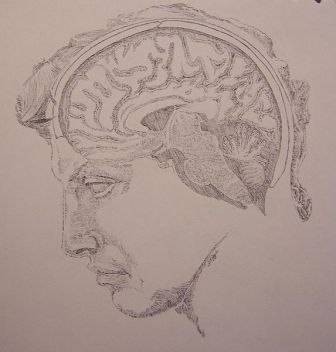
Embodied cognition, the idea that the mind is not only connected to the body but that the body influences the mind, is one of the more counter-intuitive ideas in cognitive science. In sharp contrast is dualism, a theory of mind famously put forth by Rene Descartes in the 17th century when he claimed that “there is a great difference between mind and body, inasmuch as body is by nature always divisible, and the mind is entirely indivisible… the mind or soul of man is entirely different from the body.” In the proceeding centuries, the notion of the disembodied mind flourished. From it, western thought developed two basic ideas: reason is disembodied because the mind is disembodied and reason is transcendent and universal. However, as George Lakoff and Rafeal Núñez explain:
Cognitive science calls this entire philosophical worldview into serious question on empirical grounds… [the mind] arises from the nature of our brains, bodies, and bodily experiences. This is not just the innocuous and obvious claim that we need a body to reason; rather, it is the striking claim that the very structure of reason itself comes from the details of our embodiment… Thus, to understand reason we must understand the details of our visual system, our motor system, and the general mechanism of neural binding.
What exactly does this mean? It means that our cognition isn’t confined to our cortices. That is, our cognition is influenced, perhaps determined by, our experiences in the physical world. This is why we say that something is “over our heads” to express the idea that we do not understand; we are drawing upon the physical inability to not see something over our heads and the mental feeling of uncertainty. Or why we understand warmth with affection; as infants and children the subjective judgment of affection almost always corresponded with the sensation of warmth, thus giving way to metaphors such as “I’m warming up to her.”
This sounds like an analogy to a government sitting within a society. For example, while a government does technically control the body society through the production of laws (to a limited extent), the body society also influences and effects the government (brain) to produce different results. This is how government can be working independently of (and sometimes, contrary to) the rest of society, just as the society can also work independently of (and, sometimes, when the government isn't being cooperative with society's needs) contrary to the government.<br><br>Thanks for this! :)
The notion of a separate organism is clearly an abstraction, as is also its boundary. Underlying all this is unbroken wholeness even though our civilization has developed in such a way as to strongly emphasize the separation into parts. --David Bohm and Basil J. Hile, The Undivided Universe.1
"I suddenly developed a severe headache in the back of my head," the nurse said tearfully. "It was so painful I could not function and had to leave work. This was strange, because I never have headaches. When I reached home and was lying in bed, the phone rang. I learned that my beloved brother had been killed from a gunshot wound to the back of his head, the same place my terrible headache was located. My headache began at the same time the shooting occurred."
The woman was a prominent nurse leader at a major hospital in northern California
Peter Russell and Eckhart Tolle discuss how meditation should be effortless, an open awareness to the present moment. Online Course - http://www.peterrussell...
Deep in the heart of the Amazon is a mysterious language no outsider has ever learned. Until now. After thirty years of research and life with the Pirahas, o...
Very interesting documentary about the language of the Pirahas tribe of the Amazon basin... through their language insight in their worldview, daily needs and social structure is gained.
Answer (1 of 27): First, a simple fact. World's total wealth (including all bank savings, stocks, homes, company treasuries. government funds, pension funds, mines and other natural resources) amounts to $200 trillion or about $25000 per person.
Featureteaser: The Matrix, Waking Life, Spirited Away, Stalker, Au Hasard Balthazar – some of the films famous for evoking the evasive nature of the mystical encounter. We polled Reality Sandwich contributors to find out their favorites.
To get content containing either thought or leadership enter:
To get content containing both thought and leadership enter:
To get content containing the expression thought leadership enter:
You can enter several keywords and you can refine them whenever you want. Our suggestion engine uses more signals but entering a few keywords here will rapidly give you great content to curate.


 Your new post is loading...


 Scoop.it!