Suppose for a moment that all your favorite stories are true. Not literally true or true in every detail, but true in essence. What if the stories of our lives are not so different from, say, that of Bilbo Baggins? It may be profoundly un-postmodern of me, but I am suggesting that it's time to reacquaint ourselves with the notion of destiny.

quest inspiration
7.5K views |
+0 today
A collection of projects, tools, inspiration and possible allies
Curated by
Jerónimo M.M.
 Your new post is loading...
 Scoop.it! 
As a bird sings, some neurons in its brain prepare to make the next sounds while others are synchronized with the current notes—a coordination of physical actions and brain activity that is needed to produce complex movements. 
Scoop.it!

Nathanael Johnson explores the “care effect” — the idea that the opportunity for patients to feel heard and cared for can improve their health.
Jerónimo M.M.'s insight:
Back in 2002, The New England Journal of Medicine published a paper showing that arthroscopic knee surgery for arthritis worked no better than a placebo, though 650,000 such operations were being performed a year. Knee doctors protested: They knew from personal experience that their patients felt much better after this procedure. These patients had come to them with their pain; the surgeons provided care in the form they knew best — surgery — and the patients’ pain decreased. But as with the saw palmetto and Chinese herbs, the surgery itself wasn’t the thing that helped. In the years since, other trials have confirmed the study’s findings and silenced the protests. It’s reasonable to think that the act of caring may be what led to the improvements.

Jerónimo M.M.'s curator insight,
February 17, 2013 12:53 PM
"Back in 2002, The New England Journal of Medicine published a paper showing that arthroscopic knee surgery for arthritis worked no better than a placebo, though 650,000 such operations were being performed a year. Knee doctors protested: They knew from personal experience that their patients felt much better after this procedure. These patients had come to them with their pain; the surgeons provided care in the form they knew best — surgery — and the patients’ pain decreased. But as with the saw palmetto and Chinese herbs, the surgery itself wasn’t the thing that helped. In the years since, other trials have confirmed the study’s findings and silenced the protests. It’s reasonable to think that the act of caring may be what led to the improvements."
Scoop.it!

I realized it was all my fault. I let the culture of the company get corrupted.I ignored problems instead of nipping them in the bud.I was aloof and away instead of managing or training managers.I confused everyone by sharing my daily thoughts before they had cemented into decisions.I announced decisions, then assumed they were being done, without following-up to ensure.I whimsically delegated to the wrong people, avoiding the mental work of choosing wisely.(I could list another 20 of these, but you get the idea.)It felt so SO good to realize it was my fault!
Jerónimo M.M.'s insight:
I sort of agree with this man -jero
Scoop.it!
From the "I have a dream" speech to Steve Jobs’ iPhone launch, all great presentations have a common architecture. In this talk, Nancy Duarte draws lessons on how to make a powerful call-to-action.
Jerónimo M.M.'s insight:
fundamental
Scoop.it!

A feature documentary exploring the depths of the current human condition and the emergence of an integrated worldview
Jerónimo M.M.'s insight:
highly recommended
Scoop.it!
This is a very cool original animation by Louis Lefebvre which chronicles the evolution of Consciousness from its inanimate state into human form and then ba...
Jerónimo M.M.'s insight:
must see animation from the I, pet goat II creator
Scoop.it!
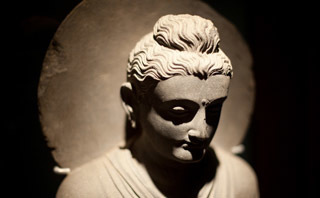
Neuroscience tells us the thing we take as our unified mind is an illusion, that our mind is not unified and can barely be said to “exist” at all. Our feeling of unity and control is a post-hoc confabulation and is easily fractured into separate parts. As revealed by scientific inquiry, what we call a mind (or a self, or a soul) is actually something that changes so much and is so uncertain that our pre-scientific language struggles to find meaning. Via ddrrnt

Nur Svsc 's curator insight,
March 16, 2013 12:19 AM
A good book on the subject is 'The Dalai Lama at MIT' -- a 2008 collection of the papers and research discussed at the Massachusetts Institute of Technology in 2003, a unique dialogue between Buddhist practioners and neurosecientists on the issues of perception, subjectivity, concentration, emotion and perspectivism.
Scoop.it!
Aghori ascetics, while being devotees of the Hindu God Shiva in Shiva's form as Lord Bhairava, are monists who adhere to the common Hindu belief in liberatio...
Jerónimo M.M.'s insight:
prepare
Scoop.it!
Psychologists from the University of Toronto and Harvard University have identified one of the biological bases of creativity.
... the brains of creative people appear to be more open to incoming stimuli from the surrounding environment.
01 Oct 2003 Via ddrrnt
Scoop.it!

wow -jero
Jakucho Setouchi is a revered nun and famous novelist, yet few know that psychoanalysis helped shape her spiritual life...
"Meaning and nuance are lost when necessarily complex ideas are re-packaged as simple, folksy pop psychology, and ‘spirituality’ becomes just a lofty word for having emotions.....
Buddhism’s ‘no-self’ insight, like the contrast between ‘false’ and ‘true’ selves sometimes found in Christian teaching, can give the impression that, with enough meditation or prayer, mental health problems will simply go away. Very often the reverse is true. Meditation in particular can show you things that you really ought to take to a psychotherapist or psychiatrist, or perhaps work through, painfully and embarrassingly, with your family."
Scoop.it!

An anthropologist´s take on 2012, worth following the links -jero
"You hadn’t heard? On or around Dec 21, 2012, the Maya Long Count will mark the end of a 5125 year cycle. Will this be a mere a calendrical turn, no more inherently eventful that the transition from Dec 31, 2012 to Jan 1, 2013? Will this be a moment of astronomical alignments, fiery conflagrations, and social upheavals? Or will there be a shift in human consciousness, an opportunity for the prepared to improve their lives and achieve enlightenment?"
Scoop.it!
From
fora

In this talk, acclaimed game designer Richard Bartle discusses how and why it is that a game design tool can be applied successfully to Gamification theory, pot (RT @SanteAlagia: Watch A Game Designer’s View of Gamification Via Pekka Puhakka
|
Scoop.it!

Rituals bind us, in modern societies and prehistoric tribes alike. But can our loyalties stretch to all of humankind?
Jerónimo M.M.'s insight:
Very little of the inter-group hatred we observe in the world today is based on knowledge of the enemy as real people. And the groups with which we identify are made up, for the most part, of people we’ll never meet. Still, we haven’t forgotten our prehistoric ways of being bound together in groups. In times of desperation, we remember it best: for example, when the guns of a dictator are turned against us.
Scoop.it!
Spark: A Burning Man Story is a documentary feature film premiering at SXSW 2013 on Sunday, March 10 at 5:15 PM. http://schedule.sxsw.com/2013/events/event_F...
Scoop.it!
Nature Friends Lodge, Sierra Madre, CA, 11. September 1993
Scoop.it!
"CHASING ICE" is NOMINATED for an Academy Award: Best Original Song "Before My Time" by J. Ralph featuring Scarlett Johansson and Joshua Bell. Hear the song:...
Scoop.it!
Jerónimo M.M.'s insight:
which one is ours?
Scoop.it!

Toby Litt discusses the difficulty of persuading people to tackle climate change, and how we need to change our perspective.
Jerónimo M.M.'s insight:
a must read -jero
"What the Greens should do, but cannot, because it is so undermining, is say to each of us directly:
You are not a hero. Your acts are not righteous. Neither are ours, individually. Our individual illusions of heroic righteousness are catastrophic.
What they should say, but cannot, because it would alienate almost everyone, is what needs most of all to be said: You are not a sympathetic central character because exactly what centre are we talking about? There are either seven billion equally important centres, in which case if they all behave like you we're screwed, or there are no centres, in which case we might just stand a chance."
Scoop.it!
Jerónimo M.M.'s insight:
a must see! could tie with the Penan story
Scoop.it!
In the confines of a London dinner party, comedian Tim Minchin argues with a hippy named Storm. While Storm herself may not be converted, audiences from Lond...
Jerónimo M.M.'s insight:
watch out for the skeptics!
Scoop.it!

How complex is the simple life? Beginning in 2006, photographer Lucas Foglia spent four years photographing people who rejected modern urban living, opting instead for an “off the grid” life.
Scoop.it!

The results, published Nov.16 in the journal Nature's Scientific Reports, suggest that some undiscovered, fundamental laws may govern the growth of systems large and small, from the electrical firing between brain cells and growth of social networks to the expansion of galaxies.
"Natural growth dynamics are the same for different real networks, like the Internet or the brain or social networks," said study co-author Dmitri Krioukov, a physicist at the University of California San Diego. Via ddrrnt
Scoop.it!
Science today is hardly universally secure, and scientists seem themselves beset by critics, denialists, and those they label “pseudoscientists”—as seen all too clearly in battles over evolution and climate change. The Pseudoscience Wars simultaneously reveals the surprising Cold War roots of our contemporary dilemma and points readers to a different approach to drawing the line between knowledge and nonsense.
Scoop.it!

saying without words -jero
Adonis & Ali Fuat are two very different people. They have almost nothing in common.
|