Your new post is loading...

|
Scooped by
michel verstrepen
October 16, 2022 12:44 PM
|
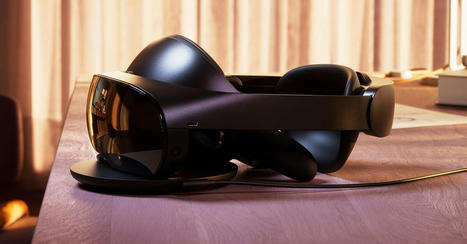
Cameras inside the Quest Pro that track eye and face movements can make an avatar’s expressions more realistic, but they raise new privacy questions.
|
|
Rescooped by
michel verstrepen
from Learning & Technology News
October 11, 2022 11:21 AM
|
CoSpaces is a mixed reality (VR and AR) web-based application that allows users to create and engage with interactive media content. It allows students to demonstrate their knowledge in new ways by building virtual interactive worlds. Educators can use it to create a basic scene with a couple of objects and give students level-appropriate instructions on what to add or change in the target language.
Via Nik Peachey
|
|
Rescooped by
michel verstrepen
from Media, Business & Tech
September 14, 2022 2:29 PM
|
Quels sont les critères d'un cloud public souverain ? Comment les principaux fournisseurs se positionnent-ils vis-à-vis de chacun ? Tour d'horizon.
Via Bruno Renkin
|
|
Rescooped by
michel verstrepen
from Educational Technology News
September 12, 2022 11:00 AM
|
This article reveals the truth behind 6 virtual reality training myths so that you can make the most of immersive learning tech.
Via EDTECH@UTRGV
Depuis le début de l’été, la bibliothèque publique de New York a ouvert une “succursale virtuelle” sur Instagram via le #NYPLSummerBookshelf. Un espace de recommandation de lecture, principalement dédié aux jeunes, et utilisant la technologie de réalité augmentée.
Via Bibliothèques-Médiathèques de Metz
We are on the threshold of a new decade of digital transformation, and at a defining moment for all leaders. Welcome to the "Metaverse Continuum"—a spectrum of digitally enhanced worlds, realities and business models poised to revolutionize life and enterprise in the next decade—and the impact on healthcare begins today. While there are many components, we see the metaverse as having two primary functions: Creating the "Internet of Place" and the "Internet of Ownership." Soon, new spaces in the metaverse will transport us to almost any type of world we can imagine, letting us interact with clinicians, peers and enterprises at a distance. And healthcare organizations will shift part of their operations to the metaverse, maintaining their own internal virtual environments so employees can work from anywhere and collaborate in new ways. This way of life seems futuristic, but it’s already on its way here.1 Only with a high-performing digital core could healthcare enterprises be prepared to participate in, or even build, the next evolution of the internet—creating greater access, better experiences and improved outcomes while keeping people at the heart of it.
Via Edumorfosis, juandoming
|
|
Rescooped by
michel verstrepen
from Logicamp.org
June 23, 2022 9:32 PM
|
OpenSim reported land area growth for the third month in a row with the addition of more than 1,400 new regions, for a new record high of 114,567 standard region equivalents. Active monthly users went up by 525, for a new record high of 44,061.Logicamp and Creatrix World — two major grids that...
Via Didier Preud'homme (Logicamp)
Diving into a magnified human cell. Studying stars from the surface of the moon. Tossing a Frisbee on the quad with a classmate who lives 700 miles away.
These scenarios are far-fetched for most college students. Yet a new virtual reality experiment aims to make them possible. Ten higher education institutions across the U.S. have signed up to create digital versions of themselves that look 3D and feel immersive when accessed by students wearing VR headsets. Drawing on lingo that has gained popularity among tech entrepreneurs, these online simulations of colleges are being called “metaversities.” Learn more / En savoir plus / Mehr erfahren: https://www.scoop.it/topic/21st-century-innovative-technologies-and-developments/?&tag=Metaverse
Via Edumorfosis, Gust MEES
Medical schools are using augmented reality in their curricula to give students hands-on learning opportunities. Medical students can use augmented reality to see and apply theories throughout their training. Augmented reality (AR) and virtual reality (VR) in the healthcare sector are giving a new perspective to the world. Virtual reality (VR) and other innovative technologies such as augmented reality are already being used by many healthcare organizations (AR). Technologists employ virtual reality in various settings, including treating patients, medical teaching, and hospital management. Augmented Surgery Surgeons can utilize AR to learn more about their patients’ anatomy. They may feed their MRI and CT scan results into an AR headset. Then, just before surgery, place-specific patient physiology over their body. Doctors can examine muscles, bones, and essential organs with this technology. Previously, surgery had a significant mortality rate. Procedures can now be a lot safer because of AR. When physicians and experts try to save patients’ lives, AR can help by providing people with all the information they need. Physicians could be more aware of organ placement, vein meshes, and diagnostic reports as they operate since they are all there in front of their eyes. Augmented Diagnosis Some patients, you may have seen, have trouble accurately articulating actual symptoms to doctors. Because of AR, patients will finally be able to communicate their symptoms. As a result of this procedure, doctors can more readily examine their patients’ complaints and diagnose them more accurately. Using augmented reality, the nurse can now swiftly find veins. How? AccuVein, an AR firm that uses a portable scanner, allows nurses to determine the location of veins. Augmented Practice Medical schools use augmented reality in their curricula to give students hands-on learning opportunities. It would be simple to replicate patients and surgical interactions for students using AR in education. Medical students can use augmented reality to see and apply theories throughout their training. Virtual Collaboration Between Physicians With AR What if your surgeon is thousands of miles away? AR may be able to help you. If the surgeon is unavailable and a specialized on hand possesses AR tools, the specialist can assist and follow orders. Doctors may employ AR for collaborative operations and AR video conferencing for successful meetings on any health topic. With doctors from outside the clinic assisting, it might be a life-saving situation.
Via Dr. Stefan Gruenwald, juandoming
Si vous avez la nouvelle carte d'identité électronique et un téléphone avec puce NFC, vous pourrez prochainement tester l'application permettant de vous authentifier auprès des services en ligne reliés à FranceConnect. Un décret publié au Journal officiel le 27 avril 2022 définit le cadre réglementaire de ce « Service de garantie de l'identité numérique » conçu pour fournir un moyen d'accès sécurisé à votre compte Ameli, votre dossier fiscal, vos droits sociaux, etc.
Via Intelligence Economique, Investigations Numériques et Veille Informationnelle
The reason is simple: Augmented Reality will give us superpowers.
We cannot afford to overlook the impact this technology will have on our lives in the near future. One need only consider the billions being spent on the so-called metaverse. Still, I have been involved in this field from the very beginning, and I appreciate the skepticism that surrounds virtual and augmented reality. We lived through a false start in the 1990s, and another in the mid-2010s.
But this time is different.
VR and AR technologies are finally able to offer real-world value. While I can point to many examples, no field of endeavor makes the case more clearly than medicine. Last week I participated as a panelist at the Digital Orthopedics Conference in San Francisco, where a major theme was to imagine the medical field in the 2030s. As part of this effort, a small group of us carefully reviewed the latest research and assessed the potential impact of immersive technologies.
Via Edumorfosis, juandoming, LGA
The higher education Metaverse is about creating immersive learning experiences. Soon, students will be attending the Metaversity.
Via EDTECH@UTRGV
|
The term metaverse is overused, and we all feel it. It’s buzzy, pigeonholing, and doesn’t encompass how the underlying technologies could change everything, from meeting to playing, working to shopping, and the overall ways we experience life. It is therefore imperative that we are careful about how we even refer to the metaverse. Its potential offerings have yet to emerge in the market, and companies are fearful of overpromising and hype that could contribute to disappointment from mass consumers, as we witnessed during the earlier VR craze.
Via Edumorfosis, juandoming
|
|
Rescooped by
michel verstrepen
from Educación a Distancia y TIC
September 14, 2022 2:29 PM
|
Virtual Reality has been one of the most buzzing phrases in the technological world recently. Its amazing benefits have been dominating every industry, and the education sector is no different. This article confers 5 exceptional ways educators can benefit from VR for their online teachings.
Education is steadily evolving, with technology taking the epicenter. Due to technological advancements, educators can offer more meaningful lectures to learners anywhere and at any time. Learners, too, don’t have to first reach specific lecture halls to attain quality education. With the availability of education apps, learning is possible just anywhere.
Via Edumorfosis, LGA
Augmented reality (AR) is a new technology for many eLearning developers. Although the ability to access AR from mobile devices has made the barrier to entry for using AR relatively low, for developers it can be overwhelming to know where to start. In this article, I will introduce some of the basics.
Via Marta Torán, juandoming
Jonathan Kelly, an ISU professor of psychology and human computer interaction, says cybersickness can be temporarily debilitating — and a big turnoff toward using the technology. “It commonly includes nausea, sweating, dizziness, headache and eyestrain,” Kelly says.
Earlier studies showed that more than half of first-time virtual reality headset users experienced cybersickness within ten minutes. The new ISU research is finding the more a person uses VR, the less woozy they become.
“Exposure to virtual reality seems to gradually reduce this experience of cybersickness,” Kelly says. “This is similar to other forms of motion sickness, car sickness, sea sickness, where for most people, if they experienced that sickness initially, it will eventually reduce over repeated exposures.”
Via Amy Cross, juandoming
|
|
Rescooped by
michel verstrepen
from Raspberry Pi
July 20, 2022 12:38 PM
|
Technology, Software, AI, Robotics, and more from the world of technology...
Via F. Thunus
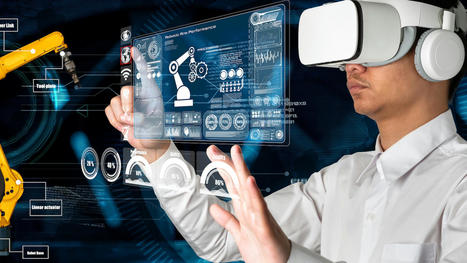
Augmented Reality (AR) is quickly becoming one of the most important technologies of this century. It is expanding from consumer use to become one of the cornerstones of the latest industrial revolution: Industry 4.0.
It is a technology that expands the physical environment by adding layers of digital information to a user's reality in real time. AR can take human cognition and perception to a whole new level by superimposing computer-generated information on the physical reality of a user.
Via Edumorfosis, juandoming
|
|
Rescooped by
michel verstrepen
from Raspberry Pi
June 4, 2022 12:49 AM
|
SimCity is one of the original city-building games.Although Cities: Skylines now holds the city building and management crown, SimCity holds a place...
Via F. Thunus
Vous connaissez l’adage. « Si c’est gratuit, c’est toi le produit. » Et, en l’occurrence, on ne croit pas si bien dire. Car une étude du Conseil Irlandais des Libertés Civiles (ICCL) estime que la vente de nos données personnelles représentait un marché de plus de 117 milliards de dollars l’an dernier en Europe et aux États-Unis.
Via Intelligence Economique, Investigations Numériques et Veille Informationnelle
In the last week, the Virtual Human Interaction Lab at Stanford University published its recent findings on the measured effects of time on various measures within a collaborative virtual environment, using ENGAGE as its VR platform of choice.
“Overall, the results showed that all measures, including self, social, and spatial presence, enjoyment, entitativity, and realism increased over time. This underscores the critical role that time plays in how people’s experience in VR evolves. Given this, it is possible that once participants adapt to the medium and are no longer uncomfortable with the novelty of the technology, they are able to reap the advantages that VR and CVEs provide and feel more presence and connectedness.”
Via Edumorfosis, juandoming
|
|
Rescooped by
michel verstrepen
from Veille CDI
May 12, 2022 4:44 PM
|
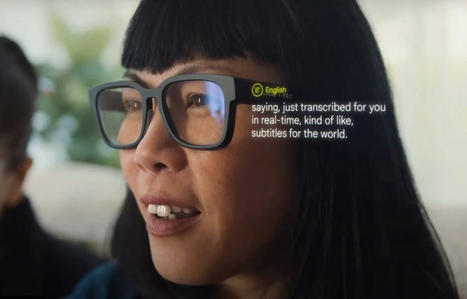
A l'occasion de sa conférence Google I/O, l'entreprise californienne a confirmé qu'elle n'avait pas renoncé à un futur enrichi en réalité augmentée
Via cdi
|