 Your new post is loading...

|
Scooped by
Jeff Domansky
July 10, 2015 3:40 AM
|
The recent news that mobile searches have surpassed desktop searches on Google was considered monumental.
There is no arguing that mobile is not tremendously important. Even for those who did not previously think much about mobile, there was no way to miss Google’s announced “Mobilegeddon” — it was the SEO’s Y2K. Any business in today’s market that ignores its mobile presence does so at their own peril.
This emphasis on mobile might be a story of its own making, however. To be sure, mobile has come a long way since just a few years ago. Yet this new focus on “everything mobile” and “mobile first” might be misplaced if it is to the exclusion of your multi-device users.
What if “mobile first” is not everything it’s hyped to be? What if you are sacrificing real users and real money on the altar of “mobileness”?...
|
|
Scooped by
Jeff Domansky
July 10, 2015 3:27 AM
|
When it comes to American consumerism, a 2015 study by Mintel says: Americans not only use the internet to stay connected to work, family and friends, but 69 percent seek out advice and opinions on goods and services before purchasing. Of those who seek out advice, shoppers are equally likely to visit user review sites or independent review sites before making a purchase (70 percent), while 57 percent use social media networks for recommendations.
Yet even though so many of us put stock in what our digital friends tell us, it isn’t always so cut and dry....
|
|
Scooped by
Jeff Domansky
July 10, 2015 3:12 AM
|
No taste? No problem. Google's got you covered.
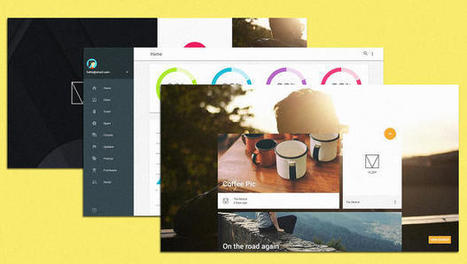
By now, we’ve all heard of Google’s enticing pitch on Material Design—their design language that re-imagines the pieces of user interface as real, physical objects. But while Google offers tools for any Android developer to build an app that adheres to Material Design standards, what if you just want to make a snazzy, Material Design website?
Now, Google has released a tool to make the process simple. It’s calledMaterial Design Lite, and it’s a site filled with copy-and-pasteable code that you can use to create Material Design websites in CSS, HTML and JavaScript....
|
|
Scooped by
Jeff Domansky
July 10, 2015 1:49 AM
|
Mobile isn’t the future anymore — it’s the present. According to “Queen of the Internet” Mary Meeker and her 2015 Internet Trends Report, mobile usage has grown to almost 3 hours per day for the average American adult. Compare this to the less than 1/3 of an hour Americans spent on mobile in 2008, and it’s easy to see why marketers everywhere should be paying attention.
As mobile devices become increasingly dependable and effective, it becomes all the more important that companies and marketers understand how mobile can work for them — and how it differs from desktop. These 3 decks lend insight into the ever-evolving world of mobile so you can align with your consumers’ habits and make the most of the latests trends....
|
|
Scooped by
Jeff Domansky
July 9, 2015 2:18 AM
|
Dive Brief:Retailers’ social media activity is far better than their websites or search engines at getting shoppers to convert or try new things, according to a report from digital marketing vendor Epsilon Data Management LLC.
For its “Digital Shopping Tool Impact Study 2015,” Epsilon looked at what prompted shoppers to try new brands and products, and the top influencers were: - retailers’ social media usage (29%) - brands’ social media usage (28%) - printable coupons (23%), - daily deal sites (22%), and friends’ social media posts (21%).
While consumers may use a retailer’s site more often, social media, apps, and even coupons are more likely to influence their shopping and decision-making in 10 areas of the shopping process, including what store they visit and their amount of unplanned purchases. The top five digital tools, according the report, are retailers’ social network posts and pages (35%), price comparison sites (35%), shopping apps (34%), brands’ social network posts and pages (33%), product reviews (33%), printable coupons (32%). ...
|
|
Scooped by
Jeff Domansky
July 9, 2015 1:46 AM
|
Over the past few years, I've made a study of how to get retweets. I've tried a ton of tactics -- plenty that don't work and some that do.
May I share my best tips with you, here on the Post Planner Blog? Let's talk about the tactics that WORK!
In this post, I'll give you 7 of my field-tested tips that can help you get more retweets... FAST! Guaranteed! (But there's a catch.)...
|
|
Scooped by
Jeff Domansky
July 7, 2015 3:05 AM
|
Whether you’re tired of hearing newfangled phrases in discussions about tech or are still recovering from Post Silicon Valley Move Stress Disorder , there’s now a ready reckoner to sort you out.Silicon Valley Dictionary serves up nearly 200 (and counting) terms commonly used in the tech world, along with a smattering of them from ‘Silicon Valley’, an HBO comedy that presents a wry take on startups.
Some of my favorites are:Gluttonygramming: Programming and working at a slower pace to purposely get more food out of the company....
|
|
Scooped by
Jeff Domansky
July 7, 2015 2:39 AM
|
While the majority of our readers are likely beyond college age, it’s still fun to wistfully remember your experimental undergraduate years—or whatever they were. That’s why I’ve written a list of the 10 best colleges for creative writers, based on my own highly idiosyncratic metrics: accomplished professors, famous alumni, environments conducive to writing, bizarre course selections, and, best of all, any random facts that might add to the writerly collegiate experience.
|
|
Scooped by
Jeff Domansky
July 7, 2015 2:04 AM
|
Forrester asserts that consumer use of coupons has shifted overwhelmingly to digital, with 66 million digital coupons redeemed in 2013, up 141 percent from 2012.
However, even as mobile wallets and applications now hand out context-specific coupons at critical moments, most marketers still rely on free-standing inserts.
Forrester recommends that marketers consider the ability of context to improve the relevance of coupons the same as it does for marketing messages. The report recommends marketers personalize their physical and digital coupon offers and distribution...
|
|
Scooped by
Jeff Domansky
July 7, 2015 1:36 AM
|
The consumer is changing. Evolving. And it’s largely thanks to social media.The proliferation of social media has made it easier than ever before for consumers to reach out to brands, to research their purchases and to shop from anywhere in the world.
Here are four new social consumer behaviors that your brand should be paying attention to: - They are mobile
- The social shopper can shop from her living room, the subway or while at work. She can tweet recommendations in transit, and read reviews in bed. She can engage with brands anywhere at any time.
- Social consumers now spend more time accessing digital media through a mobile device than on a desktop...
|
|
Scooped by
Jeff Domansky
July 7, 2015 12:50 AM
|
...With all the back and forth, I have finally come to a realization that the goals and desires of Modern Marketing can be accomplished with these 5Cs: - CONSUMER
- CONTEXT
- CONTENT
- COMMERCE
- CONVERGENCE
Always putting the CONSUMER at the center, both in strategy and execution (more often than not we are missing one or the other). CONVERGENCE needed at all levels to overcome the challenges of fragmentation and silos and of course the 2 channel agnostic pillars of a seamless experience – CONTENT & CONTEXT that if done right, will organically drive a COMMERCE BEHAVIOR....
|
|
Scooped by
Jeff Domansky
July 6, 2015 11:21 AM
|
When researching purchases in store, more than twice as many shoppers head for a website, rather than an app, on their smartphone.
Questioned about how they use their mobiles in store, 47 per cent of respondents said they used their phone for sharing ideas, followed by 29 per cent who said they used it for comparing prices, with 20 per cent saying they used their phone for finding product information, and 17 per cent for sharing photos, taking pictures as a reminder, finding store location information, and browsing (with no intention to purchase)....
|
|
Scooped by
Jeff Domansky
July 6, 2015 11:01 AM
|
If your brand is targeting 20 to 30 year olds, using video as a communication tool is key. You might find that your business, like many others, are failing to fully engage the millennial demographic.
Did you know that millennials (or Generation Y, as they’re also called) will spend more than $200 billion annually starting from 2017? Did you know that millennials are primarily visual buyers? Or that there are approximately 80 million millennials in the US? Needless to say, there’s a lot of money and loyalty to earn if you get your communication strategy right.
Luckily, Animoto created an infographic with the key statistics you need to know in order to understand why, and how, the Gen Y are interacting with online videos. Below are the key take-aways....
|
|
|
Scooped by
Jeff Domansky
July 10, 2015 3:37 AM
|
We all know that in the past decade digital has been the big story in the marketing world, with traditional techniques either being side-lined or used alongside new technologies, such as social media.
To an extent, some of the more traditional marketing practices have transferred onto online platforms – for example, email newsletters instead of paper ones, and advertising on websites instead of magazines.
One area which seems to work better online than offline is reviewing. Whilst previously reviews could be seen in dedicated magazines or marketing literature, thanks to sites such as Trip Advisor and Amazon, reviews can now be written and published instantly for the world to see....
|
|
Scooped by
Jeff Domansky
July 10, 2015 3:22 AM
|
Last week, the U.S. Census Bureau released a sobering statistic: The Millennial generation now totals 83.1 million and represent more than a quarter of the nation’s population.
When it comes to buyer preferences, Millennials are changing the rules of marketing and engagement, according to Demand Gen Report’s 2015 Content Preferences Survey.
Alicia Fiorletta, Senior Editor of Demand Gen Report, presented some of the survey results during this year’s Content2Conversion Conference. According to the findings, only 3% of Millennials would rank content as “excellent.” While it might be tempting to shrug off this statistic given the generation’s reputation as a demographic of “self-absorbed and entitled” youth, Fiorletta pointed out that many Millennials are young professionals who are quickly rising in their careers. So if they aren’t already, they soon will be making most of the buying decisions for their companies.
Here are some other interesting findings from the survey as it relates to Millennials and their content preferences: - 61% of Millennials frequently use their smartphones to access content; - 71% of Digital Natives (a slightly younger set, ages 21-29) say they consume content before interacting with a salesperson (vs. 53% ages 40+); and - 66% of Millennials use web search to find content, 53% use industry publications, and 51% use peer referrals....
|
|
Scooped by
Jeff Domansky
July 10, 2015 3:05 AM
|
There are so many metrics that can be measured in social media, that sometimes it can be overwhelming to narrow it down to something bite-sized, and find a good measure of success. Since social media also touches everything from attracting prospects to delighting customers in the buyer’s journey, figuring out what metrics to report on can be a challenge.
In this post, I will break down the metrics we observe at HubSpot, how we define success, and how we make that decision each month. And the best part: we'll wrap up with how to actually measure those metrics at HubSpot....
|
|
Scooped by
Jeff Domansky
July 9, 2015 11:56 AM
|
There’s been a lot of talk about how traditional public relations can help boost your SEO.SEO and PR go hand in hand. I’m really lucky to work with several PR professionals in my current position, and they all agree that SEO best practice is essential if your story is going to connect with its audience.
While still distinct disciplines, SEO and PR are now joined at the hip, and professionals on both sides can no longer remain ignorant of each other’s worlds. An SEO who is armed with top tier PR training can have intelligent conversations with clients in regards to branding and PR goals, and an expert public relations professional can optimize press releases, understand on-page elements and use tools beyond social media to make sure that their client’s needs are best served.
So, here are some tools that I use in my own efforts as in performing my outreach role:...
|
|
Scooped by
Jeff Domansky
July 9, 2015 1:53 AM
|
Content marketing is a great way to develop customer relationships, increase brand awareness and target your audience with precision.
You’ve given it a go for a while, with some decent results.
Now what?
You know by now that content marketing isn’t static. Things are always changing.How will you stay ahead of those changes?...
|
|
Scooped by
Jeff Domansky
July 8, 2015 12:56 PM
|
At Onalytica we have been looking closely at the transformation of PR as we know it. Our vision is to evolve media relations into influencer relations professionals by managing relationships with hundreds of key influencers rather than just journalists.
Think about the numerous analysts, politicians, bloggers, thought leaders, industry professionals, stakeholders and influential consumers that all have big audiences that you want to reach. Influencer relations is a truly essential part of modern PR (we also offer a B2B influencer relations platform for PR practitioners)
One of the most time consuming parts of influencer relations (or influencer marketing) is identifying the right thought leaders. What if you just wrote a new blog and you have no idea what influencers would be interested in your content?
We’re here to help! We built a new tool to do this. Before it took up to an hour to find 10-20 relevant influencers, now you can do it in less than a minute…
|
|
Scooped by
Jeff Domansky
July 7, 2015 2:57 AM
|
Metaphor is not the sole preserve of Shakespearean scholarship or high literary endeavour but has governed how we think about and describe our daily lives for centuries, according to researchers at Glasgow University.
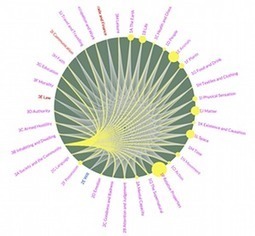
Experts have now created the world’s first online Metaphor Map, which contains more than 14,000 metaphorical connections sourced from 4m pieces of lexical data, some of which date back to 700AD.
While it is impossible to pinpoint the oldest use of metaphor in English, because some may have been adopted from earlier languages such as Germanic, the map reveals that the still popular link between sheep and timidity dates back to Old English. Likewise, we do not always recognise modern use of metaphor: for example, the word “comprehend” comes from Latin, where it meant to physically grasp an object.
The three-year-long project to map the use of metaphor across the entire history of the English language, undertaken by researchers at the School of Critical Studies, was based on data contained in the Historical Thesaurus of English, which spans 13 centuries....
|
|
Scooped by
Jeff Domansky
July 7, 2015 2:20 AM
|
The key to an emotionally engaging headline? Context Words: a group of 1,072 words in the English language that can increase a person’s interest and attention in a specific message.
Context Words were uncovered through EEG testing and something called the Pearson product-moment correlation coefficient, a way to measure the correlation between two variables. In this case, we were looking to understand the relationship between word choice and the brain’s emotional response.
We’ve split the Context Words into four categories: insight words, time words, space words and motion words.Insight words provide more detail, i.e. closure, admit, inform, think. Time words refer to a point in time, i.e. after, fast, long, prior. Motion and space words help us understand where something is happening, i.e. appear, replace, arrive, enter....
|
|
Scooped by
Jeff Domansky
July 7, 2015 1:48 AM
|
The report, Navigating the New Digital Divide which studied close to 2,000 urban Indian shoppers, said the conversion rate of shoppers who use a digital touch-point is 40% higher than the non-digitally influenced shoppers.
Besides more than a third of digitally influenced shoppers would prefer the flexibility of buy-online-pickup-in-store, the report said.
However, Rohit Bhatiani, director at Deloitte added, “Today, 90% of the retailers do not have a mobile app or mobile-friendly websites and hence these retailers are not even considered by consumers for pre-buying research. Retailers need to create a strong meaningful digital presence to attract customer attention.”...
|
|
Scooped by
Jeff Domansky
July 7, 2015 1:04 AM
|
The recent 2015 Next Generation of Commerce study from Acquity Group, looks at what the firm considers “untapped opportunities” for brands across nontraditional spaces. It says these opportunities cater to younger generations especially.
For one, it found that nearly half of consumers (45%) say recognizing a brand they often buy on multiple media channels, such as TV, social media and magazines, makes them more likely to shop from that brand next time they’re in a brick-and-mortar setting. It’s 28% for online.
The study, which surveyed over 2,000 consumers in the U.S. about their habits and preferences surrounding digital entertainment, content, shopping, and services, also found that 3 in 5 consumers (59%) say they would be more likely to watch an online streaming TV series produced by a brand if that meant no commercials. 1 in 4 consumers indicated they are influenced by native ads in news outlets.1
28% of consumers ages 18-22 and 32% ages 23-30 would switch retailers if offered the option to pay in social currency, such as engagement for discounts, it found. On the other hand, it also found that 60% of consumers believe they see too many ads. According to Acquity Group, this means brands should focus on “weaving their offerings into an appealing and relevant user experience.”...
|
|
Scooped by
Jeff Domansky
July 6, 2015 11:35 PM
|
Twitter is a fascinating adventure of relationships, entertainment, education, and fun. Now imagine layering on a few dozen power-ups.
That’s how it feels sometimes when you find just the right Twitter tool. And there’s a tool for practically every desire or whim.
Tools for productivity, for efficiency, for research, and so much more. With such a generous API, Twitter tools have become legion—and we social sharers are better off for it.
At Buffer, we tend to come across a fair share of social media tools. We’ve collected a great bunch to share with you! Here are all the tools we’ve found helpful and many more that we’re excited to try. If there’s a free Twitter tool out there, you’re likely to find a mention here in our list.
|
|
Scooped by
Jeff Domansky
July 6, 2015 11:11 AM
|
Now several companies, including Google, Facebook, Twitter and Pinterest, are trying to bridge the gap between mobile browsing and desktop purchasing with a simple “buy” button.
Buy buttons have been around since the early days of the Web, of course, notably with Amazon’s “One-Click Ordering,” where people set up a button that runs their credit card and ships whatever they have bought to a designated address.
But these new buy buttons allow technology companies to act as middlemen between mobile shoppers and retailers — eliminating aggravating typing on a phone’s touch screen and extending one-click ordering to thousands of small retailers....
|











I have run into this issue recently -- whether mobile first is the best marketing strategy -- and appreciate the framing in this article.