 Your new post is loading...

|
Scooped by
Jeff Domansky
October 31, 2015 1:02 AM
|
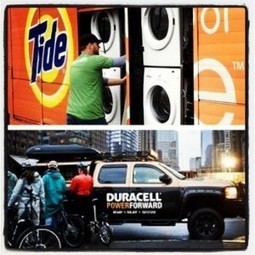
Beacons are excellent tools for creating location-based and real-time mobile experiences. Some big businesses are experimenting with using beacons to deliver localized, timely, and relevant information and marketing offers, including Facebook, Target, and the London Underground.
When they work, it’s magic — but sometimes that’s easier said than done.
Through our own research and conversations we’ve had with companies that have tried beacons before, we’ve identified a number of problems companies run into when they decide to give beacons a try....
|
|
Scooped by
Jeff Domansky
October 30, 2015 11:51 PM
|
The number of UK consumers using social media to research what products are "best" has rocketed from 25% to 43% in the last year, according to the Adobe Digital Index (ADI) 2015 Holiday Shopping Prediction report. The study examined more than 1trn visits to 4,500 retail websites since 2008, with a separate survey of over 400 consumers per country in the UK, USA, Germany, France, Australia, China and Singapore.
"We’re seeing the rise of social media as a source of product reviews," says Ryan Dietzen, senior market insights analyst at ADI. "It’s a key part of the customer journey."
The story is the same across Europe, with the percentage of respondents in France using social media to research products jumping from 28% in 2014 to 35% this year. Almost half of respondents in the UK said product reviews are one of the top two influencers on them when making major purchases, while the number influenced by reviews was even greater in Germany at 64 percent....
|
|
Scooped by
Jeff Domansky
October 30, 2015 11:41 PM
|
Spending on marketing technology is expected to hit $32 billion by 2018.
Between mergers, acquisitions, and general spending on martech platforms, demand for tech solutions has led to unprecedented YoY growth in this market.
According to Walker Sands, there were close to 1,900 martech companies across 43 different product categories at the beginning of 2015. Based on YoY estimates, that means the market nearly doubled from 2014-2015.
Interestingly, despite rapid market growth and high demand, 51 percent of marketers don’t think their companies are investing enough in these solutions — an opinion that very well may change soon considering the large investments being made in mobile advertising and marketing technology heading into next year.
So, as we move into 2016, what buying trends do tech companies need to know in order to get in front of key decision makers and win more business?...
|
|
Scooped by
Jeff Domansky
October 29, 2015 2:24 AM
|
When we talk about the “digitization” of society, we often focus our attention on the younger generations. And it makes perfect sense to do so. They have grown up with the technology in their hands. They don’t know of a reality in which they can’t Google something, or WhatsApp someone, or post a pic on Instagram. In turn, businesses have targeted this younger generation—the Millennials—with rich, engaging digital experiences in an effort to win their hearts, minds, and wallets. Only, in focusing just on Millennials, they are alienating a huge demographic; a demographic that is spending more time online that any other.
Before I do the big reveal, let’s look at how “time spent online” has changed in just a year....
So who’s spending all this time online? If not Millennials, then which demographic is it? Drum roll please… Baby Boomers. That’s right, where 45% of our total sample pool spent more than 15+ hours online outside of work, 51% of Baby Boomers indicated that they spent 15 or more hours online each week....
|
|
Scooped by
Jeff Domansky
October 29, 2015 2:03 AM
|
The fear of missing out is an emotional trigger that undeniably leads to people clicking the purchase button in higher numbers. And when I think about companies moving away from discounts, I’m reminded of the epic fail that was JC Penney’s rebranding and decision to stop using coupons in favor of lowering prices across the board. When the coupons went away, so did millions of dollars.
But what if discount culture isn’t helping you reap the benefits you think it is? Slant’s infographic makes the case that maybe you should reconsider discounts. If the thought of losing out on the upcoming money-spending frenzy that is the holiday shopping season is frightening, this infographic isn’t just dropping bad news on you and fleeing the scene. It also gives actionable solutions that are proven to drive sales....
|
|
Scooped by
Jeff Domansky
October 29, 2015 1:29 AM
|
If brands—whether they’re brick and mortar merchants or online e-commerce vendors—want to increase customer satisfaction, they ought to offer non-monetary rewards, recent research suggests. But why?
It stands to reason that if two consumers receive rewards with the same dollar value, whether in cash or as a gift, they ought to show the same level of satisfaction. However, studies find this is often not the case, with users that received non monetary rewards experiencing consistently higher satisfaction levels than those who did not.
According to a study conducted by the Kellogg School of Management at Northwestern University, this behavior is due in part to what researchers dub “value sensitivity”, or the participant's’ ability to make an educated guess as to the value of their reward: “...present research demonstrates that countability (how easily a product or service can be counted using simple whole numbers) feeds into value sensitivity and thus moderates the impact of inequity on satisfaction” (Northwestern University)....
|
|
Scooped by
Jeff Domansky
October 29, 2015 1:09 AM
|
Every business must serve a social purpose”. These are not the words of a social campaigner or a politician; they are the words of a banker, Ashok Vaswani, the CEO of Retail and Business Banking at Barclays, one of the world’s largest banks. Barclays has been involved in at least one major trading scandal and holds the dubious honour of the most fined bank in Britain. There will be some people who will treat his words with understandable cynicism but that would be to miss the point.
The point is not whether the words are sincere or not – it is that they should have been said at all. Banks are concerned with the control of money, why should they concern themselves with any purpose beyond that? The reason is that society is demanding they do. When banks first started they fulfilled a social need in the community, to enable ordinary people to fund their ambitions. Over the years banks forgot that purpose and focused most of their efforts on funding their own ambitions through obscene profits, often at the consumer’s expense. The bubble burst in spectacular fashion with the downfall of Lehman Brothers in the US and RBS in the UK.
It isn’t just the banks that have lost their way. Now it’s critical for any business to demonstrate it has a purpose before, and beyond profit; that it seeks to improve the lives of its customers as a primary goal. Failure to have such a purpose, to be clear about it and to ensure it directs everything you do, will lose customers, employees and ultimately business value....
|
|
Scooped by
Jeff Domansky
October 28, 2015 12:41 PM
|
That's exactly the same approach outdoor retailer and co-op REI is taking with a new campaign aimed at discouraging people from joining the mad shopping rush to instead enjoy the great outdoors. Dubbed #OptOutside, the company is closing all 143 of its stores on Black Friday, while still paying its employees to take the day off too. Created by people from agencies Venables Bell & Partners, Edelman, Spark, and the brand itself, the campaign also includes a spot with REI chief exec Jerry Stritzke introducing the idea from his roomy office....
|
|
Scooped by
Jeff Domansky
October 28, 2015 10:38 AM
|
I am a content marketing failure.
Despite following what I thought were all the best practices, my last year in the content marketing trenches has been a complete fiasco.
Luckily, I failed big and fast. This is a good way to fail, if you have to, because you can do nothing but re-think your strategy from the ground up.In other words, my failure turned out to be a blessing and today I wanted to share my “failure-blessing” with you....
|
|
Scooped by
Jeff Domansky
October 28, 2015 3:42 AM
|
Social media isn’t a once and done process. It’s iterative. You have to keep listening, sharing and participating in the conversation for it to extend your content marketing’s reach.
Here are 5 key ways social media boosts your content marketing results along with actionable tips....
|
|
Scooped by
Jeff Domansky
October 28, 2015 3:27 AM
|
Are you in charge of getting your company’s social media marketing up and running? Using social media to grow your business, generate leads and build a brand may seem like a huge task, and in some ways it is. But there are steps you can take to improve your chances of success, which will help you take advantage of everything social media has to offer.
Whether you’re just getting started, or have been active on sites like Facebook and Twitter but haven’t had much success, following these 15 social media tips will help propel you to the next level....
|
|
Scooped by
Jeff Domansky
October 28, 2015 2:54 AM
|
About 528 U.S. respondents participated in the study, which analyzed research and buying habits among consumers and B2B buyers, the number of channels used to make decisions, and the type of content that resonates best -- whether focusing on connecting with B2C or B2B buyers.
More than 70% of consumers use three channels or more when researching a purchase. Some 45% of consumers who make the purchase, and 46% of B2B customers, look to the data to help them make the correct decision. Many look at the headline of articles and content for hard facts such as dollars and percentages....
|
|
Scooped by
Jeff Domansky
October 27, 2015 12:47 AM
|
If you want to win the hearts and minds (and dollars) of consumers in their micro-moments, you have to do more than just be there. You have to be useful too. That means connecting people to what they’re looking for in real-time and providing relevant information when they need it.
Mobile adds a rich layer of context on top of intent that lets marketers create even more relevant messages in micro-moments. For example, when someone searches for digital cameras, are they at home, on the street, or actually in your store? Is it 6 p.m. Friday or 6 a.m. Monday? The answers to questions like these play a role in determining what problem consumers are trying to solve, what creative they'll respond to, and what marketers need to think about when trying to engage them.
And being useful in those moments matters. Take the fact that 51% of smartphone users have purchased from a company/brand other than the one they intended to because the information provided was useful.
Seventy-three percent of consumers say that regularly giving useful information in their advertising is the most important attribute when selecting a brand....
|
|
|
Scooped by
Jeff Domansky
October 31, 2015 12:01 AM
|
As Product Editor at Wired, Jeremy White is in the business of knowing what’s coming next for consumers. His unique position on the cutting edge of tech gives him a terrific view of the digital horizon, so here he reveals five key developments and trends that smart marketers need to grasp if they hope to reach consumers in the months and years ahead.
At Wired, our observation is that consumers often take the lead when it comes to digital adoption and marketers tend to follow. But that’s not surprising, so don’t be afraid to fail fast. Try things out. See if something works – if it does or doesn’t, establish that quickly and move on. Here are five digital developments marketers can get to grips with right now to maintain the pace....
|
|
Scooped by
Jeff Domansky
October 30, 2015 11:48 PM
|
Marketers have a lot of issues to deal with moving forward, but there are still plenty of reasons to be optimistic. Even though, as Dillon points out, intrusive advertising is in a state of crisis, content and experiential marketing is starting to truly live up to the hype that’s been building over the past few years.
So if Dillon is the devil over the shoulder, allow me to take the perspective of the angel....
|
|
Scooped by
Jeff Domansky
October 29, 2015 2:38 AM
|
25 disruptive technology trends 2015-2016 according to Brian Solis, digital analyst, anthropologist and futurist.In his work at Altimeter Group, Solis studies the effects of disruptive technology on business and society. Agree or disagree with his list – and it covers a lot of ground – it makes fascinating and enlightening reading....
|
|
Scooped by
Jeff Domansky
October 29, 2015 2:11 AM
|
To win the hearts and minds (and dollars) of consumers in their micro-moments, you have to do more than just be there. You have to be useful too. That means connecting people to what they’re looking for in real-time and providing relevant information when they need it.
Mobile adds a rich layer of context on top of intent that lets marketers create even more relevant messages in micro-moments. For example, when someone searches for digital cameras, are they at home, on the street, or actually in your store? Is it 6 p.m. Friday or 6 a.m. Monday? The answers to questions like these play a role in determining what problem consumers are trying to solve, what creative they'll respond to, and what marketers need to think about when trying to engage them.
And being useful in those moments matters. Take the fact that 51% of smartphone users have purchased from a company/brand other than the one they intended to because the information provided was useful.
Seventy-three percent of consumers say that regularly giving useful information in their advertising is the most important attribute when selecting a brand....
|
|
Scooped by
Jeff Domansky
October 29, 2015 1:56 AM
|
People access more media and information now than they otherwise would because of mobile devices. They do more of everything — read news, listen to music, watch videos, chat with friends, shop, play games, etc. They do these things while waiting for a bus, riding a train, eating, working, stuck in traffic, or walking.
This generation has clearly mastered the art of multitasking. It is sometimes amazing how one can post a photo on social media while crossing the street (which is of course very dangerous).
Mobile content consumption has skyrocketed over the popularity of smartphones. A 2014 report from Millennial Media and comScore reveals that 44% of online content is now consumed via smartphones, 12% on tablets, and 44% on desktop computers. What’s more is mobile isn’t just an option now, it’s the popular choice....
|
|
Scooped by
Jeff Domansky
October 29, 2015 1:17 AM
|
People are instinctively drawn to brands that are considered more authentic than their competitors. How can your brand win?Authentic stories help you build emotional connections with customers. But how can you relate your stories back to the target audience?Below are four tactics that can help add a layer of authenticity to your content marketing....
|
|
Scooped by
Jeff Domansky
October 29, 2015 12:52 AM
|
How do marketers discover, research, and evaluate marketing technologies?
To find out, in June 2015 Walker Sands Communications surveyed 313 marketers based in the United States. Respondents work for a range of company sizes (29% at businesses with fewer than 50 employees; 17% at enterprises with 5000+ employees) and hold titles at all levels (31% coordinator/specialist, 28% manager, 21% vice-president, 5% CMO, 16% other).Below, key findings from the report.
Discovery Some 30% of respondents say they learn about marketing technology from peers; 20% discover new technologies via media outlets/blogs.
Forbes is the most popular media outlet for learning about marketing technologies and industry news (44% of respondents read); Wired is next (37% read), followed by the Wall Street Journal (35%).
Most respondents (91%) say they begin researching marketing tech vendors on their desktop or laptop computer; 6% begin on a smartphone, and 3% on a tablet.
Peer recommendations are the most influential sources of information about marketing technology solutions (63% of respondents rate them as very influential), followed by online reviews (44%) and analyst reports (33%)....
|
|
Scooped by
Jeff Domansky
October 28, 2015 10:53 AM
|
This is particularly true in the world of video, where TV—still a powerful medium, to be sure—is now far from the be-all for securing desired levels of video impressions. According to Nielsen, traditional television viewing has decreased from the prior year across the majority of demographics.
MoffettNathanson reports that the pay TV industry lost an estimated 556,000 subs in Q2 2015, and that commercial ratings for cable channels have been down every month since May 2014. And Americans are now spending almost five and a half hours a day viewing screens ... without even turning on a television! At the same time, Kinetic USA reports Americans now spend an unprecedented 70 percent of their time out of the home.
So the conundrum is this: TV is moving in a negative direction, yet we know that video remains the most powerful form of ad messaging At the same time, with consumers out and about more than ever—what's a media planner to do?...
|
|
Scooped by
Jeff Domansky
October 28, 2015 3:48 AM
|
I believe some form of atomization is a requirement, for three reasons: 1. Atomization is resource efficientIt allows you to cover more ground with your content, with less effort than making brand-new content marketing executions every time. 2. Atomization helps win the relevancy warsExecuting your content theme in multiple platforms and in multiple ways gives you a better chance of producing content in a form that is hyper-relevant to a particular segment of your audience. 3. Atomization includes built-in amplificationBy taking your big idea and spreading it in many, smaller ways you envelop your audience with the concept. It feels like you’re “everywhere” and creates an attention multiplier effect....
|
|
Scooped by
Jeff Domansky
October 28, 2015 3:32 AM
|
After passing the 300 million users mark a few months ago, Instagram is one of the most popular social media networks, second only to Facebook, which by the way owns Instagram. For everyday users, it’s an excellent way to build and grow an audience and showcase their creativity.
Businesses, on the other hand, can rely on Instagram for creating brand awareness, audience building and content marketing, as well as for selling.
In this post, I go over 8 different types of tools you can use to take your Instagram marketing efforts to the next level, whether you’re a solopreneur, small business owner or are part of a social media marketing team....
|
|
Scooped by
Jeff Domansky
October 28, 2015 3:06 AM
|
I recently read an interesting study posted by Myles Anderson on Search Engine Land that said 88% of consumers who read online product reviews trust the reviews as much as personal recommendations. The important caveat to this statistic, as noted by Myles, is that there must be multiple reviews on a product for this to apply, and those reviews must appear authentic.
Amazon’s recent lawsuit against fake reviewers throws this phenomenon into sharp relief. The company is targeting over 1,000 fake reviewers who have posted fraudulent reviews in exchange for financial compensation. Despite Amazon’s use of artificial intelligence and machine learning to combat fake reviews, there is still a growing market for writers willing to post fake positive (or negative) reviews on the site. Amazon has struggled with this challenge for years now, and deserves credit for working to build the trust of customers and prospective buyers.
This kind of trust issue can have serious financial implications for big brands. Canadian wireless network operator Bell was recently issued a fine of $1.25 million when it came to light that Bell staffers were writing and posting fake reviews on app download sites.
All these stories get me thinking. In the world of online product reviews, trust is key. Whose opinions do buyers actually trust? More importantly, whose opinions should they trust?...
|
|
Scooped by
Jeff Domansky
October 27, 2015 1:49 AM
|
The home page and header are two of the most common things that designers tend to focus on the most when it comes to constructing a website. As a result, the footer generally becomes more of an afterthought, practically becoming the prime location for content such as disclaimers, copyright information, etc.However, the footer does not always have to be this way, nor should it ever be. In fact, the footer is just as much important as the header is, perhaps even more so. This is because the footer serves as the last “port of call” for many of your website’s visitors....
|















Challenges and opportunities abound with beacons.