Your new post is loading...

|
Scooped by
Jean-Michel Ané
September 13, 2022 12:39 PM
|
Background
Since the root nodules formation is regulated by specific and complex interactions of legume and rhizobial genes, there are still too many questions to be answered about the role of the genes involved in the regulation of the nodulation signaling pathway.
Results
The genetic and biological roles of the isoflavone-7-O-beta-glucoside 6″-O-malonyltransferase gene GsIMaT2 from wild soybean (Glycine soja) in the regulation of nodule and root growth in soybean (Glycine max) were examined in this work. The effect of overexpressing GsIMaT2 from G. soja on the soybean nodulation signaling system and strigolactone production was investigated. We discovered that the GsIMaT2 increased nodule numbers, fresh nodule weight, root weight, and root length by boosting strigolactone formation. Furthermore, we examined the isoflavone concentration of transgenic G. max hairy roots 10 and 20 days after rhizobial inoculation. Malonyldaidzin, malonylgenistin, daidzein, and glycitein levels were considerably higher in GsMaT2-OE hairy roots after 10- and 20-days of Bradyrhizobium japonicum infection compared to the control. These findings suggest that isoflavones and their biosynthetic genes play unique functions in the nodulation signaling system in G. max.
Conclusions
Finally, our results indicate the potential effects of the GsIMaT2 gene on soybean root growth and nodulation. This study provides novel insights for understanding the epistatic relationship between isoflavones, root development, and nodulation in soybean.
|
|
Scooped by
Jean-Michel Ané
September 9, 2022 1:14 PM
|
Hereditary symbioses have the potential to drive transgenerational effects, yet the mechanisms responsible for transmission of heritable plant symbionts are still poorly understood. The leaf symbiosis between Dioscorea sansibarensis and the bacterium Orrella dioscoreae offers an appealing model system to study how heritable bacteria are transmitted to the next generation. Here, we demonstrate that inoculation of apical buds with a bacterial suspension is sufficient to colonize newly formed leaves and propagules, and to ensure transmission to the next plant generation. Flagellar motility is not required for movement inside the plant but is important for the colonization of new hosts. Further, tissue-specific regulation of putative symbiotic functions highlights the presence of two distinct subpopulations of bacteria in the leaf gland and at the shoot meristem. We propose that bacteria in the leaf gland dedicate resources to symbiotic functions, while dividing bacteria in the shoot tip ensure successful colonization of meristematic tissue, glands, and propagules. Compartmentalization of intrahost populations together with tissue-specific regulation may serve as a robust mechanism for the maintenance of mutualism in leaf symbiosis.
|
|
Scooped by
Jean-Michel Ané
September 9, 2022 12:58 PM
|
Molecular communication is a new paradigm of information relay, which uses chemical signals or molecules as dialogues for communication and has been witnessed in prokaryotes, plants as well as in animal kingdom. Understanding this fascinating relay of signals between plants and rhizobia during the establishment of a synergistic relationship for biological nitrogen fixation represents one of the hotspots in plant biology research. Predominantly, their interaction is initiated by flavonoids exuding from plant roots, which provokes changes in the expression profile of rhizobial genes. Compatible interactions promote the secretion of Nod factors (NFs) from rhizobia, which are recognised by cognate host receptors. Perception of NFs by host receptors initiates the symbiosis and ultimately leads to the accommodation of rhizobia within root nodules via a series of mutual exchange of signals. This review elucidates the bacterial and plant perspectives during the early stages of symbiosis, explicitly emphasizing the significance of NFs and their cognate NF receptors.
|
|
Scooped by
Jean-Michel Ané
September 9, 2022 12:42 PM
|
Arbuscular mycorrhizal fungi (AMF) are generally recognized to induce plant growth and prime plants against soil-borne parasites, such as plant parasitic nematodes. However, the effectiveness of commercial formulates containing AMF has been questioned. Increasing amounts per plant of one commercial AMF-containing formulate, reported in the text as Myco, were used to detect the effects on growth of tomato plants and the resistance induced against root-knot nematodes (RKNs) The doses used per plant (0.5, 1.0, 2.0 g, reported as Myco1, Myco2, Myco3, respectively) were soil-drenched to growing potted plants; the effects of such treatments were analyzed both in plants not inoculated or inoculated by Meloidogyne incognita juveniles. Consistent increases in plant weight were apparent as soon as 7 days only after Myco2 treatments. Moreover, only treatments with Myco2 induced a consistent repression of the nematode infection observed in untreated plants. Conversely, treatments with Myco1 and Myco3 did not produce such an early growth improvement; some plant weight increase was observable only at 28 dpt. Accordingly, such Myco doses did not restrict the level of infestation observed in untreated plants. Control of infection was dependent on the dose of Myco provided to plants five days before nematode inoculation. About one month after all Myco treatments, several areas of roots were found to be colonized by AMF, although in Myco2-treated plants, three genes involved in the AMF colonization process (SlCCaMK, SlLYK9, and SlLYK13) were found to be over-expressed already at 7 dpt; over-expression was generally less consistent at 14 and 21 dpt. The expressions of two key genes of plant defense, the hypersensitive cell death inducer PR4b gene and the glutathione peroxidase-encoding GPX gene, were monitored in roots of Myco2-treated plants 3 and 7 days after nematode inoculation. PR4b was over-expressed and GPX was silenced in treated plants with respect to untreated plants. The repressive effect of Myco2 treatment against RKN infection was completely abolished when Myco2 suspensions were autoclaved to sterilization or treated with the potent anti-fungal agent amphotericin B, thus indicating that the biological control agents contained in the commercial formulate were living fungi.
|
|
Scooped by
Jean-Michel Ané
September 9, 2022 12:29 PM
|
The arbuscular mycorrhizal (AM) symbiosis is a widespread beneficial association of ~80% of vascular plant species with a variety of soil-dwelling fungi. Establishing and maintaining this symbiosis and in particular the arbuscule as its central intracellular interface requires major transcriptional reprogramming of the host cells in the root cortex. Although major efforts have been successful in identifying key members of signaling pathways contributing to the regulation of the AM symbiosis,mechanisms for finetuning the association with respect to the hormonal and nutritional status of the host plant are still largely unknown. As part of this study, four Medicago truncatula genes encoding Zinc finger (ZF) proteins were identified to be transcriptionally upregulated in roots colonized by Rhizophagus irregularis. Of these genes, MtZf1, MtZf2 and MtZf3 were not characterized prior to this study, while MtPalm1, encoding a C2H2-family transcription factor, had been identified to act as a regulator in M. truncatula compound leaf development. As part of a functional analysis, the activity of these genes was confirmed to be strongly correlated with the growth of intraradical AM fungal structures via transcript measurements and histochemical localizations. These studies also indicated the involvement of upstream/overlapping ORFs in the regulation of these genes, in particular MtPalm1. Additionally, three separate gene silencing experiments via RNA-interference demonstrated that roots deficient in MtPALM1, MtZF1 and MtZF2 were quantitatively hampered in AM fungal colonization, with functional disruption of MtPalm1 yielding average ~50% reductions in arbuscule formation. These phenotypes were confirmed for MtPalm1 and MtZf2 in stable Tnt1-insertion mutant lines and could be rescued through complementation via the introduction of a functional gene copy. Transcriptome profiles obtained from MtPALM1-deficient mycorrhized roots suggested this TF to act as a potential link between AM-symbiotic signaling involving strigolactones and other phytohormones, most crucially auxin. Conversely, heterologous protein interaction studies via a Yeast 2-Hybrid library mating suggested that the putative RING domain protein MtZF1 functions in targeted ubiquitination prior to AM fungal colonization. Furthermore, promoter-binding assays performed in a Yeast 1-Hybrid system gave indications of the position of the four ZFs studied in known AM regulatory networks, with protein-DNA interactions pointing to an involvement of key regulators such as RAM1, NSP2 and AMrelated NF-Y-proteins in the regulation of MtPalm1-, MtZf1- and MtZf3-expression. As a whole, the present thesis provides novel insights into the previously unknown contributions of ZF proteins to the fine-tuning of AM-symbiotic interactions, including the surprising role of the leaf developmental regulator MtPALM1 in modulating the level of AM-colonization, possibly by integrating hormonal signals during mycorrhization.
|
|
Scooped by
Jean-Michel Ané
September 9, 2022 12:11 PM
|
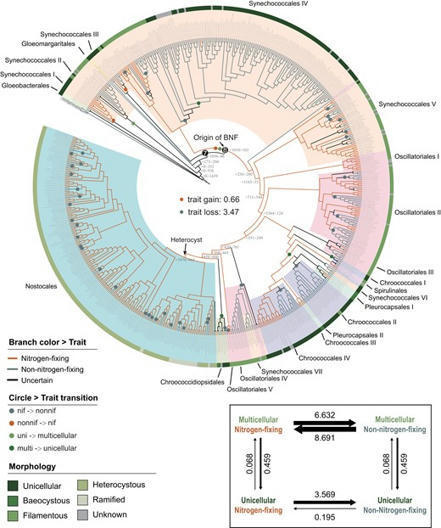
Biological nitrogen fixation (BNF) by cyanobacteria is of significant importance for the Earth’s biogeochemical nitrogen cycle but is restricted to a few genera that do not form monophyletic group. To explore the evolutionary trajectory of BNF and investigate the driving forces of its evolution, we analyze 650 cyanobacterial genomes and compile the database of diazotrophic cyanobacteria based on the presence of nitrogen fixation gene clusters (NFGCs). We report that 266 of 650 examined genomes are NFGC-carrying members, and these potentially diazotrophic cyanobacteria are unevenly distributed across the phylogeny of Cyanobacteria, that multiple independent losses shaped the scattered distribution. Among the diazotrophic cyanobacteria, two types of NFGC exist, with one being ancestral and abundant, which have descended from diazotrophic ancestors, and the other being anaerobe-like and sparse, possibly being acquired from anaerobic microbes through horizontal gene transfer. Interestingly, we illustrate that the origin of BNF in Cyanobacteria coincide with two major evolutionary events. One is the origin of multicellularity of cyanobacteria, and the other is concurrent genetic innovations with massive gene gains and expansions, implicating their key roles in triggering the evolutionary transition from nondiazotrophic to diazotrophic cyanobacteria. Additionally, we reveal that genes involved in accelerating respiratory electron transport (coxABC), anoxygenic photosynthetic electron transport (sqr), as well as anaerobic metabolisms (pfor, hemN, nrdG, adhE) are enriched in diazotrophic cyanobacteria, representing adaptive genetic signatures that underpin the diazotrophic lifestyle. Collectively, our study suggests that multicellularity, together with concurrent genetic adaptations contribute to the evolution of diazotrophic cyanobacteria.
|
|
Scooped by
Jean-Michel Ané
September 9, 2022 11:59 AM
|
Milpas are traditional Mesoamerican agroecosystems maintained with ancestral practices. Maize landraces are grown in polyculture, creating highly productive and diverse ecosystems. Recent studies suggest that milpas maintain beneficial plant-microbe interactions that are probably absent in modern agroecosystems; however, direct comparisons of the microbiome of plants between traditional and modern agroecosystems are still needed. Here, we studied seed endophytic bacterial communities from native maize landraces from milpas (NME) and hybrid varieties (HME). First, we quantified the abundance of culturable endophytic microbes; next, we assessed pairwise antagonistic interaction networks between bacterial isolates; finally, we compared bacterial community structure by 16S rRNA amplicon sequencing. We found that seeds from native maize landraces harbor a higher endophytic microbial load, including more bacterial strains with antagonistic activity against soil-borne bacteria, and overall harbor more diverse bacterial communities than the hybrid varieties. Noteworthy, most of the seed-endophytic strains with antagonistic activity corresponded to Burkholderia spp. that were only found in native maize seeds, through both culture-dependent and independent strategies. Altogether, our results support that crop modernization alters the functions and structure of plant-associated microbes; we propose native maize from milpas could serve as a model for understanding plant-microbe interactions and the effect of modernization.
|
|
Scooped by
Jean-Michel Ané
September 5, 2022 9:13 PM
|
Arbuscular mycorrhizal fungi (AMF) establish symbiotic relationships with most land plants, mainly for the purpose of nutrient exchange. Many studies have revealed the regulation of processes in AMF, such as nutrient absorption from soil, metabolism and exchange with host plants, and the genes involved. However, the spatial regulation of the genes within the structures comprising each developmental stage is not well understood. Here, we demonstrate the structure-specific transcriptome of the model AMF species, Rhizophagus irregularis. We performed an ultra-low input RNA-seq analysis, SMART-seq2, comparing five extraradical structures, germ tubes, runner hyphae, branched absorbing structures (BAS), immature spores and mature spores. In addition, we reanalyzed the recently reported RNA-seq data comparing intraradical mycelium and arbuscule. Our analyses captured the distinct features of each structure and revealed the structure-specific expression patterns of genes related to nutrient transport and metabolism. Of note, the transcriptional profiles suggest distinct functions of BAS in nutrient absorption. These findings provide a comprehensive dataset to advance our understanding of the transcriptional dynamics of fungal nutrition in this symbiotic system.
|
|
Scooped by
Jean-Michel Ané
September 1, 2022 5:39 PM
|
Some plants have acquired traits of remarkable adaptive value to thrive under stress.
Transferring these traits to crops could improve agriculture, but uncovering the toolkit
required has remained largely elusive. We propose that single-cell genomics offers
a framework to compare species with contrasting developmental traits and to identify
the regulators of evolutionary innovations.
|
|
Scooped by
Jean-Michel Ané
August 17, 2022 12:27 PM
|
Improving biological nitrogen fixation (BNF) in cereal crops is a long-sought objective; however, no successful modification of cereal crops showing increased BNF has been reported. Here, we described a novel approach in which rice plants were modified to increase the production of compounds that stimulated biofilm formation in soil diazotrophic bacteria, promoted bacterial colonization of plant tissues and improved BNF with increased grain yield at limiting soil nitrogen contents. We first used a chemical screening to identify plant-produced compounds that induced biofilm formation in nitrogen-fixing bacteria and demonstrated that apigenin and other flavones induced BNF. We then used CRISPR-based gene editing targeting apigenin breakdown in rice, increasing plant apigenin contents and apigenin root exudation. When grown at limiting soil nitrogen conditions, modified rice plants displayed increased grain yield. Biofilm production also modified the root microbiome structure, favouring the enrichment of diazotrophic bacteria recruitment. Our results support the manipulation of the flavone biosynthetic pathway as a feasible strategy for the induction of biological nitrogen fixation in cereals and a reduction in the use of inorganic nitrogen fertilizers.
|
|
Scooped by
Jean-Michel Ané
August 2, 2022 10:31 AM
|
In the symbiotic associations between rhizobia and legumes, the NodD regulators orchestrate the transcription of the specific nodulation genes. This set of genes is involved in the synthesis of nodulation factors, which are responsible for initiating the nodulation process. Rhizobium tropici CIAT 899 is the most successful symbiont of Phaseolus vulgaris and can nodulate a variety of legumes. Among the five NodD regulators present in this rhizobium, only NodD1 and NodD2 seem to have a role in the symbiotic process. However, the individual role of each NodD in the absence of the other proteins has remained elusive.
In this work, we show that the CIAT 899 NodD2 does not require activation by inducers to promote the synthesis of nodulation factors. In fact, a CIAT 899 strain overexpressing nodD2—but lacking all additional nodD genes—can nodulate three different legumes as efficiently as wild-type. Interestingly, CIAT 899 NodD2-mediated gain of nodulation can be extended to another rhizobial species, since its overproduction in Sinorhizobium fredii HH103 not only increases the number of nitrogen-fixing nodules in two host legumes but also results in nodule development in incompatible legumes. These findings potentially open exciting opportunities to develop rhizobial inoculants and increase legume crop production.
|
|
Scooped by
Jean-Michel Ané
June 24, 2022 5:02 PM
|
Rhizobium–legume nitrogen-fixing symbiosis involves the formation of a specific organ, the root nodule, which provides bacteria with the proper cellular environment for atmospheric nitrogen fixation. Coordinated differentiation of plant and bacterial cells is an essential step of nodule development, for which few transcriptional regulators have been characterized. Medicago truncatula ETHYLENE RESPONSE FACTOR REQUIRED FOR NODULE DIFFERENTIATION (MtEFD) encodes an APETALA2/ETHYLENE RESPONSIVE FACTOR (ERF) transcription factor, the mutation of which leads to both hypernodulation and severe defects in nodule development. MtEFD positively controls a negative regulator of cytokinin signaling, the RESPONSE REGULATOR 4 (MtRR4) gene. Here we showed that that the Mtefd-1 mutation affects both plant and bacterial endoreduplication in nodules, as well as the expression of hundreds of genes in young and mature nodules, upstream of known regulators of symbiotic differentiation. MtRR4 expressed with the MtEFD promoter complemented Mtefd-1 hypernodulation but not the nodule differentiation phenotype. Unexpectedly, a nonlegume homolog of MtEFD, AtERF003 in Arabidopsis (Arabidopsis thaliana), could efficiently complement both phenotypes of Mtefd-1, in contrast to the MtEFD paralog MtEFD2 expressed in the root and nodule meristematic zone. A domain swap experiment showed that MtEFD2 differs from MtEFD by its C-terminal fraction outside the DNA binding domain. Furthermore, clustered regularly interspaced short palindromic repeats-CRISPR associated protein 9 (CRISPR-Cas9) mutagenesis of MtEFD2 led to a reduction in the number of nodules formed in Mtefd-1, with downregulation of a set of genes, including notably NUCLEAR FACTOR-YA1 (MtNF-YA1) and MtNF-YB16, which are essential for nodule meristem establishment. We, therefore, conclude that nitrogen-fixing symbiosis recruited two proteins originally expressed in roots, MtEFD and MtEFD2, with distinct functions and neofunctionalization processes for each of them.
|
|
Scooped by
Jean-Michel Ané
June 24, 2022 4:59 PM
|
In mutualisms, variation at genes determining partner fitness provides the raw material upon which coevolutionary selection acts, setting the dynamics and pace of coevolution. However, we know little about variation in the effects of genes that underlie symbiotic fitness in natural mutualist populations. In some species of legumes that form root nodule symbioses with nitrogen-fixing rhizobial bacteria, hosts secrete nodule-specific cysteine-rich (NCR) peptides that cause rhizobia to differentiate in the nodule environment. However, rhizobia can cleave NCR peptides through the expression of genes like the plasmid-borne Host range restriction peptidase (hrrP), whose product degrades specific NCR peptides. Although hrrP activity can confer host exploitation by depressing host fitness and enhancing symbiont fitness, the effects of hrrP on symbiosis phenotypes depend strongly on the genotypes of the interacting partners. However, the effects of hrrP have yet to be characterised in a natural population context, so its contribution to variation in wild mutualist populations is unknown. To understand the distribution of effects of hrrP in wild rhizobia, we measured mutualism phenotypes conferred by hrrP in 12 wild Ensifer medicae strains. To evaluate context dependency of hrrP effects, we compared hrrP effects across two Medicago polymorpha host genotypes and across two experimental years for five E. medicae strains. We show for the first time in a natural population context that hrrP has a wide distribution of effect sizes for many mutualism traits, ranging from strongly positive to strongly negative. Furthermore, we show that hrrP effect size varies across host genotypes and experiment years, suggesting that researchers should be cautious about extrapolating the role of genes in natural populations from controlled laboratory studies of single genetic variants.
|
|
|
Scooped by
Jean-Michel Ané
September 9, 2022 2:44 PM
|
Plant epigenetic regulations are involved in transposable element silencing, developmental processes and responses to the environment1,2,3,4,5,6,7. They often involve modifications of DNA methylation, particularly through the DEMETER (DME) demethylase family and RNA-dependent DNA methylation (RdDM)8. Root nodules host rhizobia that can fix atmospheric nitrogen for the plant's benefit in nitrogen-poor soils. The development of indeterminate nodules, as in Medicago truncatula, involves successive waves of gene activation9,10,11,12, control of which raises interesting questions. Using laser capture microdissection (LCM) coupled to RNA-sequencing (SYMbiMICS data11), we previously identified 4,309 genes (termed NDD) activated in the nodule differentiation and nitrogen fixation zones, 36% of which belong to co-regulated genomic regions dubbed symbiotic islands13. We found MtDME to be upregulated in the differentiation zone and required for nodule development, and we identified 474 differentially methylated regions hypomethylated in the nodule by analysing ~2% of the genome4. Here, we coupled LCM and whole-genome bisulfite sequencing for a comprehensive view of DNA methylation, integrated with gene expression at the tissue level. Furthermore, using CRISPR–Cas9 mutagenesis of MtDRM2, we showed the importance of RdDM for CHH hypermethylation and nodule development. We thus proposed a model of DNA methylation dynamics during nodule development.
|
|
Scooped by
Jean-Michel Ané
September 9, 2022 1:10 PM
|
In this study, a first experiment was conducted with the objective of determining how drought stress alters the radial water flow and physiology in the whole maize nested association mapping (NAM) population and to find out which contrasting maize lines should be tested in a second experiment for their responses to drought in combination with an arbuscular mycorrhizal (AM) fungus. Emphasis was placed on determining the role of plant aquaporins and phytohormones in the responses of these contrasting maize lines to cope with drought stress. Results showed that both plant aquaporins and hormones are altered by the AM symbiosis and are highly involved in the physiological responses of maize plants to drought stress. The regulation by the AM symbiosis of aquaporins involved in water transport across cell membranes alters radial water transport in host plants. Hormones such as IAA, SA, ABA and jasmonates must be involved in this process either by regulating the own plant-AM fungus interaction and the activity of aquaporins, or by inducing posttranscriptional changes in these aquaporins, which in turns alter their water transport capacity. An intricate relationship between root hydraulic conductivity, aquaporins and phytohormones has been observed, revealing a complex network controlling water transport in maize roots.
|
|
Scooped by
Jean-Michel Ané
September 9, 2022 12:55 PM
|
Abiotic stresses are the most significant factors reducing agricultural productivity. Plants face extreme environmental conditions that may affect their biological mechanisms, thereby influencing their growth and development. Microorganisms possess substantial metabolites that aid in helping plants mitigate abiotic stresses. Plants’ interaction with microbes constitutes a diversified ecosystem, as sometimes both the partners share a mutualistic relationship. Endophytes, plant-growth-promoting rhizobacteria (PGPRs), and arbuscular mycorrhizal fungi (AMFs) are examples of microorganisms that play an essential role in alleviating abiotic stresses and, hence, improving plant growth. The plant–microbe interaction leads to the modulation of complex mechanisms in the plant cellular system. Moreover, the residing microbial flora also inhibits the phytopathogens, therefore, it becomes part of plants’ innate defense system. Keeping in view the growing environmental concerns, it is important to identify the role of the plant microbiome in the transportation of nutrients to maintain sustainable production. Furthermore, it is important to identify the factors enabling plants to recruit beneficial microbial species and how to deal with the potential pathogens. Therefore, this review aims to summarize the impacts of various abiotic stressors on agricultural productivity and the role of beneficial microorganisms in mitigating the negative effects of abiotic stresses. The literature review also shows that the beneficial microbes, including PGPRs, AMFs, and endophytes, adopt various mechanisms for ameliorating the negative effects of various stresses. It has been observed that biochar and microbes, either individually or in combination, can play a significant role in maintaining plant growth under stress conditions. Although conventional inoculation of beneficial microbes mitigates abiotic stresses and enhances productivity, the advancement in genetic engineering would help transfer specific genes from the microbes to plants to aid in abiotic stress mitigation.
|
|
Scooped by
Jean-Michel Ané
September 9, 2022 12:36 PM
|
There has been a surge in industries built on the production of arbuscular mycorrhizal (AM) fungal-based inoculants in the past few decades. This is not surprising, given the positive effects of AM fungi on plant growth and nutritional status. However, there is growing concern regarding the quality and efficacy of commercial inoculants. To assess the potential benefits and negative consequences of commercial AM fungal inoculants in grasslands, we conducted a controlled growth chamber study assessing the productivity and AM fungal root colonization of nine grassland plant species grown in grassland soil with or without one of six commercial AM fungal products. Our research showed no evidence of benefit; commercial inoculants never increased native plant biomass, although several inoculants decreased the growth of native species and increased the growth of invasive plant species. In addition, two commercial products contained excessive levels of phosphorus or nitrogen and consistently reduced AM fungal root colonization, indicating an unintentional de-coupling of the symbiosis. As there is little knowledge of the ecological consequences of inoculation with commercial AM fungal products, it is critical for restoration practitioners, scientists, and native plant growers to assess the presence of local AM fungal communities before investing in unnecessary, or possibly detrimental, AM fungal products.
|
|
Scooped by
Jean-Michel Ané
September 9, 2022 12:21 PM
|
Symbiotic nitrogen fixation provides large amounts of nitrogen for global agricultural systems with little environmental or economic costs. The basis of symbiosis is the nutrient exchange occurring between legumes and rhizobia, but key regulators controlling nutrient exchange are largely unknown. Here, we reveal that magnesium (Mg), an important nutrient factor that preferentially accumulates in inner cortical cells of soybean nodules, shows the most positive correlation with nodule carbon (C) import and nitrogen (N) export. We further identified a pair of Mg transporter genes, GmMGT4 and GmMGT5, that are specifically expressed in the nodule cortex, modulating both nodule Mg import and C-N transport processes. The GmMGT4&5-dependent Mg import activates the activity of a plasmodesmata-located β-1,3-glucanase GmBG2 and consequently keeps plasmodesmata permeable for C-N transport in nodule inner cortical cells. Our studies discovered an important regulating pathway for host plants fine-tuning nodule C-N trading to achieve optimal growth, which may be helpful for optimizing nutrient management for soybean production.
|
|
Scooped by
Jean-Michel Ané
September 9, 2022 12:05 PM
|
Chitin is a homopolymer of β-(1,4)-linked N-acetyl-D-glucosamine (GlcNAc) and a major structural component of fungal cell walls. In plants, chitin acts as a microbe-associated molecular pattern (MAMP) that is recognized by lysin motif (LysM)-containing plant cell surface-localized pattern recognition receptors (PRRs) that activate a plethora of downstream immune responses. To deregulate chitin-induced plant immunity and successfully establish infection, many fungal pathogens secrete LysM domain-containing effector proteins during host colonization. The LysM effector Ecp6 from the tomato (Solanum lycopersicum) leaf mold fungus Cladosporium fulvum can outcompete plant PRRs for chitin binding because two of its three LysM domains cooperate to form a composite groove with ultra-high (pM) chitin-binding affinity. However, most functionally characterized LysM effectors contain only two LysMs, including Magnaporthe oryzae MoSlp1, Verticillium dahliae Vd2LysM, and Colletotrichum higginsianum ChElp1 and ChElp2. Here, we performed modeling, structural, and functional analyses to investigate whether such dual-domain LysM effectors can also form ultra-high chitin-binding affinity grooves through intramolecular LysM dimerization. However, our study suggests that intramolecular LysM dimerization does not occur. Rather, our data support the occurrence of intermolecular LysM dimerization for these effectors, associated with a substantially lower chitin binding affinity than monitored for Ecp6. Interestingly, the intermolecular LysM dimerization allows for the formation of polymeric complexes in the presence of chitin. Possibly, such polymers may precipitate at infection sites to eliminate chitin oligomers, and thus suppress the activation of chitin-induced plant immunity.
|
|
Scooped by
Jean-Michel Ané
September 9, 2022 11:44 AM
|
Symbiotic interactions have structured past and present ecosystems and shaped the evolution of life. As any trait, the symbiotic state observed in extant species builds on ancestral and conserved features, and lineage-specific innovations. From these mixed origins, defining the ancestral state of symbiotic associations is challenging although it is instrumental for understanding how symbiotic abilities emerge from non-symbiotic states. Here we aimed at reconstructing the intermediate steps leading to the root-nodule nitrogen-fixing symbiosis (RNS) observed in some extant flowering plants. For this, we compared the transcriptomic responses of nine host plants in response to symbiotic bacteria. We included the mimosoid legume Mimosa pudica for which we assembled a chromosome-level genome and generated the transcriptomic response to experimentally evolved bacterial symbionts. With this dataset, we reconstructed the ancestral RNS transcriptome, composed of most already described symbiotic genes together with hundreds of novel candidates. We found that the response to the chemical signals produced by the symbiont, nodule organogenesis and nitrogen-fixation are predominantly linked to ancestral responses, although these traits have diversified in the different nitrogen-fixing lineages. We detected a clear signature of recent and convergent evolution for the ability to release intracellular symbiosomes in two legume lineages, exemplified by the expression of different classes of small proteins in each group, potentially leading to the convergent gain of symbiotic evolutionary stability. Our findings demonstrate that most of the novelties for RNS were mostly in place in the most recent common ancestor of the RNS-forming species that lived on Earth 110 million years ago.
|
|
Scooped by
Jean-Michel Ané
September 5, 2022 9:09 PM
|
Rhizophagus irregularis is one of the most extensively studied arbuscular mycorrhizal fungi (AMF) that forms symbioses with and improves the performance of many crops. Lack of transformation protocol for R. irregularis renders it challenging to investigate molecular mechanisms that shape the physiology and interactions of this AMF with plants. Here, we used all published genomics, transcriptomics, and metabolomics resources to gain insights into the metabolic functionalities of R. irregularis by reconstructing its high-quality genome-scale metabolic network that considers enzyme constraints. Extensive validation tests with the enzyme-constrained metabolic model demonstrated that it can be used to (i) accurately predict increased growth of R. irregularis on myristate with minimal medium; (ii) integrate enzyme abundances and carbon source concentrations that yield growth predictions with high and significant Spearman correlation (𝜌𝑆ρS = 0.74) to measured hyphal dry weight; and (iii) simulate growth rate increases with tighter association of this AMF with the host plant across three fungal structures. Based on the validated model and system-level analyses that integrate data from transcriptomics studies, we predicted that differences in flux distributions between intraradical mycelium and arbuscles are linked to changes in amino acid and cofactor biosynthesis. Therefore, our results demonstrated that the enzyme-constrained metabolic model can be employed to pinpoint mechanisms driving developmental and physiological responses of R. irregularis to different environmental cues. In conclusion, this model can serve as a template for other AMF and paves the way to identify metabolic engineering strategies to modulate fungal metabolic traits that directly affect plant performance.
|
|
Scooped by
Jean-Michel Ané
August 24, 2022 2:45 PM
|
Host genetics has recently been shown to be a driver of plant microbiome composition. However, identifying the underlying genetic loci controlling microbial selection remains challenging. Genome-wide association studies (GWAS) represent a potentially powerful, unbiased method to identify microbes sensitive to the host genotype and to connect them with the genetic loci that influence their colonization. Here, we conducted a population-level microbiome analysis of the rhizospheres of 200 sorghum genotypes. Using 16S rRNA amplicon sequencing, we identify rhizosphere-associated bacteria exhibiting heritable associations with plant genotype, and identify significant overlap between these lineages and heritable taxa recently identified in maize. Furthermore, we demonstrate that GWAS can identify host loci that correlate with the abundance of specific subsets of the rhizosphere microbiome. Finally, we demonstrate that these results can be used to predict rhizosphere microbiome structure for an independent panel of sorghum genotypes based solely on knowledge of host genotypic information.
|
|
Scooped by
Jean-Michel Ané
August 7, 2022 12:37 PM
|
The transcription factor NODULE INCEPTION (NIN) has been studied extensively for its multiple roles in root nodule symbiosis within plants of the nitrogen-fixing clade (NFC) that associate with soil bacteria, such as rhizobia and Frankia. However, NIN homologs are present in plants outside the NFC, suggesting a role in other developmental processes. Here, we show that the biofuel crop Populus sp., which is not part of the NFC, contains eight copies of NIN with diversified protein sequence and expression patterns. Lipo-chitooligosaccharides (LCOs) are produced by rhizobia and a wide range of fungi, including mycorrhizal ones, and act as symbiotic signals that promote lateral root formation. RNAseq analysis of Populus sp. treated with purified LCO showed induction of the PtNIN2 subfamily. Moreover, the expression of PtNIN2b correlated with the formation of lateral roots and was suppressed by cytokinin treatment. Constitutive expression of PtNIN2b overcame the inhibition of lateral root development by cytokinin under high nitrate conditions. Lateral root induction in response to LCOs likely represents an ancestral function of NIN retained and repurposed in nodulating plants, as we demonstrate that the role of NIN in LCO-induced root branching is conserved in both Populus sp. and legumes. We further established a visual marker of LCO perception in Populus sp. roots, the putative sulfotransferase PtSS1, that can be used to study symbiotic interactions with the bacterial and fungal symbionts of Populus sp.
|
|
Scooped by
Jean-Michel Ané
July 1, 2022 5:30 PM
|
The increasing environmental stresses such as drought, high/low temperature, flood, elevated CO2, and ozone due to climate change have an impact on the efficacy of rhizobia inoculation in many legume species. The effect of climate change on rhizobia inoculation depends on crop species, the nature of stresses imposed, the intensity of stresses, the inoculation method, the presence or absence of native rhizobia stains and their effectiveness. This chapter shows the current progress of rhizobia inoculation effect under climate change at the physiological, agronomic, and chemical levels. There is an urgent need to focus on developing tolerant rhizobia in order to improve legume symbiosis if we want to feed the growing global population with safe food and sustainable agriculture.
|
|
Scooped by
Jean-Michel Ané
June 24, 2022 5:02 PM
|
The rhizobium-legume symbiosis is essential for sustainable agriculture by reducing nitrogen fertilizer input, but its efficiency varies under fluctuating soil conditions and resources. The nitrogen-related phosphotransferase system (PTSNtr) consisting of PtsP, PtsO, and PtsN is required for optimal nodulation and nitrogen fixation efficiency of the broad-host-range Sinorhizobium fredii CCBAU45436 associated with diverse legumes, though the underlying mechanisms remain elusive. This work characterizes the PtsN-KdpDE-KdpFABC pathway that contributes to low potassium adaptation and competitive nodulation of CCBAU45436. Among three PtsN, PtsN1 is the major functional homolog. The unphosphorylated PtsN1 binds the sensory kinase KdpD through a non-canonical interaction with the GAF domain of KdpD, while the region covering HisKA-HATPase domains mediates the interaction of KdpD with the response regulator KdpE. KdpE directly activates the kdpFABC operon encoding the conserved high-affinity potassium uptake system. Disruption of this signaling pathway leads to reduced nodule number, nodule occupancy, and low potassium adaptation ability, but without notable effects on rhizoplane colonization. The induction of key nodulation genes NIN and ENOD40 in host roots during early symbiotic interactions is impaired when inoculating the kdpBC mutant that shows delayed nodulation. The nodulation defect of the kdpBC mutant can be rescued by supplying replete potassium. Potassium is actively consumed by both prokaryotes and eukaryotes, and components of the PTSNtr-KdpDE-KdpFABC pathway are widely conserved in bacteria, highlighting the global importance of this pathway in bacteria-host interactions.
|