 Your new post is loading...

|
Scooped by
Jean-Michel Ané
April 21, 2024 4:43 PM
|
A group of Gram-negative plant-associated diazotrophic bacteria belonging to the genus Nitrospirillum was investigated, including both previously characterized and newly isolated strains from diverse regions and biomes, predominantly in Brazil. Phylogenetic analysis of 16S rRNA and recA genes revealed the formation of a distinct clade consisting of thirteen strains, separate from the formally recognized species N. amazonense (the closest species) and N. iridis. Comprehensive taxonomic analyses using the whole genomes of four strains (BR 11140T = AM 18T = Y-2T = DSM 2788T = ATCC 35120T, BR 11142T = AM 14T = Y-1T = DSM 2787T = ATCC 35119T, BR 11145 = CBAmC, and BR 12005) supported the division of these strains into two species: N. amazonense (BR 11142 T and BR 12005) and a newly proposed species (BR 11140 T and BR 11145), distinct from N. iridis. The phylogenomic analysis further confirmed the presence of the new Nitrospirillum species. Additionally, MALDI-TOF MS analysis of whole-cell mass spectra provided further evidence for the differentiation of the proposed Nitrospirillum species, separate from N. amazonense. Analysis of chemotaxonomy markers (i.e., genes involved in fatty acid synthesis, metabolism and elongation, phospholipid synthesis, and quinone synthesis) revealed that the new species highlights high similarity and evolutionary convergence with other Nitrospirillum species. This new species exhibited nitrogen fixation ability in vitro, it has similar NifHDK protein phylogeny position with the closest species, lacked denitrification capability, but possessed the nosZ gene, enabling N2O reduction, distinguishing it from the closest species. Despite being isolated from diverse geographic regions, soil types, and ecological niches, no significant phenotypic or physiological differences were observed between the proposed new species and N. amazonense. Based on these findings, a new species, Nitrospirillum viridazoti sp. nov., was classified, with the strain BR 11140T (DSM 2788T, ATCC 35120T) designated as the type strain.
|
|
Scooped by
Jean-Michel Ané
April 15, 2024 5:47 PM
|
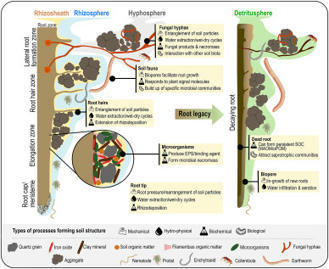
• Plant roots are inherently bound to soil structure dynamics through rhizosphere processes.
• Rhizodeposits and root hairs trigger rhizosheath formation through multiple routes.
• Roots foster formation of unique habitat by affecting soil porosity and aggregation.
• Soil fauna and legacy of dead roots are overlooked factors for rhizosphere structure formation and stability.
•Bridging solid phase and pore scale research needed to advance rhizosphere research.
|
|
Scooped by
Jean-Michel Ané
April 15, 2024 10:40 AM
|
Rhizopus microsporus is an example of a fungal holobiont. Strains of this species can harbor bacterial and viral endosymbionts inherited by the next generation. These microbial allies increase pathogenicity and defense and control asexual and sexual reproduction.
|
|
Scooped by
Jean-Michel Ané
April 15, 2024 10:35 AM
|
In this work, we analyzed the effect of water stress and acid pH on the growth of the endemic fodder legume Chamaecytisus albidus, inoculated with four strains of Bradyrhizobium, from three different symbiovars previously isolated from the plant grown in different eco-geographical areas of Morocco. We also assessed the competitiveness of the three symbiovars for plant nodulation under water stress and acidity. We analyzed the strain’s nodulation ability, rates of nodules occupancy, shoot, and root dry weights of plants grown at -100, -80, and − 60 MPa water potential, and 6.0 and 7.0 pH values. The strains CM64 and CJ2 belong to the symbiovar genistearum and strains CA20 and CB10 to the symbiovars retamae and lupini, respectively. The strains CB10 and CJ2 were the most infective regardless of the pH and water potential at which the plants were grown. The strain CB10 was also the most abundant in nodules from plants grown at any conditions examined. Reductions in the water potential altered the nodulation ability, the strains CB10 and CJ2 still being the more infective. These strains were also the most infective at pH 6.0 and 7.0. The highest values of shoot and root dry weights were recorded in plants inoculated with strain CA20 under all the irrigation regimes used. The reduction from 100% to 80 and 60% field capacity decreased the shoot dry weight of the plants by 31.23 and 67.06%, respectively. Moreover, there was a 37.95 and 61.74% decrease in plant root dry weight when grown at 80 and 60% of field capacity, respectively. Despite variations in the efficiency of each strain, overall, the pH did not affect either the SDW or the RDW of the plants. The inoculation of C. albidus with a mix of the four strains did not result in further improvement of nodulation or symbiotic efficiency. These results show that water deficiency drastically affects the growth of C. albidus and that the retamae symbiovar was the most effective under the conditions examined. This is the first report on the competitiveness of symbiovars for the nodulation of a legume under stress.
|
|
Scooped by
Jean-Michel Ané
April 14, 2024 4:50 PM
|
Root exudates are plant-derived, exported metabolites likely shaping root-associated microbiomes by acting as nutrients and signals. However, root exudation dynamics are unclear and thus also, if changes in exudation are reflected in changes in microbiome structure. Here, we assess commonalities and differences between exudates of different plant species, diurnal exudation dynamics, as well as the accompanying methodological aspects of exudate sampling. We find that exudates should be collected for hours rather than days as many metabolite abundances saturate over time. Plant growth in sterile, nonsterile, or sugar-supplemented environments significantly alters exudate profiles. A comparison of Arabidopsis thaliana, Brachypodium distachyon, and Medicago truncatula shoot, root, and root exudate metabolite profiles reveals clear differences between these species, but also a core metabolome for tissues and exudates. Exudate profiles also exhibit a diurnal signature. These findings add to the methodological and conceptual groundwork for future exudate studies to improve understanding of plant-microbe interactions.
|
|
Scooped by
Jean-Michel Ané
April 12, 2024 3:55 PM
|
•Rhizosphere interactions were mediated by root exudates and microbial metabolites as biochemical communications in plant-soil-microbe.
•Root exudates were released to cry for helps by altering soil physicochemical properties and microbe flora structure under stresses.
•Rhizosphere microbes stimulated directly or indirectly host growth and resistance to ambient pressure via metabolic cross-talk.
•The coupling of multi-omics platforms, genetic tools and analytical methods boosted the deepening of rhizosphere interactions.
|
|
Scooped by
Jean-Michel Ané
April 12, 2024 3:28 PM
|
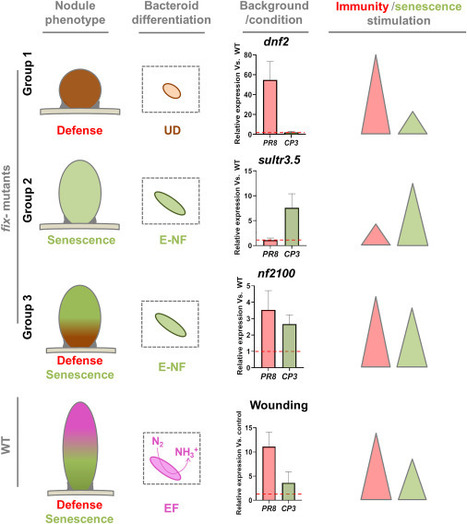
Immunity and senescence play a crucial role in the functioning of the legume symbiotic nodules. The miss-regulation of one of these processes compromises the symbiosis leading to death of the endosymbiont and the arrest of the nodule functioning. The relationship between immunity and senescence has been extensively studied in plant organs where a synergistic response can be observed. However, the interplay between immunity and senescence in the symbiotic organ is poorly discussed in the literature and these phenomena are often mixed up. Recent studies revealed that the cooperation between immunity and senescence is not always observed in the nodule, suggesting complex interactions between these two processes within the symbiotic organ. Here, we discuss recent results on the interplay between immunity and senescence in the nodule and the specificities of this relationship during legume-rhizobium symbiosis.
|
|
Scooped by
Jean-Michel Ané
April 12, 2024 3:20 PM
|
Agricultural microbiology seeks to replace the use of agrochemicals with microbe-based products. Plant growth-promoting bacteria (PGPB) are often selected based on their functions in vitro, and then, their effect on plant development is tested. However, this approach neglects the study of their survival in soil, root-colonization, and the monitoring of beneficial functions in the rhizosphere. This could explain the recurrent lack of success in the transition from lab tests to field applications of natural isolates from novel habitats. In our recent studies, we found that native maize seeds from traditional agroecosystems carry endophytic bacterial communities that are dominated by members of the class Bacilli. As an approach to grasp their PGP potential, we developed protocols to test maize root-colonization of these natural isolates in 1) a short-term hydroponics assay in vitro and 2) a long-term assay in non-sterile soil pots. Our results show that in vitro biofilm formation was only partially associated to short-term colonization in vitro; furthermore, long-term root-colonization in soil pots was not correlated to the in vitro assays. This work highlights the necessity to incorporate root-colonization assays as part of the research strategies in the search for PGPB natural isolates from unexplored habitats, towards the generation of inoculants with increased success in the field.
|
|
Scooped by
Jean-Michel Ané
April 12, 2024 9:29 AM
|
Symbiotic interactions were key to the evolution of chloroplast and mitochondria organelles, which mediate carbon and energy metabolism in eukaryotes. Biological nitrogen fixation, the reduction of abundant atmospheric nitrogen gas (N2) to biologically available ammonia, is a key metabolic process performed exclusively by prokaryotes. Candidatus Atelocyanobacterium thalassa, or UCYN-A, is a metabolically streamlined N2-fixing cyanobacterium previously reported to be an endosymbiont of a marine unicellular alga. Here we show that UCYN-A has been tightly integrated into algal cell architecture and organellar division and that it imports proteins encoded by the algal genome. These are characteristics of organelles and show that UCYN-A has evolved beyond endosymbiosis and functions as an early evolutionary stage N2-fixing organelle, or “nitroplast.”
|
|
Scooped by
Jean-Michel Ané
April 8, 2024 6:18 PM
|
Plants are an intrinsic part of the soil community and the “one health concept” considers that human health is intimately connected to the health of animals, plants, and microbial environments. Plant-microbe interactions are a cornerstone of one health, the soil microbiome being comprised of a diverse range of organisms, interacts in the rhizosphere through continuous molecular communications. Soils are a source and reservoir of pathogens, as well as beneficial microorganisms. Hence, the molecular dialogue at the rhizosphere interface is crucial not only for successful plant-microbe interactions but also for crop resilience and stress tolerance. The plant-microbe continuum forms a network of underground “nutrient highways” that benefit both plant and microbial communities. It also serves as a significant sink for atmospheric CO 2. While microbial diversity is generally positively associated with one health, the host range of beneficial microbes currently limits their successful exploitation with a wide range of microbial communities. We consider the possibility of increasing the host range of beneficial microbes, including arbuscular mycorrhiza fungi (AMF) and rhizobia, and how current genetic incompatibility and/or activation of robust plant defenses, can be overcome while accepting that significant challenges exist in translating laboratory findings into the field. We consider why AMF inoculants and plant growth-promoting microbes are not always beneficial under field conditions and suggest possible approaches for tailoring plant-microbe interactions to assist plant breeding efforts in crop resilience.
|
|
Scooped by
Jean-Michel Ané
April 8, 2024 6:15 PM
|
Coriariaceae are a small plant family of 14-17 species and subspecies that currently have a global but disjunct distribution. All species can form root nodules in symbiosis with diazotrophic Frankia cluster-2 strains, which form the earliest divergent symbiotic clade within this bacterial genus. Studies on Frankia cluster-2 mostly have focused on strains occurring in the northern hemisphere. Except for one strain from Papua New Guinea, namely Candidatus Frankia meridionalis Cppng1, no complete genome of Frankia associated with Coriaria occurring in the southern hemisphere has been published thus far, yet the majority of the Coriariaceae species occur here. We present field sampling data of novel Frankia cluster-2 strains, representing two novel species, which are associated with Coriaria arborea and Coriaria sarmentosa in New Zealand, and with Coriaria ruscifolia in Patagonia (Argentina), in addition to identifying Ca. F. meridionalis present in New Zealand. The novel Frankia species were found to be closely related to both Ca. F. meridionalis, and a Frankia species occurring in the Philippines, Taiwan, and Japan. Our data suggest that the different Frankia cluster-2 species diverged early after becoming symbiotic circa 100 million years ago.
|
|
Scooped by
Jean-Michel Ané
April 8, 2024 6:04 PM
|
Plant growth behavior is a function of genetic network architecture. The importance of root microbiome variation driving plant functional traits is increasingly recognized, but the genetic mechanisms governing this variation are less studied. Here, we collected roots and rhizosphere soils from nine Populus species belonging to four sections, generated metabolite and transcription data for roots and microbiota data for rhizospheres, and conducted comprehensive multi-omics analyses. We demonstrated that the roots of robust Leuce poplar enriched more plant growth-promoting rhizobacteria, which compared with the poorly performing poplar, agreeing with the ‘Matthew effect’ on poplar-microbe interaction. Moreover, we confirmed that Pseudomonas was strongly associated with tricin and apigenin biosynthesis and identified that gene GL3 was critical for tricin secretion. The elevated tricin secretion via constitutive transcription of PopGL3 and PopCHS4 could drive Pseudomonas colonization in the rhizosphere and further enhance poplar growth, nitrogen acquisition, and lateral root development in nitrogen-poor soil. This study reveals plant-metabolite-microbe regulation patterns contribute to the poplar fitness and thoroughly decoded the key regulatory mechanisms of tricin, and provided new insights into the interactions of the plant’s key metabolites with its transcriptome, rhizosphere microbes.
|
|
Scooped by
Jean-Michel Ané
April 8, 2024 4:51 PM
|
Comprehending the structure and function of rhizobacteria components and their regulation are crucial for sustainable agricultural management. However, obtaining comprehensive species information for most bacteria in the natural environment, particularly rhizobacteria, presents a challenge using traditional culture methods. To obtain diverse and pure cultures of rhizobacteria, this study primarily reviews the evolution of rhizobacteria culturomics and associated culture methods. Furthermore, it explores new strategies for enhancing the application of culturomics, providing valuable insights into efficiently enriching and isolate target bacterial strains/groups from the environment. The findings will help improve rhizobacteria’s culturability and enrich the functional bacterial library.
|
|
|
Scooped by
Jean-Michel Ané
April 16, 2024 3:24 PM
|
The book explores microbial inoculants' stress management, sustainable agriculture, and their role in soil health and restoration.
|
|
Scooped by
Jean-Michel Ané
April 15, 2024 10:50 AM
|
It has been proposed that ectomycorrhizal fungi can reduce decomposition while arbuscular mycorrhizal fungi may enhance it. These phenomena are known as the ‘Gadgil effect’ and ‘priming effect’, respectively. However, it is unclear which one predominates globally.
We evaluated whether mycorrhizal fungi decrease or increase decomposition, and identified conditions that mediate this effect. We obtained decomposition data from 43 studies (97 trials) conducted in field or laboratory settings that controlled the access of mycorrhizal fungi to substrates colonized by saprotrophs.
Across studies, mycorrhizal fungi promoted decomposition of different substrates by 6.7% overall by favoring the priming effect over the Gadgil effect. However, we observed significant variation among studies. The substrate C : N ratio and absolute latitude influenced the effect of mycorrhizal fungi on decomposition and contributed to the variation. Specifically, mycorrhizal fungi increased decomposition at low substrate C : N and absolute latitude, but there was no discernable effect at high values. Unexpectedly, the effect of mycorrhizal fungi was not influenced by the mycorrhizal type.
Our findings challenge previous assumptions about the universality of the Gadgil effect but highlight the potential of mycorrhizal fungi to negatively influence soil carbon storage by promoting the priming effect.
|
|
Scooped by
Jean-Michel Ané
April 15, 2024 10:37 AM
|
Symbiosis is an old idea with a contentious history. New genomic technologies and research paradigms are fueling a shift in some of its central tenets; we need to be humble and open-minded about what the data are telling us.
|
|
Scooped by
Jean-Michel Ané
April 14, 2024 4:53 PM
|
Plant roots are functionally heterogeneous in cellular architecture, transcriptome profile, metabolic state, and microbial immunity. We hypothesized that axial differentiation may also impact spatial colonization by root microbiota along the root axis. We developed two growth systems, ArtSoil and CD-Rhizotron, to grow and then dissect Arabidopsis thaliana roots into three segments. We demonstrate that distinct endospheric and rhizosphere bacterial communities colonize the segments, supporting the hypothesis of microbiota differentiation along the axis. Root metabolite profiling of each segment reveals differential metabolite enrichment and specificity. Bioinformatic analyses and GUS histochemistry indicate microbe-induced accumulation of SWEET2, 4, and 12 sugar uniporters. Profiling of root segments from sweet mutants shows altered spatial metabolic profiles and reorganization of endospheric root microbiota. This work reveals the interdependency between root metabolites and microbial colonization and the contribution of SWEETs to spatial diversity and stability of microbial ecosystem.
|
|
Scooped by
Jean-Michel Ané
April 12, 2024 8:53 PM
|
In AM symbiosis, the fungi are accommodated in plant-derived specialized membrane compartments called peri-arbuscular membranes (PAM). Unlike this intracellular symbiosis, in the intercellular ECM symbiosis the fungi only form a mantle surrounding the root and an intercellular Hartig net between root cells. It first evolved c. 180 Ma (Martin et al., 2017). Scattered studies indicated that ECM symbiosis involves few AM-conserved genes (Garcia et al., 2015; Cope et al., 2019). Here, we aim to conduct a phylogenomic study to comprehensively evaluate the recruitment of AM-conserved genes for ECM symbiosis. This can be best studied through phylogenomic analysis using ECM host species that have lost the AM symbiosis. We characterized several Fagales species with such properties and showed that they maintained the majority of AM-conserved genes, unlike other non-AM hosts. Transcriptome analysis showed that several of these maintained genes were induced in ECM symbiosis. Our results indicate that ECM formation recruits AM-derived mechanisms, which provides novel insights into the evolution of the ECM symbiosis.
|
|
Scooped by
Jean-Michel Ané
April 12, 2024 3:51 PM
|
Plants and their microbiomes are complex adaptive systems consisting of host plants and a dynamic network of associated microorganisms inside and around plant tissues. This article introduces Functional Team Selection (FTS) as a framework to help envision and study the movement of matter, energy, and information within plant-microbiome systems. FTS embraces the fact that belowground, plants are surrounded by trillions of soil organisms that may help or hinder the function of roots to provide essential resources for photosynthetic production. We describe how limited resources and antagonistic biotic interactions drive host-mediated microbiome engineering and how the function of belowground microbiomes can be selected -even during the host’s lifespan- to generate plant adaptation in stressful but not benign environments. The FTS framework provides guidelines for how to work with, rather than against, evolutionary and ecological forces to generate durable cooperation and mutualism in plants and their microbiome.
|
|
Scooped by
Jean-Michel Ané
April 12, 2024 3:25 PM
|
Biomolecular condensates, such as the nucleoli or P-bodies, are non-membrane-bound assemblies of proteins and nucleic acids that facilitate specific cellular processes. Like eukaryotic P-bodies, the recently discovered bacterial ribonucleoprotein bodies (BR-bodies) organize the mRNA decay machinery, yet the similarities in molecular and cellular functions across species have been poorly explored. Here, we examine the functions of BR-bodies in the nitrogen-fixing endosymbiont Sinorhizobium meliloti, which colonizes the roots of compatible legume plants. Assembly of BR-bodies into visible foci in S. meliloti cells requires the C-terminal intrinsically disordered region (IDR) of RNase E, and foci fusion is readily observed in vivo, suggesting they are liquid-like condensates that form via mRNA sequestration. Using Rif-seq to measure mRNA lifetimes, we found a global slowdown in mRNA decay in a mutant deficient in BR-bodies, indicating that compartmentalization of the degradation machinery promotes efficient mRNA turnover. While BR-bodies are constitutively present during exponential growth, the abundance of BR-bodies increases upon cell stress, whereby they promote stress resistance. Finally, using Medicago truncatula as host, we show that BR-bodies enhance competitiveness during colonization and appear to be required for effective symbiosis, as mutants without BR-bodies failed to stimulate plant growth. These results suggest that BR-bodies provide a fitness advantage for bacteria during infection, perhaps by enabling better resistance against the host immune response.
|
|
Scooped by
Jean-Michel Ané
April 12, 2024 3:08 PM
|
The ability of plants to select effective symbiotic partners is crucial for optimum plant growth. In New Zealand, breeding programmes for white clover (Trifolium repens) have made selections largely based on above-ground characteristics, with little direct attention given to the ability of cultivars to form effective below-ground associations. The ability of three pairs of historical (1930s–1950s), and modern (2000s) cultivars of white clover, to form associations with effective strains of Rhizobium leguminosarum (rhizobia) from a mixture of strains was tested in vitro. First, the efficacy of six individual strains of rhizobia was ranked against all six clover cultivars with shoot biomass used as a direct measure of symbiotic effectiveness for each strain × cultivar combination. Next, each cultivar was inoculated with a mixture of all rhizobia strains at the same cell concentration to examine the identity and frequency of strains found on each host. There was a positive relationship between nodule occupancy and strain effectiveness for historical but not modern cultivars. Cultivars Grasslands Huia and Louisiana (both historical) had nodule occupancy increase with strain effectiveness. This study provides some evidence that historical cultivars may be better able to form associations with effective strains of rhizobia compared with modern cultivars.
|
|
Scooped by
Jean-Michel Ané
April 11, 2024 11:42 AM
|
The symbiotic interaction of plants with arbuscular mycorrhizal (AM) fungi is ancient and widespread. Plants provide AM fungi with carbon in exchange for nutrients and water, making this interaction a prime target for crop improvement. However, plant–fungal interactions are restricted to a small subset of root cells, precluding the application of most conventional functional genomic techniques to study the molecular bases of these interactions. Here we used single-nucleus and spatial RNA sequencing to explore both Medicago truncatula and Rhizophagus irregularis transcriptomes in AM symbiosis at cellular and spatial resolution. Integrated, spatially registered single-cell maps revealed infected and uninfected plant root cell types. We observed that cortex cells exhibit distinct transcriptome profiles during different stages of colonization by AM fungi, indicating dynamic interplay between both organisms during establishment of the cellular interface enabling successful symbiosis. Our study provides insight into a symbiotic relationship of major agricultural and environmental importance and demonstrates a paradigm combining single-cell and spatial transcriptomics for the analysis of complex organismal interactions.
|
|
Scooped by
Jean-Michel Ané
April 8, 2024 6:18 PM
|
Nitrous oxide (N2O) is a potent greenhouse gas, and agricultural soils represent a major anthropogenic source. Crop residues provide nutrients for plants but also act as hotspots of N2O production. The hyphae of arbuscular mycorrhizal fungi (AMF) could proliferate in organic patches, utilize released N from the organic patches, and potentially mitigate N2O emissions. However, the effect of AMF on N2O emissions in degraded residue patches and the possible microbial mechanism remain uncertain. Here, a mesocosm experiment was conducted to investigate the impact of AMF (Funneliformis mosseae) inoculation on N2O emissions, availabilities of carbon and nitrogen, extracellular enzyme activities, and the abundance of key N-cycling genes in degraded residue patches. Our results showed that AMF hyphae significantly reduced N2O emissions from degraded residue patches. Quantitative PCR analysis of key functional genes involved in N2O production (amoA, nirK, nirS) and consumption (nosZ) showed that AMF significantly reduced the abundance of the bacterial amoA and nirS genes. NH4+, NO3−, total dissolved nitrogen (TDN), total nitrogen (TN), and dissolved organic carbon (DOC) contents decreased drastically in the presence of AMF. In addition, the activities of all tested extracellular enzymes were significantly decreased by AMF and positively correlated with DOC content. Multiple stepwise regression analysis demonstrated that the abundance of the nirS gene primarily influenced N2O emissions and was positively correlated with DOC content in degraded residue patches. Our findings indicate that AMF suppressed N2O producers, particularly nirS-type denitrifiers, by slowing down the release of C and N from degraded residues, thereby leading to a cascade effect on the decrease of N2O emissions. This study provides a promising approach to mitigate N2O emissions by enhancing AMF in the agroecosystems.
|
|
Scooped by
Jean-Michel Ané
April 8, 2024 6:11 PM
|
Graphene quantum dots (GQDs) are useful nanomaterials of excellent water solubility, biocompatibility and optical stability for various applications. In this study, we achieved the nitrogen fixation activity enhancement of autogenous azotobacters (Azotobacter vinelandii) by GQDs and revealed its mechanism. GQDs (1–10 mg/L) accelerated the logarithmic growth phase of A. vinelandii, making bacteria enter the plateau earlier. Biocompatible GQDs did not cause cell death and oxidative damage of A. vinelandii. The expression levels of metabolism and nitrogen fixation related genes were significantly up-regulated by GQDs, thereby enhancing the activity of nitrogenase. The nitrogen fixation activity of A. vinelandii reached 471.7 % of the control upon the exposure to GQDs. The intracellular polyhydroxyalkanoate vesicles were consumed to provide energy for nitrogen fixation, which involved with a chain reaction of carbohydrate metabolism, lipid metabolism, and energy metabolism pathways accompanied by significant increases in electron transfer rate. The synergistic effect of GQDs on A. vinelandii further facilitated the augmentation of soil nitrogen content in Qinghai-Tibet Plateau. Our results provided an effective approach to enhance the biological nitrogen fixation by GQDs.
|
|
Scooped by
Jean-Michel Ané
April 8, 2024 6:02 PM
|
Legume crops establish symbiosis with nitrogen-fixing rhizobia for biological nitrogen fixation (BNF), a process that provides a prominent natural nitrogen source in agroecosystems; and efficient nodulation and nitrogen fixation processes require a large amount of phosphorus (P). Here, a role of GmPAP4, a nodule-localized purple acid phosphatase, in BNF and seed yield was functionally characterized in whole transgenic soybean (Glycine max) plants under a P-limited condition. GmPAP4 was specifically expressed in the infection zones of soybean nodules and its expression was greatly induced in low P stress. Altered expression of GmPAP4 significantly affected soybean nodulation, BNF, and yield under the P-deficient condition. Nodule number, nodule fresh weight, nodule nitrogenase, APase activities, and nodule total P content were significantly increased in GmPAP4 overexpression (OE) lines. Structural characteristics revealed by toluidine blue staining showed that overexpression of GmPAP4 resulted in a larger infection area than wild-type (WT) control. Moreover, the plant biomass and N and P content of shoot and root in GmPAP4 OE lines were also greatly improved, resulting in increased soybean yield in the P-deficient condition. Taken together, our results demonstrated that GmPAP4, a purple acid phosphatase, increased P utilization efficiency in nodules under a P-deficient condition and, subsequently, enhanced symbiotic BNF and seed yield of soybean.
|


 Scoop.it!










Uncanny beast