 Your new post is loading...

|
Scooped by
Jean-Michel Ané
July 10, 2014 10:13 AM
|
Wageningen plant researcher René Geurts has been awarded a Vici grant by the Netherlands Organisation for Scientific Research (NWO). He will use the grant, which is worth € 1.5 million, for research into the origins of the cooperation between plants and bacteria that are able to fixate nitrogen from the atmosphere. René Geurts works at the Laboratory for Molecular Biology of Wageningen University.
|
|
Scooped by
Jean-Michel Ané
July 9, 2014 11:05 PM
|
The accumulation of Cr in soil could be highly toxic to human health; therefore Cr soil distribution was studied in rhizosphere soils from Ricinus communis and Conium maculatum and bare soil (BS) from an industrial and urban area in Argentina. Total Cr, Cr(VI) and Cr(III) concentrations were determined in 3 soil fractions: total, extractable and associated to total-glomalin-related protein (T-GRSP). BS had the highest total Cr and total Cr(VI) concentrations. Total Cr(VI) concentration from both rhizosphere soils did not differ from the allowed value for residential area in Argentina (8 μg Cr(VI) g− 1 soil), while total Cr(VI) in BS was 1.8 times higher. Total Cr concentration in all the soils was higher than the allowed value (250 μg Cr g− 1 soil). Extractable and associated to T-GRSP Cr(VI) concentrations were below the detection limit. Cr(III) bound to T-GRSP was the highest in the BS. These findings are in agreement with a long term effect of glomalin in sequestrating Cr. In both plant species, total Cr was higher in root than in shoot and both species presented arbuscular mycorrhizal fungi (AMF). As far as we know, this is the first study that reports the presence of Cr in T-GRSP fraction of soil organic matter. These findings suggest that Cr mycorrhizostabilization could be a predominant mechanism used by R. communis and C. maculatum to diminish Cr soil concentration. Nevertheless, further research is needed to clarify the contribution of native AMF isolated from R. communisand C. maculatum rhizosphere to the Cr phytoremediation process.
|
|
Scooped by
Jean-Michel Ané
July 9, 2014 10:59 PM
|
We study the coevolution of staying together and cooperation. Staying together means that replicating units do not separate after reproduction, but remain in proximity. For example, following cell division the two daughter cells may not fully separate but stay attached to each other. Repeated cell division thereby can lead to a simple multi-cellular complex. We assume that cooperators generate a diffusible public good, which can be absorbed by any cell in the system. The production of the public good entails a cost, while the absorption leads to a benefit. Defectors produce no public good. Defectors have a selective advantage unless a mechanism for evolution of cooperation is at work. Here we explore the idea that the public good produced by a cooperating cell is absorbed by cells of the same complex with a probability that depends on the size of the complex. Larger complexes are better at absorbing the public goods produced by their own individuals. We derive analytical conditions for the evolution of staying together, thereby studying the coevolution of clustering and cooperation. If cooperators and defectors differ in their intrinsic efficiency to absorb the public good, then we find multiple stable equilibria and the possibility for coexistence between cooperators and defectors. Finally we study the implications of disadvantages that might arise if complexes become too large.
|
|
Scooped by
Jean-Michel Ané
July 9, 2014 8:33 AM
|
Arbuscular mycorrhizal (AM) fungi, important plant mutualists, provide plants with nutrients such as phosphorus (P) in return for carbon. AM fungi also enhance the attractiveness of plants to aphids via effects on emissions of plant volatiles used in aphid host location. We tested whether increased P uptake by plants is the mechanism through which AM fungi alter the volatile profile of plants and aphid behavioural responses by manipulating the availability of P and AM fungi to broad beans (Vicia fabaL.) in a multi-factorial design. If AM fungi affect plant volatiles only via increased P acquisition, we predicted that the emission of volatiles and the attractiveness of mycorrhizal beans to aphids would be similar to those of non-mycorrhizal beans supplied with additional P. AM fungi and P addition increased leaf P concentrations by 40 and 24%, respectively. The production of naphthalene was less in mycorrhizal plants, regardless of P addition. By contrast, production of (S)-linalool, (E)-caryophyllene and (R)-germacrene D was less in plants colonized by AM fungi but only in the absence of P additions. The attractiveness of plants to pea aphids (Acyrthosiphon pisum Harris) was positively affected by AM fungi and correlated with the extent of root colonization; however, attractiveness was neither affected by P treatment nor correlated with leaf P concentration. These findings suggest that increased P uptake is not the main mechanism by which mycorrhiza increase the attractiveness of plants to aphids. Instead, the mechanism is likely to operate via AM fungi-induced plant systemic signalling.
|
|
Scooped by
Jean-Michel Ané
July 8, 2014 7:17 PM
|
Plant Microbe Symbiosis: Fundamentals and Advances
|
|
Scooped by
Jean-Michel Ané
July 8, 2014 2:31 PM
|
Understanding commonalities and differences of how symbiotic and parasitic microbes interact with plants will improve advantageous interactions and allow pathogen control strategies in crops. Recently established systems enable studies of root pathogenic and symbiotic interactions in the same plant species.
|
|
Scooped by
Jean-Michel Ané
July 8, 2014 2:24 PM
|
Two strains of Gram-negative, methylotrophic bacteria, isolated because of their abilities to promote plant growth, were subjected to a polyphasic taxonomic study. The isolates were strictly aerobic, motile, pink-pigmented, facultatively methylotrophic, non-spore-forming rods. The chemotaxonomic characteristics of the isolates included the presence of C18 : 1ω7c as the major cellular fatty acid. The DNA G+C contents of strains BL36T and BL47T were 69.4 and 69.8 mol%, respectively. 16S rRNA gene sequence analysis of strains BL36T and BL47T placed them under the genus Methylobacterium, with the pairwise sequence similarity between them and the type strains of closely related species ranging from 97.2 to 99.0 %. On the basis of their phenotypic and phylogenetic distinctiveness and the results of DNA–DNA hybridization analysis, the isolates represent two novel species within the genusMethylobacterium, for which the names Methylobacterium pseudosasicola sp. nov. (type strain BL36T = NBRC 105203T = ICMP 17621T) and Methylobacterium phyllostachyos sp. nov. (type strain BL47T = NBRC 105206T = ICMP 17619T) are proposed.
|
|
Scooped by
Jean-Michel Ané
July 7, 2014 10:32 PM
|
While textbook figures imply nuclei as resting spheres at the center of idealized cells, this picture fits few real situations. Plant nuclei come in many shapes and sizes, and can be actively transported within the cell. In several contexts, this nuclear movement is tightly coupled to a developmental program, the response to an abiotic signal, or a cellular reprogramming during either mutualistic or parasitic plant-microbe interactions. While many such phenomena have been observed and carefully described, the underlying molecular mechanism and the functional significance of the nuclear movement are typically unknown. Here, we survey recent as well as older literature to provide a concise starting point for applying contemporary molecular, genetic and biochemical approaches to this fascinating, yet poorly understood phenomenon.
|
|
Scooped by
Jean-Michel Ané
July 7, 2014 10:29 PM
|
Plant receptor-like kinases (RLKs) are distinguished by having a tyrosine in the ‘gatekeeper’ position. Previously we reported Symbiosis Receptor Kinase from Arachis hypogaea (AhSYMRK) to autophosphorylate on the gatekeeper tyrosine (Y670), though this phosphorylation was not necessary for the kinase activity. Here we report that recombinant catalytic domain of AhSYMRK with a phosphomimic substitution in the gatekeeper position (Y670E) is catalytically almost inactive and is conformationally quite distinct from the corresponding native enzyme. Additionally, we show that gatekeeper-phosphorylatedAhSYMRK polypeptides are inactive and depletion of this inactive form leads to activation of intramolecular autophosphorylation of AhSYMRK. Together, our results suggest gatekeeper tyrosine autophosphorylation to be autoinhibitory for AhSYMRK.
|
|
Scooped by
Jean-Michel Ané
July 7, 2014 10:26 PM
|
The first commercialization of seedlings inoculated with truffle fungi occurred in 1973. Over the last 40 years, considerable progress has been made relative to quality control for inoculated seedlings. A recently published paper by Andrés-Alpuente and colleagues (Mycorrhiza 24:29–37, 2014) reviewed and tested the different methods of mycorrhization assessment currently used in Europe. The aim of this paper is to augment their findings by adding information to the discussion about the most important steps in seedling quality control. Additionally, the history of seedlings inoculated with truffles, procedures currently used in France for seedling control quality, and a reflection on future research aimed at increasing truffle production will be presented.
|
|
Scooped by
Jean-Michel Ané
July 7, 2014 10:21 PM
|
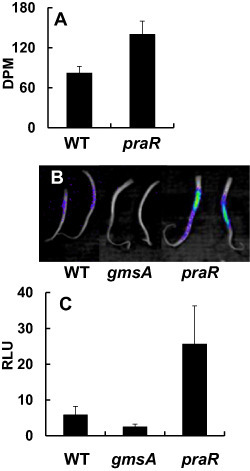
In Rhizobium leguminosarum bv. viciae, quorum-sensing is regulated by CinR, which induces the cinIS operon. CinI synthesizes an AHL, whereas CinS inactivates PraR, a repressor. Mutation of praR enhanced biofilms in vitro. We developed a light (lux)-dependent assay of rhizobial attachment to roots and demonstrated that mutation of praR increased biofilms on pea roots. The praR mutant out-competed wild-type for infection of pea nodules in mixed inoculations. Analysis of gene expression by microarrays and promoter fusions revealed that PraR represses its own transcription and mutation of praR increased expression of several genes including those encoding secreted proteins (the adhesins RapA2, RapB and RapC, two cadherins and the glycanase PlyB), the polysaccharide regulator RosR, and another protein similar to PraR. PraR bound to the promoters of several of these genes indicating direct repression. Mutations in rapA2, rapB, rapC, plyB, the cadherins or rosR did not affect the enhanced root attachment or nodule competitiveness of the praR mutant. However combinations of mutations in rapA, rapB and rapC abolished the enhanced attachment and nodule competitiveness. We conclude that relief of PraR-mediated repression determines a lifestyle switch allowing the expression of genes that are important for biofilm formation on roots and the subsequent initiation of infection of legume roots.
|
|
Scooped by
Jean-Michel Ané
July 7, 2014 12:40 AM
|
Brazilian sugarcane has been shown to obtain part of its nitrogen via biological nitrogen fixation (BNF). Recent reports, based on the culture independent sequencing of bacterial nifH complementary DNA (cDNA) from sugarcane tissues, have suggested that members of the Bradyrhizobium genus could play a role in sugarcane-associated BNF. Here we report on the isolation of Bradyrhizobium spp. isolates and a few other species from roots of sugarcane cultivar RB867515 by two cultivation strategies: direct isolation on culture media and capture of Bradyrhizobium spp. using the promiscuous legume Vigna unguiculata as trap-plant. Both strategies permitted the isolation of genetically diverse Bradyrhizobium spp. isolates, as concluded from enterobacterial repetitive intergenic consensus polymerase chain reaction (PCR) fingerprinting and 16S ribosomal RNA, nifH and nodC sequence analyses. Several isolates presented nifH phylotypes highly similar to nifH cDNA phylotypes detected in field-grown sugarcane by a culture-independent approach. Four isolates obtained by direct plate cultivation were unable to nodulate V. unguiculata and, based on PCR analysis, lacked a nodC gene homologue. Acetylene reduction assay showed in vitro nitrogenase activity for some Bradyrhizobium spp. isolates, suggesting that these bacteria do not require a nodule environment for BNF. Therefore, this study brings further evidence that Bradyrhizobium spp. may play a role in sugarcane-associated BNF under field conditions.
|
|
Scooped by
Jean-Michel Ané
July 5, 2014 12:21 PM
|
|
|
|
Scooped by
Jean-Michel Ané
July 9, 2014 11:38 PM
|
Almost all plant species form symbioses with soil fungi, and nutrient transfer to plants is largely mediated through this partnership. Studies of fungal nutrient transfer to plants have largely focused on the transfer of limiting soil nutrients, such as nitrogen and phosphorous, by mycorrhizal fungi. However, certain fungal endophytes, such as Metarhizium and Beauveria, are also able to transfer nitrogen to their plant hosts. Here, we review recent studies that have identified genes and their encoded transporters involved in the movement of nitrogen, phosphorous, and nonlimiting soil nutrients between symbionts. These recent advances in our understanding could lead to applications in agricultural and horticultural settings, and to the development of model fungal systems that could further elucidate the role of fungi in these symbioses.
|
|
Scooped by
Jean-Michel Ané
July 9, 2014 11:01 PM
|
The root exudate composition reflects the contradictory-concomitantly attractive and repulsive-behaviour of plants towards soil microorganisms. Plants produce antimicrobial, insecticide and nematicide compounds to repel pathogens and invaders. They also produce border cells that detach from roots and play an important role as biological and physical barrier against aggressors. Plants produce also metabolites used as carbon source resulting in the attraction of phytobeneficial soil microorganisms that help plants in controlling diseases directly via the production of antimicrobial compounds or indirectly via the induction of plant systemic resistance. The root exudates may have a direct impact on carbon and nitrogen cycling, as they exhibit a rhizosphere priming effect towards soil organic matter degraders, and may inhibit nitrification process by soil nitrifying microorganisms. They also contain signalling molecules required for the establishment of ‘plant-microorganisms’ interactions. The composition of root exudates is therefore broad ranging, consisting of feeding, antimicrobial and signalling molecules. We thus focused this review on current research concerning the role of the root exudate composition in ‘plant-microorganisms’ interactions and functioning of the rhizosphere.
|
|
Scooped by
Jean-Michel Ané
July 9, 2014 10:57 PM
|
|
|
Rescooped by
Jean-Michel Ané
from Plants and Microbes
July 9, 2014 8:27 AM
|
|
|
Scooped by
Jean-Michel Ané
July 8, 2014 2:33 PM
|
The primary dilemma in evolutionarily stable mutualisms is that natural selection for cheating could overwhelm selection for cooperation. Cheating need not entail parasitism; selection favours cheating as a quantitative trait whenever less-cooperative partners are more fit than more-cooperative partners. Mutualisms might be stabilised by mechanisms that direct benefits to more-cooperative individuals, which counter selection for cheating; however, empirical evidence that natural selection favours cheating in mutualisms is sparse. We measured selection on cheating in single-partner pairings of wild legume and rhizobium lineages, which prevented legume choice. Across contrasting environments, selection consistently favoured cheating by rhizobia, but did not favour legumes that provided less benefit to rhizobium partners. This is the first simultaneous measurement of selection on cheating across both host and symbiont lineages from a natural population. We empirically confirm selection for cheating as a source of antagonistic coevolutionary pressure in mutualism and a biological dilemma for models of cooperation.
|
|
Scooped by
Jean-Michel Ané
July 8, 2014 2:28 PM
|
A number of studies have recently suggested that organic farming better addresses issues related to climate change than non-organic farming. Many of the reported climate change advantages of organic farming flow from its prohibition of synthetic fertilizers and exclusive use of organic fertilizers. In the debate over the future of agriculture, organic food proponents have been using these results to support their arguments. One such recent statement is found in the Organic Farming Research Foundation’s August 2012 publication Organic Farming for Health and Prosperity which states “…organic farming has been shown to effectively mitigate climate change by increasing carbon sequestration in the soil, reducing greenhouse gas release and consuming less fossil fuel.” In comparison to non-organic farms, most of the climate change mitigation benefits of organic farms “were due to the high energy demand and emissions associated with the production of synthetic fertilizers used in the non-organic system.” Since organic farming uses organic sources of plant nutrients, like animal manure or fish byproducts, it disassociates itself from the energy inputs and greenhouse gas production associated with synthetic fertilizer production, or does it?
|
|
Scooped by
Jean-Michel Ané
July 7, 2014 10:35 PM
|
Root traits vary enormously among plant species but we have little understanding of how this variation affects their functioning. Of central interest is how root traits are related to plant resource acquisition strategies from soil. We examined root traits of 33 woody species from northeastern US forests that form two of the most common types of mutualisms with fungi, arbuscular mycorrhizas (AM) and ectomycorrhizas (EM). We examined root trait distribution with respect to plant phylogeny, quantifying the phylogenetic signal (Kstatistic) in fine root morphology and architecture, and used phylogenetically independent contrasts (PICs) to test whether taxa forming different mycorrhizal associations had different root traits. We found a pattern of species forming roots with thinner diameters as species diversified across time. Given moderate phylogenetic signals (K = 0.44–0.68), we used PICs to examine traits variation among taxa forming AM or EM, revealing that hosts of AM were associated with lower branching intensity (rPIC = −0.77) and thicker root diameter (rPIC = −0.41). Because EM evolved relatively more recently and intermittently across plant phylogenies, significant differences in root traits and colonization between plants forming AM and EM imply linkages between the evolution of these biotic interactions and root traits and suggest a history of selection pressures, with trade-offs for supporting different types of associations. Finally, across plant hosts of both EM and AM, species with thinner root diameters and longer specific root length (SRL) had less colonization (rPIC = 0.85, −0.87), suggesting constraints on colonization linked to the evolution of root morphology.
|
|
Scooped by
Jean-Michel Ané
July 7, 2014 10:29 PM
|
Arbuscular mycorrhizal (AM) symbiosis is the most widespread mutualistic association. It concerns 80% of land plants and involves fungi belonging to the phylum Glomeromycota. Benefits to the host plants due to this symbiosis range from nutrient supply to protection against pathogens. AM fungi are important components of the soil microbiome and are of great interest for managing sustainable agriculture, provided that their life cycle is better understood. Recently, major advances in the genomics of the model AM fungus Rhizophagus irregularis DAOM197198 have been published, offering new tools to investigate the biology of this symbiosis. In this chapter, we provide an overview of the efforts that were necessary to reach these results, from the discovery of these fungi and the description of their mutualistic incidence to their in vitro cultivation and on to genomics. The genome of DAOM197198 is estimated at ca. 150 Mb. It is haploid and less polymorphic than expected. Although it is an obligate biotrophic fungus, very little gene loss was observed. We put the Rhizophagus gene repertoire in perspective with previous investigations performed on the physiology of AM fungi: germination, early signalling with host plants, plant invasion, metabolism (phosphorous, carbon and nitrogen) and sexuality. Clearly, the publication of the genome of R. irregularis DAOM197198 is a turning point in the study of AM fungi, and large areas of their biology that still remain to be elucidated will now become accessible for investigation.
|
|
Scooped by
Jean-Michel Ané
July 7, 2014 10:27 PM
|
Field studies indicate an intensification of mineral weathering with advancement from arbuscular mycorrhizal (AM) to later-evolving ectomycorrhizal (EM) fungal partners of gymnosperm and angiosperm trees. We test the hypothesis that this intensification is driven by increasing photosynthate carbon allocation to mycorrhizal mycelial networks using14CO2-tracer experiments with representative tree–fungus mycorrhizal partnerships. Trees were grown in either a simulated past CO2 atmosphere (1500 ppm)—under which EM fungi evolved—or near-current CO2 (450 ppm). We report a direct linkage between photosynthate-energy fluxes from trees to EM and AM mycorrhizal mycelium and rates of calcium silicate weathering. Calcium dissolution rates halved for both AM and EM trees as CO2 fell from 1500 to 450 ppm, but silicate weathering by AM trees at high CO2approached rates for EM trees at near-current CO2. Our findings provide mechanistic insights into the involvement of EM-associating forest trees in strengthening biological feedbacks on the geochemical carbon cycle that regulate atmospheric CO2 over millions of years.
|
|
Scooped by
Jean-Michel Ané
July 7, 2014 10:21 PM
|
Root nodulation is a unique developmental process that predominantly occurs in leguminous plants. In this process, signaling initiated by symbiotic bacterial infection alters the fate of differentiated cortical cells and causes formation of new organs. Two qualitatively different regulatory events, namely bacterial infection and nodule organogenesis, need to be coordinated in the epidermis and cortical cells to establish proper nodule formation. Recent studies have determined the tissue-specific requirements of known symbiotic genes and also detailed a direct molecular link between the two regulatory pathways. Additionally, the detailed function of cytokinin signaling has been identified and the downstream genes have been isolated, providing greater understanding of the genetic mechanisms underlying nodule organogenesis.
|
|
Scooped by
Jean-Michel Ané
July 7, 2014 2:20 PM
|
Cysteine-rich proteins seem to play important regulatory roles in Medicago truncatula/Sinorhizobium meliloti symbiosis. In particular, a large family of nodule-specific cysteine-rich (NCR) peptides is crucial for the differentiation of nitrogen-fixing bacteroids. The Medicago truncatula N5 protein (MtN5) is currently the only reported non-specific lipid transfer protein necessary for successful rhizobial symbiosis; in addition, MtN5 shares several characteristics with NCR peptides: a small size, a conserved cysteine-rich motif, an N-terminal signal peptide for secretion and antimicrobial activity. Unlike NCR peptides, MtN5 expression is not restricted to the root nodules and is induced during the early phases of symbiosis in root hairs and nodule primordia. Recently, MtN5 was determined to be involved in the regulation of root tissue invasion; while, it was dispensable for nodule primordia formation. Here, we discuss the hypothesis that MtN5 participates in linking the progression of bacterial invasion with restricting the competence of root hairs for infection.
Biological market theory has been used successfully to explain cooperative behavior in many animal species. Microbes also engage in cooperative behaviors, both with hosts and other microbes, that can be described in economic terms. However, a market approach is not traditionally used to analyze these interactions. Here, we extend the biological market framework to ask whether this theory is of use to evolutionary biologists studying microbes. We consider six economic strategies used by microbes to optimize their success in markets. We argue that an economic market framework is a useful tool to generate specific and interesting predictions about microbial interactions, including the evolution of partner discrimination, hoarding strategies, specialized versus diversified mutualistic services, and the role of spatial structures, such as flocks and consortia. There is untapped potential for studying the evolutionary dynamics of microbial systems. Market theory can help structure this potential by characterizing strategic investment of microbes across a diversity of conditions.
Via Francis Martin
|











Good job René!