


In legume–rhizobia symbioses, the bacteria in infected cells are enclosed in a plant membrane, forming organelle-like compartments called symbiosomes. Symbiosomes remain as individual units and avoid fusion with lytic vacuoles of host cells. We observed changes in the vacuole volume of infected cells and thus hypothesized that microsymbionts may cause modifications in vacuole formation or function. To examine this, we quantified the volumes and surface areas of plant cells, vacuoles, and symbiosomes in root nodules of Medicago truncatula and analyzed the expression and localization of VPS11 and VPS39, members of the HOPS vacuole-tethering complex. During the maturation of symbiosomes to become N2-fixing organelles, a developmental switch occurs and changes in vacuole features are induced. For example, we found that expression of VPS11 andVPS39 in infected cells is suppressed and host cell vacuoles contract, permitting the expansion of symbiosomes. Trafficking of tonoplast-targeted proteins in infected symbiotic cells is also altered, as shown by retargeting of the aquaporin TIP1g from the tonoplast membrane to the symbiosome membrane. This retargeting appears to be essential for the maturation of symbiosomes. We propose that these alterations in the function of the vacuole are key events in the adaptation of the plant cell to host intracellular symbiotic bacteria.

Plant-Microbe Symbiosis
524.4K views |
+1 today
Beneficial associations between plants and microbes
Curated by
Jean-Michel Ané
 Your new post is loading...
 Scoop.it! 
The persistence of mutualisms in host-microbial – or holobiont – systems is difficult to explain because microbial mutualists, who bear the costs of providing benefits to their host, are always prone to being competitively displaced by non-mutualist ‘cheater’ species. This disruptive effect of competition is expected to be particularly strong when the benefits provided by the mutualists entail costs such as reduced competitive ability. Using a metacommunity model, we show that competition between multiple cheaters within the host's microbiome, when combined with the spatial structure of host–microbial interactions, can have a constructive rather than a disruptive effect by allowing the emergence and maintenance of mutualistic microorganisms within the host. These results indicate that many of the microorganisms inhabiting a host's microbiome, including those that would otherwise be considered opportunistic or even potential pathogens, play a cryptic yet critical role in promoting the health and persistence of the holobiont across spatial scales. 
Scoop.it!

MykoWeb -- information on mushrooms and other fungi, mycophagy, and mycology primarily for the amateur. Includes descriptions, photographs, recipes, and more.
Scoop.it!
Background
Scoop.it!

Soybeans exhibit a nitrogen-fixing symbiosis with soil bacteria of the genera Bradyrhizobium and Ensifer/Sinorhizobium in a unique organ, the root nodule. It is well known that nodulation of soybean is controlled by several host genes referred to as Rj (rj) genes. Among these genes, a dominant allele, Rj4, restricts nodulation with specific bacterial strains such as B. elkanii USDA61 and B. japonicum Is-34. These incompatible strains fail to invade the host epidermal cells as revealed by observations using DsRed-labeled bacteria. Here, we describe the molecular identification of the Rj4 gene by using map-based cloning with several mapping populations. The Rj4 gene encoded a thaumatin-like protein (TLP) that belongs to pathogenesis-related (PR) protein family 5. In rj4/rj4 genotype soybeans and wild soybeans, we found six missense mutations and two consecutive amino acid deletions in the rj4 gene as compared with the Rj4 allele. We also found, using hairy root transformation, that the rj4/rj4 genotype soybeans were fully complemented by the expression of the Rj4 gene. Whereas the expression of many TLPs and other PR proteins is induced by biotic/abiotic stress, Rj4 gene expression appears to be constitutive in roots including root nodules.
Scoop.it!

Brand new! @mossytanja N2-fixation by methanotrophs sustains carbon and nitrogen accumulation in pristine #peatlands http://t.co/v85xntIfha
Scoop.it!

To evaluate the effects of organic amendments on soil aggregate stability and aggregation-associated soil characteristics, a study was initiated in agricultural soils after 4 years of organic amendments. Soil samples were collected from the plow layer (0–20 cm) and plow pan (20–40 cm) under three cornfield management scenarios: 1) conventional cropping (CK, corn straw removal and no organic manure application), 2) straw retention (SR, incorporation of 9000 kg ha− 1 chopped corn stalk), and 3) manure application (MA, 15,000 kg ha− 1 of chicken manure input). The soil samples were fractionated into three aggregate sizes, i.e., < 0.25 mm (microaggregates), 0.25–1 mm (small macroaggregates), and > 1 mm (macroaggregates). The results showed that organic amendments increased the proportion of macroaggregate and mean weight diameter (MWD), especially in the plow layer. The macroaggregates accounted for 43.87% and 49.96% of the total soil weight in the SR and MA. The distribution patterns of soil organic C (SOC), microbial biomass C (MBC), total glomalin-related soil protein (TG) and easily extracted glomalin-related soil protein (EEG) within aggregate sizes were affected by organic treatments. In the plow layer, the SOC in MA increased by 35.5% in macroaggregates compared with CK, and significant differences in MBC, TG and EEG in macroaggregates were also found among organic amendments. MWD was positively correlated with SOC, MBC, TG and EEG. Organic amendment, either through crop residues or manure application, enhanced soil aggregate stability through the positive effects on soil binding agents including SOC, MBC and glomalin-related soil protein. The links among binding agents or between binding agents and aggregate stability were aggregate scale-dependent.
Scoop.it!

Tricholoma matsutake is an ectomycorrhizal fungus that forms commercially important mushrooms in coniferous forests. In this study, we explored the ability of T. matsutake to form mycorrhizae withPinus sylvestris by inoculating emblings produced through somatic embryogenesis (SE) in an aseptic culture system. Two months after inoculation, clones with less phenolic compounds in the tissue culture phase formed mycorrhizae with T. matsutake, while clones containing more phenols did not. Effects of inoculation on embling growth varied among clones; two of the four tested showed a significant increase in biomass and two had a significant increase in root density. In addition, results suggest that clones forming well-developed mycorrhizae absorbed more Al, Fe, Na, P, and Zn after 8 weeks of inoculation. This study illustrates the value of SE materials in experimental work concerning T. matsutake as well as the role played by phenolic compounds in host plant response to infection by mycorrhizal fungi.
Scoop.it!

Currently we have only a limited understanding of the evolutionary and ecological significance of reproductive traits of fungi. We compared data on fruit body size, spore size and shape between saprotrophic and mutualistic (ectomycorrhizal) fungi in Northern and Central Europe. Lifestyle and reproductive traits showed strong phylogenetic signals. A phylogenetically informed analysis demonstrated that saprotrophs produce on average smaller fruit bodies than mutualistic species. The two guilds, however, do not differ in spore size. Overall this suggests that fruit bodies of ectomycorrhizal fungi produce on average more spores than saprotrophic fungi. We argue that this difference is related to resource availability: ectomycorrhizal fungi receive carbon from their hosts and, therefore, evolution favours large fruit bodies, whereas the fruit body size of saprotrophic fungi might have responded to resource availability and the distribution and size of resource patches.
Scoop.it!

Horizontal gene transfer (HGT) is an important mode of adaptation and diversification of prokaryotes and eukaryotes and a major event underlying the emergence of bacterial pathogens and mutualists. Yet it remains unclear how complex phenotypic traits such as the ability to fix nitrogen with legumes have successfully spread over large phylogenetic distances. Here we show, using experimental evolution coupled with whole genome sequencing, that co-transfer of imuABC error-prone DNA polymerase genes with key symbiotic genes accelerates the evolution of a soil bacterium into a legume symbiont. Following introduction of the symbiotic plasmid of Cupriavidus taiwanensis, the Mimosa symbiont, into pathogenic Ralstonia solanacearum we challenged transconjugants to become Mimosa symbionts through serial plant-bacteria co-cultures. We demonstrate that a mutagenesis imuABC cassette encoded on the C. taiwanensis symbiotic plasmid triggered a transient hypermutability stage in R. solanacearum transconjugants that occurred before the cells entered the plant. The generated burst in genetic diversity accelerated symbiotic adaptation of the recipient genome under plant selection pressure, presumably by improving the exploration of the fitness landscape. Finally, we show that plasmid imuABC cassettes are over-represented in rhizobial lineages harboring symbiotic plasmids. Our findings shed light on a mechanism that may have facilitated the dissemination of symbiotic competency among α- and β-proteobacteria in natura and provide evidence for the positive role of environment-induced mutagenesis in the acquisition of a complex lifestyle trait. We speculate that co-transfer of complex phenotypic traits with mutagenesis determinants might frequently enhance the ecological success of HGT.
Scoop.it!
The Baylis postulate has been an influential idea in arbuscular mycorrhizal (AM) research (Baylis, 1975; Fitter, 2004). The original formulation of the postulate made the prediction that only plants with elaborate root systems could grow in the absence of mycorrhiza (Baylis, 1975). A generalized form of the Baylis postulate stated that the root architectural parameters of the plant host could represent a good predictor of its mycorrhizal growth response (MGR), defined as the percentage difference in biomass of AM-inoculated vs non-AM-inoculated plants grown under identical conditions. The generalized formulation of the Baylis postulate has been widely used in AM research, although it has never been explicitly tested (e.g. Fitter, 2004). In this issue of New Phytologist, Maherali (pp. 191–199) describes the results of a meta-analysis to assess the empirical support for this hypothesis. Maherali demonstrated that, despite having included studies in which the relationship between root architectural parameters and MGR was significant, the overall effect was neutral. This result was robust to the exclusion of individual studies in a sensitivity analysis.
Jean-Michel Ané's insight:
I am personally very skeptical about the reliability of these meta-analyses... Some of them seem even more biased to me than the original articles.
Scoop.it!
Legume root nodules are induced by N-fixing rhizobium bacteria that are hosted in an intracellular manner. These nodules are formed by reprogramming differentiated root cells. The model legume Medicago truncatula forms indeterminate nodules with a meristem at their apex. This organ grows by the activity of the meristem that adds cells to the different nodule tissues. In Medicago sativa it has been shown that the nodule meristem is derived from the root middle cortex. During nodule initiation, inner cortical cells and pericycle cells are also mitotically activated. However, whether and how these cells contribute to the mature nodule has not been studied. Here, we produce a nodule fate map that precisely describes the origin of the different nodule tissues based on sequential longitudinal sections and on the use of marker genes that allow the distinction of cells originating from different root tissues. We show that nodule meristem originates from the third cortical layer, while several cell layers of the base of the nodule are directly formed from cells of the inner cortical layers, root endodermis and pericycle. The latter two differentiate into the uninfected tissues that are located at the base of the mature nodule, whereas the cells derived from the inner cortical cell layers form about eight cell layers of infected cells. This nodule fate map has then been used to re-analyse several mutant nodule phenotypes. This showed, among other things, that intracellular release of rhizobia in primordium cells and meristem daughter cells are regulated in a different manner.
Jean-Michel Ané's insight:
Awesome paper...a must read for anyone interested in legume nodulation and nitrogen fixation.
Scoop.it!

Ectomycorrhizal fungi, living in soil forests, are required microorganisms to sustain tree growth and productivity. The establishment of mutualistic interaction with roots to form ectomycorrhiza (ECM) is not well known at the molecular level. In particular, how fungal and plant cell walls are rearranged to establish a fully functional ectomycorrhiza is poorly understood. Nevertheless, it is likely that Carbohydrate Active enZymes (CAZyme) produced by the fungus participate in this process. Genome-wide transcriptome profiling during ECM development was used to examine how the CAZome of L. bicolor is regulated during symbiosis establishment. CAZymes active on fungal cell wall were upregulated during ECM development in particular after 4 weeks of contact when the hyphae are surrounding the root cells and start to colonize the apoplast. We demonstrated that one expansin-like protein, whose expression is specific to symbiotic tissues, localizes within fungal cell wall. Whereas L. bicolor genome contained a constricted repertoire of CAZymes active on cellulose and hemicellulose, these CAZymes were expressed during the first steps of root cells colonization. L. bicolor retained the ability to use homogalacturonan, a pectin-derived substrate, as carbon source. CAZymes likely involved in pectin hydrolysis were mainly expressed at the stage of a fully mature ECM. All together, our data suggest an active remodelling of fungal cell wall with a possible involvement of expansin during ECM development. By contrast, a soft remodelling of the plant cell wall likely occurs through the loosening of the cellulose microfbrils by AA9 or GH12 CAZymes and middle lamella smooth remodelling through pectin (homogalacturonan) hydrolysis likely by GH28, GH12 CAZymes.
|
Scoop.it!

Mushrooms are the visible manifestations (sexual organs, actually) of microscopic, soil-dwelling fungi that form mutually-beneficial partnerships with plants. Since these filamentous fungi interact...
Scoop.it!

How one company is trying to save the world from a looming food scarcity problem and reduce our reliance on harmful chemicals. (As long as it tastes like steak!
Scoop.it!
Dave Hula is cognizant of the potential benefits of taking care of microbes in the soil and seeks to boost their populations with additional carbon.
Scoop.it!

Ectomycorrhizal (EM) fungi form symbiotic associations with plant roots that regulate nutrient exchange between forest plants and soil.
Scoop.it!
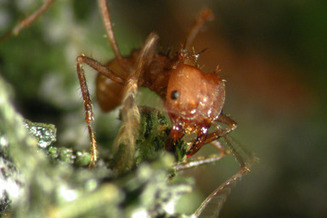
Leaf-cutter ants are crafty cultivators. They tend and defend vast gardens of fungus that they harvest to feed their minions.
Scoop.it!

Background and aims
In order to develop new strategies aiming at reconverting agriculture-managed soils into forest plantations, pesticides effect on plant growth needs to be further understood. Thus, the development of Pinus pinea seedlings on soil spiked with benfluralin mimicking different application rates was evaluated, as a well as its effect on root colonisation with Pisolithus tinctorius and Suillus bellinii. MethodP. pinea development and ectomycorrhiza colonization on soil spiked with benfluralin were assessed after 6 month growth. ResultsP. pinea seedlings inoculated with P. tinctorius showed higher plant growth and increased nutrient levels than seedlings inoculated with S. bellinii. At field application rate, benfluralin had an inhibitory effect on growth of non inoculated plants. Inoculation with P. tinctorius promoted plant development and nutrient uptake whereas inoculation with S. bellinii did not seem to confer plant protection against the toxic. Although P. tinctorius and S. bellinii were able to form ectomycorrhizae in the presence of benfluralin, the extent of root colonisation was affected by the herbicide. ConclusionP. tinctorius conferred protection to P. pinea against benfluralin toxicity, overcoming the effect of the herbicide on P. pinea growth and nutrient uptake. This approach can be advantageous for plant establishment on pesticide contaminated soils.
Scoop.it!

Nitrogen compounds such as nitrate act as a potential inhibitor for legume nodulation. In this study, we isolated a new CLE gene, GmNIC2, from nitrate-treated roots, which shares high sequence homology with nitrate-induced CLE gene GmNIC1. Similar to GmNIC1, the expression level of GmNIC2 was not significantly altered in roots by rhizobial inoculation and was much higher in young nodules than in roots. In addition, overexpression of GmNIC2 led to similar nodulation inhibition of transgenic hairy roots to that of GmNIC1, which occurred in GmNARK-dependent manner and at the local level. By analyzing GmNARK loss-of-function mutant, SS2-2, it was found that expression levels of GmNIC1 and GmNIC2 in the SS2-2 roots were lower than in the wild type (WT) roots in response to nitrate. In contrast to GmNIC1 and GmNIC2, expressions of GmRIC1 and GmRIC2 genes that are related to the autoregulation of nodulation (AON) were strongly suppressed both of the soybeans during all periods of nitrate treatment and even were not induced by additional inoculation with rhizobia. Taken together, the results of this study suggest that GmNIC2, as an active homologous gene located in chromosome 13, acts locally to suppress nodulation, like GmNIC1, and nitrate inhibition of nodulation is led by fine-tuned regulation of both nitrate-induced CLEs and rhizobia-induced CLEs.
Scoop.it!
n this study we investigated effects of Zn supply on germination, growth, inorganic solutes (Zn, Ca, Fe, and Mg) partitioning and nodulation of Medicago sativa This plant was cultivated with and without Zn (2 mM). Treatments were plants without (control) and with Zn tolerant strain (S532), Zn intolerant strain (S112) and 2 mM urea nitrogen fertilisation. Results showed that M. sativa germinates at rates of 50% at 2 mM Zn. For plants given nitrogen fertilisation, Zn increased plant biomass production. When grown with symbionts, Zn supply had no effect on nodulation. Moreover, plants with S112 showed a decrease of shoot and roots biomasses. However, in symbiosis with S532, an increase of roots biomass was observed. Plants in symbiosis with S. meliloti accumulated more Zn in their roots than nitrogen fertilised plants. Zn supply results in an increase of Ca concentration in roots of fertilised nitrogen plants. However, under Zn supply, Fe concentration decreased in roots and increased in nodules of plants with S112. Zn supply showed contrasting effects on Mg concentrations for plants with nitrogen fertilisation (increase) and plants with S112 (decrease). The capacity of M. sativa to accumulate Zn in their nodulated roots encouraged its use in phytostabilisation processes.
Jean-Michel Ané's insight:
Publication date Jan 2, 2015
Scoop.it!

Scoop.it!

Arbuscular mycorrhizal (AM) fungi accumulate a massive amount of phosphate as polyphosphate to deliver to the host, but the underlying physiological and molecular mechanisms have yet to be elucidated. In the present study, the dynamics of cationic components during polyphosphate accumulation were investigated in conjunction with transcriptome analysis.Rhizophagus sp. HR1 was grown with Lotus japonicus under phosphorus-deficient conditions, and extraradical mycelia were harvested after phosphate application at prescribed intervals. Levels of polyphosphate, inorganic cations and amino acids were measured, and RNA-Seq was performed on the Illumina platform.Phosphate application triggered not only polyphosphate accumulation but also near-synchronous and near-equivalent uptake of Na+, K+, Ca2+ and Mg2+, whereas no distinct changes in the levels of amino acids were observed. During polyphosphate accumulation, the genes responsible for mineral uptake, phosphate and nitrogen metabolism and the maintenance of cellular homeostasis were up-regulated.The results suggest that inorganic cations play a major role in neutralizing the negative charge of polyphosphate, and these processes are achieved by the orchestrated regulation of gene expression. Our findings provide, for the first time, a global picture of the cellular response to increased phosphate availability, which is the initial process of nutrient delivery in the associations. Via Francis Martin
Scoop.it!
Aim The geographical distributions of most fungal species are still poorly known; consequently, their origins and historical distributions remain largely understudied. High levels of cryptic diversity, scarce fossil records and poorly sampled regions can explain some of these shortcomings. We extensively sampled an iconic group of edible ectomycorrhizal (EM) fungi, Amanita caesarea and its allies, in order to infer evolutionary patterns on a global scale. Location Worldwide. Methods DNA sequences from three nuclear genes were derived for 120 collections. Divergence times were estimated using fossil calibrations within the Agaricomycetes, followed by more inclusive (A. sect. Caesareae + outgroup) root-recalibrated estimations. Ultrametric trees from beast were used in ancestral-area reconstructions and to infer geodispersal models. They were further used in diversification-rate analyses using maximum-likelihood and Bayesian methods. Results Molecular dating and ancestral-area reconstruction indicated a Palaeotropical origin of A. sect. Caesareae between the Palaeocene and Eocene. Dispersal events to temperate regions in Mediterranean Europe, eastern Australia and North and Central America, occurred mostly during the late Miocene and Pliocene. A boreotropical model was supported as the most likely mode of geodispersal. Diversification rates were significantly higher in the New World than in the Old World. Main conclusions
We present evidence that this group of edible EM mushrooms was ancestrally Palaeotropical from around the Eocene to the late Miocene, reaching temperate insular and continental areas during the late Miocene and Pliocene. The mode of dispersal is largely consistent with Wolfe's boreotropical hypothesis. We also found that the overall diversification rate has been rather constant, but has increased relatively recently in the New World, possibly as a result of the well-documented Plio-Pleistocene climatic fluctuations.
|




