 Your new post is loading...

|
Scooped by
Jean-Michel Ané
September 30, 2014 3:37 PM
|
Arbuscular mycorrhizal (AM) fungi have traditionally been considered generalist symbionts. However, an increasing number of studies are pointing out the selectivity potential of plant hosts. Plant life form, determined by plant life history traits, seems to drive the AM fungal community composition. The AM fungi also exhibit a wide diversity of functional traits known to be responsible for their distribution in natural ecosystems. However, little is known about the role of plant and fungal traits driving the resultant symbiotic assemblages. With the aim of testing the feedback relationship between plant and fungal traits on the resulting AM fungal community, we inoculated three different plant life forms, i.e. annual herbs, perennial herbs and perennial semi-woody plants, with AM fungal communities sampled in different seasons. We hypothesized that the annual climate variation will induce changes in the mean traits of the AM fungal communities present in the soil throughout the year. Furthermore, the association of plants with different life forms with AM fungi with contrasting life history traits will show certain preferences according to reciprocal traits of the plants and fungi. We found changes in the AM fungal community throughout the year, which were differentially disrupted by disturbance and altered by plant growth form and plant biomass. Both plant and fungal traits clearly contributed to the resultant AM fungal communities. The revealed process can have implications for the functioning of ecosystems since changes in dominant plant life forms or climatic variables could influence the traits of AM fungal communities in soil and hence ecosystem processes.
|
|
Scooped by
Jean-Michel Ané
September 28, 2014 12:58 PM
|
|
|
Scooped by
Jean-Michel Ané
September 28, 2014 12:40 PM
|
Genetic engineering lags behind conventional breeding in efforts to create drought-resistant maize.
|
|
Scooped by
Jean-Michel Ané
September 28, 2014 12:26 PM
|
Most techniques used to study small molecules, such as pharmaceutical drugs or endogenous metabolites, employ tissue extracts which require the homogenization of the tissue of interest that could potentially cause changes in the metabolic pathways being studied(1). Mass spectrometric imaging (MSI) is a powerful analytical tool that can provide spatial information of analytes within intact slices of biological tissue samples(1-5). This technique has been used extensively to study various types of compounds including proteins, peptides, lipids, and small molecules such as endogenous metabolites. With matrix-assisted laser desorption/ionization (MALDI)-MSI, spatial distributions of multiple metabolites can be simultaneously detected. Herein, a method developed specifically for conducting untargeted metabolomics MSI experiments on legume roots and root nodules is presented which could reveal insights into the biological processes taking place. The method presented here shows a typical MSI workflow, from sample preparation to image acquisition, and focuses on the matrix application step, demonstrating several matrix application techniques that are useful for detecting small molecules. Once the MS images are generated, the analysis and identification of metabolites of interest is discussed and demonstrated. The standard workflow presented here can be easily modified for different tissue types, molecular species, and instrumentation.
|
|
Scooped by
Jean-Michel Ané
September 28, 2014 12:23 PM
|
Plants need nitrogen and carbon to grow. Photosynthesis allows them to take in the latter directly from the air, but they have to procure nitrogen through their roots in the form of organic molecules like ammonia or urea. Even though nitrogen gas makes up approximately 80 percent of Earth's atmosphere, ...
|
|
Scooped by
Jean-Michel Ané
September 27, 2014 11:28 AM
|
Some beneficial plant-interacting bacteria can biologically fix N2 to plant-available ammonium. Biological nitrogen fixation (BNF) is an important source of nitrogen (N) input in agriculture and represents a promising substitute for chemical N fertilizers. Diazotrophic bacteria have the ability to develop different types of root associations with different plant species. Among the highest rates of BNF are those measured in legumes nodulated by endosymbionts, an already very well documented model of plant–diazotrophic bacterial association. However, it has also been shown that economically important crops, especially monocots, can obtain a substantial part of their N needs from BNF by interacting with associative and endophytic diazotrophic bacteria, that either live near the root surface or endophytically colonize intercellular spaces and vascular tissues of host plants. One of the best reported outcomes of this association is the promotion of plant growth by direct and indirect mechanisms. Besides fixing N, these bacteria can also produce plant growth hormones, and some species are reported to improve nutrient uptake and increase plant tolerance against biotic and abiotic stresses. Thus, this particular type of plant–bacteria association consists of a natural beneficial system to be explored; however, the regulatory mechanisms involved are still not clear. Plant N status might act as a key signal, regulating and integrating various metabolic processes that occur during association with diazotrophic bacteria. This review will focus on the recent progress in understanding plant association with associative and endophytic diazotrophic bacteria, particularly on the knowledge of the N networks involved in BNF and in the promotion of plant growth.
|
|
Scooped by
Jean-Michel Ané
September 26, 2014 12:58 AM
|
Without a solid understanding of how the soil microbiome contributes to atmospheric carbon, researchers are struggling to determine whether dirt-dwelling bacteria could impact—and be impacted by—climate change.
|
|
Scooped by
Jean-Michel Ané
September 26, 2014 12:38 AM
|
- Macroecological patterns of microbes have received relatively little attention until recently. This study aimed to disentangle the determinants of the global biogeographic community of Alnus-associated actinobacteria belonging to the Frankia alni complex.
- By determining a global sequence similarity threshold for the nitrogenase reductase (nifH) gene, we separated Frankia into operational taxonomic units (OTUs) and tested the relative effects of Alnus phylogeny, geographic relatedness, and climatic and edaphic variables on community composition at the global scale.
- Based on the optimal nifH gene sequence similarity threshold of 99.3%, we distinguished 43 Frankia OTUs from root systems of 22Alnus species on four continents. Host phylogeny was the main determinant of Frankia OTU-based community composition, but there was no effect on the phylogenetic structure of Frankia. Biogeographic analyses revealed the strongest cross-continental links over the Beringian land bridge.
- Despite the facultative symbiotic nature of Frankia, phylogenetic relations among Alnus species play a prominent role in structuring root-associated Frankia communities and their biogeographic patterns. Our results suggest that Alnus species exert strong phylogenetically determined selection pressure on compatible Actinobacteria.
|
|
Scooped by
Jean-Michel Ané
September 26, 2014 12:30 AM
|
- We performed a landscape-scale investigation to compare the arbuscular mycorrhizal fungal (AMF) communities between grasslands and farmlands in the farming–pastoral ecotone of northern China.
- AMF richness and community composition were examined with 454 pyrosequencing. Structural equation modelling (SEM) and multivariate analyses were applied to disentangle the direct and indirect effects (mediated by multiple environmental factors) of land use on AMF.
- Land use conversion from grassland to farmland significantly reduced AMF richness and extraradical hyphal length density, and these land use types also differed significantly in AMF community composition. SEM showed that the effects of land use on AMF richness and hyphal length density in soil were primarily mediated by available phosphorus and soil structural quality. Soil texture was the strongest predictor of AMF community composition. Soil carbon, nitrogen and soil pH were also significantly correlated with AMF community composition, indicating that these abiotic variables could be responsible for some of the community composition differences among sites.
- Our study shows that land use has a partly predictable effect on AMF communities across this ecologically relevant area of China, and indicates that high soil phosphorus concentrations and poor soil structure are particularly detrimental to AMF in this fragile ecosystem.
|
|
Scooped by
Jean-Michel Ané
September 26, 2014 12:24 AM
|
This short article is a chapter from my book “Fertilizer for Free: How to make the most from Biological Nitrogen Fixation”. One important question perm

|
Suggested by
Kevin Garcia
September 26, 2014 12:10 AM
|
Diazotroph bacteria are known to have a symbiotic relationship with legume plants whereby the bacteria thrive while providing energy to the plant3. Little research has been done about relationships between Diazotrophs and non-legume plants, especially during the germination stage. We investigated the use of diazotroph bacteria as a germination aid for cereal crops. Using homemade equipment we carried out germination and growth experiments over 11 months. We analyzed the performance of more than 9,500 seed samples, recording over 120,000 manual measurements in 125 experimental sets. Based on our extensive experimental results we succeeded in showing statistically that two strains of Rhizobium bacteria can significantly accelerate the rate of crop germination (+40% for r.leguminosarum and 28% for r.japonicum; (p<0.0001). R.japonicum also increased the subsequent dry mass of barley by 70% (p<0.0001). We believe that the biochemical mechanism that produced the noted improvements is triggered when flavonoids from the crops prompt the release of lipochitooligosaccharides which catalyse accelerated seed growth. These results have significant potential for increasing yields of food crops and reducing losses due to adverse weather conditions. They also offer opportunities for reducing the environmental footprint of agriculture by reducing fertilizer usage. As demand for cereals increases with population growth16, this discovery could act as a partial solution to the impending food poverty crisis. There is potential for future work in this area and we plan to investigate the biochemical mechanism involved and carry out more extensive field trials.
|
|
Scooped by
Jean-Michel Ané
September 26, 2014 12:07 AM
|
January 1974: In the dark of the electron microscope room, Paola Bonfante started up and looked again at the greenish screen; she was indeed looking at a round body very similar to a bacterium. Unexpectedly, this faint body was inside the cytoplasm of a mycorrhizal symbiotic fungus, which was inside the root cells of a plant.
|
|
Scooped by
Jean-Michel Ané
September 25, 2014 11:56 PM
|
The objectives of this research were to select the appropriate plant growth promoting rhizobacteria (PGPR) and evaluate their influence in promoting nodulation and N2-fixing efficiency of soybean (Glycine max) by coinoculation with Bradyrhizobium diazoefficiens USDA110 and B. japonicum THA6 strains. Selected 12 PGPR performed a significant capability of promoting N2-fixation, nodule number, nodule and plant dry weight with both of the commercial bradyrhizobial strains, USDA110 and THA6 (P < 0.05). Furthermore, isolates S141 and S222, which are closely related to Bacillus subtilis and Staphylococcus sp., were selected for coinoculation with USDA110 and THA6. The effective coinoculation doses of PGPR:Bradyrhizobium on soybean were 106:106 colony forming unit (CFU) ml−1 seed−1. The expression levels of soybean and Bradyrhizobium related genes including Glyma17g07330, otsA, phbC, dctA and nifH in nodule discontinuously triggered both up- and down-regulation at different time frames (2–7 WAI). The transmission electron microscopy (TEM) micrograph of coinoculated soybean nodule showed the compact cluster of bacteroids which was densely packed with poly-ß-hydroxybutyrate (PHB) granules. The amounts of PHBs remained in mature nodule of coinoculation treatments whilst single inoculation nodules were senescence. The induction of soybean root subsequently increased the nodulation signaling and then activated the trehalose accumulation and the transport of carbon that represented an increase in PHB accumulation, resulting in the enhancement of the nodulation and N2-fixation in soybean. These results were accordingly related with phenotypic characters in Leonard’s jar experiment in terms of enhancing the nodulation and N2-fixation in soybean. The effect of coinoculation experiment under field condition could increase 9.7–43.6% of seed yield per hectare which was higher than those of uninoculation or single inoculation of PGPR or Bradyrhizobium. Therefore, the efficiency to enhance soybean N2-fixation by coinoculation of S141 and S222 with Bradyrhizobium strategy could be developed for supreme soybean inoculants.
|
|
|
Scooped by
Jean-Michel Ané
September 30, 2014 3:36 PM
|
The availability of genome sequences from both arbuscular and ectomycorrhizal fungi and their hosts has, together with elegant biochemical and molecular biological analyses, provided new information on signal exchange between the partners in mycorrhizal associations. The progress in understanding cellular processes has been more rapid in arbuscular than ectomycorrhizal symbiosis due to its similarities of early processes with Rhizobium-legume symbiosis. In ectomycorrhiza, the role of auxin and ethylene produced by both fungus and host plant is becoming understood at the molecular level, although the actual ligands and receptors leading to ectomycorrhizal symbiosis have not yet been discovered. For both systems, the functions of small effector proteins secreted from the respective fungus and taken up into the plant cell may be pivotal in understanding the attenuation of host defense. We review the subject by comparing cross-talk between fungal and plant partners during formation and establishment of arbuscular and ectomycorrhizal symbioses.
|
|
Scooped by
Jean-Michel Ané
September 28, 2014 12:56 PM
|
BROOKINGS, S.D. - Assistant professor Senthil Subramanian has become the first South Dakota State University plant scientist to receive a National Science Foundation Faculty Early Career Development award.
|
|
Scooped by
Jean-Michel Ané
September 28, 2014 12:26 PM
|
Plants can communicate the onset of an attack from aphids by making use of an underground network of fungi, researchers have found.
|
|
Scooped by
Jean-Michel Ané
September 28, 2014 12:23 PM
|
The mechanism of nitrogenase remains enigmatic, with a major unresolved issue concerning how inhibitors and substrates bind to the active site. We report a crystal structure of carbon monoxide (CO)–inhibited nitrogenase molybdenum-iron (MoFe)–protein at 1.50 angstrom resolution, which reveals a CO molecule bridging Fe2 and Fe6 of the FeMo-cofactor. The μ2 binding geometry is achieved by replacing a belt-sulfur atom (S2B) and highlights the generation of a reactive iron species uncovered by the displacement of sulfur. The CO inhibition is fully reversible as established by regain of enzyme activity and reappearance of S2B in the 1.43 angstrom resolution structure of the reactivated enzyme. The substantial and reversible reorganization of the FeMo-cofactor accompanying CO binding was unanticipated and provides insights into a catalytically competent state of nitrogenase.
Autoregulatory negative-feedback loops play important roles in fine-balancing tissue and organ development. Such loops are composed of short-range intercellular signaling pathways via cell–cell communications. On the other hand, leguminous plants use a long-distance negative-feedback system involving root–shoot communication to control the number of root nodules, root lateral organs that harbor symbiotic nitrogen-fixing bacteria known as rhizobia. This feedback system, known as autoregulation of nodulation (AON), consists of two long-distance mobile signals: root-derived and shoot-derived signals. Two Lotus japonicus CLAVATA3/ENDOSPERM SURROUNDING REGION (CLE)-related small peptides, CLE ROOT SIGNAL1 (CLE-RS1) and CLE-RS2, function as root-derived signals and are perceived by a shoot-acting AON factor, the HYPERNODULATION ABERRANT ROOT FORMATION1 (HAR1) receptor protein, an ortholog of Arabidopsis CLAVATA1, which is responsible for shoot apical meristem homeostasis. This peptide–receptor interaction is necessary for systemic suppression of nodulation. How the onset of nodulation activates AON and how optimal nodule numbers are maintained remain unknown, however. Here we show that an RWP-RK–containing transcription factor, NODULE INCEPTION (NIN), which induces nodule-like structures without rhizobial infection when expressed ectopically, directly targets CLE-RS1 and CLE-RS2. Roots constitutively expressing NIN systemically repress activation of endogenous NIN expression in untransformed roots of the same plant in a HAR1-dependent manner, leading to systemic suppression of nodulation and down-regulation of CLE expression. Our findings provide, to our knowledge, the first molecular evidence of a long-distance autoregulatory negative-feedback loop that homeostatically regulates nodule organ formation.
Via Francis Martin
|
|
Scooped by
Jean-Michel Ané
September 26, 2014 1:03 AM
|
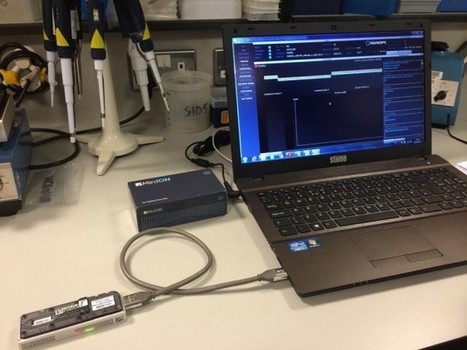
Oxford Nanopore Technologies has finally delivered on its promise to bring personalized genome sequencing to the desktop. It is now time to see what their MinIon USB device can do.
|
|
Scooped by
Jean-Michel Ané
September 26, 2014 12:38 AM
|
In this study, we focused on the effect of glutamine synthetase (GSI) activity in Mesorhizobium loti on the symbiosis between the host plant, Lotus japonicus, and the bacteroids. We used a signature-tagged mutant of M. loti (STM30) with a transposon inserted into the GSI (mll0343) gene. The L. japonicus plants inoculated with STM30 had significantly more nodules, and the occurrence of senesced nodules was much higher than in plants inoculated with the wild-type. The acetylene reduction activity (ARA) per nodule inoculated with STM30 was lowered compared to the control. Also, the concentration of chlorophyll, glutamine, and asparagine in leaves of STM30-infected plants was found to be reduced. Taken together, these data demonstrate that a GSI deficiency in M. loti differentially affects legume–rhizobia symbiosis by modifying nodule development and metabolic processes.
|
|
Rescooped by
Jean-Michel Ané
from Rhizobium Research
September 26, 2014 12:33 AM
|
In bacteria, membrane transporters of the cation diffusion facilitator (CDF) family participate in Zn2+, Fe2+, Mn2+, Co2+ and Ni2+ homeostasis. The functional role during infection processes for several members has been shown to be linked to the specificity of transport. Sinorhizobium meliloti has two homologous CDF genes with unknown transport specificity. Here we evaluate the role played by the CDF SMc02724 (SmYiiP). The deletion mutant strain of SmYiiP (ΔsmyiiP) showed reduced in vitro growth fitness only in the presence of Mn2+. Incubation of ΔsmyiiP and WT cells with sub-lethal Mn2+ concentrations resulted in a 2-fold increase of the metal only in the mutant strain. Normal levels of resistance to Mn2+ were attained by complementation with the gene SMc02724 under regulation of its endogenous promoter. In vitro, liposomes with incorporated heterologously expressed pure protein accumulated several transition metals. However, only the transport rate of Mn2+ was increased by imposing a transmembrane H+ gradient. Nodulation assays in alfalfa plants showed that the strain ΔsmyiiP induced a lower number of nodules than in plants infected with the WT strain. Our results indicate that Mn2+ homeostasis in S. meliloti is required for full infection capacity, or nodule function, and that the specificity of transport in vivo of SmYiiP is narrowed down to Mn2+ by a mechanism involving the proton motive force.
Raimunda D and Elso-Berberián G (2014). Biochim Biophys Acta. 2014 Sep 18.
Via IvanOresnik
|
|
Scooped by
Jean-Michel Ané
September 26, 2014 12:24 AM
|
BackgroundLegume roots show a remarkable plasticity to adapt their architecture to biotic and abiotic constraints, including symbiotic interactions. However, global analysis of miRNA regulation in roots is limited, and a global view of the evolution of miRNA-mediated diversification in different ecotypes is lacking.ResultsIn the model legume Medicago truncatula, we analyze the small RNA transcriptome of roots submitted to symbiotic and pathogenic interactions. Genome mapping and a computational pipeline identify 416 miRNA candidates, including known and novel variants of 78 miRNA families present in miRBase. Stringent criteria of pre-miRNA prediction yield 52 new mtr-miRNAs, including 27 miRtrons. Analyzing miRNA precursor polymorphisms in 26?M. truncatula ecotypes identifies higher sequence polymorphism in conserved rather than Medicago-specific miRNA precursors. An average of 19 targets, mainly involved in environmental responses and signalling, is predicted per novel miRNA. We identify miRNAs responsive to bacterial and fungal pathogens or symbionts as well as their related Nod and Myc-LCO symbiotic signals. Network analyses reveal modules of new and conserved co-expressed miRNAs that regulate distinct sets of targets, highlighting potential miRNA-regulated biological pathways relevant to pathogenic and symbiotic interactions.ConclusionsWe identify 52 novel genuine miRNAs and large plasticity of the root miRNAome in response to the environment, and also in response to purified Myc/Nod signaling molecules. The new miRNAs identified and their sequence variation across M. truncatula ecotypes may be crucial to understand the adaptation of root growth to the soil environment, notably in the agriculturally important legume crops.
|
|
Scooped by
Jean-Michel Ané
September 26, 2014 12:20 AM
|
Rhizobia-based biofertilizer manual now available!In partnership with #Africa2000Network @a2nug Contact:ashc@cabi.org pic.twitter.com/FYLSBcoUfA
|
|
Scooped by
Jean-Michel Ané
September 26, 2014 12:07 AM
|
Bacterial biocontrol strains used as an alternative to chemical fungicides may influence bacterial communities in the rhizosphere and effects might differ depending on the soil type. Here we present baseline data on the effects of Pseudomonas jessenii RU47 on the bacterial community composition in the rhizosphere of lettuce grown in diluvial sand, alluvial loam and loess loam at the same field site. 16S rRNA gene fragments amplified from total community DNA were analyzed by denaturing gradient gel electrophoresis (DGGE) and pyrosequencing. DGGE fingerprints revealed that in three consecutive years (2010-2012) effects of RU47 had a slight but statistically significant effect on the bacterial community composition in one (2010), two (2011), or all the three soils (2012). However, these effects were much less pronounced compared to the influence of soil types. Additional pyrosequence analysis of 2011 samples showed that significant changes in bacterial community compositions in response to RU47 inoculation occurred only in alluvial loam. Different taxonomic groups responded to the RU47 application depending on the soil type. Most remarkable was the increased relative abundance of OTUs belonging to the genera Bacillus and Paenibacillus in alluvial loam. Pyrosequencing allowed identifying side-effects of the application of bacterial inoculants into the rhizosphere.
|
|
Scooped by
Jean-Michel Ané
September 25, 2014 11:59 PM
|
Understanding how mutualistic interactions are stabilized in the presence of cheaters is a major question in evolutionary biology. The legume–rhizobia mutualism has become a model system for studying how plants control cheating partners. However, the generality and evolutionary origins of these control mechanisms are intensely debated. In this Opinion article, we argue that a novel system – the Parasponia–rhizobia mutualism – will significantly advance research in mutualism stability. Parasponia is the only non-legume lineage to have evolved a rhizobial symbiosis, which provides an evolutionary replicate to test how rhizobial exploitation is controlled. Evidence also suggests that this symbiosis is young. This allows studies at an earlier evolutionary stage in mutualisms, so the origin of control mechanisms can be better understood.
|















A bit expected but interesting