Your new post is loading...

|
Scooped by
Jean-Michel Ané
October 16, 2014 8:56 PM
|
Manual on Biofertilizer Production and Application
|
|
Scooped by
Jean-Michel Ané
October 16, 2014 2:57 PM
|
Flavonoids are small molecular secondary metabolites synthesized by plants with various biological activities. Due to their physical and biochemical properties, they are capable of participating in plants’ interactions with other organisms (microorganisms, animals and other plants) and their reactions to environmental stresses. The majority of their functions result from their strong antioxidative properties. Although an increasing number of studies focus on the application of flavonoids in medicine or the food industry, their relevance for the plants themselves also deserves extensive investigations. This review summarizes the current knowledge on the functions of flavonoids in the physiology of plants and their relations with the environment.
|
|
Scooped by
Jean-Michel Ané
October 16, 2014 2:04 PM
|
Genetically modified food (or GM food) is food produced from plants or animals whose DNA has been altered through genetic engineering. These genetically modified organisms are often called GMOs for short.
|
|
Scooped by
Jean-Michel Ané
October 16, 2014 2:03 PM
|
Corn, watermelon, and peaches were unrecognizable 8,000 years ago.
|
|
Scooped by
Jean-Michel Ané
October 15, 2014 12:57 PM
|
To date, three different nitrogenase systems [molybdenum (MoFe), vanadium (VFe), and iron-only (FeFe)] have been found in nature. The MoFe nitrogenase has been studied extensively, but the alternative vanadium-dependent (Vnf) and iron-only (Anf) systems are less well characterized, particularly with respect to components required for their biosynthesis and activity. We have engineered an artificial FeFe nitrogenase system in Escherichia coli that combines anf structural genes with accessory nitrogen fixation genes (nif) to provide a minimal 10-gene cluster that supports the biosynthesis and activity of the FeFe nitrogenase. Our findings underscore the potential for the future engineering of nitrogen fixation in eukaryotes because the Anf system can bypass limitations in molybdenum availability in plant organelles.
|
|
Scooped by
Jean-Michel Ané
October 15, 2014 12:54 PM
|
Microbial associations are integral to all eukaryotes. Mutualism, the interaction of two species for the benefit of both, is an important aspect of microbial associations, with evidence that multicellular organisms in particular benefit from microbes. However, the microbe’s perspective has largely been ignored, and it is unknown whether most microbial symbionts benefit from their associations with hosts. It has been presumed that microbial symbionts receive host-derived nutrients or a competition-free environment with reduced predation, but there have been few empirical tests, or even critical assessments, of these assumptions. We evaluate these hypotheses based on available evidence, which indicate reduced competition and predation are not universal benefits for symbionts. Some symbionts do receive nutrients from their host, but this has not always been linked to a corresponding increase in symbiont fitness. We recommend experiments to test symbiont fitness using current experimental systems of symbiosis and detail considerations for other systems. Incorporating symbiont fitness into symbiosis research will provide insight into the evolution of mutualistic interactions and cooperation in general.
|
|
Scooped by
Jean-Michel Ané
October 15, 2014 12:52 PM
|
Traditionally, symbiosis research has been undertaken by researchers working independently of one another and often focused on a few host-symbiont interactions. New model systems are emerging that will enable us to fill fundamental gaps in symbiosis research and theory, focusing on a broad range of symbiotic interactions ranging from bi-partite microbial consortia to multicellular hosts and their complex microbial communities. We welcome researchers to contribute their work on diverse symbiotic networks since there is a large variety of symbioses with major roles in the proper functioning of terrestrial or aquatic ecosystems. This Research Topic will provide a venue for communicating findings across diverse taxonomic groups. A synthesis of recent investigations in symbiosis can impact areas such as agriculture, where a basic understanding of plant-microbe symbiosis will provide foundational information on the increasingly important issue of nitrogen fixation; climate change, where a significant fraction of green house gases are the result of the microbiome in the rumen of herbivores, and where anthropogenic factors are threatening the survival of marine symbiotic ecosystems such as coral reefs; animal and human health, where unbalances in host microbiomes are being increasingly associated with a wide range of diseases; and biotechnology, where process optimization can be achieved through optimization of symbiotic partnerships. Overall, our vision is to produce a volume of works that will help define general principles of symbiosis within a new conceptual framework, in the road to finally establish symbiology as an overdue central discipline of biological science.
Via Francis Martin
|
|
Scooped by
Jean-Michel Ané
October 14, 2014 9:27 PM
|
An experiment was conducted to evaluate the potential of plant growth promoting rhizobacteria (PGPR) for enhancing yield and yield contributing characters of MR219 rice variety in limited water environment. A total of 20 bacteria were isolated from different dry rhizosphere soil samples. Nine isolates (A1, A4, A5, B4, C2, C3, D1, D2a and D3) were found to fix nitrogen by changing the colour of malate media into pale blue. Six isolates (A4, B2b, B4, C2, D2a and D4) developed halo zones on phosphate growth medium showing their ability to solubilize phosphate on such media. The significantly highest IAA was produced by the isolate D2a. Based on the results of in vitro screening test, two best performed isolates were further evaluated on rice variety MR219 under drought condition. The results of the glass house study revealed that, both the selected isolates B4 and D2a were effective in enhancing plant physiological and yield contributing characteristics over control treatment indicating their potential to be used as PGPR in rice variety MR219 under drought condition.
|
|
Scooped by
Jean-Michel Ané
October 14, 2014 9:11 PM
|
N-acyl homoserine lactones (AHLs) act as quorum sensing signals that regulate cell-density dependent behaviors in many gram-negative bacteria, in particular those important for plant-microbe interactions. AHLs can also be recognized by plants, and this may influence their interactions with bacteria. Here we tested whether the exposure to AHLs affects the nodule-forming symbiosis between legume hosts and rhizobia. We treated roots of the model legume, Medicago truncatula, with a range of AHLs either from its specific symbiont, Sinorhizobium meliloti, or from the potential pathogens, Pseudomonas aeruginosa and Agrobacterium vitis. We found increased numbers of nodules formed on root systems treated with the S. meliloti-specific AHL, 3-oxo-C14-homoserine lactone, at a concentration of 1 μM, while the other AHLs did not result in significant changes to nodule numbers. We did not find any evidence for altered nodule invasion by the rhizobia. Quantification of flavonoids that could act as nod gene inducers in S. meliloti did not show any correlation with increased nodule numbers. The effects of AHLs were specific for an increase in nodule numbers, but not lateral root numbers or root length. Increased nodule numbers following 3-oxo-C14-homoserine lactone treatment were under control of autoregulation of nodulation and were still observed in the autoregulation mutant, sunn4 (super numeric nodules4). However, increases in nodule numbers by 3-oxo-C14-homoserine lactone were not found in the ethylene-insensitive sickle mutant. A comparison between M. truncatula with M. sativa (alfalfa) and Trifolium repens (white clover) showed that the observed effects of AHLs on nodule numbers were specific to M. truncatula, despite M. sativa nodulating with the same symbiont. We conclude that plant perception of the S. meliloti-specific 3-oxo-C14-homoserine lactone influences nodule numbers in M. truncatula via an ethylene-dependent, but autoregulation-independent mechanism.
|
|
Scooped by
Jean-Michel Ané
October 14, 2014 2:40 PM
|
Diseases caused by soil-borne pathogens result worldwide in significant yield losses in economically important crops. In contrast to foliar diseases, relatively little is known about the nature of root defenses against these pathogens. This review summarizes the current knowledge on root infection strategies, root-specific preformed barriers, pathogen recognition, and defense signaling. Studies reviewed here suggest that many commonalities as well as differences exist in defense strategies employed by roots and foliar tissues during pathogen attack. Importantly, in addition to pathogens, plant roots interact with a plethora of non-pathogenic and symbiotic microorganisms. Therefore, a good understanding of how plant roots interact with the microbiome would be particularly important to engineer resistance to root pathogens without negatively altering root-beneficial microbe interactions.
|
|
Scooped by
Jean-Michel Ané
October 14, 2014 2:37 PM
|
|
|
Scooped by
Jean-Michel Ané
October 14, 2014 2:33 PM
|
Legumes have been for a long time recalcitrant to efficient Agrobacterium transformation. The choice and use of model legume plants (Medicago truncatula and Lotus japonicus) for molecular studies has triggered extensive studies devoted to the development of efficient Agrobacterium-mediated transformation protocols for these two plants. In M. truncatula, transformation protocols rely on the use of highly regenerable lines obtained by recurrent in vitro culture selection. These protocols are based on Agrobacterium-mediated transformation of M. truncatula followed by somatic embryogenesis-mediated plant regeneration. We describe here the protocol developed for M. truncatula R108-1 (c3).
|
|
|
Scooped by
Jean-Michel Ané
October 16, 2014 8:54 PM
|
Soybean plays roles in reducing soil erosion, in biological nitrogen fixation, in pests and disease management and is also an important source of plant protein…
|
|
Scooped by
Jean-Michel Ané
October 16, 2014 2:54 PM
|
A genetic linkage map is a valuable tool for quantitative trait locus mapping, map-based gene cloning, comparative mapping, and whole-genome assembly. Alfalfa, one of the most important forage crops in the world, is autotetraploid, allogamous, and highly heterozygous, characteristics that have impeded the construction of a high-density linkage map using traditional genetic marker systems. Using genotyping-by-sequencing (GBS), we constructed low-cost, reasonably high-density linkage maps for both maternal and paternal parental genomes of an autotetraploid alfalfa F1 population. The resulting maps contain 3591 single-nucleotide polymorphism markers on 64 linkage groups across both parents, with an average density of one marker per 1.5 and 1.0 cM for the maternal and paternal haplotype maps, respectively. Chromosome assignments were made based on homology of markers to the M. truncatula genome. Four linkage groups representing the four haplotypes of each alfalfa chromosome were assigned to each of the eight Medicago chromosomes in both the maternal and paternal parents. The alfalfa linkage groups were highly syntenous with M. truncatula, and clearly identified the known translocation between Chromosomes 4 and 8. In addition, a small inversion on Chromosome 1 was identified between M. truncatula and M. sativa. GBS enabled us to develop a saturated linkage map for alfalfa that greatly improved genome coverage relative to previous maps and that will facilitate investigation of genome structure. GBS could be used in breeding populations to accelerate molecular breeding in alfalfa.
|
|
Scooped by
Jean-Michel Ané
October 16, 2014 2:03 PM
|
Blasting seeds with radiation is considered a "conventional" technique.
|
|
Scooped by
Jean-Michel Ané
October 15, 2014 12:59 PM
|
Phosphorus (P) is essential for plant growth and productivity. It is one of the most limiting macronutrients in soil because it is mainly present as unavailable, bound P whereas plants can only use unbound, inorganic phosphate (Pi), which is found in very low concentrations in soil solution. Some ectomycorrhizal fungi are able to release organic compounds (organic anions or phosphatases) to mobilize unavailable P. Recent studies suggest that bacteria play a major role in the mineralization of nutrients such as P through trophic relationships as they can produce specific phosphatases such as phytases to degrade phytate, the main form of soil organic P. Bacteria are also more effective than other microorganisms or plants at immobilizing free Pi. Therefore, bacterial grazing by grazers, such as nematodes, could release Pi locked in bacterial biomass. Free Pi may be taken up by ectomycorrhizal fungus by specific phosphate transporters and transferred to the plant by mechanisms that have not yet been identified. This mini-review aims to follow the phosphate pathway to understand the ecological and molecular mechanisms responsible for transfer of phosphate from the soil to the plant, to improve plant P nutrition.
|
|
Scooped by
Jean-Michel Ané
October 15, 2014 12:56 PM
|
Professor Ray Dixon from the John Innes Centre has been working with Chinese scientists to genetically engineer bacteria that could reduce farmers’ reliance on industrial nitrogen (N) fertilisers. Plants need nitrogen to grow, and obtain this in the form of fixed N from the soil. However, in modern, intensive agricultural systems soil N is rapidly depleted, which necessitates the application of N fertilisers. Although effective at increasing crop yields and cheap to produce, these are associated with a number of environmental drawbacks such as pollution caused by nitrates leaching from the soil, ammonia emission, and the release of nitrous oxide; a potent greenhouse gas. Plants can get some of the nitrogen they need from nitrogen-fixing bacteria present in the soil, or in the case of specialised plants such as legumes, by forming symbiotic associations with bacteria that fix nitrogen in nodules on their roots. Nitrogen-fixing bacteria possess one or more of three types of nitrogenase enzymes that convert atmospheric nitrogen into ammonium. The most common version contains the metal molybdenum, but alternative vanadium and iron-dependent nitrogenases also exist. Recently published in the journal Proceedings of the National Academy of Sciences of the USA, the goal of this research was to engineer an artificial iron-dependent nitrogen-fixing system inEscherichia coli, a bacterium that does not normally fix nitrogen from the air. Professor Dixon said: “Nitrogenase enzymes are complex structures encoded by several different genes, and the activity of these enzymes are supported by other genes scattered about the genome. It is particularly difficult to determine how many genes are required for nitrogen fixation in an organism that contains three different types of the enzyme. Instead, we used E. coli as a chassis to genetically engineer a functional, iron-dependent nitrogenase. We discovered that only a few genes are required to make this enzyme, which will hopefully make the system easier to engineer in other bacteria and even perhaps even in crops, since plant mitochondria and chloroplasts are deficient in molybdenum.” This research marks a first step towards engineering new N-fixing bacteria that could potentially be used to create synthetic symbioses between microbes and plants. This could provide abiologically sustainable source of N for crops, particularly in areas of the world where soils are deficient in molybdenum. It also paves the way for further research to engineer plants that, one day, might be able to fix their own nitrogen directly from the atmosphere.
|
|
Scooped by
Jean-Michel Ané
October 15, 2014 12:53 PM
|
In 1944, the year Bir Bahadur (B.B.) Singh was born in the state of Uttar Pradesh in India, Indian agriculture was in shambles. During nearly 200 years of British rule, the country’s agricultural enterprise had been turned over to commodities such as cotton, indigo, and sugarcane for export; what little food was grown hinged on rainfall and the soil’s natural fertility—or lack of it. Crop yields were often abysmal as a result, and famine was common. So when India won independence from Britain in 1947, the Indian government enacted a sweeping program of nationwide, agricultural education.
Geological sites of exceptional fossil preservation are becoming a focus of research on root evolution because they retain edaphic and ecological context, and the remains of plant soft tissues are preserved in some. New information is emerging on the origins of rooting systems, their interactions with fungi, and their nature and diversity in the earliest forest ecosystems. Remarkably well-preserved fossils prove that mycorrhizal symbionts were diverse in simple rhizoid-based systems. Roots evolved in a piecemeal fashion and independently in several major clades through the Devonian Period (416 to 360 million years ago), rapidly extending functionality and complexity. Evidence from extinct arborescent clades indicates that polar auxin transport was recruited independently in several to regulate wood and root development. The broader impact of root evolution on the geochemical carbon cycle is a developing area and one in which the interests of the plant physiologist intersect with those of the geochemist.
Via Francis Martin
To determine the exchange of nitrogen and carbon between ectomycorrhiza and host plant, young beech (Fagus sylvatica) trees from natural regeneration in intact soil cores were labelled for one growing season in a greenhouse with 13CO2 and 15NO3 15NH4. The specific enrichments of 15N and 13C were higher in ectomycorrhizas (EMs) than in any other tissue. The enrichments of 13C and 15N were also higher in the fine-root segments directly connected with the EM (mainly second-order roots) than that in bulk fine or coarse roots. A strict, positive correlation was found between the specific 15N enrichment in EM and the attached second-order roots. This finding indicates that strong N accumulators provide more N to their host than low N accumulators. A significant correlation was also found for the specific 13C enrichment in EM and the attached second-order roots. However, the specific enrichments for 15N and 13C in EM were unrelated showing that under long-term conditions, C and N exchange between host and EMs are uncoupled. These findings suggest that EM-mediated N flux to the plant is not the main control on carbon flux to the fungus, probably because EMs provide many different services to their hosts in addition to N provision in their natural assemblages.
Via Francis Martin
|
|
Scooped by
Jean-Michel Ané
October 14, 2014 9:26 PM
|
MAXIMISING soil nitrogen in Mallee soils can bring big benefits by boosting yields without increasing fertiliser costs.
|
|
Scooped by
Jean-Michel Ané
October 14, 2014 2:41 PM
|
This study was conducted to examine the effects of the combined application of rhizobial strains and plant growth-promoting rhizobacteria at different ratios on growth and salt tolerance of lucerne. Vegetative growth, relative water content, photosynthetic pigments and organic and inorganic solute contents in leaves were measured after 6 weeks of sowing. The results showed that bacterial inoculation significantly increased shoot and root dry weight, leaf number and relative water content whereas salinity reduced the growth of plants mainly in root dry weight and leaf area. However, the obtained results showed a significant improvement in the growth under salt stress of inoculated plants compared to non-inoculated ones. Regarding photosynthetic pigments, inoculation and salt induced significant variations in the total chlorophyll content, whereas changes in carotenoids remained insignificant. The inoculated plants accumulated less sodium and chloride and maintained a constant potassium content compared to non-inoculated plants. This would imply that the bacteria have retained Na+ and Cl− and so have consequently limited their translocation to the leaves and have promoted selectivity of K+ ions relative to Na+. The levels of organic solutes and soluble proteins were not significantly affected in most plants by both salt and bacterial inoculation, suggesting that they are not directly involved in the strategy of salt tolerance of Lucerne. These results indicate that inoculation with these plant growth promoting rhizobacteria could mitigate the adverse effects of soil salinity on growth of lucerne suggesting that these species could be used as bio-inoculants to increase productivity in arid and semi-arid lands.
|
|
Scooped by
Jean-Michel Ané
October 14, 2014 2:38 PM
|
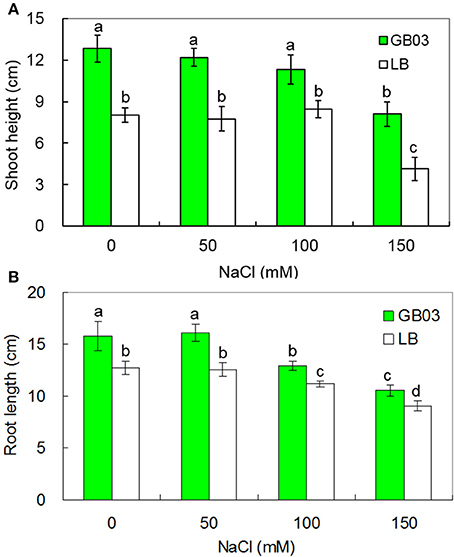
Soil salinity is an increasingly serious problem worldwide that reduces agricultural output potential. Selected beneficial soil bacteria can promote plant growth and augment tolerance to biotic and abiotic stresses. Bacillus subtilis strain GB03 has been shown to confer growth promotion and abiotic stress tolerance in the model plant Arabidopsis thaliana. Here we examined the effect of this beneficial soil bacterium on salt tolerance in the legume forage crop, white clover. Plants of white clover (Trifolium repens L. cultivar Huia) were grown from seeds with or without soil inoculation of the beneficial soil bacterium Bacillus subtilis GB03 supplemented with 0, 50, 100, or 150 mM NaCl water into soil. Growth parameters, chlorophyll content, malondialdehyde (MDA) content and osmotic potential were monitored during the growth cycle. Endogenous Na+ and K+ contents were determined at the time of harvest. White clover plants grown in GB03-inoculated soil were significantly larger than non-inoculated controls with respect to shoot height, root length, plant biomass, leaf area and chlorophyll content; leaf MDA content under saline condition and leaf osmotic potential under severe salinity condition (150 mM NaCl) were significantly decreased. Furthermore, GB03 significantly decreased shoot and root Na+ accumulation and thereby improved K+/Na+ ratio when GB03-inoculated plants were grown under elevated salt conditions. The results indicate that soil inoculation with GB03 promotes white clover growth under both non-saline and saline conditions by directly or indirectly regulating plant chlorophyll content, leaf osmotic potential, cell membrane integrity and ion accumulation.
|
|
Scooped by
Jean-Michel Ané
October 14, 2014 2:35 PM
|
Arbuscular mycorrhizal fungi (AMF) can form complex networks in the soil that connect different host plants. Previous studies have focused on the effects of these networks on individual hosts and host communities. However, very little is known about how different host species affect the success of the fungal network itself.
Given the potentially strong selection pressure against hosts that invest in a fungal network which benefits their competitors, we predict that the presence of multiple host species negatively affects the growth of the extraradical network.
We designed an experiment using an in vitro culture approach to investigate the effect of different hosts (carrot, chichory and medicago) on the formation of a common mycelial network. In vitro root cultures, each inoculated with their own fungal network, were grown in a double split plate design with two host compartments and a common central compartment where fungal networks could form.
We found that the size of fungal networks differs depending on the social environment of the host. When host species were propagated in a mixed species environment, the fungal abundance was significantly reduced compared to monoculture predictions. Our work demonstrates how host-to-host conflict can influence the abundance of the fungal partner.
|


 Scoop.it!