Food insecurity and malnutrition are prominent issues for this century. As the world’s population continues to increase, ensuring that the earth has enough food that is nutritious too will be a difficult task. Today one billion people of the world are undernourished and more than a third are malnourished. Moreover, the looming threat of climate change is exasperating the situation even further. At the same time, the total acreage of arable land that could support agricultural use is already near its limits, and may even decrease over the next few years due to salination and desertification patterns resulting from climate change. Clearly, changing the way we think about crop production must take place on multiple levels. New varieties of crops must be developed which can produce higher crop yields with less water and fewer agricultural inputs. Besides this, the crops themselves must have improved nutritional qualities or become biofortified in order to reduce the chances of ‘hidden hunger’ resulting from malnourishment. It is difficult to envision the optimum way to increase crop production using a single uniform strategy. Instead, a variety of approaches must be employed and tailored for any particular agricultural setting. New high-impact technologies such as green biotechnology, biofortification, and nanotechnology offer opportunities for boosting agricultural productivity and enhancing food quality and nutritional value with eco-friendly manner. These agricultural technologies currently under development will renovate our world to one that can comfortably address the new directions, our planet will take as a result of climate change.
Key message The ICP Forests network can be a platform for large-scale mycorrhizal studies. Mapping and monitoring of mycorrhizas have untapped potential to inform science, management, conservation and policy regarding distributions, diversity hotspots, dominance and rarity, and indicators of forest changes. Context A dearth of information about fungi at large scales has severely constrained scientific, forest management, fungal conservation and environmental policy efforts worldwide. Nonetheless, fungi fulfil critical functional roles in our changing environments and represent a considerable proportion of terrestrial biodiversity. Mycorrhizal fungi are increasingly viewed as a major functional guild across forest ecosystems, and our ability to study them is expanding rapidly. Aims This study aimed to discuss the potential for starting a mycorrhizal monitoring programme built upon the existing forest monitoring network, raise questions, propose hypotheses and stimulate further discussion. Results An overview of the state-of-the-art regarding forest ectomycorrhizal ecology raises questions and recommendations for scaling up mycorrhizal assessments aimed at informing a variety of stakeholders, with a new focus on conservation and policy. Conclusion Fungal research and conservation are areas that can be informed by ICP Forests and may lead to useful spin-offs; research linked to long-term forest monitoring plots will enhance the relevance of science and conservation.
Soil microorganisms are sensitive to environment disturbances, and such alterations have consequences on microbial diversity and functions. Our hypothesis is that alpha diversity of microbial communities and functional diversity decrease from undisturbed to disturbed soils, with consequences for functional redundancy in the soil ecosystem. To test this hypothesis, we used soil DNA shotgun metagenomics approach to assess the soil microbiome in a chronosequence of land-use from a native tropical forest, followed by deforestation and cultivation of soybean croplands and pasture in different seasons. Agriculture and pasture soils were among the most diverse and presented higher functional redundancy, which is important to maintain the ecosystem functioning after the forest conversion. On the other hand, the ecosystem equilibrium in forest is maintained based on a lower alpha diversity but higher abundance of microorganisms. Our results indicate that land-use change alters the structure and composition of microbial communities; however, ecosystem functionality is overcome by different strategies based on the abundance and diversity of the communities.
Glacier chronosequences are important sites for primary succession studies and have yielded well-defined primary succession models for plants that identify environmental resistance as an important determinant of the successional trajectory. Whether plant-associated fungal communities follow those same successional trajectories and also respond to environmental resistance is an open question. In this study, 454 amplicon pyrosequencing was used to compare the root-associated fungal communities of the ectomycorrhizal (ECM) herb Bistorta vivipara along two primary succession gradients with different environmental resistance (alpine versus arctic) and different successional trajectories in the vascular plant communities (directional replacement versus directional non-replacement). At both sites, the root-associated fungal communities were dominated by ectomycorrhizal basidiomycetes and community composition shifted with increasing time since deglaciation. However, the fungal community's successional trajectory mirrored the pattern observed in the surrounding plant community at both sites: the alpine site displayed a directional-replacement successional trajectory, and the arctic site displayed a directional-non-replacement successional trajectory. This suggests that, like in plant communities, environmental resistance is key in determining succession patterns in root-associated fungi. The need for further replicated study, including in other host species, is emphasized.
With the number of sequenced plant genomes growing, the number of predicted genes and functional annotations is also increasing. The association between genes and phenotypic traits is currently of great interest. Unfortunately, the information available today is widely scattered over a number of different databases. Information retrieval (IR) has become an all-encompassing bioinformatics methodology for extracting knowledge from complex, heterogeneous and distributed databases, and therefore can be a useful tool for obtaining a comprehensive view of plant genomics, from genes to traits. Here we describe LAILAPS (http://lailaps.ipk-gatersleben.de), an IR system designed to link plant genomic data in the context of phenotypic attributes for a detailed forward genetic research. LAILAPS comprises around 65 million indexed documents, encompassing >13 major life science databases with around 80 million links to plant genomic resources. The LAILAPS search engine allows fuzzy querying for candidate genes linked to specific traits over a loosely integrated system of indexed and interlinked genome databases. Query assistance and an evidence-based annotation system enable time-efficient and comprehensive information retrieval. An artificial neural network incorporating user feedback and behavior tracking allows relevance sorting of results. We fully describe LAILAPS’s functionality and capabilities by comparing this system’s performance with other widely used systems and by reporting both a validation in maize and a knowledge discovery use-case focusing on candidate genes in barley.
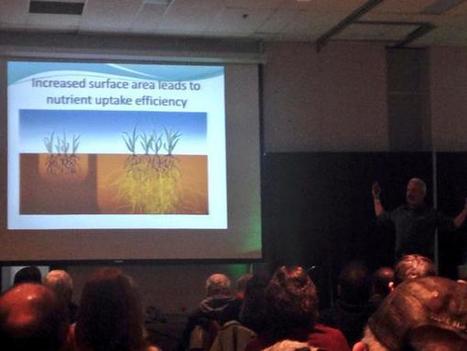
Larry Simpson, director of education and training for Mycorrhizal Applications, discusses the value of mycorrhizal applications in no-tilled fields. http://w...
Association of Vibrio cholerae with chitinous surfaces of zooplankton is important for its persistence in marine environments, as it provides accessibility to nutrients and resistance to stresses. Predation by heterotrophic protists has a major impact on the survival of V. cholerae. V. cholerae forms biofilms as its main defensive strategy, and quorum sensing (QS) additionally regulates the production of antiprotozoal factors. The role of chitin and QS regulation in V. cholerae grazing resistance was investigated by exposing V. cholerae wild-type (WT) and QS mutant biofilms grown on chitin flakes to the bacteriotrophic, surface-feeding flagellate Rhynchomonas nasuta. V. cholerae formed more biofilm biomass on chitin flakes compared with nonchitinous surfaces. The growth of R. nasuta was inhibited by WT biofilms grown on chitin flakes, whereas the inhibition was attenuated in QS mutant biofilms. The chitin-dependent toxicity was also observed when the V. cholerae biofilms were developed under continuous flow or grown on a natural chitin source, the exoskeleton of Artemia. In addition, the antiprotozoal activity and ammonium concentration of V. cholerae biofilm supernatants were quantified. The ammonium levels (3.5 mm) detected in the supernatants of V. cholerae WT biofilms grown on chitin flakes were estimated to reduce the number of R. nasuta by >80% in add-back experiments, and the supernatant of QS mutant biofilms was less toxic owing to a decrease in ammonium production. Transcriptomic analysis revealed that the majority of genes involved in chitin metabolism and chemotaxis were significantly downregulated in QS mutant biofilms when grown on chitin compared with the WT biofilms.
Given the attention drawn since several decades by arbuscular mycorrhizal fungi (AMF) as potential biological alternatives to chemicals in a low-input agriculture, much effort has been spent in the investigation of mechanisms influencing the dynamics inside AMF communities. In the present study we evaluated the influence of different crop rotations on the AMF soil community, after a 50 y long-term field experiment established at Martonvásár, Hungary. Four types of crop rotation were chosen for sampling: corn monocropping, corn-alfalfa, corn-wheat, and corn-spring barley-peas-wheat. Community composition of AMF in soil was analyzed with a molecular approach amplifying a portion of 28S rDNA. The crop rotation practice didn’t show an influence on identity of the species composing AMF assemblages, but on the other hand seemed to affect positively the true diversity, defined as number of MOTUs present in the communities.
Due to increased levels of heterozygosity, polyploids are expected to have a greater ability to adapt to different environments than their diploid ancestors. While this theoretical pattern has been suggested repeatedly, studies comparing adaptability to changing conditions in diploids and polyploids are rare. The aim of the study was to determine the importance of environmental conditions of origin as well as target conditions on performance of two Anthericum species, allotetraploid A. liliago and diploid A. ramosum and to explore whether the two species differ in the ability to adapt to these environmental conditions. Specifically, we performed a common garden experiment using soil from 6 localities within the species’ natural range, and we simulated the forest and open environments in which they might occur. We compared the performance of diploid A. ramosum and allotetraploid A. liliago originating from different locations in the different soils. The performance of the two species was not affected by simulated shading but differed strongly between the different target soils. Growth of the tetraploids was not affected by the origin of the plants. In contrast, diploids from the most nutrient poor soil performed best in the richest soil, indicating that diploids from deprived environments have an increased ability to acquire nutrients when available. They are thus able to profit from transfer to novel nutrient rich environments. Therefore, the results of the study did not support the general expectation that the polyploids should have a greater ability than the diploids to adapt to a wide range of conditions. In contrast, the results are in line with the observation that diploids occupy a wider range of environments than the allotetraploids in our system.
Mycorrhizal functioning in the fern Ophioglossum is complex and poorly understood. It is unknown whether mature O. vulgatum sporophytes form mutualistic associations with fungi of the Glomeromycota and with what specificity. Are green sporophytes able to ‘repay’ fungal carbon (C) invested in them by mycorrhizal partners during the initially heterotrophic gametophyte and early sporophyte stages of the lifecycle? We identified fungal partners of O. vulgatum sporophytes using molecular techniques and supplied them with 33P-orthophosphate and O. vulgatum sporophytes with 14CO2. We traced the movement of fungal-acquired nutrients and plant-fixed C between symbionts and analysed natural abundance 13C and 15N isotope signatures to assess nutritional interactions. We found fungal specificity of O. vulgatum sporophytes towards a mycorrhizal fungus closely related to Glomus macrocarpum. Our radioisotope tracers revealed reciprocal C-for-phosphorus exchange between fern sporophytes and fungal partners, despite competition from surrounding vegetation. Monocultures of O. vulgatum were enriched in 13C and 15N, providing inconclusive evidence of mycoheterotrophy when experiencing competition from the surrounding plant community. We show mutualistic and specific symbiosis between a eusporangiate fern and fungi of the Glomeromycota. Our findings suggest a ‘take now, pay later’ strategy of mycorrhizal functioning through the lifecycle O. vulgatum, from mycoheterotrophic gametophyte to mutualistic aboveground sporophyte.
In an effort to improve plant growth and productivity by increasing the amount of N2-fixation, a two-year field experiment was designed to study the combined effect of potassium and two strains of Rhizobium leguminosarum (L-1897 and L-2097) on quantitative and qualitative traits of lentil (Lens culinaris Medikus). Bacterial inoculation and potassium application (0 kg K ha-1 and 50 kg K ha-1) caused measurable changes in the observed characteristics in both years of study. In addition to growth characteristics, chemical- and bio-fertilizer treatments also affected the nitrogen and potassium concentration in seeds and seed protein content. Yield and yield characteristics improved more with the combined application as compared with a single treatment and control. Among the bacterial strains, L-1897 along with potassium fertilization resulted in highest yield. We conclude that optimum potassium fertilization is required for the favorable and sustained action of Rhizobium to influence growth characteristics and qualitative traits and hence, yield and yield components.
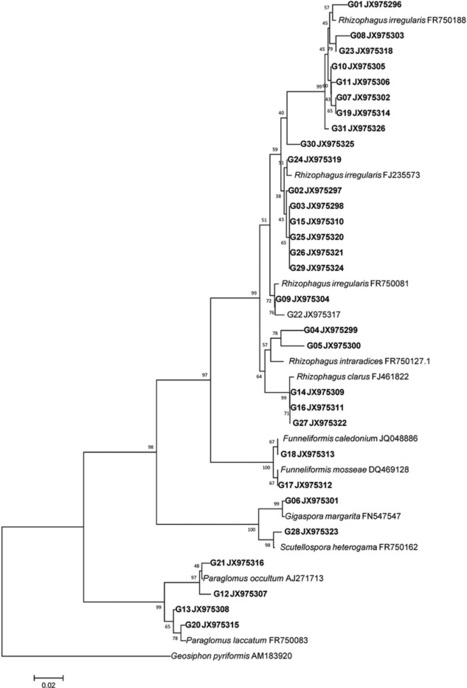
In this study, we examined arbuscular mycorrhizal fungal (AMF) community structure colonizing field-cultivated ginseng roots according of different ages, such as 1- to 5-year-old plant, collected from Geumsan-gun, Korea. A total of seven AMF species namely, Funnelliformis caledonium, F. moseae, Gigaspora margarita, Paraglomus laccatum, P. occultum, Rhizophagus irregularis, and Scutellospora heterogama were identified from the roots using cloning, PCR-restriction fragment length polymorphism and sequence analysis of the large subunit region in rDNA. AMF species diversity in the ginseng roots decreased with the increase in root age because of the decreased species evenness. In addition, the community structures of AMF in the roots became more uniform. These results suggest that the age of ginseng affects mycorrhizal colonization and its community structure.
Actinorhizal plant growth in pioneer ecosystems depends on the symbiosis with the nitrogen-fixing actinobacterium Frankia cells that are housed in special root organs called nodules. Nitrogen fixation occurs in differentiated Frankia cells known as vesicles. Vesicles lack a pathway for assimilating ammonia beyond the glutamine stage and are supposed to transfer reduced nitrogen to the plant host cells. However, a mechanism for the transfer of nitrogen-fixation products to the plant cells remains elusive. Here, new elements for this metabolic exchange are described. We show that Alnus glutinosa nodules express defensin-like peptides, and one of these, Ag5, was found to target Frankia vesicles. In vitro and in vivo analyses showed that Ag5 induces drastic physiological changes in Frankia, including an increased permeability of vesicle membranes. A significant release of nitrogen-containing metabolites, mainly glutamine and glutamate, was found in N2-fixing cultures treated with Ag5. This work demonstrates that the Ag5 peptide is central for Frankia physiology in nodules and uncovers a novel cellular function for this large and widespread defensin peptide family.
Dans un article du journal Le Monde paru en 2014 intitulé «Twitter et les chercheurs, l’exception française?», Sylvain Deville s’étonnait de la faible place qu’occupe l’oiseau bleu chez les chercheurs français par rapport à nos collègues anglo-saxons. Notre rapport à la communication en général serait lacunaire, pour des raisons tant culturelles qu’institutionnelles.
Aujourd’hui, grâce à En Direct Du Labo, nous vous proposons de participer à changer cet état de fait en constituant la première communauté de chercheurs francophones ouverts à la communication scientifique sur Twitter!
Pourquoi utiliser Twitter lorsqu’on est un(e) chercheur(se)? Si vous pensez que vous n’avez rien à y gagner, voici quelques raisons qui pourraient vous faire changer d’avis: ....
The remediation of metal-contaminated soils by phytoextraction depends on plant growth and plant metal accessibility. Soil microorganisms can affect the accumulation of metals by plants by either directly or indirectly stimulating plant growth and activity or by (im)mobilizing and/or complexing metals. Understanding the intricate interplay of metal-accumulating plants with their rhizosphere microbiome is an important step towards the application and optimization of phytoremediation. We studied the effect of a ‘native’ compared to a strongly disturbed (gamma-irradiated) soil microbial community on cadmium and zinc accumulation by the plant Arabidopsis halleri in soil microcosm experiments. A. halleri accumulated 100% more cadmium and 15% more zinc when grown on the untreated compared to the gamma-irradiated soil. Gamma-irradiation neither affected plant growth nor the 1 M HCl-extractable metal content of the soil. However, it strongly altered soil microbial community composition and overall cell numbers. Pyrosequencing of 16S rRNA gene amplicons of DNA extracted from rhizosphere samples of A. halleri identified microbial taxa (Lysobacter, Streptomyces, Agromyces, Nitrospira, Candidatus Chloracidobacterium) of higher relative sequence abundance in the rhizospheres of A. halleri plants grown on untreated compared to gamma-irradiated soil leading to hypotheses on their potential effect on plant metal uptake. However, further experimental evidence is required, wherefore we discuss different mechanisms of interaction of A. halleri with its rhizosphere microbiome that might have directly or indirectly affected plant metal accumulation. Deciphering the complex interactions between A. halleri and individual microbial taxa will help to further develop soil metal phytoextraction as efficient and sustainable remediation strategy.
We developed the PHIV-RootCell software to quantify anatomical traits of rice roots transverse section images. Combined with an efficient root sample processing method for image acquisition, this program permits supervised measurements of areas (those of whole root section, stele, cortex, and central metaxylem vessels), number of cell layers and number of cells per cell layer. The PHIV-RootCell toolset runs under ImageJ, an independent operating system that has a license-free status. To demonstrate the usefulness of PHIV-RootCell, we conducted a genetic diversity study and an analysis of salt stress responses of root anatomical parameters in rice (Oryza sativa L.). Using 16 cultivars, we showed that we could discriminate between some of the varieties even at the 6 day-olds stage, and that tropical japonica varieties had larger root sections due to an increase in cell number. We observed, as described previously, that root sections become enlarged under salt stress. However, our results show an increase in cell number in ground tissues (endodermis and cortex) but a decrease in external (peripheral) tissues (sclerenchyma, exodermis, and epidermis). Thus, the PHIV-RootCell program is a user-friendly tool that will be helpful for future genetic and physiological studies that investigate root anatomical trait variations.
Symbioses represent a frequent and successful lifestyle on earth and lichens are one of their classic examples. Recently, bacterial communities were identified as stable, specific and structurally integrated partners of the lichen symbiosis, but their role has remained largely elusive in comparison to the well-known functions of the fungal and algal partners. We have explored the metabolic potentials of the microbiome using the lung lichen Lobaria pulmonaria as the model. Metagenomic and proteomic data were comparatively assessed and visualized by Voronoi treemaps. The study was complemented with molecular, microscopic and physiological assays. We have found that more than 800 bacterial species have the ability to contribute multiple aspects to the symbiotic system, including essential functions such as (i) nutrient supply, especially nitrogen, phosphorous and sulfur, (ii) resistance against biotic stress factors (that is, pathogen defense), (iii) resistance against abiotic factors, (iv) support of photosynthesis by provision of vitamin B12, (v) fungal and algal growth support by provision of hormones, (vi) detoxification of metabolites, and (vii) degradation of older parts of the lichen thallus. Our findings showed the potential of lichen-associated bacteria to interact with the fungal as well as algal partner to support health, growth and fitness of their hosts. We developed a model of the symbiosis depicting the functional multi-player network of the participants, and argue that the strategy of functional diversification in lichens supports the longevity and persistence of lichens under extreme and changing ecological conditions.
How do scientists decide where to submit manuscripts? Many factors influence this decision, including prestige, acceptance probability, turnaround time, target audience, fit, and impact factor. Here, we present a framework for evaluating where to submit a manuscript based on the theory of Markov decision processes. We derive two models, one in which an author is trying to optimally maximize citations and another in which that goal is balanced by either minimizing the number of resubmissions or the total time in review. We parameterize the models with data on acceptance probability, submission-to-decision times, and impact factors for 61 ecology journals. We find that submission sequences beginning with Ecology Letters, Ecological Monographs, or PLOS ONE could be optimal depending on the importance given to time to acceptance or number of resubmissions. This analysis provides some guidance on where to submit a manuscript given the individual-specific values assigned to these disparate objectives.
Many studies have examined the role of mean climate change in agriculture, but an understanding of the influence of inter-annual climate variations on crop yields in different regions remains elusive. We use detailed crop statistics time series for ~13,500 political units to examine how recent climate variability led to variations in maize, rice, wheat and soybean crop yields worldwide. While some areas show no significant influence of climate variability, in substantial areas of the global breadbaskets, >60% of the yield variability can be explained by climate variability. Globally, climate variability accounts for roughly a third (~32–39%) of the observed yield variability. Our study uniquely illustrates spatial patterns in the relationship between climate variability and crop yield variability, highlighting where variations in temperature, precipitation or their interaction explain yield variability. We discuss key drivers for the observed variations to target further research and policy interventions geared towards buffering future crop production from climate variability.
Growth in sucrose medium was previously found to trigger the expression of functions involved in the plant associated life style of the endophytic bacterium Enterobacter sp. 638. Therefore, comparative transcriptome analysis between cultures grown in sucrose or lactate medium was used to gain insights in the expression levels of bacterial functions involved in the endophytic life style of strain 638. Growth on sucrose as a carbon source resulted in major changes in cell physiology, including a shift from a planktonic life style to the formation of bacterial aggregates. This shift was accompanied by a decrease in transcription of genes involved in motility (e.g. flagella biosynthesis) and an increase in the transcription of genes involved in colonization, adhesion and biofilm formation. The transcription levels of functions previously suggested as being involved in endophytic behavior and functions responsible for plant growth promoting properties, including the synthesis of indole-acetic acid, acetoin and 2,3-butanediol, also increased significantly for cultures grown in sucrose medium. Interestingly, despite an abundance of essential nutrients transcription levels of functions related to uptake and processing of nitrogen and iron became increased for cultures grown on sucrose as sole carbon source. Transcriptome data were also used to analyze putative regulatory relationships. In addition to the small RNA csrABCD regulon, which seems to play a role in the physiological adaptation and possibly the shift between free-living and plant-associated endophytic life style of Enterobacter sp. 638, our results also pointed to the involvement of rcsAB in controlling responses by Enterobacter sp. 638 to a plant-associated life style. Targeted mutagenesis was used to confirm this role and showed that compared to wild-type Enterobacter sp. 638 a ΔrcsB mutant was affected in its plant growth promoting ability.
Arbuscular mycorrhizal (AM) fungi play a prominent role in plant nutrition by supplying mineral nutrients, particularly inorganic phosphate (Pi), and also constitute an important carbon sink. AM stimulates plant growth and development, but the underlying mechanisms are not well understood. In this study, Medicago truncatula plants were grown with Rhizophagus irregularis BEG141 inoculum (AM), mock inoculum (control) or with Pi fertilization. We hypothesized that AM stimulates plant growth through either modifications of leaf anatomy or photosynthetic activity per leaf area. We investigated whether these effects are shared with Pi fertilization, and also assessed the relationship between levels of AM colonization and these effects. We found that increased Pi supply by either mycorrhization or fertilization led to improved shoot growth associated with increased nitrogen uptake and carbon assimilation. Both mycorrhized and Pi-fertilized plants had more and longer branches with larger and thicker leaves than the control plants, resulting in an increased photosynthetically active area. AM-specific effects were earlier appearance of the first growth axes and increased number of chloroplasts per cell section, since they were not induced by Pi fertilization. Photosynthetic activity per leaf area remained the same regardless of type of treatment. In conclusion, the increase in growth of mycorrhized and Pi-fertilized Medicago truncatula plants is linked to an increase in the surface for sunlight capture, hence increasing their photosynthetic production, rather than to an increase in the photosynthetic activity per leaf area.
The protein kinase (PK) gene family is one of the largest and most highly conserved gene families in plants and plays a role in nearly all biological functions. While a large number of genes have been predicted to encode PKs in soybean, a comprehensive functional classification and global analysis of expression patterns of this large gene family is lacking. In this study, we identified the entire soybean PK repertoire or kinome, which comprised 2166 putative PK genes, representing 4.67% of all soybean protein-coding genes. The soybean kinome was classified into 19 groups, 81 families, and 122 subfamilies. The receptor-like kinase (RLK) group was remarkably large, containing 1418 genes. Collinearity analysis indicated that whole-genome segmental duplication events may have played a key role in the expansion of the soybean kinome, whereas tandem duplications might have contributed to the expansion of specific subfamilies. Gene structure, subcellular localization prediction, and gene expression patterns indicated extensive functional divergence of PK subfamilies. Global gene expression analysis of soybean PK subfamilies revealed tissue- and stress-specific expression patterns, implying regulatory functions over a wide range of developmental and physiological processes. In addition, tissue and stress co-expression network analysis uncovered specific subfamilies with narrow or wide interconnected relationships, indicative of their association with particular or broad signalling pathways, respectively. Taken together, our analyses provide a foundation for further functional studies to reveal the biological and molecular functions of PKs in soybean.
To get content containing either thought or leadership enter:
To get content containing both thought and leadership enter:
To get content containing the expression thought leadership enter:
You can enter several keywords and you can refine them whenever you want. Our suggestion engine uses more signals but entering a few keywords here will rapidly give you great content to curate.


 Your new post is loading...