Legumes are major contributors to sustainable agriculture; their key feature is their ability to fix atmospheric nitrogen through symbiotic nitrogen fixation. Legumes are often recalcitrant to regeneration and transformation by Agrobacterium tumefaciens; however, A. rhizogenes-mediated root transformation and composite plant generation are rapid and convenient alternatives to study root biology, including root nodule symbiosis. RNA interference (RNAi), coupled with A. rhizogenes-mediated root transformation, has been very successfully used for analyses of gene function by reverse genetics. Besides being applied to model legumes (Medicago truncatula and Lotus japonicus), this method has been adopted for several other legumes due to the ease and relative speed with which transgenic roots can be generated. Several protocols for hairy root transformation have been published. Here we describe an improved hairy root transformation protocol and the methods to study nodulation in Medicago. We also highlight the major differences between our protocol and others, and key steps that need to be adjusted in order to translate this method to other legumes.
We observed that the maize pathogenic fungus Ustilago maydis grew in nitrogen (N)-free media at a rate similar to that observed in media containing ammonium nitrate, suggesting that it was able to fix atmospheric N2. Because only prokaryotic organisms have the capacity to reduce N2, we entertained the possibility that U. maydis was associated with an intracellular bacterium. The presence of nitrogenase in the fungus was analyzed by acetylene reduction, and capacity to fix N2 by use of 15N2. Presence of an intracellular N2-fixing bacterium was analyzed by PCR amplification of bacterial 16S rRNA and nifH genes, and by microscopic observations. Nitrogenase activity and 15N incorporation into the cells proved that U. maydis fixed N2. Light and electron microscopy, and fluorescence in situ hybridization (FISH) experiments revealed the presence of intracellular bacteria related to Bacillus pumilus, as evidenced by sequencing of the PCR-amplified fragments. These observations reveal for the first time the existence of an endosymbiotic N2-fixing association involving a fungus and a bacterium.
Symbiosis, defined by DeBary as ‘the living together of unlike organisms’, can increase the collective problem solving power of biological systems. The best-known and most charismatic examples of symbiosis usually involve microorganisms and eukaryotic cells that exchange nutritional, energetic or protective services. In these cases, the members of the symbiosis are clearly unlike each other; the host is a eukaryote, the symbiont a bacterium. But it is becoming increasingly clear that microbes form metabolically interdependent associations at the population and community levels. These interdependencies have the potential to direct the evolution of microbial lineages and likely play integral roles in shaping community assembly and ecosystem function. Here, we shine a spotlight on converging lines of evidence consistent with this view and consider future innovation at the interface of microbial ecology and synthetic biology that builds on cooperative design.
Fungi are ubiquitous and important contributors to soil nutrient cycling, playing a vital role in C, N and P turnover, with many fungi having direct beneficial relationships with plants. However, the factors that modulate the soil fungal community are poorly understood. We studied the degree to which the composition of tree species affected the soil fungal community structure and diversity by pyrosequencing the 28S rRNA gene in soil DNA. We were also interested in whether intercropping (mixed plantation of two plant species) could be used to select fungal species. More than 50,000 high quality sequences were analyzed from three treatments: monoculture of Eucalyptus; monoculture of Acacia mangium; and a mixed plantation with both species sampled 2 and 3 years after planting. We found that the plant type had a major effect on the soil fungal community structure, with 75% of the sequences from the Eucalyptus soil belonging to Basidiomycota and 19% to Ascomycota, and the Acacia soil having a sequence distribution of 28% and 62%, respectively. The intercropping of Acacia mangium in a Eucalyptus plantation significantly increased the number of fungal genera and the diversity indices and introduced or increased the frequency of several genera that were not found in the monoculture cultivation samples. Our results suggest that management of soil fungi is possible by manipulating the composition of the plant community, and intercropped systems can be a means to achieve that.
Background MicroRNAs (miRNAs) are non-coding RNA molecules which have recently emerged as important gene regulators in plants and their gene expression analysis is becoming increasingly important. miRNAs regulate gene expression at the post-transcriptional level by translational repression or target degradation of specific mRNAs and gene silencing. In order to profile the microtranscriptome of Arabidopsis thaliana leaf and callus tissues in response to bacterial lipopolysaccharide (LPS), small RNA libraries were constructed at 0 and 3 h post induction with LPS and sequenced by Illumina sequencing technology. Results Differential regulation of subset of miRNAs in response to LPS treament was observed. Small RNA reads were mapped to the miRNA database and 358 miRNAs belonging to 49 miRNA families in the callus tissues and 272 miRNAs belonging to 40 miRNA families in the leaf tissues were identified. Moreover, target genes for all the identified miRNAs families in the leaf tissues and 44 of the 49 miRNAs families in the callus tissues were predicted. The sequencing analysis showed that in both callus and leaf tissues, various stress regulated-miRNAs were differentially expressed and real time PCR validated the expression profile of miR156, miR158, miR159, miR169, miR393, miR398, miR399 and miR408 along with their target genes. Conclusion A. thaliana callus and leaf callus tissues respond to LPS as a microbe-associated molecular pattern molecule through dynamic changes to the microtranscriptome associated with differential transcriptional regulation in support of immunity and basal resistance.
Understanding the dynamics of water distribution in soil is crucial for enhancing our knowledge of managing soil and water resources. The application of X-ray computed tomography (CT) to the plant and soil sciences is now well established. However, few studies have utilized the technique for visualizing water in soil pore spaces. Here this method is utilized to visualize the water in soil in situ and in three-dimensions at successive reductive matric potentials in bulk and rhizosphere soil. The measurements are combined with numerical modelling to determine the unsaturated hydraulic conductivity, providing a complete picture of the hydraulic properties of the soil. The technique was performed on soil cores that were sampled adjacent to established roots (rhizosphere soil) and from soil that had not been influenced by roots (bulk soil). A water release curve was obtained for the different soil types using measurements of their pore geometries derived from CT imaging and verified using conventional methods, such as pressure plates. The water, soil, and air phases from the images were segmented and quantified using image analysis. The water release characteristics obtained for the contrasting soils showed clear differences in hydraulic properties between rhizosphere and bulk soil, especially in clay soil. The data suggest that soils influenced by roots (rhizosphere soil) are less porous due to increased aggregation when compared with bulk soil. The information and insights obtained on the hydraulic properties of rhizosphere and bulk soil will enhance our understanding of rhizosphere biophysics and improve current water uptake models.
Studies on the effects of transgenes in soybean [Glycine max (L.) Merr.] and the associated use of specific herbicides on biological nitrogen fixation (BNF) are still few, although it is important to ensure minimal impacts on benefits provided by the root-nodule symbiosis. Cultivance CV127 transgenic soybean is a cultivar containing the ahas gene, which confers resistance to herbicides of the imidazolinone group. The aim of this study was to assess the effects of the ahas transgene and of imidazolinone herbicide on BNF parameters and soybean yield. A large-scale set of field experiments was conducted, for three cropping seasons, at nine sites in Brazil, with a total of 20 trials. The experiment was designed as a completely randomized block with four replicates and the following treatments: (T1) near isogenic transgenic soybean (Cultivance CV127) + herbicide of the imidazolinone group (imazapyr); (T2) near isogenic transgenic soybean + conventional herbicides; and (T3) parental conventional soybean (Conquista) + conventional herbicides; in addition, two commercial cultivars were included, Monsoy 8001 (M-SOY 8001) (T4), and Coodetec 217 (CD 217) (T5). At the R2 growth stage, plants were collected and BNF parameters evaluated. In general, there were no effects on BNF parameters due to the transgenic trait or associated with the specific herbicide. Similarly, at the final harvest, no grain-yield effects were detected related to the ahas gene or to the specific herbicide. However, clear effects on BNF and grain yield were attributed to location and cropping season.
Plant–herbivore interactions and mycorrhizal symbiosis are important associations in grasslands that may interact due to their relationships with a common host plant and its resources. However, few studies have explored the effect of mycorrhizal symbiosis on plant–herbivore interactions. An understanding of the complex interactions between host plants, mycorrhizal fungi, and insect herbivores is enhanced by in situ examinations of the three parties acting simultaneously. The objective of this study was to quantify the effects of mycorrhizal symbiosis on insect herbivory and the host-plant community in tallgrass prairie. We used long-term mycorrhizal and fungicide-treated plots at Konza Prairie Biological Station (Manhattan, KS) to determine whether insect herbivory is altered by suppression of mycorrhizal fungi. Herbivory on plants in mycorrhizal control plots was greater than in fungicide-treated plots, and for one plant guild, C3 graminoids, the difference was significant. In fungicide-treated plots, plant diversity was significantly greater and herbivory was negatively correlated with plant species diversity. Differences in productivity of plant functional groups due to mycorrhizal symbiosis may be a key factor in patterns of insect herbivory. The results indicate that mycorrhizal symbiosis has diverse consequences, influencing the abundance and the quality of host plants in tallgrass prairie, as well as their responses to consumers.
A long-term phosphorus study by Agriculture and Agri-Food Canada is in the works.
Without adequate phosphorus, plant growth and crop yield are reduced. As plants grow, they remove phosphorus from the soil, and as a result fertilizers containing phosphorus compounds are often added to soil.
However, fertilizer phosphorus added beyond the crop’s yearly needs can remain in the soil, and can become more tightly bound to soil than recently added fertilizer. Not much is known about the availability of “residual phosphorus” or “legacy phosphorus” to plants.
Aim Fungal symbionts are ubiquitous in plants and can mitigate abiotic stressors associated with climate change. Predicting fungal symbiont distributions under future climates first requires knowledge of current distributions and their potential drivers.
Location We documented colonization by fungal symbionts in perennial, cool-season grasses along altitudinal gradients in the Rocky Mountains of Colorado, USA.
Methods Across seven replicate altitudinal gradients, spanning c. 1400 vertical meters, we scored fungal colonization for 46 grass species. We documented altitudinal clines in colonization by both above-ground and below-ground fungal symbionts for the first time, including localized foliar endophytes (LFE) and systemic endophytes (epichloae) in leaves and arbuscular mycorrhizal fungi (AMF) and dark septate endophytes (DSE) in roots. For a subset of 16 well-sampled grass species, we used model selection procedures to evaluate the relative importance of geography, edaphic factors and host plant identity. We also assessed the influence of host phylogenetic relatedness and colonization by co-infecting fungi.
Results Levels of fungal colonization varied strongly with host plant identity, but the effects of particular host species were not consistent across fungal groups. In addition to the influence of host identity, epichloae colonization declined with elevation and varied with geography (latitude/longitude) and edaphic factors. Geography and collection date were important predictors of LFE colonization, with higher colonization later in the growing season. Colonization estimates for the obligately plant-associated fungi (epichloae, AMF) were phylogenetically conserved across the grass supertree. Positive correlations between AMF and DSE, which remained even after accounting for host plant relatedness, suggested possible synergisms between these fungal groups.
Main conclusions Our survey showed greater host specificity in patterns of fungal colonization than prior reports and revealed that different fungal symbiont groups do not share similar drivers. Conserving plant–fungal symbioses under future climates may require unique strategies for different plant species and fungal symbiont types.
Nodulation symbiosis is a key component of natural ecosystems, and the nitrogen-fixing ability of such symbioses can have a significant impact on the restoration of degraded ecosystems. Here, we investigated the diversity of legume-rhizobium symbioses, compared the N2-fixing efficiency of legume-rhizobium symbioses, and clarified the relationship of rhizobia, host species, and microhabitat. Eighteen potential N2-fixing species were surveyed, and only nine of them were found to be nodulated. Most of wild legumes were found to be associated with rhizobia belonging to the genus Bradyrhizobium, except for Callerya nitida, which formed associations with the genus Mesorhizobium. δ15N signatures of Derris fordii were significantly closer to zero than all the other plants tested, suggesting that the D. fordii-ISA2507 (Bradyrhizobium elkanii) symbiosis might have the highest N2-fixing efficiency of all the associations. D. fordii and its rhizobial symbionts may have potential for application in ecological restoration and agricultural production. Host species selection was the major factor, and there was no significant effect of slope position on nodulation-legume symbioses in our study area, in which altitudes ranged from 287 m to 521 m at the small scale. The Shannon diversity and the evenness of N2-fixing species (nodulated legumes) were significantly positively correlated (P < 0.05) with the Shannon and evenness across non-N2-fixing plants (non-nodulated plants), suggesting that the Bradyrhizobium-legume nodulation symbiosis plays an important role in maintaining plant community structure in this degraded ecosystem.
Legumes form a symbiosis with rhizobia in which the plant provides an energy source to the rhizobia bacteria that it uses to fix atmospheric nitrogen. This nitrogen is provided to the legume plant, allowing it to grow without the addition of nitrogen fertilizer. As part of the symbiosis, the bacteria in the infected cells of a new root organ, the nodule, are surrounded by a plant-derived membrane, the symbiosome membrane, which becomes the interface between the symbionts. Fractions containing the symbiosome membrane (SM) and material from the lumen of the symbiosome (peribacteroid space or PBS) were isolated from soybean root nodules and analyzed using non-gel proteomic techniques. Bicarbonate stripping and chloroform-methanol extraction of isolated SM were used to reduce complexity of the samples and enrich for hydrophobic integral membrane proteins. One hundred and ninety-seven proteins were identified as components of the SM, with an additional fifteen proteins identified from peripheral membrane and PBS protein fractions. Proteins involved in a range of cellular processes such as metabolism, protein folding and degradation, membrane trafficking and solute transport were identified. These included a number of proteins previously localized to the SM, such as aquaglyceroporin nodulin 26, sulfate transporters, remorin, and Rab7 homologues. Among the proteome were a number of putative transporters for compounds such as sulfate, calcium, hydrogen ions, peptide/dicarboxylate and nitrate, as well as transporters for which the substrate is not easy to predict. Analysis of the promoter activity for six genes encoding putative SM proteins showed nodule specific expression, with five showing expression only in infected cells. Localization of two proteins was confirmed using GFP-fusion experiments. The data have been deposited to the ProteomeXchange with identifier PXD001132. This proteome will provide a rich resource for the study of the legume-rhizobium symbiosis.
Plant root rhizosphere interactions with mutualistic microbes are diverse and numerous, having evolved over time in response to selective pressures on plants to attain anchorage and nutrients. These relationships can be considered to be formed through a combination of architectural connections: molecular architecture interactions that control root–microbe perception and regulate the balance between host and symbiont and developmental architecture interactions that enable the microbes to be ‘housed’ in the root and enable the exchange of compounds. Recent findings that help to understand the common architecture that exists between nodulation and mycorrhizal interactions, and how this architecture could be re-tuned to develop new symbioses, are discussed here.
Across two days, speakers ranging from diversified producers to seasoned researchers talked about the components that go into creating healthy agricultural soils. The Midwest Soil Health Summit, held Feb. 18-19 in Alexandria, was the second annual gathering to discuss ways producers can promote soil health on their farms. Though experts came from a variety of backgrounds, they all circled back to five basic soil health principles:
Chromium, specifically hexavalent chromium is one of the most toxic pollutants that are released into soils by various anthropogenic activities. It has numerous adverse effects not only on plant system but also on beneficial soil microorganisms which are the indicators of soil fertility and health. Recent emergence of phytoremediation as an environmental friendly and economical approach to decontaminate the chromium stressed soils has received wider attention. But major drawback of this process is that it takes long time. Application of multifunctional plant-growth-promoting bacteria (PGPB) exhibiting chromium resistance and reducing traits when used as bioinoculants with phytoremediating plants, has resulted in a better plant growth and chromium remediating efficiency in a short time span. PGPB improve chromium uptake by modifying root architecture, secreting metal sequestering molecules in rhizosphere and alleviating chromium induced phytotoxicity. The purpose of this review is to highlight the plant-beneficial traits of PGPB to accelerate plant-growth and concurrently ameliorate phytoremediation of chromium contaminated soils.
LysM domains, which are frequently present as repetitive entities in both bacterial and plant proteins, are known to interact with carbohydrates containing N-acetylglucosamine (GlcNAc) moieties, such as chitin and peptidoglycan. In bacteria, the functional significance of the involvement of multiple LysM domains in substrate binding has so far lacked support from high-resolution structures of ligand-bound complexes. Here, a structural study of the Thermus thermophilus NlpC/P60 endopeptidase containing two LysM domains is presented. The crystal structure and small-angle X-ray scattering solution studies of this endopeptidase revealed the presence of a homodimer. The structure of the two LysM domains co-crystallized with N-acetyl-chitohexaose revealed a new intermolecular binding mode that may explain the differential interaction between LysM domains and short or long chitin oligomers. By combining the structural information with the three-dimensional model of peptidoglycan, a model suggesting how protein dimerization enhances the recognition of peptidoglycan is proposed.
Biology rap song made for Dr. Willette's Bio 100A winter class. Bio,geo,chemistry Discipline studies involving Earth's properties Chemically, physically, eve...
Strigolactones released from plant roots trigger both seed germination of parasitic weeds such as Striga spp. and hyphal branching of the symbionts arbuscular mycorrhizal (AM) fungi. Generally, strigolactone composition in exudates is quantitatively and qualitatively different among plants, which may be involved in susceptibility and host specificity in the parasite–plant interactions. We hypothesized that difference in strigolactone composition would have a significant impact on compatibility and host specificity/preference in AM symbiosis. Strigolactones in root exudates of Striga-susceptible (Pioneer 3253) and -resistant (KST 94) maize (Zea mays) cultivars were characterized by LC-MS/MS combined with germination assay using Striga hermonthica seeds. Levels of colonization and community compositions of AM fungi in the two cultivars were investigated in field and glasshouse experiments. 5-Deoxystrigol was exuded exclusively by the susceptible cultivar, while the resistant cultivar mainly exuded sorgomol. Despite the distinctive difference in strigolactone composition, the levels of AM colonization and the community compositions were not different between the cultivars. The present study demonstrated that the difference in strigolactone composition has no appreciable impact on AM symbiosis, at least in the two maize cultivars, and further suggests that the traits involved in Striga-resistance are not necessarily accompanied by reduction in compatibility to AM fungi.
WINNIPEG, MANITOBA--(Marketwired - March 6, 2015) - Monsanto BioAg is set to introduce TagTeam® faba bean granular inoculant to growers this spring after receiving regulatory approval from the Canadian Food Inspection Agency (CFIA) last fall.
TagTeam® faba bean is a new dual action inoculant that provides balanced phosphate and nitrogen nutrition to the crop.
"TagTeam® faba bean is the only granular inoculant registered for use in faba beans in Canada and was developed with a specially-selected rhizobia strain to provide increased nitrogen fixation to the growing crop," said Darrell Wolkowski, Canadian business lead with Monsanto BioAg business based out of Saskatoon, Saskatchewan. "The rhizobia are combined with Penicillium bilaii, the active ingredient in JumpStart® inoculant, to help provide good phosphate nutrition which can result in more nodules being formed and more active nitrogen fixation."
Soybeans remove significant amounts of nutrients per bushel of grain harvested. Nutrient uptake in soybeans early in the season is relatively small. However, as they grow and develop, the daily rate of nutrient uptake increases. Soybeans need an adequate nutrient supply at each developmental stage for optimum growth. High-yielding soybeans remove substantial nutrients from the soil. This should be taken into account in an overall nutrient management plan.
A 40-bushel-per-acre soybean crop removes approximately 30 pounds of phosphorus and 50 pounds of potassium with the grain. The stover has an additional 10 pounds of phosphorus and 40 pounds of potassium which is either returned to the soil or utilized as feed. Nitrogen is supplied to soybeans mainly by nitrogen fixation, and fertilizer nitrogen application is not recommended if the plants are well nodulated. Soybeans are high in protein, which contains lots of nitrogen. The beans remove 130 pounds of nitrogen per acre, and 44 pounds with the stover. Soybeans use all the nitrogen they can fix, plus nitrogen from the pool of available nitrogen in the soil. Nitrogen fertilizer application to soybean seldom results in any yield benefit, and efforts should focus on proper inoculation.
3. Symbiosis – I think most plant scientists would agree that plants were able to colonize the land thanks to symbiotic partnerships with certain soil-dwelling fungi, which we call mycorrhizae. And many plants are able to thrive in nitrogen-poor soils thanks to nitrogen fixation resulting from a symbiosis with specific soil bacteria. But in order to form such symbiotic partnerships with such “friendly” microorganisms, plants must first turn off their defensive responses. That is, they need to be able to distinguish between “friend” and “foe” when it comes to bacteria and fung
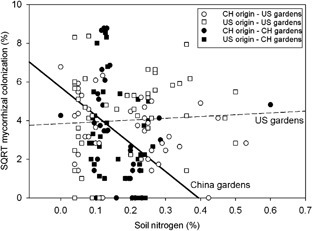
Biotic interactions involving exotic plants in their introduced ranges may differ from those of co-occurring plant species and from interactions in their native ranges. When interactions are less negative, or more positive compared to native plant species, this may increase invasion success, and differences among ranges may cause changes in exotic plant traits. Here, we investigated arbuscular mycorrhizae (AM) associated with Triadica sebifera seedlings from populations in native (China) and introduced ranges (US) and with seedlings from US and China species within three co-occurring genera (Liquidambar, Ulmus, Celtis) grown in multiple common gardens in both ranges. No general pattern of higher or lower AM colonization was found in the introduced range for China and US Celtis, Liquidambar, or Ulmus species. However, AM colonization was significantly higher for Triadica than for other genera, particularly in the introduced range, suggesting AM may improve Triadica's invasion success. Triadica AM colonization was higher in US than China gardens, decreased with increasing soil nitrogen in China, but was independent of soil nitrogen in the US. This might reflect a different effect of soil fertility on this mutualism among ranges. Introduced Triadica populations had higher AM colonization than native populations, particularly in US gardens, implying a possible advantage from greater AM association in the introduced range. This is the first field study demonstrating post-introduction changes in mycorrhizal colonization of an invasive species. It indicates that there are ecological and evolutionary components to the effect of positive interactions on plant invasions.
Seventy bacterial strains were isolated from root nodules of the legume Hedysarum flexuosum grown wild in soils from Northwest Morocco. Repetitive extragenic palindromic (REP)-polymerase chain reaction (PCR) clustered the strains into 30 REP-PCR groups. The nearly complete sequence of the 16S rRNA gene from a representative strain of each REP-PCR pattern showed that 17 strains were closely related to members of the genus Rhizobium of the family Rhizobiaceae of the Alphaproteobacteria. Pairwise alignments between globally aligned sequences of the 16S rRNA gene indicated that the strains from H. flexuosum had 99.75–100% identity with Rhizobium sullae type strain IS123T. The phenotypic characteristics analyzed allowed description of a wide physiological diversity among the isolates, where the carbohydrate assimilation test was the most discriminating. Analysis of the 16S rRNA gene of a representative strains from the remaining 13 REP-PCR groups showed they belong to a wide variety of phylogenetic groups being closely related to species of genera Stenotrophomonas, Serratia, Massilia, Acinetobacter, Achromobacter, and Pseudomonas from the Beta- and Gammaproteobacteria. The R. sullae strains identified in this study produced effective symbiosis with their original host plant. None of the other bacterial strains could form nodules on H. flexuosum.
One of the grand challenges facing society today is how to feed a growing global population while at the same time minimizing the impact on the environment. Recent initiatives by the United States Agency for International Development and the United Nations suggest “sustainable intensification” as the most appropriate means to use land in order to increase food supplies while protecting biodiversity and ecosystem processes. However, it remains unclear what sustainable intensification entails and what it means to those working on this grand challenge. This study draws from 30 interviews with agricultural experts to assess their perceptions of sustainable intensification. Results show that the term is not uniformly understood and the majority of respondents do not see it as a significant departure from current agricultural practices. Concerns included the vague nature of the term ‘sustainable’ and insufficient attention to relying on biological processes to support environmentally friendly production systems. These findings suggest that the term sustainable intensification needs to be defined and used carefully in terms of land use programs and policies. The paper concludes by exploring ‘ecological intensification’ as an alternative concept proposed to guide the management of agricultural systems.
Background Transposable elements constitute an important part of the genome and are essential in adaptive mechanisms. Transposition events associated with phenotypic changes occur naturally or are induced in insertional mutant populations. Transposon mutagenesis results in multiple random insertions and recovery of most/all the insertions is critical for forward genetics study. Using genome next-generation sequencing data and appropriate bioinformatics tool, it is plausible to accurately identify transposon insertion sites, which could provide candidate causal mutations for desired phenotypes for further functional validation.
Results We developed a novel bioinformatics tool, ITIS (Identification of Transposon Insertion Sites), for localizing transposon insertion sites within a genome. It takes next-generation genome re-sequencing data (NGS data), transposon sequence, and reference genome sequence as input, and generates a list of highly reliable candidate insertion sites as well as zygosity information of each insertion. Using a simulated dataset and a case study based on an insertional mutant line from Medicago truncatula, we showed that ITIS performed better in terms of sensitivity and specificity than other similar algorithms such as RelocaTE, RetroSeq, TEMP and TIF. With the case study data, we demonstrated the efficiency of ITIS by validating the presence and zygosity of predicted insertion sites of the Tnt1 transposon within a complex plant system, M. truncatula.
Conclusion This study showed that ITIS is a robust and powerful tool for forward genetic studies in identifying transposable element insertions causing phenotypes. ITIS is suitable in various systems such as cell culture, bacteria, yeast, insect, mammal and plant.
To get content containing either thought or leadership enter:
To get content containing both thought and leadership enter:
To get content containing the expression thought leadership enter:
You can enter several keywords and you can refine them whenever you want. Our suggestion engine uses more signals but entering a few keywords here will rapidly give you great content to curate.


 Your new post is loading...