Your new post is loading...

|
Scooped by
Jean-Michel Ané
March 24, 2015 9:51 AM
|
We provide a brief definition and history of signals, pointing out how differences in body plan between plants and animals require fundamentally different signaling mechanisms, and then list the diversity of chemical and physical signals along with their pathways of transmission, providing details on molecular signals and focusing on the phloem and xylem as being the main conduits for (rapid) systemic signaling. The two major electrical (action potentials and variation potentials) as well as hydraulic signals are then described. The latter part of the chapter deals with methods of analysis of molecular signals, including accessing the phloem and identifying the array of gene products transported therein. A description is provided of the modern methods used in metabolomics and phenotyping to analyze the metabolic consequences of signal action. Conventional techniques for analyzing electrical and hydraulic signals and their ionic components using electrodes are then furnished. Finally we describe novel techniques developed recently in the animal field using fluorescence to monitor real-time changes in membrane potential, which could be adapted for plants to open up new vistas in our understanding of electrical signals in plants.
In a rare gathering, genomics met palaeontology at the 10th New Phytologist Workshop on the ‘Origin and evolution of plants and their interactions with fungi’. An eclectic group of 17 experts met at The Natural History Museum (London, UK) on 9–10 September 2014 to discuss the latest findings on plant interactions with fungi (Eumycota) and oomycetes (Oomycota = Peronosporomycota), with topics ranging from the fossil record and comparative genomics to symbiosis and phytopathology. The discussions were largely disseminated via social media (Box 1). Highly diverse plant–fungal interactions have formed the backbone of land ecosystems and biogeochemical cycles since the Palaeozoic (see Fig. 1 for geological timeframe). As summarized by Christine Strullu-Derrien and Paul Kenrick (The Natural History Museum, London, UK) the first land plants arose c. 470 million years (Myr) ago (Kenrick et al., 2012; Edwards et al., 2014), at which time fungi and oomycetes had already colonized terrestrial ecosystems. Following their terrestrialization, these microbes began to abound within plant fossils (Taylor et al., 2014, and references therein). Ultimately, biological interactions sculpted the genomes of plants, fungi and oomycetes (e.g. Schmidt & Panstruga, 2011; Kohler et al., 2015). Here we illustrate the picture that has emerged from the discussions at the 10th New Phytologist Workshop, and point to some pending questions.
Via Francis Martin
|
|
Scooped by
Jean-Michel Ané
March 19, 2015 10:22 AM
|
Tyrosine phosphorylation is an important post-translational modification that is known to regulate receptor kinase (RK)-mediated signaling in animals. Plant RKs are annotated as serine/threonine kinases, but recent work has revealed that tyrosine phosphorylation is also crucial for the activation of RK-mediated signaling in plants. These initial observations have paved the way for subsequent detailed studies on the mechanism of activation of plant RKs and the biological relevance of tyrosine phosphorylation for plant growth and immunity. In this Opinion article we review recent reports on the contribution of RK tyrosine phosphorylation in plant growth and immunity; we propose that tyrosine phosphorylation plays a major regulatory role in the initiation and transduction of RK-mediated signaling in plants.
|
|
Scooped by
Jean-Michel Ané
March 18, 2015 11:54 PM
|
Support our mind-bending, life-affirming film about mushrooms, featuring Paul Stamets and produced by Lyn Lear.
|
|
Scooped by
Jean-Michel Ané
March 18, 2015 11:51 PM
|
Carbon cycle models often lack explicit belowground organism activity, yet belowground organisms regulate carbon storage and release in soil. Ectomycorrhizal fungi are important players in the carbon cycle because they are a conduit into soil for carbon assimilated by the plant. It is hypothesized that ectomycorrhizal fungi can also be active decomposers when plant carbon allocation to fungi is low. Here, we reviewed the literature on ectomycorrhizal decomposition and we developed a simulation model of the plant-mycorrhizae interaction where a reduction in plant productivity stimulates ectomycorrhizal fungi to decompose soil organic matter. Our review highlights evidence demonstrating the potential for ectomycorrhizal fungi to decompose soil organic matter. Our model output suggests that ectomycorrhizal activity accounts for a portion of carbon decomposed in soil, but this portion varied with plant productivity and the mycorrhizal carbon uptake strategy simulated. Lower organic matter inputs to soil were largely responsible for reduced soil carbon storage. Using mathematical theory, we demonstrated that biotic interactions affect predictions of ecosystem functions. Specifically, we developed a simple function to model the mycorrhizal switch in function from plant symbiont to decomposer. We show that including mycorrhizal fungi with the flexibility of mutualistic and saprotrophic lifestyles alters predictions of ecosystem function.
|
|
Scooped by
Jean-Michel Ané
March 18, 2015 2:31 PM
|
Bad news, scientists: there is a good chance that your most cutting-edge work is behind you.
Young researchers are much more likely than older scientists to study exciting innovative topics, according to a text analysis of more than 20 million biomedical papers published over the past 70 years. More-senior researchers are more likely to publish in hot areas when they are supervising a younger scientist.
|
|
Scooped by
Jean-Michel Ané
March 18, 2015 2:17 PM
|
Forty-five isolates from root nodules of chickpea (Cicer arietinum L.) growing in the western and northwestern regions of Iran were characterized by phenotypic properties, repetitive element sequence-based (rep)-PCR, and 16S rRNA sequences. Based on phenotypic features, the isolates could be divided into three main groups at 92 % similarity. Nodulating isolates of those grouped in clusters II and III were grouped with reference strains of Mesorhizobium mediterraneum and M. ciceri, respectively. The three isolates of cluster I did not induce nodules on the host plant. Based on the analysis of the fingerprint patterns generated by enterobacterial repetitive intergenic consensus- and BOX-PCR, the strains were classified into six clusters (A–F) at the 75 % similarity level. These six clusters could be further divided into several subgroups at the 85 % similarity level. The phylogenetic analysis based on 16S rRNA gene sequences showed that representative isolates were closely related to M. mediterraneum, M. ciceri, and Agrobacterium tumefaciens.
|
|
Scooped by
Jean-Michel Ané
March 18, 2015 11:11 AM
|
According to the U.S. Census, the human population will grow to 8 billion by 2025, about a billion more people than are alive today. A frenzy of issues will expectedly arise with this dramatic people-packing of continents. To begin, how will we feed 1 billion more mouths?
At UC Davis, researchers like Louise Jackson, an ecologist in the department of land, air and water resources, are investigating how we might increase food production with minimal effect on the environment, a practice referred to as sustainable intensification.
She earned her undergraduate degree in biology at UC Santa Cruz, where she was surrounded by the diverse ecosystems of the redwood forests, and her master’s and doctorate in botany at the University of Washington in Seattle.
|
|
Scooped by
Jean-Michel Ané
March 17, 2015 12:05 PM
|
Infection of legume hosts by rhizobial bacteria results in the formation of a specialized organ, the nodule, in which atmospheric nitrogen is reduced to ammonia. Nodulation requires the reprogramming of the plant cell, allowing the microsymbiont to enter the plant tissue in a highly controlled manner. We have found that, in Crotalaria (Fabaceae), this reprogramming is associated with the biosynthesis of pyrrolizidine alkaloids (PAs). These compounds are part of the plant’s chemical defense against herbivores and cannot be regarded as being functionally involved in the symbiosis. PAs in Crotalaria are detectable only when the plants form nodules after infection with their rhizobial partner. The identification of a plant-derived sequence encoding homospermidine synthase (HSS), the first pathway-specific enzyme of PA biosynthesis, suggests that the plant and not the microbiont is the producer of PAs. Transcripts of HSS are detectable exclusively in the nodules, the tissue with the highest concentration of PAs, indicating that PA biosynthesis is restricted to the nodules and that the nodules are the source from which the alkaloids are transported to the above ground parts of the plant. The link between nodulation and the biosynthesis of nitrogen-containing alkaloids in Crotalaria highlights a further facet of the effect of symbiosis with rhizobia on the ecologically important trait of the plant’s chemical defense.
|
|
Scooped by
Jean-Michel Ané
March 16, 2015 11:30 AM
|
With apologies to the poet John Donne, and based on recent work from the U.S. Department of Energy Joint Genome Institute (DOE JGI), a DOE Office of Science user facility, it can be said that no plant is an island, entire of itself. Unseen by the human eye, plants interact with many species of fungi and other microbes in the surrounding environment, and these exchanges can impact the plant’s health and tolerance to stressors such as drought or disease, as well as the global carbon cycle.
Mycorrhizal fungi live in the roots of host plants, where they exchange sugars that plants produce by photosynthesis for mineral nutrients that fungi absorb from the soil. They include some of the most conspicuous forest mushrooms, including the iconic, flaming red “fly agaric,” Amanita muscaria, and are of interest to bioenergy researchers, because they play roles in maintaining the health of candidate feedstock crop trees. Recent studies indicate that mycorrhizal fungi also play a significant role in belowground carbon sequestration, which may mitigate the effects of anthropogenic CO2 emissions.
|
|
Scooped by
Jean-Michel Ané
March 16, 2015 12:11 AM
|
An unexpected discovery overturns a longstanding belief in the biological sciences. The research demonstrates that chitin, a molecule that was previously thought to be absent in vertebrates and that has been shown to trigger an allergy/immune reaction in mammals, is endogenously produced in fishes and amphibians.
|
|
Scooped by
Jean-Michel Ané
March 15, 2015 11:16 PM
|
The way we grow and consume food is changing both landscapes and societies globally. The constraints and challenges we face in meeting the anticipated large increase in global food demand out to 2050 are examined to show that while they present significant difficulties on many fronts, we have a large range of choices in the way this food demand might be met. Meeting this future food demand has frequently been articulated as a crisis of supply alone by some dominant institutions and individuals with prior ideological commitments to a particular framing of the food security issue. Our analysis indicates that the crisis can be avoided by the choices we make. The food security debate will be enriched by a rigorous evaluation of all these choices and recognition that the eventual solution will reside in a mixture of these choices. We could shift from our current paradigm of productivity enhancement while reducing environmental impacts, to a paradigm where ecological sustainability constitutes the entry point for all agricultural development. If we embraced this new paradigm, sustainable governance and management of ecosystems, natural resources and earth system processes at large, could provide the framework for practical solutions towards an intensification of agriculture. Such a paradigm shift could reposition world food production from its current role as the world’s single largest driver of global environmental change, to becoming a critical part of a world transition to work within the boundaries of the safe operating space for humanity with respect to the planet’s biophysical processes and functions.
|
|
Scooped by
Jean-Michel Ané
March 15, 2015 3:57 PM
|
Rhizobial diversity and host preferences were assessed in 65 native Fynbos legumes of the papilionoid legume tribes Astragaleae, Crotalarieae, Genisteae, Indigofereae, Millettieae, Phaseoleae, Podalyrieae, Psoraleeae and Sesbanieae. Sequence analyses of chromosomal 16S rRNA, recA, atpD and symbiosis-related nodA, nifH genes in parallel with immunogold labelling assays identified the symbionts as alpha- (Azorhizobium, Bradyrhizobium, Ensifer, Mesorhizobium and Rhizobium) and beta-rhizobial (Burkholderia) lineages with the majority placed in the genera Mesorhizobium and Burkholderia showing a wide range of host interactions. Despite a degree of symbiotic promiscuity in the tribes Crotalarieae and Indigofereae nodulating with both alpha- and beta-rhizobia, Mesorhizobium symbionts appeared to exhibit a general host preference for the tribe Psoraleeae, whereas Burkholderia prevailed in the Podalyrieae. Although host genotype was the main factor determining rhizobial diversity, ecological factors such as soil acidity and site elevation were positively correlated with genetic variation within Mesorhizobium and Burkholderia, respectively, indicating an interplay of host and environmental factors on the distribution of Fynbos rhizobia.
|
|
|
Scooped by
Jean-Michel Ané
March 23, 2015 11:55 AM
|
Rhizobia preferentially enter legume root hairs via infection threads, after which root hairs undergo tip swelling, branching, and curling. However, the mechanisms underlying such root hair deformation are poorly understood. Here, we showed that a type II small GTPase, ROP10, of Medicago truncatula is localized at the plasma membrane (PM) of root hair tips to regulate root hair tip growth. Overexpression of ROP10 and a constitutively active mutant (ROP10CA) generated depolarized growth of root hairs, whereas a dominant negative mutant (ROP10DN) inhibited root hair elongation. Inoculated with Sinorhizobium meliloti, the depolarized swollen and ballooning root hairs exhibited extensive root hair deformation and aberrant infection symptoms. Upon treatment with rhizobia-secreted nodulation factors (NFs), ROP10 was transiently upregulated in root hairs, and ROP10 fused to green fluorescent protein was ectopically localized at the PM of NF-induced outgrowths and curls around rhizobia. ROP10 interacted with the kinase domain of the NF receptor NFP in a GTP-dependent manner. Moreover, NF-induced expression of the early nodulin gene ENOD11 was enhanced by the overexpression of ROP10 and ROP10CA. These data suggest that NFs spatiotemporally regulate ROP10 localization and activity at the PM of root hair tips and that interactions between ROP10 and NF receptors are required for root hair deformation and continuous curling during rhizobial infection.
|
|
Scooped by
Jean-Michel Ané
March 19, 2015 10:24 AM
|
Improvement and year-to-year stabilization of biomass yields are primary objectives for the development of a low-input switchgrass feedstock production system using microbial endophytes. An earlier investigation of the effect of Burkholderia phytofirmans strain PsJN on switchgrass germplasm demonstrated differential responses between genotypes. PsJN inoculation of cv. Alamo (lowland ecotype) increased the plant root system, shoot length, and biomass yields, whereas it had no beneficial effect on cv. Cave-in-Rock (upland ecotype). To understand the gene networks governing plant growth promotion responses triggered by PsJN, the gene expression profiles were analysed in these two hosts, following seedling inoculation. The Affymetrix platform switchgrass expressed sequence tag (EST) microarray chip representing 122 972 probe sets, developed by the DOE BioEnergy Science Center, was employed to assess transcript abundance at 0.5, 2, 4, and 8 DAI (days after PsJN inoculation). Approximately 20 000 switchgrass probe sets showed significant responses in either cultivar. Switchgrass identifiers were used to map 19 421 genes in MapMan software. There were apparent differences in gene expression profiling between responsive and non-responsive cultivars after PsJN inoculation. Overall, there were 14 984 and 9691 genes affected by PsJN inoculation in Alamo and Cave-in-Rock, respectively. Of these, 394 are annotated as pathogenesis-related genes. In the responsive cv. Alamo, 68 pathogenesis-related genes were affected, compared with only 10 in the non-responsive cv. Cave-in-Rock. At the very early stage at 0.5 DAI, both cultivars exhibited similar recognition and defence responses, such as genes in signalling and proteolysis, after which the defence reaction in the responsive cv. Alamo became weaker while it was sustained in non-responsive cv. Cave-in-Rock.
|
|
Scooped by
Jean-Michel Ané
March 19, 2015 10:18 AM
|
„Knöllchenbakterium“ heißt die Mikrobe des Jahres 2015, mit wissenschaftlichem Namen Rhizobium. Diese Mikrobe erleichtert den Anbau von Bohnen, Erbsen, Linsen und Futtermitteln wie Klee. Die Vereinigung für Allgemeine und Angewandte Mikrobiologie (VAAM) kürte diesen faszinierenden Mikroorganismus am 9. Februar 2015 zur Mikrobe des Jahres 2015.
|
|
Scooped by
Jean-Michel Ané
March 18, 2015 11:51 PM
|
Grazing can directly or indirectly influence carbon (C) inputs, turnover, and retention in grassland soil. However, relative to the plant response to grazing, belowground biota and process responses are more complex and often do not correlate with the aboveground responses. Ungulate grazing involves three mechanisms - defoliation (removal of plant shoot tissue), dung and urine return, and trampling. An evaluation of the relative roles of these mechanisms and their combinations in grazing can explain the causes of changes in grassland, thereby explaining the soil carbon sequestration in a steppe ecosystem. In this study, we examined the changes in plants attributes, soil abiotic characteristics, and the soil microbial community in response to mowing (M), dung and urine addition (DU), simulated trampling (T), and their combinations by conducting a 3-year experiment in a steppe ecosystem in Inner Mongolia, China. Most of the variation in the grazing effects on grassland was explained by defoliation through decreased plant production and soil respiration and altered vegetation composition. Dung and urine return was second to defoliation in explaining grazing effects on grassland, and lead to increasing plant C inputs to the soil, while simultaneously potential loss of soil C due to the increase of the abundance of bacteria and soil respiration, eventually accelerated soil C cycling. An interaction between defoliation and trampling on microbial growth was observed in our study: trampling increased the abundance of total bacteria, fungi, and AMF only in the no-mowing plots. Trampling led to plant allocation to the belowground tissues and increased the abundance of fungi and AMF, which is critical for soil carbon sequestration, and trampling with defoliation further decreased the abundance of soil microbes, which may decelerate soil C cycling and increase its retention time. These results indicate that defoliation and dung and urine return play major roles in explaining grazing effects on grassland systems, including plant, soil, and microbe parameters examined, but the trampling effects and the interaction between defoliation and trampling are the two key factors that contribute to explaining the overall effects of grazing on soil carbon sequestration in a typical steppe ecosystem in Inner Mongolia.
|
|
Scooped by
Jean-Michel Ané
March 18, 2015 2:32 PM
|
Plant microRNAs (miRNAs) play important regulatory roles in a number of developmental processes. The present work investigated the roles of miRNAs during nodule development in the crop legume soybean (Glycine max).Fifteen soybean small RNA libraries were sequenced from different stages of nodule development, including young nodules, mature nodules and senescent nodules. In order to identify the regulatory targets of the miRNAs, five parallel analysis of RNA ends (PARE) libraries were also sequenced from the same stages of nodule development.Sequencing identified 284 miRNAs, including 178 novel soybean miRNAs. Analysis of miRNA abundance identified 139 miRNAs whose expression was significantly regulated during nodule development, including 12 miRNAs whose expression changed > 10-fold. Analysis of the PARE libraries identified 533 miRNA targets, including three nodulation-related genes and eight nodule-specific genes.miR393j-3p was selected for detailed analysis as its expression was significantly regulated during nodule formation, and it targeted a nodulin gene, Early Nodulin 93 (ENOD93). Strong, ectopic expression of miR393j-3p, as well as RNAi silencing of ENOD93 expression, significantly reduced nodule formation. The data indicate that miR393j-3p regulation of ENOD93 mRNA abundance is a key control point for soybean nodule formation.
|
|
Scooped by
Jean-Michel Ané
March 18, 2015 2:22 PM
|
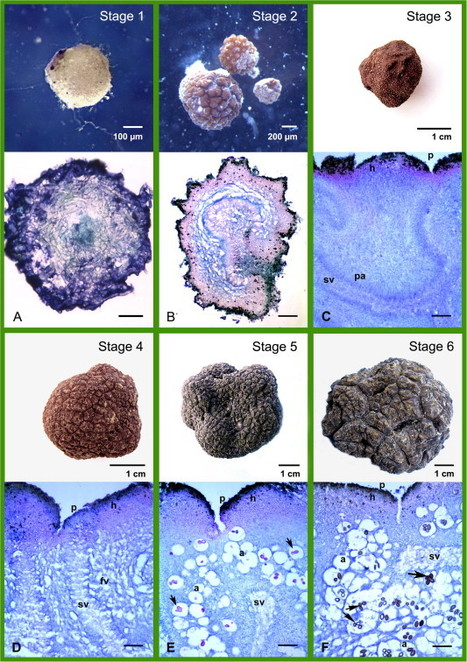
The symbiotic fungus Tuber melanosporum Vittad. (Périgord black truffle) belongs to the Ascomycota and forms mutualistic symbiosis with tree and shrub roots. This truffle has a high value in a global market and is cultivated in many countries of both hemispheres. The publication of the T. melanosporum genome has given researchers unique opportunities to learn more about the biology of the fungus. Real-time quantitative PCR (qRT-PCR) is a definitive technique for quantitating differences in transcriptional gene expression levels between samples. To facilitate gene expression studies and obtain more accurate qRT-PCR data, normalization relative to stable housekeeping genes is required. These housekeeping genes must show stable expression under given experimental conditions for the qRT-PCR results to be accurate. Unfortunately, there are no studies on the stability of housekeeping genes used in T. melanosporum development. In this study, we present a morphological and microscopical classification of the developmental stages of T. melanosporum fruit body, and investigate the expression levels of 12 candidate reference genes (18S rRNA; 5.8S rRNA; Elongation factor 1-alpha; Elongation factor 1-beta; α-tubulin; 60S ribosomal protein L29; β-tubulin; 40S ribosomal protein S1; 40S ribosomal protein S3; Glucose-6-phosphate dehydrogenase; β-actin; Ubiquitin-conjugating enzyme). To evaluate the suitability of these genes as endogenous controls, five software-based approaches and one web-based comprehensive tool (RefFinder) were used to analyze and rank the tested genes. We demonstrate here that the 18S rRNA gene shows the most stable expression during T. melanosporum development and that a set of three genes, 18S rRNA, Elongation factor 1-alpha and 40S ribosomal protein S3, is the most suitable to normalize qRT-PCR data from all the analyzed developmental stages; conversely, 18S rRNA, Glucose-6-phosphate dehydrogenase and Elongation factor 1-alpha are the most suitable genes for fruiting body developmental stages.
|
|
Scooped by
Jean-Michel Ané
March 18, 2015 11:30 AM
|
Brassinosteroids (BRs) have been shown to enhance stress tolerance by inducing antioxidant defense systems. However, the mechanisms of BR-induced antioxidant defense in plants remain to be determined. In this study, the role of calcium (Ca2+) and maize calcium/calmodulin-dependent protein kinase (CCaMK), ZmCCaMK, in BR-induced antioxidant defense, and the relationship between ZmCCaMK and Ca2+ in BR signaling were investigated. BR treatment led to a significant increase in cytosolic Ca2+ concentration in protoplasts from maize mesophyll, and Ca2+ was shown to be required for BR-induced antioxidant defense. Treatment with BR induced increases in gene expression and enzyme activity of ZmCCaMK in maize leaves. Transient overexpression and silencing of ZmCCaMK in maize protoplasts demonstrated that ZmCCaMK was required for BR-induced antioxidant defense. The requirement for CCaMK was further investigated using a loss-of-function mutant of OsCCaMK, the orthologous gene of ZmCCaMK in rice. Consistent with the findings in maize, BR treatment could not induce antioxidant defense in the rice OsCCAMK mutant. Furthermore, Ca2+ was required for BR-induced gene expression and activation of ZmCCaMK, while ZmCCaMK was shown to enhance the BR-induced increase in cytosolic Ca2+ concentration. Moreover, our results also showed that ZmCCaMK and H2O2 influenced each other. These results indicate that Ca2+ works together with ZmCCaMK in BR-induced antioxidant defense, and there are two positive feedback loops between Ca2+ or H2O2 and ZmCCaMK in BR signaling in maize.
|
|
Scooped by
Jean-Michel Ané
March 18, 2015 11:07 AM
|
Bacterial secretion systems play critical roles in communication with neighboring bacteria and in the modulation of host immune responses via the secretion of small proteins called effectors. Several secretion systems have been identified and these are denoted types I–VII. Of these, the type VI secretion system (T6SS) and its effectors were only recently elucidated. Most studies on the role and significance of the T6SS and its effectors have focused on human pathogens. In this review, type 6 effectors from plant-associated beneficial and pathogenic bacteria are discussed, including effectors from Agrobacterium tumefaciens, Dickeya dadanti, Rhizobium leguminosarum, Pectobacterium atroseptium, Ralstonia solanacearum, Pseudomonas syringae, Pseudomonas fluorescens, and Pseudomonas protegens. Type 6 effectors act in symbiosis, biofilm formation, virulence, and interbacterial competition. Understanding the impact of type 6 effectors on pathogenesis will contribute to the management of bacterial pathogens in crop plants by allowing the manipulation of intra and inter-specific interactions.
|
|
Scooped by
Jean-Michel Ané
March 16, 2015 11:41 PM
|
For Mike Verhoef, relying on inoculants is more one of those “getting back to basics” approaches that are earning more attention from farmers, agronomists, advisers, retailers and company representatives. He confirms Bohner’s statement about the companies being involved in more research into newer strains, but also the use of polymers, colourants and seed application processes. And he echoes Bohner’s contention that we need to be more specific with terminology and the differences between the inoculant (Bradyrhizobium japonicum) and the growth promoter (Bacillus subtilis).
|
|
Scooped by
Jean-Michel Ané
March 16, 2015 12:12 AM
|
Chitin, a biopolymer of N-acetylglucosamine, is abundant in invertebrates and fungi and is an important structural molecule [1 and 2]. There has been a longstanding belief that vertebrates do not produce chitin; however, we have obtained compelling evidence to the contrary. Chitin synthase genes are present in numerous fishes and amphibians, and chitin is localized in situ to the lumen of the developing zebrafish gut, in epithelial cells of fish scales, and in at least three different cell types in larval salamander appendages. Chitin synthase gene knockdowns and various histochemical experiments in zebrafish further authenticated our results. Finally, a polysaccharide was extracted from scales of salmon that exhibited all the chemical hallmarks of chitin. Our data and analyses demonstrate the existence of endogenous chitin in vertebrates and suggest that it serves multiple roles in vertebrate biology.
|
|
Scooped by
Jean-Michel Ané
March 15, 2015 11:19 PM
|
A number of studies have shown that elevated atmospheric CO2 ([CO2]) affects rice yields and grain quality. However, the responses of root-associated bacteria to [CO2] elevation have not been characterized in a large-scale field study. We conducted a free-air CO2 enrichment (FACE) experiment (ambient + 200 μmol.mol−1) using three rice cultivars (Akita 63, Takanari, and Koshihikari) and two experimental lines of Koshihikari [chromosome segment substitution and near-isogenic lines (NILs)] to determine the effects of [CO2] elevation on the community structure of rice root-associated bacteria. Microbial DNA was extracted from rice roots at the panicle formation stage and analyzed by pyrosequencing the bacterial 16S rRNA gene to characterize the members of the bacterial community. Principal coordinate analysis of a weighted UniFrac distance matrix revealed that the community structure was clearly affected by elevated [CO2]. The predominant community members at class level were Alpha-, Beta-, and Gamma-proteobacteria in the control (ambient) and FACE plots. The relative abundance of Methylocystaceae, the major methane-oxidizing bacteria in rice roots, tended to decrease with increasing [CO2] levels. Quantitative PCR revealed a decreased copy number of the methane monooxygenase (pmoA) gene and increased methyl coenzyme M reductase (mcrA) in elevated [CO2]. These results suggest elevated [CO2] suppresses methane oxidation and promotes methanogenesis in rice roots; this process affects the carbon cycle in rice paddy fields.
|
|
Scooped by
Jean-Michel Ané
March 15, 2015 4:09 PM
|
We have a limited understanding of the relative contributions of different processes that regulate microbial communities, which are crucial components of both natural and agricultural ecosystems. The contributions of selective and neutral processes in defining community composition are often confounded in field studies because as one moves through space, environments also change. Managed ecosystems provide an excellent opportunity to control for this and evaluate the relative strength of these processes by minimising differences between comparable niches separated at different geographic scales. We use next-generation sequencing to characterize the variance in fungal communities inhabiting adjacent fruit, soil and bark in comparable vineyards across 1000 kms in New Zealand. By compartmentalizing community variation, we reveal that niche explains at least four times more community variance than geographic location. We go beyond merely demonstrating that different communities are found in both different niches and locations by quantifying the forces that define these patterns. Overall, selection unsurprisingly predominantly shapes these microbial communities, but we show the balance of neutral processes also have a significant role in defining community assemblage in eukaryotic microbes.
|