Plant-symbiotic arbuscular mycorrhizal fungi (AMF) are of high global ecological and economic importance, but describing environmental communities of AMF at the species level remains a challenge, despite the need to understand AMF-plant preferences and to apply AMF in sustainable agriculture. Here, the potato-associated AMF species community composition was assessed for three Andean countries along an altitudinal gradient and at different plant stages, by using 454 GS-FLX+ sequencing of a 760 bp LSU rRNA gene PCR amplicon. Two methods were compared: defining OTUs based on a simple sequence similarity threshold, or affiliating reference sequences to species based on a high throughput phylogenetic annotation approach using an evolutionary placement algorithm (EPA). The EPA-based approach was not only more precise, but also fundamental to robustly unveil the AMF species community composition. The principal advantage of this approach was also demonstrated by using artificially constructed datasets based on validated public database sequences. The affiliation of sequence reads to species using phylogenetic annotation revealed a surprisingly conserved AMF core-species community structure in Andean potatoes, regardless of different plant stages and environmental factors. In total, 41 species were detected and in some cases more than 25 species were found colonizing an individual root system. Acaulospora species were identified as dominant colonizers, co-occurring with Cetraspora nodosa and certain Claroideoglomus and Rhizophagus species in most potato root samples.
Most crop species form a symbiotic association with arbuscular mycorrhizal (AM) fungi, receiving plant photosynthate and exchanging nutrients from the soil. The plant carbon (C) allocation to AM fungi and the nitrogen feedback are rarely studied together. In this study, a dual 13CO2 and 15NH415NO3 pulse labeling experiment was carried out to determine the allocation of recent photosynthates to mycorrhizal hyphae and the translocation of N absorbed by hyphae to strawberry plants. Plants were grown in pots in which a 50 μm mesh net allowed the physical separation of the mycorrhizal hyphae from the roots in one portion of the pot. An inorganic source of 15N was added to the hyphal compartment at the same time of the 13CO2 pulse labeling. One and seven days after pulse labeling, the plants were destructively harvested and the amount of the recently fixed carbon (C) and of the absorbed N was determined. 13C allocated to belowground organs such as roots and mycorrhizal hyphae accounted for an average of 10%, with 4.3% allocated to mycorrhizal hyphae within the first 24 h after the pulse labeling. Mycorrhizae absorbed labeled inorganic nitrogen, of which almost 23% was retained in the fungal mycelium. The N uptake was linearly correlated with the 13C fixed by the plants suggesting a positive correlation between a plant photosynthetic rate and the hyphal absorption capacity.
Rhizobium sp. UR51a is a Gram-negative bacterium isolated from roots of rice plants, and it presents plant growth-promoting abilities. The nutrient uptake in rice plants inoculated with UR51a was satisfactory. The genome of strain UR51a is composed of 5,233,443-bp and harbors 5,079 coding sequences.
The key to the human race’s future may be right beneath our feet. It sounds bizarre, but fungi better known as mushrooms can help solve many of society’s greatest challenges, from cleaning up the environment and living more sustainability to colonizing other planets.
Threaded into nearly every square inch of the ground are tiny, biological wires called mycelia. They’re the raw, exposed nervous system of the mushrooms that hold the planet together. When your feet press against the ground, or when it rains, or when a tree falls over, the fungal network responds, streaming chemical data in all directions and altering its growth and behavior accordingly. Crusading mycologist Paul Stamets calls mycelia the “neurological network of nature,” and a “biomolecular superhighway.” He likens this fungal network to the human nervous system and the structure of the Universe itself.
To some, Stamets’s description of fungi may sound uncomfortably metaphysical. But he’s right that, much like a nervous system, fungal networks have been managing Earth’s ecosystems for eons. And by learning to harness these astounding organisms, we can build ourselves a stronger and more sustainable world.
Epichloë species (including the former genus Neotyphodium) are fungal symbionts of many agronomically important forage grasses, and provide their grass hosts with protection from a wide range of biotic and abiotic stresses. Epichloë species include many interspecific hybrids with allodiploid-like genomes, which may provide the potential for combined traits or recombination to generate new traits. Though circumstantial evidence suggests that such interspecific hybrids might have arisen from nuclear fusion events following vegetative hyphal fusion between different Epichloë strains, this hypothesis has not been addressed empirically. Here, we investigated vegetative hyphal fusion and subsequent nuclear behavior in Epichloë species. A majority of Epichloë strains, especially those having a sexual stage, underwent self vegetative hyphal fusion. Vegetative fusion also occurred between two hyphae from different Epichloë strains. Though Epichloë spp. are uninucleate fungi, hyphal fusion resulted in two nuclei stably sharing the same cytoplasm, which might ultimately lead to nuclear fusion. In addition, protoplast fusion experiments gave rise to uninucleate putative hybrids, which apparently had two markers, one from each parent within the same nucleus. These results are consistent with the notion that interspecific hybrids arise from vegetative hyphal fusion. However, we also discuss additional factors, such as post-hybridization selection, that may be important to explain the recognized prevalence of hybrids in Epichloë species.
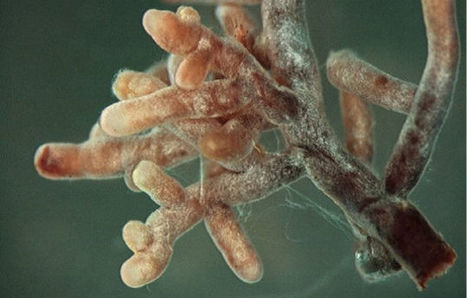
The word "Mycorrhiza" is given to a mutualistic association between a fungus (Myco) and the roots (rhiza) of the plants. This ascociation is symbiotic because the relationship is advantageous for both organisms. The macrosymbiont (the plant) gains increased exploration of the soil (rhizo sphere) with the intrincate net of hyphae that increases the uptake of water and nutrients from the soil interphase. The microsymbiont (the fungus) uses the carbon provided by the plant for its physiological functions, growth and development.
When driving past a sunlit field of grapes, we miss the frenzy of activity that is invisible to the human eye. Vines and roots teem with bacteria, and viruses and fungi all impact how those grapes will grow.
Researchers from Argonne National Laboratory led a new study of the microbes growing among grapevines, surveying microbes on the plants and their influence on the plants’ health. The study is part of a larger push to understand the roles microbes play in agriculture.
Substantial amounts of nutrients are lost from soils via leaching and as gaseous emissions. These losses can be environmentally damaging and expensive in terms of lost agricultural production. Plants have evolved many traits to optimize nutrient acquisition, including the formation of arbuscular mycorrhizas (AM), associations of plant roots with fungi that acquire soil nutrients. There is emerging evidence that AM have the ability to reduce nutrient loss from soils by enlarging the nutrient interception zone and preventing nutrient loss after rain-induced leaching events. Until recently, this important ecosystem service of AM had been largely overlooked. Here we review the role of AM in reducing nutrient loss and conclude that this role cannot be ignored if we are to increase global food production in an environmentally sustainable manner.
Understanding how plants balance between enabling microbial symbionts and fending off pathogens has direct implications both for basic plant biology and optimal use of crop plants in agriculture. The degree to which the processes associated with these two types of interactions overlap is poorly known. Recent studies revealed that symbiotic and pathogenic filamentous microbes require common plant genetic elements to establish colonization (Wang et al., 2012; Rey et al., 2013), supporting the long-held view that plants have evolved the ability to accommodate microbes (Parniske, 2000) and that pathogens have exploited these pathways. However, the extent to which plant genes implicated in fungal or bacterial symbioses are involved in interactions with biotrophic pathogens is unknown and research has been hampered by the lack of suitable common host experimental systems
Understanding how plants balance between enabling microbial symbionts and fending off pathogens has direct implications both for basic plant biology and optimal use of crop plants in agriculture. The degree to which the processes associated with these two types of interactions overlap is poorly known. Recent studies revealed that symbiotic and pathogenic filamentous microbes require common plant genetic elements to establish colonization (Wang et al., 2012; Rey et al., 2013), supporting the long-held view that plants have evolved the ability to accommodate microbes (Parniske, 2000) and that pathogens have exploited these pathways. However, the extent to which plant genes implicated in fungal or bacterial symbioses are involved in interactions with biotrophic pathogens is unknown and research has been hampered by the lack of suitable common host experimental systems.
Plants foster diverse assemblages of bacteria in the rhizosphere serving important functions which may result in enhanced plant growth. Microbial diversity is increasingly recognized to shape the functionality of microbial communities. This leads to the assumption that there is a positive relationship between rhizosphere diversity and plant growth. Here we investigate how bacterial diversity affects the mineralization of organic matter and plant nutrient acquisition.
We hypothesized that altered bacterial diversity will affect nitrogen mineralisation, uptake by plants and ultimately plant growth. We set up a controlled model system with Arabidopsis thaliana colonized by defined assemblages of fluorescent pseudomonads, a well-characterised plant-beneficial rhizosphere taxon. The growth substrate contained casein as sole nitrogen source, making the plant nitrogen uptake dependant on breakdown by bacterial enzymes.
Bacterial diversity was associated with a higher enzyme activity which increased nitrogen mineralization and enhanced plant growth. The effect of bacterial diversity on plant growth increased with time, pointing to a positive feedback between bacteria and plants: Bigger plants associated with species-rich bacterial communities supported more bacterial growth, which further enhanced the impact of bacteria on plant growth.
We demonstrate that plant-soil feedbacks establish rapidly during one single growth season and that bacterial diversity modulates this interaction. Preserving soil microbial diversity therefore may improve positive plant-soil feedbacks and thereby plant growth.
Background Pseudomonas fluorescens strain MFE01 secretes in abundance two Hcp proteins (haemolysin co-regulated proteins) Hcp1 and Hcp2, characteristic of a functional type 6 secretion system. Phenotypic studies have shown that MFE01 has antibacterial activity against a wide range of competitor bacteria, including rhizobacteria and clinically relevant bacteria. Mutagenesis of the hcp2 gene abolishes or reduces, depending on the target strain, MFE01 antibacterial activity. Hcp1, encoded by hcp1, may also be involved in bacterial competition. We therefore assessed the contribution of Hcp1 to competition of P. fluorescens MFE01 with other bacteria, by studying MFE01 mutants in various competitive conditions.
Results Mutation of hcp1 had pleiotropic effects on the MFE01 phenotype. It affected mucoidy of the strain and its motility and was associated with the loss of flagella, which were restored by introduction of plasmid expressing hcp1. The hcp1 mutation had no effect on bacterial competition during incubation in solid medium. MFE01 was able to sequester another P. fluorescens strain, MFN1032, under swimming conditions. The hcp2 mutant but not the hcp1 mutant conserved this ability. In competition assays on swarming medium, MFE01 impaired MFN1032 swarming and displayed killing activity. The hcp2 mutant, but not the hcp1 mutant, was able to reduce MFN1032 swarming. The hcp1 and hcp2 mutations each abolished killing activity in these conditions.
Conclusion Our findings implicate type 6 secretion of Hcp1 in mucoidy and motility of MFE01. Our study is the first to establish a link between a type 6 secretion system and flagellin and mucoidy. Hcp1 also appears to contribute to limiting the motility of prey cells to facilitate killing mediated by Hcp2. Inhibition of motility associated with an Hcp protein has never been described. With this work, we illustrate the importance and versatility of type 6 secretion systems in bacterial adaptation and fitness.
Probably one of the most interesting hour and a half science related lectures you will ever watch. Packed with all sorts of invaluable information. I have cr...
Agriculture often leads to altered composition and reduced diversity of arbuscular mycorrhizal fungal (AMF) communities compared to natural grassland systems. However, the ecology of taxa that are lost in this transition has thus far not been well characterized. In this study we found that reduced or lost AMF taxa in farmlands were significantly stronger correlated with soil N:P ratio than a randomly sampled community; this indicates that taxa that prevail at high N:P ratio in grasslands are the ones most sensitive to agriculture. As a high N:P environment is also commonly argued to impose the highest AMF benefit to plants, the observation that those taxa are lost could indicate that agricultural fields are left with communities of reduced symbiotic quality.
Populus species and hybrids (poplars, aspens, cottonwoods, etc.) are important trees in forestry and landscaping, whereas Populus trichocarpa is an internationally accepted model organism for tree research. Populus roots often form symbiotic relationships with ectomycorrhizal partners, and such relationships improve the host tree’s general condition and stress tolerance. Indeed, symbioses are very important factors in poplar physiology and consequently have been a subject of frequent investigation. The aim of the presented paper is to give a background knowledge about the current status of research on poplar-specific ectomycorrhiza (ECM), to highlight the most commonly used methods as well as effects of ECM research on poplar cultivation. I focus also on predominant topics in poplar ECM research, such as diversity and specificity of ECM strains, nitrogen acquisition, transgenic poplar research and stress response. Finally I discuss the perspectives of further poplar ECM research.
During arbuscular mycorrhizal (AM) symbiosis, the plant gains access to phosphate (Pi) and nitrogen delivered by its fungal symbiont. Transfer of mineral nutrients occurs at the interface between branched hyphae called arbuscules and root cortical cells. In Medicago truncatula, a Pi transporter, PT4, is required for symbiotic Pi transport, and in pt4, symbiotic Pi transport fails, arbuscules degenerate prematurely, and the symbiosis is not maintained. Premature arbuscule degeneration (PAD) is suppressed when pt4 mutants are nitrogen-deprived, possibly the result of compensation by PT8, a second AM-induced Pi transporter. However, PAD is also suppressed in nitrogen-starved pt4 pt8 double mutants, negating this hypothesis and furthermore indicating that in this condition, neither of these symbiotic Pi transporters is required for symbiosis. In M. truncatula, three AMT2 family ammonium transporters are induced during AM symbiosis. To test the hypothesis that suppression of PAD involves AMT2 transporters, we analyzed double and triple Pi and ammonium transporter mutants. ATM2;3 but not AMT2;4 was required for suppression of PAD in pt4, while AMT2;4, but not AMT2;3, complemented growth of a yeast ammonium transporter mutant. In summary, arbuscule life span is influenced by PT4 and ATM2;3, and their relative importance varies with the nitrogen status of the plant.
Arbuscular mycorrhizal fungi (AMF) help to facilitate mobilization of nutrients from soil to plant. The study was carried out in humid Rubavu and semi-arid Bugesera districts in Rwanda. We hypothesized that the presence of tree species in farming systems enhances mycorrhizal fungal density. The occurrence and abundance of AMF in the soil around main agroforestry tree species in these regions was studied. Tree species in Rubavu included Alnus acuminata, Markhamia lutea, Grevillea robusta and Eucalyptus sp. and in Bugesera Acacia polyacantha, Senna spectabilis, Grevillea robusta and Eucalyptus sp. AMF spores were isolated from soil samples collected under and outside the trees canopies. Results show significant differences in spore density between species. The density of AMF spores was highest under A. acuminata and A. polyacantha and lowest in Eucalyptus sp. and G. robusta in Rubavu and Bugesera, respectively. Generally, the mean spore abundance (spores/g of soil) was significantly higher in Bugesera (3.1-6.6) than Rubavu (1.6-4.4). Spores abundance was also affected by distance from the tree trunk and tree size. The present work is the first attempt to study the AMF communities associated with tree species in agroforestry systems in Rwanda. We propose further studies relating mycorrhizal diversity in the agroforestry systems to performance and yields of crops.
Perhaps you have already heard the buzz about soils, and why everyone should be thinking about them this year, and every year; 2015 is the International Year of Soils! Just hop on Twitter and look up posts tagged with #IYS2015 – every day new photographs and articles are being posted. There has been a plethora of great pieces on the importance of soil, including ten things everyone should know about soil, Resources from the FAO (including the infographic below), the Soils Atlas, and another cool infographic form Mother Nature Network. There was a recent New York Times piece on no-till farming practices and how they benefit soils here, and the Guardian recently published a piece on how we depend on soils here. With more articles being published as the year progresses and various conferences and meetings taking place, there are plenty of ways to join in with the discussion.
The flagellin receptor of Arabidopsis, At-FLAGELLIN SENSING 2 (FLS2), has become a model for mechanistic and functional studies on plant immune receptors. Responses to flagellin or its active epitope flagellin 22 (flg22) have been extensively studied in Arabidopsis leaves. However, the perception of microbe-associated molecular patterns (MAMPs) and the immune responses in roots are poorly understood. Here, we show that isolated root tissue is able to induce pattern-triggered immunity (PTI) responses upon flg22 perception, in contrast to elf18 (the active epitope of elongation factor thermo unstable (EF-Tu)). Making use of fls2 mutant plants and tissue-specific promoters, we generated transgenic Arabidopsis lines expressing FLS2 only in certain root tissues. This allowed us to study the spatial requirements for flg22 responses in the root. Remarkably, the intensity of the immune responses did not always correlate with the expression level of the FLS2 receptor, but depended on the expressing tissue, supporting the idea that MAMP perception and sensitivity in different tissues contribute to a proper balance of defense responses according to the expected exposure to elicitors. In summary, we conclude that each investigated root tissue is able to perceive flg22 if FLS2 is present and that tissue identity is a major element of MAMP perception in roots.
Cover Crops can be used to produce Nitrogen. The following charts rates legumes as a nitrogen source and gives nitrogen production from common cover crop species. The reasons why farmers use cover crops are as varied as the number of species that can be used as a cover crop. Traditionally cover crops were used for erosion control but in the past few years’ cover crops have been used for other purposes. Nitrogen is necessary for all plant growth. Legumes have the ability to “fix” nitrogen from the air and store it in nodules in their roots. This nitrogen can be released or use by subsequent crops.
Rhizobia are a diverse group of bacteria engaged in nitrogen-fixing symbioses with leguminous plants. A prevalent interaction type results in root nodules colonized by the bacteria. Establishment and maintenance of this symbiosis involves specific recognition and coordinated differentiation of both bacterial and host cells driven by signal exchange. Characterization of this interplay reveals an impressive degree of specificity and fine-tuning resulting from million years of evolution.
The development of phosphorus (P)-efficient crop varieties is urgently needed to reduce agriculture’s current over-reliance on expensive, environmentally destructive, non-renewable and inefficient P-containing fertilizers. The sustainable management of P in agriculture necessitates an exploitation of P-adaptive traits that will enhance the P-acquisition and P-use efficiency of crop plants. Action in this area is crucial to ensure sufficient food production for the world’s ever-expanding population, and the overall economic success of agriculture in the 21st century. This informative and up-to-date volume presents pivotal research directions that will facilitate the development of effective strategies for bioengineering P-efficient crop species. The 14 chapters reflect the expertise of an international team of leading authorities in the field, who review information from current literature, develop novel hypotheses, and outline key areas for future research. By evaluating aspects of vascular plant and green algal P uptake and metabolism, this book provides insights as to how plants sense, acquire, recycle, scavenge and use P, particularly under the naturally occurring condition of soluble inorganic phosphate deficiency that characterises the vast majority of unfertilised soils, worldwide. The reader is provided with a full appreciation of the diverse information concerning plant P-starvation responses, as well as the crucial role that plant–microbe interactions play in plant P acquisition. Annual Plant Reviews, Volume 48: Phosphorus Metabolism in Plants is an important resource for plant geneticists, biochemists and physiologists, as well as horticultural and environmental research workers, advanced students of plant science and university lecturers in related disciplines. It is an essential addition to the shelves of university and research institute libraries and agricultural and ecological institutions teaching and researching plant science.
Researchers have shown that a known antibiotic and antifungal compound produced by a soil microbe can inhibit another species of microbe from forming biofilms—microbial mats that frequently are medically harmful—without killing that microbe. The findings may apply to other microbial species, and can herald a plethora of scientific and societal benefits. The research is published online ahead of print on March 30, 2015, in the Journal of Bacteriology, a publication of the American Society for Microbiology. The study will be printed in a special section of the journal that will comprise of papers from the 5th ASM Conference on Cell-Cell Communication in Bacteria.
Many microbes produce antibiotics and antifungals, presumably to compete with other microbes. "Our working hypothesis was that some of the compounds that bacteria secrete might act more subtly, as signals to alter the behavior of their neighboring microbes rather than to kill them," said corresponding author Elizabeth A. Shank, PhD, assistant professor of biology, the University of North Carolina, Chapel Hill. They found that at low concentrations, the compound, DAPG (the acronym stands for 2,4-diacetylphloroglucinol), produced by the bacterium Pseudomonas protegens, did not kill the experimental target bacterium, Bacillus subtilis, but merely prevented it from forming biofilms. DAPG also blocked spore formation.
To get content containing either thought or leadership enter:
To get content containing both thought and leadership enter:
To get content containing the expression thought leadership enter:
You can enter several keywords and you can refine them whenever you want. Our suggestion engine uses more signals but entering a few keywords here will rapidly give you great content to curate.


 Your new post is loading...











The conservation is really striking indeed. Nice paper from a technological (EPA) point of view too.